
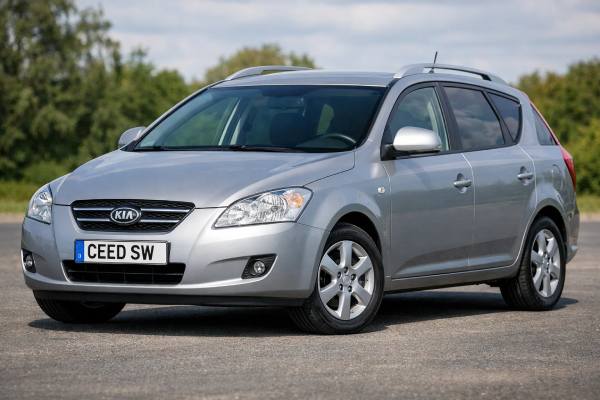
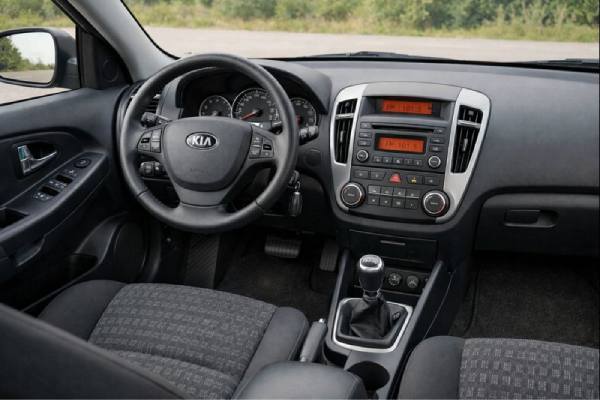
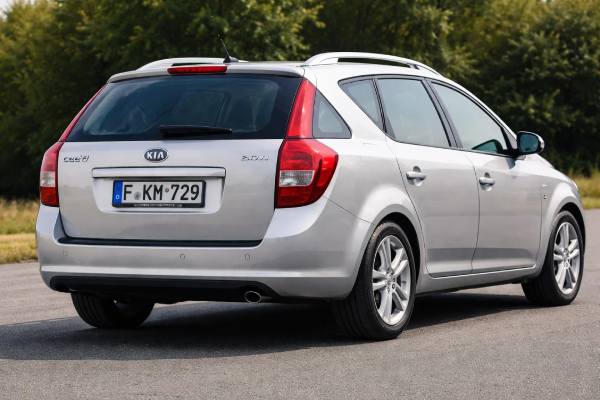
The facelift Kia Cee’d SW (ED) with the 2.0 CRDi D4EA (140 hp) is the “long-legged” version of the first-gen Cee’d family: a roomy wagon body, a torque-rich diesel, and simple, proven hardware. It suits drivers who do regular motorway miles, carry loads, or want strong mid-range pull without chasing high rpm. The D4EA’s strength is usable torque and relaxed cruising; its weakness is that diesel emissions hardware and fueling components need the right driving habits and service discipline to stay happy.
As a used buy, this model rewards careful history checks (timing belt, fuel filter, proper oil spec) and a test drive that confirms smooth boost build and clean regeneration behavior where fitted. Get those basics right and it can be a durable, economical workhorse with genuine wagon practicality.
What to Know
- Strong mid-range torque makes it easy to overtake and haul family gear without constant downshifts.
- Wagon packaging is the real advantage: low load lip, square cargo bay, and useful roof load options.
- Highway economy is typically best in steady 100–120 km/h use, where the diesel runs in its comfort zone.
- Plan for diesel-specific upkeep: fuel filter care, intake and EGR cleanliness, and DPF-friendly driving (where fitted).
- Use a sensible oil interval: 10,000–15,000 km or 12 months (shorter if mostly city/short trips).
Navigate this guide
- Kia Cee’d SW ED facelift basics
- Kia Cee’d SW ED D4EA specs
- Kia Cee’d SW ED facelift trims and safety
- Reliability and common faults
- Maintenance and buyer’s checklist
- Driving and real-world economy
- How it stacks up to rivals
Kia Cee’d SW ED facelift basics
The 2009–2010 facelift version of the Cee’d SW (ED) keeps the same fundamental recipe—front-wheel drive, multi-link rear suspension, and practical wagon packaging—while tidying up equipment and refinement. In day-to-day ownership, the big story is the pairing of a relatively simple, robust 2.0-liter common-rail diesel (D4EA) with a body that can genuinely do “one car” duties: commuting, long trips, and cargo runs.
Why the D4EA fits the SW body well: the 140 hp output is not about speed; it’s about torque delivery. You typically feel the engine’s best side between roughly 1,800 and 3,000 rpm, where it pulls with little drama. That matters in a wagon because you often drive it loaded: luggage, strollers, tools, or bicycles. With a healthy turbo and clean intake path, the car accelerates briskly in real traffic without needing aggressive throttle inputs.
Facelift ownership traits you’ll notice:
- Refinement focus: slightly improved perceived quality inside, better NVH (noise, vibration, harshness) in many trims, and more modern infotainment options depending on market.
- Safety equipment spread: stability control (ESC/ESP), traction control, and extra airbags became more common as standard or widely optioned, but this still varies by country and trim.
- Chassis balance: the rear multi-link helps the SW feel stable when loaded and less “bouncy” than simpler torsion-beam wagons over broken surfaces.
Where owners can get surprised: this is a diesel from the era when emissions systems became more complex. Depending on market and build, you may encounter EGR valves, swirl flaps in the intake, and a diesel particulate filter (DPF). None are “automatic dealbreakers,” but they change how you should drive and service the car. Short trips, low-quality fuel, and stretched oil intervals are the common path to expensive headaches.
If you want an economical wagon that feels solid at motorway speeds, the facelift Cee’d SW with the D4EA is a rational choice—provided you buy on condition and history, not on the badge or mileage claim alone.
Kia Cee’d SW ED D4EA specs
Below are practical, owner-focused specifications for the Cee’d SW (ED) facelift 2009–2010 with the 2.0 CRDi D4EA (140 hp). Exact values can vary by market, emissions version, and trim, so treat these as the most common ranges.
Powertrain and efficiency
| Item | Specification |
|---|---|
| Engine code | D4EA 2.0 CRDi |
| Layout | Inline-4 turbo-diesel, DOHC, 16-valve |
| Displacement | 2.0 L (≈ 1,991 cc) |
| Induction | Turbocharged (often VGT), intercooler |
| Fuel system | Common-rail direct injection |
| Bore × stroke | ≈ 83.0 × 92.0 mm (3.27 × 3.62 in) |
| Compression ratio | Typically ~17–18:1 (varies by version) |
| Max power | 140 hp (103 kW) @ ~4,000 rpm |
| Max torque | ≈ 305 Nm (≈ 225 lb-ft) @ ~1,800–2,500 rpm |
| Timing drive | Timing belt (service interval varies by market) |
| Rated efficiency | Commonly ~5.8–6.6 L/100 km (41–36 mpg US / 49–43 mpg UK) |
| Real-world highway @ 120 km/h | Often ~6.2–7.2 L/100 km (38–33 mpg US / 46–39 mpg UK) depending on tyres, load, and wind |
Transmission and driveline
| Item | Specification |
|---|---|
| Drive type | FWD |
| Manual | Commonly 6-speed |
| Automatic | Often 4-speed in some markets (less common than manual) |
| Differential | Open |
Chassis and dimensions
| Item | Specification (typical ranges) |
|---|---|
| Suspension (front/rear) | MacPherson strut / multi-link |
| Steering | Electric or hydraulic assist (market-dependent); rack and pinion |
| Brakes | Disc front; rear disc or drum (trim/market dependent) |
| Popular tyre sizes | 195/65 R15, 205/55 R16, 225/45 R17 (varies) |
| Length / width / height | ≈ 4,470 / 1,790 / 1,495 mm (176.0 / 70.5 / 58.9 in) |
| Wheelbase | ≈ 2,650 mm (104.3 in) |
| Turning circle | ≈ 10.6–11.0 m (34.8–36.1 ft) |
| Kerb weight | ≈ 1,430–1,530 kg (3,153–3,373 lb) |
| Fuel tank | ≈ 53 L (14.0 US gal / 11.7 UK gal) |
| Cargo volume | ≈ 534 L seats up / ≈ 1,650+ L seats down (method varies) |
Performance and capability
| Item | Typical figure |
|---|---|
| 0–100 km/h (0–62 mph) | ~10.2–11.2 s (gearbox/trim dependent) |
| Top speed | ~195–205 km/h (121–127 mph) |
| Braking 100–0 km/h | Commonly ~39–42 m (setup/tyres matter) |
| Towing capacity | Often ~1,400–1,500 kg braked / ~600–650 kg unbraked (market dependent) |
| Payload | Often ~450–550 kg (market/trim dependent) |
Fluids and service capacities (decision-grade)
| Item | Typical specification |
|---|---|
| Engine oil | Often 5W-30 meeting ACEA diesel/emissions needs; capacity ~5.3 L (≈ 5.6 US qt) with filter |
| Coolant | Ethylene glycol long-life mix 50/50; capacity often ~6–7 L (≈ 6.3–7.4 US qt) |
| Manual gearbox oil | Usually GL-4 75W-85/90; capacity often ~2.0 L (≈ 2.1 US qt) |
| Automatic ATF | Commonly SP-III type; capacity varies widely by drain/fill vs total |
| A/C refrigerant | Often R134a; charge varies by system |
| Key torque specs | Wheel nuts typically ~90–110 Nm (66–81 lb-ft); confirm per wheel type |
Safety and driver assistance (era-correct)
| Item | Notes |
|---|---|
| Euro NCAP | Cee’d line achieved a 5-star rating in period testing (protocol differs vs modern % scoring) |
| Core systems | ABS and stability control common; availability varies by trim/market |
| ADAS | Generally minimal by 2009–2010: expect basic sensors, not modern AEB/ACC |
Kia Cee’d SW ED facelift trims and safety
Because the Cee’d SW (ED) was sold across many European markets, trims and option names vary, but the facelift cars tend to cluster into familiar “value to premium” steps. When shopping, focus less on the badge on the tailgate and more on what hardware is actually fitted, because equipment changes both the driving feel and long-term maintenance needs.
Trims and options that matter in practice
Wheels and suspension feel:
Base trims on 15–16 inch tyres ride more comfortably and are generally kinder to front suspension bushings and wheel bearings. Sportier trims on 17s can feel sharper, but they expose weak dampers or tired bushes sooner, and tyres cost more.
Transmission choice:
A 6-speed manual is the enthusiast’s pick for economy and response. If you find an automatic, verify shift quality hot and cold and confirm fluid service history—older 4-speed units can remain reliable, but they dislike neglected ATF and overheated towing.
Climate and electrical equipment:
Dual-zone climate, heated seats, and upgraded audio are nice-to-haves, but they also add actuators, blend doors, and control modules. These aren’t inherently fragile—just check that everything works and that the battery/charging system is healthy.
Quick identifiers when inspecting:
- Stability control switch: a dedicated ESC/ESP button (or the lack of one) can hint at system presence.
- Airbag count: check for curtain airbags (tags on the A-pillar/headliner area).
- Parking sensors: factory rear sensors usually integrate cleanly; aftermarket kits can be messy and cause electrical gremlins.
Safety ratings and structure (what they mean for you)
The first-generation Cee’d family earned a strong reputation for occupant protection for its era, and the wagon shares the same core safety cell and restraint philosophy. Keep in mind that 2009–2010 safety ratings are not directly comparable to modern tests: today’s protocols emphasize advanced driver assistance and vulnerable road user performance far more heavily.
Safety systems and “ADAS” reality check
Expect ABS and usually ESC/ESP, plus front airbags and often side/curtain airbags on better trims. What you generally should not expect from this era are modern features such as automatic emergency braking (AEB), adaptive cruise control (ACC), or lane-centering assistance. That is not a flaw—just an honest expectation setting.
After accident repair or major suspension work, insist that the car tracks straight and brakes evenly. Even without advanced sensors, an older wagon’s safety depends heavily on tyre quality, correct alignment, and properly functioning brakes.
Reliability and common faults
The D4EA 2.0 CRDi can be durable, but reliability depends on whether the car lived a diesel-appropriate life: warm runs, correct oil, clean fuel, and timely belt service. Below are typical issues organized by prevalence and cost tier, with the “what you’ll notice” clues that help you catch problems early.
Common (often seen)
- EGR valve and intake soot buildup (medium cost)
Symptoms: hesitant throttle response, uneven idle, reduced power, smoke under load, occasional limp mode.
Likely cause: soot and oil vapour mixing in the intake and EGR system, especially with short trips.
Remedy: EGR and intake cleaning; confirm boost hoses and sensors are intact; avoid purely short-trip use. - Boost leaks and tired intercooler hoses (low–medium cost)
Symptoms: whooshing sound, oily residue on hoses, sluggish acceleration, overboost/underboost codes.
Likely cause: aging rubber hoses and clamps.
Remedy: pressure test the charge-air system; replace hoses/clamps as needed. - Glow plug wear and cold-start issues (low–medium cost)
Symptoms: long crank when cold, rough first seconds, glow plug warning lamp.
Likely cause: aged glow plugs or controller issues.
Remedy: test and replace as a matched set when needed; check battery health.
Occasional (depends on driving pattern and maintenance)
- DPF loading or poor regeneration (high cost if ignored)
Symptoms: rising fuel use, frequent fan running, warning lights, reduced power, oil dilution in severe cases.
Likely cause: too many short trips, wrong oil spec, or faulty sensors.
Remedy: verify whether your car is DPF-equipped; check pressure and temperature sensors; ensure the car gets periodic sustained driving. - Injector wear or fuel delivery faults (medium–high cost)
Symptoms: hard start, diesel knock, smoke, uneven idle, fuel smell, poor economy.
Likely cause: contaminated fuel, long filter intervals, high mileage.
Remedy: proper diagnostic balance tests; replace/overhaul injectors only when confirmed. - Turbo actuator or vane issues (medium–high cost)
Symptoms: intermittent limp mode, inconsistent boost, surging at steady throttle.
Likely cause: sticky variable vanes or actuator wear from soot and heat.
Remedy: confirm vacuum/actuator health; avoid repeated short heat cycles; repair or rebuild if needed.
Rare (but worth checking)
- Cooling system weak points (medium cost)
Symptoms: slow coolant loss, heater performance changes, overheating under load.
Likely cause: aging hoses, radiator end tanks, thermostat issues.
Remedy: pressure test; replace thermostat and suspect hoses proactively on older cars.
Recalls, TSBs, and service actions
Recall and service campaigns vary by country. Your safest process is simple: run the VIN through an official Kia recall checker and confirm completion with dealer history. Avoid relying on owner stories alone; many cars have been maintained outside the dealer network, and paperwork is your friend.
Maintenance and buyer’s checklist
A facelift Cee’d SW diesel can be inexpensive to run if you set a diesel-appropriate maintenance rhythm. The schedule below is practical for real ownership (not just minimum compliance), especially if the car sees city use.
Practical maintenance schedule (distance/time)
- Engine oil and filter: every 10,000–15,000 km or 12 months.
Use the correct specification for diesel emissions hardware where applicable. Short-trip cars benefit from the shorter interval. - Fuel filter: every 30,000–40,000 km (or sooner if fuel quality is uncertain).
This is one of the best “cheap insurance” services on a common-rail diesel. - Air filter: inspect every 15,000 km; replace 30,000 km typical.
- Cabin filter: every 15,000–30,000 km depending on dust and city use.
- Coolant: typically every 5 years (verify the correct coolant type and mix).
- Brake fluid: every 2 years regardless of mileage.
- Manual gearbox oil: optional on some service books, but wise every 80,000–120,000 km if you plan to keep the car.
- Timing belt kit (belt, tensioners, idlers, often water pump): follow the manufacturer interval for your market; many owners plan around ~90,000 km or 5 years as a conservative rule.
- Serpentine belt and pulleys: inspect annually; replace at first cracking/noise or during major belt work.
- Glow plugs: test condition as part of cold-start troubleshooting; replace as a set if performance drops.
- Brakes: inspect pads/rotors at every tyre rotation; seize-prone caliper slides should be cleaned and lubricated.
Fluids and torque values (owner decision essentials)
- Oil choice matters: if the car has DPF equipment, wrong oil can accelerate ash loading.
- Wheel nut torque: typically around 90–110 Nm, but confirm for your wheel type.
- Don’t guess capacities: when doing any fluid service, use measured drain/fill amounts and check level procedures carefully.
Buyer’s guide: inspection checklist
Before you travel to see the car, ask for:
- Proof of timing belt work (invoice with parts listed, not just “belt done”).
- Oil service history showing intervals and oil spec.
- Fuel filter replacement dates.
- Any record of turbo, injector, or clutch work.
In-person checks (15 minutes that save money):
- Cold start: should fire cleanly without excessive smoke or prolonged cranking.
- Boost behavior: strong, smooth pull; no surging; no whistle that sounds like a leak.
- Clutch and flywheel: listen for rattles at idle with clutch engaged/disengaged; feel for shudder on takeoff.
- Cooling system: no oily residue in coolant tank; stable temperature on test drive.
- Suspension wear: listen for knocks over small bumps; check uneven tyre wear.
- Corrosion hotspots: inspect rear wheel arches, tailgate edges, underbody seams, and subframe areas.
Best version to target: a car with clear belt history, a manual gearbox (if you prefer simplicity), and evidence of regular long drives. Avoid “city-only diesel” histories unless maintenance is exceptionally well documented.
Driving and real-world economy
In the real world, the D4EA diesel turns the Cee’d SW into a relaxed long-distance tool. The defining trait is mid-range torque, not top-end power. If you drive it like a petrol—revving high and chasing redline—you miss the point. Drive it on torque, and it feels effortlessly brisk.
Ride, handling, and NVH
For a compact wagon, the Cee’d SW’s chassis is a strong point. The rear multi-link suspension helps it stay composed on uneven roads, especially with passengers or cargo. On 15–16 inch wheels, it rides with a useful softness that suits daily commuting. On larger wheels, the steering can feel sharper, but impacts are more noticeable and tyre roar can increase.
At motorway speeds, the car is typically stable and easy to place. Wind and tyre noise dominate more than engine noise when cruising, because the diesel settles into a low-stress rhythm in top gear.
Powertrain character and transmission feel
- Throttle response: strongest once boost is established; below that, it can feel a touch sleepy if the turbo is off-boost.
- Passing performance: strong in-gear acceleration in the mid-range is the everyday advantage, especially with the 6-speed manual.
- Automatic behavior: older automatics can feel slower to kick down; they suit calm driving more than aggressive passing.
If you experience inconsistent pull—strong one moment, weak the next—think boost control, vacuum lines, or sensors before assuming the turbo is “dead.”
Real-world efficiency (what owners usually see)
Expect economy to vary more with driving pattern than with tiny trim differences:
- City: often 7.0–8.5 L/100 km (34–28 mpg US / 40–33 mpg UK), worse with short trips.
- Highway 100–120 km/h: often 6.2–7.2 L/100 km (38–33 mpg US / 46–39 mpg UK).
- Mixed use: often 6.5–7.8 L/100 km (36–30 mpg US / 43–36 mpg UK).
Cold weather can add a noticeable penalty because diesels warm slowly and cabin heat demand is high. If your car has DPF equipment, frequent regenerations can also raise consumption—another reason consistent longer drives help.
Load carrying and towing notes
The SW body makes the car useful with a full load, but towing and heavy cargo change the equation:
- Expect a 10–25% fuel use increase under sustained heavy load or towing.
- Brakes and cooling need to be in top condition before towing.
- Tyre pressures should match the load recommendations in the vehicle documentation.
How it stacks up to rivals
To judge the facelift Cee’d SW 2.0 CRDi fairly, compare it with the wagons people actually cross-shop: Ford Focus Estate (diesel), VW Golf Variant (TDI), Skoda Octavia Combi (TDI), Opel/Vauxhall Astra Caravan (CDTI), and Toyota Auris Touring Sports (later, often petrol/hybrid). Each has a clear “personality,” and the Kia’s strengths are more practical than flashy.
Where the Cee’d SW wins
Value and mechanical straightforwardness:
In many markets, these cars offer strong equipment for the money. The chassis and wagon packaging feel “honest”: it does the job without complicated gimmicks. When maintained correctly, the D4EA drivetrain can deliver long-distance durability with good economy.
Comfortable real-world tuning:
The ride/handling balance is mature for the era, especially on sensible wheel sizes. For families, that matters more than ultimate cornering grip.
Cargo practicality:
Some rivals have similar volume on paper, but the Kia’s square space, low load lip, and easy folding are everyday advantages.
Where rivals can be better
Modernity and efficiency in later diesels:
Some competitors introduced more refined and more efficient diesel engines earlier, and many have broader automatic gearbox choices. If you do heavy city use, later petrol-hybrid rivals can be cheaper to live with than an older diesel.
Cabin polish and noise isolation:
A well-kept Golf Variant or Octavia can feel more premium at speed, depending on trim and tyres. That said, maintenance costs and parts pricing can also be higher.
Specialist strengths:
- Octavia Combi: often the “space king” with a huge boot.
- Focus Estate: often the handling benchmark.
- Golf Variant: strong all-rounder feel and resale in many markets.
The best match for this Kia
Choose the Cee’d SW 2.0 CRDi if you want a used wagon that does distance work with a sensible ownership plan. Choose a petrol or hybrid alternative if your week is mostly short trips, stop-start driving, or you can’t commit to diesel-appropriate maintenance and driving patterns.
References
- Car Safety Recalls | What They Are & What To Do | Kia UK 2025 (Recall Information)
- Vilka Serviceintervaller gäller för min Kia? 2025 (Service Intervals)
- ED(FL) Swd-FOREWORD.QXP 2012 (Owner’s Manual PDF)
- Kia cee’d wins 5-Star Euro NCAP safety rating – Kia Slovakia s.r.o. 2006 (Safety Rating)
Disclaimer
This article is for informational purposes only and is not a substitute for professional diagnosis, inspection, or repair. Specifications, torque values, service intervals, and procedures can vary by VIN, market, engine/emissions version, and installed equipment, so always verify details using your vehicle’s official service documentation and label data before purchasing parts or performing work.
If you found this guide useful, please consider sharing it on Facebook, X (Twitter), or your favorite forum to help others find reliable ownership information.