

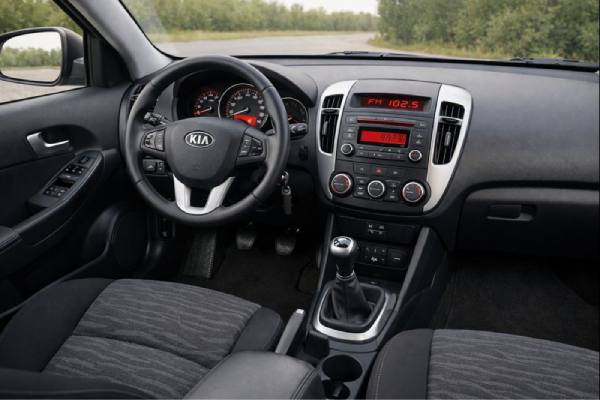

The facelifted Kia Cee’d (ED) with the 1.4-litre G4FA petrol is the “simple and sensible” end of the range: naturally aspirated, timing chain driven, and usually paired with a straightforward 5-speed manual. With 90 hp it will not feel quick, but the payoff is predictable running costs, an engine that tolerates mixed driving well, and a chassis tuned for comfort over drama. In daily use, this version suits owners who value a calm commute, reasonable fuel use, and easy servicing more than outright performance.
Where the car rewards careful ownership is in the details: using the correct oil spec, keeping the cooling system healthy, and staying ahead of wear items like suspension bushes and brakes. Do that, and the Cee’d can be a reliable, practical hatch with a pleasantly “honest” feel for its age.
Owner Snapshot
- Easy to live with in town thanks to light controls and good visibility for a compact hatch.
- Simple MPI petrol setup suits short trips better than many small diesels of the same era.
- Cabin and boot packaging remain competitive for a 2009–2012 C-segment hatch.
- Watch for age-related suspension wear and electrical niggles on higher-mileage cars.
- Plan oil and filter service every 15,000 km or 12 months (sooner for frequent short trips).
Contents and shortcuts
- Kia Cee’d ED facelift profile
- Kia Cee’d ED 1.4 specs
- Kia Cee’d ED trims and safety
- Reliability patterns and fixes
- Maintenance plan and buying tips
- Road feel and real economy
- Rivals to cross-shop
Kia Cee’d ED facelift profile
The 2009–2012 facelift of the first-generation Cee’d (platform code ED) kept the basic recipe intact: a roomy, European-tuned hatchback with conservative engineering and a strong focus on value. With the G4FA 1.4 petrol (90 hp), this car is best understood as a durable daily driver rather than a hot hatch. The engine is a multi-point injection (MPI) unit with a timing chain, which keeps scheduled “big ticket” timing-belt work off the calendar. In practice, that shifts your attention toward routine fluid changes and the health of supporting systems (cooling, ignition, intake).
For many owners, the biggest benefit is drivability predictability. The 1.4 is happiest driven with a light foot and a willingness to use revs on hills or when merging. In traffic, it feels smooth and cooperative; on a motorway, it will hold speed, but you will notice that overtakes require planning. That is not a flaw so much as the trade-off for a lower-stress powertrain with fewer high-pressure fuel system parts than modern downsized turbo engines.
The facelift years also matter when you are shopping. By 2009–2012, most examples have had time for wear and corrosion exposure to show up. The upside is that common weak points are well-known and usually inexpensive to address if caught early. The hatch body style is generally the sweet spot for owners who want compact external dimensions with useful cargo flexibility. Rear seat folding gives you practical load space for weekend trips, and the cabin typically feels less tight than many small cars from the same period.
If you are deciding whether this exact version fits you, ask one question first: “Do I want relaxed ownership or lively performance?” If the answer is relaxed ownership, the G4FA Cee’d can be a smart buy—especially with a full service history, tidy cooling system, and suspension that does not clunk over bumps.
Kia Cee’d ED 1.4 specs
Below are practical, owner-focused specs for the facelift Kia Cee’d (ED) hatch with the 1.4 G4FA 90 hp petrol. Figures vary by market, wheels, and trim; treat these as typical ranges for this variant, then confirm against your VIN and handbook.
Powertrain and efficiency
| Item | Spec (typical for G4FA 1.4 MPI) |
|---|---|
| Code | G4FA |
| Engine layout and cylinders | Inline-4, DOHC, 16-valve (4 valves/cyl) |
| Displacement | 1.4 L (1,396 cc) |
| Bore × stroke | 77.0 × 74.1 mm (3.03 × 2.92 in) |
| Induction | Naturally aspirated |
| Fuel system | MPI (port injection) |
| Compression ratio | ~10.5:1 (market dependent) |
| Max power | 90 hp (66 kW) @ ~6,200 rpm |
| Max torque | ~137 Nm (101 lb-ft) @ ~5,000 rpm |
| Timing drive | Chain |
| Rated efficiency (combined) | ~6.0–6.5 L/100 km (39–36 mpg US / 47–43 mpg UK) |
| Real-world highway @ 120 km/h | ~6.3–7.0 L/100 km (37–34 mpg US / 45–40 mpg UK) |
Transmission and driveline
| Item | Spec |
|---|---|
| Transmission | 5-speed manual (most common); 4-speed automatic optional in some markets |
| Drive type | FWD |
| Differential | Open |
Chassis and dimensions (hatch)
| Item | Spec (typical) |
|---|---|
| Suspension (front/rear) | MacPherson strut / multi-link (market dependent setup) |
| Steering | Electric power steering (EPS); ratio varies by rack |
| Brakes | Ventilated front discs; rear discs or drums by trim/market |
| Popular tyre sizes | 195/65 R15 or 205/55 R16 (common) |
| Ground clearance | ~150 mm (~5.9 in) |
| Length / width / height | ~4,260 / 1,790 / 1,480 mm (167.7 / 70.5 / 58.3 in) |
| Wheelbase | ~2,650 mm (104.3 in) |
| Turning circle (kerb-to-kerb) | ~10.6 m (~34.8 ft) |
| Kerb (curb) weight | ~1,200–1,320 kg (2,646–2,910 lb) |
| Fuel tank | ~53 L (14.0 US gal / 11.7 UK gal) |
| Cargo volume | ~340 L (12.0 ft³) seats up; ~1,300 L (45.9 ft³) seats down (method varies) |
Performance and capability
| Metric | Typical result |
|---|---|
| 0–100 km/h (0–62 mph) | ~12.5–13.5 s |
| Top speed | ~170–175 km/h (106–109 mph) |
| Braking 100–0 km/h | Highly tyre-dependent; expect mid- to high-30 m range in good condition |
| Towing capacity | Often limited or market-specific; verify type approval plate and handbook |
| Payload | Varies widely by trim; check door-jamb label |
Fluids and service capacities (common values)
| Item | Specification and typical capacity |
|---|---|
| Engine oil | 5W-30 or 5W-40 meeting required ACEA/API for your market; ~3.3 L (3.5 US qt) with filter (confirm by VIN) |
| Coolant | Long-life ethylene glycol mix (usually 50/50); ~5–6 L (5.3–6.3 US qt) typical |
| Manual gearbox oil | 75W-85/75W-90 GL-4 (market dependent); ~1.7–2.0 L (1.8–2.1 US qt) |
| Brake fluid | DOT 3/4; flush interval-based |
| A/C refrigerant | R134a; charge varies by equipment |
Key torque specs (decision-useful only)
| Fastener | Typical torque |
|---|---|
| Wheel nuts | ~90–110 Nm (66–81 lb-ft) |
| Spark plugs | ~18–25 Nm (13–18 lb-ft) |
| Engine oil drain plug | ~30–40 Nm (22–30 lb-ft) |
Safety and driver assistance (typical for 2009–2012)
| Item | Notes |
|---|---|
| Crash ratings | Euro NCAP rating exists for this generation; older test protocols may not provide modern percentage scores |
| Airbags | Commonly front and side; curtain airbags depend on trim/market |
| Stability control | ESC/ESP often standard or widely available by facelift years; verify by VIN/trim |
| ADAS | No modern AEB/ACC/LKA on this generation; focus is on ABS, ESC, and passive safety |
Kia Cee’d ED trims and safety
Trim naming for the facelift Cee’d varies a lot by country (and sometimes by dealer package), so the best approach is to think in “equipment bands” rather than trusting a badge alone. On most markets, the 1.4 petrol was offered in entry and mid trims, with optional upgrades focused on comfort and convenience rather than performance hardware. You might see steel wheels with covers on base cars, then alloy wheels (often 15–16 in), upgraded audio, and extra cabin features as you move up the range. Some markets bundled popular items into “packs,” so two cars with the same trim label can still differ.
How to identify options quickly (useful when shopping)
- ESC/ESP presence: look for an ESC button (often near the steering wheel or center stack) and confirm with a scan tool if possible.
- Curtain airbags: check for “AIRBAG” tags along the A-pillar and headliner edges.
- Climate control: manual rotary controls vs a digital climate panel; different compressor load behavior can slightly affect city fuel use.
- Audio tier: base head unit vs branded systems (where offered) can hint at a higher equipment line.
- Parking sensors: rear sensors were commonly optional; working sensors add real daily convenience but can be failure-prone with age.
Safety ratings and what they mean for this car
For the ED-generation Cee’d, published crash-test results exist, but be careful comparing them to modern cars. Older Euro NCAP protocols used different scoring methods and do not always include the familiar adult/child/VRU percentage breakdown you see today. Still, the takeaway for a buyer is practical: this Cee’d was engineered to perform credibly for its era, and many cars were equipped with the core safety systems that matter day-to-day—ABS and (on many facelift cars) ESC.
Safety systems and “driver assistance” (pre-ADAS era)
You should expect:
- ABS with EBD: standard in most markets; improves stability under hard braking.
- ESC/ESP: common by facelift years, but not guaranteed on every base trim—verify.
- Traction control: often integrated with ESC.
- Front airbags: essentially universal.
- Side and curtain airbags: frequent but trim-dependent.
- ISOFIX/LATCH: typically present on outboard rear seats; check plastic guides and anchor labels.
Because there is no camera-based ADAS to calibrate, ownership is simpler—but you still want the “basics” functioning perfectly. A weak battery, poor wheel-speed sensor signal, or a damaged tone ring can trigger ABS/ESC lights and reduce safety margin. When test-driving, ensure the ABS/ESC warning lamps illuminate at key-on and go out after start, and confirm there are no stored fault codes. Safety in a 2009–2012 car is less about fancy features and more about maintenance and correct tyres, brakes, and suspension.
Reliability patterns and fixes
The G4FA 1.4 MPI is generally a low-drama engine, but by 2026 most examples are old enough that age-related issues matter as much as design. The good news is that many common problems are inexpensive if handled early. Below is a practical map of what tends to show up, how it feels, and what usually fixes it.
Common (expect to see)
- Ignition coils and plugs (low–medium cost):
Symptoms: misfire under load, rough idle, flashing MIL on severe misfire.
Root cause: coil aging, plug wear, moisture intrusion.
Remedy: replace plugs with the correct heat range, then coil(s) as needed; check coil boots. - Vacuum/PCV and small intake leaks (low cost):
Symptoms: unstable idle, lean codes, hesitation off idle.
Root cause: hardened hoses, tired PCV valve, intake gasket seep.
Remedy: smoke test, replace brittle lines, service PCV, clean throttle body if sticky. - Cooling system wear (medium cost if delayed):
Symptoms: slow warm-up (stuck-open thermostat), overheating in traffic (fan issues), coolant smell.
Root cause: thermostat aging, radiator end-tank seep, tired cap, fan resistor/relay faults.
Remedy: refresh thermostat and coolant on schedule; pressure-test before summer. - Suspension knocks and vague steering feel (medium cost):
Symptoms: clunks over sharp bumps, wandering at speed, uneven tyre wear.
Root cause: drop links, control-arm bushes, ball joints, worn dampers.
Remedy: inspect on a lift; replace in pairs where appropriate and align afterward.
Occasional (depends on mileage and climate)
- Wheel bearings (medium): humming that rises with speed and changes with steering load.
- EPS/steering noises (medium): light “click” or clunk can come from column couplings or worn joints (diagnose carefully—don’t guess).
- Exhaust leaks (low–medium): flex joint and rear section corrosion in salted climates.
- Alternator and battery aging (medium): slow cranking, charging warnings; battery health matters for ABS/ESC stability.
Rare but costly (verify during purchase)
- Oil consumption from neglect (high if severe): not a defining trait of this engine, but long oil intervals and wrong spec can lead to ring and valve deposit issues. Check for blue smoke on overrun and heavy oil residue in the intake.
- Overheat damage (high): any history of overheating can warp the head or accelerate gasket issues. A clean coolant reservoir does not prove anything—look for stable temperature behavior on a long test drive.
Service actions, recalls, and how to verify
For an older car, “recall complete” status is part of reliability. Do not rely on verbal assurances—use an official VIN check and dealer records. If the car has been imported, verify in the market where it was first sold as well. Even when there is no active recall, a dealer can confirm whether campaigns were carried out.
The most valuable reliability strategy here is simple: treat warning lights as diagnostic prompts, not annoyances to ignore. A small fault (like a weak wheel-speed sensor signal) can cascade into disabled ABS/ESC or poor fuel economy if it forces limp strategies or incorrect trims.
Maintenance plan and buying tips
A facelift Cee’d 1.4 can be inexpensive to keep, but only if you run it on a disciplined schedule. The goal is to protect the timing chain system (via clean oil), avoid cooling system surprises, and keep the chassis tight enough that tyres and brakes last.
Practical maintenance schedule (distance or time, whichever comes first)
- Engine oil and filter: every 15,000 km / 12 months (consider 10,000 km if mostly short trips, cold starts, or city use).
- Cabin air filter: every 15,000–20,000 km or yearly (more often in dusty cities).
- Engine air filter: every 30,000 km (inspect earlier if you drive dusty roads).
- Spark plugs: typical interval 60,000–90,000 km depending on plug type; replace sooner if misfire begins.
- Coolant: every 4–5 years (or per handbook); pressure-test the system before summer.
- Brake fluid: every 2 years regardless of mileage.
- Manual gearbox oil: inspect for leaks; refresh around 90,000–120,000 km if you want smoother shifting long-term.
- Aux belt and tensioner: inspect every service; commonly replaced around 60,000–100,000 km depending on cracking/noise.
- Tyre rotation and alignment: rotate every 10,000–12,000 km; align after any suspension work.
- 12 V battery: test yearly; many last 4–6 years depending on climate and usage.
Timing components (what “no belt” really means)
The G4FA uses a timing chain, so there is usually no fixed replacement interval. That does not make it “lifetime and forget.” What you do instead is:
- Keep oil clean and correct-spec.
- Listen for persistent rattles on cold start or under light load.
- Investigate timing correlation codes promptly if they appear.
Most chain problems on small petrol engines come from poor oil quality, prolonged intervals, or low oil level.
Buyer’s guide: what to check before you buy
Body and corrosion hotspots
- Lower door edges, rear wheel arches, and underbody seams (especially if the car lived in salted winters).
- Tailgate/hatch area and water ingress signs (damp boot carpets, musty smell).
Engine and cooling
- Stable warm-up and temperature behavior; radiator fan operation in traffic.
- No creamy residue under oil cap (small condensation is normal in winter; heavy sludge is not).
- Smooth idle and clean rev pickup without hesitation.
Transmission and clutch
- Manual: smooth engagement, no crunch into 2nd when cold, no clutch slip in higher gears under load.
- Automatic (if fitted): no flare, harsh engagement, or delayed shifts; fluid condition matters.
Chassis
- Clunks over bumps, steering vagueness, uneven tyre wear (alignment or worn bushes).
- Brake feel: firm pedal, no pulsing (warped discs) or pulling (sticking caliper).
Electrics
- All windows, locks, mirrors, A/C, and instrument cluster behave consistently.
- No persistent ABS/ESC warning lights; scan for stored codes.
Best “value years and options” for long-term ownership
For many markets, the facelift years are attractive because equipment (especially ESC and side/curtain airbags) is more common than on earlier cars. Aim for a well-documented example with ESC, working A/C, and evidence of regular oil services. Avoid cars with repeated overheating history, persistent warning lights, or mismatched tyres across axles—those are often signs of shortcut maintenance.
Road feel and real economy
Driven back-to-back with newer turbo compacts, the 1.4 G4FA Cee’d feels old-school in a mostly positive way: linear throttle response, predictable power delivery, and a drivetrain that communicates what it is doing. Around town the engine is smooth and quiet at light load, and the car’s controls are typically easygoing. The steering is tuned for comfort and everyday confidence rather than sharp feedback. At parking speeds it is light; at motorway speeds it can feel a bit “floaty” if the suspension is tired or the alignment is off, which is why suspension condition matters so much on a test drive.
Powertrain character
- Low-rpm torque: modest. Expect to downshift for hills and overtakes.
- Midrange: adequate for steady cruising; happiest when you keep it in the rev band rather than lugging.
- High-rpm behavior: willing enough for a small MPI petrol, but not sporty—noise rises before speed does.
- Manual gearbox: usually the better match for this engine because it lets you choose revs; worn mounts or old gearbox oil can make shifts feel notchy.
Ride, handling, and NVH
A healthy example rides comfortably for its class, with a sensible balance between firmness and compliance. With fresh dampers and good tyres, it tracks straight and feels secure on wet roads. With worn bushes or mismatched tyres, it can become noisy and less settled, especially on coarse asphalt. Cabin noise at 120 km/h is typically dominated by tyre roar and wind around mirrors—again, tyre choice and door seal condition can make a noticeable difference.
Real-world fuel economy (typical owner experience)
Real consumption depends heavily on gearing, tyre size, and how much city traffic you do. As realistic ranges:
- City (stop-start): ~7.5–9.0 L/100 km (31–26 mpg US / 38–31 mpg UK)
- Highway 100–120 km/h: ~6.3–7.0 L/100 km (37–34 mpg US / 45–40 mpg UK)
- Mixed driving: ~6.8–7.8 L/100 km (35–30 mpg US / 42–36 mpg UK)
Cold weather usually pushes numbers upward because enrichment time increases and cabin heat demands rise. Short trips are the efficiency killer for this engine, not because the design is fragile, but because any petrol engine runs richer until fully warmed.
Small changes that improve the experience
- Keep tyres matched (same model and similar tread depth across an axle).
- Fix minor suspension play early; it improves both comfort and braking stability.
- Do not chase ultra-long oil intervals; clean oil helps chain systems and keeps idle quality stable.
- If motorway use is common, choose tyres known for low noise and stable wet grip rather than the cheapest option.
Rivals to cross-shop
If you are cross-shopping a 2009–2012 Cee’d 1.4, you are usually comparing it to other C-segment hatchbacks with modest petrol engines. The right comparison depends on what you value: driver feel, cabin size, parts cost, or long-term durability.
Ford Focus (Mk2/Mk2.5) 1.4–1.6 petrol
- Why choose it: sharper steering feel and chassis balance, strong parts availability.
- Why the Cee’d wins: often simpler ownership with good value on the used market; many Cee’ds feel less “worked” at similar age if well maintained.
Volkswagen Golf Mk6 1.4 (non-turbo)
- Why choose it: refined cabin feel, strong resale, mature motorway manners.
- Why the Cee’d wins: typically lower purchase price for similar year and mileage; fewer “brand premium” costs. For the same budget, you may find a better-kept Cee’d.
Opel/Vauxhall Astra H 1.4
- Why choose it: common and cheap to buy; broad mechanic familiarity.
- Why the Cee’d wins: cabin packaging and overall “tightness” can be better on a well-kept example; many owners report fewer persistent nuisance faults when serviced regularly.
Toyota Auris 1.4–1.6 petrol
- Why choose it: strong reliability reputation and calm everyday behavior.
- Why the Cee’d wins: often better value for equipment per euro, and the driving position and cargo flexibility can feel more “European hatch” than some Auris trims.
How to decide quickly
Pick the Cee’d 1.4 if you want:
- Straightforward MPI petrol ownership without turbo complexity.
- A comfortable, practical hatch with sensible running costs.
- Good value in the used market when service history is complete.
Choose a rival instead if you prioritize:
- More engaging steering and handling (often Focus).
- Brand-driven resale and cabin refinement (often Golf).
- Maximum “set-and-forget” reputation and dealer footprint (often Auris).
The best car in this class is almost always the one with the cleanest history and the fewest neglected basics. A well-maintained Cee’d with fresh suspension wear parts, strong cooling performance, and tidy service records will beat a more prestigious badge that has been run on shortcuts.
References
- Kia Recalls | Kia Europe 2026 (Recall Database)
- Kia Service Intervals 2024 (Service Intervals)
- euroncap_kia_ceed_2007_5stars.pdf 2007 (Safety Rating)
Disclaimer
This article is for informational purposes only and is not a substitute for professional diagnosis, inspection, or repair. Specifications, torque values, service intervals, and procedures can vary by VIN, market, model year, and equipment, so always verify details using official owner and service documentation for your exact vehicle.
If you found this guide useful, please consider sharing it on Facebook, X (Twitter), or your favorite forum to help others maintain their cars responsibly.