
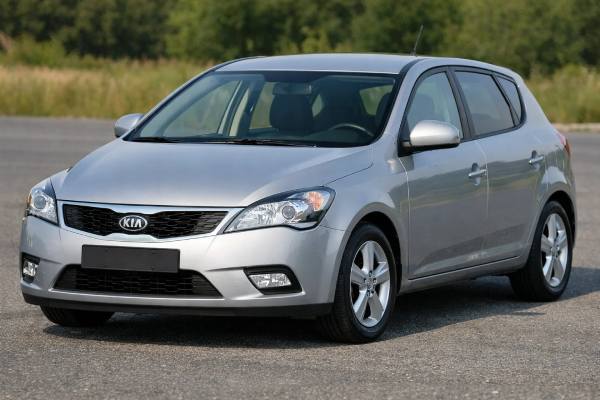
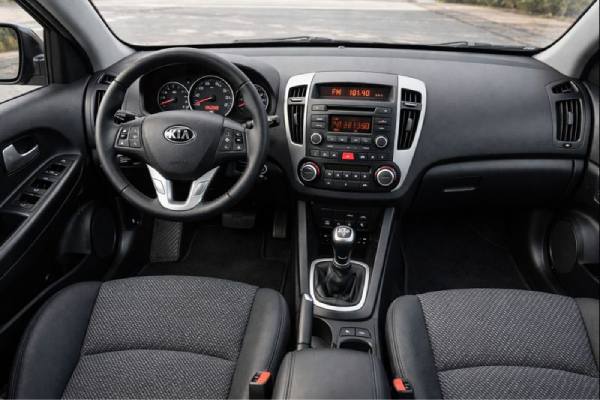
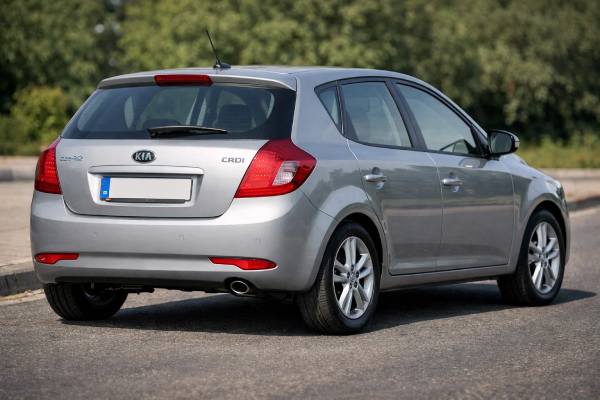
The 2009–2012 facelift Kia Cee’d with the 1.6 CRDi D4FB in 115 hp tune is the “sweet spot” diesel in this generation: noticeably stronger than the 90 hp version, yet still focused on economy and everyday durability. It’s the right match for drivers who want relaxed overtakes, lower motorway rpm (often with a 6-speed manual), and consistently low fuel use—without stepping into higher-output diesels that can feel more demanding on clutches and mounts.
Like any modern-ish small diesel, its long-term reliability depends less on the basic engine block and more on how it’s used and serviced. Regular long runs help keep EGR and (where fitted) DPF systems healthy, while short-trip life can accelerate soot-related issues. Buy one with clean maintenance history, keep fluids and filters conservative, and the facelift 115 hp CRDi can still be a highly rational daily driver.
Top Highlights
- Stronger mid-range torque than the 90 hp diesel makes motorway driving and overtakes easier.
- Typically excellent real-world economy on mixed and highway use with sensible tyres.
- Simple, confidence-building chassis that stays stable at speed and under braking.
- Short urban trips can trigger EGR/DPF soot-loading problems if the car rarely warms fully.
- Change engine oil and filter every 15,000 km (10,000 mi) or 12 months for conservative longevity.
Section overview
- Kia Cee’d 1.6 CRDi 115 explained
- Kia Cee’d 115 hp spec sheet
- Kia Cee’d trims and safety kit
- Known issues and service actions
- Maintenance schedule and buying advice
- Performance feel and economy
- Comparing the best alternatives
Kia Cee’d 1.6 CRDi 115 explained
The facelift Cee’d (ED) is a straightforward European-focused compact: practical interior, predictable controls, and a chassis tuned for stability rather than drama. In 115 hp 1.6 CRDi form, it becomes a more complete all-rounder than the entry diesels. You still get the efficiency-first personality that makes small diesels appealing, but with enough torque to avoid constant downshifts on hills or when overtaking.
What changes most versus the 90 hp diesel is real-world flexibility. The 115 hp tune typically delivers a broader, stronger mid-range, so it feels calmer when merging, climbing grades, or carrying passengers. That matters because it reduces the temptation to lug the engine at very low rpm in high gears—an important habit for emissions-system health. The best way to drive this engine is “torque-smart”: keep revs comfortably above idle, use the mid-range, and don’t treat it like a petrol that wants high rpm.
From an engineering standpoint, the D4FB’s foundation is solid for its era: common-rail direct injection, turbocharging, and a timing chain. The chain is a plus for ownership planning (no routine belt interval), but it is not a free pass—oil quality and change frequency still determine long-term wear. The more meaningful ownership variable is emissions equipment. Most markets use EGR, and many cars also use a DPF. These systems can be reliable when the car is warmed fully and driven regularly on longer trips, but they can become troublesome if the car’s life is mostly cold starts, school runs, and short urban journeys.
Advantages to highlight for buyers today are simple: parts availability is generally good, independent garages understand the platform, and the car’s ride/handling balance remains comfortable and confidence-building. The trade-off is that age now plays a larger role than design. A well-documented, regularly used example can feel remarkably “together.” A neglected one can turn into a cycle of soot-related warnings, driveline vibration, and suspension knocks. The difference is not luck—it’s history and maintenance.
Kia Cee’d 115 hp spec sheet
The tables below focus on the facelift 2009–2012 Kia Cee’d with the D4FB 1.6 CRDi in ~115 hp output. Exact figures vary by market emissions level, body style (hatch vs SW), and transmission code, so treat these as typical “owner reference” values and verify by VIN.
Powertrain and efficiency
| Item | Specification (typical) |
|---|---|
| Code | D4FB (1.6 CRDi) |
| Engine layout and cylinders | Inline-4, transverse; DOHC; 4 valves/cyl (16V) |
| Bore × stroke | 77.2 × 84.5 mm (3.04 × 3.33 in) |
| Displacement | 1.6 L (1,582 cc) |
| Induction | Turbocharged, intercooled (often VGT by market) |
| Fuel system | Common-rail direct injection |
| Compression ratio | ~17:1 (varies by emissions version) |
| Max power | 115 hp (85 kW) @ ~4,000 rpm |
| Max torque | ~255 Nm (188 lb-ft) @ ~1,900–2,750 rpm |
| Timing drive | Chain |
| Rated efficiency (combined) | ~4.7–5.4 L/100 km (50–44 mpg US / 60–52 mpg UK) |
| Real-world highway @ 120 km/h | ~5.6–6.6 L/100 km (42–36 mpg US / 50–43 mpg UK) |
Transmission and driveline
| Item | Specification (typical) |
|---|---|
| Transmission | 6-speed manual common (market dependent); some markets offered other variants |
| Drive type | FWD |
| Differential | Open |
Chassis and dimensions
| Item | Specification (typical hatchback reference) |
|---|---|
| Suspension (front/rear) | MacPherson strut / multi-link (common on this generation) |
| Steering | Power-assisted rack and pinion (system varies by year/market) |
| Brakes | Front ventilated discs / rear discs (trim dependent) |
| Wheels and tyres (popular) | 205/55 R16; 225/45 R17 on higher trims |
| Ground clearance | ~150 mm (5.9 in), market dependent |
| Length / width / height | ~4,235 / 1,790 / 1,480 mm (166.7 / 70.5 / 58.3 in) |
| Wheelbase | ~2,650 mm (104.3 in) |
| Turning circle (kerb-to-kerb) | ~10.4–10.6 m (34–35 ft) |
| Kerb weight | ~1,330–1,480 kg (2,932–3,263 lb) depending on body and equipment |
| GVWR | commonly ~1,850–1,950 kg (4,079–4,299 lb), verify by VIN plate |
| Fuel tank | ~53 L (14.0 US gal / 11.7 UK gal) |
| Cargo volume | Hatch typically ~340 L seats up; SW typically higher (method varies) |
Performance and capability
| Item | Specification (typical) |
|---|---|
| 0–100 km/h (0–62 mph) | ~11.5–12.5 s (body/gearbox dependent) |
| Top speed | ~185–190 km/h (115–118 mph) |
| Braking distance | Depends heavily on tyres and brake condition; test-drive for straight, stable stops |
| Towing capacity | Often ~1,300–1,500 kg braked (verify by VIN and market) |
| Payload | Typically ~450–550 kg (verify by VIN plate) |
Fluids and service capacities
| Item | Specification (typical guidance) |
|---|---|
| Engine oil | DPF-compatible oil often ACEA C3; viscosity commonly 5W-30; capacity typically ~5.3 L (5.6 US qt) with filter |
| Coolant | Ethylene glycol-based long-life coolant; common 50/50 mix; capacity varies by radiator spec |
| Manual gearbox | Gear oil spec and quantity vary by code; verify before servicing |
| A/C refrigerant | Type and charge vary by market; check under-hood label |
| Key torque specs | Wheel lug nuts commonly 88–107 Nm (65–79 lb-ft) |
Safety and driver assistance
| Item | What to expect on this generation |
|---|---|
| Crash ratings | Euro NCAP rating exists for the model generation; interpret by protocol year |
| Core systems | ABS common; stability control often fitted (market/trim dependent) |
| ADAS | Modern AEB/ACC/lane-centering generally not available |
Kia Cee’d trims and safety kit
Because trim names vary widely across countries, the most useful “trim guide” is really an equipment and condition checklist. For the 115 hp diesel, many markets positioned it as a mid-to-upper engine choice, so you often see it paired with better gearboxes and comfort options—but not always. Focus on the elements that change ownership costs and safety outcomes.
Trims and options that matter
- Wheel and tyre packages: 16-inch setups tend to deliver the best ride/tyre-cost balance. 17-inch packages can sharpen response but increase road noise and can accelerate suspension wear on rough roads. Check for mismatched tyre brands or uneven wear—both hint at alignment or bushing issues.
- Transmission and gearing: Many 115 hp cars came with a 6-speed manual, which can lower motorway rpm and make the car feel quieter and more economical at speed. Confirm by counting gears on the road test rather than trusting a listing.
- Climate control: Automatic climate control is a comfort win, but on older cars the value is in function—verify that temperature changes are quick, the fan works on all speeds, and airflow direction actuators don’t click or stick.
- Cruise control and parking aids: Cruise control is common on higher trims and suits this engine well. Rear sensors (and sometimes a basic camera on later cars) can reduce bumper damage—worth checking because cosmetic repairs can hide poor work.
Safety equipment and structure
This generation’s passive safety is generally strong for its era, especially with side and curtain airbags often present. Your priority today is confirming that the system is intact and not hiding crash history:
- Airbag system health: The airbag light should illuminate at ignition and then turn off. A light that stays on can mean a seat connector issue, a sensor fault, or a prior repair done poorly.
- ISOFIX: Typically fitted on rear outboard seats. Confirm the anchor points are accessible and that seat belts retract cleanly.
- Brakes and stability systems: ABS is usually standard. Stability control (ESC/ESP) is often fitted but can be trim- and market-dependent—look for the button and confirm no warning lamps remain on after driving.
Driver assistance (what not to expect)
Do not buy this car expecting modern active-safety tech. Most examples predate autonomous emergency braking, adaptive cruise, lane keep assist, and radar-based blind-spot monitoring. That’s not necessarily a downside on an older used car: fewer sensors mean fewer calibration headaches after a bumper repair. Instead, “active safety” here is tyres, brakes, alignment, and visibility. Clear headlights, quality tyres, and fresh brake fluid often make a bigger real-world safety difference than any single option badge.
Known issues and service actions
A good facelift Cee’d 1.6 CRDi 115 can be dependable, but diesel ownership is rarely “set and forget.” The engine itself is usually robust; the weak points are airflow, emissions control, and wear items that reveal how the car was used. Below is a practical map by prevalence and cost tier.
Common (low to medium cost)
- EGR and intake contamination
Symptoms: hesitant throttle response, rough idle, reduced power, occasional limp mode.
Likely cause: soot buildup from short trips and low exhaust temperatures.
Recommended fix: correct diagnostics first; cleaning can help, but sticky valves may need replacement. Prevention is regular long runs and keeping the engine reaching full temperature. - Boost leaks and hose ageing
Symptoms: flat performance, hissing/whistling, oily film around intercooler hoses.
Likely cause: split hoses, tired clamps, intercooler seepage.
Recommended fix: pressure test the charge-air system; replace compromised hoses and clamps. - Glow plug or control faults
Symptoms: poor cold starts, smoke on start, warning lights.
Likely cause: ageing glow plugs or a control relay/module fault.
Recommended fix: replace failed components using correct procedure to avoid damaging threads.
Occasional (medium to high cost)
- DPF soot-loading (where fitted)
Symptoms: rising fuel use, frequent regeneration behavior, DPF warning, limp mode.
Likely cause: short trips, thermostat stuck open (engine runs cool), injector issues increasing soot.
Recommended fix: scan live data (temps, differential pressure); fix root causes before forced regeneration or parts replacement. - Clutch and dual-mass flywheel wear
Symptoms: vibration at idle, rattling, slipping under load, harsh engagement.
Likely cause: city use, repeated low-rpm lugging, age.
Recommended fix: replace as a system (clutch kit + DMF if needed) and inspect mounts. - Injector sealing (combustion blow-by)
Symptoms: chuffing noise, diesel smell, tar-like deposits around injectors.
Likely cause: copper washer leakage.
Recommended fix: reseal early; delayed repair can make injectors difficult to remove.
Rare but important (high cost if ignored)
- Turbo control issues (vacuum/actuator/vanes)
Symptoms: intermittent limp mode, inconsistent boost under load.
Recommended fix: diagnose vacuum lines, solenoids, and actuator movement before condemning the turbocharger. - Timing chain wear
Symptoms: start-up rattle, correlation faults when scanned, noisy running.
Recommended fix: treat as a measured condition; frequent oil changes reduce risk.
Recalls, TSBs, and verification
Recall campaigns vary by country and VIN range. The practical rule is simple: verify with an official VIN lookup and request proof of completion from dealer records. If a seller cannot show evidence, assume the work may not have been done and price the risk accordingly. This is especially relevant for safety-related campaigns and any updates that address wiring, airbags, or fuel system components.
Maintenance schedule and buying advice
If you want this diesel to stay economical and avoid warning lights, conservative servicing matters more than chasing the longest factory interval. The goal is to protect the turbo, keep injectors happy, and support emissions hardware by maintaining correct temperatures and clean airflow.
Practical maintenance schedule
- Engine oil and filter: 15,000 km (10,000 mi) or 12 months. If the car does many short trips, reduce to 10,000–12,000 km. Use the correct low-ash oil type for DPF-equipped cars (often ACEA C3).
- Air filter: inspect each service; replace typically 30,000 km, sooner in dusty conditions.
- Cabin filter: 15,000–30,000 km depending on air quality and HVAC use.
- Fuel filter: 30,000–40,000 km is a sensible interval; poor fuel and water contamination are bigger threats than mileage.
- Brake fluid: every 2 years regardless of mileage.
- Coolant: follow the coolant type’s long interval, then repeat on a consistent cycle (commonly 3–5 years).
- Manual gearbox oil: often listed as long-life, but a preventive change around 120,000–160,000 km can support shift feel and bearing life.
- Accessory belt and pulleys: inspect every service; replace on condition (cracking/noise).
- Timing chain: no routine interval; monitor for noise and scan-data symptoms at higher mileage.
Buyer’s checklist (what to inspect)
- Warm-up and temperature behavior: On a test drive the engine should reach and hold normal operating temperature. A cool-running diesel increases soot and can cause DPF problems.
- Service records: Look for consistent oil changes and fuel filter replacement. Gaps often correlate with turbo and injector complaints later.
- Idle quality and smoke: Some diesel noise is normal, but uneven idle, heavy smoke, or diesel smell needs investigation.
- Clutch/DMF feel: Listen for rattles at idle and feel for vibration through the pedal. Test higher-gear acceleration for slip.
- Boost delivery: It won’t be fast like a hot hatch, but it should pull smoothly without sudden flat spots.
- Underbody condition: Check for corrosion on subframes, brake lines, and suspension mounting points—especially in salty climates.
- Electrics and warning lights: Confirm no ABS/ESC/airbag lamps remain on after driving.
Long-term ownership outlook
Used correctly and maintained conservatively, the 115 hp D4FB can deliver many years of economical commuting. The most common “diesel regret” scenario is buying one for short city trips; in that use case, soot-related maintenance can eat the fuel savings. If your weekly routine includes longer drives, this engine is much easier to live with.
Performance feel and economy
The 115 hp diesel is the version that makes the Cee’d feel appropriately “grown up” on the motorway. It won’t feel sporty, but it does feel capable: steady at speed, calm under braking, and flexible enough to reduce constant shifting.
Ride, handling, and NVH
- Ride quality: On 16-inch tyres, the Cee’d usually has a forgiving ride for a compact. Worn dampers and tired bushes are common at this age, so a rattly test drive often reflects maintenance needs rather than design.
- Handling balance: Safe and predictable. The car tracks well on long curves and remains composed over mid-corner bumps, especially on well-matched tyres.
- Steering feel: Typically light-to-moderate. If it feels vague, check front tyre condition and alignment first, then inspect bushings and ball joints.
- Cabin noise: Expect diesel clatter when cold, then a quieter cruise once warm. Tyre brand and tread pattern can change cabin noise dramatically.
Powertrain character
This engine likes a driving style that protects the clutch and emissions hardware:
- Use the mid-range torque rather than revving it hard.
- Avoid lugging below the comfortable band in high gears; it can increase soot and stress the driveline.
- If fitted with a 6-speed manual, the top gear is a cruising gear—downshift for brisk overtakes rather than forcing it.
Passing performance feels meaningfully better than the 90 hp diesel, especially when the turbo is healthy and the charge-air system is leak-free. In practical terms, it’s the difference between “plan the gap” and “take the gap” when joining faster traffic.
Real-world fuel economy
Typical owner-reported patterns (highly dependent on tyres, temperature, traffic, and driving style):
- City with short trips: ~6.0–7.5 L/100 km (39–31 mpg US / 47–38 mpg UK).
- Mixed driving: ~5.0–6.2 L/100 km (47–38 mpg US / 56–46 mpg UK).
- Motorway at 120 km/h: ~5.6–6.6 L/100 km (42–36 mpg US / 50–43 mpg UK).
Cold weather usually increases consumption and can increase regeneration frequency where a DPF is fitted. If economy suddenly worsens, start with basics: tyre pressures, dragging brakes, thermostat performance (running too cool), and a scan for airflow or temperature sensor faults.
Comparing the best alternatives
In the 2009–2012 used market, the Cee’d 1.6 CRDi 115 competes with some excellent compact diesels—and a few that can become expensive if neglected. The Kia’s advantage is rarely a single headline number; it’s that the whole package is usually easy to understand, easy to service, and cost-effective when bought in good condition.
How it stacks up to key rivals
- Volkswagen Golf (Mk6) 1.6 TDI / 2.0 TDI (lower outputs): Often feels more premium inside and may offer more gearbox variety, but complexity and repair pricing can be higher depending on engine family and emissions equipment. Choose the Golf if cabin feel matters most and you’re prepared to pay for specialist fixes when needed.
- Ford Focus (late Mk2 / early Mk3) 1.6 TDCi: Frequently the handling benchmark. However, diesel-specific issues (EGR/DPF/injectors) still hinge on service history. A great buy when maintained, not automatically safer than the Kia on costs.
- Toyota Auris D-4D: Commonly the conservative choice for reliability perception and resale value. It can cost more to buy in similar condition, so value depends on pricing and history.
- Renault Mégane 1.5 dCi: Very efficient and often cheaper to purchase, but history is crucial and some examples suffer when oil changes were stretched.
- Hyundai i30 (FD) 1.6 CRDi: The closest cousin. The real contest is condition, rust exposure, and documentation rather than engineering differences.
Where the Cee’d 115 hp diesel wins
- Motorway usability without big running costs: enough torque to feel relaxed, still frugal when driven smoothly.
- Owner-friendly repairs: generally approachable for independent garages, with good parts availability.
- Balanced chassis: comfortable ride with stable handling—good for daily driving rather than chasing sportiness.
The best “rival” is often a petrol
If your driving is mostly short urban trips, a petrol Cee’d (or petrol rival) can be the smarter long-term choice even if it uses more fuel. The diesel’s advantage only stays an advantage when your routine includes regular warm, longer drives. If it does, the facelift Cee’d 1.6 CRDi 115 remains one of the most sensible compact diesel picks of its era.
References
- Kia Recalls | Kia Europe 2026 (Recall Database)
- Check if a vehicle, part or accessory has been recalled – GOV.UK 2026 (Recall Database)
- ED English 1.qxd 2007 (Owner’s Manual)
- Kia cee’d wins 5-Star Euro NCAP safety rating – Kia Slovakia s.r.o. 2007 (Safety Rating)
Disclaimer
This article is for informational purposes only and is not a substitute for professional inspection, diagnosis, or repair. Specifications, torque values, fluid capacities, and service intervals can vary by VIN, market, model year, and equipment. Always verify details using the correct official documentation for your specific vehicle and consult a qualified technician when needed.
If this guide helped, please consider sharing it on Facebook, X/Twitter, or your preferred community to support our work.