
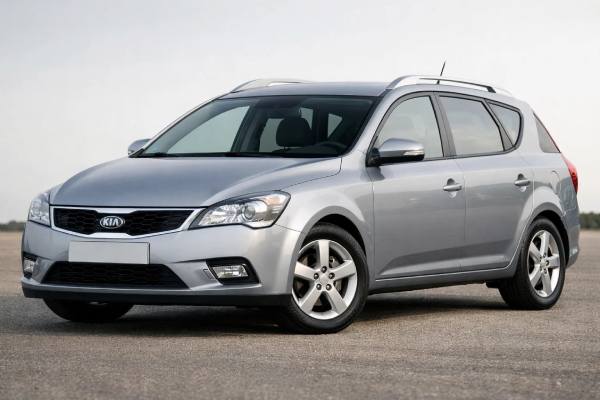
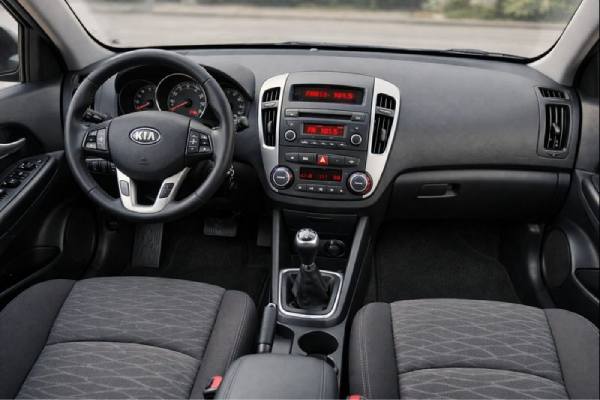
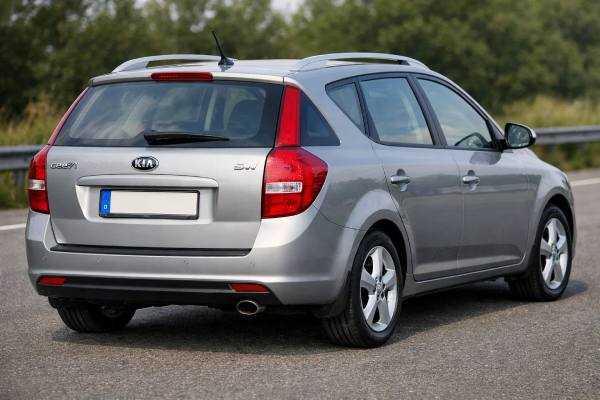
The 2009–2012 Kia Cee’d SW (ED) facelift with the 1.4-litre G4FA petrol engine is the “quietly sensible” side of the C-segment wagon market. It was engineered around straightforward hardware: a naturally aspirated, chain-driven DOHC four-cylinder, simple front-wheel drive, and a practical estate body with a low loading lip. For owners, that usually translates into predictable running costs, easy drivability, and enough cargo space to replace a small van for everyday life.
The trade-off is performance. With 90 hp, this Cee’d SW is happiest when driven smoothly and kept in its torque band, especially when fully loaded or on motorways. If you buy one with clear service history and you keep up with fluids, brakes, and suspension wear items, it can be a durable, practical long-term car—particularly for mixed city and suburban use.
What to Know
- Practical wagon packaging with a low, usable boot and straightforward cabin controls.
- Simple petrol drivetrain (no turbo) that suits short trips better than small diesels.
- Comfortable, stable chassis on rough roads, especially on 15–16 inch wheels.
- Watch for age-related suspension and brake wear, plus coil and sensor niggles.
- Plan engine oil and filter service every 15,000 km or 12 months, whichever comes first.
Navigate this guide
- Kia Cee’d SW ED facelift ownership fit
- Kia Cee’d SW 1.4 G4FA specs and dimensions
- Kia Cee’d SW ED trims, safety and ADAS
- Reliability hotspots and common faults
- Maintenance plan and buyer checklist
- Real-world driving and efficiency
- How this Cee’d SW compares to rivals
Kia Cee’d SW ED facelift ownership fit
If you want a compact wagon that behaves like an honest appliance, the facelift ED Cee’d SW with the 1.4 G4FA makes a strong case. Its main advantage is balance: it’s sized like a normal hatchback in traffic but gives you estate practicality—shopping, prams, flat-pack furniture, weekend luggage—without stepping up to a larger, heavier mid-size wagon.
The G4FA 1.4 is a naturally aspirated petrol engine with a timing chain and port injection. In day-to-day use, that typically means fewer expensive “modern petrol” complications (no turbocharger, no high-pressure direct injection pump) and smoother warm-up behavior on short trips compared with many small diesels. The engine’s character is also predictable: it likes revs, it responds cleanly to throttle, and it’s happiest when you avoid lugging it in high gear at low rpm. Drivers coming from turbo engines often mistake it as “weak,” but it’s more accurate to say it needs the right gear choice.
The facelift (roughly 2009 onward) brought detail improvements—updated trim, small equipment reshuffles, and in many markets a gradual move toward stability control being more commonly fitted. The SW body is the real story: you get a long roofline, a wide tailgate opening, and a boot that’s easy to use. If you do family duty, you’ll appreciate how the rear seats fold and how the load floor and tie-down points help keep things from sliding around.
Who is it best for?
- Commuters and families who want a simple petrol wagon and don’t need fast overtakes.
- City and suburban drivers who prefer petrol for short trips and winter warm-up.
- Budget-conscious owners who value predictable maintenance over performance.
Who should think twice?
- Drivers who do a lot of high-speed motorway overtakes with a full load. The car can do it, but you’ll be downshifting often.
- Anyone expecting modern driver-assistance tech. This generation is mostly “ABS/ESC/airbags,” not AEB or adaptive cruise.
Treat it as a practical tool, keep it serviced, and it rewards you with low drama ownership.
Kia Cee’d SW 1.4 G4FA specs and dimensions
Below are the core specifications that matter for ownership, maintenance planning, and real-world expectations. Values can vary slightly by market, emissions certification, wheel and tyre package, and gearbox choice, so use these as a baseline and verify against your VIN-specific documentation.
Powertrain and efficiency
| Item | Specification |
|---|---|
| Code | G4FA |
| Engine layout and cylinders | Inline-4, DOHC, 4 valves/cyl (16V) |
| Displacement | 1.4 L (1,396 cc) |
| Induction | Naturally aspirated |
| Fuel system | Multi-point/port injection (MPI) |
| Bore × stroke | 77.0 × 75.0 mm (3.03 × 2.95 in) |
| Compression ratio | ~10.5:1 (market dependent) |
| Max power | 90 hp (66 kW) @ ~6,300 rpm (varies by tune) |
| Max torque | ~137 Nm (101 lb-ft) @ ~4,200–5,000 rpm (varies by tune) |
| Timing drive | Chain |
| Rated efficiency (typical combined) | ~6.0–6.2 L/100 km (38–39 mpg US / 45–47 mpg UK) |
| Real-world highway @ 120 km/h | ~6.8–7.6 L/100 km (31–35 mpg US / 37–42 mpg UK) |
Transmission and driveline
| Item | Specification |
|---|---|
| Transmission | Typically 5-speed manual (market dependent) |
| Drive type | FWD |
| Differential | Open |
Chassis and dimensions
| Item | Specification |
|---|---|
| Suspension (front / rear) | MacPherson strut / multi-link (market dependent) |
| Steering | Electric power steering (most markets), rack and pinion |
| Brakes | Front ventilated discs / rear discs (some trims) or rear drums (some markets) |
| Wheels and tyres (common) | 185/65 R15 or 205/55 R16 (varies by trim) |
| Length / width / height | ~4,470 / 1,790 / 1,525 mm (176.0 / 70.5 / 60.0 in) |
| Wheelbase | ~2,650 mm (104.3 in) |
| Turning circle (kerb-to-kerb) | ~10.6–10.9 m (34.8–35.8 ft) |
| Kerb weight | ~1,270–1,360 kg (2,800–3,000 lb), equipment dependent |
| Fuel tank | ~53 L (14.0 US gal / 11.7 UK gal) |
| Cargo volume | ~534 L (18.9 ft³) seats up / ~1,664 L (58.8 ft³) seats down (method varies) |
Performance and capability
| Item | Typical figure |
|---|---|
| 0–100 km/h (0–62 mph) | ~13.0–13.5 s (gearbox and wheels matter) |
| Top speed | ~175–180 km/h (109–112 mph) |
| Braking distance 100–0 km/h | Commonly ~37–41 m (surface and tyres dominate) |
| Towing capacity | Market dependent; commonly modest (verify on VIN plate/manual) |
| Payload | Typically ~450–550 kg (trim dependent) |
Fluids and service capacities (planning values)
| Item | Specification (typical) |
|---|---|
| Engine oil | Commonly 5W-20 or 5W-30 meeting the specified API/ACEA standard; capacity ~3.3 L (3.5 US qt) |
| Coolant | Ethylene glycol long-life coolant; mix ratio typically 50/50 (capacity varies by radiator and market) |
| Manual transmission | MTF meeting manufacturer spec (often GL-4 class oil); capacity varies by gearbox |
| Brake fluid | DOT 3/4 as specified by market |
| A/C refrigerant | R134a on most examples; charge varies by system label |
Safety and driver assistance (generation context)
| Item | Summary |
|---|---|
| Crash ratings | Euro NCAP five-star era result for the model line (test version and year matter) |
| Core safety systems | ABS, brake assist, multiple airbags; ESC availability varies by market/trim/year |
| ADAS | Generally limited on this generation; no modern AEB/ACC in most markets |
If you’re shopping, the key takeaway from the numbers is this: the car is sized and geared like a practical family wagon, not a hot hatch. Choose tyres and maintenance quality carefully, because they influence braking, noise, and comfort more than most buyers expect.
Kia Cee’d SW ED trims, safety and ADAS
Trim structures vary widely across Europe and nearby markets, so it’s more useful to think in “equipment bands” than exact trim names. Most Cee’d SW 1.4 cars were sold as value-focused wagons, and the facelift years often mixed interior updates with small packaging changes.
Trims and options that change ownership
Look for these practical differentiators:
- Wheel size (15 vs 16 vs 17 inch): Smaller wheels usually ride better and cost less for tyres. On a 90 hp car, lighter wheels also help it feel less strained.
- Rear brakes (disc vs drum): Some markets paired rear discs with higher trims. Discs can feel more consistent under repeated braking but also add caliper slider maintenance in winter climates.
- Climate control: Manual A/C is common; automatic climate appears on higher grades. Either works, but automatic systems can be more expensive when blend door actuators or sensors age.
- Infotainment and steering wheel controls: Nice to have, but aging head units and steering buttons can become nuisance faults. Check everything.
- Heated seats and mirrors: Valuable in cold climates, usually reliable, but check for broken seat heater elements on high-mileage cars.
Quick identifiers when viewing a car:
- VIN plate and option sticker can help decode drivetrain and build details.
- Rear brake type is easy to confirm visually through the wheel.
- ESC button / instrument cluster icon: Presence and startup self-check behavior can hint whether stability control is fitted and functioning.
Safety ratings: how to read them for this car
This generation of Cee’d earned strong crash-test recognition for its time, and the structure is generally regarded as solid for the segment. Still, be careful when comparing: test protocols evolved significantly after the late 2000s. A “five-star” result from that period does not equal a five-star result under modern testing, because scoring categories and requirements changed.
For ownership, focus on what is consistent across years:
- Cabin structure and restraint performance are the core strengths.
- Child-seat usability is generally good, but you should confirm ISOFIX/Top Tether presence in your specific car and check that labels and covers are intact.
Safety systems and ADAS availability
Typical equipment includes:
- Airbags: Front, side, and curtain airbags are commonly fitted; some markets add additional bags depending on trim.
- ABS and stability control: ABS is standard; ESC may be optional or standard depending on year/market. If ESC matters to you, verify it by equipment list, dashboard icons at ignition on, and a diagnostic scan.
- No modern ADAS suite: Most examples do not have autonomous emergency braking, adaptive cruise, or lane-centering. That’s normal for this era, but it means tyre choice, brake maintenance, and driver attention matter even more.
Service implication: if the car has ESC, steering angle sensors and wheel speed sensors must be handled carefully during suspension or alignment work. A good alignment and correct tyre sizing prevent “phantom” stability-control interventions and warning lights.
Reliability hotspots and common faults
The facelift ED Cee’d SW 1.4 has a generally solid mechanical base, but age and usage profile now matter more than brand reputation. Below is a practical way to think about issues by prevalence and cost.
Common (usually low to medium cost)
- Ignition coils and plugs (misfire under load):
Symptoms: rough idle, flashing MIL, hesitation climbing hills.
Likely cause: aging coil packs, worn plugs, moisture in boots.
Remedy: replace plugs with the correct heat range, then coils as needed; check valve cover gasket seepage that can contaminate plug wells. - Crankshaft/cam sensors (intermittent no-start or stalling):
Symptoms: sudden stall, restart after cooling, random fault codes.
Cause: sensor aging or wiring fatigue near heat.
Remedy: sensor replacement and harness inspection; avoid cheap no-name parts. - Front suspension wear (clunks over bumps):
Symptoms: knocking on rough roads, vague steering, uneven tyre wear.
Cause: drop links, strut top mounts, bushings.
Remedy: replace in pairs; align afterward. This is one of the biggest “makes it feel new again” jobs. - Brake hardware sticking (especially where roads are salted):
Symptoms: one wheel hotter, uneven pad wear, squeal, pulling.
Cause: seized caliper slider pins, corrosion, old brake fluid.
Remedy: clean and lubricate sliders, replace boots/pins, refresh fluid.
Occasional (medium cost)
- Cooling system aging (thermostat, radiator, hoses):
Symptoms: slow warm-up, overheating in traffic, coolant smell.
Cause: thermostat sticking, brittle plastics, clamp fatigue.
Remedy: pressure test, replace weak components preventively, and use correct coolant mix. - Manual gearbox and clutch wear:
Symptoms: heavy pedal, clutch slip in higher gears, notchiness.
Cause: normal wear, sometimes worsened by city use and towing.
Remedy: clutch kit replacement; check for oil leaks that can contaminate the clutch. - Electrical convenience issues (tailgate wiring, central locking):
Symptoms: intermittent rear wiper, plate lights, hatch lock issues.
Cause: wiring fatigue in tailgate hinge area.
Remedy: inspect and repair harness; confirm water sealing at grommets.
Rare but expensive
- Timing chain system noise or correlation faults:
The G4FA uses a chain, which is a plus, but chains are not “lifetime no matter what.”
Symptoms: rattling at cold start, persistent timing correlation codes, rough running.
Cause: tensioner wear, guide wear, stretched chain (usually after poor oil service).
Remedy: diagnose carefully; if confirmed, replace chain, guides, and tensioner as a set.
Recalls, service actions, and how to verify
At this age, the important thing is not memorizing every recall headline—it’s confirming whether the specific car is up to date:
- Run an official VIN/registration recall check for your country.
- Ask the seller for dealer invoices showing recall completion.
- Scan the car for stored fault codes; unresolved campaigns sometimes leave traces in module history.
A well-kept example will usually show boring consistency: regular oil changes, tidy cooling system behavior, and a suspension that feels tight. A neglected one will feel “old” quickly—noisy front end, uneven tyres, intermittent warning lights—and costs can stack.
Maintenance plan and buyer checklist
A simple wagon stays simple only if you keep the basics under control. Use the schedule below as a practical baseline, then adjust to your climate and driving pattern.
Core maintenance schedule (distance or time, whichever comes first)
- Engine oil and filter: every 15,000 km or 12 months. If you do short trips, consider 10,000–12,000 km intervals to protect the timing chain system and reduce sludge risk.
- Air filter: inspect every 15,000 km; replace typically every 30,000 km (more often in dusty areas).
- Cabin filter: every 15,000 km or annually for strong HVAC airflow.
- Spark plugs: commonly 60,000–90,000 km depending on plug type and market; don’t stretch intervals if you feel misfires.
- Brake fluid: every 2 years regardless of mileage.
- Coolant: follow the specified long-life interval for your market; if history is unknown, refresh it and reset the clock.
- Manual transmission oil: not always listed as routine, but a change around 90,000–120,000 km can improve shift feel and longevity.
- Drive/aux belt and tensioner: inspect at every service; replace on cracking/noise or by age if original.
- Tyre rotation and alignment: rotate every 10,000–12,000 km; align any time you replace suspension parts or see uneven wear.
- 12 V battery: test yearly after year 4–5; many last 5–7 years, but cold climates shorten life.
Fluids and specs that matter
- Engine oil grade: use the viscosity and standard specified for your exact engine and market label (commonly 5W-20 or 5W-30 meeting the required API/ACEA category). The right standard matters more than chasing a “sporty” thicker oil.
- Coolant: use correct long-life coolant type and proper mix ratio; mixing incompatible coolants is a common DIY mistake.
- Brake fluid: DOT 3/4 as specified; a fresh flush reduces internal corrosion and improves pedal consistency.
Key torque values (decision-grade)
Because torque specs vary by fastener and model year, treat these as “why it matters” rather than a repair manual:
- Wheel bolts/nuts: must be torqued correctly to prevent warped brake discs and vibration.
- Spark plugs: correct torque prevents thread damage and misfires.
- Brake caliper carrier bolts: correct torque prevents loosening and noise.
For actual numbers, rely on VIN-specific service documentation for your market.
Buyer’s guide: what to inspect before purchase
Walk through this checklist in order:
- Cold start behavior: listen for chain rattle, check idle stability, and confirm no warning lights stay on.
- Service history quality: look for regular oil services and evidence of brake fluid and coolant attention, not just “stamps.”
- Cooling system: verify consistent warm-up, steady temperature, no heater fluctuations, no sweet smell.
- Suspension and steering: drive over broken pavement at low speed; clunks and looseness usually point to front-end wear.
- Brakes: check for pulling, pulsation, and uneven pad wear; inspect rear calipers (if equipped) for sticking.
- Rust and water ingress: check tailgate edges, underbody seams, and the spare wheel well for moisture.
- Electricals: test every switch, window, lock, rear wiper, and all exterior lights—tailgate wiring problems are easier to catch early than diagnose later.
Long-term outlook: if you buy a straight, well-maintained car and you refresh suspension and brakes as needed, the platform can age gracefully. Most “bad ownership stories” come from skipped fluids and ignored minor faults that snowballed.
Real-world driving and efficiency
The 1.4 G4FA Cee’d SW is a “momentum” car. It’s not slow in city traffic, but it asks for sensible gear choice once speeds rise or loads increase.
Ride, handling, and NVH
On typical 15–16 inch tyres, the Cee’d SW rides with a mature, slightly firm European tuning. It tracks straight on the motorway, doesn’t get upset by crosswinds as much as taller MPVs, and generally feels secure in fast bends. The steering is light and easy for parking; feedback is adequate rather than engaging. If the front end feels floaty or noisy, it’s often worn drop links, top mounts, or mismatched tyres—not a fundamental flaw.
Noise levels are acceptable for the class, but don’t expect modern acoustic glass isolation. Common NVH contributors:
- Budget tyres with coarse tread patterns (biggest culprit).
- Worn rear trailing/multi-link bushings (road roar).
- Old engine mounts (vibration at idle).
Powertrain character and “how to drive it”
The naturally aspirated engine builds power with revs. For smooth progress:
- In town, short-shift is fine, but avoid lugging below ~1,500–2,000 rpm in higher gears.
- For overtakes, downshift early and keep it in the mid-range where it responds cleanly.
- With five people and luggage, treat hills like you would in a small van: pick a gear and hold it rather than constantly hunting.
The benefit of this simple setup is predictability. Throttle response is consistent, and there’s no turbo heat management, turbo lag, or high-pressure fuel system behavior to complicate ownership.
Real-world fuel economy
Owners typically see:
- City: ~7.5–9.0 L/100 km (26–31 mpg US / 31–38 mpg UK), heavily dependent on trip length and winter conditions.
- Highway (100–120 km/h): ~6.5–7.6 L/100 km (31–36 mpg US / 37–43 mpg UK).
- Mixed use: often lands near the official combined figure if driving is steady and tyres are properly inflated.
Short trips are the big penalty. If your usage is mostly under 5–8 km per trip, you’ll spend more time in warm-up enrichment and see higher consumption.
Braking feel and confidence
A well-maintained system feels stable and linear. If the pedal feels soft or inconsistent, brake fluid age and caliper slider condition are common causes. Because many cars of this era now run on their third or fourth set of discs and pads, quality parts and correct bedding-in make a noticeable difference.
Bottom line: it’s a comfortable, trustworthy wagon for normal driving. If you want “effortless” performance, move up to a larger petrol engine or a turbo option—but if you value simplicity, this drivetrain delivers.
How this Cee’d SW compares to rivals
The Cee’d SW ED facelift sits in a very competitive field of compact wagons from the late 2000s and early 2010s. Here’s how it generally stacks up, focusing on ownership reality rather than brochure claims.
Versus Ford Focus Mk2/Mk2.5 wagon
- Driving: Focus usually wins on steering feel and chassis balance.
- Ownership: parts availability is excellent; some engines are more complex depending on spec.
- Cee’d advantage: simpler “appliance” vibe in 1.4 petrol form, often with straightforward maintenance and strong practicality.
Choose the Focus if driving enjoyment matters most; choose the Cee’d if you want a calm, predictable wagon.
Versus Opel/Vauxhall Astra H Caravan
- Practicality: very comparable; both are strong on cargo utility.
- Reliability pattern: Astra can be very dependable, but engine choices and age-related electrical issues vary widely.
- Cee’d advantage: the Gamma 1.4 MPI style simplicity (no turbo, no DI) can be appealing if you want fewer high-cost systems.
Versus Volkswagen Golf Variant Mk6 (and related Skoda Octavia)
- Cabin and refinement: VW-group often feels more refined at speed, depending on trim.
- Running costs: can be higher if equipped with more complex engines/gearboxes.
- Cee’d advantage: often cheaper to buy and insure, and the “basic petrol + manual” recipe is easier to keep happy long-term.
If you prioritize quiet motorway cruising and higher-end interior feel, Golf/Octavia may suit better. If you want value and simpler mechanicals, Cee’d is compelling.
Versus Hyundai i30 CW (FD)
This is the closest cousin.
- Similarity: shared engineering philosophy and many component commonalities.
- Choosing factor: condition and history matter more than badge.
- Cee’d advantage: depending on market, you may find better-equipped examples or better pricing.
Quick verdict for most buyers
Pick the Cee’d SW 1.4 if you want:
- A practical wagon with uncomplicated petrol mechanics,
- predictable ownership costs,
- and you’re comfortable planning overtakes and using the gearbox.
Pick a rival instead if you want:
- noticeably quicker motorway performance (larger petrol or turbo),
- more modern driver assistance,
- or a more premium cabin experience.
In today’s used market, the best deal is usually the car with the clearest maintenance history and the tightest chassis—regardless of badge.
References
- Engine Oil Grades and Capacities 2023 (Service Document)
- Kia Service Intervals 2023 (Service Document)
- Kia Recalls | Kia Europe 2026 (Recall Information)
- Check if a vehicle, part or accessory has been recalled – GOV.UK 2026 (Recall Database)
- euroncap_kia_ceed_2007_5stars.pdf 2007 (Safety Rating)
Disclaimer
This article is for informational purposes only and is not a substitute for professional diagnosis, inspection, or repair. Specifications, torque values, service intervals, and procedures can vary by VIN, market, engine calibration, and installed equipment. Always verify details using official owner and service documentation for your exact vehicle and consult qualified professionals when needed.
If you found this guide useful, consider sharing it on Facebook, X (Twitter), or your favorite forum to help others find reliable ownership information.