
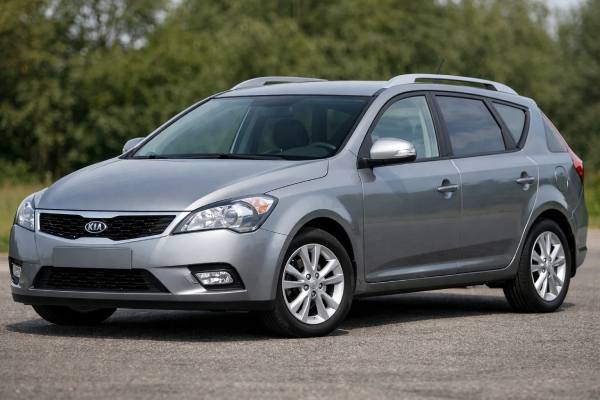
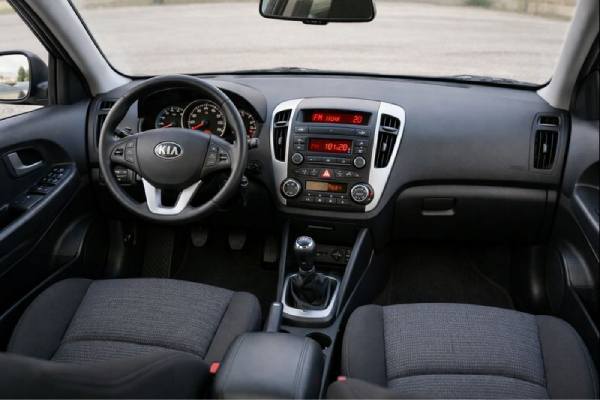
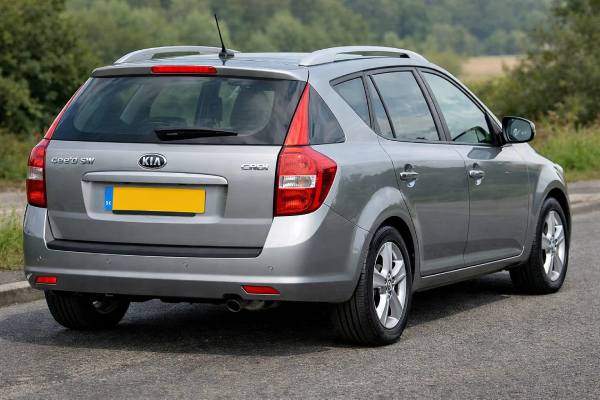
The facelifted 2009–2012 Kia Cee’d SW (ED) with the 1.6 CRDi D4FB in 128 hp tune is a practical long-roof that earns its keep on long distances. The key engineering story is the torque-heavy diesel calibration paired with a sensible chassis: it’s easy to drive smoothly, stable at motorway speeds, and roomy enough to handle family duty without feeling bulky. Where owners win is operating cost—strong highway economy, durable core components when serviced on time, and simple packaging for routine work. Where owners can lose is in “diesel reality”: soot management (EGR/intake), occasional turbo-control issues, and—on DPF-equipped cars—short-trip usage that never lets the system regenerate properly. If you buy one today, treat it like a commuter tool: verify history, check for the common diesel wear points, and you’ll usually get a wagon that ages better than its price suggests.
Quick Specs and Notes
- Strong mid-range torque makes it relaxed at 90–130 km/h, even when loaded.
- Big, square cargo area suits strollers, bikes, and airport runs without drama.
- Good long-distance fuel economy when the engine is kept in its efficient band.
- Short-trip use can clog EGR/intake and upset DPF regeneration (where fitted).
- Plan oil service every 12 months or 15,000 km (whichever comes first) if you want long turbo and injector life.
Navigate this guide
- Kia Cee’d SW ED 128 hp ownership
- Kia Cee’d SW ED D4FB technical specs
- Kia Cee’d SW ED equipment and safety
- Reliability issues and service actions
- Maintenance plan and buying advice
- Driving feel and real-world economy
- How it stacks up against rivals
Kia Cee’d SW ED 128 hp ownership
This facelift-era Cee’d SW sits in a sweet spot: compact enough to park easily, but shaped like a true estate, so it carries real cargo. The 128 hp version of the D4FB 1.6 CRDi is the pick for drivers who spend time on open roads. It doesn’t need high revs; instead, it rewards clean throttle inputs and steady cruising, where the turbo is in its efficient range. In practice, the “feel” is less hot hatch and more calm tool—quiet enough for long journeys, with strong rolling acceleration for overtakes.
Cabin and load practicality are the main ownership win. The rear opening is wide, the floor is usable, and the long roof makes bulky items easier than in a hatch. If you do family duty, the SW body also tends to be more forgiving with child seats and day-to-day clutter. The facelift brought detail improvements (trim, equipment mixes, and small refinements), but the fundamental strengths are packaging and predictable road manners.
The trade-offs are typical of small diesels from this period. The engine is robust when serviced correctly, yet it is sensitive to neglected oil changes and low-quality fuel. The same soot that helps diesel efficiency also loads the EGR and intake over time, and cars used mostly for short, cold trips can develop drivability issues that look “electrical” but are often airflow and soot-related. If the car has a diesel particulate filter (DPF), short-trip usage can also lead to frequent regeneration attempts or warning lights—something you want to identify before you buy, not after.
Think of this variant as a value-focused long-distance wagon. If your routine includes steady-speed driving, it can be an inexpensive way to cover big mileage. If your routine is mostly urban, you can still run it, but you must be more deliberate about maintenance and give the engine regular hot runs so it stays clean internally.
Kia Cee’d SW ED D4FB technical specs
Specs vary slightly by market, emissions version, and gearbox, but the tables below reflect the common European configuration for the facelift SW with the 128 hp tune.
Powertrain and efficiency (typical)
| Item | Specification |
|---|---|
| Code | D4FB (1.6 CRDi) |
| Engine layout | I-4, DOHC, 16-valve |
| Displacement | 1.6 L (≈1,582 cc) |
| Induction | Turbocharged (VGT common) |
| Fuel system | Common-rail diesel injection |
| Compression ratio | Typically in the mid-to-high teens:1 (market dependent) |
| Max power | 128 hp (≈94 kW) @ ~4,000 rpm (varies by calibration) |
| Max torque | Typically ~255–260 Nm @ ~1,900 rpm |
| Timing drive | Chain (inspect for noise; no routine interval) |
| Rated efficiency | Commonly ~4.5–5.3 L/100 km (53–44 mpg US / 63–53 mpg UK) depending on tyres/gearbox |
| Real-world highway @ 120 km/h | Often ~5.5–6.2 L/100 km (43–38 mpg US / 51–46 mpg UK) |
Transmission and driveline
| Item | Specification |
|---|---|
| Transmission | Commonly 6-speed manual (market dependent) |
| Drive type | FWD |
| Differential | Open |
Chassis and dimensions (SW/estate body, typical)
| Item | Specification |
|---|---|
| Suspension (front/rear) | MacPherson strut / multi-link |
| Steering | Electric assist (varies); tuned for light effort |
| Brakes | 4-wheel discs on most trims (sizes vary by trim) |
| Popular tyre sizes | 195/65 R15, 205/55 R16, 225/45 R17 |
| Ground clearance | ~150 mm (varies with load/tyres) |
| Length / Width / Height | ~4,505 / 1,790 / 1,525 mm (market dependent) |
| Wheelbase | ~2,650 mm |
| Turning circle (kerb-to-kerb) | ~10.5–11.0 m (varies by wheel/tyre) |
| Kerb weight | ~1,360–1,470 kg (equipment dependent) |
| Fuel tank | ~53 L |
| Cargo volume | ~534 L seats up / ~1,650+ L seats down (method varies by market) |
Performance and capability (typical)
| Item | Specification |
|---|---|
| Acceleration | 0–100 km/h in ~10.5–11.5 s |
| Top speed | ~190–200 km/h |
| Braking distance | Tyres and condition dominate; expect “family wagon normal,” not sports-car short |
| Towing | Often ~1,300–1,500 kg braked / ~600 kg unbraked (check VIN plate) |
| Payload | Often ~450–550 kg (equipment dependent) |
Fluids, service capacities, and key torque specs (common guidance)
| Item | Specification |
|---|---|
| Engine oil | Low-SAPS ACEA C3 commonly used; 5W-30 is typical |
| Engine oil capacity | Typically ~5.3 L (verify by engine/market) |
| Coolant | Ethylene glycol long-life; commonly 50/50 mix |
| Manual gearbox oil | Usually a GL-4 spec; capacity varies by gearbox |
| A/C refrigerant | Often R134a; charge varies by system |
| Wheel fasteners | Often ~90–110 Nm (always confirm for your wheels) |
| Oil drain plug | Often ~35–45 Nm (confirm for your pan/plug) |
Safety and driver assistance (period-correct)
| Item | Specification |
|---|---|
| Crash ratings | Euro NCAP: model-line rating depends on test protocol year; verify exact test document |
| ADAS suite | Typically stability/traction control and ABS; modern AEB/ACC/lane systems were generally not common on this generation |
Kia Cee’d SW ED equipment and safety
Trim structure varies by country, but most facelift Cee’d SW lineups follow a familiar ladder: a value trim with core safety and comfort, a mid-grade with nicer interior and wheels, and a higher trim that bundles convenience and appearance features. When shopping, focus less on the badge and more on what is physically present—wheels, climate panel type, steering-wheel controls, and infotainment faceplate often tell you more than the ad copy.
Trims and options that matter in daily use
- Wheels and tyres: Larger wheels can sharpen steering response but often increase road noise and replacement cost. If you value comfort and economy, the 15–16 inch setups are usually the best match for this chassis.
- Climate control: Manual A/C is simple and reliable; automatic climate adds comfort but brings extra blend-door motors and sensors that can fail with age.
- Infotainment: Period systems range from basic radios to navigation units. Age-related issues are more about buttons, screens, and speaker wear than software sophistication.
- Interior durability: Seat bolsters, door pulls, and steering-wheel trim show real mileage. A “clean” interior often correlates with careful maintenance.
Quick identifiers (useful at inspection)
- DPF presence: Many cars have a DPF warning symbol on the cluster or a label under the bonnet; a scan tool can confirm soot load and regeneration history.
- Cruise control: Usually identifiable by steering-wheel buttons; it matters for diesel economy on long commutes.
- Parking sensors and camera: Sensors are common on higher trims; a factory camera is less common in this era.
Safety ratings
Facelift years don’t always mean new crash tests. Many model lines carry forward an earlier Euro NCAP result even after updates. When you present safety information, treat it as a baseline for the platform’s structure and restraint design, then judge the specific car by condition: airbag warning lights, seatbelt function, tyre quality, and brake maintenance often have a larger real-world impact than the difference between trims.
Safety systems and “ADAS” reality for 2009–2012
This generation is mainly about foundational safety:
- ABS with electronic brake-force distribution and stability control (often standard or widely fitted).
- Front and side airbags, and commonly curtain airbags on many trims.
- ISOFIX/LATCH child-seat anchors typically present on the rear outboard seats.
True modern driver assistance—automatic emergency braking, adaptive cruise, lane centering—was generally not a defining feature here. If a seller claims those functions, verify carefully; many listings confuse later-generation features with this older platform.
After any suspension or steering work, confirm the car tracks straight, the steering wheel is centered, and the stability-control light behaves normally. Even without advanced ADAS, basic stability systems rely on accurate wheel-speed and steering-angle inputs.
Reliability issues and service actions
A well-kept D4FB Cee’d SW can be very dependable, but age and usage pattern matter more than the badge. Below is a practical way to think about issues by prevalence and cost, with the “symptom → likely cause → best fix” format that helps during diagnosis or a pre-purchase inspection.
Common (low to medium cost)
- Rough idle, hesitant low-speed pull → EGR and intake soot buildup → clean EGR/intake, verify boost and airflow readings.
Short trips, low-load driving, and extended oil intervals accelerate soot accumulation. A clean restores drivability more often than people expect. - Intermittent limp mode under load → boost control/vacuum leak or sticky turbo actuator → smoke-test/vacuum test, repair hoses, confirm actuator movement.
This can mimic “bad turbo,” but many cases are control-side faults. - Hard starting when cold → tired glow plugs or weak battery → test glow circuit and battery capacity, replace as needed.
Diesel starting depends heavily on battery health; a borderline battery can look like fuel trouble.
Occasional (medium cost)
- Diesel smell or dampness near injectors → injector seal leak (“black death” soot) → reseal early, clean seat properly.
Left too long, it can damage the injector seat and increase repair time. - Clutch shudder or rattling at idle (clutch engaged) → dual-mass flywheel wear → replace DMF and clutch as a set.
Stop-start traffic and low-rpm lugging shorten DMF life. - DPF warning or frequent regeneration related symptoms → short-trip pattern or sensor issues → confirm soot load, pressure sensor function, and regeneration history.
The best “repair” can be changing usage: regular hot runs and correct oil spec.
Rare but higher-cost
- Persistent boost loss with noise or oil consumption → turbocharger wear → confirm with shaft play/oil traces; replace and flush oil feed/return as needed.
- Overheating under load → thermostat or radiator efficiency loss → pressure test, check fan operation, replace weak components.
Software, calibrations, and scan-tool checks
Even without flashy electronics, ECU calibrations and sensor plausibility matter. During inspection, it’s worth scanning for stored codes and checking live data:
- requested vs actual boost,
- MAF readings at idle and under load,
- DPF soot load/ash estimate (if applicable),
- injector correction values (where available).
Recalls, TSBs, and extended coverage
Because recall scope is market-specific, don’t rely on forum lists. Use an official VIN-based checker and match it with dealer history. The same model can have different campaigns across countries, and a “done” recall is often recorded only in dealer systems.
Maintenance plan and buying advice
The most cost-effective way to own this diesel wagon is to maintain it like a diesel, not like a generic commuter car. That means shorter oil intervals if your driving is harsh, strict attention to filters, and avoiding repeated short cold runs.
Practical maintenance schedule (good baseline)
- Engine oil and filter: every 12 months or 15,000 km (shorter if mostly city). Use the correct low-ash diesel-compatible spec; this protects turbo bearings and, where fitted, the DPF.
- Air filter: inspect every 15,000 km; replace around 30,000 km (sooner in dusty areas).
- Cabin filter: every 15,000–20,000 km or annually if you want strong HVAC performance.
- Fuel filter: commonly 30,000–40,000 km; more often if fuel quality is uncertain.
- Coolant: often 5 years / ~100,000 km as a conservative target, unless your official schedule differs.
- Brake fluid: every 2 years (moisture control protects ABS components).
- Gearbox oil (manual): inspect for leaks; consider a preventive change around 100,000–120,000 km if you keep the car long-term.
- Serpentine belt and tensioner: inspect at each oil service; replace at the first sign of cracking, chirping, or wobble.
- Timing chain: no routine interval; inspect if you hear cold-start rattle or see timing-correlation faults.
- Tyres: rotate every 10,000–12,000 km; align if you see inner-edge wear (common on heavily loaded wagons).
- 12 V battery: expect 4–6 years; test before winter.
Fluids and “small habits” that extend life
- Let the engine warm gently; avoid full boost when cold.
- After hard motorway runs, give it a short cool-down period before shutoff.
- If DPF-equipped, schedule one longer run weekly (steady speed, fully warm) so regeneration completes naturally.
Buyer’s guide checklist (what to look for)
- Service evidence: oil interval, correct oil spec, fuel filter history.
- Cold start: should fire cleanly without extended cranking or heavy smoke.
- Boost behavior: strong, smooth pull; no sudden limp mode.
- Clutch/DMF: listen for rattles, feel for shudder on takeoff.
- DPF reality: ask about usage; scan for soot load and fault history if possible.
- Cooling system: stable temperature, no oily coolant, no pressure spikes.
- Suspension wear: rear bushings and front links can clunk; check tyre wear patterns.
- Corrosion hotspots: inspect sills, rear arches, subframe areas, and underbody seams—wagons often see wet cargo use and winter road spray.
Long-term outlook
If you buy a car with clean boost control, a healthy clutch/DMF, and evidence of sensible oil intervals, the drivetrain can run high mileage. The “money” repairs tend to come from neglect, not from weak base design.
Driving feel and real-world economy
The 128 hp D4FB calibration is about usable torque, not drama. In normal driving it feels flexible: you can short-shift and surf the midrange without constantly chasing revs. That suits the SW body, which is often driven loaded. The common 6-speed manual (where fitted) is a good pairing because it gives you a tall cruising gear while keeping the engine in its efficient band on gentle grades.
Ride, handling, and NVH
For a compact estate, the Cee’d SW is typically stable and predictable. The rear multi-link setup helps it feel planted at motorway speeds, and the steering is usually light rather than chatty. On rough city streets, smaller wheels and taller tyre sidewalls improve comfort noticeably. With 17-inch wheels, expect sharper response but more impact harshness and more road noise.
Cabin noise is largely tyre-dependent. A good set of touring tyres can make the car feel “one class up” on long drives, while cheap tyres can make it seem louder and less refined than it really is.
Powertrain character
- Low rpm: strong pull once the turbo is spooled; avoid lugging below the engine’s comfort zone because it increases soot and stresses the drivetrain.
- Midrange: the sweet spot for overtakes; this is where the car feels quicker than the horsepower suggests.
- High rpm: power tapers; it’s more effective to upshift than to chase the redline.
Real-world efficiency (typical expectations)
Your biggest swing factors are tyre size, ambient temperature, and trip length:
- City (short trips): often ~6.5–8.0 L/100 km (36–29 mpg US / 43–35 mpg UK).
- Highway 100–120 km/h: often ~5.5–6.2 L/100 km (43–38 mpg US / 51–46 mpg UK).
- Mixed driving: often ~5.2–6.0 L/100 km (45–39 mpg US / 54–47 mpg UK).
In winter, add a meaningful penalty—diesels warm slowly, and heating demands plus denser air can raise consumption.
Key performance metrics that matter
0–100 km/h times around the low-11-second range aren’t exciting on paper, but real passing performance is helped by torque and gearing. The car’s “everyday quickness” is best judged by how it responds from 80–120 km/h in a higher gear—something this engine generally does well when healthy.
Load and towing
For occasional towing, the platform behaves sensibly, but keep expectations realistic: it’s a compact wagon with a small-displacement diesel. If you tow regularly, prioritize cooling-system health, use the correct oil, and keep the clutch in mind—many towing complaints trace back to a tired DMF/clutch rather than engine weakness.
How it stacks up against rivals
The Cee’d SW ED 1.6 CRDi 128 hp competes in a crowded class of compact diesel estates. Its strongest argument is value: you often get a roomy, well-equipped wagon for less money than the most famous badges. The decision usually comes down to your priorities—refinement, parts cost, or long-term diesel-system complexity.
Against Volkswagen Golf Variant / Skoda Octavia Combi (1.6 TDI era)
- Where the Kia can win: purchase price, straightforward ownership when maintained, and often simpler option structures.
- Where it may lose: some VW-group interiors feel more premium, and certain drivetrains have stronger resale.
- Reality check: both families can suffer from diesel emissions hardware issues; condition and history matter more than brand.
Against Ford Focus Wagon (1.6 TDCi)
- Where the Ford can win: steering feel and chassis engagement; it often feels more “driver-oriented.”
- Where the Kia can win: cabin packaging and sometimes lower entry cost in the used market.
If you want a more responsive front end, the Focus is compelling; if you want a calm, practical tool, the Kia holds up well.
Against Opel/Vauxhall Astra Sports Tourer (diesel variants)
- Where the Astra can win: seat comfort and highway stability in some trims.
- Where the Kia can win: simpler ownership experience if you find a well-maintained example, plus good cargo usability.
Against Toyota Auris Touring Sports (later generation, often hybrid-focused)
Not a direct same-era match, but worth mentioning because many shoppers cross-shop for reliability. If your use is mostly city, a non-diesel alternative can be smarter long-term. If your use is mostly highway, the diesel Kia still makes a strong case.
Choosing the right car for your use
- Mostly highway, long trips, and steady speeds: the Kia’s diesel strengths show clearly—economy and torque.
- Mostly city, short trips, frequent cold starts: consider whether you really want a diesel, or budget for more frequent maintenance and occasional soot-related fixes.
- Mixed family use with occasional long runs: the Cee’d SW can be an excellent compromise if you buy on condition and verify diesel-system health.
In short: as a used purchase, this Cee’d SW is often best seen as a “smart buy” rather than a “dream car.” Pick a cared-for example, avoid neglected short-trip cars, and it can be one of the more cost-effective compact wagons to run.
References
- Engine Oil Grades and Capacities 2024 (Technical Guide)
- Kia Recalls | Kia Ireland 2025 (Recall Database)
- cee’d product Guide 2007 (Product Guide)
Disclaimer
This article is for informational purposes only and is not a substitute for professional diagnosis, inspection, or repair. Specifications, torque values, fluid capacities, service intervals, and procedures can vary by VIN, market, model year, and installed equipment. Always verify details against your official owner’s manual and factory service documentation for your exact vehicle.
If this guide helped, please consider sharing it on Facebook, X (Twitter), or your favorite forum to support our work.