
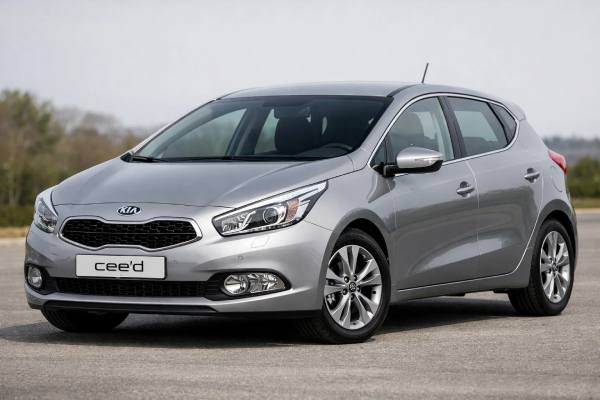
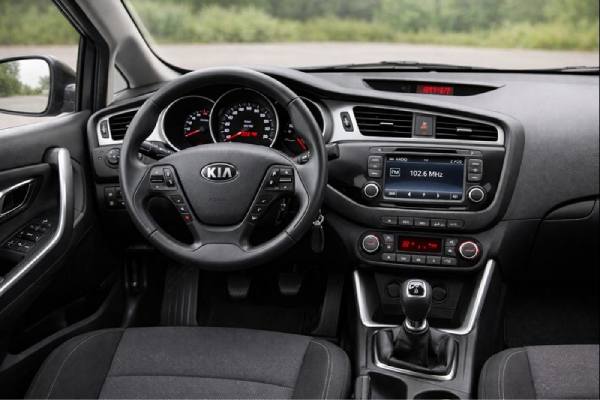
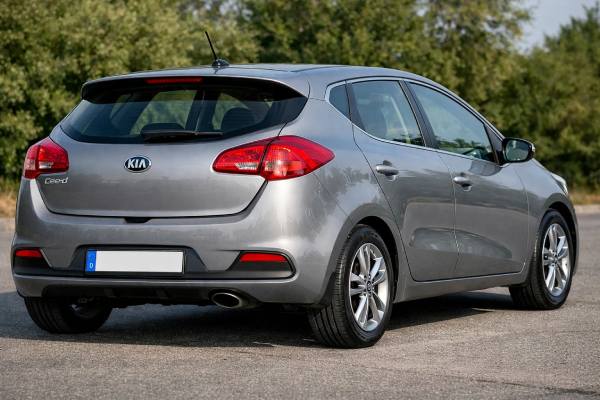
The 2012–2015 Kia Cee’d (JD) with the 1.6 Gamma MPi is the “simple petrol” choice in a generation better known for value and solid engineering. You get a naturally aspirated, port-injected four-cylinder that favors predictable response and lower long-term fuss over headline speed. In daily use, that usually means clean cold starts, fewer fuel-system surprises than direct injection, and decent tolerance for mixed city driving—provided you keep up with oil changes and ignition maintenance. The chassis is also a strength: stable at motorway speeds, easy to place in traffic, and generally resistant to rattles if it has not lived a hard life. The trade-off is that efficiency and punch are only “good enough” by modern turbo standards, so buying smart—condition, service history, and the right trim—matters more than chasing the newest badge.
Owner Snapshot
- Smooth, predictable 1.6 MPi power delivery that suits commuting and mixed driving.
- Port injection helps avoid the intake-valve carbon buildup common on many early direct-injection petrols.
- Strong crash-test performance for its era, with stability control widely fitted.
- Watch for age-related ignition and cooling-system issues on higher-mileage cars.
- Plan engine-oil service at least every 12 months (or ~15,000 km), even if your market allows longer.
Jump to sections
- Kia Cee’d JD 1.6 MPi profile
- Kia Cee’d JD 1.6 MPi spec sheet
- Kia Cee’d JD equipment and safety
- Known faults and factory fixes
- Service plan and buying tips
- Road manners and fuel use
- Rivals and value check
Kia Cee’d JD 1.6 MPi profile
In the 2012–2015 Cee’d (JD) range, the 1.6 Gamma MPi sits in the sweet spot for buyers who want petrol smoothness without the added complexity of turbocharging or direct injection. “MPi” here means multi-point (port) injection: fuel is sprayed into the intake ports rather than directly into the combustion chamber. For owners, the practical upside is long-term consistency—especially if the car has seen lots of short trips where direct-injection engines can suffer from intake deposits and rough idle over time.
On the road, this engine’s character is linear. It does not deliver the low-rpm shove of a small turbo, so it rewards sensible gear choices and steady throttle rather than quick bursts. In real traffic that can actually feel calmer: less surge, fewer abrupt shifts, and a more “analogue” response you can meter easily in wet or snowy conditions. If you drive mostly in-town, the 1.6 MPi also tends to be less fussy about fuel quality than some early DI systems.
The JD platform itself is a big part of the appeal. The car feels planted at speed, the steering is predictable, and the suspension tune typically balances comfort with enough control to avoid the floaty feel that some budget hatchbacks develop with age. That said, the Cee’d is still a compact family car, not a hot hatch—so the best examples feel tidy and quiet rather than sharp and aggressive.
From an ownership standpoint, your biggest “make or break” factor is maintenance quality. These cars respond well to consistent oil changes, timely spark-plug replacement, and cooling-system care. If those basics are neglected, small issues (misfires, overheating risks, noisy auxiliaries) can stack up and make the car feel older than it is. Buy it for the fundamentals—simple petrol engine, practical body, and strong safety baseline—and it usually delivers exactly that.
Kia Cee’d JD 1.6 MPi spec sheet
Below is a focused spec set for the 2012–2015 Cee’d (JD) with the 1.6 Gamma MPi (commonly 130 PS / ~128–130 hp depending on market rating). Exact figures can vary by VIN, gearbox, wheel size, and homologation cycle, so treat these as the “most typical” values you’ll see in European-market listings.
Powertrain and efficiency
| Item | Specification |
|---|---|
| Code | Gamma 1.6 MPi (commonly G4FC or later Gamma II variants by market) |
| Engine layout and cylinders | Inline-4, DOHC, 4 valves/cyl, dual CVVT commonly fitted |
| Bore × stroke | ~77.0 × 85.4 mm (3.03 × 3.36 in) |
| Displacement | 1.6 L (1,591 cc) |
| Induction | Naturally aspirated |
| Fuel system | Multi-point injection (port injection) |
| Compression ratio | Typically around 10.5:1 (market-dependent) |
| Max power | ~130 hp (96 kW) @ ~6,000–6,300 rpm |
| Max torque | ~157 Nm (116 lb-ft) @ ~4,500–4,850 rpm |
| Timing drive | Chain |
| Rated efficiency | Commonly ~5.9–6.6 L/100 km (40–36 mpg US / 48–43 mpg UK), cycle and wheels vary |
| Real-world highway @ 120 km/h | Often ~6.8–7.4 L/100 km (35–32 mpg US / 42–38 mpg UK) in normal conditions |
Transmission and driveline
| Item | Specification |
|---|---|
| Transmission | 6-speed manual common; 6-speed automatic available in some markets |
| Drive type | FWD |
| Differential | Open |
Chassis and dimensions (5-door hatchback)
| Item | Specification |
|---|---|
| Suspension (front/rear) | MacPherson strut / multi-link (typical EU spec; some markets differ) |
| Steering | Electric power steering; ratio varies by rack version |
| Brakes | 4-wheel discs common; sizes vary by trim and wheel package |
| Wheels/tyres (popular sizes) | 195/65 R15, 205/55 R16, 225/45 R17 (market/trim dependent) |
| Ground clearance | Typically around ~140–150 mm (5.5–5.9 in) |
| Length / width / height | ~4,310 / 1,780 / 1,470 mm (169.7 / 70.1 / 57.9 in) |
| Wheelbase | ~2,650 mm (104.3 in) |
| Turning circle (kerb-to-kerb) | Typically ~10.4–10.8 m (34–35 ft) |
| Kerb weight | Often ~1,250–1,350 kg (2,756–2,976 lb) depending on gearbox and trim |
| Fuel tank | ~53 L (14.0 US gal / 11.7 UK gal) typical for JD petrol |
| Cargo volume | ~380 L seats up; up to ~1,300 L seats down (method varies by source) |
Performance and capability
| Item | Typical value |
|---|---|
| Acceleration 0–100 km/h (0–62 mph) | ~9.8–10.6 s (gearbox and wheels change results) |
| Top speed | ~190–195 km/h (118–121 mph) |
| Braking distance (100–0 km/h) | Strongly tyre-dependent; expect roughly mid-to-high 30 m range on good tyres |
| Towing capacity | Often offered in many markets; exact braked/unbraked limits vary widely—check the VIN plate and local approval |
| Payload | Typically in the ~450–550 kg range depending on spec |
Fluids and service capacities (high-level guide)
| Item | Typical specification |
|---|---|
| Engine oil | Commonly ACEA A5/B5 class oils; 0W-40 / 5W-30 / 5W-40 appear in official regional guides; capacity ~3.6 L with filter in many JD petrol listings |
| Coolant | Ethylene glycol long-life coolant; capacity varies by radiator and heater circuit (verify by VIN) |
| Transmission fluid | Manual gear oil and automatic ATF vary by gearbox code—use only the specified fluid |
| A/C refrigerant | Typically R134a on this era (verify sticker under bonnet) |
| Key torque specs | Wheel nuts often ~88–108 Nm on many Kias; critical fasteners vary by wheel and hub—verify per service manual |
Safety and driver assistance (baseline)
| Item | Typical for the generation |
|---|---|
| Crash ratings (Euro NCAP) | 5 stars for the generation’s test; published results include strong adult and child protection in the 2012-era evaluation |
| ADAS suite | ESC common; advanced AEB and lane support generally limited or absent on early JD years depending on market/trim |
Kia Cee’d JD equipment and safety
Trim naming varies by country, but the equipment story is consistent: the Cee’d (JD) was usually sold in clearly stepped trims with option packs that bundle comfort features (climate control, infotainment upgrades) and convenience tech (parking sensors, cameras, smarter lighting). For a 1.6 MPi buyer, the key is to focus on functional differences that affect running costs and day-to-day satisfaction rather than chasing cosmetic upgrades.
Trims and options that matter most
Look first at the wheel and tyre package. Smaller wheels (15–16 inch) tend to ride better, cost less in tyres, and can reduce pothole damage. Larger wheels (17 inch) sharpen response but can make the car feel busier on broken roads and raise tyre cost. If you do a lot of motorway driving, a mid-spec trim with better seats and sound insulation can make the car feel “one class up” on long trips.
Infotainment and connectivity are another practical divider. Early systems may feel dated, but factory navigation and upgraded audio can still be worthwhile if the screen is bright and the controls work cleanly. Check for Bluetooth stability, USB charging reliability, and whether steering-wheel buttons respond crisply—these are small signals of overall electrical health.
Climate hardware is worth prioritizing. Manual A/C is fine, but dual-zone climate (where available) adds comfort and can improve resale. Make sure the A/C blows cold quickly and does not cycle loudly, which can hint at a tired compressor clutch or low refrigerant.
Quick identifiers when shopping used
- Parking sensors and camera: Often visible by bumper sensors and a tailgate camera lens; verify the beeper works in reverse.
- Lighting upgrades: Projector or LED daytime-running signatures can signal higher trims; check headlamp haze and aim.
- Seat trim: Better trims often have stronger side bolsters and lumbar support; look for worn outer bolsters as mileage clues.
- Cruise controls: A simple, valuable feature for motorway drivers; ensure it holds speed without hunting.
Safety ratings and systems
In this era, the Cee’d’s core safety value comes from structure, airbags, and stability systems. Many markets included multiple airbags as standard, plus ESC (electronic stability control) and related traction functions. That combination matters in real life: ESC reduces loss-of-control crashes on wet roads, and good seatbelt reminders improve belt use rates in daily driving.
Driver-assistance technology (in the modern sense of automatic emergency braking and lane centering) is usually limited on early JD cars. Some later examples may have warning-based systems (like lane departure warning) depending on market packs, but you should not assume full ADAS coverage. Treat anything beyond ESC, ABS, and parking aids as a trim-specific bonus and confirm it works during a test drive.
Finally, if the car has had windshield replacement, steering alignment work, or front-end repairs, double-check any camera- or sensor-based features. Even basic parking systems can misbehave after poor repairs, and small calibration issues can become a constant annoyance.
Known faults and factory fixes
The 1.6 Gamma MPi is generally a robust, conventional petrol setup, but age and usage patterns still create repeat issues. The best way to think about reliability is to separate “common and annoying” from “rare but expensive,” then match that to the car’s history and your driving style.
Common issues (usually low to medium cost)
- Ignition coils and spark plugs (misfire under load):
Symptoms: rough idle, hesitation, flashing MIL under acceleration.
Likely cause: coil breakdown or worn plugs, sometimes worsened by oil contamination in plug wells.
Remedy: replace plugs with correct heat range and gap, then coils as needed; inspect for valve cover seepage. - Dirty throttle body or tired PCV valve (unstable idle):
Symptoms: hunting idle, stalling when coming to a stop, sluggish response.
Cause: carbon and oil vapor deposits, especially on short-trip cars.
Remedy: clean throttle body correctly, replace PCV valve, and confirm there are no vacuum leaks. - Cooling-system aging (slow coolant loss):
Symptoms: sweet smell, low reservoir level over weeks, dampness near thermostat housing or hose junctions.
Cause: hardened seals, plastic fittings aging, clamps loosening.
Remedy: pressure test, replace suspect hoses and thermostat housing seals early—overheating is the real enemy. - Front suspension wear (clunks over bumps):
Symptoms: knocks over potholes, vague steering feel.
Cause: drop links, top mounts, or control-arm bushings.
Remedy: replace in pairs where sensible; align afterwards.
Occasional issues (medium cost, more downtime)
- Timing-chain noise or correlation faults:
Symptoms: rattling on cold start, cam-crank correlation codes, persistent rough running.
Cause: chain stretch, tensioner wear, or guide wear—often accelerated by long oil intervals.
Remedy: diagnose with scan data and mechanical inspection; replace chain set if out of spec. - Manual clutch wear (slip, high bite point):
Symptoms: rising revs without acceleration, chatter on take-off.
Cause: normal wear; can be earlier if driven hard in city traffic.
Remedy: clutch kit; check flywheel condition where applicable.
Rare but higher cost
- Automatic transmission shift quality issues:
Symptoms: flare on upshifts, harsh engagement, delayed drive.
Cause: aged ATF, valve-body wear, software calibration sensitivity.
Remedy: correct fluid service (not “universal” ATF), and ensure any software updates are applied by a specialist.
Recalls, service actions, and software updates
Because recall scopes vary by country and VIN range, the only reliable method is a VIN check plus dealer records. If you are inspecting a used car, request:
- Proof of recall completion (paperwork or dealer printout).
- Evidence of software updates for drivability or emissions-related calibrations where applicable.
- A scan for stored fault codes—even if the dash has no warning lights.
The practical point: a well-maintained Cee’d often feels tight and dependable; a neglected one can feel like “death by a thousand cuts.” Prioritize service history, then verify recalls before negotiating.
Service plan and buying tips
A simple petrol engine only stays simple if the maintenance rhythm is consistent. The 1.6 MPi Cee’d (JD) rewards owners who treat fluids and ignition parts as “schedule items,” not “fix when broken.” The plan below is a conservative, durability-focused approach that works well for mixed driving and frequent short trips.
Practical maintenance schedule (distance or time)
| Item | Interval (good practice) | Notes |
|---|---|---|
| Engine oil and filter | 12 months or ~10,000–15,000 km | Short trips justify the shorter end; use the specified ACEA class and viscosity for your climate. |
| Engine air filter | ~30,000 km or 2 years | Inspect yearly in dusty areas. |
| Cabin filter | 15,000–30,000 km or yearly | Keeps HVAC performance strong and reduces windshield fogging. |
| Spark plugs | ~60,000–90,000 km | Replace on time to protect coils and catalytic converter. |
| Brake fluid | Every 2 years | Hygroscopic fluid hurts pedal feel and corrosion resistance. |
| Coolant | Verify the factory fill type; commonly long-life | Replace per official guidance for your market; don’t mix coolant types. |
| Manual gearbox oil | Inspect for leaks; consider 90,000–120,000 km change | Especially if shifts feel notchy or the car tows. |
| Automatic ATF | Consider 60,000–90,000 km service if used hard | Use only the correct fluid spec and method for your gearbox. |
| Tyre rotation and balance | ~10,000–12,000 km | Extends tyre life and reduces noise. |
| Alignment check | Yearly or after major pothole impacts | Prevents inner-edge tyre wear. |
| 12 V battery test | From year 5 onward, annually | Cold starts and stop-start usage shorten life. |
Fluids, specs, and decision-making notes
- Engine oil: Stick to the manufacturer-allowed viscosity range for your climate; many official regional guides list multiple grades, and the wrong choice can increase consumption or cold-start wear.
- Oil capacity: Many JD petrol listings show about 3.6 L with filter—but always verify by engine code and sump version before ordering supplies.
- Brake parts: Choose quality pads and rotors; cheap friction material often squeals and can warp rotors faster.
Buyer’s guide: what to inspect before purchase
Documentation
- Full service history with dates, mileage, and receipts (oil changes matter most).
- Proof of recall completion and any service actions.
Mechanical checks
- Cold start: listen for chain rattle or loud top-end ticking that persists.
- Idle quality: should be steady with A/C on and off.
- Cooling system: check for dried coolant residue around hose joints and the thermostat area.
- Road test: confirm smooth acceleration without misfire and steady cruising without vibration.
Chassis and body
- Uneven tyre wear (alignment or worn bushings).
- Brake feel: consistent pedal, no steering shake under braking.
- Corrosion hotspots: inspect rear arches, underbody seams, and subframe areas depending on winter salt exposure.
Long-term durability outlook
A cared-for 1.6 MPi Cee’d can be a very durable “keep it and forget it” hatch. The pattern is simple: frequent oil service plus timely ignition parts reduces the chance of chain and misfire problems, while periodic suspension refresh keeps the car feeling younger than its years.
Road manners and fuel use
The Cee’d (JD) is at its best when you drive it like a well-sorted family hatch: smooth inputs, steady throttle, and sensible tyres. The platform feels stable at motorway speeds, and the body control is usually more composed than you’d expect from a value-focused badge. Over broken pavement, the ride quality depends heavily on wheel size and tyre choice—15–16 inch setups tend to absorb sharp edges better, while 17s can add impact harshness and extra road noise.
Powertrain character
The 1.6 MPi’s power delivery is progressive. Around town, it’s easy to modulate, and parking-lot creep is predictable. On faster roads, it prefers revs: overtakes feel best if you downshift early and keep the engine in the mid-range rather than waiting for low-rpm torque that isn’t there. This is also where the gearbox choice matters:
- 6-speed manual: typically the more engaging and efficient option; clutch feel should be light and progressive.
- 6-speed automatic: generally smooth if healthy, but it may feel more relaxed than quick; ensure shifts are clean and consistent when warm.
NVH (noise, vibration, harshness)
A good example has mature NVH for the class: wind noise is controlled, and engine note stays subdued at a steady cruise. If you hear booming at 90–110 km/h, suspect cupped tyres, worn rear dampers, or cheap replacement tyres with stiff sidewalls. Steering vibrations under braking often point to rotor issues or sticky calipers.
Real-world efficiency
For a naturally aspirated petrol, economy is respectable but sensitive to speed. Typical owner experience often looks like this:
- City: roughly ~7.5–9.0 L/100 km (31–26 mpg US / 38–31 mpg UK), depending on traffic and trip length.
- Highway (100–120 km/h): roughly ~6.3–7.4 L/100 km (37–32 mpg US / 45–38 mpg UK).
- Mixed driving: roughly ~6.8–8.0 L/100 km (35–29 mpg US / 42–35 mpg UK).
Cold weather and short trips can push numbers up noticeably because the engine spends more time warming up. If your driving is mostly short urban runs, tighter oil intervals and regular battery checks become more important than chasing the last decimal of fuel economy.
Performance metrics that actually matter
In daily use, the key metric is not 0–100, but passing response. A healthy engine and clean ignition system make the car feel crisp when you ask for acceleration. If it feels flat, check for old plugs, weak coils, and overdue air-filter service before assuming it is “just slow.”
Rivals and value check
The 2012–2015 Cee’d JD 1.6 MPi competes in a crowded segment where most rivals are competent, but they deliver competence in different ways. The smart comparison is not “which is best,” but “which fits your priorities: simplicity, comfort, running costs, or driving feel.”
Where the Cee’d 1.6 MPi stands out
Simplicity and predictability:
Compared with small turbo petrols of the same era, the 1.6 MPi often feels less sensitive to driving pattern and fuel quality. If you do lots of short trips, that matters. Port injection is also a practical advantage for long-term cleanliness in the intake tract.
Value and equipment:
In many markets, a mid-trim Cee’d offers features (heated seats, sensors, decent infotainment) that cost more in a Golf-class alternative. When the price gap is meaningful, the Kia’s “complete package” can be the better real-world buy.
Safety baseline:
This generation earned strong crash-test results for its time and commonly includes stability control and multiple airbags—important if you are shopping older used cars where safety spec can vary wildly.
Where key rivals can beat it
Volkswagen Golf (Mk7-era equivalents):
Often feels more refined in steering precision and cabin materials. Many engine options are also more efficient at speed, especially the smaller turbo units—though they can be more complex long-term.
Ford Focus (Mk3):
Typically sharper handling and steering feedback. If you value cornering feel, a good Focus can be more engaging, but suspension wear and alignment sensitivity can make neglected cars feel rough quickly.
Opel/Vauxhall Astra (J):
Comfortable and stable, sometimes with strong seats, but weight and certain powertrains can dull performance. Choose carefully by engine.
Hyundai i30 (GD):
Mechanically close cousin, often similar strengths and weaknesses. Shopping the i30 alongside the Cee’d can uncover better condition or spec for the money.
A quick value checklist
- Buy the best service history, not the lowest mileage.
- Prefer smaller wheels if comfort and tyre cost matter.
- Confirm recall status by VIN before final payment.
- If you want modern ADAS, you may need a newer generation—don’t assume it’s present on early JD cars.
If your priority is a straightforward, durable petrol hatch with solid safety fundamentals, the Cee’d JD 1.6 MPi remains a sensible used choice—especially when you find one with clean maintenance habits and the right comfort options.
References
- Kia C’eed – Crash Test 2012 2012 (Safety Rating) ([Euro NCAP Newsroom][1])
- Kia Recalls | Kia Europe 2026 (Recall Information) ([Kia][2])
- Check for Recalls: Vehicle, Car Seat, Tire, Equipment | NHTSA 2026 (Recall Database) ([NHTSA][3])
- Kia Car Owners Manual | Kia UK 2026 (Owner’s Manual) ([Kia][4])
- Engine Oil Grades and Capacities 2023 (Service Guide)
Disclaimer
This article is for informational purposes only and is not a substitute for professional diagnosis, inspection, or repair. Specifications, torque values, fluid types, capacities, service intervals, and procedures can vary by VIN, market, model year, and installed equipment. Always verify details using your vehicle’s official owner’s documentation and the correct service information for your exact car.
If you found this guide useful, please consider sharing it on Facebook, X (Twitter), or your favorite forum or group—your support helps us keep producing practical, independent owner resources.