
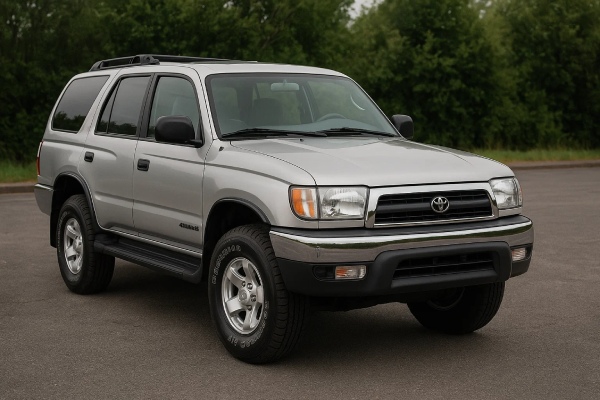
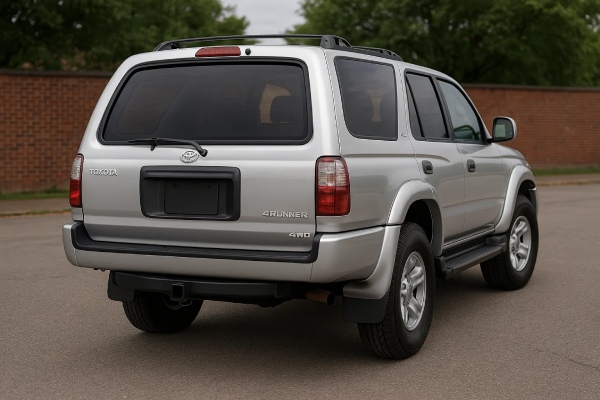
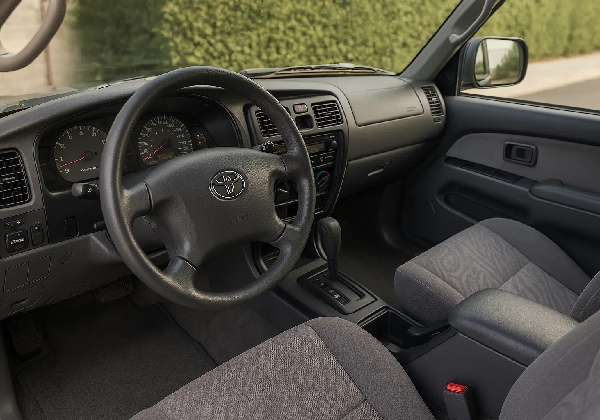
The 1999–2000 Toyota 4Runner 2WD with the 3RZ-FE 2.7-liter four is a mid-size, body-on-frame SUV from the third-generation 4Runner line. This facelift phase brought cleaner styling, minor interior updates, and incremental equipment changes while preserving the rugged ladder frame, rack-and-pinion steering, and coil-spring suspension that made the platform so durable. Within the lineup, the 2.7-liter 2WD variant sits as the simplest, lightest-nose configuration—appealing to buyers who value longevity, serviceability, and lower running costs over raw acceleration or heavy towing. This article covers the 1999 and 2000 model years as sold in North America, focusing on the four-cylinder, rear-wheel-drive specification with either the 5-speed manual or 4-speed automatic. You’ll find verified specs and dimensions, performance context, safety background, maintenance requirements, known issues, and a pragmatic buyer’s checklist. If you’re shopping for a tough daily driver, a sensible starter SUV, or a reliable base for mild overlanding without the complexity of 4×4 hardware, this specific 4Runner configuration deserves a close look.
Fast Facts
- Timing-chain 3RZ-FE is robust, accessible, and tolerant of mileage with regular 5W-30 service.
- Ladder frame, simple rear-drive layout, and rack-and-pinion steering yield predictable road manners.
- Manual gearbox livens response; automatic is smooth but benefits from periodic drain/fills.
- Caveat: modest highway passing power; keep momentum on grades and expect longer stopping distances than modern disc-all-around SUVs.
- Typical interval: engine oil and filter every 5,000 mi (8,000 km) or 6 months; brake fluid every 2 years.
Navigate this guide
- Detailed Overview — 4Runner 2WD (1999–2000)
- Specifications and Technical Data — 3RZ-FE 2WD
- Trims and Options, Safety and Driver Assistance
- Reliability, Common Issues and Service Actions
- Maintenance and Buyer’s Guide
- Driving and Performance
- How 4Runner Compares to Rivals
Detailed Overview — 4Runner 2WD (1999–2000)
The facelifted third-gen 4Runner refined a proven truck platform. In 2WD form with the 3RZ-FE, you get a longitudinal four-cylinder, rear-drive layout on a boxed ladder frame. The front uses double-wishbone/coil suspension; the rear is a solid axle on four links with coils. Steering is hydraulic rack-and-pinion—unusual in body-on-frame SUVs of the era and part of the model’s precise, durable feel. Brakes pair front ventilated discs with rear drums; ABS was available depending on trim.
Why the four-cyl 2WD? Compared with the heavier V6 or 4×4 versions, this configuration places less mass over the nose, slightly improving turn-in and front-end wear rates. The 3RZ-FE’s chain-driven cams mean there’s no scheduled timing belt replacement; valve clearances are shim-over-bucket and hold well over long intervals. Access for routine service (plugs, coils, belts, hoses) is straightforward. The trade is performance: 150 hp (110 kW) and ~240 Nm (177 lb-ft) move a mid-size SUV adequately in town, but highway passing needs planning—especially with roof loads, larger-than-stock tyres, or hills. On the upside, the simpler drivetrain reduces maintenance complexity and potential repair costs.
Cabin ergonomics are classic late-’90s Toyota: clear analog gauges, logical HVAC controls, and hard-wearing materials. Five-passenger seating and the roll-down rear window remain signature 4Runner touches—handy for hauling long items or improving airflow without buffeting. The rear cargo area is boxy and easy to pack; with seats folded you can fit camping bins or mountain bikes without drama. Owners often add mild all-terrain tyres, a transmission cooler (for the automatic), and fresh suspension bushings—small improvements that materially enhance the driving experience while keeping reliability intact.
As a used buy today, the key question is condition, not pedigree. A lightly optioned SR5 2WD with documented maintenance and minimal corrosion will typically outlast a high-miles, heavily modified 4×4 in the same budget. And given the third-gen 4Runner’s parts ecosystem, you can refresh nearly every wear item with widely available components.
Specifications and Technical Data — 3RZ-FE 2WD
Engine and Performance (3RZ-FE, gasoline, naturally aspirated)
| Item | Value |
|---|---|
| Code & layout | 3RZ-FE inline-4, DOHC, 16-valve, timing chain |
| Displacement | 2.7 L (2,693 cc) |
| Compression ratio | ~9.5:1 |
| Induction/fueling | Naturally aspirated; multi-point EFI |
| Rated power | 150 hp (110 kW) @ ~4,800 rpm |
| Rated torque | 240 Nm (177 lb-ft) @ ~4,000 rpm |
| Emissions/diagnostics | OBD-II |
| Fuel requirement | Regular unleaded |
| Fuel tank (usable) | ~70 L (18.5 gal) |
| Aerodynamics | Typical Cd mid-0.4s; frontal area ~2.7–2.8 m² (context for highway economy) |
| Highway real-world (120 km/h / 75 mph) | Often ≈ EPA combined when stock; lifts/AT tyres reduce by 5–20% |
Transmission and Driveline (2WD focus)
| Item | Value |
|---|---|
| Transmissions | 5-speed manual (R150F); 4-speed automatic (A340E family) |
| Final drive ratios (typical) | ~4.10–4.56 (varies by transmission and axle code) |
| Differential | Open rear (E-locker not applicable on 2WD factory spec) |
| Steering | Hydraulic rack-and-pinion |
| Refuel to full | ~70 L (18.5 gal); 2–3 min typical at pump |
Chassis and Dimensions
| Item | Value |
|---|---|
| Platform | Body-on-frame (boxed ladder) |
| Front suspension | Double-wishbone with coilover, stabilizer bar |
| Rear suspension | Four-link solid axle with coil springs, stabilizer bar |
| Brakes | Front ventilated discs; rear drums; ABS availability by trim |
| Wheels/tyres (factory) | 15–16 in; common sizes 225/75R15 to 265/70R16 |
| Wheelbase | 2,675 mm (105.3 in) |
| Length | ≈ 4,653–4,656 mm (183.2–183.3 in) |
| Width (body) | ≈ 1,690–1,730 mm (66.5–68.1 in) |
| Height | ≈ 1,715–1,740 mm (67.5–68.5 in) |
| Ground clearance | ≈ 230–240 mm (9.1–9.4 in) on stock tyres |
| Curb weight (typical 2WD I-4) | ≈ 1,650–1,700 kg (3,638–3,748 lb) |
| GVWR | ≈ 2,380 kg (≈5,250 lb) |
| Turning circle | ≈ 11.6–11.9 m (38–39 ft) |
| Cargo volume (seats up/down) | ≈ 1,260 L / 2,260 L (≈45 / 80 cu ft) |
Fluids and Capacities (decision-making quick sheet)
| System | Spec & Capacity (typical) |
|---|---|
| Engine oil | 5W-30, ~4.8–5.5 L (5.1–5.8 qt) with filter |
| Coolant | Toyota Long-Life (red) or Super Long Life (pink), total ~7–9 L (varies) |
| Manual transmission (R150F) | 75W-90 GL-4/GL-5, ~2.3–2.6 L |
| Automatic (A340E) | Toyota Type T-IV / Dexron III, drain/fill ~2.0–3.5 L; overhaul ~7–9 L |
| Power steering | ATF Dexron II/III (per cap) |
| Brake fluid | DOT 3 or DOT 4; flush every 2 years |
| Rear axle (2WD) | 75W-90 GL-5, ~2.5–3.0 L |
Selected torque values (commonly referenced):
- Wheel lug nuts — 113 Nm (83 lb-ft)
- Front caliper brackets — ~122 Nm (90 lb-ft)
- Spark plugs — 18–22 Nm (13–16 lb-ft) (aluminum head; follow plug maker guidance)
- Differential drain/fill — ~49–59 Nm (36–44 lb-ft)
- Oil drain plug — ~39 Nm (29 lb-ft)
Performance and Economy (2WD 3RZ-FE)
| Metric | 5-MT (2WD) | 4-AT (2WD) |
|---|---|---|
| 0–60 mph (owner/test ranges) | ~10.8–11.8 s | ~11.5–12.5 s |
| Top speed (indicated) | ~100–105 mph | ~100 mph |
| EPA mpg (city/hwy/comb) | 16 / 21 / 18 | 18 / 22 / 19 |
| Comb L/100 km (approx.) | ~13.1 | ~12.4 |
| Typical tow rating* | Up to 2,268 kg (5,000 lb) when properly equipped | |
| Payload (typical) | ~400–550 kg (880–1,210 lb) | |
| Roof load (dynamic) | ~75–100 kg (165–220 lb), rack dependent |
*Practical note: the I-4/2WD will tow light utility or small campers fine with conservative speeds and careful loading; expect significant performance/economy penalties near the limit.
Trims and Options, Safety and Driver Assistance
Trims (1999–2000 four-cyl 2WD focus):
- Base: Cloth seats, manual HVAC, simple audio, steel wheels (often 15-inch), power rear window, and the signature roll-down tailgate glass.
- SR5: Popular for the I-4 2WD. Adds alloy wheels, power accessories, roof rack, upgraded fabrics, and available 16-inch tyre packages.
- Limited: Typically paired with the V6 and 4×4; a 2.7L 2WD Limited is uncommon. Most 2WD four-cyl buyers will encounter Base or SR5.
Mechanical/functional differences to note:
- Brakes and wheel packages: 16-inch setups may carry different rotor sizes; confirm when ordering parts.
- Final drive: Manual 2WD trucks are often shorter geared than automatics; decode the axle code on the door jamb.
- ABS: Availability depends on trim and build—verify operation and consider a fluid flush if pedal feel is long.
Convenience and interior:
- Power rear window, folding rear bench, and straightforward dash controls are standard across most builds. Audio options ranged from basic head units to upgraded speakers; many trucks now run modern double-DIN units.
Safety ratings context (period-correct):
- In era-appropriate testing, the third-gen 4Runner achieved Acceptable in the IIHS moderate-overlap frontal test with ratings applying to 1996–2002 models; frontal airbags and seatbelt changes in 1998–1999 improved federal full-width outcomes relative to early builds. Side airbags and modern crash-avoidance tech were not offered.
- NHTSA testing protocols of the time differ from today’s; rollover risk metrics for tall, body-on-frame SUVs were more conservative than for modern crossovers.
Safety systems and child seating:
- Dual front airbags; pre-LATCH era child-seat installation uses belts and locking clips per the owner’s manual.
- ABS (if equipped) requires correct bleed sequence; after steering or suspension work, confirm steering angle centering on the alignment rack.
Year-to-year highlights (within 1999–2000):
- Facelift styling and interior trims carry over with minor package reshuffles. Equipment bundling may affect ABS and wheel size availability; always check the build sticker and VIN-decoded option list.
Reliability, Common Issues and Service Actions
Overall reliability snapshot: The 3RZ-FE/2WD drivetrain is among the most durable Toyota truck combinations of its era. Age, climate, and maintenance history drive most problems you’ll see today. Map your expectations by prevalence and cost.
Common (frequent; low-to-medium cost)
- Lower ball joints (LBJ) wear:
Symptoms: steering wander, knock over bumps, inconsistent toe on rough roads.
Root cause: age, dust boot tears, contamination; heavy tyres accelerate wear.
Remedy: quality LBJs, torque with vehicle at ride height, alignment afterward. - Rear axle seal seepage (2WD):
Symptoms: oil on backing plates, reduced braking as shoes get contaminated.
Root cause: hard seals/vent restriction increasing housing pressure.
Remedy: replace seals (and bearings if noisy), clean/replace shoes and hardware, ensure the axle breather is clear. - Cooling system age-outs:
Symptoms: hairline radiator tank cracks, soft hoses, inconsistent heater output.
Remedy: new radiator, thermostat, hoses; OE-spec coolant; thorough bleed.
Occasional (medium prevalence; medium cost)
- Valve cover gasket and plug tube seals:
Symptoms: oil smell, oil in plug wells, coil boot swelling.
Remedy: gasket set with grommets; refresh PCV valve/hose. - Accessory belt & idler bearings:
Symptoms: cold-start squeal or growl.
Remedy: replace belts and noisy idlers; verify pulley alignment. - A340E shift quality degradation:
Symptoms: 2–3 flare, lazy lock-up when hot.
Remedy: staged ATF drain/fills with T-IV/Dex III as labeled; inspect throttle cable (if applicable); valve body service if unresolved. - Shifter seat/bushing wear (manual):
Symptoms: vague gates, excessive play.
Remedy: inexpensive nylon seat/bushing refresh; short DIY.
Rare (low prevalence; high impact)
- Head gasket failure: Uncommon on 3RZ-FE; most cases follow severe overheating. Monitor coolant level and radiator condition.
- ABS actuator leaks/failures: Unusual but expensive—verify before parts-cannon replacements.
- ECU failures: Rare; more often ground corrosion or connector issues.
Electrical and lighting (age-driven)
- Chassis ground corrosion, alternator brush wear, and bulb socket oxidation. Clean/retorque grounds, test charging output under load, refresh aging bulbs/connectors.
Corrosion hotspots (even on 2WD):
- Rear frame rails near the kick-up, body mounts, fuel tank straps, and seams under the cargo floor. Southern/Southwestern trucks age best; salt-belt trucks require careful probing inside the boxed rails (borescope helps).
Recalls, TSBs, and extended coverage:
- Third-gen 4Runner four-cyl 2WD examples generally lack widespread engine or frame recalls seen on other Toyota trucks in later eras. Nevertheless, always run an official VIN recall check and keep dealer records. Aftermarket lighting or accessory recalls may apply if your truck has non-OE parts.
Pre-purchase records to request:
- Proof of regular oil service, cooling system refresh, brake fluid flushes, axle/gear oil services, and any front-end rebuild work (LBJs, tie-rods, bushings). For automatics, ask for ATF service history (dates/mileage).
Maintenance and Buyer’s Guide
Practical maintenance schedule (normal service; shorten for heavy towing, desert heat, frequent short trips, or dusty off-road use):
- Engine oil & filter: 5,000 mi (8,000 km) or 6 months; 5W-30.
- Engine air filter: Inspect 12 months / 15,000 mi (24,000 km); replace on condition.
- Cabin filter: Many did not ship with one; retrofit kits exist. Inspect HVAC box annually for debris.
- Spark plugs: Copper plugs ~30,000 mi (48,000 km); verify gap and torque. Long-life plugs if specified can extend intervals—confirm part number.
- Fuel filter (external): 60,000–90,000 mi (96,000–145,000 km); check lines for corrosion.
- Coolant: Red Long-Life every 2–3 years/30,000–50,000 mi; Pink Super Long Life 5–7 years/100,000–150,000 mi—do not mix types.
- Drive belts & hoses: Inspect at each oil change; replace 60,000–90,000 mi or on condition.
- A340E ATF: Drain/fill 30,000–60,000 mi; avoid power flushes on high-milers—use staged services.
- R150F manual oil: 30,000–60,000 mi if water crossings/dust; otherwise ~60,000+ mi.
- Rear axle (2WD): 30,000–60,000 mi depending on use; verify breather.
- Brake fluid: Flush every 2 years; clean and lube front caliper slide pins; adjust rear drums.
- Brake pads/shoes/rotors/drums: Inspect each rotation; replace to spec; service drum hardware.
- Tyre rotation & alignment: Rotate 5,000–7,500 mi; align annually or after front-end work.
- Valve clearances: Shim-over-bucket; inspect ~100,000 mi or if ticking/misfire suggests.
- 12V battery: Load-test annually after year 3; typical service life 4–6 years.
Fluid choices and quick capacities (recap):
- Engine oil 5W-30 ~5.1–5.8 qt with filter.
- A340E Type T-IV / Dex III; R150F 75W-90 GL-4/5; axle 75W-90 GL-5.
- Coolant Toyota LL/SLLC; brake DOT 3/4; PS Dexron II/III.
Essential torque references:
- Lug nuts 113 Nm (83 lb-ft); oil drain ~39 Nm (29 lb-ft); diff plugs ~49–59 Nm (36–44 lb-ft); spark plugs 18–22 Nm (13–16 lb-ft).
Buyer’s inspection checklist (2WD emphasis):
- Frame and underbody: Probe rear rails, crossmembers, tank straps; borescope inside boxed sections.
- Front end: LBJs, inner/outer tie-rods, control-arm bushings, front wheel bearings; check for wander or tramlining on test drive.
- Rear axle/brakes: Look for oil on backing plates; confirm parking brake holds on a slope.
- Cooling system: Radiator end-tank condition, thermostat housing seepage, heater performance.
- Transmission:
- Automatic: From a hot start, confirm clean 1–2 and 2–3 shifts, torque-converter lock-up at cruise, and no flare on gentle throttle.
- Manual: Smooth clutch take-up, no synchro crunch on 2–3, no shifter buzz.
- Electrical: Rear window operation, alternator output under load, intact ground straps.
- Body: Windshield surround and roof rack mounts for rust; tailgate garnish for bubbling; door drains clear.
- Tyres/wheels: Avoid oversized mud-terrains on stock gearing; they sap performance and stress LBJs and brakes.
What to prioritize/avoid:
- Prioritize: Stock or lightly modified SR5 2WD with records; recent cooling/brake/ATF services; clean frame.
- Be cautious of: Heavily lifted trucks on large tyres, evidence of chronic overheating, ATF neglected for 100k+ miles, “undercoating” hiding advanced corrosion.
- Longevity outlook: With corrosion managed and fluids on time, the 3RZ-FE/2WD combination routinely sees 300,000+ miles (480,000+ km) on the original long block.
Driving and Performance
Ride and handling: The 2WD four-cyl trims a bit of front axle weight compared with V6/4×4 versions, lending slightly crisper turn-in. The ladder frame and coil springs deliver a compliant ride on broken pavement; secondary motions are well-damped if shocks and bushings are healthy. Body roll is moderate, aided by stabilizer bars. Straight-line stability is good, with some sensitivity to crosswinds at freeway speeds—tire choice matters.
Noise, vibration, harshness (NVH): At idle and in cruise, the 3RZ-FE is smooth for a truck four-cyl; at high rpm it’s coarse but not unpleasant. Cabin noise mainly reflects tyre tread and roof accessories. Worn LBJs/bushings add creaks and wander; a refreshed front end restores the calm, bank-vault feel these trucks are known for.
Powertrain character:
- 5-speed manual: Best for response and grade control; the broad torque plateau and direct connection make the 3RZ feel more willing around town.
- 4-speed automatic: Durable and smooth; benefits from regular drain/fills and, for hot climates or towing, an auxiliary cooler. Expect a downshift for modest hills or passing. Keep the engine in the 3,000–4,800 rpm band for decisive moves.
Braking behavior: Pedal travel is longer than modern disc-all-around setups. Proper drum adjustment, fresh fluid, and quality pads/shoes make a noticeable difference. Stainless lines and higher-friction pads can sharpen bite for mountain driving; keep expectations period-correct.
Efficiency reality: In stock form on highway runs at 60–70 mph (100–115 km/h), many owners see numbers close to EPA combined; at 75 mph (120 km/h) or with A/T tyres, roof racks, or lifts, expect 5–20% worse. City economy varies widely with trip length and warm-up time. Cold ambient temps and ethanol blends also reduce mpg.
Towing and load: Properly equipped, the 2WD I-4 can tow up to 5,000 lb (2,268 kg), but real-world comfort is in the 1,500–3,000 lb (680–1,360 kg) band. Watch trans temps (add a cooler for the automatic), brake early, and allow for longer merging distances. With a full camping load, plan on a 25–40% fuel-economy penalty and slower passes.
How 4Runner Compares to Rivals
Jeep Cherokee XJ (4.0L I-6, 2WD): Faster in a straight line and widely modded, but the unibody can show fatigue and the cooling system needs diligence. The 4Runner’s frame and timing-chain I-4 favor long-term durability and easier service access. On-road, the XJ can feel lighter; the 4Runner’s rack-and-pinion steering ages gracefully.
Nissan Pathfinder R50 (3.3L V6, 2WD): More car-like ride from its unibody; similar real-world pace. Pathfinder timing belt adds periodic cost; the 4Runner’s chain and parts availability are long-term advantages. Drivetrain simplicity favors the Toyota for high-miles ownership.
Ford Explorer (’99–’01, OHV/SOHC V6, 2WD): Plentiful and inexpensive to buy used, but the SOHC chain drive layout can be a service risk. The 4Runner’s resale and parts ecosystem are stronger; braking/handling feel is similar when both wear healthy tyres and fresh suspension bits.
Bottom line: If your priorities are longevity, service access, and predictable ownership costs, the 2WD 3RZ-FE 4Runner remains a standout. If you need brisk freeway passing or frequent heavy towing, look at a V6 alternative—or plan conservative expectations with the I-4.
References
- Gas Mileage of 1999 Toyota 4Runner 2025 (EPA/DOE Database)
- 1999 Toyota 4Runner 2025 (Safety Rating)
- Scheduled Maintenance Guide 1999 (Owner’s Manual Supplement)
- Look up Safety Recalls & Service Campaigns by VIN 2025 (Recall Database)
Disclaimer
This article is for informational purposes and isn’t a substitute for professional diagnosis or repair. Specifications, torque values, intervals, and procedures can vary by VIN, market, options, and build date. Always verify numbers and procedures in your official Toyota service documentation and under-hood labels. If you found this helpful, please consider sharing it with fellow enthusiasts on Facebook or X/Twitter to support xcar’s work.