
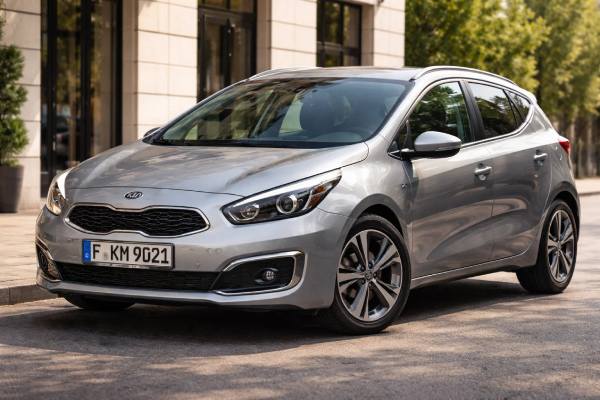
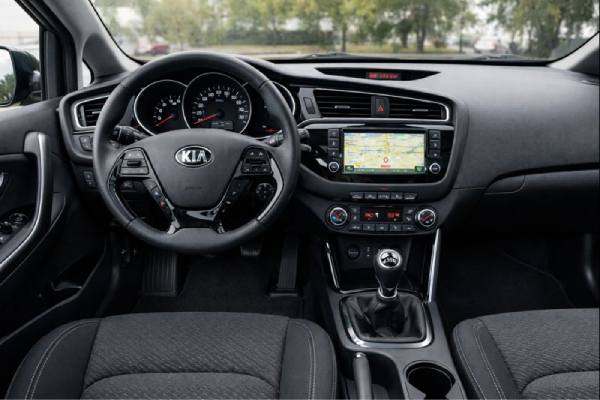
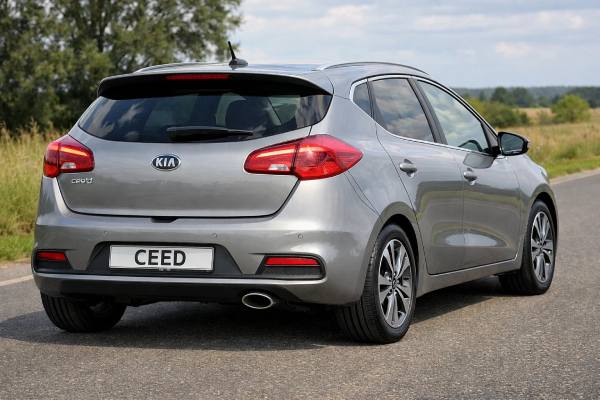
The facelifted Kia Cee’d (JD) with the 1.6 U II CRDi in 110 hp tune is the “quiet achiever” of the range: a conventional, torque-rich diesel hatch that majors on usable mid-range, long-distance economy, and low day-to-day drama when it’s serviced on time. Compared with small turbo petrols, it’s less sensitive to driving style and load, but it demands a bit more owner awareness around emissions hardware—especially the DPF (diesel particulate filter) if your use is mostly short trips. The JD platform also benefits from mature suspension tuning: stable at motorway speeds, predictable in the wet, and easy to place in tight city streets.
If you’re shopping used, the sweet spot is a car with a clear service record, regular oil changes, and evidence it has seen occasional longer runs. Get those basics right, and this Cee’d can be a cost-controlled commuter with genuine touring range.
What to Know
- Strong low-rpm pull makes it relaxed in traffic and on inclines, even with passengers and luggage.
- Typically efficient at motorway speeds when tyres and alignment are correct and the DPF stays healthy.
- Straightforward chassis and braking hardware keeps wear parts affordable and widely available.
- If it’s used mainly for short trips, budget for DPF and EGR maintenance as mileage climbs.
- Plan engine oil and filter every 15,000 km (9,000 mi) or 12 months (whichever comes first) for best longevity.
Navigate this guide
- Kia Cee’d JD diesel profile
- Kia Cee’d JD 110 CRDi specs
- Kia Cee’d JD trims and safety
- Known faults and recalls
- Maintenance plan and buying tips
- On-road performance and economy
- Rival comparison and verdict
Kia Cee’d JD diesel profile
The facelifted (2015–2018) Cee’d JD sits in the “normal-sized hatchback” sweet spot: big enough for adult rear passengers and holiday luggage, compact enough for dense urban parking. In 1.6 CRDi 110 form, it’s best understood as a torque-first setup rather than a headline-power car. You buy it for the way it covers distance with low effort: fewer downshifts, lower cruising revs, and a steady, unhurried feel that suits commuters and high-mileage drivers.
What changed with the facelift, and why it matters: the update focused on refinement, equipment, and powertrain availability across markets. Some regions offered multiple diesel outputs under the same 1.6 CRDi umbrella (for example, 81 kW/110 hp and higher outputs). When you’re reading listings, treat “1.6 CRDi” as a family name and confirm the exact output via documentation or the VIN-decoded engine rating in your market.
Engineering traits owners notice quickly
- Elastic mid-range: the turbocharged diesel delivers its best work in the mid-rev band, so you can short-shift and still make clean progress.
- Calm motorway manners: the JD chassis is tuned for stability, with predictable weight transfer and sensible damping that doesn’t punish you on broken pavement.
- Practical packaging: the hatch layout, folding rear bench, and sensible cabin storage make it easy to live with even if it’s your only car.
Who it suits
- Drivers doing frequent longer trips (commutes, motorway, mixed A-roads) where the diesel’s efficiency and torque shine.
- Households that want a reliable second car that can also handle weekends away without feeling strained.
Who should pause
- Very low-mileage, mostly-city use. Modern diesels dislike repeated cold starts and short trips because soot loading rises and the DPF may not regenerate often enough. You can still run one in town, but you must intentionally add longer drives.
A well-chosen Cee’d diesel is rarely “exciting,” but it can be impressively competent—quiet, stable, and cheap to fuel—provided you respect the emissions hardware and service it like a diesel, not like an appliance.
Kia Cee’d JD 110 CRDi specs
Below are typical specifications for the facelift Cee’d JD hatch with the 1.6 U II CRDi in 110 hp (81 kW) tune. Exact figures can vary by market, gearbox, wheel size, and emissions calibration, so treat these as a practical reference, not a VIN-perfect certificate.
Powertrain and efficiency
| Item | Specification (typical) |
|---|---|
| Code | U II CRDi (commonly D4FB family, market dependent) |
| Engine layout | Inline-4, turbocharged дизel, DOHC, 16-valve |
| Displacement | 1.6 L (≈ 1,582 cc) |
| Bore × stroke | ≈ 77.2 × 84.5 mm (≈ 3.04 × 3.33 in) |
| Fuel system | Common-rail direct injection (CRDi) |
| Induction | Turbocharged (usually VGT by market) |
| Compression ratio | ≈ 17:1 (varies by calibration) |
| Max power | 110 hp (81 kW) @ ≈ 4,000 rpm |
| Max torque | ≈ 260 Nm (192 lb-ft) @ ≈ 1,900–2,750 rpm |
| Timing drive | Chain (inspect for noise with age) |
| Rated efficiency | ≈ 4.0–4.7 L/100 km (≈ 50–59 mpg US / 60–71 mpg UK), by test cycle |
| Real-world @ 120 km/h | ≈ 5.2–6.0 L/100 km (≈ 39–45 mpg US / 47–54 mpg UK), climate and tyres dependent |
Transmission and driveline
| Item | Specification (typical) |
|---|---|
| Transmission | 6-speed manual (common); some markets offered DCT/automatic variants |
| Drive type | FWD |
| Differential | Open (traction control does the “work” electronically) |
Chassis and dimensions (5-door hatch)
| Item | Specification (typical) |
|---|---|
| Suspension (front/rear) | MacPherson strut / multi-link (market dependent) or torsion beam on some trims/markets |
| Steering | Electric power steering (EPS) |
| Brakes | 4-wheel discs on many trims; exact diameters vary |
| Popular tyre size | 205/55 R16 or 225/45 R17 (common fitments) |
| Ground clearance | ≈ 140–150 mm (≈ 5.5–5.9 in) |
| Length / width / height | ≈ 4,310 / 1,780 / 1,470 mm (≈ 169.7 / 70.1 / 57.9 in) |
| Wheelbase | ≈ 2,650 mm (≈ 104.3 in) |
| Turning circle | ≈ 10.5–10.8 m (≈ 34.4–35.4 ft) |
| Kerb weight | ≈ 1,300–1,450 kg (≈ 2,866–3,197 lb), spec dependent |
| Fuel tank | ≈ 53 L (≈ 14.0 US gal / 11.7 UK gal) |
| Cargo volume | ≈ 380 L (≈ 13.4 ft³) seats up; ≈ 1,300 L (≈ 45.9 ft³) seats down (method varies) |
Performance and capability
| Item | Specification (typical) |
|---|---|
| 0–100 km/h (0–62 mph) | ≈ 10.5–11.5 s (gearbox and tyres matter) |
| Top speed | ≈ 190–195 km/h (≈ 118–121 mph) |
| Braking 100–0 km/h | ≈ 36–40 m (test setup dependent) |
| Towing capacity | Market dependent; commonly ~1,200–1,500 kg braked (verify VIN plate) |
| Payload | Often ~450–550 kg (verify VIN plate) |
Fluids, service capacities, and key torque specs (practical ranges)
| Item | Typical guidance |
|---|---|
| Engine oil | ACEA C3-type low-SAPS oil (DPF-friendly), commonly 5W-30; capacity often ~5.0–5.7 L (verify) |
| Coolant | Long-life ethylene glycol mix (usually 50/50); capacity varies by system |
| Brake fluid | DOT 4 (common) |
| A/C refrigerant | R-134a (most JD years); charge varies with equipment |
| Wheel nuts | Commonly 88–110 Nm (65–81 lb-ft) |
| Oil drain plug | Often ~30–40 Nm (22–30 lb-ft) |
If you want one takeaway from the tables: the car is mechanically conventional, and that’s a good thing. The “special” parts are mostly emissions-related—DPF, EGR, sensors—and those are exactly where correct oil choice and correct driving patterns pay off.
Kia Cee’d JD trims and safety
Trim names vary across Europe and export markets, but the facelift Cee’d typically followed a familiar ladder: a base trim focused on value, mid trims adding comfort and infotainment, and higher trims adding appearance packages, larger wheels, and convenience tech. With the 1.6 CRDi 110, you’ll most often see it paired with mid-level equipment because diesel buyers tend to be high-mileage drivers who value comfort.
Trims and options that change ownership
Wheels and tyres
- Smaller wheels (often 16-inch) usually deliver the best real-world ride comfort and are kinder to suspension bushings.
- Larger wheels (17-inch) can sharpen turn-in but increase tyre cost and make the car more sensitive to alignment.
Suspension layout
- Some markets/trims used a rear multi-link setup, others a torsion beam. Multi-link tends to feel more composed over uneven mid-corner bumps; torsion beam is simpler and cheaper. Either can be reliable—what matters is bushing condition and correct alignment.
Infotainment and comfort
- Look for the combination that matches your usage: Bluetooth/USB is enough for many owners; built-in navigation is nice but can age poorly. Heated seats and a heated steering wheel (where fitted) are genuinely valuable in cold climates.
Gearbox choice
- The 6-speed manual is the simplest long-term bet. If your market offers a dual-clutch or automatic pairing with the diesel, confirm service history (especially fluid changes) and test for smooth low-speed behaviour.
Safety ratings and what they mean for a facelift car
The Cee’d JD earned a strong Euro NCAP result for its era, with a 5-star score under the test version used at the time. On a facelift car, the structure is broadly similar, but the exact score does not automatically “carry over” if the test protocol changes. Practically, it still signals a well-engineered passenger cell and competent restraint design.
Safety equipment you should expect (most markets)
- Multiple airbags (front, side, and curtain on many trims)
- ABS with electronic brakeforce distribution
- Stability control (ESC) and traction control
- Hill-start assist (common)
ADAS (driver assistance) availability
Facelift years are a transitional period: some cars have minimal assistance beyond ESC, while later examples in some markets add features like parking sensors/camera, lane departure warning, or autonomous emergency braking (AEB) in higher trims or option packs. Treat ADAS as trim-specific, not model-guaranteed.
Calibration note after repairs
If a car has camera-based lane systems or radar-based AEB (where fitted), a windshield replacement or front-end repair may require calibration. On a used car, ask whether those systems work normally and whether a shop documented calibration after major body work.
Bottom line: choose the trim for the life you actually live—tyre size, seats, lights, and infotainment will shape daily satisfaction more than badges. Safety is generally a strength of the JD platform, but tech features vary widely, so verify by VIN/build sheet rather than assumption.
Known faults and recalls
A well-kept 1.6 CRDi Cee’d can be very durable, but the failure pattern is typical modern-diesel stuff: emissions hardware, intake deposits, and wear parts stressed by torque. Think in mileage bands and usage patterns, because city-only use can make a “healthy on paper” diesel expensive.
Common issues (more prevalent)
1) DPF soot loading (medium to high cost if ignored)
- Symptoms: frequent fan running after shutdown, rising fuel use, rough idle, warning lights, limp mode.
- Likely causes: repeated short trips, wrong oil (non-DPF-compatible), failed pressure sensor, stuck thermostat preventing full warm-up.
- Remedy: verify sensor readings, check for exhaust leaks, perform a proper regeneration (guided), and correct the root cause. Avoid repeated forced regens without diagnosis.
2) EGR valve and intake fouling (medium cost)
- Symptoms: hesitation at low rpm, uneven idle, smoke under load, fault codes related to EGR flow.
- Likely causes: soot build-up, short-trip use, sticking actuator.
- Remedy: cleaning or replacement depending on severity; check boost hoses and vacuum control (if equipped).
3) Injector sealing and fuel system sensitivity (medium cost)
- Symptoms: diesel smell, chuffing noise, hard start, misfire feel, black residue around injectors.
- Likely causes: injector washer/seal leak, poor-quality fuel, long intervals between fuel filter changes.
- Remedy: reseal early; prolonged leaks can damage the injector seat.
Occasional issues (market and maintenance dependent)
Turbo control and boost leaks (medium to high cost)
- Symptoms: underboost codes, weak acceleration, whistle, oil mist at hose joints.
- Root causes: split intercooler hose, sticky turbo actuator, vacuum leaks on vacuum-controlled setups.
- Remedy: smoke test intake, confirm actuator movement, repair leaks before condemning the turbo.
Dual-mass flywheel and clutch wear (high cost when due)
- Symptoms: rattling at idle with clutch engaged/disengaged, vibration on take-off, slipping under load.
- When: commonly after long city use or towing; mileage varies widely.
- Remedy: clutch + DMF as a set is often the sensible repair.
Rare but worth screening
Cooling system and thermostat issues
- Symptoms: slow warm-up (bad for DPF), temperature fluctuation, weak cabin heat.
- Remedy: thermostat and coolant service as needed; don’t ignore warm-up behaviour on a diesel.
Software, calibrations, and service actions
Many “mystery diesel problems” are sensor plausibility issues or calibration updates. If the car has a persistent emissions light with no obvious mechanical fault, ask a dealer or specialist whether an ECU update applies.
Recalls and how to verify
Rather than relying on hearsay lists, verify completion using an official VIN recall check and service records. On a used car, request:
- A printout or screenshot of recall status from an official portal in your country
- Invoices showing campaign completion
- Evidence of airbag recall work where applicable in your region
A Cee’d that has had its recalls completed and has a consistent service history is usually a safer bet than one with “low miles” but no paperwork—especially on the diesel.
Maintenance plan and buying tips
This section is the difference between “cheap diesel commuting” and “death by warning lights.” The goal is to keep the engine clean inside, keep the DPF happy, and catch wear parts early.
Practical maintenance schedule (distance/time)
Use whichever comes first: distance or time.
| Item | Interval (typical best practice) | Notes |
|---|---|---|
| Engine oil + filter | 15,000 km (9,000 mi) or 12 months | Use DPF-safe low-SAPS oil (ACEA C3-type) |
| Air filter (engine) | 30,000 km or 24 months | More often in dusty areas |
| Cabin filter | 15,000–30,000 km or 12–24 months | Affects HVAC performance and smell |
| Fuel filter | 45,000–60,000 km or 3–4 years | Cheap insurance for injectors |
| Brake fluid | Every 2 years | Moisture control and pedal feel |
| Coolant | 5 years then per schedule | Verify spec and mix ratio |
| Gearbox oil (manual) | Inspect; change 90,000–120,000 km if keeping long-term | Helps shift quality |
| DCT/automatic fluid (if equipped) | Strictly per manufacturer schedule | Service history matters more than mileage |
| Serpentine belt | Inspect every service; replace by condition | Replace early if cracked/glazed |
| Battery (12 V) | Test yearly after ~4 years | Diesels stress batteries in winter |
| Alignment and tyre rotation | Every 10,000–15,000 km | Protects tyres and steering feel |
DPF “ownership rules” that actually work
- Give it heat: add a 20–30 minute steady drive weekly or bi-weekly if your normal use is short trips.
- Don’t interrupt regens repeatedly: if the idle rises slightly or the fan runs after you park, try to complete the next drive cycle without many stop-starts.
- Use correct oil: wrong ash content accelerates DPF ash loading.
- Fix thermostat issues early: a diesel that never reaches proper temperature will soot up faster.
Fluids and parts choices (decision-grade guidance)
- Oil: prioritize the correct spec over brand. Low-SAPS oil is non-negotiable for DPF longevity.
- Fuel: use reputable stations; consider occasional high-quality diesel and avoid repeatedly running the tank very low (sediment risk).
- Brakes: quality pads reduce noise and dust; cheap pads can feel grabby and can overheat.
Pre-purchase checklist (diesel-specific)
Paperwork
- Service book or invoices showing oil services at sensible intervals
- Proof of fuel filter changes
- Recall status confirmation
Cold start
- Should start quickly with minimal cranking
- Excessive smoke or lumpy idle suggests injector, glow, or air/fuel issues
Test drive
- Strong mid-range pull without surging
- No limp mode, no persistent engine light
- Smooth clutch take-up; no DMF rattle or strong vibration
Under bonnet
- Check for oily boost hose joints (small mist is common; heavy wetness is not)
- Look for coolant staining and diesel smell
Buying guidance: best fits and “avoid” patterns
Best fits
- Owners who commute mixed roads and service annually
- Cars with 16-inch wheels and conservative tyre setups (comfort + cost)
Avoid patterns
- “City-only diesel” with repeated short trips and unknown oil spec
- Heavily modified tuning without supporting maintenance records
- Cars with unresolved warning lights—diesel emissions faults can stack costs
Done right, maintenance on this Cee’d is not exotic. It’s simply disciplined. If you keep it warm, keep it serviced, and respond early to symptoms, you can get long life out of the core engine and drivetrain.
On-road performance and economy
The 1.6 CRDi 110’s personality is defined by usable torque, not top-end power. In real life, that often feels faster than the spec sheet suggests because you spend more time in the engine’s comfortable zone and less time chasing revs.
Ride, handling, and NVH (noise, vibration, harshness)
Ride: On standard tyres, the Cee’d JD generally rides with a composed, slightly firm European feel. It’s not plush like a large sedan, but it avoids the crashiness that some rivals get on low-profile tyres. If you’re shopping, remember that wheel size matters: a 16-inch car often feels more mature over potholes than a 17-inch car on sporty tyres.
Handling: The chassis is predictable and confidence-building. It resists understeer well for a front-drive hatch, and stability control tuning is usually sensible rather than intrusive. In wet weather, it’s easy to meter power out of corners because the diesel delivers torque smoothly rather than in a sudden spike.
NVH: At idle, you’ll hear the diesel. Once warm and moving, it settles down, and motorway noise is more about tyres and wind than engine. Worn engine mounts or a tired DMF can add vibration—another reason a careful test drive matters.
Powertrain character and drivability
- Throttle response: Stronger once boost is up; gentle turbo lag can exist below the main torque band, especially in a taller gear.
- In-gear pull: This is the selling point. Passing from ~80–120 km/h is usually effortless without a downshift if you’re already in the torque band.
- Manual gearbox feel: Typically light and easy, built for daily use rather than performance theatrics.
If equipped with an automated gearbox in your market, pay attention to low-speed behaviour. Smooth crawling and clean take-up matter more than fast shifting on a commuter diesel.
Real-world efficiency (what owners typically see)
Your results will swing based on tyre choice, alignment, climate, and driving pattern, but these ranges are realistic planning numbers:
| Scenario | Typical consumption |
|---|---|
| City (warm engine, moderate traffic) | ~5.5–7.0 L/100 km |
| Highway 100–120 km/h | ~5.0–6.0 L/100 km |
| Mixed commuting | ~5.2–6.5 L/100 km |
| Cold weather / short trips | +10–25% penalty |
Two notes that save money:
- Thermostat health affects consumption more than many people expect—slow warm-up wastes fuel and increases soot.
- Alignment and tyre pressure can easily change consumption by a noticeable margin on a hatchback.
Performance metrics that matter day-to-day
- 0–100 km/h: not sports-car quick, but adequate. The car feels strongest from ~40–120 km/h where torque dominates.
- Braking feel: usually consistent and confidence-inspiring with quality pads. If pedal feel is soft, brake fluid age is often the culprit.
- Long-distance comfort: this is where the diesel earns its keep—steady cruising, fewer gear changes, and excellent range on a tank.
In short: the Cee’d 1.6 CRDi 110 is a tool that works best when you use it like one. Drive it regularly, warm it properly, and it repays you with calm, efficient transport.
Rival comparison and verdict
In the used market, the facelift Cee’d JD diesel competes with a deep bench of European hatchbacks. The smart way to compare isn’t “which is best,” but “which fits my usage and risk tolerance.”
Versus Volkswagen Golf 1.6 TDI (≈110 hp)
Golf strengths: premium cabin feel, broad parts ecosystem, strong resale.
Cee’d advantages: often better value for money used, simpler ownership when not overloaded with options.
Watch-outs: the Golf can be excellent, but condition and service history vary massively; emissions hardware and EGR/DPF concerns exist on both.
Versus Ford Focus diesel (1.5/1.6 TDCi)
Focus strengths: steering feel and chassis balance; enjoyable on back roads.
Cee’d advantages: calmer “set and forget” commuter vibe, typically straightforward ergonomics and ownership.
Watch-outs: Focus diesels can be sensitive to maintenance discipline; the Cee’d is not immune, but tends to feel less fussy when serviced properly.
Versus Opel/Vauxhall Astra 1.6 CDTi
Astra strengths: efficient engines, comfortable long-distance cruising, often good seats.
Cee’d advantages: strong value and usually simpler trim complexity.
Watch-outs: Astra can be very good, but check gearbox/clutch health and any brand-specific known issues in your region.
Versus Hyundai i30 1.6 CRDi
This is the closest cousin in spirit.
i30 strengths: similar fundamentals, sometimes different equipment packaging.
Cee’d advantages: depending on market, you may find better-priced examples or trims that suit you better.
Verdict: buy the best-maintained car, regardless of badge.
Versus Peugeot 308 1.6 BlueHDi
308 strengths: very efficient on the highway, often refined, modern interior design.
Cee’d advantages: generally more conventional controls and a “simple car” feel that some owners prefer long-term.
Watch-outs: the Peugeot can be a great high-miler, but ensure you understand its emissions system servicing requirements.
Final verdict: who should buy the Cee’d CRDi 110?
Buy it if:
- You do regular longer drives and want a calm, efficient hatch.
- You value predictable handling and practical packaging.
- You want a diesel that isn’t trying to be sporty—just competent.
Skip it if:
- Your use is mostly short urban trips and you can’t commit to occasional longer runs.
- You want modern ADAS as standard; availability is trim- and market-specific.
- You prefer the simplest emissions setup possible (a petrol may suit better).
The best Cee’d JD diesels are the ones that were treated as high-mileage tools: serviced on time, driven warm, and kept close to factory specification. Find that car, and the ownership experience can be refreshingly straightforward.
References
- Check if a vehicle, part or accessory has been recalled 2026 (Recall Database)
- euroncap_kia_ceed_2012_5stars.pdf 2012 (Safety Rating)
- new_kia_ceed_specification.pdf 2017 (Manufacturer Specification)
Disclaimer
This article is for informational purposes only and is not a substitute for professional inspection, diagnosis, or repair. Specifications, torque values, service intervals, and procedures can vary by VIN, market, model year, emissions calibration, and installed equipment. Always verify details using official documentation for your exact vehicle and follow approved service information.
If this guide helped, please consider sharing it on Facebook, X/Twitter, or your favorite forum—your support helps us keep publishing practical, owner-focused content.