
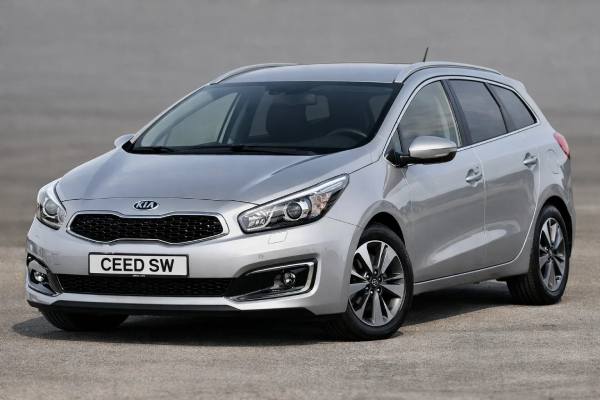
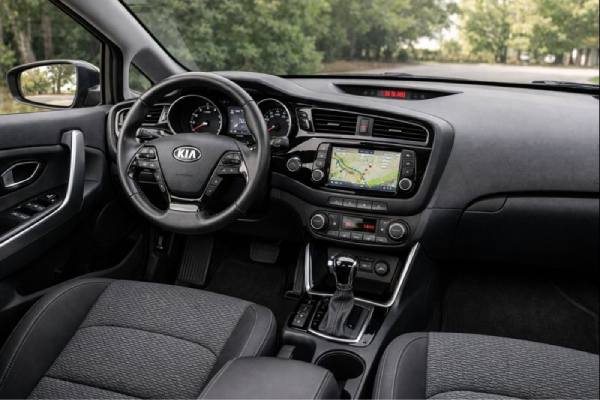

The facelifted Kia Cee’d SW (JD) with the 1.0 T-GDi (100 hp) is one of those quietly rational family cars that rewards owners who value usable space and predictable running costs over headline speed. The Sportswagon body adds real cargo practicality without turning the car into a barge, while the downsized turbo triple focuses on low-load efficiency and everyday drivability. This engine is at its best when you treat it like a modern, high-specific-output unit: warm it properly, keep oil quality high, and avoid long oil intervals in hard use. In return, you get a flexible torque curve for city work, a stable motorway footprint, and an ownership experience that’s usually more “routine maintenance” than “constant surprises.” The key is choosing the right equipment level and keeping a close eye on service history and recall completion.
Quick Specs and Notes
- Strong space efficiency: 528 L cargo (VDA) with the rear seats up, expanding to 1,642 L seats folded.
- Real-world-friendly torque delivery: turbo triple suits commuting and light loads better than short urban hops on cold oil.
- Stable family-car dynamics: long wheelbase and wagon rear help motorway composure and luggage-carrying balance.
- Ownership caveat: direct-injection turbo engines are sensitive to oil quality and short-trip use; reduce intervals if you do mostly city driving.
- Typical interval: plan engine oil and filter every 10,000 miles / 12 months (whichever comes first).
Contents and shortcuts
- Kia Cee’d SW JD facelift tour
- Kia Cee’d SW 1.0 T-GDi spec tables
- Kia Cee’d SW trims, safety, and ADAS
- Known issues and service campaigns
- Maintenance plan and buying checklist
- Driving feel and real efficiency
- Rivals and value positioning
Kia Cee’d SW JD facelift tour
The 2015–2018 facelift Cee’d SW sits in a sweet spot of “modern enough, not overly complicated.” In Sportswagon form it’s a true compact estate: low loading lip, a wide tailgate opening, and a boot that’s genuinely useful for strollers, tool bags, or airport runs without playing luggage Tetris. The rear suspension tuning also tends to feel more settled with cargo on board than some shorter hatchbacks, which matters if you regularly drive with people in the back and weight in the boot.
With the 1.0 T-GDi in 100 hp tune, the car’s personality is defined less by peak power and more by how the turbo and gearing support normal speeds. You get a broad mid-range “push” that makes urban gaps and roundabouts easier than the power figure suggests—provided you keep the engine in its comfort zone and don’t expect effortless overtakes when fully loaded. The wagon body does add mass and aero drag, so the engine feels best when you drive with momentum, short-shift on light throttle, and use the torque rather than rev-chasing.
This facelift era also matters for ownership because equipment availability widened. Depending on market and trim, you’ll see better infotainment, more effective cabin insulation than earlier cars, and improved driver-assistance availability on upper grades. The chassis itself is straightforward: front struts, rear multi-link on many variants, and predictable front-wheel-drive behavior. That simplicity is a plus for long-term costs—fewer exotic components and generally accessible service work.
Where owners most often go wrong is treating the 1.0 T-GDi like an old-school, low-stress small petrol. It is a compact, turbocharged, direct-injection engine. That means oil condition and warm-up habits have an outsized impact on wear control, turbo health, and long-term drivability. If your usage is mostly short trips, the car can still be a good fit—but you’ll want conservative oil intervals and a maintenance mindset that prioritizes prevention over “wait until a warning light.”
Kia Cee’d SW 1.0 T-GDi spec tables
Below are technical highlights for the facelifted Cee’d SW (JD) with the Kappa 1.0 T-GDi in the 100 hp (low output) configuration. Specs can vary slightly by market, wheel/tyre package, and test standard, so treat these as the most common published figures for this variant.
Powertrain and efficiency
| Item | Specification |
|---|---|
| Engine code (family) | Kappa (K) 1.0 T-GDi (3-cyl turbo, direct injection) |
| Layout | Inline-3, turbocharged, DOHC |
| Valvetrain | 12 valves (4 per cylinder) |
| Displacement | 1.0 L (998 cc) |
| Bore × stroke | 71.8 × 84.0 mm (2.83 × 3.31 in) |
| Compression ratio | 10.0:1 |
| Induction | Turbocharged |
| Fuel system | Direct injection (GDI) + CVVT |
| Max power | 100 ps (73 kW) @ 6,000 rpm |
| Max torque | 171 Nm (126 lb-ft) @ 4,000 rpm |
| Timing drive | Chain (typical for this family) |
| Rated combined economy | 5.0 L/100 km (most common published combined figure for SW “MT low”) |
| Real-world highway @ 120 km/h | Often lands around 6.0–7.0 L/100 km depending on wind, tyres, and load |
Transmission and driveline
| Item | Specification |
|---|---|
| Transmission | 6-speed manual (common pairing for 100 hp) |
| Drive type | FWD |
| Differential | Open (traction control via ESC system) |
Chassis and dimensions
| Item | Specification |
|---|---|
| Suspension (front / rear) | MacPherson strut / multi-link (market/trim dependent) |
| Steering | Electric power steering (EPS) |
| Brakes | 4-wheel discs on many trims (rear discs more common on higher grades); sizes vary by trim |
| Common tyre size | 205/55 R16 (popular mainstream fitment) |
| Ground clearance | 140 mm (5.5 in) |
| Length / width / height | 4,505 / 1,780 / 1,485 mm (177.4 / 70.1 / 58.5 in) |
| Wheelbase | 2,650 mm (104.3 in) |
| Fuel tank | 53 L (14.0 US gal / 11.7 UK gal) |
| Cargo volume (VDA) | 528 L (18.6 ft³) seats up / 1,642 L (58.0 ft³) seats down |
Performance and capability
| Item | Specification |
|---|---|
| 0–100 km/h (0–62 mph) | 13.1 s (SW, 1.0 T-GDi “low”, manual) |
| Top speed | 182 km/h (113 mph) |
| Towing capacity (braked / unbraked) | 1,000 kg (2,205 lb) / 500 kg (1,102 lb) |
| Kerb weight (typical) | ~1,230 kg (2,712 lb) for SW 1.0 T-GDi “low” |
| GVWR (gross weight) | ~1,820 kg (4,012 lb) for common SW gasoline configurations |
Fluids and service capacities
Some capacities vary by cooling pack, gearbox, and market. These are the most decision-relevant items many owners ask for when planning routine service.
| Item | Specification |
|---|---|
| Engine oil viscosity and standard | Common listing: ACEA C2, 0W-30 |
| Engine oil capacity | 3.6 L (3.8 US qt) |
| Coolant | Verify by VIN; typical small turbo petrol systems often land in the 5–7 L range |
| Manual gearbox oil | Verify by VIN; commonly a GL-4/MTF-type fluid, capacity varies by gearbox revision |
| A/C refrigerant | Varies by model year and compressor; confirm under-hood label |
Safety and driver assistance overview
| Item | Specification |
|---|---|
| Euro NCAP (model family rating) | 5 stars (Adult 89%, Child 88%, Pedestrian 61%, Safety Assist 86%) |
| Core systems | ESC, traction control, ABS, EBD; hill-start assist common |
| ADAS availability | Depends heavily on trim/market; higher trims may add AEB, lane support, and parking aids |
Kia Cee’d SW trims, safety, and ADAS
Trim naming varies by country, but the facelift SW line-up typically falls into three broad “equipment tiers”: value-focused base trims, comfort trims with the most balanced ownership proposition, and sport-lux trims (often including GT Line styling) that add wheels, seats, and tech. For the 1.0 T-GDi 100 hp specifically, you’ll often find it positioned as an efficient step-up engine: more flexible than a basic naturally aspirated petrol, but cheaper to run than larger turbo or diesel options in low-mileage use.
Trims and option packs that matter
When shopping, prioritize features that change daily quality of life or long-term costs:
- Wheel size and tyre type: 16-inch packages tend to ride better and cost less in tyres than 17–18-inch options. Bigger wheels can sharpen steering response but increase impact harshness and make pothole damage more likely.
- Parking aids: rear camera and sensors are worth real money on an estate, because you’ll use them constantly.
- Climate equipment: automatic climate control improves comfort and reduces window fogging management in winter.
- Infotainment tier: later systems tend to be more stable and integrate better with phones; older head units are functional but can be slow.
Quick visual identifiers can help when listings are vague:
- GT Line-style cars often have sportier bumpers, larger wheels, and more aggressive interior trims.
- Comfort-focused trims typically pair mid-size wheels, more modest exterior styling, and the best balance of ride and noise control.
Safety ratings in plain language
The JD Cee’d family achieved a strong Euro NCAP result for its era, with especially good adult and child occupant scores. The important nuance is that official crash tests reflect a specific test protocol and equipment level at the time. In practical terms, structural crash performance tends to remain consistent within a generation, while active safety (crash avoidance tech) is what varies most by trim and year.
Airbags, child-seat provisions, and what to check
Most cars in this family are equipped with front airbags and side/curtain protection, plus ISOFIX/LATCH-style mounting points for child seats. Before purchase:
- Confirm the airbag warning light behaves correctly (lights on at key-on, then goes out).
- Verify ISOFIX points are intact and not blocked by broken trim or bent anchors.
- Inspect rear seatbelt buckles for damage (common in family use).
ADAS and calibration implications
If your target car includes AEB, lane support, or camera-based systems, treat windscreen replacement and front-end repairs as “calibration events.” A cheap windscreen job can become expensive later if warning lights appear due to misalignment. After any front bumper removal (parking sensor work, condenser replacement, minor collision repair), ensure sensors are tested and any required calibrations are completed to avoid nuisance faults and reduced safety performance.
Known issues and service campaigns
The facelift Cee’d SW is generally a straightforward car, but the 1.0 T-GDi powertrain and modern convenience features bring a few repeat patterns. Think of these as “things to screen for,” not automatic deal-breakers.
Common, usually low-to-medium cost
- Ignition coil or spark plug wear (misfire under load):
Symptoms: hesitation when accelerating, flashing MIL under hard pull, rough idle.
Likely cause: coil degradation, worn plugs, or marginal plug gap in a boosted engine.
Remedy: replace plugs with the correct heat range; swap coils if misfire follows a cylinder. - PCV/ventilation and oily intake piping:
Symptoms: light oil film in boost pipes, occasional idle fluctuation.
Likely cause: crankcase vapors condense in the intake tract (normal to a point).
Remedy: inspect hoses and clamps; address excessive oiling by checking PCV function and driving pattern. - Brake slider sticking (uneven pad wear):
Symptoms: one wheel runs hotter, brake pull, squeal, or uneven pad thickness.
Likely cause: dry or corroded caliper guide pins.
Remedy: clean/lube pins with proper brake grease; replace boots/pins if pitted. - A/C performance drop or blower resistor issues:
Symptoms: weak airflow on certain fan speeds, intermittent cooling.
Likely cause: resistor pack wear or cabin filter neglect.
Remedy: replace cabin filter first, then diagnose resistor and blower health.
Occasional, can be higher cost if ignored
- Turbo control concerns (wastegate rattle or boost inconsistency):
Symptoms: metallic rattle at certain rpm, inconsistent pull, over/under-boost codes.
Likely cause: wear in wastegate linkage or boost control hardware.
Remedy: confirm with a proper boost test; repair/replace actuator or turbo hardware as required. - Direct-injection intake deposits (long-term drivability):
Symptoms: gradual loss of crisp throttle response, rough cold idle over time.
Likely cause: intake valve deposits from DI operation, worsened by short trips.
Remedy: driving pattern changes (fully warm runs), and if needed, professional intake cleaning methods appropriate for DI engines.
Software, updates, and when a reflash matters
Modern drivability complaints sometimes trace back to calibration rather than broken parts. If the car shows:
- persistent hesitation with no mechanical fault found,
- repeated sensor plausibility codes, or
- infotainment instability,
…a dealer-level scan for updates and campaigns is worth doing early. It’s also smart after battery replacement or any electrical work, because undervoltage events can “snowball” into multiple spurious faults.
Recalls, TSBs, and how to verify completion
The only reliable approach is VIN-based verification using official channels and dealer history. If a seller can’t show proof of recall work, assume it may still be open and price accordingly. A well-documented car will typically include dated invoices or dealer printouts listing completed campaigns.
Maintenance plan and buying checklist
For this model, long-term satisfaction comes from treating the 1.0 T-GDi like a precision component: clean oil, clean air, and consistent thermal management. Below is a practical schedule that errs on the safe side for mixed driving.
Core maintenance schedule (distance/time)
- Engine oil and filter: every 10,000 miles (16,000 km) / 12 months.
If most trips are under 10 km or the car sees frequent cold starts, consider 6,000–8,000 miles (10,000–13,000 km). - Engine air filter: inspect every 12 months; replace every 2 years or sooner in dusty areas.
- Cabin air filter: every 12 months (or sooner if airflow drops).
- Spark plugs: commonly 30,000–60,000 miles depending on plug type and driving severity; boosted engines benefit from earlier replacement if misfire develops.
- Coolant: often a long-life type; plan inspection annually and replacement per the official schedule for your market/VIN.
- Brake fluid: every 2 years (moisture control matters more than mileage).
- Manual gearbox oil: inspect for leaks; consider a preventive change around 60,000–80,000 miles if the car is kept long-term.
- Accessory belt and hoses: inspect annually after year 6; replace at the first signs of cracking, glazing, or coolant seepage.
- Tyres: rotate every 10,000–12,000 km; align annually or after pothole strikes.
Fluids, specs, and “buying the right oil”
For the facelift JD 1.0 Kappa T-GDi listing, common published guidance includes:
- Oil specification: ACEA C2
- Viscosity: often listed as 0W-30
- Capacity: 3.6 L (plus filter)
The practical point: prioritize the correct spec and high-quality oil over chasing the cheapest option. Turbocharged DI engines can punish neglected oil, especially in cold climates or short-trip use.
Essential torque values (decision-useful)
Torque specifications can vary by wheel and fastener type, so verify for your exact hardware. These ranges are provided to help you spot obviously wrong work:
- Wheel fasteners: typically in the 88–108 Nm (65–80 lb-ft) range
- Engine oil drain plug: often around 35–45 Nm (26–33 lb-ft) depending on plug design
If you see stripped threads, excessive sealant, or a rounded drain plug, assume prior service quality was poor.
Buyer’s checklist: what to inspect in 30 minutes
- Cold start behavior: listen for abnormal rattles beyond a brief cold idle flare; check for stable idle after 30–60 seconds.
- Boost delivery: on a warm test drive, accelerate in a higher gear from ~2,000 rpm; it should pull smoothly without surging.
- Cooling system: inspect for dried coolant traces around hose joints and the radiator end tanks.
- Brake wear symmetry: look through wheels for uneven pad thickness; check for pulling or vibration.
- Rear suspension noise: over sharp bumps, listen for repeated knocks (bushings or links).
- Electrics: confirm all windows, mirrors, camera/sensors, and infotainment stability; intermittent issues often trace back to battery health or past water ingress.
- Documentation: confirm oil change cadence, correct oil spec usage, and recall/campaign completion.
Long-term durability outlook
If serviced well, the Cee’d SW platform typically ages with predictable wear items rather than catastrophic surprises. The 1.0 T-GDi’s long-term health is strongly linked to oil interval discipline and driving pattern. A car with frequent warm, longer runs and consistent maintenance is usually the one that feels “tight” even at higher mileage.
Driving feel and real efficiency
The Cee’d SW’s driving experience is built around stability and low-effort control rather than sharp “hot hatch” responses. The wagon’s longer rear body doesn’t radically change dynamics, but it does influence the car’s balance: it tends to feel calmer on the motorway and slightly more planted when loaded, especially compared with some lighter, shorter competitors.
Ride, handling, and NVH
- Ride quality: best on 16-inch wheels, where sidewall helps absorb impacts. On larger wheels, sharp edges and potholes are more noticeable, and tyre noise rises.
- Steering: EPS tuning is typically light-to-moderate in effort, with predictable response rather than rich feedback.
- Braking feel: generally consistent for commuting; the main variable is maintenance quality (fluid age and caliper slider condition).
- Cabin noise: expect typical compact-estate wind and tyre noise at speed; roof bars and aggressive tyres can add a surprising amount.
Powertrain character: how the 100 hp tune behaves
The 100 hp version is tuned for usable mid-range rather than top-end punch. In practice:
- It feels strongest in the mid band where the turbo is working efficiently.
- It prefers clean, progressive throttle inputs rather than abrupt “stab and wait” driving.
- With passengers and luggage, it will still cruise happily, but overtakes benefit from planning and downshifts.
If you’re coming from a larger naturally aspirated petrol, the turbo engine can feel more eager at low speed but less relaxed when pushed hard uphill with a full load. That’s normal for a small turbo working near its limits.
Fuel economy: what owners typically see
Published combined figures for this variant sit around 5.0 L/100 km, but real-world results depend heavily on speed and temperature:
- City-heavy driving: commonly 6.5–8.0 L/100 km if trips are short and cold.
- Highway at 100–120 km/h: often 6.0–7.0 L/100 km, with wind and tyre choice making a noticeable difference.
- Mixed use: many drivers land around 5.8–6.8 L/100 km.
Cold weather usually pushes consumption up because the engine runs richer during warm-up and cabin heating demand increases. The simple trick is to avoid repeated short trips on cold oil when possible—combine errands and let the car fully warm.
Load, cargo, and towing reality
With a braked towing figure around 1,000 kg, the 1.0 T-GDi SW is capable of light towing, but it’s not a torque monster. If you tow regularly, treat it as an occasional-use capability:
- Keep speeds moderate, watch coolant temps, and plan earlier downshifts on grades.
- Expect a meaningful fuel economy penalty under tow or full load—often 20–40% depending on speed and terrain.
- Consider more frequent oil changes if towing is part of your routine.
Rivals and value positioning
The facelift Cee’d SW 1.0 T-GDi competes in a crowded compact-estate class where the best choice depends on how you prioritize space, refinement, and long-term risk.
Volkswagen Golf Variant 1.0 TSI
The Golf Variant often feels more polished in cabin materials and may have slightly sharper infotainment integration in comparable years. However, purchase prices can be higher, and option complexity can make “like-for-like” comparisons difficult. If you value a more premium feel and are comfortable paying for it, it’s a strong benchmark.
Škoda Octavia Combi 1.0 TSI
The Octavia is the space champion in many markets, with a larger footprint and often a bigger boot. It’s excellent for families who constantly use the rear seats and cargo area. The tradeoff is that it can feel larger in tight urban settings, and prices can track higher depending on demand.
Ford Focus Estate 1.0 EcoBoost
The Focus Estate is usually the driver’s choice, with agile steering and confident chassis behavior. It’s a great option if handling matters to you, though the ride can be firmer on sport trims. As with any small turbo DI engine, service history quality is a major deciding factor.
Hyundai i30 Wagon 1.0 T-GDi
As a close cousin, the i30 Wagon often mirrors the Cee’d’s ownership logic: sensible packaging, straightforward maintenance, and similar powertrain character. Choosing between them can come down to local pricing, trim availability, and which example has the cleaner history.
Where the Kia makes the most sense
Choose the Cee’d SW 1.0 T-GDi if you want:
- estate practicality without mid-size bulk,
- a generally predictable maintenance profile, and
- a car that’s happiest doing the “daily grind” with occasional long trips.
Skip it—or at least be more selective—if:
- you routinely drive fully loaded in hilly areas and want effortless overtakes, or
- your usage is almost entirely very short trips and you’re unwilling to shorten oil intervals.
The best value usually sits in the mid trims with 16-inch wheels, proven service history, and a clean record of recall/campaign completion.
References
- Distinctive looks, new engines and more dynamic performance for upgraded Kia cee’d 2015 (Manufacturer Specifications)
- Engine Oil Grades and Capacities 2023 (Service Data)
- 7.2 Kia Service Intervals.xlsx 2025 (Service Intervals)
- Kia Cee’d 2012 (Safety Rating)
- Kia Recalls | Kia Europe 2026 (Recall Database)
Disclaimer
This article is for informational purposes only and is not a substitute for professional diagnosis, inspection, or repair. Specifications, torque values, service intervals, and procedures can vary by VIN, model year, market, and equipment. Always verify details using official owner information and service documentation for the exact vehicle you are working on.
If you found this guide useful, please consider sharing it on Facebook, X (Twitter), or your favorite forum communities—your support helps us keep producing detailed, practical ownership content.