
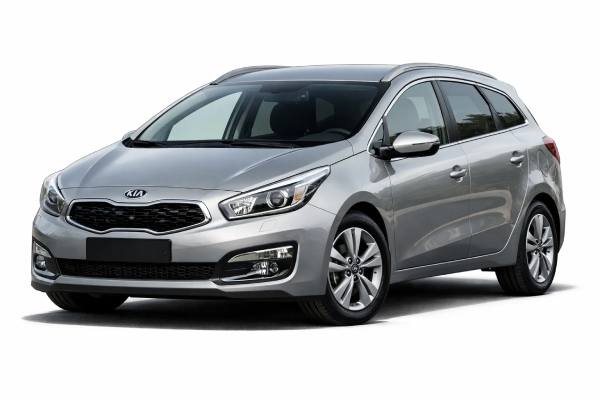
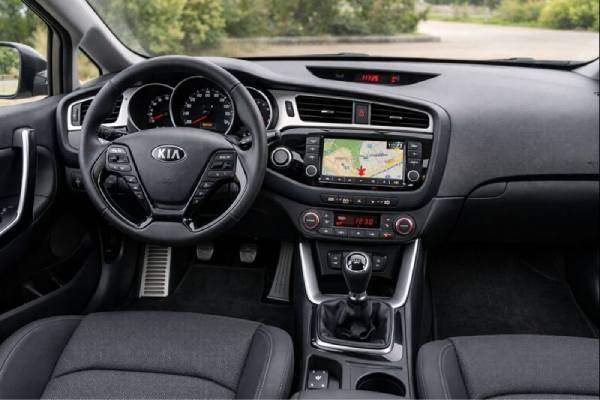
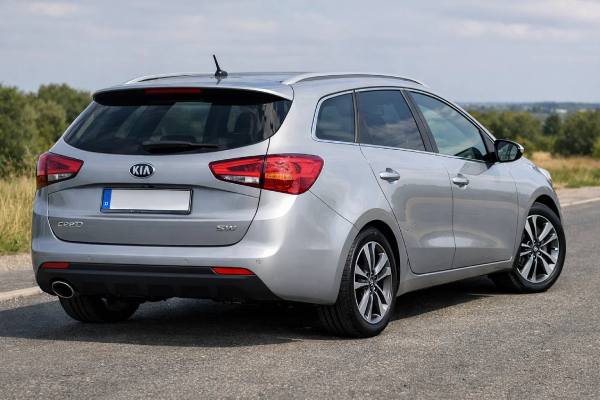
The facelift Kia Cee’d SW (JD) with the 1.4 Gamma MPi (100 hp) is the “simple petrol wagon” choice in a market full of turbo engines and complex emissions hardware. It uses a naturally aspirated, multi-point-injection engine that is generally tolerant of mixed driving and short trips, while the Sportswagon body delivers genuine family practicality without the height and weight of an SUV. The tradeoff is performance: it’s designed for smooth, steady progress rather than quick overtakes when fully loaded. Where this model shines is predictable running costs, straightforward servicing, and fewer turbo-related variables as the miles add up. If you choose a well-maintained example and keep up with fluids and wear items, it can be one of the calmer long-term ownership bets in the compact estate class.
At a Glance
- Naturally aspirated MPi petrol is typically simpler to own than small turbo petrols, especially for short-trip use.
- Sportswagon packaging is the big win: a wide, square boot and practical rear seat fold.
- Best for steady commuting and family duties; not ideal if you frequently overtake with a full load on steep roads.
- Caveat: many cars live on budget servicing—verify oil quality and cooling-system upkeep, not just mileage.
- Typical interval: engine oil and filter every 15,000 km / 12 months, and shorten it to 10,000 km for mostly city driving.
Jump to sections
- Kia Cee’d SW JD 1.4 MPi focus
- Kia Cee’d SW 1.4 MPi data
- Kia Cee’d SW trims and safety kit
- Common problems and recalls
- Service schedule and buyer advice
- Road manners and mpg
- Best alternatives to consider
Kia Cee’d SW JD 1.4 MPi focus
The facelift Cee’d SW is a practical compact estate that feels “right-sized” for daily life: easy to park, stable on the motorway, and genuinely useful when you fold the rear seats. With the 1.4 Gamma MPi, the personality shifts toward simplicity. There’s no turbocharger to manage heat and boost, and multi-point injection (MPi) tends to be less sensitive to short-trip patterns than many direct-injection turbo petrols. That makes this variant attractive for owners who value predictable running costs over outright performance.
The wagon body is the real headline. The boot is wide, the tailgate opening is tall, and the load floor is designed for real items—strollers, luggage, tool cases, and groceries without awkward stacking. You also get a driving position and cabin layout that many owners find straightforward and ergonomic. Controls are typically intuitive, and service access for routine maintenance is usually uncomplicated, which matters if you plan to keep the car long term or use independent workshops.
Performance expectations should be realistic. A 100 hp naturally aspirated engine can feel perfectly fine in town and at steady cruise speeds, but it won’t mask a heavy load the way a torquey diesel or small turbo might. The way to enjoy this powertrain is to drive it smoothly: carry momentum, downshift early on hills, and treat overtakes as a planned maneuver rather than a last-second squeeze.
As a used purchase, this model is often found in “family duty” condition: child-seat use, short commutes, and budget tires. That’s not automatically negative, but it makes inspection important. Focus on evidence of consistent maintenance—oil changes at sensible intervals, coolant condition, brake fluid age, and suspension wear. The Cee’d platform itself is generally robust, so most ownership “surprises” come from neglected consumables or poor repair quality rather than fundamental design flaws.
If your goal is a comfortable wagon that can handle school runs, shopping, and occasional road trips with minimum mechanical drama, the 1.4 MPi facelift Cee’d SW is a sensible candidate—especially if your driving pattern doesn’t suit modern diesels or high-strung turbo petrols.
Kia Cee’d SW 1.4 MPi data
Specs can vary by market and homologation cycle, so treat the figures below as typical for the facelift-era Cee’d SW with the 1.4 Gamma MPi around 100 hp (often listed as 100 PS). Always confirm exact values using your VIN data, registration documents, and local service literature.
Powertrain and efficiency
| Item | Typical specification |
|---|---|
| Engine family / code | Gamma 1.4 MPi (often referenced as G4FA in many applications) |
| Engine layout | Inline-4, DOHC, 4 valves/cyl (16 valves) |
| Displacement | 1.4 L (1,396 cc) |
| Bore × stroke | ~77.0 × 74.2 mm (3.03 × 2.92 in) |
| Induction | Naturally aspirated |
| Fuel system | MPi (multi-point injection) |
| Compression ratio | ~10.5:1 (market dependent) |
| Max power | 100 hp (74 kW) @ ~6,000 rpm |
| Max torque | ~134 Nm (99 lb-ft) @ ~4,000 rpm |
| Timing drive | Chain |
| Rated efficiency | commonly ~6.0–6.6 L/100 km (36–39 mpg US / 43–47 mpg UK), depending on cycle and wheels |
| Real-world highway @ 120 km/h | often ~7.0–7.8 L/100 km (30–34 mpg US / 36–40 mpg UK) in steady conditions |
Transmission and driveline
| Item | Typical specification |
|---|---|
| Transmission | 6-speed manual common; 6-speed automatic available in some markets |
| Drive type | FWD |
| Differential | Open (traction control via ESC/brake-based systems) |
Chassis and dimensions
| Item | Typical value |
|---|---|
| Suspension (front / rear) | MacPherson strut / multi-link (trim and market dependent) |
| Steering | Electric power steering (EPS) |
| Brakes | Front ventilated discs; rear discs on many trims (some lower trims may have rear drums in some markets) |
| Wheels/tyres (popular) | 205/55 R16 (common); 225/45 R17 on higher trims |
| Ground clearance | ~140–150 mm (5.5–5.9 in), market dependent |
| Length / width / height | ~4,505 / 1,780 / 1,485 mm (177.4 / 70.1 / 58.5 in) |
| Wheelbase | ~2,650 mm (104.3 in) |
| Turning circle (kerb-to-kerb) | ~10.6 m (34.8 ft) |
| Kerb (curb) weight | ~1,260–1,350 kg (2,778–2,976 lb), equipment dependent |
| GVWR | ~1,820–1,900 kg (4,012–4,189 lb), market dependent |
| Fuel tank | ~53 L (14.0 US gal / 11.7 UK gal) |
| Cargo volume | commonly ~528 L (18.6 ft³) seats up / ~1,642 L (58.0 ft³) seats down (method varies) |
Performance and capability
| Metric | Typical value |
|---|---|
| 0–100 km/h (0–62 mph) | ~12.5–14.0 s (gearbox and weight dependent) |
| Top speed | ~175–185 km/h (109–115 mph) |
| Braking distance 100–0 km/h | ~38–41 m (tire condition and trim matter) |
| Towing capacity | often ~1,200 kg (2,646 lb) braked / ~600 kg (1,323 lb) unbraked (verify locally) |
| Payload | often ~450–550 kg (992–1,213 lb), trim dependent |
Fluids and service capacities (typical)
| Item | Typical guidance (verify by VIN) |
|---|---|
| Engine oil | commonly 5W-30 meeting required ACEA/API spec |
| Engine oil capacity | ~3.3–3.6 L (3.5–3.8 US qt) with filter depending on sump/version |
| Coolant | long-life ethylene glycol coolant; mix ratio typically 50/50 unless specified |
| Automatic transmission fluid (if equipped) | use only the specified OEM ATF (often Hyundai/Kia SP-type fluid) |
| A/C refrigerant | varies by year/equipment; confirm under-hood label |
| Key torque specs | wheel nuts typically ~88–108 Nm (65–80 lb-ft), verify for your wheels |
Safety and driver assistance
| Item | Notes |
|---|---|
| Crash ratings | Euro NCAP rating exists for this generation; test protocol depends on year |
| Core safety | multiple airbags, ESC stability control, ABS, ISOFIX/LATCH |
| ADAS availability | trim and market dependent (parking aids more common than advanced AEB in this era) |
Kia Cee’d SW trims and safety kit
Trim levels for the facelift Cee’d SW vary by country, but the ownership logic stays the same: the 1.4 MPi is usually paired with practical equipment grades, and the big decision is how much comfort and safety tech you want versus wheel size and running cost. Because this engine is modest in output, it often feels best in trims that keep weight and rolling resistance sensible—typically mid trims with 16-inch wheels rather than the heaviest wheel packages.
Trims and options that actually matter
When shopping, prioritize features that improve daily usability and long-term satisfaction:
- Wheel and tyre package: 205/55 R16 setups usually ride better, cost less, and can improve real-world fuel economy. Larger wheels can look great but increase tyre cost and impact harshness—more noticeable on a wagon that sometimes carries weight.
- Parking aids: rear sensors and a reversing camera are genuinely useful on an estate, especially when the boot is full and rear visibility is reduced.
- Climate features: automatic climate control, heated seats, and a heated steering wheel (market dependent) can make the car feel “one class above” in winter.
- Infotainment tier: stable Bluetooth, responsive touchscreen behavior, and working USB ports are more important than fancy navigation graphics.
Quick identifiers during a viewing:
- Button checks often reveal trim: heated seat switches, parking sensor toggles, steering-wheel audio controls, and cruise control buttons.
- Interior wear clues: shiny steering wheels, collapsed seat bolsters, and worn pedal rubbers can signal heavy use regardless of mileage reading.
Safety ratings and what to look for today
The JD Cee’d platform is known for strong baseline occupant protection for its era, but real-world safety depends heavily on maintenance and tire quality. Even a well-rated car becomes less safe on mismatched budget tyres or with tired brakes.
Key safety items to confirm:
- Airbag warning light: should illuminate briefly at key-on, then go out. A permanently lit or missing light is a red flag.
- ABS/ESC behavior: the car should track straight under firm braking, and there should be no ABS/ESC warning lights.
- Seatbelts and child-seat anchors: ensure ISOFIX/LATCH points are intact and not damaged by repeated child-seat installation.
Driver assistance (ADAS) reality for this era
Many facelift Cee’d SWs rely on solid fundamentals—ESC, traction control, and good chassis balance—rather than advanced modern ADAS. Depending on market and trim, you may find blind-spot monitoring or rear cross-traffic alert, but treat them as optional extras.
Service note: if the car has sensor-based features (parking sensors, blind-spot radar), check the quality of any body repairs. Poor bumper alignment or aftermarket wiring can cause intermittent faults that feel “electrical” but are often physical mounting problems.
Overall, the best trim choice is usually the one with the comfort equipment you’ll use daily, paired with sensible wheels and a clean maintenance record.
Common problems and recalls
The 1.4 Gamma MPi is generally a durable, conventional petrol engine, and many issues seen on these cars are more about age, use pattern, and maintenance quality than about a single catastrophic weak point. Still, a few patterns come up often enough that they deserve a focused checklist.
Common issues (low to medium cost)
- Ignition coil and spark plug wear
Symptoms: hesitation under load, rough idle, occasional misfire codes.
Likely cause: normal wear, accelerated by old plugs or cheap replacements.
Remedy: replace plugs at sensible intervals with correct spec; replace coil(s) if misfire follows a cylinder. - Throttle body and idle control deposits
Symptoms: unstable idle, low-speed surging, stalling when cold.
Likely cause: carbon and oil vapor deposits in the intake/throttle area.
Remedy: cleaning and adaptation procedure where required; confirm vacuum hoses are sound. - Cooling system small leaks
Symptoms: slow coolant loss, sweet smell after driving, damp hose joints.
Likely cause: aging clamps, radiator end tank seepage, or water pump weep.
Remedy: pressure test and address early—overheating is the preventable “big bill” on any engine. - Rear brake slider sticking
Symptoms: uneven pad wear, hot wheel after a drive, squeal, mild pull.
Likely cause: corroded guide pins or torn boots.
Remedy: clean and lubricate properly, replace pins/boots if pitted.
Occasional issues (can become costly if ignored)
- Clutch wear (manual cars)
Symptoms: high bite point, slipping in higher gears, shudder on take-off.
Likely cause: normal wear, accelerated by city driving and hill starts.
Remedy: clutch replacement; inspect flywheel condition during the job. - Suspension bushing and drop-link wear
Symptoms: knocking over small bumps, vague steering feel, uneven tyre wear.
Likely cause: age plus rough roads and heavy loads.
Remedy: replace worn links/bushings, then perform alignment. - Electric power steering clunks (where applicable)
Symptoms: low-speed knock through the wheel.
Likely cause: coupler/bushing wear in the steering column assembly.
Remedy: targeted replacement; confirm it’s not a suspension ball joint first.
Recalls, service campaigns, and how to verify
Recall applicability is VIN- and market-specific. The practical approach is consistent:
- Run an official VIN recall check and ask for proof of completion.
- Request dealer history printouts if possible, especially for cars with missing invoices.
- Scan for stored codes even if the dash is clear; old low-voltage events can leave “ghost” faults.
Pre-purchase checks that save money
- Start from cold and listen for unusual rattles that persist beyond the first moments.
- Drive until fully warm and confirm stable coolant temperature and consistent heater output.
- Test several steady-speed cruise conditions and then a few firm accelerations—smoothness matters more than speed here.
- Inspect underside corrosion points (subframe edges, rear suspension mounts, brake lines), especially in salted-road regions.
The good news: most problems are manageable if caught early. The bad news: neglected basics—old coolant, worn tires, overdue brake fluid—can make an otherwise solid wagon feel tired and expensive.
Service schedule and buyer advice
A naturally aspirated MPi engine gives you some “forgiveness” compared with a small turbo, but it still benefits from disciplined maintenance. The aim is simple: keep lubrication fresh, keep the cooling system healthy, and prevent small drivability issues from turning into recurring annoyances.
Practical maintenance schedule (distance/time)
- Engine oil and filter: every 15,000 km / 12 months. For heavy city use, frequent cold starts, or lots of idling, use 10,000 km intervals.
- Engine air filter: inspect yearly; replace typically 30,000–45,000 km depending on dust conditions.
- Cabin filter: every 15,000–30,000 km or yearly for cleaner HVAC performance.
- Spark plugs: typically 60,000–90,000 km depending on plug type and driving conditions; replace sooner if idle quality declines.
- Coolant: inspect yearly; replace per official schedule (often long-life), and never mix unknown coolant types.
- Brake fluid: every 2 years regardless of mileage.
- Manual transmission oil: check for leaks; consider a preventive change around 100,000–120,000 km if keeping the car long-term.
- Automatic transmission fluid (if equipped): follow the exact OEM interval and fluid spec; automatics reward correct servicing.
- Accessory belt and hoses: inspect annually after year 6; replace at cracking, glazing, noise, or seepage signs.
- Tyres: rotate every 10,000–12,000 km; align annually or after pothole strikes.
Fluid specifications and “doing it the safe way”
For buyers, the most important takeaway is documentation. A seller who can name the oil spec and show invoices usually maintained the car better overall. Practical tips:
- Use the correct oil spec, and avoid “whatever was on sale” service habits.
- Replace the cabin filter on time—poor airflow encourages fogging and makes A/C work harder.
- Keep brake fluid fresh; it’s cheap insurance against spongy brakes and internal corrosion.
Essential torque values (for planning)
Torque values vary by market hardware, but these ranges help you spot bad workmanship:
- Wheel nuts/bolts: typically 88–108 Nm (65–80 lb-ft)
- Oil drain plug: often 25–35 Nm (18–26 lb-ft)
If you see stripped threads, excessive sealant, or rounded fasteners, assume service quality was inconsistent.
Buyer’s guide: what to prioritize
Best signs
- Regular oil services (time-based, not only mileage-based).
- Clear coolant condition and no chronic top-ups.
- Even tire wear and a straight-tracking test drive.
- Clean braking behavior with no vibration and no “hot wheel” smell.
Red flags
- Mystery coolant, low coolant warnings, or evidence of overheating.
- Multiple cheap mismatched tyres (often signals budget maintenance).
- Persistent check lights, or a seller who recently disconnected the battery “to clear warnings.”
- No paperwork and vague claims like “it was always serviced.”
A well-kept 1.4 MPi Cee’d SW isn’t glamorous, but it’s often the car that simply shows up every morning and does the job without drama—exactly what many wagon buyers want.
Road manners and mpg
In the facelift Cee’d SW, driving feel is defined by stability and ease rather than excitement. The wagon body doesn’t radically change the platform’s behavior, but it does encourage a calmer, more “grown up” balance—especially when the boot is loaded. For daily use, the car’s best traits are predictable steering response, composed motorway tracking, and a ride that can be comfortable when paired with sensible tyres and wheel sizes.
Ride, handling, and NVH
- Ride comfort: 16-inch wheels are usually the sweet spot. They absorb pothole edges better and reduce the “thump” you can get on low-profile tyres.
- Cornering balance: neutral and safe. The car prefers smooth inputs, and stability control tuning is generally conservative—good for family duty.
- Steering: light around town, stable at speed. Feedback is moderate, but accuracy is usually good when suspension and alignment are healthy.
- Braking feel: typically consistent; the biggest variable is maintenance (fresh fluid and free-sliding calipers).
Noise at speed is commonly tyre-dominated. A quiet touring tyre can transform the cabin experience, while aggressive tread patterns can make the wagon sound older than it is.
Engine character: what 100 hp feels like
A naturally aspirated 1.4 needs revs compared with a turbo engine. The upside is linear response; the downside is that you must downshift earlier when the car is loaded or climbing. Best practice:
- Avoid lugging at very low rpm in a high gear; downshift instead.
- Keep momentum on hills, and treat overtakes as planned maneuvers.
- Expect the car to feel most relaxed at steady cruise, not when rushed.
Real-world fuel economy
Your fuel consumption will depend heavily on speed, load, temperature, and tyre choice. Typical real-world patterns:
- City-heavy driving: ~7.5–9.0 L/100 km (26–31 mpg US / 31–38 mpg UK), especially with short trips.
- Highway at 100–120 km/h: ~7.0–7.8 L/100 km (30–34 mpg US / 36–40 mpg UK).
- Mixed driving: ~7.2–8.4 L/100 km (28–33 mpg US / 34–39 mpg UK).
Cold weather often pushes consumption up due to longer warm-up time and cabin heating demand. The MPi engine is generally tolerant of short trips, but combining errands into fewer, longer drives still helps.
Load and towing impressions
If towing is part of your use case, this engine can do light towing, but expect to downshift and accept higher consumption. Under load:
- Plan earlier gear changes on grades.
- Keep speeds moderate to reduce cooling-system stress.
- Shorten oil intervals if you tow regularly.
Overall, the Cee’d SW 1.4 MPi is a comfortable, honest wagon that rewards smooth driving and good tyres more than aggressive throttle. If your expectations match its strengths, it can feel more relaxing than many “faster on paper” cars.
Best alternatives to consider
The compact estate segment offers several strong options, and the right rival depends on whether you value simplicity, space, or a particular driving feel. The Cee’d SW 1.4 MPi’s key advantage is straightforward ownership; rivals often win on either performance or cabin polish.
VW Golf Variant 1.4/1.5 petrol (non-turbo vs turbo mix)
The Golf Variant can feel more premium inside and may have a slightly more refined motorway character. However, many engines in this era are turbocharged, which can add complexity as mileage rises. If you want a more upscale cabin and are willing to accept higher repair variability, it’s a strong benchmark.
Škoda Octavia Combi 1.4 petrol
If space is your top priority, the Octavia Combi is often the practical king. It tends to offer more rear-seat room and a larger-feeling cargo area. The tradeoff is that it can feel bigger in tight urban parking, and used prices can be firm depending on demand.
Ford Focus Estate 1.6 Ti-VCT or similar non-turbo petrol
A naturally aspirated Focus petrol can be a good “simple engine” alternative with pleasant chassis feel. It often drives with a bit more agility than the Kia, but condition and maintenance history matter just as much—especially suspension wear and corrosion in some climates.
Hyundai i30 Wagon 1.4 MPi
As the closest cousin, the i30 Wagon often matches the Kia’s ownership logic: sensible packaging, conservative engineering, and similar service patterns. In many cases, the best-maintained example between the two is the better buy, regardless of badge.
When the Kia is the better pick
Choose the Cee’d SW 1.4 MPi if you want:
- A wagon that’s practical without SUV bulk,
- A generally predictable maintenance profile, and
- An engine that’s tolerant of varied driving patterns.
Consider a rival if you want:
- More effortless loaded performance (a torquier turbo or diesel),
- A more premium cabin feel, or
- The newest generation of driver-assistance tech as standard.
In used markets, the “best car” is often the one with the cleanest service history and the most honest condition. For this Kia, prioritize maintenance records, tyre quality, and cooling-system health—those items often matter more than small differences in trim.
References
- Kia Recalls | Kia Europe 2026 (Recall Database)
- Engine Oil Grades and Capacities 2023 (Service Data)
- 7.2 Kia Service Intervals.xlsx 2025 (Maintenance Schedule)
- euroncap_kia_ceed_2012_5stars.pdf 2012 (Safety Rating)
Disclaimer
This article is for informational purposes only and is not a substitute for professional inspection, diagnosis, or repair. Specifications, torque values, service intervals, and procedures can vary by VIN, market, model year, and equipment, so always verify details using your official Kia owner’s literature and service documentation for the exact vehicle.
If this guide helped you, please consider sharing it on Facebook, X (Twitter), or your preferred communities—your support helps us keep producing detailed ownership content.