
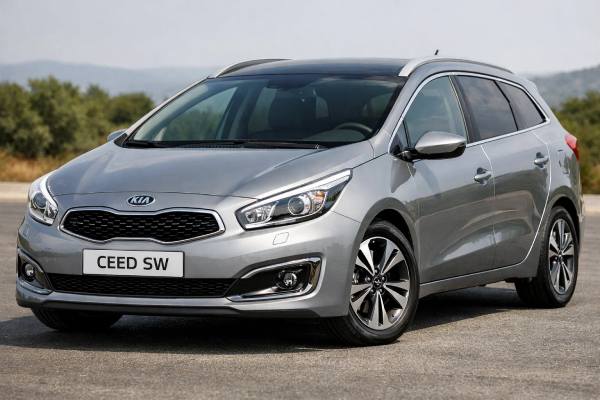
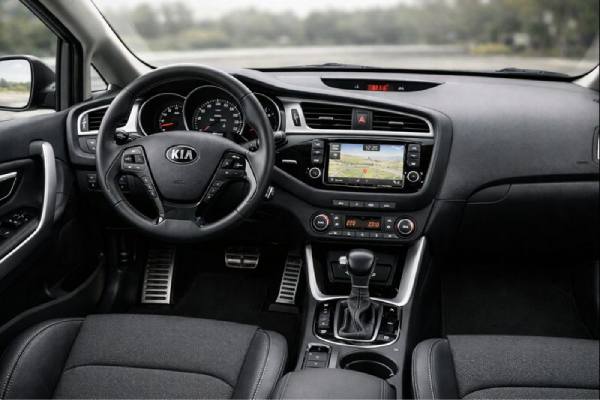
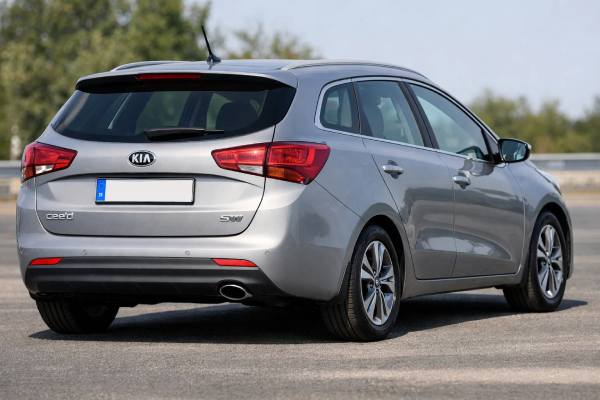
The facelifted Kia Cee’d SW (JD) with the 1.6 Gamma GDi is an honest, naturally aspirated petrol wagon built around everyday usability: stable road manners, sensible running costs, and a practical boot that can handle family life without feeling bulky in town. The GDi badge matters here—direct injection brings crisp response and decent efficiency for the class, but it also means oil quality and driving pattern (lots of short trips vs mixed use) can influence long-term cleanliness inside the intake. In 135 hp form, performance is adequate rather than sporty, yet the car’s gearing, braking, and chassis tuning make it feel confident at motorway speeds. If you want a compact estate that prioritizes predictability, safety equipment, and straightforward servicing over turbo punch, this is one of the more balanced options from its era.
Quick Specs and Notes
- Strong everyday practicality with a large, square cargo area and low loading lip for the class.
- Naturally aspirated 1.6 GDi delivers smooth, linear power with fewer turbo-related parts to age.
- Stable motorway tracking and predictable handling; works well with 16-inch tyres for comfort.
- Direct-injection engines benefit from stricter oil discipline and occasional longer drives to reduce deposits.
- Plan engine oil and filter service every 15,000 km (or 12 months), sooner with frequent short trips.
Guide contents
- Kia Cee’d SW JD ownership profile
- Kia Cee’d SW 1.6 GDi specifications
- Kia Cee’d SW equipment and safety tech
- Reliability patterns and service actions
- Upkeep schedule and pre-purchase checks
- On-road performance and consumption
- How it stacks up to rivals
Kia Cee’d SW JD ownership profile
Think of this Cee’d Sportswagon as a compact estate that was engineered to be easy to live with. The 2015–2018 facelift brought small refinements in noise suppression, infotainment revisions depending on market, and incremental safety and driver-assistance availability. The fundamentals stayed the same: a torsionally solid body, a suspension tune that prioritizes stability over sharpness, and ergonomics that feel “European” in seating position and pedal placement.
With the 1.6 Gamma GDi (135 hp), the ownership experience is defined by linear, naturally aspirated power delivery. Around town it feels clean and predictable, but it will not surge forward like the turbocharged 1.0/1.4 rivals from the same era. Instead, it rewards a driver who uses revs when joining faster traffic. For many owners, that’s a positive: there is no turbocharger, intercooler plumbing, or boost-control hardware to age. The trade-off is that peak torque arrives higher in the rev range, so hills and overtakes often mean a downshift.
The SW body is where this model earns its keep. The boot is long and practical, the rear opening is wide, and the load floor is designed for daily use—pushchairs, flat-pack boxes, luggage for four, and DIY runs. A roof rail-equipped example also becomes a capable “weekend gear” car without stepping up to an SUV. On 16-inch wheels, ride comfort is generally better than many sporty hatchbacks, and road noise is easier to manage on longer trips.
This powertrain suits owners who prefer routine maintenance over complex fixes. The GDi system uses direct fuel injection, which improves efficiency and throttle response, but can raise the likelihood of intake-valve deposits when the car sees frequent short trips and long oil intervals. If you do mixed driving and keep oil services consistent, the engine tends to age more gracefully. Overall, the facelift SW 1.6 GDi is best viewed as a calm, sensible estate with a “keep it serviced and it keeps going” personality.
Kia Cee’d SW 1.6 GDi specifications
Below are practical, commonly observed specifications for the 2015–2018 facelift Cee’d SW (JD) with the 1.6 Gamma GDi. Exact figures can vary by market, emissions certification, wheel/tyre package, and transmission.
Powertrain and efficiency
| Item | Specification |
|---|---|
| Code | Gamma GDi (commonly G4FD family, market-dependent) |
| Engine layout and cylinders | Inline-4, DOHC, 16 valves (4 valves/cyl) |
| Bore × stroke | ~77.0 × 85.4 mm (~3.03 × 3.36 in) |
| Displacement | 1.6 L (1,591 cc) |
| Induction | Naturally aspirated |
| Fuel system | Direct injection (GDi) |
| Compression ratio | ~11.0:1 (typical for this engine family) |
| Max power | 135 hp (99–100 kW) @ ~6,300 rpm* |
| Max torque | ~164 Nm (~121 lb-ft) @ ~4,850 rpm* |
| Timing drive | Chain |
| Rated efficiency | ~5.9–6.6 L/100 km (40–48 mpg US / 43–57 mpg UK)** |
| Real-world highway @ 120 km/h (75 mph) | ~6.5–7.2 L/100 km (33–36 mpg US / 39–43 mpg UK) |
- Output and rpm points depend on ECU calibration and emissions market.
** Ratings depend heavily on wheels, gearbox, and test cycle used locally.
Transmission and driveline
| Item | Specification |
|---|---|
| Transmission | 6-speed manual (common); 6-speed automatic in some markets |
| Drive type | FWD |
| Differential | Open |
Chassis and dimensions (Sportswagon body)
| Item | Specification |
|---|---|
| Suspension (front/rear) | MacPherson strut / multi-link (typical JD setup) |
| Steering | Electric power steering (EPS) |
| Brakes (front/rear) | Disc / disc (often vented front) |
| Wheels and tyres (popular) | 205/55 R16 (also 225/45 R17 common) |
| Ground clearance | ~140–150 mm (~5.5–5.9 in) |
| Length / width / height | ~4,505 / 1,780 / 1,485 mm (~177.4 / 70.1 / 58.5 in) |
| Wheelbase | ~2,650 mm (~104.3 in) |
| Turning circle (kerb-to-kerb) | ~10.4 m (~34.1 ft) |
| Kerb (curb) weight | ~1,270–1,360 kg (~2,800–3,000 lb) |
| Fuel tank | ~53 L (~14.0 US gal / 11.7 UK gal) |
| Cargo volume | ~528 L (~18.6 ft³) seats up / ~1,642 L (~58.0 ft³) seats down (VDA, typical) |
Performance and capability
| Item | Typical result |
|---|---|
| 0–100 km/h (0–62 mph) | ~9.8–10.7 s |
| Top speed | ~190–197 km/h (~118–122 mph) |
| Braking distance (100–0 km/h) | ~36–39 m (typical with good tyres) |
| Towing capacity | Often ~1,200–1,400 kg braked / ~600 kg unbraked (market-dependent) |
| Payload | Often ~450–600 kg (depends on trim and equipment) |
Fluids and service capacities (typical guidance)
| Item | Specification (verify for your VIN) |
|---|---|
| Engine oil | Usually ACEA A5/B5 or A3/B4 depending on market; common viscosities 5W-30 or 5W-40; capacity ~3.6–3.8 L (~3.8–4.0 US qt) |
| Coolant | Ethylene glycol long-life coolant; typical 50/50 mix; capacity ~5.5–6.5 L (~5.8–6.9 US qt) |
| Manual gearbox | MTF (GL-4) typically 75W-85; capacity ~1.8–2.1 L |
| Automatic (if fitted) | ATF spec varies; commonly SP-IV family; capacity varies by service method |
| A/C refrigerant | Type varies by year/market; charge typically ~450–550 g (verify under-hood label) |
Key torque specs (critical fasteners only; verify for your VIN)
| Item | Typical torque |
|---|---|
| Wheel nuts | ~88–108 Nm (~65–80 lb-ft) |
| Engine oil drain plug | ~30–35 Nm (~22–26 lb-ft) |
| Spark plugs | ~18–22 Nm (~13–16 lb-ft) |
Kia Cee’d SW equipment and safety tech
Trim names vary widely by country, but the facelift Cee’d SW typically followed a familiar ladder: a value-focused base grade, a mid-trim with comfort and infotainment upgrades, and a higher grade adding larger wheels, lighting improvements, and more driver assistance. When shopping, prioritize equipment that changes day-to-day satisfaction (seats, lighting, parking aids) and equipment that changes cost of ownership (wheel size, tyre type, brake package).
Trims and options that matter most
- Wheel and tyre package: 16-inch setups often deliver the best balance of ride comfort, tyre cost, and pothole resilience. 17-inch wheels can sharpen steering response but usually increase road noise and replacement cost.
- Seat comfort and heating: Heated seats and steering wheel (where offered) are meaningful in cold climates and can be a stronger quality-of-life upgrade than cosmetic packages.
- Infotainment generation: Later facelift cars may have better phone integration and faster head units. Check Bluetooth stability, USB ports, and whether navigation uses an SD card (and whether updates are available in your market).
- Parking aids: Rear sensors are common; a reversing camera and front sensors reduce bumper scuffs on a longer wagon tail.
Safety ratings
The Cee’d line achieved strong crash-test results for its era, with high Adult and Child Occupant scores under Euro NCAP’s then-current regime. While the headline star rating is reassuring, remember that test protocols evolve. A 2012-era five-star car is not directly comparable to a five-star car tested under much newer, stricter rules. For a buyer today, the practical takeaway is that the Cee’d SW’s structure and restraint systems were well-regarded, and facelift cars often improved standard safety equipment availability.
Safety systems and ADAS
Core safety hardware on most cars includes:
- Multiple airbags (front, side, and curtain airbags are common; confirm count by trim)
- ABS and ESC (electronic stability control) and traction control
- ISOFIX/LATCH anchor points for child seats (usually on outer rear seats)
Driver assistance features depend heavily on trim and option packs. In this generation, you may see:
- AEB (Autonomous Emergency Braking) in higher trims or later years in certain markets
- Lane departure warning and sometimes lane-keeping support
- Blind-spot monitoring and rear cross-traffic alert on better-equipped cars
- Cruise control widely available; adaptive cruise is less common than on newer rivals
A practical service note: if your car has a camera-based lane system or radar-based AEB, windscreen replacement, front-end repairs, and wheel alignment can trigger recalibration needs. When inspecting a used car, confirm that warning lights are absent and that all driver assistance features can be demonstrated in a short test drive.
Reliability patterns and service actions
The facelift Cee’d SW with the 1.6 GDi is generally a dependable package when maintained on time. Most expensive surprises come from neglected fluids, repeated short-trip use, or ignored warning signs. Below is a practical way to think about issues—by prevalence and cost tier—so you can prioritize inspection and preventive care.
Common (low to medium cost)
- Ignition coil or spark plug wear
Symptoms: misfire under load, flashing engine light, rough idle.
Likely cause: worn plugs, weak coil, or moisture intrusion.
Remedy: replace plugs at the correct interval (use the specified type), replace the failing coil(s), and address any oil contamination from a leaking rocker cover gasket if present. - GDi intake deposits (usage-related)
Symptoms: slightly lumpy cold idle, reduced response, higher fuel consumption over time.
Likely cause: direct injection means fuel does not wash intake valves; deposits can build with short trips and extended oil intervals.
Remedy: tighten oil-change discipline, use high-quality oil, include regular longer drives, and consider professional intake cleaning if symptoms justify it. - PCV valve and crankcase ventilation issues
Symptoms: oil smell, minor oil seepage, unstable idle, increased consumption.
Likely cause: PCV valve sticking or hoses aging.
Remedy: inspect/replace PCV components and check for related gasket seepage.
Occasional (medium cost)
- Thermostat, coolant leaks, or water pump seepage
Symptoms: slow warm-up, temperature creeping in traffic, coolant smell, low coolant level.
Likely cause: age-related seal wear or thermostat sticking.
Remedy: pressure-test the system, replace the failing component, and refill with correct coolant mix. - Manual clutch wear and dual-mass flywheel behavior (if fitted)
Symptoms: judder on take-off, vibration at idle, slipping under acceleration (worn clutch).
Likely cause: driving style, urban use, towing, or high mileage.
Remedy: clutch kit replacement; address flywheel if noise/vibration is out of normal range.
Rare (higher cost, but watch for early signs)
- Catalyst damage after prolonged misfire
Symptoms: loss of power, sulfur smell, persistent engine light, failed emissions test.
Likely cause: driving with misfires can overheat the catalytic converter.
Remedy: fix misfire immediately; replace catalyst only if efficiency is confirmed poor. - Automatic transmission shift quality issues (where fitted)
Symptoms: shift flare, shudder, delayed engagement.
Likely cause: fluid degradation or software calibration mismatch after repairs.
Remedy: verify fluid condition/spec, check for updates, and avoid “universal” ATF.
Recalls, TSBs, and software updates
Exact recalls and technical service actions are VIN- and market-specific. The safest approach is procedural:
- Run an official VIN recall check and ask a dealer to print completion status.
- Review service history for software updates (engine/infotainment) and warranty work.
- Scan the car with a capable diagnostic tool to check for stored history codes, not just active warning lights.
For this generation, recall themes across the industry often relate to airbags, braking hydraulics, and electrical harness routing—so verify completion rather than relying on generalizations. A clean bill of health here meaningfully reduces risk.
Upkeep schedule and pre-purchase checks
A 1.6 GDi wagon can be a low-drama long-term car if you treat maintenance as a routine, not a reaction. The schedule below blends typical manufacturer intervals with sensible “real-world” adjustments for direct injection and short-trip use.
Practical maintenance schedule (distance/time)
- Engine oil and filter: every 15,000 km (9,000–10,000 miles) or 12 months; consider 10,000–12,000 km if most trips are short, cold, or urban. Use the correct ACEA/API grade and viscosity for your climate.
- Engine air filter: inspect every oil service; replace typically 30,000 km (sooner in dusty areas).
- Cabin air filter: 15,000–30,000 km or yearly if you want better HVAC performance.
- Spark plugs: commonly 60,000–100,000 km depending on plug type; for GDi, staying closer to the earlier end helps protect the catalyst and coils.
- Coolant: usually 5 years then every 2–3 years (market-dependent coolant type).
- Brake fluid: every 2 years regardless of mileage.
- Manual gearbox oil: not always listed as routine, but a preventative change around 100,000–120,000 km can improve shift feel and bearing life.
- Automatic transmission fluid (if equipped): follow the correct spec; consider a preventative service around 60,000–100,000 km depending on use and service history.
- Aux belt and tensioner: inspect at 60,000 km, replace with signs of cracking/noise.
- Tyre rotation and alignment: rotate every 10,000–12,000 km; alignment check yearly or after pothole impacts.
- 12 V battery: test yearly after year 4; many last 4–6 years depending on climate and usage.
Fluids, specs, and “what to verify”
Because specifications vary by VIN and region, treat these as a checklist:
- Confirm the oil spec (ACEA/API) and viscosity for your market and engine calibration.
- Verify coolant type (do not mix incompatible coolants).
- For automatics, verify the exact ATF specification—using the wrong fluid can create shudder and wear.
- Check the under-hood label for A/C refrigerant type and charge mass.
Buyer’s guide: what to inspect before purchase
Engine and drivability
- Cold start: should idle cleanly after a brief settle; persistent stumbling can hint at deposits, vacuum leaks, or ignition issues.
- Test drive: confirm strong pull from 2,000 rpm upward; the engine should feel smooth to the redline without misfire.
- Look for oil seepage around the rocker cover and timing cover edges.
Cooling system
- Check coolant level and condition; dried coolant marks around the radiator or pump area deserve a pressure test.
Chassis and brakes
- Listen for front-end knocks over rough roads (bushings, drop links).
- Brake pedal should be firm and consistent; a soft pedal suggests fluid age or air.
Wheels and tyres
- Uneven wear points to alignment or worn suspension parts.
- If fitted with 17-inch wheels, inspect rims for bends and tyres for sidewall damage.
Paperwork
- Prioritize cars with documented oil services at sensible intervals.
- Confirm recall completion status and verify that major options (camera, sensors, ADAS) function properly.
Long-term outlook: when serviced correctly, this drivetrain tends to remain mechanically sound, with most “big” costs avoidable through early attention to misfires, coolant issues, and fluid correctness.
On-road performance and consumption
In motion, the 1.6 GDi Cee’d SW feels more “grown-up commuter” than “hot wagon.” Steering is typically light at parking speeds and settles into a stable, slightly numb-but-secure weighting on the motorway. The chassis is tuned to be predictable: it resists drama in quick lane changes, and the rear end follows cleanly even when the boot is loaded. With 16-inch tyres, the car usually rides with a rounded edge that suits imperfect roads; with larger wheels, you may notice sharper impacts and more tyre roar.
Powertrain character
The naturally aspirated GDi engine responds cleanly to small throttle inputs, which makes it easy to drive smoothly in traffic. It does not deliver a big low-end shove—peak torque arrives higher—so passing often requires a downshift in a manual or a deliberate kickdown in an automatic. On a 6-speed manual, the gearbox generally suits the engine well: keep it in the mid-range and it feels willing. On a 6-speed automatic (where offered), the car is more relaxed but can feel less urgent during sudden overtakes.
Real-world efficiency
Direct injection helps this engine produce respectable fuel economy for a petrol estate, but results vary with speed and trip pattern:
- City driving: typically 8.0–9.5 L/100 km (25–29 mpg US / 30–35 mpg UK), depending on traffic and temperature.
- Mixed driving: typically 7.0–7.8 L/100 km (30–34 mpg US / 36–40 mpg UK).
- Motorway at 120 km/h (75 mph): typically 6.5–7.2 L/100 km (33–36 mpg US / 39–43 mpg UK).
Cold weather can add roughly 0.5–1.5 L/100 km in short-trip use due to longer warm-up and cabin heating demand.
Performance metrics that matter
For most buyers, the meaningful numbers are “safe merge” and “comfortable cruise.” Expect 0–100 km/h in about 10 seconds (varying by gearbox and load). Braking confidence is usually solid when the car wears quality tyres and fresh brake fluid—an overlooked maintenance item that strongly affects pedal feel on long descents.
Load carrying
The SW body handles loads well, but remember that extra mass reduces urgency and increases fuel use. If you routinely carry heavy cargo, prioritize:
- Matching tyres to the correct load rating
- Regular rear suspension inspection (bushings and dampers)
- Brake servicing discipline (pads, fluid, and caliper slide lubrication)
Overall, the driving experience is calm and consistent—exactly what many estate buyers want—so long as you accept that this 1.6 GDi is built for steady progress, not effortless turbo torque.
How it stacks up to rivals
In the compact estate class, the Cee’d SW 1.6 GDi competes most directly with mainstream European wagons that often used smaller turbo petrol engines. Your best choice depends on what you value: torque and tuning sophistication, cabin refinement, or predictable costs.
Versus VW Golf Variant and Skoda Octavia Combi (TSI petrol)
- Rivals’ edge: turbo torque makes them feel quicker at low rpm, especially when loaded. Many offer a broader engine range and, in some trims, a more premium cabin feel.
- Kia’s edge: the naturally aspirated setup avoids turbo-related aging concerns, and the Cee’d SW often represents better value on the used market for similar equipment.
- Decision tip: if you want effortless overtakes without downshifting, the turbo cars win. If you want simpler hardware and are happy to use revs, the Kia holds its own.
Versus Ford Focus Estate (EcoBoost era)
- Rivals’ edge: sharp steering and handling balance; turbos feel lively in everyday driving.
- Kia’s edge: typically calmer ride and stable motorway demeanor; often easier to live with as a family “do-everything” car.
- Decision tip: choose the Focus for driving engagement, the Kia for predictable comfort and wagon practicality.
Versus Hyundai i30 Wagon (shared family DNA)
- Similarities: comparable platform philosophy, practical packaging, and ownership approach.
- Differences: equipment packaging and suspension feel can differ by market; some i30 variants used different petrol engines and trim mixes.
- Decision tip: buy on condition, service history, and equipment—you’ll feel bigger differences between individual cars than between badges.
Versus Opel/Vauxhall Astra Sports Tourer
- Rivals’ edge: some engines deliver stronger midrange punch; cabin design varies by year and can feel more “Germanic.”
- Kia’s edge: straightforward ergonomics and typically strong value-per-feature in many markets.
- Decision tip: compare ride noise and seat comfort carefully—these vary widely by tyre choice and trim.
The bottom line
The Cee’d SW 1.6 GDi is most compelling when you want:
- A compact wagon with real cargo usability
- Smooth, linear petrol power without turbo complexity
- A car that feels stable at speed and manageable in town
It is less ideal if you prioritize low-rpm torque, maximum refinement at high speed, or the newest driver-assistance technology. In the used market, a well-maintained Kia often beats a more “prestigious” rival that missed services or ran extended oil intervals—so condition and documentation should lead the decision.
References
- Engine Oil Grades and Capacities 2023 (Owner’s Guide)
- 7.2 Kia Service Intervals V25.12.xlsx 2026 (Service Intervals)
- Kia Recalls | Kia Europe 2026 (Recall Database)
- New-generation Kia cee’d awarded top safety score by EuroNCAP – Kia Slovakia s.r.o. 2012 (Safety Rating)
Disclaimer
This article is for informational purposes only and is not a substitute for professional inspection, diagnosis, or repair. Specifications, torque values, service intervals, and procedures can vary by VIN, market, model year, and installed equipment; always verify details against your vehicle’s official service documentation and labels before performing work.
If you found this guide useful, consider sharing it on Facebook, X (Twitter), or your preferred forum to help others support and discover our work.