
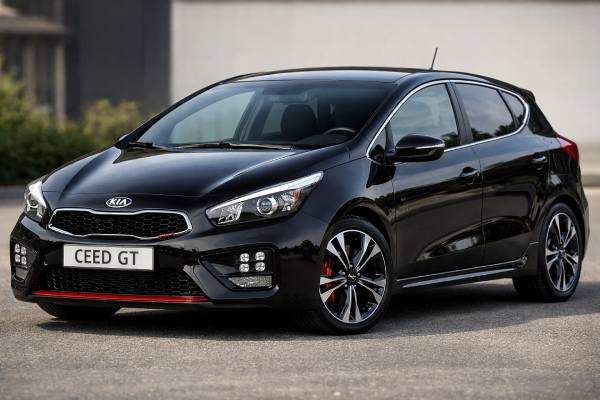
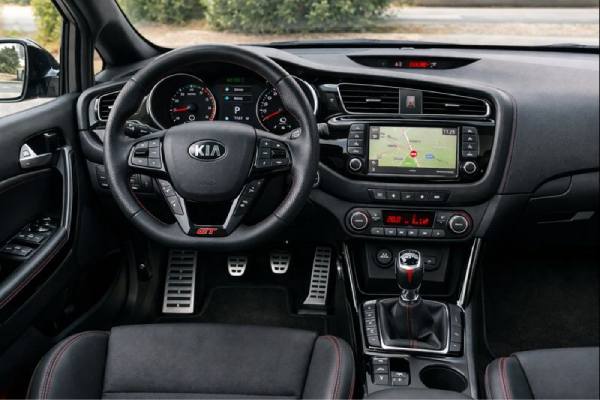
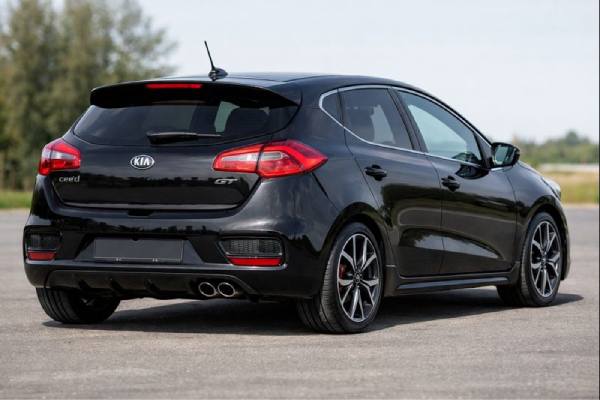
The facelifted Kia Cee’d GT (JD) is one of those rare “warm hatches” that feels engineered around real roads rather than lap times. You get a stout 1.6-litre turbocharged direct-injection engine, a tight six-speed manual, and a chassis that’s firm enough to stay composed without turning every commute into a punishment. For owners, the story is mostly about balance: strong mid-range torque, predictable front-wheel-drive manners, and a practical cabin/boot that still works as everyday transport.
Where this model rewards careful ownership is heat and lubrication management. The 1.6 T-GDi runs hot under load, and direct injection demands sensible oil intervals and good fuel. Treat it well and it’s typically a durable, enjoyable hot-ish hatch with low surprise costs compared with more complex rivals.
Quick Specs and Notes
- Strong mid-range pull and flexible gearing make it quick in real traffic, not just on paper.
- Mature chassis tuning: stable at speed, confidence-inspiring brakes, predictable grip.
- Practical hot hatch basics: usable rear seat and boot, comfortable driving position.
- Caveat: direct-injection turbo engines dislike neglected oil and repeated short trips—maintenance discipline matters.
- Typical interval: engine oil and filter every 10,000–12,000 km (6,000–7,500 mi) or 12 months for long-term health.
Navigate this guide
- Cee’d GT JD facelift deep dive
- Cee’d GT JD 2015–2018 specs and measurements
- GT trims, options, and driver assistance
- Reliability issues and service actions
- Maintenance plan and buying tips
- Real-world driving and efficiency
- Rivals and positioning
Cee’d GT JD facelift deep dive
Kia’s 2015–2018 facelift didn’t change the core GT formula so much as refine the edges. You still get the same layout: a transverse, turbocharged 1.6 up front driving the front wheels through a manual gearbox, with suspension tuning aimed at fast-road control rather than track aggression. What makes the Cee’d GT (JD) attractive today is the way its “whole car” feel holds together: it’s quick enough to enjoy, yet simple enough to live with.
Engine character (Gamma II 1.6 T-GDi). The turbocharged direct-injection engine is defined by its torque plateau. In day-to-day driving you feel it most from roughly the high-1000s rpm into the midrange, where it pulls cleanly without constant downshifts. It’s not a razor-edged top-end engine; instead it delivers repeatable shove, which suits European A- and B-roads and makes overtakes easy. The trade-off is that it’s a heat-producing, high cylinder-pressure design—excellent when maintained, less forgiving when neglected.
Chassis and traction philosophy. The GT isn’t built around a mechanical limited-slip differential the way some hardcore rivals are. Instead, traction and corner-exit behavior lean on tire choice, suspension geometry, and stability/traction control logic. Drive it smoothly and it flows; mash the throttle mid-corner in low gears and you’ll feel typical front-drive limitations—steering load, some scrabble, and intervention. On the right tires, it’s composed and confidence-inspiring rather than wild.
Why the facelift years matter. In the used market, facelift cars often bring small but meaningful ownership improvements: updated infotainment hardware, revised lighting, and incremental equipment changes that can reduce “daily friction.” The mechanical core stays familiar, which is good news for parts availability and independent-shop servicing.
Who it fits best. This is a strong choice for drivers who want one car that can do everything: commute, family errands, weekend trips, and the occasional back-road blast. If you want the sharpest possible corner-exit traction, the Cee’d GT can feel a step behind the best LSD-equipped rivals—but as a value play with mature road manners, it remains compelling.
Cee’d GT JD 2015–2018 specs and measurements
Below are the key specifications that matter for the facelift 2015–2018 Kia Cee’d GT (JD) with the Gamma II 1.6 T-GDi. Exact figures can vary by market, homologation cycle, wheel/tire choice, and equipment, so use these as a practical reference and verify against your VIN documentation when precision matters.
Powertrain and efficiency
| Item | Specification |
|---|---|
| Code | Gamma II 1.6 T-GDi (commonly G4FJ family) |
| Layout | Transverse front, inline-4 |
| Valvetrain | DOHC, 4 valves/cyl (16V) |
| Bore × stroke | ~77.0 × 85.4 mm (3.03 × 3.36 in) |
| Displacement | 1.6 L (1,591 cc) |
| Induction | Single turbocharger, intercooled |
| Fuel system | Gasoline direct injection (DI) |
| Compression ratio | ~9.5:1 (market dependent) |
| Max power | ~201 hp (≈150 kW) @ ~6,000 rpm |
| Max torque | ~265 Nm (≈195 lb-ft) @ ~1,750 rpm |
| Timing drive | Chain |
| Rated efficiency | typically ~6.8–7.4 L/100 km (≈35–42 mpg UK / 32–35 mpg US) |
Real-world highway @ 120 km/h (75 mph): expect roughly 7.2–8.2 L/100 km depending on wind, tires, load, and temperature.
Transmission and driveline
| Item | Specification |
|---|---|
| Transmission | 6-speed manual |
| Drive type | FWD |
| Differential | Open (traction aided by brake-based stability/traction control) |
Chassis and dimensions
| Item | Specification |
|---|---|
| Suspension (front) | MacPherson strut |
| Suspension (rear) | Multi-link |
| Steering | Electric assist rack-and-pinion |
| Brakes (front/rear) | Ventilated discs ~300 mm (11.8 in) / solid discs ~262 mm (10.3 in) |
| Common tire size | 225/40 R18 (18 in rim) |
| Length / width / height | ~4,310 / 1,780 / 1,450 mm (169.7 / 70.1 / 57.1 in) |
| Wheelbase | ~2,650 mm (104.3 in) |
| Turning circle | ~10.6 m (34.8 ft) |
| Kerb weight | typically ~1,400–1,500 kg (3,086–3,307 lb) |
| GVWR | commonly ~1,800–1,900 kg (3,968–4,189 lb) |
| Fuel tank | ~53 L (14.0 US gal / 11.7 UK gal) |
| Cargo volume | ~380 L (13.4 ft³) seats up / ~1,318 L (46.5 ft³) seats down (VDA-style figures often cited) |
Performance and capability
| Metric | Typical figure |
|---|---|
| 0–100 km/h (0–62 mph) | ~7.7 s |
| Top speed | ~230 km/h (143 mph) |
| Braking 100–0 km/h | commonly mid-30s meters (tire and surface dependent) |
| Towing | often not emphasized for GT trims; verify local rating (many are effectively “not recommended”) |
| Payload | market dependent; check door-jamb plate |
Fluids and service capacities (practical owner reference)
| Fluid | Typical spec and note |
|---|---|
| Engine oil | commonly 5W-30 or 5W-40 meeting ACEA/API requirements listed for your market; capacity ~4.0–4.7 L (4.2–5.0 US qt) with filter |
| Coolant | long-life ethylene glycol mix (often 50/50); capacity commonly ~6–7 L (6.3–7.4 US qt) |
| Manual transmission oil | GL-4 style manual trans fluid; commonly ~1.8–2.2 L (1.9–2.3 US qt) |
| A/C refrigerant | R-134a (many cars of this era); charge varies by build |
Key torque specs (common “decision-making” fasteners)
These vary by exact hub, brake supplier, and market, so treat them as a checklist item to verify:
- Wheel lug nuts: typically ~88–110 Nm (65–81 lb-ft)
- Spark plugs: typically ~18–25 Nm (13–18 lb-ft)
- Oil drain plug: typically ~25–40 Nm (18–30 lb-ft)
GT trims, options, and driver assistance
For the facelift years, the easiest way to think about the Cee’d GT range is that the GT badge is the mechanical “fixed point,” while infotainment, lighting, and convenience equipment vary the most by market and model year.
Trims and options: what typically changes
Most regions offered a Cee’d GT hatchback and, depending on country, a related pro_cee’d GT body style. The GT package usually includes sport seats (often with strong bolstering), 18-inch wheels, larger brakes than standard models, sport exterior styling, and a richer standard equipment list.
What varies most in the real world:
- Infotainment: screen size, navigation availability, and Bluetooth/USB integration level. Facelift cars often have better responsiveness and phone compatibility than earlier units.
- Lighting: halogen vs bi-xenon/LED signatures depending on market and option packs; daytime running light elements can be a known wear item on some builds.
- Comfort features: heated seats and steering wheel, dual-zone climate control, keyless entry/start, parking sensors, and camera availability differ by package.
- Driver-assistance add-ons: some cars gain lane-related warning functions, blind-spot monitoring, or speed-limiter/cruise variations depending on region.
Quick identifiers when shopping used
When you’re viewing listings that might be “GT-look” cars, use functional tells:
- Brakes and wheels: genuine GT cars usually have the larger brake hardware and 18-inch wheel/tire package as standard.
- Interior: bolstered sport seats, a GT steering wheel, and specific trim accents are common.
- Badging + VIN build: badges can be swapped; the VIN/build sheet from a dealer or official Kia owner portal is the reliable confirmation.
Safety ratings (how to interpret them)
The JD-generation Cee’d earned a 5-star Euro NCAP score under the test protocol of its time, with strong adult and child occupant percentages. The important nuance: protocols change, so a 2012-era 5-star score is not directly comparable to later tests that added tougher pedestrian and active-safety requirements. Use the rating as evidence of solid structure, restraint performance, and stability control coverage, not as a guarantee of modern ADAS capability.
Safety systems and ADAS: what you can expect
Common, broadly fitted safety equipment includes:
- Multiple airbags (front, side, and curtain in many markets)
- ABS, electronic brake-force distribution, and stability control
- ISOFIX/LATCH provisions in the rear seats (confirm exact positions)
- Tire pressure monitoring (market dependent)
Driver assistance is typically basic by modern standards. If your shortlist includes a car advertised with lane or blind-spot systems, confirm that:
- the system is actually present (dashboard button/menu), and
- it functions correctly after windshield replacement, wheel alignment, or bumper repairs (sensor alignment matters).
Reliability issues and service actions
A well-kept Cee’d GT can be a dependable performance daily, but it’s still a turbocharged direct-injection engine in a hot hatch body—maintenance history matters more than odometer bragging rights. Below is a practical “prevalence vs cost” map to guide diagnosis and buying decisions.
Common, lower-cost issues (watch items)
- Ignition coils and plugs (common / low–medium cost): Misfires under boost, rough idle, or a flashing MIL often point here. Remedy is usually coils and correct-spec plugs, plus checking plug gap and heat range.
- PCV and crankcase ventilation (common / low cost): Excess oil mist, unstable idle, or increased intake deposits can be linked to a tired PCV valve or hoses. Fix is inexpensive and helps long-term intake health.
- Brake wear and heat management (common / medium cost): The GT’s performance invites enthusiastic driving, and front brakes can wear quickly if driven hard in traffic. A proper pad compound and quality rotors prevent judder and fade.
Occasional, medium-cost issues
- DI intake valve carbon build-up (occasional / medium cost): Because fuel is injected directly into the cylinder, valves don’t get “washed” with fuel. Symptoms can include cold-start stumble, hesitant low-rpm response, and reduced efficiency. Remedy is typically walnut blasting or an approved cleaning method, plus reducing short-trip use.
- Turbo control quirks (occasional / medium cost): Rattles, inconsistent boost, or limp-mode behavior can come from wastegate actuator wear, vacuum/boost leaks, or sensor faults. Fix ranges from hose replacement to actuator work, depending on root cause.
- Cooling system weak points (occasional / medium cost): Thermostat behavior, aging hoses, or small leaks can show up as slow warm-up, overheating in traffic, or coolant smell. Remedy is usually straightforward but should be taken seriously on a turbo engine.
Rarer, higher-cost risks (the ones you want ruled out)
- Clutch and flywheel wear (rare–occasional / high cost): Hard launches and repeated low-speed torque loading can accelerate wear. Symptoms include slip under boost in higher gears, judder on take-off, or noise at idle. Remedy can be clutch plus dual-mass flywheel depending on condition.
- High-pressure fuel system faults (rare / high cost): Hard starts, rail pressure codes, or hesitation under load can indicate pump or injector issues. Diagnosis should include fuel quality assessment and proper pressure logging, not parts swapping.
Software, calibrations, and “service actions”
Modern drivability issues often come down to calibration. If you feel persistent hesitation, odd idle behavior, or repeated sensor codes:
- Ask for dealer history showing ECU updates (if performed).
- Confirm that aftermarket tuning hasn’t disabled safeguards or masked faults.
- After major work (battery replacement, throttle cleaning, etc.), confirm that idle relearn/adaptation steps were done correctly.
Recalls and official campaigns: how to handle without guessing
Recall and campaign coverage is VIN-specific, and it varies by country. The right approach is procedural:
- Run the VIN through an official Kia recall checker for your region.
- Check the vehicle’s dealer service history for completion evidence.
- If you’re in the UK, use the DVSA recall checker as a second viewpoint.
This method prevents you from buying a car that “looks fine” but still has an outstanding safety campaign.
Maintenance plan and buying tips
If you want the Cee’d GT to stay fast and reliable into higher mileage, the goal is simple: keep oil clean, keep heat under control, and prevent small drivability issues from becoming expensive ones. Below is a pragmatic schedule that suits the 1.6 T-GDi’s realities, even if the factory schedule in some markets is longer.
Practical maintenance schedule (distance or time, whichever comes first)
- Engine oil and filter: every 10,000–12,000 km or 12 months (shorter if mostly city/short trips).
- Engine air filter: inspect every 15,000 km, replace by 30,000 km (sooner in dusty areas).
- Cabin filter: every 15,000–20,000 km or annually for HVAC performance.
- Spark plugs: typically every 60,000 km (confirm plug type; turbo DI engines are sensitive to plug condition).
- Coolant: follow the official long-life interval for your market, but plan a check/refresh around 5–7 years if history is unknown.
- Brake fluid: every 2 years regardless of mileage.
- Manual gearbox oil: not always “required” early, but a preventive change around 80,000–120,000 km helps shift quality and longevity.
- Serpentine belt and hoses: inspect annually; replace at first signs of cracking, glazing, or seepage.
- Tires: rotate every 8,000–10,000 km, align yearly or after suspension work.
- Timing chain: no routine replacement interval; inspect for noise, correlation faults, or tensioner issues and address if symptoms appear.
- 12 V battery: load-test annually after year 4; many last 4–6 years depending on climate and use.
Fluids and “spec discipline”
For this engine, correct oil specification matters more than chasing a trendy viscosity. Use the spec listed for your VIN/market and keep receipts that show:
- viscosity grade,
- ACEA/API classification, and
- filter brand/part number.
If you do many short trips, consider a shorter interval rather than thicker oil as your first move.
Buyer’s guide: what to check in 30 minutes
Bring a flashlight, a small mirror, and do a warm and cold check if possible.
- Cold start: listen for rough idle, misfires, or timing-related rattles. A smooth cold start is a good sign on DI engines.
- Boost behavior: in 3rd gear from ~2,000 rpm, check for clean pull without surging or limp mode.
- Cooling health: confirm stable temperature, no coolant smell, and no oily residue around hoses/tank.
- Clutch test: high-gear pull at low rpm—watch for rev flare (slip).
- Brakes: check for vibration under moderate braking and uneven pad wear.
- Electrics: confirm all lighting elements work (including DRLs), and test parking sensors/camera if fitted.
- Underside: look for oil seepage, damaged undertrays, and exhaust flex/joint condition.
- Paper trail: verify oil service frequency and recall/campaign completion via VIN.
Long-term outlook
With disciplined oil changes, a healthy cooling system, and occasional DI intake cleaning when symptoms appear, these cars can age well. The biggest “buyer regret” cases usually trace back to neglected oil intervals, hidden tuning, or repeated short-trip use without compensating maintenance.
Real-world driving and efficiency
On the road, the facelift Cee’d GT feels more grown-up than its badge might imply. It’s not the most ferocious hot hatch of its era, but it often feels easier to drive quickly—especially on imperfect surfaces where stability and predictability matter more than ultimate grip.
Ride, handling, and NVH
- Ride: Firm, but generally controlled. The 18-inch wheel/tire package transmits sharp edges more than smaller wheels, yet the car usually avoids the brittle, crashy feel that can plague stiffer rivals.
- Steering: Electric assist gives consistent weight, but feedback is filtered. You can still place the car accurately; you just read grip more through the chassis and tires than through the wheel.
- Braking feel: Strong initial bite with good repeatability when the system is healthy. If the car has been driven hard on cheap pads, you can get judder or fade—this is more a maintenance/parts-quality story than a design flaw.
- Cabin noise: Expect noticeable tire roar on coarse asphalt (common with 225/40 R18). At steady highway speeds, wind noise is typically reasonable for the class.
Powertrain character and gearbox behavior
The 1.6 T-GDi’s strength is real-world torque. In normal driving it feels eager without constant high revs. Turbo lag is usually mild; the more noticeable trait is traction management in low gears—use smooth throttle application and you’ll get cleaner, faster progress.
The six-speed manual is a key part of the experience. A good example shifts cleanly when warm. If you notice notchiness, reluctance into a specific gear, or grinding, treat it as a buying-negotiation item and investigate fluid history and clutch condition.
Real-world efficiency (what owners actually see)
Official test cycles tend to flatter steady-state cruising and gentle acceleration. In mixed real use:
- City-heavy: ~9.0–11.0 L/100 km (≈26–31 mpg UK / 21–26 mpg US)
- Highway 100–120 km/h: ~7.2–8.2 L/100 km (≈34–39 mpg UK / 29–33 mpg US)
- Mixed: ~8.0–9.5 L/100 km (≈30–35 mpg UK / 25–29 mpg US)
Cold weather and short trips can add a meaningful penalty, especially if the engine rarely reaches full operating temperature.
Performance metrics that matter
The headline 0–100 km/h time (about the high-7-second range) matches how the car feels: quick enough to entertain, but not so quick that it overwhelms its tires. Passing performance is where it shines. In-gear acceleration in the midrange is strong, and it’s the reason many owners like it as a “one-car solution.”
Rivals and positioning
The Cee’d GT sits in an interesting middle ground. Compared with the most famous hot hatches, it often looks like the sensible choice—but that’s also its advantage when you compare total ownership experience.
Where the Cee’d GT wins
- Value and equipment: Used pricing often undercuts big-name rivals while still offering strong standard kit.
- Everyday usability: Practical cabin, sensible boot, and a suspension tune that works on real roads.
- Simplicity vs modern complexity: A straightforward petrol turbo with a manual gearbox can be less intimidating than dual-clutch-heavy alternatives, especially as cars age.
- Ownership confidence (market dependent): Kia’s brand reputation and warranty culture in Europe make these cars appealing when service history is clean.
Where it concedes ground
- Ultimate traction and adjustability: Many benchmark rivals offer a mechanical limited-slip differential or more aggressive chassis calibration, which can translate into faster corner-exit speed and a more “special” feel.
- Interior wow-factor: Functional and durable, but not always as premium-feeling as the best from Germany.
- ADAS maturity: Even in facelift form, driver assistance is generally behind newer generations. If advanced AEB/ACC is a must-have, you’ll likely need a newer platform.
Common rival cross-shops (how to decide)
- Volkswagen Golf GTI (Mk7 era): More refined cabin and often sharper drivetrain integration; higher parts costs can follow.
- Ford Focus ST (Mk3): More power and a bigger personality; can be thirstier and harsher depending on setup.
- Peugeot 308 GTi / Renault Mégane GT: Often more “hot hatch” in feel; maintenance sensitivity varies widely by engine and prior ownership.
- Hyundai i30 Turbo (period): Similar philosophy; decide based on condition, history, and local parts pricing.
The practical verdict
If you want a fast-road hatch that’s engaging without being exhausting, the facelift Cee’d GT is a smart shortlist car. Prioritize service history, stock calibration, and cooling/oil health over cosmetic mods. A clean, unmodified example with frequent oil changes is usually a better “performance car” than a tuned one with gaps in its maintenance story.
References
- euroncap_kia_ceed_2012_5stars.pdf 2012 (Safety Rating)
- OWNER’S MANUAL QUICK REFERENCE GUIDE 2016 (Owner’s Manual)
- Kia Recalls | Kia Europe 2026 (Recall Database)
- Check if a vehicle, part or accessory has been recalled – GOV.UK 2026 (Recall Database)
Disclaimer
This article is for informational purposes only and is not a substitute for professional inspection, diagnosis, or repair. Specifications, torque values, service intervals, and procedures can vary by VIN, market, model year, and equipment; always verify details using your official Kia owner’s documentation and service information for your exact vehicle.
If this guide helped, please consider sharing it on Facebook, X (Twitter), or your favorite forum/community to support our work.