
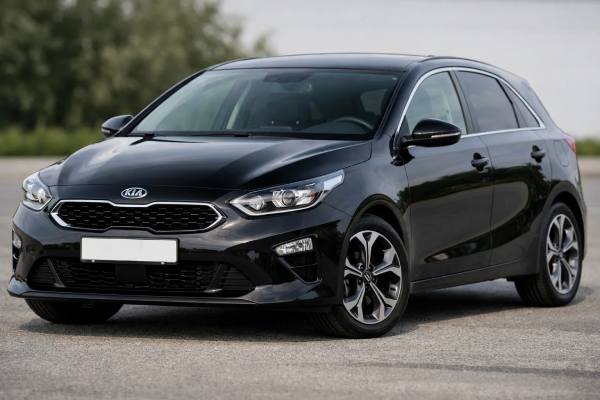
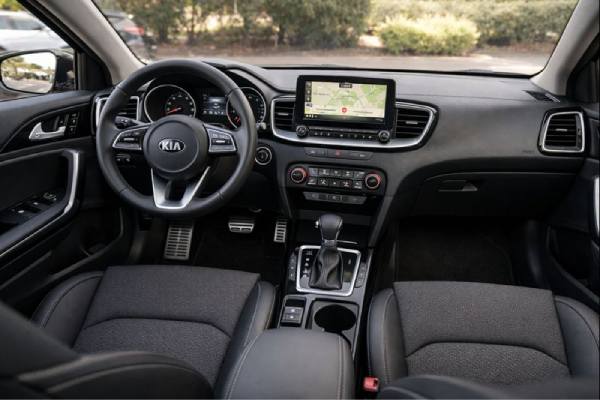
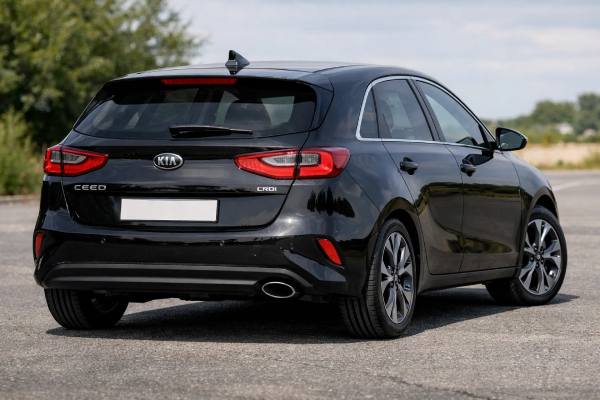
The 2018–2021 Kia Ceed (CD) with the 1.0 T-GDi (118 hp) is a smart “right-sized” hatchback: modern safety structure, compact exterior dimensions, and a turbocharged three-cylinder that’s tuned more for flexible everyday torque than outright speed. In practice, it rewards drivers who do steady commutes and mixed urban use, where the engine’s mid-range pull helps the car feel stronger than its displacement suggests. The CD-generation chassis is also a step forward in refinement—better wind and road-noise control, and a composed suspension tune that fits European roads well.
Ownership is usually straightforward if you treat it like a small turbo direct-injection engine: warm it properly, service it on time, and avoid a life of only short cold trips. Do that, and it can be a low-stress, efficient daily driver with a broad equipment spread.
Owner Snapshot
- Strong mid-range torque makes city and mixed driving feel easy, even with passengers.
- Balanced ride and steering suit rougher roads without feeling floaty at highway speeds.
- Practical hatch packaging: easy loading height and useful rear-seat room for the class.
- Short-trip use can accelerate deposits and exhaust filter issues—plan regular longer drives.
- Change engine oil every 10,000 miles (16,000 km) or 12 months (whichever comes first).
What’s inside
- Ceed CD 1.0 T-GDi in detail
- Ceed CD tech specs table
- Ceed CD trims and safety tech
- Known faults and campaigns
- Service schedule and buying checks
- Road manners and economy
- How Ceed CD stacks up
Ceed CD 1.0 T-GDi in detail
This Ceed configuration is the “efficient core” of the range: a light, turbocharged 1.0-litre three-cylinder paired most commonly with a 6-speed manual and front-wheel drive. The key engineering point is that Kia isn’t trying to make it feel like a hot hatch; it’s tuned to give usable torque early and hold it through the mid-range, so normal traffic and moderate hills don’t require constant downshifts. That’s the main advantage over many naturally aspirated small engines: you can drive it lazily without the car feeling slow.
The Kappa II T-GDi layout also reflects modern emissions realities. Direct injection (DI) improves efficiency and response, but it can increase intake-valve deposits over time if the car mostly does cold-start short trips. Many European-market examples also use a gasoline particulate filter (GPF) to reduce soot; it’s usually invisible to the driver, but it prefers fully warmed exhaust temperatures now and then. A weekly longer run (20–30 minutes at steady speed) is a simple habit that pays back with fewer “niggly” emissions-system warnings.
From an ownership perspective, the best “fit” is a driver who values predictable costs and wants a calm, modern hatchback—without stepping into higher taxes, higher insurance groups, or larger tyre and brake packages. The Ceed’s strengths show up in the basics: stable straight-line behavior, an interior that feels designed for daily use rather than novelty, and a parts-and-service ecosystem that is typically simpler than premium-badged rivals.
Where you should be realistic: this is not the quietest engine at idle (three-cylinders have a natural thrum), and it won’t deliver effortless high-speed overtakes if you stay in too tall a gear. Treat it like a small turbo—keep oil fresh, let it warm, and don’t lug it at very low rpm under heavy load—and it tends to reward you with long-term consistency.
Ceed CD tech specs table
Below are the key specifications for the 2018–2021 Ceed (CD) hatch with the 1.0 T-GDi 118 hp output. Some figures vary slightly by wheel/tyre, trim, and market homologation, so treat these as “typical for this variant” rather than VIN-specific cert data.
Powertrain and efficiency
| Item | Specification |
|---|---|
| Code | Kappa II T-GDi (commonly listed as G3LC family) |
| Engine layout and cylinders | Inline-3, DOHC, 12 valves (4 per cylinder) |
| Bore × stroke | 71.0 × 84.0 mm (2.80 × 3.31 in) |
| Displacement | 1.0 L (998 cc) |
| Induction | Turbocharged |
| Fuel system | Direct injection (DI) |
| Compression ratio | 10.0:1 |
| Max power | 118 hp (88 kW) @ 6,000 rpm |
| Max torque | 172 Nm (127 lb-ft) @ 1,500–4,000 rpm |
| Timing drive | Chain |
| Rated efficiency | Common brochure/WLTP combined range: ~5.5–6.0 L/100 km (≈39–43 mpg US / 47–51 mpg UK), equipment-dependent |
| Real-world highway @ 120 km/h | Often ~6.5–7.2 L/100 km (≈33–36 mpg US / 39–43 mpg UK), wind/tyres dependent |
Transmission and driveline
| Item | Specification |
|---|---|
| Transmission | 6-speed manual (most common for 1.0); availability varies by market |
| Drive type | FWD |
| Differential | Open (traction control uses brakes to limit wheelspin) |
Chassis and dimensions (hatchback)
| Item | Specification |
|---|---|
| Suspension (front/rear) | MacPherson strut / multi-link |
| Brakes (front/rear) | Ventilated disc 288 mm (11.34 in) / solid disc 272 mm (10.71 in) (market/trim may vary) |
| Popular tyre size | 205/55 R16 or 225/45 R17 (trim dependent) |
| Length / width / height | Market dependent; CD hatch is typically ~4.31 m class (verify by VIN) |
| Wheelbase | Typically ~2.65 m class (verify by VIN) |
| Turning circle | Commonly ~10.6 m class (verify by VIN/tyres) |
| Kerb weight | Around 1,222 kg (2,694 lb) for 1.0 T-GDi 6MT hatch (equipment dependent) |
| GVWR | Around 1,800 kg (3,968 lb) (market/trim dependent) |
| Fuel tank | 50 L (13.2 US gal / 11.0 UK gal) |
| Cargo volume | 395 L (13.9 ft³) seats up (VDA); 1,291 L (45.6 ft³) seats down (VDA) |
Performance and capability (hatchback, typical)
| Item | Specification |
|---|---|
| Acceleration | 0–100 km/h (0–62 mph): ~11.1 s |
| Top speed | ~190 km/h (118 mph) |
| Towing capacity | Often up to ~1,200 kg braked / ~450 kg unbraked (check local limits and tow package) |
Fluids and service capacities (key decision items)
| Item | Specification |
|---|---|
| Engine oil | Capacity 3.6 L (≈3.8 US qt) (with filter); grade per market (commonly ACEA C2 / API SN Plus capable oils) |
| Oil interval (typical) | 10,000 miles (16,000 km) / 12 months (market dependent) |
| Manual transmission fluid | GL-4 70W-type MTF is common for Hyundai/Kia manuals; confirm exact product by VIN |
| Brake fluid | DOT 4 class is typical for this segment; confirm cap label/service manual |
| Key torque specs | Use service manual for VIN-specific values (wheel bolts, drain plug, caliper carrier bolts, etc.) |
Safety and driver assistance (high-level)
| Item | Specification |
|---|---|
| Crash ratings | Euro NCAP result exists for Ceed (CD generation testing era); equipment level matters (standard vs safety pack) |
| ADAS availability | AEB, lane support, blind-spot and rear cross-traffic typically vary by trim/pack and model year |
Ceed CD trims and safety tech
Trim names vary by country, but the pattern is consistent: lower trims focus on value (smaller wheels, simpler lights), mid trims add comfort and infotainment, and higher trims bundle safety assists and convenience tech. For this 1.0 T-GDi, the biggest “real-world” differences usually come from wheels/tyres, lighting, and driver-assistance packs—not from core mechanical hardware. That’s good news for buyers: you can often pick the equipment you want without worrying that you’re missing a fundamentally different engine or chassis.
Quick trim identifiers (practical tells):
- Wheel size: 16-inch packages usually ride more softly and cost less in tyres than 17-inch setups.
- Headlights: upgraded headlights can materially improve night driving, but they can also raise replacement costs.
- Infotainment: larger screens and navigation often come with better cameras and connectivity; check that Apple CarPlay/Android Auto behave correctly on a test drive.
Options that change the day-to-day experience most:
- Safety/driver assistance pack: the difference between “basic stability control and airbags” and “car that actively helps you avoid a crash.” If you do a lot of commuting, AEB and lane support are worth prioritizing.
- Parking tech: front sensors plus a good reverse camera reduce bumper damage risk—important in tight city parking.
- Heated seats/steering wheel (where available): surprisingly valuable in colder climates because it reduces the urge to idle the engine for cabin heat.
Safety ratings—how to interpret them.
Euro NCAP ratings depend on test year protocols and the exact safety equipment fitted to the test car. For the Ceed, the published percentages show strong occupant protection performance, with the usual tradeoffs of the era: adult and child protection can score very well, while vulnerable road user scoring and “safety assist” depend heavily on whether the car has pedestrian/cyclist AEB and speed assist features. When you’re shopping, the key is to match your candidate car’s equipment to the rating context—especially whether it has the relevant AEB and lane functions enabled in that trim or pack.
Core safety systems you should expect in most markets:
- Multiple airbags (front, side, curtain) and belt pretensioners.
- ESC (electronic stability control) and ABS with brake assist.
- ISOFIX/LATCH mounting points for child seats (confirm the rear-seat positions and i-Size suitability for your child seat).
ADAS service note (important but often missed): if your Ceed has camera/radar-based features (lane support, AEB, adaptive cruise on some versions), windscreen replacement, suspension geometry changes, or front-end repairs may require recalibration. A clean dash with no warning lights is not the same as a verified calibration—ask for documentation if major work was done.
Known faults and campaigns
The 1.0 T-GDi Ceed is not known for a single catastrophic “must-fail” flaw, but it does have patterns typical of small turbo DI engines and modern electronics. The smartest way to think about reliability is by prevalence and cost tier—and by whether your driving style matches what the emissions hardware wants.
Common (usually low to medium cost)
- Carbon deposits (DI intake side)
Symptoms: rough idle, hesitant throttle, reduced efficiency over time.
Likely cause: direct injection doesn’t wash intake valves with fuel; short trips increase deposits.
Remedy: driving pattern changes (regular hot runs), periodic intake cleaning if symptoms appear. - GPF (gasoline particulate filter) sensitivity on short trips
Symptoms: warning lights, forced regeneration behavior, reduced performance (rare).
Likely cause: repeated cold starts and shutdowns before full warm-up.
Remedy: consistent longer drive cycles; address misfires quickly (misfire can overload the exhaust aftertreatment). - Ignition coil or plug-related misfire (wear item)
Symptoms: flashing MIL, stumbling under load, poor fuel economy.
Likely cause: plug wear, coil aging, moisture intrusion.
Remedy: replace plugs on schedule; don’t ignore early misfire signs.
Occasional (medium cost; more likely with harsh use)
- Turbo control and boost leaks
Symptoms: whistle, inconsistent power, underboost fault codes.
Likely cause: hose clamp loosening, small leaks, wastegate/actuator wear.
Remedy: smoke test for leaks; correct clamps/hoses; actuator checks. - Cooling system seepage
Symptoms: slow coolant loss, sweet smell after parking, crusty residue near joints.
Likely cause: hose connection seepage, water-pump or thermostat housing aging (varies).
Remedy: pressure test; replace the leaking component early to avoid overheating.
Rare (potentially higher cost, but uncommon)
- Timing chain noise/stretch-related faults
Symptoms: cold-start rattle that persists, correlation fault codes, rough running.
Likely cause: wear or lubrication issues over long intervals.
Remedy: diagnose promptly; if stretch is confirmed, address guides/tensioner/chain per service manual.
Recalls, TSBs, software, and “service actions”
Modern cars often improve via software updates (engine, transmission logic where applicable, infotainment, and ADAS modules). If a Ceed feels “odd” but has no hard fault—hesitant throttle, strange idle behavior, intermittent sensor warnings—an update can be the official remedy. For recalls and campaigns, the only reliable method is a VIN check plus dealer record confirmation. Treat “I think it was done” as unverified until the VIN history confirms completion.
Pre-purchase proof to request (worth the effort):
- Service invoices showing oil changes at appropriate intervals.
- Evidence of completed recall/campaign work.
- If the car has ADAS: paperwork for windscreen replacement or front-end repairs showing calibration.
Service schedule and buying checks
A maintenance plan for the 1.0 T-GDi Ceed should be simple, consistent, and slightly conservative. The engine is hardworking (small displacement, boosted), so clean oil and correct spark health matter more than they do on a lazy naturally aspirated motor. Use the official schedule as the baseline, then adjust for your conditions.
Practical maintenance schedule (typical guidance)
| Item | Interval (distance/time) | Notes |
|---|---|---|
| Engine oil and filter | 10,000 miles (16,000 km) / 12 months | Short-trip, cold climate, or heavy city use: consider 7,500 miles (12,000 km) |
| Engine air filter | 20,000–30,000 km or 2 years | Dusty areas shorten this |
| Cabin filter | 15,000–20,000 km or yearly | Helps HVAC performance and reduces misting |
| Spark plugs | ~60,000 km (or earlier if misfire/roughness) | Turbo DI engines are sensitive to plug condition |
| Coolant | Often 5 years / 100,000 km class | Verify exact spec and interval by VIN |
| Brake fluid | Every 2 years | Moisture lowers boiling point |
| Brake inspection | At every service | Check pad thickness, rotor lip, slider condition |
| Tyre rotation and alignment | 10,000–15,000 km | Alignment saves tyres and improves stability |
| 12 V battery test | From year 4 onward | Replace proactively if weak before winter |
| Manual transmission oil | Often “lifetime” on paper, but 100,000–150,000 km is sensible | Especially if driven hard or in hot climates |
Fluids: what to be picky about
- Engine oil specification matters more than brand. Use the correct ACEA/API rating for your market and engine variant. Low-SAPs oils are often specified to protect emissions hardware.
- Don’t stretch oil intervals if the car does short trips. Oil dilution and moisture accumulation are real on turbo DI engines.
Buyer’s guide: what to inspect in 30 minutes
- Cold start behavior: listen for abnormal rattles that don’t fade quickly; check idle stability.
- Boost response test: in 3rd gear from low rpm, it should pull smoothly without surging or hesitation.
- Cooling system check: inspect for dried coolant residue, check level consistency.
- Service evidence: verify intervals on receipts, not just stamps.
- Tyres and brakes: uneven tyre wear suggests alignment issues; pulsing brakes suggest warped rotors.
- ADAS function (if equipped): confirm no warning lights and test lane/forward alert behavior in a safe area.
Best “value” spec for most owners
If you’re optimizing cost and comfort, a mid trim with 16-inch wheels and the main safety pack (AEB/lane support) is often the sweet spot. You keep running costs predictable while still getting the safety and convenience features that make the car feel modern.
Road manners and economy
In real driving, the Ceed CD’s chassis is the quiet hero. It’s tuned for stability and composure, not flash, which makes it feel “grown up” on fast roads. The steering is typically light in town and steadier at speed; you won’t confuse it with a dedicated performance hatch, but it tracks cleanly and doesn’t feel nervous on rough surfaces.
Powertrain character
The 1.0 T-GDi’s defining trait is its useful torque band. Peak torque arrives low and holds through the mid-range, so typical overtakes work best when you downshift once and use 2,000–4,000 rpm rather than trying to accelerate from very low rpm in a tall gear. That matters for longevity too: lugging (heavy throttle at very low rpm) increases knock control intervention, heat, and drivetrain shunt.
With a manual transmission, the car feels most relaxed when you treat it like a flexible small engine:
- City: short shifts are fine, but avoid flooring it below ~1,500 rpm.
- Highway: it cruises comfortably; passing is better with a deliberate downshift.
Ride, handling, and NVH
- Ride: generally absorbent over broken pavement, especially on smaller wheel packages.
- Handling: predictable, mild understeer at the limit; stability control is usually well judged for normal driving.
- NVH: the three-cylinder thrum is most noticeable at idle and low speed, but wind and road noise control is typically improved versus the previous generation.
Real-world efficiency expectations
Your consumption will depend more on speed and trip length than on clever hypermiling tricks:
- City-heavy, short trips: expect higher numbers; the engine warms slowly and enrichment events are more frequent.
- Mixed driving: many owners land in the mid-5s to low-6s L/100 km range.
- 120 km/h highway: aerodynamic load dominates; expect a step up versus mixed use.
Cold weather is the hidden variable. Short winter trips can raise consumption significantly (often 10–25% depending on distance and traffic) because the engine spends more time below efficient operating temperature, and cabin heat demand increases.
Performance metrics that matter
This 118 hp Ceed is not “slow,” but it is sensitive to gear choice. The official-style 0–100 km/h figure around the low-11-second range aligns with how it feels: adequate and confident in normal traffic, but not effortless when fully loaded and climbing at high speed. If you frequently carry four adults and luggage or live in mountainous areas, a larger engine can feel less busy.
How Ceed CD stacks up
Against mainstream C-segment rivals, the Ceed CD 1.0 T-GDi’s strength is that it feels complete: modern safety structure, sensible packaging, and a turbo engine that works well in real traffic. The decision usually comes down to priorities—driving feel, long-term costs, and how much tech you want.
Versus VW Golf 1.0 TSI
- Golf advantage: very polished drivetrain calibration, strong resale in many regions, broad specialist support.
- Ceed advantage: often better value for similar equipment; a more straightforward “what you pay is what you get” ownership proposition.
- Decision tip: if resale and premium feel dominate, Golf; if value-per-feature and warranty coverage dominate, Ceed.
Versus Ford Focus 1.0 EcoBoost
- Focus advantage: sharper steering/handling feel; can be more engaging on a twisty road.
- Ceed advantage: typically calmer ride and a slightly more conservative “daily comfort” setup.
- Decision tip: choose Focus for driving enjoyment; choose Ceed for a calmer long-commute personality.
Versus Peugeot 308 1.2 PureTech
- 308 advantage: efficient engines and often a more distinctive interior design.
- Ceed advantage: many buyers prefer the Ceed’s conventional ergonomics and less quirky control layout.
- Decision tip: if you love the i-Cockpit concept and want style, 308; if you want familiar controls and easy adaptation, Ceed.
Versus Hyundai i30 1.0 T-GDi
- i30 advantage: extremely close in concept; sometimes different trim packaging and pricing.
- Ceed advantage: often a more generous equipment/warranty perception depending on market, and styling preference is subjective.
- Decision tip: compare like-for-like trims and wheel sizes; the “best deal on the day” often wins.
Bottom line
If you want a compact hatch that feels modern, safe, and cost-predictable—without chasing performance—the Ceed CD 1.0 T-GDi is a strong pick. The ownership “win” comes from matching it to the right usage: mixed driving, regular warm runs, and consistent oil service. If your life is almost all short cold trips, the smarter move may be a powertrain that tolerates that pattern better—or a plan to deliberately add longer weekly drives.
References
- Assessment details 2019 (Safety Rating)
- Kia Recalls | Kia Europe 2026 (Recall Database)
- The new Kia Ceed 2018 (Press Kit)
- Kia Car Owners Manual | Kia UK 2026 (Owner’s Manual)
- Engine Oil Grades and Capacities 2023 (Service Data)
Disclaimer
This article is for informational purposes only and is not a substitute for professional diagnosis, inspection, or repair. Specifications, torque values, fluid types, capacities, and service intervals can vary by VIN, market, model year, and installed equipment. Always verify details using official Kia documentation for your vehicle and follow approved procedures.
If this guide helped you, please consider sharing it on Facebook, X/Twitter, or your favorite forum to support our work.