
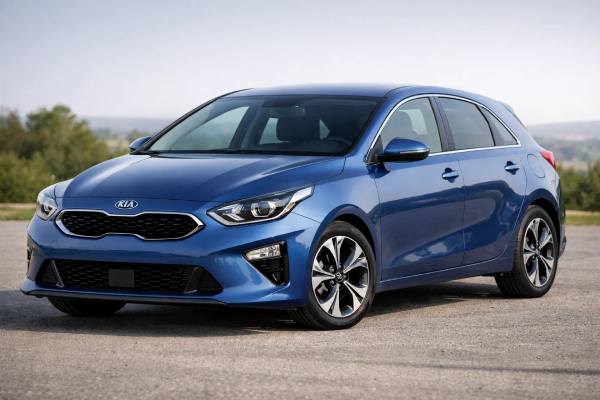
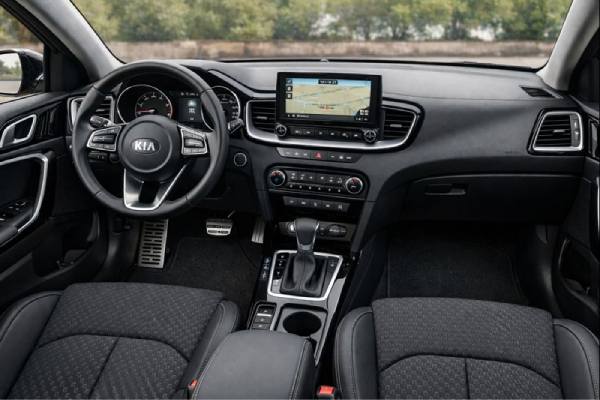
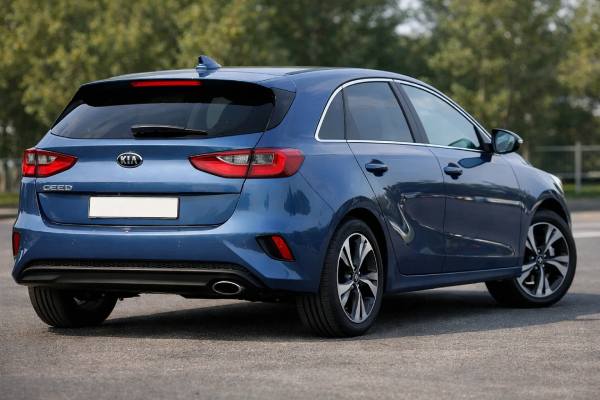
The 2018–2021 Kia Ceed (CD) with the 1.6 CRDi diesel is a “daily-driver engineer’s choice”: a compact hatch that focuses on low running costs, long-legged cruising, and predictable behavior in mixed European driving. The key hardware themes are the modern common-rail diesel with turbocharging, a diesel particulate filter (DPF), and Selective Catalytic Reduction (SCR) that uses AdBlue to reduce NOx emissions. In practice, that means strong mid-range pull for relaxed overtakes, plus excellent range from a modest fuel tank—provided the car gets regular motorway-style heat cycles for DPF health.
Ownership tends to be straightforward when service history is consistent and the car is used as intended (longer trips, not only short cold runs). Where owners get caught out is usually emissions-related maintenance: AdBlue/SCR sensors, DPF loading, and EGR soot management. If you buy with eyes open, the Ceed diesel can be a durable, economical all-rounder.
Owner Snapshot
- Strong real-world motorway economy and long range on one tank, especially at steady speeds.
- Mid-range torque makes it feel quicker than the headline power figure suggests.
- Emissions hardware needs the right driving pattern; frequent short trips increase DPF and EGR stress.
- Plan on an oil service about every 12 months or 30,000 km (18,600 mi), depending on market schedule.
- Keep AdBlue topped up and treat warning messages early to avoid forced limp-home strategies.
Navigate this guide
- Ceed CD diesel ownership picture
- Ceed CD 1.6 CRDi spec sheets
- Ceed CD trims and safety tech
- Common faults and service actions
- Maintenance plan and buying tips
- Road performance and real economy
- Rivals and smart alternatives
Ceed CD diesel ownership picture
Think of the 1.6 CRDi Ceed (CD) as a compact hatch tuned for “quiet competence.” It is not trying to feel sporty in the way a hot hatch does; it is built to cover distance with low fuel consumption, stable straight-line manners, and a sensible cabin layout. The diesel’s defining trait is usable torque at everyday revs. You typically drive it “on the wave,” short-shifting around town and letting the engine pull through mild gradients without drama. That relaxed feel is the reason many owners prefer it over a small turbo petrol if their weekly routine includes longer commutes.
The engineering trade-off is emissions complexity. The Ceed’s diesel setup pairs a DPF (to trap soot) with SCR (to reduce NOx using AdBlue/urea). This combination is effective, but it expects periodic high exhaust temperatures. If the car spends its life on two-mile school runs, the DPF may not regenerate often enough, soot load rises, and the car starts requesting regeneration or setting fault codes. Similarly, EGR (exhaust gas recirculation) is great for emissions, but it can accumulate deposits faster with short trips and low-quality fuel.
From a durability point of view, the “boring basics” matter most: correct low-ash oil (to protect the DPF), timely oil changes, clean air filtration, and attention to coolant and belt/chain service rules for your exact engine code and market. Diesel fuel systems are also sensitive to contamination. One bad tank is rare, but water or debris can be expensive if it reaches the high-pressure pump and injectors—so filters and reputable stations are not just habits, they are protection.
Where the Ceed (CD) shines is day-to-day usability: good outward visibility for the class, easy parking footprint, and a hatchback cargo area that works well for real life. It is also a predictable car to own in the sense that common issues tend to follow mileage and usage patterns. If you match the car to the right usage (mixed driving with regular longer trips), keep the service record clean, and treat warning lights as “solve now,” the 1.6 CRDi Ceed is typically a calm, economical companion.
Ceed CD 1.6 CRDi spec sheets
Below are practical, buyer-focused specifications for the 2018–2021 Ceed (CD) 1.6 CRDi diesel in the ~114 hp (115 PS) tune. Exact values vary by market, gearbox, wheels, and emissions calibration, so treat figures as representative for this configuration.
Powertrain and efficiency (representative)
| Item | Specification |
|---|---|
| Code | 1.6 CRDi (often listed as U3 / “New U-III” in service literature; market-dependent naming) |
| Engine layout and cylinders | Inline-4, turbocharged diesel; DOHC; 16 valves (4 per cylinder) |
| Bore × stroke | 77.0 × 85.8 mm (3.03 × 3.38 in) |
| Displacement | 1.6 L (≈1,589 cc) |
| Induction | Turbocharger with intercooling |
| Fuel system | Common-rail direct injection |
| Compression ratio | ~15.9:1 (varies by exact calibration) |
| Max power | 114 hp (85 kW) @ ~4,000 rpm |
| Max torque | 280 Nm (207 lb-ft) @ ~1,500–2,750 rpm (higher with some DCT calibrations) |
| Timing drive | Verify by engine code and manual; some variants use chain for cam drive and belt(s) for auxiliaries/oil pump |
| Emissions aftertreatment | DPF + SCR (AdBlue/urea) |
| Rated efficiency (typical) | ~4.0–4.6 L/100 km (59–51 mpg US / 71–61 mpg UK) |
| Real-world highway @ 120 km/h | ~5.0–5.7 L/100 km (47–41 mpg US / 56–50 mpg UK), wheel and wind dependent |
Transmission and driveline
| Item | Specification |
|---|---|
| Transmission | Typically 6-speed manual; 7-speed dual-clutch (DCT) offered in some markets/years |
| Drive type | FWD |
| Differential | Open (traction control manages wheelspin) |
Chassis and dimensions (hatchback, typical)
| Item | Specification |
|---|---|
| Suspension (front/rear) | MacPherson strut / multi-link (common Ceed CD layout) |
| Steering | Electric power steering |
| Brakes | 4-wheel discs (front ventilated); sizes vary by trim/wheel |
| Wheels and tyres (popular) | 205/55 R16 or 225/45 R17 (market-trim dependent) |
| Ground clearance | Typically around 140 mm (5.5 in), depending on wheels/trim |
| Length / width / height | ~4,310 / 1,800 / 1,447 mm (169.7 / 70.9 / 57.0 in) |
| Wheelbase | ~2,650 mm (104.3 in) |
| Turning circle | ~10.6–10.8 m (34.8–35.4 ft) |
| Kerb weight | ~1,300–1,400 kg (2,866–3,086 lb), spec dependent |
| Fuel tank | 50 L (13.2 US gal / 11.0 UK gal) |
| Cargo volume | ~395 L seats up / ~1,291 L seats down (VDA method commonly used in Europe) |
Performance and capability (typical)
| Item | Specification |
|---|---|
| 0–100 km/h (0–62 mph) | ~10.5–11.5 s (gearbox and wheels matter) |
| Top speed | ~190–195 km/h (118–121 mph) |
| Braking distance 100–0 km/h | Typically ~36–40 m (trim/tyre dependent) |
| Towing capacity | Often up to ~1,500 kg braked / ~650 kg unbraked (check VIN plate for your market) |
| Payload | Commonly ~500–600 kg (spec dependent) |
Fluids and service capacities (buyer-useful)
| Fluid | Spec and capacity (typical guidance) |
|---|---|
| Engine oil | Low-ash ACEA C5/C2/C3; common viscosity 5W-30; capacity around 4.4 L (drain and refill) |
| Coolant | OAT long-life coolant; mix typically 50:50; capacity varies (verify by VIN) |
| Manual transmission | GL-4 MTF; capacity varies by gearbox (verify by VIN) |
| DCT fluid (if equipped) | Kia/Hyundai-specific DCTF; capacity varies (verify by VIN) |
| Brake fluid | DOT 4 LV common; flush interval often time-based |
| A/C refrigerant | R-1234yf or R-134a depending on year/market; verify under-hood label |
Key torque specs (typical “critical only”)
- Wheel nuts/bolts: 88–108 Nm (65–80 lb-ft)
- Oil drain plug: commonly ~30–40 Nm (22–30 lb-ft)
- Wiper arm nuts, battery clamps, and undertrays: follow service manual to avoid plastic damage
Ceed CD trims and safety tech
Trims and option structures vary widely across Europe, but the best way to shop a Ceed (CD) diesel is to focus on the equipment that changes ownership experience: headlights, driver-assistance functions, wheels/tyres, and infotainment generation. Most markets offered several “ladder” trims (often comfort-focused and sport-styled lines) and bundled safety features into packs. Because the underlying diesel engine is consistent in this 114 hp tune, the biggest day-to-day differences come from cabin tech and safety systems rather than mechanical hard parts.
Quick trim identifiers that help in used listings
- Wheel size: 16-inch setups usually ride more comfortably and are cheaper on tyres; 17-inch can sharpen steering response but costs more in rubber.
- Headlights: look for full LED units if you drive a lot at night; they tend to provide better beam control and lower power draw, but replacement costs are higher if damaged.
- Cabin clues: higher trims often add dual-zone climate, heated seats/steering wheel, and upgraded audio; these are “feel-good” items that matter more than badge names.
Year-to-year equipment changes that matter (2018–2021)
- Infotainment and connectivity often improved by model year, including smartphone integration and faster navigation hardware on higher trims.
- Safety packs became more common as standard equipment in later years in many markets.
- Some markets introduced mild-hybrid (48V) variants on certain diesels later on; this article targets the conventional 114 hp diesel, so verify whether the car is a mild-hybrid if that matters to you (battery/alternator layout differs).
Safety ratings (what the scores mean in practice)
The Ceed earned a five-star Euro NCAP result in the relevant test era, with strong adult and child occupant performance. The vulnerable road user (pedestrian/cyclist) score is notably lower than occupant protection, which is common for this period and emphasizes the value of AEB (Automatic Emergency Braking) calibration and having the correct windshield camera alignment after glass replacement.
Safety systems and ADAS (driver assistance)
Depending on trim and pack, you may find:
- AEB (often car-to-car; sometimes pedestrian/cyclist support)
- Lane keeping assist and lane departure warning
- Driver attention monitoring
- Blind-spot monitoring and rear cross-traffic alert (usually pack-dependent)
- Adaptive cruise control (less common on base trims in early years; more common later)
Service and calibration note: ADAS relies on camera and radar alignment. Windshield replacement, front bumper repairs, or suspension geometry changes can require recalibration. If you’re buying used, ask whether the car has had front-end repairs and whether calibration was performed afterward.
For family duty, also check:
- ISOFIX/LATCH points (typically outer rear seats)
- Airbag count (front, side, and curtain airbags are common)
- ESC/traction control functionality (confirm no warning lights)
Common faults and service actions
Most Ceed (CD) 1.6 diesel complaints cluster around emissions systems and “usage mismatch,” not core engine block weakness. A good way to think about reliability is to separate wear items from emissions hardware and electronics/sensors. Below is a prevalence-and-severity map you can use while inspecting a car or interpreting an owner’s story.
Common (usually medium cost if ignored)
- DPF loading and regeneration issues
- Symptoms: frequent fan running after shutdown, rising idle speed, poor economy, warning messages, occasional limp mode.
- Likely cause: repeated short trips, interrupted regens, wrong oil spec (non-low-ash), or a tired differential pressure sensor.
- Remedy: confirm correct oil, check sensors and soot load, perform guided regeneration if needed; adjust driving pattern (see maintenance section).
- EGR and intake soot accumulation
- Symptoms: hesitant acceleration at low rpm, uneven idle, increased smoke, fault codes.
- Likely cause: soot buildup accelerated by cold running and stop-start use.
- Remedy: cleaning or replacement depending on severity; software updates may reduce drivability complaints.
- SCR (AdBlue) warnings and NOx sensor faults
- Symptoms: AdBlue warning countdown, engine light, “no restart in X km” messages on some systems.
- Likely cause: crystallization around injector, NOx sensor aging, temperature-sensitive sensor behavior, low-quality AdBlue.
- Remedy: address early; avoid topping off with questionable fluid; repair usually involves sensor/injector work and system priming.
Occasional (cost varies)
- Turbo control and boost leaks
- Symptoms: soft power, whistle/hiss, overboost/underboost codes.
- Likely cause: split boost hose, sticky actuator mechanism, vacuum issues.
- Remedy: pressure test intake tract; inspect actuator operation; replace hoses/clamps as needed.
- Fuel system sensitivity (filters and water contamination)
- Symptoms: hard starts, rough running, rail pressure codes.
- Likely cause: neglected fuel filter intervals, contaminated fuel.
- Remedy: filter service, water check; high-pressure component repairs can be expensive, so prevention matters.
Rare (but higher consequence)
- Cooling system neglect leading to overheating
- Symptoms: coolant loss, temperature spikes, heater performance changes.
- Likely cause: aging hoses, radiator damage, thermostat issues.
- Remedy: pressure test and repair promptly; diesels dislike thermal stress.
Service actions, recalls, and software
Modern Kias often use service campaigns and software revisions to address sensor logic, emissions diagnostics thresholds, and infotainment stability. Practical steps:
- Run a VIN recall check and confirm completion records from a dealer network.
- Scan for stored codes even if the dash is clear—pending emissions codes matter.
- If ADAS is equipped, confirm camera/radar calibration status after any accident repairs.
A “clean scan” plus evidence of correct oil and steady long-trip use is the best reliability predictor for this diesel variant.
Maintenance plan and buying tips
A diesel Ceed lasts longest when you treat it like a system: lubrication, filtration, thermal management, and emissions aftertreatment all support each other. Below is a practical schedule that suits typical European use; always cross-check your official service booklet for the exact VIN and market.
Practical maintenance schedule (distance and time)
Every 12 months or 30,000 km (18,600 mi) (often the diesel service rhythm in some markets)
- Engine oil and filter (use the correct low-ash ACEA category for DPF protection)
- Full visual inspection: leaks, coolant level, intercooler hoses, undertrays, exhaust condition
- Diagnostic scan for pending emissions codes
Every 15,000–20,000 km (9,000–12,000 mi) (or sooner in dusty cities)
- Engine air filter (inspect; replace if loaded)
- Cabin filter (especially if HVAC smells or airflow drops)
Every 2 years
- Brake fluid flush (prevents corrosion and keeps pedal feel consistent)
- A/C service check (refrigerant loss is gradual; don’t wait for compressor noise)
Every 60,000–90,000 km (37,000–56,000 mi)
- Fuel filter replacement (critical for injector and pump longevity)
- Brake inspection with measured pad and rotor thickness
- Alignment check (tyre wear tells you when geometry is off)
Coolant
- Follow the long-life interval in your market schedule; replace earlier if contamination is suspected or if cooling components are replaced.
Timing components
- Because timing-drive designs and intervals vary by engine code and market, treat this as a verification item: confirm whether your engine uses a chain, belt, or a combined arrangement, and follow the official interval or inspection rule.
DPF-friendly driving habit (simple and effective)
Once every week or two (depending on your use), aim for 20–30 minutes of steady driving at fully warmed temperature—motorway speeds are ideal. The goal is stable exhaust heat so the DPF can complete regeneration. If the car signals an active regen (fan running, slightly higher idle), avoid shutting down mid-cycle when possible.
Buyer’s guide checklist (what to inspect)
- Service evidence: correct oil spec, consistent intervals, and documentation of filters
- Emissions system health: no active warnings; check AdBlue history and any NOx sensor replacements
- Test drive behavior: smooth torque delivery from 1,500–2,500 rpm; no flat spots or sudden limp behavior
- Underbody and seams: look for corrosion starting points and accident repairs
- Electronics: parking sensors, camera, infotainment stability, and ADAS functions if equipped
Best fit buyer profile: drivers with mixed use and regular longer trips.
Buy with caution: cars used primarily for very short trips in cold climates without evidence of DPF/EGR attention.
Road performance and real economy
On the road, the 1.6 CRDi Ceed’s personality is defined more by torque delivery than by outright power. In normal traffic it feels brisk because the engine produces meaningful pull from low revs—ideal for merging, roundabouts, and short overtakes where you do not want to rev the engine hard. With the common 6-speed manual, the gearing typically encourages early upshifts and quiet cruising. If you find a 7DCT version in your market, you gain smoother “point and go” progress and often stronger torque mapping, but you also add a transmission that rewards fluid changes and careful low-speed behavior in heavy stop-start traffic.
Ride, handling, and NVH (noise and refinement)
The Ceed (CD) chassis is generally confidence-inspiring: stable at speed, predictable in corners, and easy to place on narrow roads. Steering feel is typically light-to-medium with consistent weighting, not a “sports car” setup but accurate enough for daily driving. The diesel adds a mild clatter at cold start and under heavy load, yet once warm and cruising, cabin noise is often dominated by tyre choice and wind rather than the engine.
- 16-inch tyres usually deliver the best comfort-to-noise balance.
- 17-inch tyres can sharpen turn-in but increase harshness on broken pavement.
Powertrain character
- Throttle response: strong once the turbo is in its efficient zone; there can be mild lag below ~1,500 rpm depending on gear.
- Passing performance: the useful band is roughly 1,800–3,000 rpm; for fast overtakes, drop one gear and stay there.
- Stop-start behavior: can be helpful for economy, but frequent short trips can be tough on DPF and EGR; the best strategy is to ensure the engine reaches full temperature regularly.
Real-world efficiency
Expect the best numbers on steady motorway runs:
- City: often ~5.5–7.0 L/100 km (43–34 mpg US / 51–40 mpg UK), depending on traffic and temperature.
- Highway (100–120 km/h): commonly ~5.0–5.7 L/100 km (47–41 mpg US / 56–50 mpg UK).
- Mixed: frequently ~5.0–6.2 L/100 km (47–38 mpg US / 56–46 mpg UK).
Cold weather can raise consumption noticeably because regeneration frequency increases and the engine runs richer/less efficiently until fully warm.
Load and towing
If rated to tow in your market, the diesel torque is well suited to moderate trailers. The practical limit is thermal management: keep an eye on cooling performance, do not lug the engine at very low rpm under heavy load, and expect consumption to rise significantly when towing.
Rivals and smart alternatives
The Ceed (CD) 1.6 CRDi sits in a crowded class where the “best” choice depends on your driving pattern and local diesel regulations. The Ceed’s strengths are its balanced chassis, generally sensible packaging, and a diesel setup designed to meet modern emissions requirements through DPF + SCR. If your routine fits diesel-friendly usage, it can be an excellent value used car. If your routine does not, a small turbo petrol or a hybrid can be the smarter long-term play.
Diesel hatch rivals (same mission)
- Volkswagen Golf 1.6 TDI (similar era): often refined and efficient; parts and servicing can be pricier, and emissions hardware still needs correct usage.
- Ford Focus 1.5/1.6 TDCi (market-dependent): good dynamics and economy; check maintenance history closely, especially oil spec and timing-drive service rules.
- Peugeot 308 1.5 BlueHDi: very strong efficiency reputation and modern emissions design; AdBlue systems are also central, so sensor health matters here too.
When a petrol alternative is better
If you mostly do short trips, school runs, and city traffic, consider:
- Ceed 1.0 T-GDi petrol: avoids diesel aftertreatment stress and can be cheaper to keep “warning-free” in urban life.
- Ceed 1.4 T-GDi petrol: stronger performance without relying on diesel torque; higher fuel use than the diesel on motorway runs, but simpler emissions behavior for short-trip use.
Quick decision guide
Choose the Ceed 1.6 CRDi if:
- You do regular motorway or A-road driving and want long range and low fuel spend.
Choose a petrol or hybrid instead if:
- Most trips are short, the engine rarely warms fully, or your area has tighter diesel restrictions and you prefer fewer emissions-system dependencies.
In short: the Ceed diesel is a strong tool when used as intended. Match the powertrain to your real usage, and it will usually reward you with calm, economical service.
References
- Kia Global Media Center : Made in Europe: the innovative new Kia Ceed 2018 (Manufacturer Press Info)
- Official Kia Cee’d 2019 safety rating 2019 (Safety Rating)
- Engine Oil Grades and Capacities 2023 (Service Information)
- Kia Recalls | Kia Europe 2026 (Recall Database)
Disclaimer
This article is for informational purposes only and is not a substitute for professional diagnosis, inspection, or repair. Specifications, torque values, service intervals, and procedures can vary by VIN, market, model year, gearbox, and equipment. Always verify details using your vehicle’s official owner documentation and service manual, and confirm recall status through official VIN records.
If this guide helped you, please consider sharing it on Facebook, X (Twitter), or your favorite forum to support our work.