
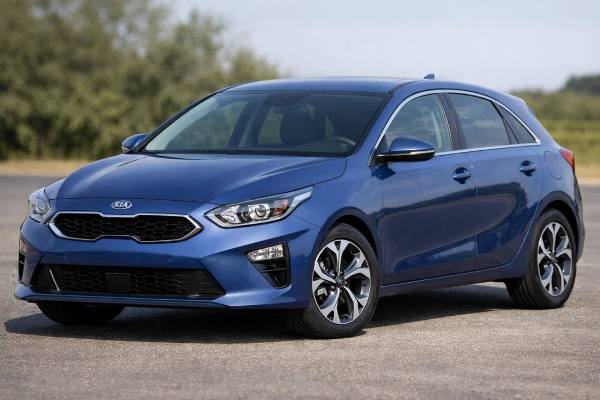
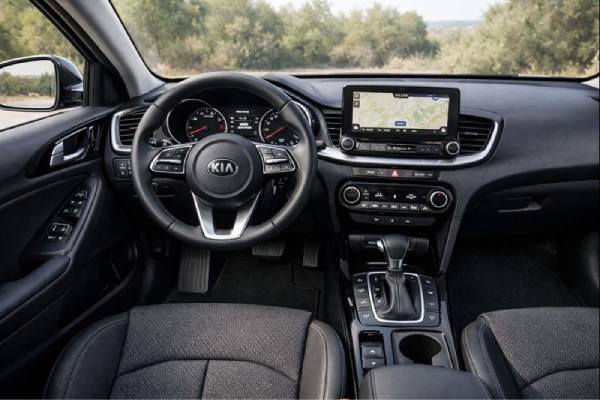
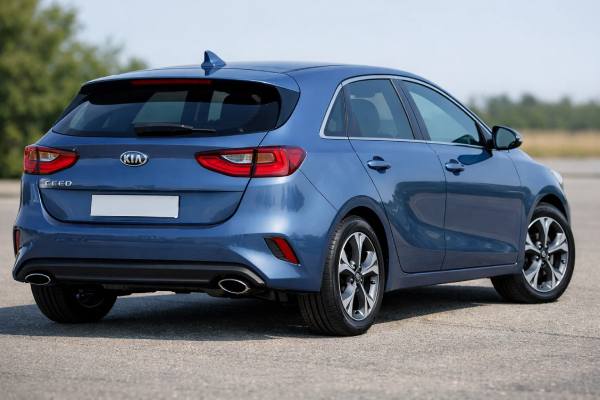
The 2018–2021 Kia Ceed (CD) with the 1.6 Smartstream CRDi diesel sits in a sweet spot for drivers who want long-range efficiency without giving up everyday refinement. In this tune, the engine delivers a strong mid-range pull that suits motorway work and hilly commutes, while the chassis feels planted and predictable at speed. The Ceed’s practical hatchback packaging matters too: a useful boot, easy rear-seat access, and sane exterior dimensions for urban parking.
Ownership success with this diesel comes down to using it the way modern emissions hardware prefers. If your driving is mostly short trips, the diesel particulate filter (DPF) and EGR system will demand more attention. If you do regular longer runs, service it on time, and use the correct low-ash oil, this powertrain can be an economical, durable daily.
Owner Snapshot
- Strong motorway economy and relaxed high-gear cruising for long commutes
- Useful torque for loaded driving and confident overtakes without high revs
- Stable, mature handling with good straight-line confidence at speed
- Short-trip use can accelerate DPF/EGR and AdBlue-related faults on Euro 6 diesels
- Plan oil and filter service every 20,000 km or 12 months (often shorter under severe use)
Navigate this guide
- Kia Ceed CD diesel in detail
- Kia Ceed CD 1.6 CRDi specs
- Kia Ceed CD trims and safety
- Reliability and known problem areas
- Maintenance plan and buying tips
- Driving feel and real economy
- Ceed 1.6 CRDi vs rivals
Kia Ceed CD diesel in detail
Kia built the third-generation Ceed (CD) to feel more “European” in the ways owners notice every day: steering that tracks straight on motorways, suspension that doesn’t get flustered on broken surfaces, and a cabin that stays relatively calm at speed. In 1.6 Smartstream CRDi form (often marketed as 136 PS / 100 kW, roughly 134 hp), the character is about usable torque rather than chasing revs. That matters in real life, because you spend more time between 1,500 and 3,000 rpm than you do near redline.
What “Smartstream CRDi” means here: this is a modern common-rail turbo-diesel designed around Euro 6 emissions rules. Expect a diesel particulate filter (DPF) and, in many markets, SCR with AdBlue (urea). Those systems are excellent when the car is driven hot and steady, but they punish a steady diet of cold starts and short errands. The Ceed isn’t unique in this; it’s simply the reality of 2018+ diesels.
Why owners like it:
- Long-range efficiency: the Ceed can cover large motorway distances on a tank, and it usually feels less “busy” than small turbo-petrol alternatives at 120–130 km/h.
- Everyday torque: the engine’s mid-range makes the car feel stronger than its horsepower figure suggests, especially when loaded with passengers or luggage.
- Practical footprint: compact outside dimensions make it easy to live with in a city, while the hatchback body still delivers useful cargo space.
Where expectations need to be realistic:
- Short-trip penalties: frequent low-speed, low-temperature use raises the risk of DPF soot accumulation, EGR valve sticking, and AdBlue/SCR sensor complaints.
- Quality fluids are not optional: low-ash oil (ACEA C2/C3/C5 depending on market guidance) protects the DPF and turbocharger, and poor fuel quality can trigger injector and NOx-control issues.
- Software matters: drivability and emissions hardware behavior often improves with ECU updates. A dealer history that shows campaign and calibration work is a meaningful plus.
If your usage includes regular 20–30 minute runs (or longer), the 1.6 CRDi Ceed tends to reward you with steady economy and a relaxed daily feel. If you mostly do 3–5 km trips, a petrol or hybrid version will usually cost less to own, even if the diesel looks tempting on fuel consumption alone.
Kia Ceed CD 1.6 CRDi specs
Below are typical specifications for the 2018–2021 Ceed (CD) hatchback with the 1.6 Smartstream CRDi diesel around 100 kW (134 hp). Exact numbers can vary by market, emissions version, transmission, wheel size, and trim.
Powertrain and efficiency
| Item | Specification |
|---|---|
| Engine family / marketing name | Smartstream CRDi (often referenced as “New U-III” 1.6 diesel) |
| Common engine codes (market-dependent) | Often seen as D4FB / D4FE variants depending on emissions and electrification |
| Layout / cylinders | Transverse front, inline-4 |
| Valvetrain | DOHC, 4 valves per cylinder (16V) |
| Bore × stroke | 77.0 × 85.8 mm (3.03 × 3.38 in) |
| Displacement | 1.6 L (1,598 cc) |
| Induction | Turbocharged, intercooled |
| Fuel system | Common-rail direct injection (CRDi) |
| Compression ratio | 15.9:1 (typical) |
| Max power | 134 hp (100 kW) @ ~4,000 rpm |
| Max torque (6MT, typical) | 280 Nm (207 lb-ft) (often broader band in the mid-range) |
| Max torque (7DCT, typical) | 320 Nm (236 lb-ft) @ ~2,000 rpm |
| Emissions hardware (typical) | DPF; many markets also use SCR (AdBlue) |
| Rated combined economy (official) | Often around 4.1–4.4 L/100 km (test-cycle dependent) |
| Real-world highway @ 120 km/h | Commonly ~5.0–5.8 L/100 km depending on wind, tyres, load, and temperature |
Transmission and driveline
| Item | Specification |
|---|---|
| Transmission options | 6-speed manual; 7-speed dual-clutch automatic (DCT) in many markets |
| Drive type | FWD |
| Differential | Open (traction control handles wheelspin) |
Chassis and dimensions (hatchback)
| Item | Specification |
|---|---|
| Front suspension | MacPherson strut (independent) |
| Rear suspension | Typically multi-link on higher-output/upper trims; confirm by trim/market |
| Steering | Electric power steering (EPS), rack-and-pinion |
| Brakes (typical) | Front ventilated discs; rear discs |
| Common brake disc diameters (typical by trim) | Front up to ~305 mm (12.0 in); rear around ~284 mm (11.2 in) |
| Popular tyre sizes | 205/55 R16 (comfort/economy) and 225/45 R17 (sport packages) |
| Ground clearance (approx.) | ~135 mm (5.3 in) |
| Length / width / height | 4310 / 1800 / 1447 mm (169.7 / 70.9 / 57.0 in) |
| Wheelbase | 2650 mm (104.3 in) |
| Turning circle (kerb-to-kerb) | ~10.6 m (34.8 ft) |
| Kerb weight (typical range) | ~1310–1340 kg (2890–2955 lb) depending on transmission/trim |
| GVWR (typical) | ~1880–1900 kg (4140–4190 lb) |
| Fuel tank | 50 L (13.2 US gal / 11.0 UK gal) |
| Cargo volume | 395 L (seats up) / 1291 L (seats down) (method varies; commonly VDA-style reporting) |
Performance and capability
| Item | Specification |
|---|---|
| 0–100 km/h (0–62 mph) | Typically ~9.9–10.2 s (DCT often quicker than manual) |
| Top speed | ~200 km/h (124 mph) |
| Braking 100–0 km/h | Tyre- and test-dependent; often mid-to-high 30 m range in class |
| Towing capacity (braked / unbraked) | Typically 1500 kg / 650 kg (check your VIN plate) |
| Payload | Often ~560 kg (1235 lb) depending on configuration |
Fluids and service capacities (owner-facing)
These are the kinds of figures you use for planning services and budgeting. Always verify your engine variant and transmission.
| Item | Specification |
|---|---|
| Engine oil (drain and refill) | 4.4 L (4.6 US qt); low-ash oil spec commonly ACEA C5/C2/C3 by market |
| Oil service interval (typical published) | Often 20,000 km / 12 months (shorter under severe use) |
| Brake fluid | DOT 4 LV class fluids are commonly specified |
| AdBlue / urea solution (if SCR fitted) | 12 L tank is common on this platform |
| Fuel tank | 50 L |
Safety and driver assistance (high-level)
| Item | Notes |
|---|---|
| Crash ratings (Euro NCAP) | 4-star result for the Ceed family in the 2019 test era |
| Euro NCAP scores | Adult 88% / Child 85% / Vulnerable Road Users 68% / Safety Assist 73% |
| Core safety systems | ESC stability control, multi-airbag layout, ISOFIX/LATCH points, ABS with EBD |
| ADAS availability | Commonly offered with AEB, lane support, speed assistance, and adaptive cruise depending on trim/pack |
Kia Ceed CD trims and safety
Trim naming varies by country, but the equipment structure is usually similar: a base version focused on value and comfort, one or two mid trims with the best feature-per-euro balance, and a top trim that bundles lighting, tech, and driver assistance. With the 1.6 CRDi, you also commonly see the drivetrain paired with higher trims because diesel buyers tend to prioritize motorway comfort, noise control, and stronger feature lists.
How to identify what you’re looking at (quick checks):
- Transmission and torque behavior: the DCT cars often feel stronger in rolling acceleration because they can be calibrated for higher torque output than the manual version in some markets.
- Wheels and brakes: 16-inch wheels often indicate comfort-oriented trims (and usually cheaper tyres). 17-inch wheels often come with firmer damping and may pair with larger front brakes.
- Lighting: full LED headlamps (often with a distinctive signature) typically signal an upper trim or a technology pack.
- Driver assistance buttons and sensors: look for steering wheel buttons for lane support and adaptive cruise, a forward camera near the rear-view mirror, and radar sensors in the lower grille area.
Options and packages that matter for ownership
1) Safety and ADAS packs
If you want modern assistance features, focus on cars that have the full suite rather than “some of it.” Depending on the market, you may find:
- AEB (autonomous emergency braking): may support car-to-car and, on some versions, pedestrian/cyclist detection.
- Lane keeping or lane following support: helpful on motorways, but windshield camera calibration becomes important after glass replacement.
- Adaptive cruise control (ACC): excellent for long commutes; check it works smoothly and doesn’t throw radar-related faults.
2) Comfort packs
For diesel buyers, comfort options often matter more than sport styling:
- Heated seats and heated steering wheel for cold climates (diesels warm slower than petrol engines).
- Dual-zone climate control and better seat trim for long-distance comfort.
- Higher-grade infotainment (and better speakers) if you live on the motorway.
Safety ratings and what they mean here
The Ceed’s Euro NCAP result is a good reality check: it’s a solid modern hatchback, but not a “top of class” five-star from the newest protocols. A 4-star rating can still represent strong occupant protection, but it may reflect scoring constraints around standard-fit assistance tech, pedestrian protection performance, or protocol changes.
What matters most when you shop:
- Match the car’s equipment to your use. If you do lots of night motorway driving, prioritize strong headlamps and clean windscreen/camera/radar areas.
- Confirm airbag and seatbelt hardware. Look for intact airbag labels and make sure seatbelt pretensioners have not been deployed (an indicator of prior significant impact).
- Child-seat practicality: ISOFIX points, top tethers, and rear seat shape can matter more day-to-day than headline star ratings.
If safety tech is a priority, don’t assume it’s present because the car “looks high spec.” Verify it with a VIN-based build sheet, the original order list, or a careful inspection of controls and sensors.
Reliability and known problem areas
A modern Euro 6 diesel can be very reliable when it’s driven hot and serviced correctly. Problems tend to cluster around emissions hardware and usage mismatch rather than core engine strength. Think in terms of probability and cost tier:
Common (seen often)
DPF soot loading (medium cost, sometimes high if ignored)
- Symptoms: frequent fan running after shutdown, rising fuel use, sluggish response, “regeneration” behavior, or warning lights.
- Likely cause: repeated short trips, low-speed city use, interrupted regenerations, incorrect oil spec (too much ash).
- Remedy: confirm forced regen eligibility, check differential pressure sensor readings, address upstream causes (EGR, boost leaks), and adapt driving patterns (regular longer runs). A neglected DPF can crack or plug and become expensive.
EGR and intake soot buildup (medium cost)
- Symptoms: rough idle, hesitation, smoke under load, EGR-related fault codes.
- Likely cause: soot and oil mist accumulation over time, especially with lots of stop-start use.
- Remedy: cleaning/replacement of EGR components, inspection for boost leaks, and ensuring the engine reaches full temperature regularly.
AdBlue/SCR warnings (medium to high cost depending on parts)
- Symptoms: AdBlue warning countdown, NOx efficiency faults, urea system errors.
- Likely cause: crystallization from poor-quality urea, injector dosing issues, NOx sensor faults, heater problems in cold climates.
- Remedy: use fresh ISO 22241-compliant urea, keep the filler area clean, diagnose with proper scan tools, and replace failed sensors/heaters rather than repeatedly clearing codes.
Occasional (depends on maintenance and driving style)
Turbo control and boost system leaks (medium cost)
- Symptoms: limp mode, whistle/whoosh noises, underboost codes, weak high-load acceleration.
- Likely cause: split charge pipes, intercooler leaks, sticky actuator mechanisms, vacuum control issues (if equipped).
- Remedy: smoke-test the intake path, confirm actuator operation, and repair leaks before chasing sensors.
Dual-mass flywheel (DMF) and clutch wear (medium to high cost)
- Symptoms: vibration at idle, rattling on shutdown, slipping under load, shudder when pulling away.
- Likely cause: high-torque use at low rpm, lots of stop-start driving, towing, aggressive launches.
- Remedy: replace worn components as a set when required; avoid lugging the engine in high gear at low speed.
DCT drivability issues (medium cost if caught early)
- Symptoms: shudder in traffic, hesitant engagement, rough low-speed behavior.
- Likely cause: clutch wear or adaptation drift, software calibration needs, or overheating in repeated creep traffic.
- Remedy: check for software updates, ensure correct fluid service if applicable to your specific DCT type, and avoid prolonged creeping on inclines.
Rare but expensive (watch for early signs)
Injector or high-pressure fuel system faults (high cost)
- Symptoms: hard starting, knocking, smoke, misfire under load, rail pressure codes.
- Likely cause: contaminated fuel, water ingestion, long-term neglected filter service.
- Remedy: confirm fuel quality issues, replace filters on schedule, and diagnose properly before parts swapping.
Software, calibrations, and “it drives better after updates”
On many late-2010s diesels, ECU updates can meaningfully improve:
- regen strategy and warning thresholds,
- drivability (throttle mapping, torque delivery),
- sensor diagnostics that prevent false faults,
- ADAS behavior and camera/radar fault handling.
For a used Ceed, a dealer-stamped history that includes campaign and update work is a practical reliability advantage, not just paperwork.
Recalls and service actions
Rather than relying on generic lists, verify your specific vehicle:
- Run an official VIN recall check for your market.
- Ask for a printout of completed campaigns and outstanding actions.
- Confirm any emissions-related service actions have documentation.
That last step matters because some updates are “quiet” improvements that never show up in a normal service invoice unless you ask.
Maintenance plan and buying tips
A disciplined maintenance approach is the simplest way to keep a modern diesel cheap to own. The goal is to protect turbo health, emissions hardware, and drivetrain components.
Practical maintenance schedule (typical planning guide)
Every 10,000–20,000 km (or 12 months, whichever comes first)
- Engine oil and filter: Use the correct low-ash diesel oil spec for your market (commonly ACEA C2/C3/C5 guidance) and don’t stretch intervals if you do city driving. Short-trip use is “severe service,” even if you drive few kilometres.
- General inspection: check for boost leaks, coolant seepage, belt condition, and undertray oil mist that can hide leaks.
Every 20,000–30,000 km
- Air filter: more often in dusty environments.
- Cabin filter: annually if you want effective HVAC and low window fogging.
Every 40,000–60,000 km
- Brake fluid: plan roughly every 2 years for best pedal feel and corrosion control.
- Alignment check: especially if you see uneven front tyre wear.
Every 60,000–100,000 km (usage-dependent)
- Fuel filter (if serviceable in your market): critical for injector protection.
- Manual gearbox oil (optional but smart for long ownership): not always required on the official schedule, but it’s cheap protection if you plan to keep the car.
- DCT service: follow the exact transmission specification for your VIN and gearbox type. Some DCTs are sensitive to correct fluid and adaptation procedures.
Coolant
- Many modern long-life coolants run for years, but it’s still wise to confirm age and concentration, especially if the car has lived in extremes of heat or cold.
AdBlue (if equipped)
- Top up with fresh fluid from a sealed container and avoid contaminating the filler. If you top up, don’t overfill and wipe spills; crystallization can create mess and sensor complaints.
Buyer’s guide: what to inspect before purchase
1) Driving pattern fit
- If your daily use is mostly short trips, think hard. A diesel with DPF/SCR will ask for attention. If you still want it, insist on proof the car has not lived on constant short commutes.
2) Test drive checks (15–20 minutes minimum)
- From cold: listen for excessive rattles, check for rough idle, and watch for warning lights.
- Under load: ensure boost builds smoothly, no limp mode, and no clouds of smoke.
- After warming: confirm stable temperature, no coolant smell, and that stop-start (if fitted) behaves normally.
3) DPF and emissions health clues
- Ask if the car has ever needed a forced regeneration. Occasional isn’t a deal-breaker; frequent is a pattern.
- Scan tool data (ideal): soot load, differential pressure, and regen history give the best picture.
4) Transmission-specific checks
- Manual: clutch bite point, any DMF chatter, smooth take-up.
- DCT: low-speed smoothness, no repeated shudder, no delayed engagement into drive/reverse.
5) Service history quality
- Correct oil spec and interval discipline matter more than dealer vs independent.
- Evidence of software updates and campaign completion is a plus.
Long-term durability outlook
For owners who do mixed-to-long trips and keep up with oil quality and interval discipline, the 1.6 CRDi Ceed can be a durable high-mileage hatch. The ownership risk is less about internal engine wear and more about emissions components being asked to do city-only duty. Buy the right usage pattern, and this drivetrain tends to make financial sense.
Driving feel and real economy
The Ceed (CD) is tuned to feel composed rather than flashy, and the 1.6 CRDi suits that personality. Where small turbo-petrols can feel busy and a bit coarse when pushed, the diesel’s advantage is that it delivers its effort early. You don’t need to rev it out to make progress, which often makes the car feel calmer in normal driving.
Ride, handling, and NVH (noise and refinement)
Ride quality: On 16-inch wheels, the Ceed generally rides with a mature “one movement” feel over bigger bumps, and it doesn’t crash harshly unless tyres are overinflated. On 17-inch packages, the steering can feel a bit sharper, but you often trade some ride compliance on rough streets.
Stability: This is a strong point. The Ceed tracks straight on motorways and feels planted in crosswinds for a car of this size. That matters if you do long distances or tow small trailers.
Cabin noise: Expect typical diesel cold-start clatter, but once warm the engine settles. At motorway speeds, tyre choice becomes a bigger factor than engine noise. Budget tyres can make the cabin noticeably louder than premium touring tyres.
Powertrain character and transmission behavior
Throttle and torque: The engine’s response is strongest in the mid-range. The smartest way to drive it is to let torque do the work—short-shift and keep it in the fat part of the torque curve rather than chasing rpm.
Manual gearbox: Usually straightforward and easy to place. The key is to avoid lugging the engine in high gear at low speed, which is hard on the drivetrain and can increase soot accumulation.
DCT behavior: Dual-clutch gearboxes shine once rolling; they can feel less natural in creeping stop-start traffic because they still rely on clutch engagement. Smooth DCT ownership is about:
- gentle throttle at parking speeds,
- avoiding prolonged creep on inclines,
- ensuring the car has had any relevant software updates.
Real-world efficiency
Official figures can look impressively low. Real-world results depend on speed and temperature more than many drivers expect:
- City-only, short trips: often 6.0–7.5 L/100 km, especially in winter or heavy traffic.
- Mixed commuting: commonly 5.0–6.2 L/100 km.
- Motorway at 120 km/h: often ~5.0–5.8 L/100 km, with headwinds and roof boxes pushing higher.
Cold weather matters because:
- diesels warm up slower,
- cabin heat demand can increase consumption,
- DPF regeneration events can temporarily raise fuel use.
Load and towing notes
With the 1.6 CRDi’s torque, the Ceed copes well with passengers and luggage. If you tow:
- stay conservative on steep grades (keep airflow up and don’t lug the engine),
- expect a noticeable fuel penalty,
- and prioritize correct tyre pressures and brake condition.
Overall, this Ceed drivetrain is at its best when it’s used consistently: warm it up, let it do longer runs, and it behaves like a relaxed long-distance hatchback rather than a fussy city diesel.
Ceed 1.6 CRDi vs rivals
In the 2018–2021 C-segment hatchback world, the Ceed 1.6 diesel competes with cars that are all “good,” but good in different ways. The best choice depends on whether you value refinement, driver assistance, dealer network, or running cost stability.
Versus Volkswagen Golf 1.6 TDI (similar era)
Where the Golf often wins
- Perceived interior solidity and resale strength in many markets
- Broad specialist support and abundant parts availability
Where the Ceed can make more sense
- Often stronger value on the used market for similar age and mileage
- A straightforward ownership experience when serviced correctly
- Practical equipment levels without needing expensive option packs
Versus Ford Focus 1.5/1.6 diesel (market-dependent)
Focus strengths
- Engaging steering feel and cornering balance
- Often very good ride/handling compromise
Ceed strengths
- Typically calmer motorway stability and an easy daily demeanor
- In many trims, a user-friendly cabin layout and sensible ergonomics
Versus Peugeot 308 1.5 BlueHDi
308 strengths
- Very strong official economy and modern diesel efficiency
- Compact, light feel with a more “design-forward” cabin concept
Ceed strengths
- More conventional control layout (some drivers prefer this)
- If your 308 alternative has complex emissions hardware history, the Ceed can feel like the simpler bet—provided your use pattern suits a diesel
Versus Opel/Vauxhall Astra 1.6 diesel
Astra strengths
- Often comfortable seats and stable high-speed behavior
- Usually competitive used pricing
Ceed strengths
- Strong practicality and a balanced chassis that doesn’t demand adaptation
- Widely familiar component ecosystem across Hyundai–Kia in many markets
The key decision filter: your driving pattern
If you regularly do longer trips and want efficient high-speed cruising, the Ceed 1.6 CRDi is a sensible, comfortable choice that can run for high mileages. If your life is mostly short urban drives, many rivals—and especially petrol or hybrid variants—will be easier and sometimes cheaper to own despite higher fuel use.
In short: the Ceed’s advantage is balanced competence. It rarely has the single strongest headline trait in the class, but it often has fewer unpleasant surprises when it’s owned thoughtfully and maintained with the right fluids and intervals.
References
- Official Kia Cee’d 2019 safety rating 2019 (Safety Rating)
- Engine Oil Grades and Capacities 2023 (Service Maintenance)
- Recommended lubricants and capacities 2023 (Owner’s Manual)
Disclaimer
This article is for informational purposes only and is not a substitute for professional diagnosis, inspection, or repair. Specifications, torque values, fluid types and capacities, service intervals, and procedures can vary by VIN, market, production date, and installed equipment. Always verify details using your vehicle’s official owner’s manual, workshop/service documentation, and dealer records before ordering parts or performing maintenance.
If you found this guide useful, please consider sharing it on Facebook, X (Twitter), or your favorite forum to help support our work.