
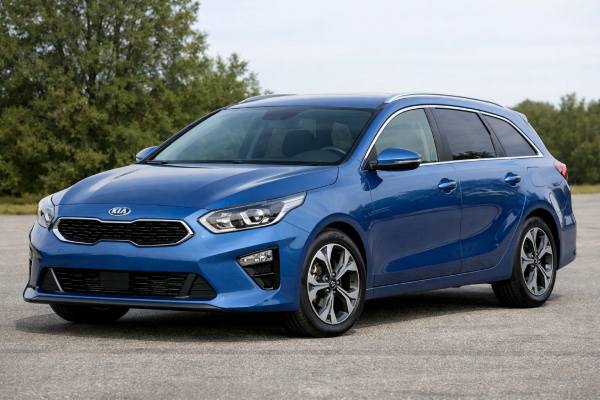
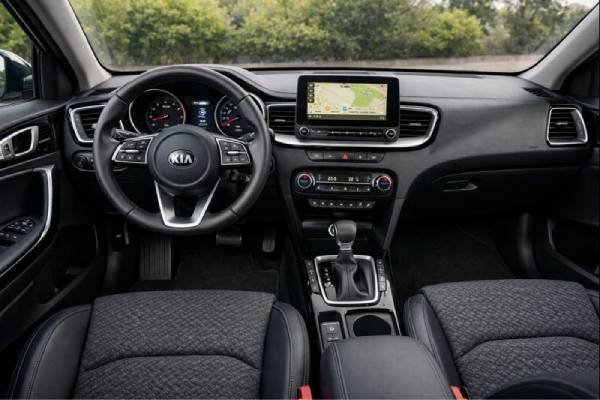
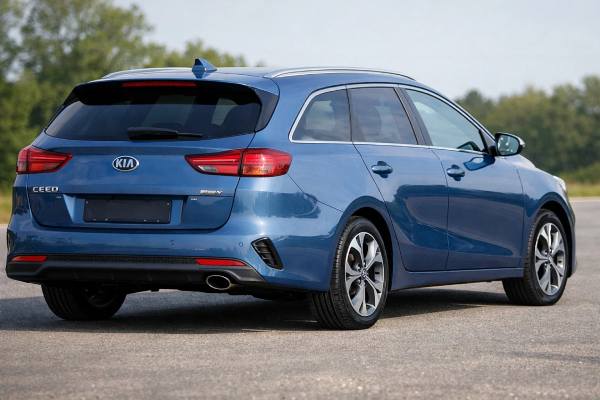
The 2018–2021 Kia Ceed Sportswagon (CD) with the 1.0 Kappa II T-GDi is aimed at drivers who need estate practicality without stepping up to a larger, heavier car. It pairs a compact, efficient three-cylinder turbo petrol with a long-roof body that’s genuinely useful: a low loading lip, a wide boot opening, and rear seat folding that makes carrying bikes, flat-pack furniture, or holiday luggage far easier than in the hatchback. Engineering-wise, the key story is balance. The small turbo engine provides torque early enough for everyday driving, while the platform feels stable on motorways and predictable on wet back roads.
Ownership is usually straightforward if you respect turbo and direct-injection basics: correct oil spec, sensible warm-up habits, and timely spark plugs. Choose the transmission carefully, too—manual is simple and robust, while the dual-clutch option suits steady cruising but can dislike heavy stop-start crawling.
Quick Specs and Notes
- Big, square boot and flat-fold versatility make it a strong “one-car solution” for families
- Efficient turbo petrol suits mixed driving better than a diesel if you do lots of short trips
- Stable motorway manners for an estate this size, especially on touring tyres
- Direct-injection turbo engines prefer frequent oil changes and fresh spark plugs to avoid misfires and deposits
- Plan engine oil and filter every 10,000 km or 12 months (sooner for short-trip city use)
Contents and shortcuts
- Kia Ceed Sportswagon CD at a glance
- Kia Ceed Sportswagon 1.0 T-GDi specs
- Kia Ceed Sportswagon trims and ADAS
- Common issues and service actions
- Maintenance and smart buying checks
- Real-world driving and economy
- Sportswagon 1.0T vs estate rivals
Kia Ceed Sportswagon CD at a glance
The Ceed Sportswagon is the version of the Ceed range that quietly solves day-to-day problems. Compared with the hatchback, the extra rear overhang is used for what matters: cargo length, opening width, and a boot that works well with real objects (strollers, luggage, pet crates) rather than just looking good on a brochure. In many markets the Sportswagon also arrives with roof rails as standard, which adds genuine utility for roof boxes or bike carriers.
With the 1.0 Kappa II T-GDi (around 118 hp), the driving feel is not “fast,” but it’s more capable than the displacement suggests. The engine makes its best effort in the low-to-mid rpm range, so you can keep pace with traffic without constantly revving. Where it can feel strained is sustained high-speed climbing with a full load, especially if you’re on larger wheels or carrying a roof box. The trick is to treat it like a torque engine: short-shift, avoid lugging, and let the turbo do the work.
This powertrain also fits modern urban reality. If your trips are short and your winters are cold, a small turbo petrol generally copes better than a diesel with DPF and SCR hardware. You still have emissions equipment—many versions use a gasoline particulate filter (GPF)—but it is typically less sensitive to short-trip use than a diesel DPF setup.
Strengths that tend to show up in ownership:
- Packaging: lots of usable boot volume without moving up to a midsize estate.
- Running costs: typically reasonable tyres, brakes, and fuel use if driven sensibly.
- Everyday refinement: stable motorway tracking and an easy, predictable chassis.
Trade-offs to be honest about:
- Performance is load-sensitive: full passengers + luggage + hills will expose the limits of 1.0 litre.
- Direct injection needs care: correct oil spec and timely plugs reduce misfires, deposits, and turbo stress.
- Transmission choice matters: manual is forgiving; a dual-clutch can be great on open roads but less happy in constant crawl traffic.
If you want the Sportswagon’s practicality but rarely carry heavy loads, the 1.0 T-GDi is often the sweet spot. If you regularly tow or drive fully loaded at high speeds, you’ll usually be happier with a larger petrol or diesel option.
Kia Ceed Sportswagon 1.0 T-GDi specs
The tables below summarize typical specifications for the 2018–2021 Kia Ceed Sportswagon (CD) with the 1.0 Kappa II T-GDi around 118 hp. Exact figures vary by market, emissions standard, wheels, and transmission.
Powertrain and efficiency
| Item | Specification |
|---|---|
| Engine code (commonly used) | Kappa II 1.0 T-GDi (often referenced as G3LC in service context) |
| Engine layout and cylinders | Transverse front, inline-3 |
| Valvetrain | DOHC, 4 valves/cyl (12 valves total) |
| Bore × stroke | 71.0 × 84.0 mm (2.80 × 3.31 in) |
| Displacement | 1.0 L (998 cc) |
| Induction | Turbocharged, intercooled |
| Fuel system | Direct injection (GDI) |
| Compression ratio | Typically around 10:1 (market-dependent) |
| Max power | 118 hp (88 kW) @ ~6,000 rpm |
| Max torque | 172 Nm (127 lb-ft) @ ~1,500–4,000 rpm |
| Timing drive | Chain (inspect for noise if oil history is poor) |
| Rated efficiency (combined) | Commonly ~5.2–5.7 L/100 km (cycle and market dependent) |
| Real-world highway @ 120 km/h | Often ~6.0–7.0 L/100 km, depending on tyres, load, wind, and temperature |
Transmission and driveline
| Item | Specification |
|---|---|
| Transmission | Typically 6-speed manual; some markets offer 7-speed dual-clutch (DCT) |
| Drive type | FWD |
| Differential | Open (traction control manages wheelspin) |
Chassis, brakes, and tyres
| Item | Specification |
|---|---|
| Suspension (front/rear) | Front MacPherson strut; rear multi-link (common on this platform) |
| Steering | Electric power steering (EPS), rack-and-pinion |
| Brakes | Disc brakes all around (diameters vary by wheel package) |
| Popular tyre sizes | 205/55 R16 (comfort/value), 225/45 R17 (sport packages) |
| Ground clearance | Typically ~135 mm (5.3 in) (varies with tyres and load) |
Dimensions and weights (Sportswagon)
| Item | Specification |
|---|---|
| Length / width / height | About 4600 / 1800 / 1465 mm (181.1 / 70.9 / 57.7 in) |
| Wheelbase | 2650 mm (104.3 in) |
| Turning circle (kerb-to-kerb) | Typically ~10.6 m (34.8 ft) |
| Kerb (curb) weight | Commonly ~1,260–1,390 kg (2,778–3,064 lb) (trim/transmission dependent) |
| GVWR | Typically ~1,820–1,880 kg (4,012–4,145 lb) |
| Fuel tank | 50 L (13.2 US gal / 11.0 UK gal) |
| Cargo volume | Typically ~625 L (seats up) / 1,694 L (seats down) (method varies by market) |
Performance and capability (typical)
| Item | Specification |
|---|---|
| 0–100 km/h (0–62 mph) | Commonly ~11.0–12.0 s (wheels and gearbox matter) |
| Top speed | Typically ~190–195 km/h (118–121 mph) |
| Towing capacity | Often up to 1,200 kg braked / 600 kg unbraked (verify VIN plate) |
| Payload | Often ~500–600 kg depending on trim and options |
Fluids, service capacities, and key torque specs
Use these for planning and budgeting; always verify by VIN and service documentation.
| Item | Typical value |
|---|---|
| Engine oil | Low-ash spec per market (commonly ACEA C2, some markets allow API SN Plus/SP) |
| Engine oil capacity (drain and refill) | About 3.6 L (3.8 US qt) |
| Coolant | Long-life OAT type in many markets; capacity varies by radiator and heater core |
| Manual transmission fluid | Typically ~1.3–1.4 L of GL-4 70W class fluid (market-dependent) |
| DCT fluid (if equipped) | Often ~1.6–1.7 L for service-fill range (procedure-dependent) |
| A/C refrigerant | Varies by equipment; confirm under-hood label |
Key torque specs (typical planning figures):
- Wheel nuts: ~88–108 Nm (65–80 lb-ft) (wheel-dependent)
- Engine oil drain plug: often ~25–35 Nm (18–26 lb-ft)
- Spark plugs: often ~18–25 Nm (13–18 lb-ft)
Safety and driver assistance (headline)
| Item | Notes |
|---|---|
| Crash rating (Euro NCAP, Ceed family) | 4 stars, with commonly published scores around Adult 88% / Child 85% / VRU 68% / Safety Assist 73% |
| ADAS availability | AEB, lane support, driver attention warning, and speed assistance often offered; ACC and blind-spot features depend on trim/pack |
Kia Ceed Sportswagon trims and ADAS
Trim names differ by country, but the Sportswagon lineup usually follows a familiar pattern: an entry trim that covers essentials, a mid trim that brings the best comfort-per-cost, and one or two higher trims that bundle lighting, infotainment, and driver assistance. With the 1.0 T-GDi, you’ll often see the broadest availability because it’s the volume engine in many markets.
Trims and options that change the driving experience
Wheels and tyre packages
The most important “hidden” option is wheel size. A 16-inch setup (often 205/55 R16) tends to deliver:
- more compliant ride on rough streets,
- lower tyre cost,
- slightly better real-world fuel use.
A 17-inch setup (often 225/45 R17) can offer sharper turn-in, but it commonly increases:
- tyre noise on coarse asphalt,
- susceptibility to pothole damage,
- fuel consumption at motorway speeds.
Infotainment and cabin tech
Mid and upper trims often include larger screens, better navigation integration, and upgraded audio. From an ownership point of view, the more important features are practical:
- parking sensors and a reversing camera (very useful on an estate),
- heated seats and heated steering wheel in cold climates,
- stronger headlights for rural driving.
Mechanical differences
In many markets the core chassis is the same, but pay attention to:
- brake size that can scale with wheel packages,
- suspension tuning differences on sport styling trims,
- transmission availability (manual vs DCT).
Safety systems: what’s typically fitted, and what to verify
Even at lower trims, most cars in this era include:
- ABS with electronic brake-force distribution,
- stability control (ESC),
- multiple airbags (front, side, and curtain),
- ISOFIX/LATCH points for child seats.
Where trims and option packs matter most is active safety (ADAS). Depending on year and market, look for:
- AEB (autonomous emergency braking): often camera-based; some versions also use radar.
- Lane keeping assist / lane following support: camera-based; windshield condition and calibration matter.
- Driver attention warning: useful, but can be sensitive to steering inputs and road markings.
- Blind-spot monitoring and rear cross-traffic alert: typically higher trims; very valuable in estate driving with a loaded rear that can limit visibility.
- Adaptive cruise control (ACC): excellent for motorways; verify smooth control and no warning messages.
Year-to-year changes that can affect equipment
For 2018–2021, the most meaningful changes tend to be:
- wider availability of driver-assist features as standard equipment,
- updated infotainment software and smartphone integration,
- emissions updates (including GPF adoption and calibration changes).
Because these changes can be subtle, avoid shopping by “year” alone. Instead, identify the exact car by:
- VIN-based build sheet (best),
- original sales invoice or option list,
- physical checks (radar panel in grille, camera housing at mirror, ACC buttons on steering wheel).
Safety ratings: how to interpret them for this model
A 4-star Euro NCAP result in this era can still represent strong occupant protection, but it may reflect:
- whether advanced ADAS was standard or optional,
- changing test protocols,
- scoring limits in vulnerable road user (VRU) categories.
Practical takeaway: if safety tech matters to you, buy the best-equipped example you can find and confirm its ADAS features actually function correctly—especially after windscreen replacement, front bumper repairs, or wheel alignment work.
Common issues and service actions
The 1.0 Kappa II T-GDi Sportswagon is generally a sensible ownership proposition, but it’s still a modern turbo direct-injection engine. Issues tend to cluster around ignition, deposits, and (if fitted) dual-clutch behavior rather than major internal engine failures. Here’s a practical map by prevalence and cost tier.
Common (seen regularly)
Ignition coil or spark plug wear (low to medium cost)
- Symptoms: misfire under load, hesitation, flashing MIL, rough idle, reduced power.
- Likely cause: plugs stretched beyond interval, heat stress, or coil degradation; short trips and cheap fuel can worsen it.
- Remedy: replace plugs with the correct heat range and gap spec; replace coils as needed; confirm no oil contamination in plug wells.
GDI intake valve deposits (medium cost over time)
- Symptoms: rough cold running, reduced efficiency, uneven idle, sluggish response.
- Likely cause: direct injection does not wash intake valves with fuel; oil vapors from PCV can contribute.
- Remedy: keep oil changes frequent, ensure the PCV system is healthy, and consider professional intake cleaning if symptoms appear.
Turbo plumbing leaks and clamps (low to medium cost)
- Symptoms: whistle or whoosh, underboost faults, inconsistent power delivery.
- Likely cause: loose clamps, aging rubber couplers, or small leaks at intercooler connections.
- Remedy: pressure/smoke test the intake tract and repair leaks before chasing sensors.
Occasional (depends on use and maintenance)
Timing chain noise or tensioner sensitivity (medium cost if ignored)
- Symptoms: rattle on cold start, persistent ticking near the timing cover, correlation faults in diagnostics.
- Likely cause: poor oil history, long oil intervals, wrong viscosity, or repeated cold running.
- Remedy: verify oil spec and service history; investigate early rather than “living with it.”
Cooling system weeps and thermostat behavior (low to medium cost)
- Symptoms: slow coolant loss, sweet smell, temperature fluctuations, slow cabin heat.
- Likely cause: hose clamps, thermostat housing seepage, or aging plastic fittings.
- Remedy: pressure test, address leaks promptly, and refill with correct long-life coolant.
Dual-clutch (DCT) shudder in stop-start traffic (medium cost)
- Symptoms: judder when creeping, delayed engagement, overheating warnings in extreme cases.
- Likely cause: clutch heat from constant crawl driving, adaptation drift, or software calibration needs.
- Remedy: confirm correct service procedure and software updates; adjust driving style (avoid extended creeping on inclines).
Rare but higher-cost risks
High-pressure fuel system faults (high cost)
- Symptoms: hard starting, poor acceleration, rail pressure codes, misfire that doesn’t respond to plugs/coils.
- Likely cause: fuel contamination or component failure.
- Remedy: proper diagnostics first; avoid repeated parts swapping.
Software, calibrations, and why they matter
Modern small turbo engines rely heavily on calibration for:
- boost control smoothness,
- knock control strategy,
- emissions hardware behavior (including GPF management where fitted),
- drivability updates that reduce hesitation or surging.
When shopping used, treat evidence of dealer campaigns and documented updates as a real value add. It can mean fewer nuisance warnings and smoother behavior, especially with ADAS systems.
Recalls and service actions: how to verify correctly
Rather than relying on generic “recall lists,” do three concrete checks:
- Run an official VIN recall check for your market.
- Ask the seller for dealer printouts showing completed actions.
- Confirm no outstanding campaign lights or warnings are present on the dash.
This approach protects you from buying a car that looks fine but is missing a known update that affects reliability or safety equipment.
Maintenance and smart buying checks
A small turbo petrol can be inexpensive to run, but only if you treat maintenance as prevention rather than reaction. The Sportswagon adds no special complexity versus the hatch, so the plan is mostly about protecting the engine, turbocharger, and (if fitted) transmission.
Practical maintenance schedule (distance and time)
Engine oil and filter: every 10,000 km or 12 months
Even if some markets list longer intervals, short trips, cold starts, and turbo heat load justify shorter changes. Use the correct oil specification (often ACEA C2 in many regions) and don’t mix unknown oils.
Air filters
- Engine air filter: typically every 20,000–30,000 km, sooner in dusty areas.
- Cabin filter: yearly is a sensible rhythm for HVAC performance and window demist quality.
Spark plugs (critical on turbo GDI)
Plan around 40,000–60,000 km depending on plug type and driving conditions. Delayed plug changes are one of the most common triggers for misfires that can also stress the catalytic converter and turbo.
Coolant
Long-life coolant can be multi-year, but don’t guess. If the history is unclear, a refresh can be cheaper than chasing overheating or heater-core issues later.
Brake fluid: every 2 years
This keeps the braking system resistant to internal corrosion and maintains consistent pedal feel.
Transmission
- Manual: inspect for smooth shifting and clutch bite; consider a gearbox oil refresh in long-term ownership even if not required.
- DCT: follow the exact service guidance for your gearbox type and market. “Wrong fluid” and “wrong procedure” are common causes of poor DCT outcomes.
Tyres and alignment
Rotate tyres as wear patterns indicate (often 10,000–12,000 km intervals if front wear is heavy) and align the car if you see uneven wear or steering pull. Estate cars often run loaded, and that can accelerate rear alignment sensitivity.
Fluids, specifications, and planning capacities
For ownership planning:
- Engine oil: typically ~3.6 L drain-and-refill
- Fuel tank: 50 L
- Use the under-hood label and official documentation for coolant and A/C charge, which vary by build.
Buyer’s guide: inspection checklist that actually saves money
1) Match the engine to your use
If you do mostly city errands, the 1.0 turbo petrol is a reasonable fit. If you often tow or run fully loaded at high speed, consider stepping up in engine size.
2) Cold start behavior matters
On a cold engine, listen for:
- persistent timing-area rattles,
- rough idle that doesn’t settle,
- warning lights that reappear after clearing.
3) Turbo health clues
During a test drive, look for:
- smooth boost build with no surging,
- no excessive smoke,
- no “underboost” limp behavior under load.
4) DCT evaluation (if equipped)
Do low-speed maneuvers in a car park:
- reverse uphill gently,
- creep in traffic simulation,
- confirm no repeated judder or delayed engagement.
5) Estate-specific wear points
Check rear suspension and tyres for signs of heavy-load use:
- uneven rear tyre wear,
- sagging springs,
- clunks over bumps.
Long-term durability outlook
With frequent oil changes, timely plugs, and a sane warm-up habit, the 1.0 T-GDi Sportswagon can be a durable, cost-effective family estate. The most expensive mistakes are usually maintenance shortcuts: stretched oil intervals, ignored misfires, and buying a DCT car that has lived in heavy city crawl without proper servicing.
Real-world driving and economy
The Ceed Sportswagon’s driving character is best described as composed and confidence-building rather than sporty. The platform feels stable at speed, the steering is predictable, and the long-roof body doesn’t turn it into a “boat.” What changes the experience most is wheel and tyre choice and, to a smaller extent, transmission.
Ride, handling, and NVH
Ride quality: On 16-inch wheels the car tends to absorb broken city pavement with less sharpness, which suits an estate’s family role. On 17-inch wheels, impacts are more noticeable, and tyre noise can rise on coarse asphalt.
Handling balance: The rear tends to feel planted, especially when lightly loaded. Add a full boot and passengers and the car can actually feel more settled over motorway undulations—up to a point. Overloading and incorrect tyre pressures are what make estates feel vague.
Cabin noise: The 1.0 three-cylinder has a characteristic thrum under acceleration, but at steady speeds it’s usually subdued. At 120–130 km/h, tyre noise and wind noise typically dominate more than engine sound.
Powertrain character (how it feels day to day)
The 1.0 T-GDi works best when you drive it like a modern turbo:
- keep revs in the mid-range during climbs,
- downshift early rather than flooring it in a tall gear,
- let the torque do the work instead of chasing high rpm.
Manual gearbox: Usually the simplest ownership path. It allows you to manage boost and revs directly, which can help fuel use and drivability on hills.
DCT (if equipped): Feels crisp once rolling and can improve consistency in traffic flow, but it can behave less smoothly in slow, stop-start crawling. Treat it gently at parking speeds and avoid prolonged creeping on inclines.
Real-world fuel use (what owners commonly see)
Real-world consumption depends heavily on speed and load. Typical ranges:
- City, short trips: about 7.0–9.0 L/100 km in winter traffic, especially with repeated cold starts.
- Mixed commuting: often 6.0–7.2 L/100 km depending on congestion and terrain.
- Motorway at 120 km/h: commonly 6.0–7.0 L/100 km; roof boxes, winter tyres, and headwinds can push higher.
Cold weather penalty is real on small turbo engines because:
- richer warm-up fueling is used for emissions and catalyst heat,
- cabin heat demands increase load,
- short trips never let the oil and coolant stabilize.
Useful performance metrics (the ones that change the verdict)
0–100 km/h times around the low-to-mid 11-second range are fine for daily use, but passing performance is the more important metric in an estate:
- a relaxed passing move often requires a downshift,
- the engine is happier between roughly 2,000 and 4,500 rpm during overtakes.
Load, roof boxes, and towing behavior
With a full boot, expect:
- slightly slower acceleration,
- longer braking distances (tyres matter),
- a modest fuel penalty.
If you tow (where allowed):
- keep speeds moderate,
- downshift early on long grades,
- and expect fuel use to rise noticeably—small turbo engines work harder under sustained load.
Net takeaway: the Sportswagon doesn’t demand effort from the driver, but it rewards good habits. Use the gears, keep maintenance tight, and it behaves like a genuinely grown-up compact estate.
Sportswagon 1.0T vs estate rivals
Compact estates are full of “good choices,” so the smartest comparison is about your priorities: boot practicality, motorway comfort, drivability under load, and long-term running costs.
Versus Skoda Octavia Combi 1.0 TSI
Octavia strengths
- Often feels like a class larger in rear legroom and boot shape
- Strong long-distance comfort in many trims
Ceed Sportswagon strengths
- Typically easier to park and thread through tight streets
- Often better value used for similar age and mileage
- A very practical boot without moving up to midsize dimensions
Versus Volkswagen Golf Variant 1.0 TSI
Golf strengths
- Broad parts ecosystem and strong resale in many markets
- Very polished powertrain calibration in many versions
Ceed Sportswagon strengths
- Often competitive equipment levels without expensive option packs
- Straightforward cabin ergonomics that many owners find easy to live with
- Practicality that feels “built-in” rather than an add-on
Versus Ford Focus Estate 1.0 EcoBoost
Focus strengths
- Engaging steering and cornering feel
- Strong ride/handling compromise when on the right wheels
Ceed Sportswagon strengths
- Often calmer straight-line motorway tracking
- A “no drama” daily character that suits family duty and commuting
Versus Hyundai i30 Wagon 1.0 T-GDi
These are close cousins in philosophy. Your decision often comes down to:
- local pricing and availability,
- which car has the better service history,
- and which trim offers the ADAS and comfort features you actually want.
Versus Toyota Corolla Touring Sports (hybrid)
Corolla hybrid strengths
- Excellent efficiency in city traffic and stop-start use
- Often very smooth low-speed behavior
Ceed Sportswagon strengths
- Conventional turbo petrol feel for drivers who prefer it
- Often lower purchase price used in some markets
- Good motorway efficiency without relying on hybrid strategy
The simplest rule for choosing
Pick the Ceed Sportswagon 1.0 T-GDi if you want:
- a compact estate with a genuinely useful boot,
- sensible running costs,
- and a powertrain that suits mixed driving better than a diesel for short-trip life.
Choose a larger engine, hybrid, or a bigger estate if you routinely:
- tow,
- drive fully loaded at high speed,
- or want effortless overtakes without downshifting.
In this segment, condition beats reputation. A well-maintained Ceed Sportswagon with the right tyres, complete service history, and working ADAS can be the best “real world” choice even if a rival wins on a single headline statistic.
References
- Spacious new Kia Ceed Sportswagon joins 5dr Hatch 2018 (Technical Specifications)
- The new Kia Ceed Sportswagon specifications | Kia Europe 2025 (Specifications)
- Official Kia Cee’d 2019 safety rating 2019 (Safety Rating)
- Engine Oil Grades and Capacities 2023 (Service Maintenance)
- Recommended lubricants and capacities 2023 (Owner’s Manual)
Disclaimer
This article is for informational purposes only and is not a substitute for professional diagnosis, inspection, or repair. Specifications, torque values, fluid types and capacities, service intervals, and procedures can vary by VIN, market, production date, and installed equipment. Always verify details using your vehicle’s official owner’s manual, workshop/service documentation, and dealer records before ordering parts or performing maintenance.
If this guide helped you, please consider sharing it on Facebook, X (Twitter), or with other owners to support our work.