
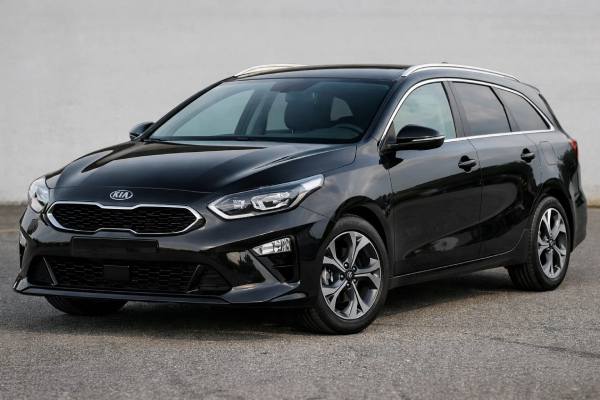
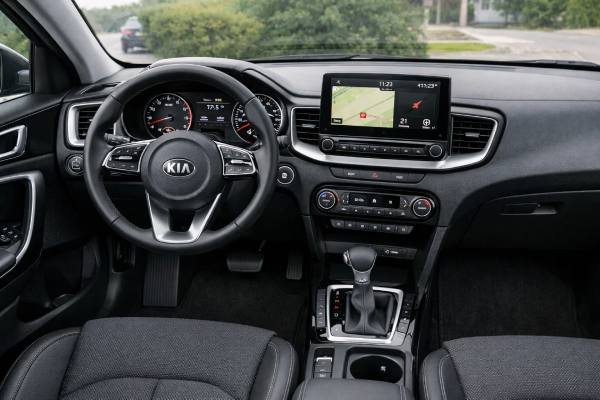
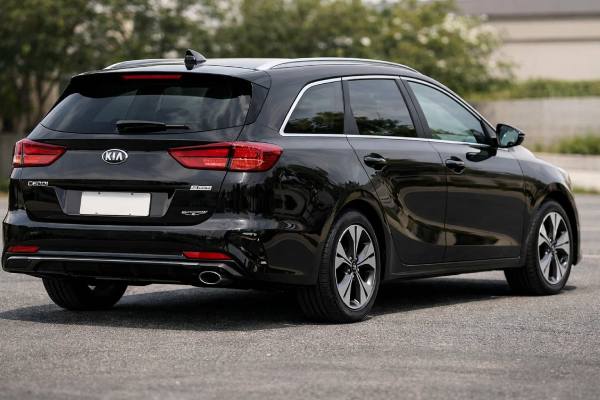
The Kia Ceed Sportswagon Plug-in Hybrid (CD) takes a practical compact estate and adds a proven, commuter-friendly hybrid system without turning the car into a tech experiment. Its 1.6-liter GDi petrol engine works with an electric motor and an 8.9 kWh battery to deliver 141 hp total, giving you two cars in one: a quiet EV for short trips and a conventional wagon for longer runs. The key ownership story is balance. You get real cargo space (though less than non-hybrid Ceed SW), predictable charging on home AC, and familiar front-wheel-drive manners. But you also inherit PHEV-specific needs—cooling loops, software updates, and stricter discipline about servicing on time. If you can charge regularly and your driving includes repeatable daily distances, this Ceed Sportswagon can be both economical and easy to live with.
What to Know
- Works best when you can charge at home or work; short trips can be mostly electric with the right routine.
- Strong everyday practicality for a PHEV estate: 437 L boot and up to 1,506 L seats folded.
- Smooth combined drivetrain with a 6-speed DCT, and adequate long-distance pace (195 km/h).
- Keep an eye on 12 V battery health and PHEV cooling/charging-related updates as the car ages.
- Plan for service every 15,000 km (9,300 mi) or 12 months, whichever comes first.
Contents and shortcuts
- Ceed SW PHEV ownership overview
- Ceed SW PHEV specifications
- Ceed SW PHEV trims and ADAS
- PHEV reliability and known problems
- Maintenance plan and buyer checks
- Driving, efficiency, and charging
- How this Cee’d compares to rivals
Ceed SW PHEV ownership overview
Think of the Ceed Sportswagon PHEV as a “normal” European compact estate first, and an electrified car second. That’s its biggest advantage: it doesn’t ask you to accept odd packaging, unfamiliar controls, or a quirky driving position just to gain plug-in ability. The hybrid hardware is integrated cleanly, and the daily experience is mostly about how often you charge and how you use the different drive modes.
In EV-friendly use—school runs, commuting, shopping, stop-start traffic—the car can cover typical short distances electrically. Kia quoted up to 60 km (about 37 mi) of electric driving under favorable conditions, and an EV top speed around 120 km/h (75 mph), which means you can stay electric on faster roads if you’re gentle and the battery has enough charge. On longer trips, it behaves like a conventional petrol wagon: you refuel quickly, and the car manages the hybrid system automatically.
Space and practicality remain central. The PHEV’s boot is smaller than non-hybrid Ceed Sportswagon versions because the battery packaging takes volume, but you still get a useful 437 L (about 15.4 ft³) with seats up and up to 1,506 L (about 53.2 ft³) with seats folded—enough for family luggage, a large stroller, or DIY runs without feeling like you “downsized” into a hatchback. Towing is also present and realistic for a compact estate: up to 1,300 kg (2,866 lb) braked and 600 kg (1,323 lb) unbraked, which suits small trailers, lightweight campers, or garden equipment—provided you respect nose weight and cooling limits.
The ownership trade-offs are predictable. You add charging habits, you add additional cooling circuits and electronics, and you become more sensitive to software campaigns that improve charging logic or fault detection. You also need to watch the 12 V battery more closely than in a pure ICE car because modern PHEVs rely heavily on electronics even when parked.
Who is it for? Drivers who want a conventional estate shape but can plug in most days, and who value warranty coverage and straightforward ergonomics over maximum EV range or cutting-edge performance. Who should think twice? Anyone who cannot charge reliably and mainly drives long motorway distances—because then you carry battery weight without harvesting the key benefit.
Ceed SW PHEV specifications
Below are the core technical figures for the 2020–2021 Ceed Sportswagon Plug-in Hybrid (1.6 GDi PHEV, 141 hp). Some specifications vary slightly by market, wheel size, and equipment level, so treat the tables as a decision framework and verify by VIN for exact service capacities and parts.
Powertrain and efficiency
| Item | Specification |
|---|---|
| Powertrain type | Plug-in hybrid (PHEV), petrol + electric motor |
| Engine | 1.6 GDi, 77.2 kW (105 hp) |
| Electric motor | 44.5 kW (60.5 hp) |
| System output | 104 kW (141 hp) |
| Battery | 8.9 kWh (traction battery) |
| Drive type | FWD |
| Transmission | 6-speed dual-clutch automatic (6DCT) |
| Charging (AC) | 3.3 kW onboard charger; approx. 2 h 45 min (typical) |
Efficiency figures (typical published values):
| Measure | Figure |
|---|---|
| Rated consumption (weighted) | 1.3 L/100 km (approx. 181 mpg US / 217 mpg UK) |
| Rated electric consumption | 11.6 kWh/100 km |
| CO₂ (rated) | 29 g/km |
| Real-world highway at 120 km/h | Expect the petrol engine to dominate once the battery is depleted; results depend heavily on temperature, speed, and load |
Dimensions and capacity
| Item | Specification |
|---|---|
| Length | 4,605 mm (181.3 in) |
| Width | 1,800 mm (70.9 in) |
| Height | 1,465 mm (57.7 in) |
| Wheelbase | 2,650 mm (104.3 in) |
| Cargo volume (seats up/down) | 437–1,506 L (15.4–53.2 ft³) |
Performance and capability
| Item | Specification |
|---|---|
| 0–100 km/h (0–62 mph) | 10.8 s |
| Top speed | 195 km/h (121 mph) |
| EV mode max speed | ~120 km/h (75 mph) |
| Towing (braked / unbraked) | 1,300 / 600 kg (2,866 / 1,323 lb) |
Fluids and service capacities (verify by VIN and market)
Because service documentation differs across regions, use these as practical guidance points rather than absolute numbers:
| System | What matters most |
|---|---|
| Engine oil | Correct spec for the 1.6 GDi hybrid application; use the exact viscosity and approval listed for your market |
| Coolant | Correct long-life coolant type and concentration; PHEVs may have additional thermal circuits |
| Transmission | DCT fluid type and change procedure must match the gearbox specification; avoid “universal ATF” assumptions |
| A/C refrigerant | Refrigerant type and charge vary by equipment; hybrids may use electric compressor arrangements |
| Key torque specs | Wheel fasteners and underbody fasteners should be torqued to spec; confirm exact numbers in official documentation |
Safety and driver assistance (headline)
| Item | Notes |
|---|---|
| Euro NCAP | Ceed achieved a 5-star rating in Euro NCAP testing (test-year specific details apply) |
| ADAS availability | AEB, lane support, and adaptive cruise depend on trim and optional safety packs |
If you are shopping cross-border, prioritize a spec sheet or VIN build list. For PHEVs, small differences—heat pump presence (if offered), wheel size, driver assistance pack—can noticeably change winter efficiency, tire costs, and long-distance comfort.
Ceed SW PHEV trims and ADAS
Trim naming varies by country, but the Ceed Sportswagon PHEV usually sits in the better-equipped middle-to-upper part of the lineup because electrified models bundle expensive components and safety features. The practical approach is to ignore marketing names at first and focus on functional differences: lighting, driver assistance, charging features, seating comfort, infotainment generation, and wheel/tire size.
Trims and options that matter most
Infotainment and connectivity. Many cars were sold with a larger integrated navigation screen (often around 10.25 inches / 26 cm) and connected services. For ownership, the key questions are: Does it support your phone reliably (wired vs wireless), are map updates available in your region, and does it have the features you’ll actually use (voice control, live traffic, remote services where supported)? A high-spec head unit can be great—until a battery disconnect or software update is needed. Always check that all keys, charge cables, and any locking wheel nut adapters are present.
Wheel and tire packages. Bigger wheels look good but can reduce ride comfort and increase tire cost. For a PHEV that often runs on electric torque at low speeds, tire choice also influences traction and noise. If your roads are rough, smaller wheels with higher-profile tires usually suit the car’s comfort-focused mission.
Comfort pack differences. Heated seats and steering wheel, power lumbar, and better seat fabrics are worth prioritizing if you plan to keep the car beyond warranty. They affect daily satisfaction far more than cosmetic styling.
Safety ratings and what they mean
The Ceed platform scored strongly in Euro NCAP testing, but it’s important to understand that the exact score can depend on whether the tested vehicle had an optional safety pack. In real ownership, the best approach is simple: if you can find a car with the full active-safety suite, it tends to be easier to resell and less fatiguing on long drives.
ADAS: what to look for and why it matters
Common features include:
- AEB (Autonomous Emergency Braking): may cover vehicle detection and, on better-equipped cars, additional scenarios.
- Lane keeping and lane following support: helpful on motorways, but camera calibration can be sensitive after windshield replacement.
- Adaptive cruise control (ACC): a major quality-of-life upgrade for commuting; check it operates smoothly with no warning lights.
- Blind-spot monitoring and rear cross-traffic alert: valuable in an estate body style with larger rear quarters.
Service implication: ADAS systems often require recalibration after alignment work, bumper repairs, or camera/windshield changes. If you’re buying used, ask for evidence of correct repair procedures after any accident work, even minor.
PHEV reliability and known problems
The Ceed Sportswagon PHEV’s hardware is based on a widely used Kia/Hyundai plug-in hybrid layout, and that’s good news: it’s not a one-off experiment. Reliability tends to be driven less by “big failures” and more by how the car was used (short trips vs long), how often it was charged, and whether service actions and software updates were kept current. Below is a practical map of what owners most often run into, grouped by prevalence and cost severity.
Common (usually low to medium cost)
12 V battery weakness or parasitic drain symptoms.
- Symptoms: slow cranking, random warning lights, car “dead” after sitting, infotainment resets.
- Likely root causes: 12 V battery aging, repeated short cycles, car left in accessory mode, or control modules not sleeping properly.
- Remedy: load-test the 12 V battery, check software updates, and confirm charging behavior. A healthy 12 V system is essential in a PHEV.
Charge-port and locking issues.
- Symptoms: charge connector won’t release, flap actuator sluggish, intermittent charge start failures.
- Likely root causes: lock actuator wear, moisture or dirt, or misalignment.
- Remedy: clean and lubricate per official guidance, replace actuator if failing, confirm correct cable seating.
Brake feel changes from regen blending.
- Symptoms: slightly inconsistent pedal feel at parking speeds, surface rust on discs if used mostly in regen.
- Root cause: regenerative braking reduces friction-brake use.
- Remedy: periodic firm brake applications to keep discs clean; regular brake inspections matter more than on an ICE-only car.
Occasional (medium cost)
Cooling system and thermal management faults.
- Symptoms: warning messages, reduced EV performance, charging interruptions, heater performance problems.
- Root cause: coolant pumps/valves/sensors, air pockets after coolant service, or control logic updates needed.
- Remedy: proper bleeding procedures, component diagnosis, and software updates where applicable.
DCT drivability complaints.
- Symptoms: low-speed shudder, hesitation when creeping, occasional harsh engagement.
- Root cause: dual-clutch behavior in stop-start use, clutch adaptation out of range, or wear accelerated by heavy city driving.
- Remedy: clutch adaptation relearn and software checks first; mechanical intervention only if symptoms persist.
Rare (higher cost but uncommon)
High-voltage component failures.
- Symptoms: EV mode unavailable, persistent HV warnings, charging disabled.
- Root cause: inverter/converter issues, isolation faults, or internal battery faults.
- Remedy: dealer-level diagnostics; this is where warranty coverage and complete service history matter most.
Recalls, TSBs, and software actions
Modern PHEVs often improve over time through calibration updates that address charging behavior, fault detection thresholds, or drivability. When buying used, do two things:
- Verify recall and service action completion by VIN through official channels and dealer records.
- Ask specifically about powertrain control module and charging-related updates. Even if the car “drives fine,” updates can prevent nuisance faults later.
If you keep the cooling system healthy, service the car on time, and avoid ignoring warning lights, this PHEV setup is typically a steady long-term companion rather than a fragile science project.
Maintenance plan and buyer checks
A plug-in hybrid estate rewards routine. The Ceed SW PHEV is not difficult to maintain, but it is less forgiving of skipped intervals because the drivetrain blends petrol, electric, and software-controlled systems. Use the schedule below as a practical baseline, then match it to your official service documentation for your VIN and market.
Core maintenance schedule (typical)
Every 15,000 km (9,300 mi) or 12 months
- Engine oil and filter (use exact oil spec for the 1.6 GDi hybrid application in your market)
- General inspection: coolant level/condition, brake lines, underbody check
- Tire rotation and pressure check; alignment check if wear is uneven
- Brake inspection (pads, discs, and slide pins), especially if you drive mostly on regeneration
- Cabin air filter inspection (replace as needed, often yearly in dusty cities)
Every 30,000 km (18,600 mi) or 24 months
- Engine air filter replacement (more often in dusty environments)
- Brake fluid change (time-based matters because fluid absorbs moisture)
- A/C performance check (including electric compressor behavior where applicable)
Every 60,000 km (37,300 mi) or 48 months
- Cooling system inspection with extra attention to hoses, clamps, and any PHEV-specific circuits
- DCT inspection and fluid service if required by your market schedule (procedures vary—verify before doing a “preventive” flush)
Spark plugs and timing components
- Spark plug intervals vary by engine version and market; follow the official schedule.
- Timing drive on this engine family is typically chain-based; treat it as “inspect for symptoms” rather than a routine replacement. If you hear persistent rattles at cold start or see timing correlation faults, investigate early.
Fluids and specifications: what owners should insist on
- Correct oil spec matters more than brand. Use the exact approval and viscosity from your official documentation.
- DCT fluid is not generic ATF. Wrong fluid can cause shift quality issues and wear.
- Coolant procedures matter. Air pockets or incorrect mix can trigger heater and thermal-control issues.
Buyer’s guide checklist (used market)
Service history and charging behavior
- Confirm annual/15,000 km services were done on time (stamps and invoices).
- Ask how often the car was charged and what charger was used (home wallbox vs occasional public charging). Regular AC charging is normal; repeated “neglected charging” is not a dealbreaker, but it reduces the point of buying a PHEV.
Battery and hybrid system checks
- Confirm EV mode works and the car charges consistently without errors.
- During a test drive, watch for warning lights, charging faults, or sudden EV dropouts.
- Check cabin heating performance; weak heat can hint at thermal system issues.
Chassis and estate-body specifics
- Inspect rear suspension components, tires, and alignment wear (estates carry loads).
- Check tailgate operation, boot floor condition, and signs of water ingress around rear lamps and seals.
Best ownership match
- Seek cars with the full safety/driver assistance pack if possible, and prioritize comfort features you will use daily.
- Avoid poorly repaired accident cars where ADAS sensors or camera alignment may be compromised.
Long-term outlook is strongest when the car is used as intended: regular charging, consistent servicing, and realistic expectations about winter efficiency and motorway consumption once the battery is depleted.
Driving, efficiency, and charging
On the road, the Ceed Sportswagon PHEV feels like a well-mannered compact estate with an extra layer of refinement at low speeds. EV pull-away is smooth and quiet, which fits the car’s family mission. The suspension tuning is typically comfort-first, and the wagon body gives reassuring straight-line stability at motorway speeds. Steering feel is predictable rather than sporty, and grip is strongly influenced by tire choice—especially if the car is fitted with larger wheels.
Powertrain character
The combined system output is 141 hp, which is enough for relaxed, everyday driving rather than hot-hatch urgency. The electric motor provides immediate low-speed torque, helping the car feel responsive in town. Under heavier throttle or at higher speeds, the 1.6 GDi engine joins in. The 6-speed DCT keeps the drivetrain feeling “normal” compared with eCVT-style hybrids, but it can be less smooth in creeping traffic than a torque-converter automatic. Treat it like a dual-clutch: avoid excessive inching uphill on the throttle and use the brake to control creep.
Real-world efficiency: what to expect
PHEV results depend on charging frequency more than almost any other factor:
- City use with regular charging: You can dramatically cut petrol use because many short trips can be electric.
- Mixed driving: Petrol consumption stays low if you top up frequently and keep speeds moderate.
- Highway at 100–120 km/h (60–75 mph): Once the battery is used up, expect fuel consumption to look more like a petrol estate carrying extra weight. Cold weather and strong headwinds make this more noticeable.
Winter changes the story. Cabin heating demands and lower battery efficiency reduce electric range. If your routine is short and you can precondition while plugged in (where supported), you can soften the winter penalty.
Charging performance in daily life
Charging is designed for simplicity rather than speed:
- AC charging: With a 3.3 kW onboard charger, a typical full charge is quoted around 2 hours 45 minutes, making overnight home charging easy.
- Public charging: It works fine, but the car’s charging rate means it is not optimized for rapid “top-ups” during short errands compared with newer PHEVs that accept higher AC power.
Key performance metrics that matter
- 0–100 km/h in 10.8 seconds is adequate for joining fast traffic but not brisk when fully loaded.
- Top speed of 195 km/h (121 mph) confirms it’s a true long-distance car, not a city-only electrified vehicle.
- Towing up to 1,300 kg braked is useful, but expect a meaningful consumption penalty when towing—especially if you start with an empty battery.
If you drive it with a clear plan—charge often, use EV where it makes sense, and accept that it becomes a conventional petrol wagon on long motorway runs—the Ceed SW PHEV delivers a calm, predictable experience.
How this Cee’d compares to rivals
The Ceed Sportswagon PHEV competes in a narrow but valuable corner: compact estates with plug-in capability. Many buyers end up cross-shopping hatchback PHEVs, SUV PHEVs, and full hybrids because the wagon-PHEV market is limited. Here’s how the Ceed’s real-world proposition stacks up.
Against other PHEV estates
Skoda Octavia iV (PHEV estate in some markets).
The Octavia often feels roomier and can offer stronger motorway performance, but it can also be more complex and option-dependent. The Ceed’s appeal is simpler packaging and a straightforward, warranty-backed ownership experience.
Peugeot 308 SW PHEV (where offered).
French PHEV estates can feel more modern inside and may deliver stronger electric performance depending on version. The trade-off can be higher parts pricing and more complicated option structures. The Ceed tends to win on “easy to live with” ergonomics and predictable servicing.
Against full hybrids (non-plug-in)
Toyota Corolla Touring Sports Hybrid.
A full hybrid is a great fit if you cannot charge. It often delivers excellent real-world economy without plugging in, especially in city traffic. The Ceed PHEV can beat it on running cost only if you plug in regularly and do many short trips electrically. If you can’t charge, the Toyota-style hybrid approach is usually the smarter choice.
Against small SUV PHEVs
Compact SUV PHEVs are everywhere, and many offer similar power. The Ceed Sportswagon counters with:
- Lower roof and more car-like handling
- Often better efficiency at steady speeds (less aerodynamic drag than tall SUVs)
- A long, practical load area that suits luggage, pets, and sports gear
SUVs can win on ground clearance, higher seating, and sometimes more rear-seat headroom, but they often carry a weight and tire-cost penalty.
The Ceed SW PHEV’s “best-fit” advantage
Where this Kia makes the most sense is a predictable daily routine:
- You can charge at home/work
- Your typical day fits within practical EV use
- You want an estate body without moving up to a larger class
If you’re a high-mileage motorway driver with limited charging, you’ll likely be happier with a modern diesel estate or a strong non-plug-in hybrid. But if your driving is mixed and you can plug in consistently, the Ceed Sportswagon PHEV offers a rare blend: wagon practicality, electric commuting capability, and conventional long-trip flexibility—without demanding a major lifestyle change.
References
- Microsoft Word – Pressemappe Kia Ceed SW PHEV Jul 2020.docx 2020 (Service Manual)
- Kia Service Intervals 2024 (Owner’s Manual)
- Scheduled maintenance service 2020 (Owner’s Manual)
- Official Kia Cee’d 2019 safety rating 2019 (Safety Rating)
Disclaimer
This article is for informational purposes only and is not a substitute for professional inspection, diagnosis, or repair. Specifications, torque values, service intervals, fluids, and procedures can vary by VIN, market, model year, and equipment. Always verify details using your vehicle’s official owner’s manual and service documentation, and consult a qualified technician for repairs or high-voltage system work.
If you found this guide useful, please consider sharing it on Facebook, X (Twitter), or your favorite forum to support our work.