
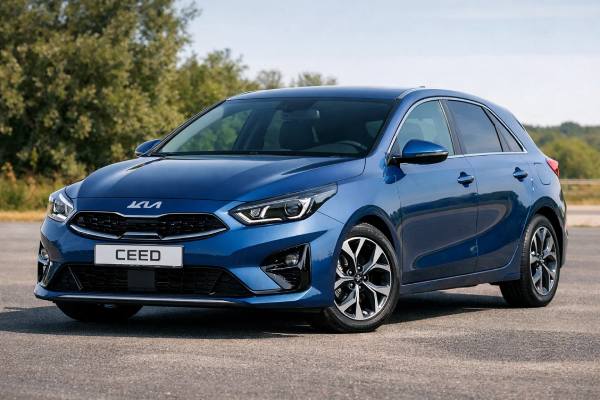
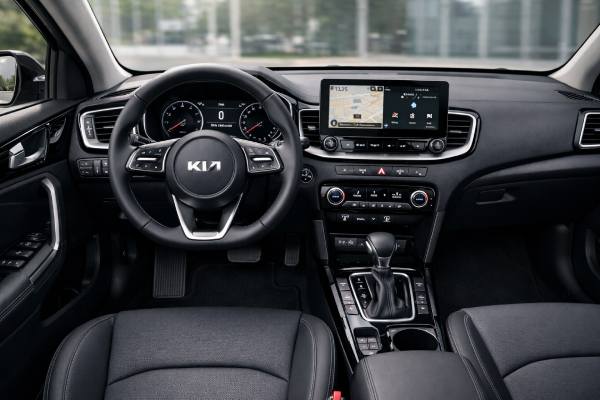
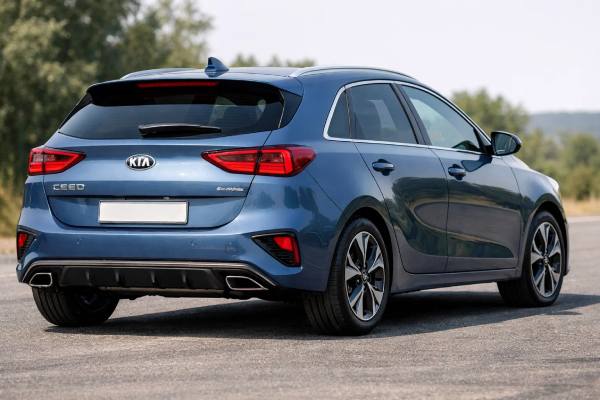
The 2021–2026 facelift Kia Ceed (CD) with the 1.5 Smartstream T-GDi (158 hp) is one of the more “engineering-honest” choices in the European C-segment: a compact hatch built around a modern, torque-rich turbo four, conventional front-wheel drive, and a chassis tuned for everyday stability rather than drama. The key ownership story is balance. You get strong mid-range pull (useful for real roads), respectable fuel economy when driven smoothly, and a cabin and control layout that stays intuitive over time. Where owners should pay attention is the usual modern-turbo housekeeping: oil quality and intervals, heat management, and avoiding a life of constant short trips that can accelerate deposits and moisture buildup. Pick the right trim for your needs, keep the maintenance simple and consistent, and this Ceed can be a quietly satisfying long-term car.
What to Know
- Strong mid-range torque makes it feel quicker in daily driving than the horsepower number suggests.
- Predictable handling and stable motorway manners suit long commutes and mixed roads.
- Good equipment value in higher trims (lighting, infotainment, and driver assists) without exotic complexity.
- Ownership caveat: direct-injection turbo engines reward strict oil discipline and warm-up habits.
- Plan on engine oil and filter every 10,000 miles / 12 months (16,000 km / 12 months), whichever comes first.
Navigate this guide
- Kia Ceed CD 2021–2026 in context
- Specs for 1.5 T-GDi 158 hp
- Trims, choices and driver assists
- Reliability issues and service actions
- Maintenance plan and buying tips
- How it drives and real-world economy
- Rivals and value verdict
Kia Ceed CD 2021–2026 in context
The facelifted Ceed (CD) sits in the heart of the European “small family car” class, competing where expectations are high: quiet cruising, safe behavior in bad weather, low running costs, and technology that doesn’t become a headache. The 1.5 Smartstream T-GDi (158 hp) is the sweet spot for many buyers because it avoids the “underpowered when loaded” feel of smaller engines while staying lighter and simpler than high-output hot-hatch variants.
What the facelift changes for owners
The 2021 facelift focuses on the parts you touch every day: lighting updates, infotainment and connectivity improvements (including wider availability of larger screens and connected services), and broader driver-assistance availability depending on trim and market. Mechanically, the core proposition stays consistent: front-drive packaging, a composed suspension setup, and an engine designed to deliver usable torque without needing high revs.
Where this powertrain fits best
This engine is at its best in three scenarios:
- Mixed commuting: strong low-to-mid torque reduces downshifts and makes gaps easier to judge.
- Motorway work: the car’s stability and gearing suit steady cruising, and the engine has enough reserve for quick passes.
- Family duty: it handles passengers and luggage without feeling strained, especially compared with smaller turbos.
If your driving is mostly short, cold trips, you’ll want to be more proactive about maintenance (oil changes on time, occasional longer runs to fully warm everything through, and attention to intake cleanliness).
Practical packaging highlights
The Ceed hatch is known for sensible packaging: a usable rear seat for adults on shorter trips, a wide tailgate opening, and a cargo area that works for everyday life. Boot volume is typically quoted around 395 L seats up in hatch form, which is competitive for the class. The driving position is straightforward, visibility is generally good for a modern hatch, and the car feels “normal” in the best way—predictable pedal tuning, consistent braking, and a stable body that doesn’t punish you on broken pavement.
Advantages at a glance
For many owners, the Ceed’s advantage isn’t one standout feature—it’s the way the pieces work together: a strong, flexible engine; a chassis that doesn’t surprise you; and a trim structure that often bundles comfort and safety features without forcing you into expensive, fragile tech. Treat it like a modern turbo car (not an old-school naturally aspirated runabout), and it tends to reward you with low stress and steady costs.
Specs for 1.5 T-GDi 158 hp
Below are the key technical specs for the facelift Ceed CD with the 1.5 Smartstream T-GDi (commonly marketed around 158 hp / 160 PS depending on country). Exact figures vary slightly by market, wheel size, and transmission.
Powertrain and efficiency
| Item | Specification (typical for Ceed CD 1.5 T-GDi) |
|---|---|
| Code (engine family) | Smartstream G1.5 T-GDi (commonly referenced as G4LH family) |
| Engine layout | Inline-4, transverse, DOHC, 4 valves/cyl |
| Bore × stroke | 71.6 × 92.0 mm (2.8 × 3.6 in) |
| Displacement | 1.5 L (1,482 cc) |
| Induction | Turbocharged, intercooled |
| Fuel system | Direct injection (GDI) |
| Max power | 158 hp (116 kW) @ ~5,500 rpm (market dependent) |
| Max torque | 253 Nm (187 lb-ft) @ ~1,500–3,500 rpm (typical band) |
| Rated efficiency (WLTP, common ranges) | ~5.8–6.3 L/100 km (≈ 45–37 mpg US / 49–45 mpg UK) |
| Real-world highway @ 120 km/h (75 mph) | ~6.5–7.2 L/100 km depending on wind/tyres/traffic |
Transmission and driveline
| Item | Specification |
|---|---|
| Transmission (typical) | 6-speed manual or 7-speed dual-clutch (DCT) (market/trim dependent) |
| Drive type | FWD |
| Differential | Open (traction managed by stability/traction control) |
Chassis and dimensions
| Item | Specification (typical hatchback figures) |
|---|---|
| Suspension (front/rear) | MacPherson strut / multi-link (fully independent) |
| Steering | Electric motor-driven power steering; quoted ratio around 12.7:1 on CD platform |
| Most common tyre sizes | 205/55 R16, 225/45 R17, some trims 235/40 R18 |
| Length / width / height | ~4,310 mm / 1,800 mm / 1,447 mm (≈ 169.7 / 70.9 / 56.9 in) |
| Wheelbase | 2,650 mm (104.3 in) |
| Turning circle (kerb-to-kerb) | ~10.6 m (34.8 ft) |
| Fuel tank | ~50 L (13.2 US gal / 11.0 UK gal) |
| Cargo volume | ~395 L (13.9 ft³) seats up (VDA); up to ~1,291 L (45.6 ft³) seats down |
Performance and capability
| Item | Typical figure (varies by gearbox/tyres) |
|---|---|
| 0–100 km/h (0–62 mph) | ~8.5–9.0 s |
| Top speed | ~210 km/h (130 mph) |
| Towing (where rated) | Often up to ~1,000 kg (2,205 lb) braked; lower unbraked rating |
| Payload (practical expectation) | Often ~430–500 kg (950–1,100 lb) depending on kerb/GVWR |
Fluids and service capacities (decision-useful)
Because capacities can vary by VIN, cooling package, and transmission, treat the following as planning values and verify in the official documentation for your exact car:
| Item | Typical guidance |
|---|---|
| Engine oil (grade) | ACEA C2 / API SN Plus, commonly 0W-20 for this 1.5 T-GDi application |
| Engine oil capacity | ~4.2 L (4.4 US qt) (oil and filter, planning value) |
| Service interval | 10,000 miles / 12 months (16,000 km / 12 months) |
Key torque specs also vary by market wheel hardware, but owners commonly plan around wheel fasteners ~90–110 Nm (66–81 lb-ft) as a range to confirm for the specific wheel/fastener type fitted.
Trims, choices and driver assists
Trim naming changes by country, but the facelift Ceed range typically follows a ladder from value-focused grades to sport-styled and fully loaded versions (often including GT-Line themes). The most important thing is not the badge—it’s the equipment bundle underneath.
Trim differences that matter mechanically
Look for these “functional” differences when comparing cars:
- Wheel and tyre size: 16s tend to ride more quietly and resist pothole damage better; 18s look sharp but can increase road noise and tyre cost.
- Headlights: full LED setups improve night visibility and reduce bulb replacements, and some trims add smarter beam control.
- Braking and stability calibration: the hardware is broadly similar, but tyre package changes can alter stopping feel and wet grip.
- DCT vs manual availability: some markets push higher trims toward DCT. Decide based on your traffic pattern and tolerance for dual-clutch behavior at low speed.
Quick identifiers when shopping used
- Exterior cues: GT-Line styling packages usually add sportier bumpers, darker trim, and larger wheels.
- Cabin tells: larger infotainment screens, upgraded clusters, heated steering wheel, and JBL-branded audio are often tied to higher grades.
- ADAS buttons and menus: adaptive cruise and lane centering functions are easiest to verify by checking the steering-wheel controls and the driver-assistance settings pages.
Safety ratings and what they mean
Euro NCAP tested the Ceed generation with results that can differ depending on whether the car has an added “safety pack.” Ratings also expire as test protocols evolve, so a result from earlier years should be treated as a snapshot of that era’s standards—not a guarantee of today’s performance in every scenario.
As a buyer, focus on equipment presence as much as the star count:
- Does the car have AEB (autonomous emergency braking) that detects cars and (ideally) pedestrians/cyclists?
- Does it have lane support that can actively assist, not just warn?
- Are rear cross-traffic alerts and blind-spot monitoring fitted if you do a lot of motorway lane changing?
ADAS suite (typical availability)
Depending on trim and market, you may see:
- Forward collision avoidance (AEB), sometimes with pedestrian/cyclist detection
- Adaptive cruise control (ACC), sometimes with stop-and-go
- Lane keeping assist (LKA) and lane following assist (LFA)
- Driver attention warning and speed limit assist
- Blind-spot detection (BSD) and rear cross-traffic alert (RCTA)
- Parking sensors and reversing camera (common), with higher trims adding more automation
One practical note: ADAS calibration matters after windscreen replacement, front-end impacts, or suspension work. A well-documented service history that shows correct calibration is a quiet advantage when buying used.
Reliability issues and service actions
Most Ceed CD owners experience a generally solid ownership pattern, but the 1.5 T-GDi is still a modern direct-injection turbo engine, and that comes with predictable “if X, then Y” maintenance consequences. Below is a practical way to think about issues by prevalence and cost.
Common (usually low to medium cost)
- GDI intake deposit buildup (age + short trips):
Symptoms: rough idle, slight hesitation, reduced efficiency.
Likely cause: direct injection doesn’t wash the intake valves with fuel; short trips increase deposits.
Remedy: prevention (quality oil, occasional long runs); cleaning methods if symptoms develop. - Ignition coils or spark plugs (mileage/heat):
Symptoms: misfire under load, check-engine light, poor acceleration.
Remedy: replace plugs at the correct interval; coils as needed, ideally diagnosed rather than guessed. - Battery sensitivity (12 V):
Symptoms: odd warnings, stop/start issues, infotainment glitches.
Remedy: battery test, correct replacement spec, and check for parasitic draw if problems repeat.
Occasional (medium cost, timing dependent)
- Turbo control and boost leaks:
Symptoms: inconsistent power, whooshing noises, overboost/underboost codes.
Root causes: hose clamps, intercooler plumbing, or actuator/control issues.
Remedy: smoke test and targeted repair beats parts swapping. - Cooling system “small leaks” over time:
Symptoms: slow coolant loss, sweet smell, heater performance changes.
Remedy: pressure test; fix early to avoid overheating risk. - DCT low-speed behavior (if equipped):
Symptoms: jerky creep, shudder in stop-start traffic, clutch smell if abused.
Root causes: dual-clutch design + heat + heavy crawling.
Remedy: adapt driving style (avoid riding creep on inclines; use brake hold); ensure software updates are applied.
Rare but higher cost (watch for these on inspections)
- Overheating events: even one serious overheat can shorten turbo and head-gasket life. Check history and look for signs of repeated coolant work.
- Long oil-interval wear patterns: stretched intervals and poor-quality oil can increase timing system wear risk over the long term. The best used examples usually have “boring” service records.
Recalls, TSBs, and software updates
Recall and service campaign activity can be market-specific. The practical advice is consistent:
- Run the VIN through an official recall checker and keep a dated screenshot or printout.
- Ask for dealer history showing completion of campaigns and software updates.
- After windscreen replacement or front-end work, confirm ADAS calibration was performed (paperwork matters).
Pre-purchase checks worth paying for
- Cold start behavior (idle stability, misfire hints, rattles)
- Evidence of correct oil changes (receipts, not just stamp books)
- Coolant level stability and absence of crusty dried coolant marks
- DCT test drive in traffic (creep smoothness, hill starts, reverse engagement)
- ADAS and camera/radar functionality (no warning lights, consistent behavior)
If you’re choosing between two cars, the one with cleaner documentation usually wins—even if it has slightly higher miles.
Maintenance plan and buying tips
A simple, consistent maintenance routine is the best reliability mod for the 1.5 T-GDi Ceed. The goal is to keep oil clean, control moisture and fuel dilution, and prevent small problems (coolant seep, boost leaks, weak battery) from turning into expensive ones.
Practical maintenance schedule (distance/time)
Use the official schedule as the final authority, but these intervals are a strong real-world baseline for most drivers:
- Engine oil and filter: every 10,000 miles / 12 months (16,000 km / 12 months). If you do mostly short trips, consider shortening to 6,000–8,000 miles (10,000–13,000 km).
- Engine air filter: inspect every service; commonly replace around 20,000 miles (32,000 km) or sooner in dusty areas.
- Cabin filter: every 10,000–20,000 miles (16,000–32,000 km) depending on allergies and city driving.
- Spark plugs: typically 60,000–75,000 miles (100,000–120,000 km) on modern iridium plugs, but verify for your exact spec.
- Brake fluid: every 2 years is a sensible safety interval.
- Coolant: long-life coolants can be extended, but confirm the exact interval by VIN/market; replace earlier if contamination is suspected.
- Manual gearbox oil: consider a preventative change around 60,000–80,000 miles (100,000–130,000 km) if you plan long ownership.
- DCT fluid (if equipped): some schedules call it “lifetime,” but a preventative service around 60,000 miles (100,000 km) can be smart for longevity—verify the correct fluid and procedure.
- Tyre rotation and alignment: rotate around 6,000–8,000 miles (10,000–13,000 km); align if you see uneven wear.
- 12 V battery: test annually after year 3; many batteries last 4–6 years depending on climate and trip length.
Fluids and specs owners should know
For the 2021-on Ceed family with the 1.5 Kappa T-GDi application, planning values commonly used are:
- Oil grade: 0W-20 meeting ACEA C2 / API SN Plus (confirm acceptable alternatives in your manual).
- Oil capacity: about 4.2 L (4.4 US qt) as a planning figure.
If you service outside the dealer network, insist the invoice lists the exact oil spec and viscosity, and keep the receipts.
Buyer’s guide: what to seek and what to avoid
Seek:
- Cars with evidence of annual oil changes (even if mileage is low)
- Sensible wheel sizes for your roads (16–17 inch is the comfort-cost sweet spot)
- ADAS you will actually use (ACC and good headlights often matter more than gimmicks)
Be cautious with:
- High-trim cars on 18s if your roads are rough (tyres and wheel repairs add up)
- DCT cars used primarily in heavy stop-start traffic with poor history
- Any example with repeated cooling system work and vague explanations
Long-term durability outlook
With consistent oil service, correct plugs, and attention to cooling and boost plumbing, the Ceed 1.5 T-GDi can be a durable daily driver. Most “big” failures in this category tend to trace back to neglected basics or repeated overheating—not mysterious design flaws.
How it drives and real-world economy
The Ceed’s driving character is best described as composed and cooperative. It isn’t trying to be the sharpest tool in the class, but it’s also not numb. For real-world use—commutes, school runs, and weekend trips—it often feels more refined than you’d expect from the price point.
Ride, handling, and NVH
- Ride quality: On 16-inch wheels, the car generally takes the edge off potholes and broken tarmac without feeling floaty. Moving to 18s typically adds firmness and can increase sharp impacts.
- Cornering balance: The chassis tends toward safe, mild understeer, with stability control stepping in smoothly when needed.
- Steering feel: The electric steering is light to medium in effort; accuracy is good, but “texture” through the wheel is limited compared with older hydraulic systems.
- Cabin noise: Expect a steady, controlled motorway noise profile. Tyre choice can change this more than you’d think.
Powertrain character
This engine’s strength is usable torque. In everyday driving you often ride the mid-range rather than chasing redline. Turbo response is generally quick enough that it doesn’t feel laggy, but like most small turbos it rewards smooth throttle inputs—stabbing the pedal can trigger a downshift and a brief pause before full boost.
- Manual: typically the more “connected” choice and often the simpler long-term ownership path.
- DCT: delivers brisk shifts when moving, but can feel less natural at crawling speeds. The best approach is to drive it like a clutch—avoid inching up steep inclines on the throttle and use brake hold where available.
Real-world efficiency
Official numbers vary by wheel size and transmission, but owners should think in ranges:
- City: roughly 7.0–8.5 L/100 km (≈ 34–28 mpg US / 40–33 mpg UK) depending on traffic and warm-up time
- Highway 100–120 km/h: roughly 6.5–7.2 L/100 km (≈ 36–33 mpg US / 43–39 mpg UK)
- Mixed: roughly 6.5–7.5 L/100 km (≈ 36–31 mpg US / 43–38 mpg UK)
Cold weather, short trips, and high-speed cruising can push consumption up noticeably. If your pattern is mostly short journeys, the biggest “efficiency mod” is simply planning one longer run each week so the oil reaches full temperature for a sustained period.
Selective metrics that change the verdict
- 0–100 km/h: around the high-8-second range makes it feel properly quick for merging and overtaking.
- Top speed: roughly 210 km/h is more than enough for unrestricted-road capability where legal.
- Turning circle: around 10.6 m keeps it easy in car parks and tight urban streets.
Overall, the Ceed 1.5 T-GDi delivers a calm, grown-up drive with enough punch to feel effortless—exactly what many buyers want from this class.
Rivals and value verdict
The Ceed competes in a crowded field where almost everything is “good.” The real question is what kind of good you want: best-in-class dynamics, peak efficiency, prestige badge appeal, or the best long-term value per feature.
Main rivals to cross-shop
- Volkswagen Golf 1.5 TSI (and Skoda Scala/Octavia equivalents): often strong efficiency and polished drivetrains; pricing and options can climb quickly.
- Ford Focus EcoBoost: typically excellent steering feel and chassis balance; check engine/gearbox combinations carefully by year.
- Hyundai i30 1.5 T-GDi: a close cousin in market intent and powertrain philosophy; compare trim pricing and warranty terms locally.
- Toyota Corolla Hybrid: the economy benchmark in many cities; not as punchy on demand as the turbo Ceed, but very strong for stop-start efficiency.
Where the Ceed wins
- Torque-per-euro usefulness: it feels strong in normal driving without needing a bigger engine.
- Feature value in higher trims: you can often get premium lighting, good infotainment, and meaningful driver aids without “luxury” pricing.
- Everyday friendliness: visibility, controls, and overall predictability are strong.
Where rivals may suit better
- If you want the sharpest handling, the Focus often leads.
- If your driving is heavily urban and you prioritize fuel savings over punch, a hybrid Corolla can be the cheaper long-run choice.
- If you want the most premium cabin feel and are willing to pay for options, a Golf can edge ahead—though you’ll want to be strict about spec comparisons.
Bottom-line recommendation
Choose the facelift Ceed CD 1.5 T-GDi if you want a compact family hatch that feels brisk, stable, and well-equipped without turning ownership into a hobby. The best buys are usually mid-to-high trims on 16–17 inch wheels, with clear service records and verified recall/campaign completion. If you’ll keep the maintenance boring and regular, this Ceed tends to return the favor with low drama and strong day-to-day satisfaction.
References
- Official Kia Cee’d 2019 safety rating 2019 (Safety Rating)
- Car Safety Recalls | What They Are & What To Do | Kia UK 2025 (Recall Guidance)
- Check if a vehicle, part or accessory has been recalled – GOV.UK 2026 (Recall Database)
- Engine Oil Grades and Capacities 2023 (Service Document)
- 7.2 Kia Service Intervals.xlsx 2025 (Service Document)
Disclaimer
This article is for informational purposes only and is not a substitute for professional inspection, diagnosis, or repair. Specifications, torque values, service intervals, fluids, and procedures can vary by VIN, market, model year, and installed equipment—always verify details against your official owner’s manual, service documentation, and dealer records.
If this guide helped, please consider sharing it on Facebook, X/Twitter, or your favorite forum to support our work.