


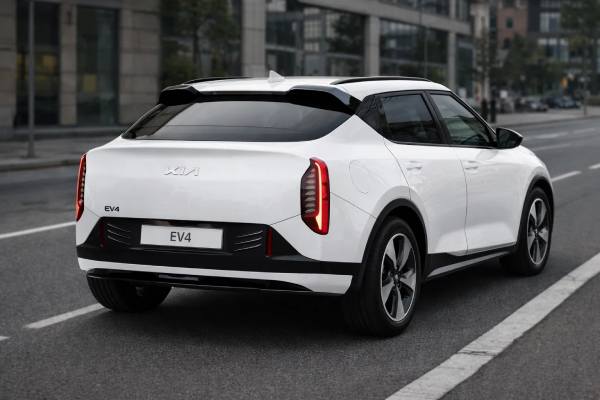
The Kia EV4 (CT1) is aimed at drivers who want EV running costs and modern driver-assistance without moving up to a larger, heavier crossover. In this 58.3 kWh, 201 hp configuration, the focus is balanced usability: quick response in city traffic, steady motorway manners, and predictable charging behavior. The engineering story is largely about integration—how the battery, inverter, thermal systems, and software work together to deliver consistent range across seasons, not just a headline WLTP number.
For owners, the practical questions usually come down to three areas: how far it goes on real roads, how it feels day to day (ride, noise, and braking), and what early-life reliability looks like in a new model line. This guide addresses those points with a buyer’s mindset, including what to inspect, what to service, and what to expect as the platform matures.
Key Takeaways
- Strong everyday performance with smooth torque delivery that suits commuting and mixed driving.
- Real-world range depends more on speed and temperature than trim; plan a clear motorway buffer.
- New-model risk is mostly software calibration and charging-handshake quirks, not “engine wear.”
- Prioritize tyre condition and alignment checks every 10,000–12,000 km for efficiency and wear control.
- Schedule routine inspections on the official interval (often 24 months / 20,000 miles, market-dependent).
Quick navigation
- Kia EV4 CT1 detailed overview
- Kia EV4 CT1 specs and technical data
- Trims, options, and driver assistance
- Reliability, issues, and service actions
- Maintenance and buyer’s guide
- Driving, range, and charging performance
- How it compares to rivals
Kia EV4 CT1 detailed overview
In 58.3 kWh / 201 hp form, the EV4’s appeal is its “right-sized” approach: enough power to feel responsive without pushing the battery into a constant high-drain operating pattern. A single-motor layout simplifies packaging and typically reduces mass, complexity, and long-term service exposure compared with dual-motor setups. For many owners, that translates into steadier efficiency and fewer drivetrain variables—especially in mixed urban and suburban use where repeated stop-start events highlight drivetrain smoothness.
The battery size is a meaningful midpoint. It’s large enough to support real motorway distance with a buffer, yet small enough that home charging remains convenient on modest AC supply. With EVs, ownership satisfaction often hinges on how frequently you need public DC charging. A battery in the high-50 kWh range usually supports a routine of home charging for commuting, with DC charging reserved for long trips or occasional high-mileage weeks. That pattern matters because frequent DC fast charging is not “bad,” but it does increase thermal cycles and can expose charging-curve behavior (tapering, preconditioning needs, and station compatibility).
Performance is best understood as “usable speed,” not peak numbers. The EV4’s advantage is immediate torque response, which makes 30–80 km/h and 50–100 km/h driving feel effortless. It also supports safer merges and overtakes without needing a downshift. The trade-off is that sustained high-speed driving is the most demanding scenario for any EV: aerodynamic drag rises sharply, consumption increases, and your effective range can drop faster than many first-time EV owners expect.
From an engineering perspective, the EV4 is also a software-defined product. That is positive when updates improve charging logic, thermal conditioning, and driver-assistance behavior over time—but it also means early production cycles can show “soft faults”: warning messages, connectivity glitches, or charging handshake problems that are solved by calibration updates rather than parts replacement. Owners who keep the car updated and document service actions tend to have the smoothest experience.
Safety is another ownership differentiator. Beyond crash structure, modern EV safety is about how well the car avoids impacts: the tuning of automatic emergency braking, lane support, and speed assistance often matters as much as the star rating itself. The EV4’s equipment strategy—what is standard versus packaged—can change the real-world outcome, so it’s worth choosing trims and options with that in mind.
Kia EV4 CT1 specs and technical data
Powertrain, battery, and efficiency
| Spec | Value |
|---|---|
| Motor type | PMSM |
| Motor layout | Single motor, front axle |
| Max power | 201 hp (150 kW) |
| Max torque | 283 Nm |
| Traction battery chemistry | Lithium-ion |
| Battery capacity (usable) | 58.3 kWh |
| Battery nominal voltage | 369 V |
| Battery capacity (Ah) | 158 Ah |
| Battery cell count | 200 cells |
| Battery weight | 380 kg |
| WLTP range (combined) | 440 km |
Charging and connectors
| Spec | Value |
|---|---|
| AC charging time (10–100%) @ 230 V / 12 A | 7 h 10 min |
| AC charging time (10–100%) @ 230 V / 16 A | 5 h 20 min |
| DC charging time (10–80%) @ 350 kW | 29 min |
| DC charging time (10–80%) @ 50 kW | 55 min |
Performance and capability
| Spec | Value |
|---|---|
| 0–100 km/h (0–62 mph) | 7.4 s |
| Top speed | 170 km/h |
| Braking distance (100–0 km/h) | 35.7 m |
| Towing capacity (braked) | 0 kg |
Chassis, dimensions, and weights
| Spec | Value |
|---|---|
| Length | 4,430 mm |
| Width | 1,860 mm |
| Height | 1,485 mm |
| Wheelbase | 2,820 mm |
| Ground clearance | 140 mm |
| Kerb weight | 1,810 kg |
| Cargo volume (VDA) | 490 L |
| Turning circle (kerb-to-kerb) | 10.8 m |
Safety ratings and driver assistance
| Spec | Value |
|---|---|
| Euro NCAP (standard equipment) | 4 stars |
| Euro NCAP adult occupant | 84% |
| Euro NCAP child occupant | 85% |
| Euro NCAP vulnerable road users | 77% |
| Euro NCAP safety assist | 78% |
| Euro NCAP (with Safety Pack) | 5 stars |
Service intervals
| Spec | Value |
|---|---|
| Routine service interval | 24 months / 20,000 miles |
Trims, options, and driver assistance
Trim strategy matters more on EVs than many buyers expect because equipment can directly affect range consistency and safety behavior. For the EV4, trims typically separate into three practical themes: comfort and convenience (seats, audio, infotainment), thermal and charging features (heat pump, battery conditioning behaviors, charging-related software), and safety/ADAS packaging (camera/radar capability and which functions are enabled).
Trims and options: how to spot the functional differences
- Wheel and tyre packages: Larger wheels often look better but can increase road noise and reduce real-world range at motorway speeds. If you do frequent high-speed driving, prioritize the most efficient wheel/tyre setup available for your market.
- Thermal equipment: In colder climates, a heat pump (if offered) is one of the most ownership-relevant options. It reduces cabin-heating energy draw, which helps preserve winter range. Even without a heat pump, EV4 owners should pay attention to how quickly the cabin warms and whether the car offers energy-saving HVAC modes.
- Charging and trip planning features: Some trims bundle better navigation, route planning that considers charging stops, and more refined battery temperature management. These features don’t just add convenience—they can reduce DC charging time variability in cold weather.
- Interior and convenience upgrades: Heated seats and heated steering wheels can be efficiency-friendly in winter because they warm occupants directly, allowing lower cabin temperature settings.
Safety ratings and what they really mean
A star rating is a summary, but it can be sensitive to equipment assumptions. The most buyer-relevant approach is to treat the rating as a baseline and then confirm whether your trim includes the safety features assumed in the top scoring configuration. If a “Safety Pack” or similar option changes the rating outcome, that is a strong signal that the additional systems are not just cosmetic—they can improve crash avoidance in the scenarios that cause real injuries.
Core active safety and ADAS: what to expect
Most modern Kia EVs ship with a suite that typically includes:
- Automatic emergency braking (AEB): Usually covering vehicle detection and, in many cases, pedestrian and cyclist scenarios. The “feel” can vary—some systems brake early and gently, others intervene later and more aggressively.
- Lane keeping and lane following: Lane centering (keeping the car in the middle of the lane) is different from basic lane departure prevention. If you do long motorway drives, lane centering quality is one of the biggest fatigue reducers.
- Adaptive cruise control (ACC): Helpful for traffic flow, but worth testing for smoothness—some calibrations accelerate too sharply after slowdowns.
- Blind-spot monitoring and rear cross-traffic alert: Very useful in urban driving and car parks, especially because EVs are quiet at low speeds and traffic patterns can be unpredictable.
Calibration and repair implications
ADAS depends on sensor alignment. After windshield replacement, bumper repairs, wheel alignment, or suspension work, many cars require recalibration. When shopping or servicing, treat unexpected warnings (lane system unavailable, front radar blocked) as a prompt to check for prior body repairs, sensor damage, or outdated software—not as an automatic deal-breaker.
Reliability, issues, and service actions
Because the EV4 line is relatively new, early reliability is usually defined by a mix of minor software issues and a smaller number of “hard faults” tied to charging hardware, sensors, or manufacturing tolerances. A helpful way to think about reliability is to split it into severity (how expensive or immobilizing it is) and prevalence (how common it is). Most early-life issues in new EV models fall into the common/low-to-medium severity bracket—annoying, but typically resolved with updates or targeted component replacement.
Common (low-to-medium cost)
- Infotainment and connectivity glitches: Symptoms include delayed boot-up, intermittent phone pairing, or navigation routing oddities. Likely causes are software bugs, backend connectivity, or a corrupted update state. Remedies are firmware updates, infotainment resets, and dealer software reflash when needed.
- Driver-assistance warnings: “Sensor blocked” or temporary unavailability can occur in heavy rain, slush, or low sun glare. The key is whether it clears normally. Persistent warnings may point to radar bracket alignment after a minor bump, or a camera module issue.
- Charging handshake quirks: A car that charges reliably on AC at home but fails on certain DC stations often has a compatibility edge case rather than a battery problem. Remedies include software updates, using supported station hardware, and ensuring battery conditioning is used when available in cold weather.
Occasional (medium-to-high cost)
- Onboard charging or DC-DC converter concerns: Symptoms can include slow or failed AC charging, 12 V battery warnings, or inconsistent accessory power behavior. Root causes vary—control-module faults, internal thermal protection events, or wiring/connector issues. Remedy is typically diagnostic scanning, module testing, and replacement if confirmed.
- Thermal management faults: EVs depend on coolant loops for the battery and power electronics. Symptoms can include reduced power, reduced charging speed, or HVAC behavior changes. The remedy may be a software update, sensor replacement, or repair of a leak/valve issue.
Rare (high cost, but important to recognize)
- High-voltage isolation or moisture ingress issues: Symptoms can include high-voltage warning messages, limited power modes, or repeated fault codes that do not clear. Likely causes involve connector sealing, damage after repairs, or component internal faults. Remedy is structured diagnostics and replacement/repair of affected high-voltage components.
- Drive unit noise or reduction gear issues: Unusual whining that changes with load, clunks on take-up, or vibration could indicate mount issues, half-shaft concerns, or a drivetrain component needing attention. These are typically warranty-type concerns in early life if confirmed.
Software and campaigns
For a new EV model, software and calibrations are not “optional.” Updates can materially change:
- DC fast-charging consistency (preconditioning logic, taper behavior)
- Regen braking feel and friction-brake blending
- ADAS smoothness and false warning frequency
- Battery management behaviors (balancing logic, displayed range calculation)
Pre-purchase documentation to request
- Proof of software updates or dealer service actions
- Evidence of any body repairs (especially front bumper/windshield) due to ADAS sensor placement
- A battery health readout if your market provides it through service tools
- Charging history insight where possible (not to “police” DC use, but to understand how the car has been used)
Maintenance and buyer’s guide
EV maintenance is simpler than combustion maintenance, but it isn’t “nothing.” The EV4’s routine work is mostly inspections, fluid condition checks, cabin comfort items, and tyre/brake management. The goal is to keep efficiency high and avoid the few expensive surprises that can appear when a car is neglected.
Practical maintenance schedule (owner-friendly)
Use the official service interval as the backbone, then layer in high-value checks that improve longevity and efficiency.
- Every 10,000–12,000 km or 12 months
- Tyre rotation (if tyre type allows) and tread depth measurement
- Alignment check if you see uneven wear or steering off-center
- Brake inspection for corrosion (especially if you rely heavily on regen and rarely use friction brakes)
- Cabin air filter inspection; replace if airflow drops or odors appear
- Every 20,000 km or 24 months (align with scheduled service where possible)
- Full diagnostic scan for stored fault codes (even if no warning light is on)
- Cooling system visual inspection (hoses, connectors, radiator area)
- Underbody inspection for fastener loss or damage to aero panels (efficiency and noise can suffer)
- Brake fluid condition check (many EV owners underestimate moisture absorption risk)
- Every 3–5 years (usage dependent)
- 12 V battery testing and likely replacement window planning
- HVAC performance check (heat output, AC output, and abnormal compressor noise)
Severe-use adjustments
If you frequently do high-speed motorway driving, regular DC fast charging, or operate in very hot/cold climates, add:
- More frequent tyre checks (pressure, wear, and alignment)
- Periodic charging performance review (does 10–80% time remain consistent in similar conditions?)
- Regular inspection of cooling system cleanliness (blocked radiators can reduce charging and power)
Buyer’s guide: what to inspect and how to decide
- Battery health (practical, not theoretical)
- Ask for a measured range check: drive a known route and compare consumption (kWh/100 km) to expectations for the speed and temperature.
- Observe rapid-charge behavior if possible: does charging start strongly and then taper smoothly, or does it immediately limit power (which could indicate temperature issues or station limitations)?
- Look for consistent state-of-charge estimation: erratic “range jump” behavior can be normal after updates, but persistent instability warrants a scan.
- Charging hardware
- Inspect the charge port area for damage, seal wear, or latch issues.
- Confirm the car charges reliably on AC and that the included cable (if supplied) is intact.
- If your market offers plug-and-charge features, confirm they’re activated and stable.
- Thermal management
- In cold weather, check cabin heat response and defrost performance.
- Listen for abnormal fan noise or repeated cooling fan operation in mild conditions (could indicate a sensor or logic issue).
- Check for any coolant smell or residue.
- Chassis and body
- Inspect underbody covers: EVs use them for aerodynamics and component protection.
- Check for suspension knocks or steering vibration—misalignment hurts range and tyre life.
- Look closely at panel gaps and paint consistency; sensor alignment can be affected by poor repairs.
- Electronics and updates
- Confirm all cameras and parking sensors behave normally.
- Review update history if available and confirm no unresolved warning messages.
- Test driver-assistance features on a short motorway drive—smoothness matters.
Long-term durability outlook
A well-maintained modern EV should deliver strong drivetrain longevity because there’s no oil dilution, no exhaust aftertreatment, and fewer wear-intensive systems. The long-term cost center is typically tyres, brakes (corrosion-related), HVAC components, and any charging/12 V electrical issues. Battery longevity is usually strong when the car is kept updated, not routinely stored at extreme states of charge, and not repeatedly overheated during charging.
Driving, range, and charging performance
The EV4’s driving character is defined by immediate response and smooth power delivery. In everyday traffic, that translates into fewer “effort” moments: you rarely need to plan gaps as carefully, and the car feels light on its feet even if the kerb weight is substantial. The key is how Kia tunes the accelerator map and traction control—good calibration makes the car easy to drive gently, not just quickly.
Ride, handling, and NVH
Expect the low-mounted battery mass to reduce body roll and improve stability, especially in crosswinds. The EV4 should feel planted at speed, with a calm center of gravity. Ride comfort will depend heavily on wheel and tyre choice:
- Smaller wheels generally improve impact compliance and lower road noise.
- Larger wheels can sharpen steering response but increase harshness on broken pavement.
Cabin noise at motorway speeds is mostly tyre roar and wind; EVs remove engine masking noise, so tyre choice and road surface become more noticeable than in petrol cars.
Braking feel and regen blending
EV braking quality comes down to the handoff between regenerative braking (motor slowing) and friction brakes (pads and rotors). A well-tuned system is predictable at low speed and consistent in repeated stops. If you test-drive, look for:
- Smooth deceleration when easing off the accelerator
- No “grabby” behavior in the last few meters before a stop
- Consistent pedal feel in slow traffic
Real-world efficiency and range: what to expect
The official figure is a useful baseline, but real range depends most on:
- Speed: 120–130 km/h motorway travel can reduce effective range significantly compared with mixed driving.
- Temperature and HVAC use: heating in winter is a major load; seat heating is often more efficient than high cabin temperature.
- Wind, rain, and elevation: headwinds and wet roads increase consumption measurably.
A practical ownership strategy is to plan long trips around a conservative usable window. Instead of assuming the full WLTP distance, plan:
- A comfortable buffer so you arrive with meaningful state of charge
- A charging stop strategy that targets the fastest charging window (often around 10–80% rather than 80–100% on DC)
Charging performance in daily life
- Home AC charging: This is where the EV4 will feel easiest to own. Overnight top-ups cover most daily needs, and even modest household supply can replenish a meaningful amount of range.
- Public DC charging: Fast charging is best treated as a trip tool. The key driver of session time is how quickly the car accepts power early in the session and when it tapers. Temperature management matters: a cold battery can start slower and ramp up later, or remain limited if the car cannot condition effectively.
Cold-weather advice that actually helps
- Preheat the cabin while plugged in when possible.
- Use seat and steering heat strategically to reduce HVAC load.
- If the car supports it, route to a fast charger via navigation so the battery can prepare for DC charging.
- Maintain tyre pressures; underinflation increases rolling resistance and reduces range.
Performance metrics that change the verdict
The 0–100 km/h time tells you it’s properly quick, but daily confidence often comes from midrange response. The EV4’s single-speed nature means there’s no shift delay, so overtakes feel immediate. If you routinely carry passengers and cargo, expect consumption to rise; the car will still be quick, but range planning becomes more important.
How it compares to rivals
The EV4’s most direct competitors are compact-to-midsize electric hatchbacks and fastbacks that aim for mainstream pricing but deliver modern safety and usable range. The comparison really comes down to three questions: charging convenience, real-world efficiency, and driver-assistance maturity.
Where the EV4 tends to win
- Balanced size and usability: It targets a practical footprint with meaningful cargo space, which many buyers prefer over taller crossovers for efficiency and handling.
- Everyday performance: 201 hp is enough to feel quick without demanding high energy use all the time.
- Feature depth: Kia typically bundles strong infotainment and a broad safety suite, with optional packs that materially change capability.
Where rivals may have an advantage
- DC charging infrastructure integration: Some brands have stronger plug-and-charge ecosystems or more consistent charging partnerships in certain regions.
- Efficiency edge at motorway speed: Aerodynamics and tyre choices can swing highway consumption; some rivals are optimized specifically for long high-speed travel.
- Ride refinement on poor roads: Suspension tuning varies widely. If your roads are rough, some competitors may feel calmer or quieter.
How to choose between them
- If your driving is mostly urban and suburban with home charging, prioritize comfort, safety equipment, and tyre/wheel efficiency. The EV4 fits well here.
- If you do frequent long motorway trips, compare charging curve behavior, winter range stability, and cabin noise at speed.
- If you keep cars a long time, consider the simplicity of the drivetrain, the clarity of warranty coverage, and the brand’s track record with software updates.
Practical shortlist strategy
Test the EV4 against two or three rivals on the same roads at the same speeds. Track:
- kWh/100 km on your typical route
- ADAS smoothness (especially lane centering and ACC)
- Cabin noise at 110–130 km/h
- Charging reliability on the networks you actually use
That real-world comparison will tell you more than brochure numbers, especially for an EV in this battery class.
References
- The Kia EV4 2026
- Euro NCAP reveals its first results of 2025 – five stars for Audi A6 e-tron, Cupra Terramar and Polestar 3 2025 (Safety Rating)
- The Kia EV4 2025 (Specifications)
Disclaimer
This article is for informational purposes only and is not a substitute for professional diagnosis, inspection, or repair. Specifications, torque values, service intervals, and procedures can vary by VIN, market, software version, and equipment; always verify details using official manufacturer documentation for your vehicle.
If this guide helped, please consider sharing it on Facebook, X/Twitter, or your favorite forum to support our work.