
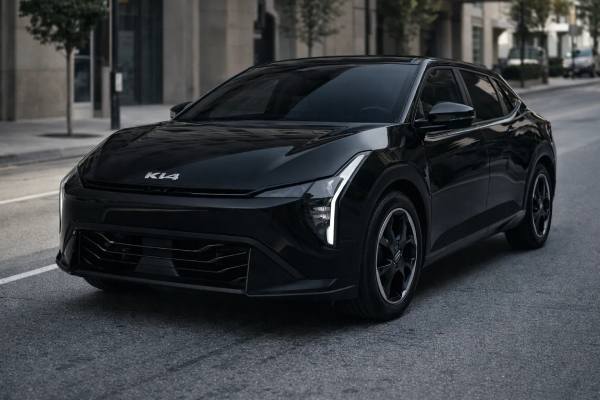
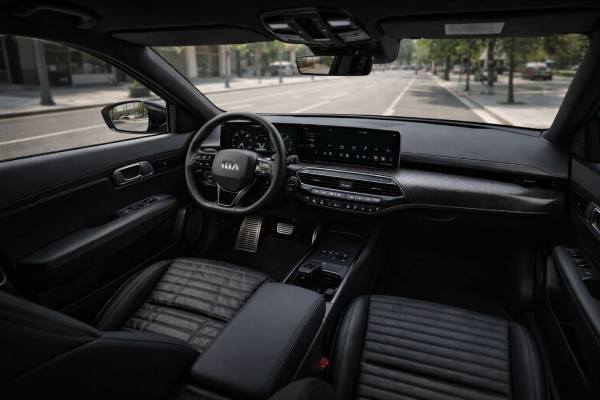
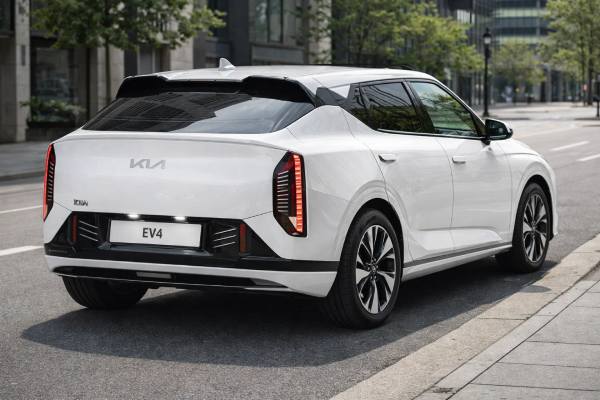
The long-range Kia EV4 (CT1) targets buyers who want EV practicality without giving up everyday comfort. With an 81.4 kWh battery and a 201 hp single-motor layout, it’s tuned for usable range, predictable performance, and efficient charging stops rather than headline acceleration. The big story is ownership ease: strong driver-assistance coverage, modern infotainment with OTA updates, and a battery-and-thermal package designed to stay consistent across seasons. At the same time, it’s a new model, so early ownership is about smart habits—protecting the 12 V system, charging with a plan, and keeping software up to date. This guide focuses on real-world range, performance feel, charging behavior, safety results, reliability watch-outs, and a practical maintenance approach you can actually follow.
Fast Facts
- Expect strong long-range usability, with efficient highway behavior when speeds and temperatures are reasonable.
- Charging is competitive for road trips if you precondition the battery and arrive at a fast charger at low state of charge.
- Driver-assistance coverage is a core strength, especially for motorway commuting and lane support.
- As a new model, plan for early software updates and occasional calibration tweaks after repairs.
- Rotate tyres every 10,000–12,000 km (6,000–7,500 mi) to protect range and keep the steering consistent.
What’s inside
- Kia EV4 CT1 long-range profile
- Kia EV4 CT1 specs and data
- Kia EV4 CT1 trims and safety tech
- Reliability watchlist and campaigns
- Service schedule and buying tips
- Range, charging, and road feel
- EV4 rivals and best alternatives
Kia EV4 CT1 long-range profile
This EV4 configuration is built around one simple promise: take a large battery, pair it with a sensible power output, and make the car easy to live with day after day. In practice, the 81.4 kWh pack is less about “rarely charge” and more about “charge on your schedule.” That distinction matters. If you can rely on home charging, you’ll typically operate in a comfortable middle band of state of charge (SOC), which helps battery health, reduces stress during hot/cold swings, and keeps regeneration consistent.
Performance is best described as clean and confident. A 201 hp single-motor EV isn’t trying to overwhelm the front tyres, and that pays off in smooth launches, predictable steering, and less drama in wet weather. The EV4’s strength is repeatability: it feels similar on your second acceleration run as it did on your first, and it tends to deliver its torque in a controllable way rather than a punchy, traction-limited surge.
For long-distance driving, the EV4’s real advantage is how it manages the “triangle” of speed, temperature, and charging. If you drive at steady motorway speeds and let the battery precondition before DC fast charging, the car is positioned to hold respectable charge rates over the useful middle window. That’s the difference between a pleasant road trip and one that feels like you’re waiting on a charge curve.
The ownership angle is also strong. Kia’s tech stack—navigation-driven routing, connected services, and OTA updates—can meaningfully improve day-to-day convenience. But new-model ownership also means being ready for early software refinements, occasional sensor or camera recalibrations after windscreen work, and learning how the car behaves in your climate. In short: if you want a long-range EV that majors on consistency, comfort, and driver-assistance, this EV4 is aimed directly at you.
Kia EV4 CT1 specs and data
Powertrain, battery, and efficiency
| Spec | Value |
|---|---|
| Drive type | FWD |
| Motor count and axle | Single motor, front axle |
| Max power | 201 hp (150 kW) |
| Battery capacity (gross) | 81.4 kWh |
| Battery capacity (usable) | 78.0 kWh |
| Battery nominal voltage | 343 V |
| Battery chemistry | NMC |
| Efficiency / test standard | WLTP |
| Rated efficiency | 14.9 kWh/100 km (240 Wh/mi) |
| Rated range | 612 km (380 mi) |
| Real-world highway @ 120 km/h (75 mph) | 20.0 kWh/100 km (322 Wh/mi) |
| Real-world highway @ 120 km/h (75 mph) range | 390 km (242 mi) |
Driveline and charging
| Spec | Value |
|---|---|
| Drive unit / transmission | Single-speed reduction gear |
| Charging connector (AC) | Type 2 |
| Charging connector (DC) | CCS2 |
| Onboard charger (AC) | 11 kW |
| DC fast-charge peak | 135 kW |
| DC 10–80% | 31 min |
| Battery preconditioning for DC charging | Yes |
Performance and capability
| Spec | Value |
|---|---|
| 0–100 km/h (0–62 mph) | 7.7 s |
| Top speed | 170 km/h (106 mph) |
| Braked towing capacity | 1,000 kg (2,205 lb) |
Chassis and dimensions
| Spec | Value |
|---|---|
| Wheelbase | 2,820 mm (111.0 in) |
| Length | 4,730 mm (186.2 in) |
| Width | 1,860 mm (73.2 in) |
| Height | 1,480 mm (58.3 in) |
| Kerb (curb) weight | 1,890 kg (4,167 lb) |
| Cargo volume | 490 L (17.3 ft³) |
Safety and driver assistance
| Spec | Value |
|---|---|
| Euro NCAP (Safety Pack) | 5 stars |
| Euro NCAP Adult occupant | 84% |
| Euro NCAP Child occupant | 85% |
| Euro NCAP Vulnerable road users | 77% |
| Euro NCAP Safety Assist | 78% |
Kia EV4 CT1 trims and safety tech
Think of EV4 trims less as “cosmetic steps” and more as bundled choices around comfort, driver assistance, and charging convenience. In most European-style lineups, you’ll see a core trim that establishes the tech baseline, then sport-styled grades (often GT-line themed) that add wheel/tyre upgrades, lighting changes, and more aggressive exterior detailing. From an ownership standpoint, the most important differences usually come down to wheels, seat comfort features, and whether advanced driver assistance is standard or packaged.
Trims and options that matter in daily use
- Wheel size and tyre type: Larger wheels can sharpen turn-in but often add road noise and reduce efficiency at motorway speeds. If your priority is real range, the smallest wheel/tyre package that still gives you the comfort and safety kit you want is usually the sweet spot.
- Heat pump and thermal features: For buyers in cold climates, a heat pump can reduce winter consumption during steady cruising and repeated short trips. Even with a heat pump, cabin preheating while plugged in is one of the biggest “free range” habits you can adopt.
- Charging convenience: Look for features like navigation-based charger routing, battery preconditioning triggers, and an easy-to-use charge scheduling menu. These affect your experience more than a small difference in peak kW.
- Practical comfort: Heated seats and a heated steering wheel matter in an EV because they let you lower cabin temperature while staying comfortable, which can reduce HVAC load.
Safety ratings and what they actually mean
Euro NCAP results are especially helpful because they separate occupant protection from crash-avoidance support. For the EV4, pay attention to the split between the base configuration and “Safety Pack” style configurations. In practical terms, this often reflects the availability of extra ADAS functions (or stronger standard fitment) that raise the Safety Assist score. If you’re shopping used later, confirm the car’s option list by VIN/build sheet or dealer equipment report—not just the badge.
Core safety systems and ADAS
You should expect the current Kia safety toolset: autonomous emergency braking (AEB) that recognizes vehicles and vulnerable road users, lane keeping and lane centering support, blind-spot monitoring, and rear cross-traffic alert/braking. On higher equipment levels, motorway assistance features become the real differentiator—adaptive cruise control that holds distance smoothly, lane centering that behaves predictably through gentle bends, and driver monitoring/hands-on detection that reduces nagging while keeping the system safer.
Service and calibration implications
Modern EV safety systems depend on sensors that must be aligned correctly. After windscreen replacement, bumper repairs, suspension work, or wheel alignment changes, plan on camera/radar calibration. If the steering wheel feels off-center or the car “hunts” within the lane, it’s often alignment-related rather than a software defect. A careful alignment to factory specs—paired with correct tyre pressures—can restore both range and ADAS smoothness.
Reliability watchlist and campaigns
Because the EV4 is a newer model, reliability should be approached as a “watchlist” rather than a long history of confirmed failures. The good news is that the core architecture is familiar in the modern EV world: traction battery, onboard charger, DC–DC converter, thermal loops, and a high-voltage (HV) safety system that constantly checks isolation. Most early ownership problems in new EV launches tend to fall into three buckets: software refinement, 12 V system sensitivity, and charging/thermal edge cases.
Most likely: software and calibration issues (common, low–medium cost tier)
- Symptoms: intermittent warnings, charging behavior changes after updates, infotainment glitches, or ADAS alerts that come and go.
- Likely root cause: early firmware tuning and sensor calibration tolerances.
- Remedy: dealer software updates, module reprogramming, and—after repairs—camera/radar calibration.
Owner tip: keep a record of update dates and the exact symptom. Intermittent issues are solved faster when you can tie them to conditions (temperature, charger type, speed, heavy rain, etc.).
Charging hardware and seals (occasional, medium cost tier)
- Symptoms: DC charging fails to start, charge port latch issues, water ingress warnings, or repeated “check charging system” messages.
- Likely root cause: charge-port hardware, connector sealing, or communication handshake problems with certain chargers.
- Remedy: inspection of port seals and pins, software updates for charger compatibility, and replacement of charge-port components if the latch or actuator fails.
Thermal management behavior (occasional, medium cost tier)
- Symptoms: reduced fast-charge speed, sudden tapering, or noisy pumps/fans during preconditioning.
- Likely root cause: battery temperature not reaching the ideal window, blocked cooling airflow, or coolant circuit control logic.
- Remedy: verify coolant level/type, check for radiator/condenser blockage, and confirm preconditioning triggers are working (often tied to navigation routing to a fast charger).
High-voltage isolation and moisture pathways (rare, high cost tier if present)
- Symptoms: HV warning lights, limp-home behavior, or faults that appear after heavy rain, deep puddles, or car washes.
- Likely root cause: moisture ingress at connectors or junction points.
- Remedy: professional isolation testing and targeted sealing/connector replacement.
Owner tip: don’t ignore “intermittent” HV warnings—those are the ones that benefit most from early diagnosis.
Battery health and degradation patterns
For most owners, degradation is gradual and tied to heat, repeated high-SOC parking, and heavy reliance on DC fast charging. The EV4’s best longevity habits are straightforward: use DC fast charging when it serves you, but default to home AC charging for routine use; avoid leaving the car at 100% for long periods; and precondition when fast charging in cold weather so you spend less time at high current with a cold pack.
Recalls, TSBs, and service actions
Your best practice is to run a VIN check at purchase and at least annually. Even “software-only” actions matter in EVs because they can change charging stability, thermal control logic, and warning thresholds. Ask the seller for proof of campaign completion and request the most recent service printout showing software versions where available.
Service schedule and buying tips
EV maintenance is simpler than internal combustion ownership, but it’s not “no maintenance.” The EV4 rewards consistency: tyres, brake fluid, cabin filtration, and cooling systems are the pillars. If you keep those under control and treat charging as a habit rather than a scramble, ownership is typically calm and predictable.
Practical maintenance schedule (normal use)
- Tyre rotation: every 10,000–12,000 km (6,000–7,500 mi). EV torque and weight can wear front tyres quickly, and uneven wear hurts both range and braking.
- Wheel alignment check: every 20,000 km (12,000 mi) or after pothole impacts, new tyres, or steering pull. Alignment is one of the cheapest ways to protect efficiency.
- Cabin air filter: every 15,000–30,000 km (10,000–20,000 mi) or 12 months depending on dust/pollen and city driving. A clogged filter increases HVAC load.
- Brake fluid: typically every 24 months. Even with regen, brake fluid absorbs moisture over time.
- Brakes inspection: every 20,000 km (12,000 mi). EVs can develop surface corrosion because regen does most of the work; periodic friction-brake use helps keep hardware clean.
- 12 V battery test: annually after year two, and proactively if you see odd electrical warnings. Many EV “mystery faults” start with a weak 12 V battery.
- Coolant loop inspection: check condition and level during scheduled services; follow official intervals for coolant replacement when specified for the battery/power electronics circuits.
Severe-use adjustments
If you frequently DC fast charge, drive in extreme heat/cold, tow, or do repeated high-speed motorway runs, shorten inspections—especially tyres, brakes, and cooling airflow cleanliness (radiators can clog with debris).
Charging habits that reduce long-term cost
- Use AC charging for routine: it’s gentler and easier on thermal systems.
- Avoid storing at 100%: set a daily limit (often 70–90%) unless you need full range the next morning.
- Precondition before DC fast charging: it saves time and reduces stress on a cold pack.
- Arrive low, leave earlier: fast charging is quickest at lower SOC; you often save time by leaving around 70–80% on road trips.
Buyer’s guide (used EV strategy)
- Battery health: request a state-of-health report if available, and compare real range at a consistent speed/temperature rather than relying on the dashboard estimate.
- Charge behavior: test both AC and DC charging if possible. A car that refuses DC charging, or tapers extremely early, needs diagnosis.
- Cooling and HVAC: confirm heat pump operation (if fitted) and listen for abnormal pump noise. Check that preconditioning can be triggered via navigation.
- Chassis and underbody: inspect the battery housing area and underbody panels for damage, missing fasteners, or signs of impact.
- ADAS and cameras: confirm all cameras/sensors function and that lane centering behaves consistently on a clear road. After accident repairs, miscalibration is common.
A well-maintained EV4 should be a low-drama daily driver. The best used examples are the ones with clean charging history, regular tyre rotations, documented updates, and a seller who can explain how the car was charged and stored.
Range, charging, and road feel
In real driving, the EV4’s personality is shaped by its battery size and the way it manages energy at speed. Around town, regen and frequent slowdowns let the car feel especially efficient. On the motorway, you’ll see the typical EV pattern: consumption rises noticeably with speed and cold weather, and the biggest “range lever” is simply how fast you cruise.
Real-world range: what to expect
For the long-range 81.4 kWh version, the official figure is impressive on paper, but day-to-day results depend on conditions:
- City and suburban use: typically the EV4 feels relaxed here, especially if you use regen intelligently and preheat/precool while plugged in.
- Motorway cruising (100–120 km/h): expect consumption to climb. Headwinds, rain, winter temperatures, and large wheels all magnify that effect.
- Cold weather: the first 10–20 minutes can be the most expensive if you heat a cold cabin and a cold battery at the same time. Seat and steering wheel heat can reduce HVAC demand.
A simple owner routine helps: precondition the cabin while plugged in, keep tyres at the correct pressure, and treat speed as a tool. Dropping from 120 km/h to 110 km/h can feel minor in time but meaningful in range.
Charging performance in daily life
Home AC charging is the “quiet hero” for this car. If you charge overnight, the EV4 becomes a fill-and-forget appliance: you wake up to a set SOC and rarely think about public chargers. Public AC is best for destination charging—shopping, work, or long stops—because it preserves battery health and avoids the “fast charger roulette.”
For road trips, DC fast charging is where technique matters:
- Arrive with low SOC: you’ll usually get the best charge rate when the battery is lower.
- Use navigation to a charger: this is often how battery preconditioning is triggered.
- Expect tapering: most EVs slow down above ~70–80% SOC; leaving earlier can be faster overall.
- Temperature is everything: a warm battery charges faster. In winter, preconditioning can be the difference between a short stop and a long one.
Driving feel: ride, handling, and NVH
With the battery mass low in the chassis, the EV4 should feel planted and stable in straight-line cruising. Ride comfort will vary mostly with wheel size: larger wheels typically sharpen response but add noise over rough surfaces. Steering in modern EVs is usually light and precise rather than full of feedback; the EV4’s best trait is likely consistency—smooth response at city speeds and calm tracking at motorway speeds.
Braking and regen behavior
The transition between regen and friction braking is one of the key “quality” markers. Take time to learn the regen levels and one-pedal behavior. In wet or cold conditions, regen may be reduced until the battery is in a safe temperature window, and that can change how the brake pedal feels. It’s normal—just a reminder to leave extra space until you’re used to it.
EV4 rivals and best alternatives
The EV4 long-range configuration sits in a competitive part of the market: practical EVs that are fast enough, efficient enough, and comfortable enough to replace a petrol car without lifestyle compromises. The best comparison points usually fall into three buckets: efficiency-focused rivals, performance-biased options, and value-led alternatives.
Efficiency-focused rivals
These are the cars that win by using less energy at motorway speeds and keeping charging stops short. If you do frequent long trips, compare:
- Highway consumption at 110–120 km/h, not just official WLTP/EPA range.
- Charge curve behavior, especially how long it holds strong power from ~10–60% SOC.
- Wheel/tyre choices, because they can swing range meaningfully.
Performance-biased alternatives
Some rivals will offer dual-motor acceleration and traction advantages (especially in wet or snowy climates). The trade-off is often higher consumption and more expensive tyres. If you want that route, ask whether you truly need AWD traction for your climate—or if a good tyre choice on a single-motor EV will cover most situations.
Value-led options
Value in EVs is rarely just purchase price; it’s warranty coverage, software support, charging convenience, and how the car behaves after three winters. Compare:
- Warranty terms, especially traction battery coverage and capacity guarantees where offered.
- Service network strength in your area.
- Update cadence: does the brand improve charging and infotainment through software, or does it stagnate after launch?
Where the EV4 long-range is likely to stand out
- A strong blend of usable range, modern driver assistance, and a feature set designed for daily commuting.
- A tech stack that supports real ownership convenience (routing, connected services, and updates).
- A balanced power output that avoids the “too much torque, too little grip” feeling.
Where you should be picky
- Wheel size and tyre choice if range is the priority.
- Safety and ADAS packaging (base vs safety pack style configurations can matter).
- Winter readiness (heat pump availability, preconditioning behavior, and your charging routine).
The EV4 long-range makes the most sense for drivers who want an EV that behaves like a reliable tool: predictable range, straightforward charging, and a calm, confident daily drive.
References
- EV4 Fastback 2025 (Price List)
- Kia EV4 Long Range 2025 (Technical Data)
- New Kia EV4 Achieves Five Star Euro NCAP Safety Rating 2025 (Safety Rating)
- Euro NCAP | Kia EV4 | 2025 | Standard Equipment 2025 (Safety Rating)
- Euro NCAP | Kia EV4 | 2025 | Safety Pack 2025 (Safety Rating)
Disclaimer
This article is for informational purposes only and is not a substitute for professional diagnosis, repair, or service advice. Specifications, torque values, service intervals, and procedures vary by VIN, market, software version, and equipment; always verify details using your official owner’s literature and service documentation. If you found this guide helpful, please consider sharing it on Facebook, X/Twitter, or your favorite forum to support our work.