
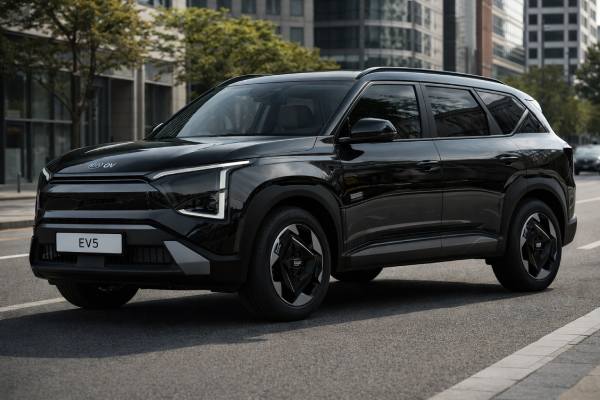
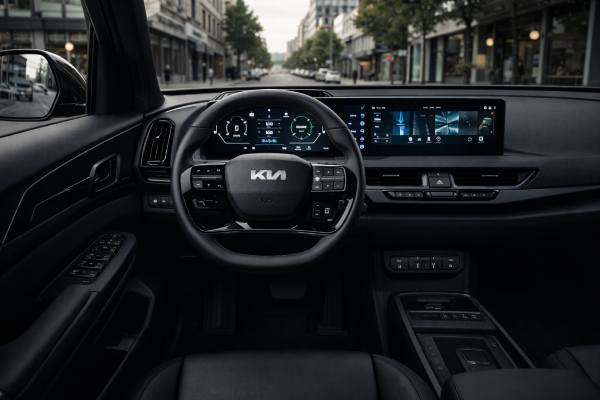
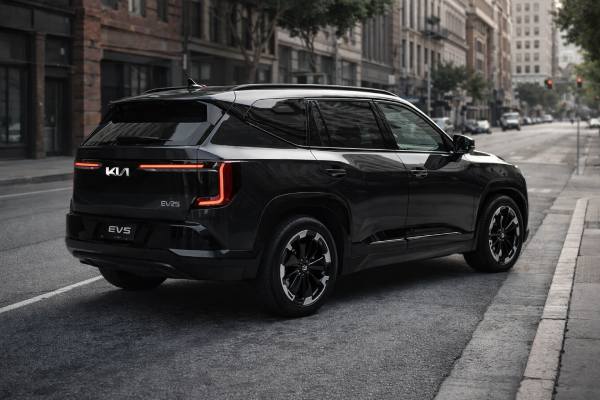
The Kia EV5 (OV) is a mid-size electric SUV built around a practical idea: deliver long-range usability without making daily ownership complicated. In its single-motor 160 kW (215 hp) form, it targets predictable efficiency, steady highway manners, and easy charging habits more than headline acceleration. The key ownership story is the 81.4 kWh battery paired with a 400 V charging system—fast enough for real trips, simple enough for routine home charging, and generally less “fussy” than higher-voltage setups.
For buyers, the EV5’s strengths come down to packaging (usable cargo space, family-friendly cabin) and a calm powertrain that makes smooth regen driving easy to learn. The trade-offs are also clear: DC charging peaks are solid rather than class-leading, and early-year software tuning can matter a lot in how the car charges, plans routes, and manages battery temperature.
Owner Snapshot
- Strong everyday range for commuting and mixed driving with an 81.4 kWh pack.
- Calm, predictable power delivery that suits family driving and slick-weather confidence.
- Useful SUV packaging with a large main cargo area and a small front trunk.
- Plan for software updates early in ownership to keep charging behavior and driver-assist features consistent.
- Rotate tires about every 10,000–12,000 km to even out wear on a heavier EV.
Navigate this guide
- Kia EV5 OV long-range profile
- Kia EV5 OV technical specs
- Kia EV5 OV trims and safety tech
- Reliability and known trouble spots
- Maintenance plan and buying tips
- Driving feel, range and charging
- How Kia EV5 stacks up
Kia EV5 OV long-range profile
Think of the EV5 (OV) as Kia’s “do the basics well” electric SUV, sized and tuned for family use rather than for maximum performance. In the 160 kW single-motor layout, the powertrain is strong enough to feel confident at merges and roundabouts, but it stays smooth and quiet instead of sharp or aggressive. That matters because the EV5’s most important engineering decisions are about repeatability: consistent consumption, consistent cabin comfort, and predictable charging on longer drives.
The 81.4 kWh battery is the anchor feature. In Europe, you will see EV5 models marketed with more than one battery size depending on country and trim, but the long-range pack is the one that best fits the EV5’s mission. It reduces “range anxiety” at highway speeds and gives the driver more flexibility to charge in the middle of the battery (roughly 20–80 percent state of charge), which is where most EVs charge fastest and age best. For readers coming from combustion SUVs, this is also the version that makes winter operation easier: you can use heat and defrost more freely without feeling like every kilometer costs you.
The EV5’s charging system is centered on a 400 V architecture. In practice, that usually means DC fast charging is very usable, but not at the peak levels of the fastest 800 V competitors. For owners, the upside is that 400 V cars often behave consistently across a wide range of chargers, and the home-charging routine stays simple: plug in at night, top up for the next day, and save fast charging for travel days.
From a market perspective, EV5 availability is primarily Europe and other global regions rather than the United States. If you are shopping across Europe and the USA, treat that as an important planning point: ownership support, local charging standards, and resale expectations depend heavily on where the model is officially sold and serviced.
Kia EV5 OV technical specs
Powertrain, Battery, and Efficiency
| Spec | Value |
|---|---|
| Motor type | PMSM |
| Motor count and axle | Single motor, front axle |
| Max power | 215 hp (160 kW) |
| Traction battery capacity | 81.4 kWh |
| Efficiency test standard | WLTP |
| Rated efficiency | 17.1 kWh/100 km (275 Wh/mi) |
| Rated range | 530 km (329 mi) |
Driveline and Charging
| Spec | Value |
|---|---|
| Drive type | FWD |
| Charging connector (AC) | Type 2 |
| Charging connector (DC) | CCS |
| Onboard charger (AC) | 11 kW |
| DC fast-charge peak | 150 kW |
| Replenishment time (DC) | 10–80%: 30 min |
| Replenishment time (AC) | 10–100%: 7 h 15 min |
Performance and Capability
| Spec | Value |
|---|---|
| Acceleration | 0–100 km/h (0–62 mph): 8.4 s |
| Top speed | 165 km/h (102 mph) |
| Towing capacity (braked) | 1,200 kg (2,646 lb) |
Chassis and Dimensions
| Spec | Value |
|---|---|
| Length | 4,615 mm (181.7 in) |
| Width | 1,875 mm (73.8 in) |
| Height | 1,715 mm (67.5 in) |
| Cargo volume (rear) | 566 L (20.0 ft³) |
| Front trunk volume | 44 L (1.6 ft³) |
Safety and Driver Assistance
| Spec | Value |
|---|---|
| Euro NCAP | 5 stars |
| Adult occupant | 83% |
| Child occupant | 85% |
| Vulnerable road users | 74% |
| Safety assist | 80% |
Kia EV5 OV trims and safety tech
Across Europe, the EV5 lineup generally follows a familiar structure: an entry grade focused on value, a mid grade that adds comfort and convenience, and sport-styled grades that bundle larger wheels, richer interior materials, and more advanced lighting. Names vary by market, but the shopping logic stays consistent. If your priority is range and efficiency, you typically want the long-range battery paired with the smallest practical wheel and tire package. If your priority is cabin feel and driver aids, you focus on option packs rather than the motor output.
How to spot trims quickly (without relying on badges):
- Wheels and tires: Larger wheel designs usually signal higher trims, but they can add road noise and slightly reduce real-world range at highway speed.
- Lighting: Adaptive or matrix-style headlight functions (where offered) are usually tied to upper grades.
- Seats: Heated and ventilated seat availability often separates “mid” from “top” trims, and memory functions typically sit at the top.
- Cabin tech: Premium audio, larger infotainment displays, and surround-view cameras commonly arrive as part of higher packages.
Safety ratings and what they mean in daily driving
For many buyers, the simple headline is the Euro NCAP star rating, but the useful detail is how the EV5 performs in the sub-scores. A strong child-occupant score tends to reflect good rear-seat restraint performance and clear child-seat installation guidance, while “Safety Assist” reflects how well the car supports the driver with lane, speed, and emergency braking technologies. As always, the trim you buy matters: some markets make key driver-assist systems standard, while others bundle them.
Typical safety systems and ADAS you should expect to evaluate:
- Automatic emergency braking (AEB): Look for car-to-car plus pedestrian and cyclist detection coverage.
- Adaptive cruise control (ACC): Very useful for highway commuting, but you want it paired with a well-calibrated lane centering or lane following function.
- Lane keeping and lane centering: These features can feel “handsy” if alignment is off or if the camera calibration changes after windshield work.
- Blind-spot monitoring and rear cross-traffic alert: High value in a family SUV, especially with taller rear pillars.
- Parking aids: Surround-view cameras and automated parking functions vary by market and package.
If you want the EV5’s safety tech to stay consistent over time, plan to keep the camera and radar sensors clean, and do not ignore alignment or windshield replacement quality. Many modern driver-assist complaints trace back to calibration and sensor issues rather than to “broken” hardware.
Reliability and known trouble spots
Because the EV5 is still early in its lifecycle, reliability is best approached as “known patterns” rather than a long history of common failures. The good news is that modern EVs remove many high-maintenance wear items (engine oil systems, multi-gear transmissions, exhaust aftertreatment). The important news is that EV ownership concentrates risk into fewer, more expensive systems: charging hardware, thermal management, electronics, and software.
Below is a practical way to think about issues by prevalence and severity, with the understanding that software revisions can change the story quickly.
Common (low to medium severity)
- Infotainment glitches and app connectivity: Symptoms include slow boot-up, dropped phone pairing, or navigation route-planning oddities. Likely root cause is software tuning and connectivity handoffs. Remedy is usually an update or reconfiguration rather than parts.
- Charge-port latch and flap alignment: Symptoms include inconsistent locking, failed release, or water seal concerns after winter grime. Root cause is often dirt ingress or misalignment. Remedy is cleaning, inspection of seals, and adjustment.
- Brake noise or surface rust: EVs use regen braking heavily, which can let friction brakes sit. Symptoms include scraping after rain or overnight parking. Remedy is periodic firm stops and routine brake service inspections.
Occasional (medium severity)
- Onboard charger (OBC) sensitivity: Symptoms can include reduced AC charging power or intermittent charging sessions. Root cause ranges from charging-station communication to onboard hardware. Remedy may include software updates, cable testing, and in some cases OBC replacement.
- Thermal management quirks in extreme weather: Symptoms include reduced fast-charge rates or noisy coolant pumps. Root cause can be temperature strategy, sensors, or coolant flow restrictions. Remedy is diagnostics and, sometimes, software updates that adjust battery conditioning.
Rare (high severity)
- High-voltage isolation or connector moisture issues: Symptoms include warning messages, restricted power, or charging lockouts. Root cause is typically moisture ingress or connector sealing problems in HV components. Remedy requires trained high-voltage diagnostics and component resealing or replacement.
- Drive unit bearing or reduction-gear noise: Symptoms include a rising whine with speed or load. Root cause can be bearing wear or fluid condition. Remedy ranges from fluid service to drive unit repair under warranty.
Software and calibrations: what matters most
For a new EV, software updates are not cosmetic. They can meaningfully change charging curves, battery temperature targets, driver-assist behavior, and warning logic. If you experience slow DC charging, unexpected tapering, or frequent driver-assist nags, ask the dealer to confirm the latest BMS (battery management system), charging, and ADAS software versions.
Recalls, service actions, and how to verify
Treat recall checks as routine: verify by VIN through official Kia channels, and keep proof of completion with your service records. For used purchases, insist on documentation for any software campaigns and any charging-related repairs, because those have the biggest impact on daily ownership.
Maintenance plan and buying tips
A good EV maintenance plan focuses on the parts you still wear out: tires, brakes, suspension, cabin filtration, and the 12 V electrical system. It also adds a few EV-specific checks that many first-time owners overlook: cooling systems, charging hardware, and battery health reporting.
Practical maintenance schedule (baseline)
Use this as a starting point, then align it to your local Kia service schedule:
- Every 10,000–12,000 km or 12 months: Tire rotation; inspect tread wear, sidewalls, and alignment. EV torque and weight can eat tires quickly if alignment drifts.
- Every 20,000–30,000 km or 24 months: Cabin air filter replacement (or sooner in dusty cities). Check wiper blades and washer system.
- Every 24 months: Brake fluid test and replace if moisture content is high. Inspect pads, rotors, and slider pins. EVs can have plenty of pad thickness but still develop corrosion or stuck hardware.
- Every 40,000–60,000 km or 48 months: Full suspension and steering inspection, including bushings, ball joints, and wheel bearings.
- Every 3–5 years: 12 V battery test at each service and replace proactively if it shows weakness. The 12 V battery is small but critical: many “car will not start” situations in EVs trace back to it.
Severe-use adjustments
If you do frequent DC fast charging, tow regularly, or drive in extreme heat or cold, shorten inspection intervals. Pay special attention to tire wear, brake condition (because winter salt can accelerate corrosion), and cooling system performance.
Buyer’s guide: what to check on a used EV5
- Battery health and usable range: Ask for a battery state-of-health report if available through service tools. Then do a real-world check: at a steady highway speed, does consumption look reasonable, and does range drop smoothly rather than in sudden steps?
- Fast-charging behavior: On a warm battery, check whether the car reaches strong charging power early and then tapers normally. Unusually early taper can be temperature, software, or hardware.
- Charge port condition: Check latch operation, seal condition, and whether the port area shows signs of water or impact damage.
- Cooling and heating performance: Verify cabin heat output, A C performance, and listen for abnormal pump noise.
- Chassis and underbody: Inspect the battery housing area and underbody panels for impact marks, missing fasteners, or corrosion.
- Electronics and driver aids: Confirm camera clarity, radar function, and that warning lights do not appear intermittently. After windshield replacement, ensure proper ADAS calibration records exist.
Long-term durability outlook
Under normal mixed driving, most modern EV packs hold up well when owners avoid living at 100 percent charge every day and limit repeated hot fast charging at high states of charge. The EV5’s long-range battery gives you more flexibility to charge in a gentler window, which is one of the simplest ways to protect battery longevity over years of ownership.
Driving feel, range and charging
On the road, the EV5’s single-motor layout aims for calm and confidence rather than drama. The first thing most drivers notice is stability: the battery’s low placement helps the car feel planted through sweepers and in crosswinds, especially compared with taller combustion SUVs. Steering is typically light to medium in effort, with a clean on-center feel that suits commuting. The trade-off is feedback; many EVs prioritize smoothness over road texture, so do not expect “sports SUV” steering conversation through the wheel.
Ride comfort and NVH (noise, vibration, and harshness)
With long-range family SUVs, wheel choice matters. Smaller wheels and taller tire sidewalls usually soften sharp bumps and reduce road roar at 110–120 km/h. Larger wheels tend to sharpen turn-in and styling, but you pay with more impact harshness and more tire noise on coarse asphalt. The EV5’s cabin generally benefits from EV quietness at city speeds, but highway noise is mostly tire and wind—so tire selection and door seal condition become real ownership factors.
Powertrain character and regen driving
A 160 kW front motor delivers quick step-off response for city gaps and smooth mid-range pull for passing. The best setups give you a predictable accelerator: you can meter torque cleanly without a sudden “surge.” Regenerative braking usually offers multiple levels and a one-pedal style mode. The key is consistency in the handoff to friction brakes. In daily driving you want smooth blending, especially in wet conditions where aggressive regen can feel abrupt if the tires are cold.
Real-world efficiency and range expectations
Official ratings are useful for comparison, but owners plan trips based on real consumption. For a mid-size SUV on an 81.4 kWh pack, realistic planning usually looks like this:
- City driving: Often the best case, helped by regen and lower speeds.
- Highway at 110–120 km/h: Expect a noticeable range drop versus official numbers, especially with roof loads, winter tires, or headwinds.
- Cold weather: Cabin heat, battery temperature management, and denser air reduce range. Short trips can be the worst case because the battery and cabin never fully warm.
A good rule for trip planning is to treat the official range as a ceiling and plan a comfortable buffer. If the EV5 is your first EV, that buffer reduces stress more than any single performance metric.
Charging in real life: home and public
- Home AC charging: An 11 kW onboard charger is a sweet spot for Europe. Overnight charging becomes easy, and you can recover meaningful range during the workday if you have workplace charging.
- DC fast charging: A 150 kW peak is travel-capable. The important number is not the peak, but how well it sustains power through the main charging window and how early taper begins. Preconditioning and battery temperature play a big role: a warm battery charges faster and more consistently.
If you road-trip often, build a habit: arrive at fast chargers at a lower state of charge when practical, and use navigation that plans charging stops intelligently. That is usually faster than trying to “fill up” to a very high percentage at one stop.
How Kia EV5 stacks up
In Europe, the EV5 lands in one of the most competitive EV segments: mid-size crossovers that need to be efficient, comfortable, and easy to live with. Here is how it generally compares, focusing on the factors that most affect ownership rather than on marketing headlines.
Against efficiency-first rivals
Some competitors prioritize low consumption and strong highway range through very optimized aerodynamics and power management. The EV5’s advantage is its balanced approach: the long-range battery gives you flexibility, and the driving experience tends to be predictable. If your priority is the longest possible highway range per kWh, you should compare tire sizes, real charging curves, and winter performance, not just official range.
Against fast-charging leaders
A few rivals offer higher-voltage systems and higher DC peak rates. Those can shorten charging stops, especially when conditions are perfect. The EV5’s counterpoint is simplicity and consistency: a 400 V system with a solid peak can be easier to plan around, and for many drivers the difference is less about peak power and more about charger availability, battery temperature, and how crowded stations are.
Against space and family-focused SUVs
This is where the EV5 can be most convincing. A practical cargo area, usable rear seating, and an easy daily charging routine matter more to families than a 0–100 time. If you routinely carry strollers, sports gear, or travel luggage, compare real cargo shape and rear-seat comfort, not just liters.
Against premium-branded alternatives
Premium rivals may offer richer materials, more advanced headlight tech, and more sophisticated driver-assist tuning. The EV5 typically competes by offering a strong feature set for the money and a straightforward ownership model: a useful range target, a travel-capable charging rate, and a cabin designed for real use.
Bottom line
If you want an EV SUV that feels calm, delivers usable range, and keeps ownership routines simple, the EV5 long-range single-motor version makes sense. If your priorities are maximum performance or the very fastest charging on the market, you may prefer a different kind of EV—often at a different price point.
References
- The Kia EV5 | Kia UK 2026
- The Kia EV5 Specification | Kia UK 2026
- Kia EV5 2025 (Safety Rating)
- Assessment details 2025 (Safety Rating)
- Kia Recalls | Kia Europe 2026 (Recall Database)
Disclaimer
This article is for informational purposes only and is not a substitute for professional diagnosis, inspection, or repair. Specifications, torque values, service intervals, and procedures can vary by VIN, market, model year, and equipment, so always verify details against official Kia documentation for your vehicle and follow trained high-voltage safety practices when servicing EV systems.
If this guide helped, please consider sharing it on Facebook, X (Twitter), or your favorite forum to support our work.