
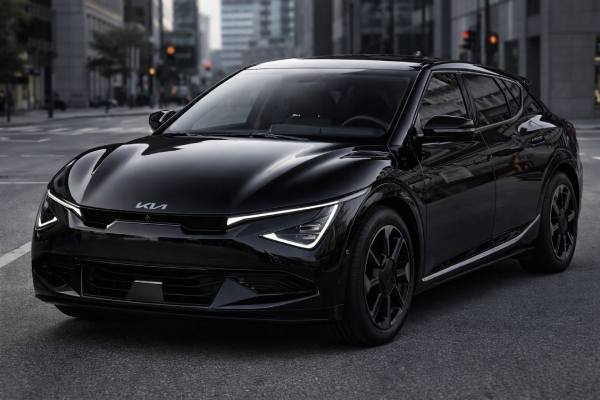
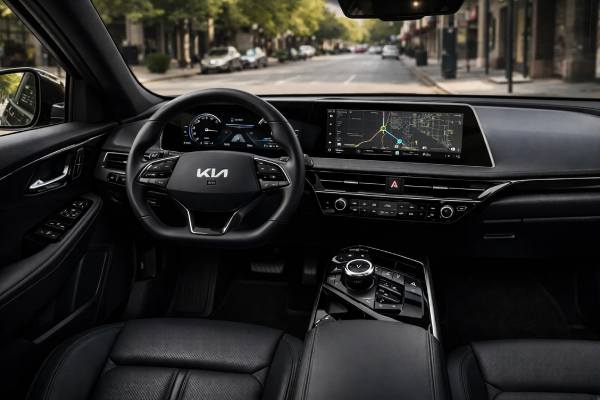
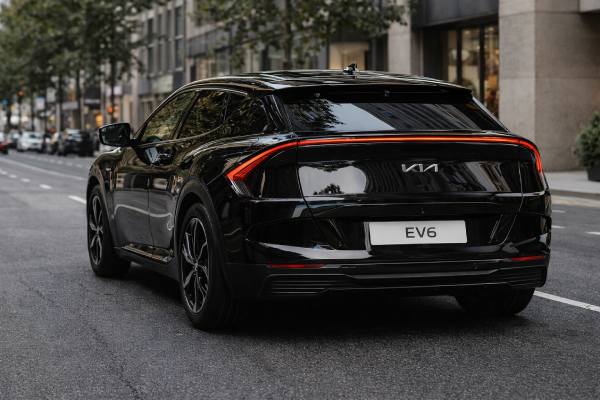
The facelifted Kia EV6 (CV) with the 84.0 kWh battery and 225 hp single-motor layout targets owners who want long-distance usefulness without the added complexity of dual motors. Its key engineering story is the E-GMP platform’s high-voltage charging backbone, which can turn brief charging stops into meaningful range—when battery temperature and charger power cooperate. For daily use, this version tends to feel lighter on its feet than AWD trims, with predictable rear-drive balance and fewer driveline parts to maintain. The trade-off is that range, performance, and even charging speed can swing with wheel size, speed, and weather. If you’re shopping used or planning to keep one past warranty, it also pays to understand the EV6’s software-driven behavior (charging logic, preconditioning, driver-assist calibration) because updates can materially change the ownership experience.
What to Know
- Expect strong road-trip charging pace on 800 V DC stations, but slower sessions if the pack is cold or the charger can’t sustain high power.
- Rear-wheel drive keeps the car simpler and typically more efficient than AWD, especially at steady highway speeds.
- Budget for tyres sooner than many owners expect if you run larger wheels or drive hard; alignment matters.
- Plan a brake-fluid service about every 48 months in many schedules, even though pads often last longer with regen.
- Rotate tyres about every 12,000 km (7,500 mi) to keep wear even and protect highway stability.
Navigate this guide
- Kia EV6 84 kWh: what it is
- Kia EV6 84 kWh specs and data
- Kia EV6 84 kWh trims and safety tech
- Reliability and known problems
- Maintenance and used buying tips
- How it drives and charges
- Rivals worth cross-shopping
Kia EV6 84 kWh: what it is
This EV6 variant pairs a larger 84.0 kWh traction battery with a single rear motor rated at 225 hp (168 kW). In the lineup, it’s the “do-everything” configuration: quick enough to feel modern, efficient enough for real highway distance, and simpler than AWD versions that add a front drive unit, extra cooling load, and more tyres to replace over time.
The facelift matters because the EV6 isn’t just a styling refresh. Kia’s updates typically focus on usability—infotainment polish, driver-assist behavior, and charging logic—along with battery and thermal strategy improvements that can show up as more consistent DC fast charging. The big win of the EV6 platform remains its high-voltage architecture: when you plug into a strong DC charger and the battery is in the right temperature window, the car can accept very high power early in the session, then taper as state-of-charge (SOC) rises. That “taper” is normal for battery health and heat control, but it’s also the reason road-trip planning should focus on the efficient charging band (often 10–80%) instead of charging to 100% at every stop.
In day-to-day driving, the rear-drive EV6 feels clean and linear. You get strong step-off torque without the sometimes abrupt “front + rear” blending you can feel in some AWD EVs. Steering and chassis balance usually benefit too: less mass over the nose, fewer moving parts up front, and fewer torque handoffs. That said, wheel and tyre choices can change the car dramatically. Bigger wheels tend to raise consumption and road noise, while narrower, more efficient tyres can improve range but may soften steering response.
For ownership, think in systems. A modern EV6 is not just “battery + motor.” It’s software scheduling battery cooling, preconditioning for fast charging, coordinating regenerative braking, and running a driver-assistance stack that depends on sensors staying aligned and clean. If you want the best version of the car you bought, staying current on updates and service campaigns is part of the EV ownership playbook.
Kia EV6 84 kWh specs and data
Powertrain, battery, and efficiency
| Spec | Value |
|---|---|
| Motor type | Permanent-magnet synchronous motor (PMSM) |
| Motor count and axle | Single motor, rear axle |
| Max power | 225 hp (168 kW) |
| Max torque | 350 Nm (258 lb-ft) |
| System voltage | 697 V |
| Battery chemistry | Lithium-ion (NMC) |
| Traction battery gross capacity | 84.0 kWh |
| Traction battery usable capacity | 80.0 kWh |
| Pack layout | Floor-mounted underbody pack |
| Battery thermal management | Liquid-cooled battery and power electronics |
| Heat pump | Available (market/trim dependent) |
| Efficiency / test standard | EPA and WLTP (market dependent) |
| Rated efficiency | 51 kWh/100 mi (318 Wh/mi) |
| Rated range | 513 km (319 mi) |
| Rated range (WLTP) | 582 km (361 mi) |
| Real-world highway @ 120 km/h (75 mph) | 22.5 kWh/100 km (362 Wh/mi) |
| Real-world highway @ 120 km/h range | 355 km (221 mi) |
Driveline and charging
| Spec | Value |
|---|---|
| Transmission / drive unit | Single-speed reduction gear |
| Final drive ratio | 10.65:1 |
| Drive type | RWD |
| Differential / torque distribution | Open differential (rear) |
| Charging connector (AC) | J1772 (market dependent) |
| Charging connector (DC) | CCS (market dependent) |
| Charging port location | Right rear quarter (market dependent) |
| Onboard charger (AC) | 10.9 kW |
| DC fast-charge peak | 240 kW |
| Replenishment time (DC 10–80%) | 18 min |
| Battery preconditioning for DC charging | Available (navigation-triggered on many markets) |
Performance and capability
| Spec | Value |
|---|---|
| 0–60 mph | 7.3 s |
| 0–100 km/h (0–62 mph) | 7.3 s |
| Top speed | 185 km/h (115 mph) |
| Braking distance 62–0 mph | 132 ft |
| Braking distance 100–0 km/h | 40 m |
| Towing capacity (braked) | 907 kg (2,000 lb) |
Chassis and dimensions
| Spec | Value |
|---|---|
| Suspension (front) | MacPherson strut |
| Suspension (rear) | Multi-link |
| Steering | Rack-and-pinion, electric assist |
| Brakes (front) | Ventilated discs, 325 mm (12.8 in) |
| Brakes (rear) | Ventilated discs, 325 mm (12.8 in) |
| Wheels/Tyres | 235/55 R19 |
| Length | 4,695 mm (184.8 in) |
| Width | 1,880 mm (74.0 in) |
| Height | 1,550 mm (61.0 in) |
| Wheelbase | 2,900 mm (114.2 in) |
| Turning circle | 11.0 m (36.1 ft) |
| Kerb weight | 1,990 kg (4,387 lb) |
| Cargo volume (seats up) | 690 L (24.4 ft³) |
| Cargo volume (seats down) | 1,322 L (46.7 ft³) |
Safety and driver assistance
| Spec | Value |
|---|---|
| Euro NCAP | 5 stars |
| Euro NCAP Adult Occupant | 90% |
| Euro NCAP Child Occupant | 86% |
| Euro NCAP Vulnerable Road Users | 64% |
| Euro NCAP Safety Assist | 87% |
Fluids and key service specs
| Spec | Value |
|---|---|
| Brake fluid | DOT 3 or DOT 4 |
| Battery and power electronics coolant | Low-conductivity coolant (market dependent) |
| Wheel nuts torque | 103 Nm (76 lb-ft) |
Kia EV6 84 kWh trims and safety tech
For the facelift era, the 84.0 kWh / 225 hp rear-drive setup usually appears in “long-range” trims aimed at everyday comfort and distance. Naming varies by market, but the shopping logic is consistent: you’re choosing between equipment tiers (lighting, seats, audio, ADAS features) and wheel sizes that can change efficiency.
How to recognize the 84 kWh RWD version quickly
- Look for the single-motor rear-drive configuration in the spec sheet and the larger battery rating (84.0 kWh).
- Many markets pair the long-range RWD with 19-inch wheels by default; sportier appearance trims can add larger wheels that reduce real range.
- Charging capability is a strong clue: this generation’s EV6 family often advertises very fast 10–80% sessions on high-power DC, but the exact peak (and how long it holds) can differ by market and software revision.
Common equipment splits that matter in ownership
- Heat pump and battery conditioning: Some trims bundle a heat pump (and related thermal hardware). For cold climates, this can preserve winter range by improving HVAC efficiency and supporting better battery temperature control. If you do frequent DC fast charging in winter, prioritize trims/packages that include battery preconditioning and the strongest thermal setup.
- Lighting and sensors: Higher trims often upgrade headlights and add more camera/sensor capability for parking and lane features. From a maintenance perspective, more sensors can mean more calibration needs after windshield replacement, bumper repairs, or suspension work.
- Seating and cabin tech: Ventilated seats, better audio, and larger screens are comfort wins, but also more electronics to keep healthy over a long ownership cycle. If you buy used, test every feature—heated wheel, seat ventilation, USB ports, wireless charging, driver profile memory—because small failures can be expensive once out of warranty.
Safety ratings and what they mean
The EV6 platform has performed strongly in major crash programs, typically earning top star ratings where tested. When you interpret those results, focus on two things: (1) the test year and protocol version, and (2) whether your trim’s lighting and ADAS hardware match what the rating tested. Safety scores reflect a mix of structural performance and driver-assistance effectiveness, so a vehicle can be structurally excellent but score lower if ADAS performance or fitment differs.
Driver assistance and calibration realities
Most EV6 trims offer a familiar modern suite: autonomous emergency braking (AEB), lane keeping and lane centering support, adaptive cruise control, blind-spot monitoring, rear cross-traffic alert, and traffic sign recognition. Facelift software can refine how smoothly these systems behave, especially lane centering and adaptive cruise response. The ownership takeaway: after alignment changes, suspension repairs, windshield replacement, or bumper work, confirm the car is properly calibrated. A poorly calibrated camera or radar can cause false alerts, lane “ping-pong,” or reduced feature availability—problems that feel like “bad software” but are often hardware alignment issues.
Reliability and known problems
Overall reliability on the EV6 tends to be strongest when three things are true: charging hardware stays healthy, cooling circuits remain leak-free and correctly filled, and software is kept current. The facelift doesn’t erase earlier patterns, but it can reduce them if updates improve charging control, thermal management, or fault detection. Below is a practical map of what owners and technicians most often watch.
Common (higher frequency, usually manageable cost)
- 12 V battery drain symptoms (low-voltage warnings, no-start, intermittent electronics).
- Likely root cause: The EV6 relies on the high-voltage system and DC–DC converter to maintain the 12 V battery. If charging control logic or a related component is not operating correctly, the 12 V battery can run low even when the traction battery is fine.
- Remedy: Check for service campaigns and software updates first; test the 12 V battery under load; inspect charging control components and fusing; replace the 12 V battery if it fails capacity testing.
- Charge-port latch or handshake issues (won’t lock/unlock, intermittent AC charging).
- Likely root cause: Wear, contamination, or a port actuator issue; sometimes cable fitment or station-side faults.
- Remedy: Clean and inspect the port, confirm correct cable fit, update charging software if available, and replace latch/actuator hardware if it fails consistently.
- Brake noise or surface corrosion (especially rear) despite low pad wear.
- Likely root cause: Heavy regenerative braking reduces friction-brake use, letting rotors develop corrosion or uneven transfer.
- Remedy: Periodic friction-brake exercise, brake service cleaning, and rotor/pad replacement if vibration or scoring develops.
Occasional (moderate cost potential)
- ICCU / charging-control faults (warnings, reduced charging, 12 V not being maintained, possible limp behavior).
- Symptoms: Charging interruptions, warning lights, inability to maintain the 12 V battery, or reduced drivability.
- Remedy: Verify recall/TSB status by VIN, apply software updates, and replace affected charging-control components when required.
- Cooling system seepage (sweet smell, low coolant level, HVAC performance changes, thermal warnings).
- Likely root cause: Hose clamp settling, seal issues, or damage to heat exchanger components.
- Remedy: Pressure test the system, repair leaks, and ensure correct coolant type and bleeding procedure.
Rare (higher cost, needs expert diagnostics)
- High-voltage isolation faults (warning messages, charging disabled, limp-home).
- Likely root cause: Moisture ingress at connectors, damaged harness sections, or internal component insulation breakdown.
- Remedy: Professional isolation testing, connector inspection, harness repair, and targeted component replacement as needed.
Software and calibrations: why they matter more than usual
The EV6 is “software-defined” in the ways that owners actually feel: charging curves, battery preconditioning triggers, regenerative braking blending, and ADAS behavior can all change with updates. If you experience inconsistent DC charging (early taper, low peak power, repeated session failures), don’t guess—check for updates and known service actions first. Similarly, if lane centering becomes erratic after suspension work or windshield replacement, suspect calibration before assuming the system is “bad.”
Pre-purchase checks that reduce risk
- Proof that all recalls and service campaigns were completed.
- Evidence of stable DC charging behavior (no repeated session failures, no unexplained early throttling).
- A battery health snapshot: recent range at known conditions, or a formal state-of-health report if available.
- Inspection of the charge port (seal condition, latch function) and underbody protection panels (damage can lead to moisture issues).
Maintenance and used buying tips
A good EV6 maintenance plan is less about oil changes and more about preventing the small issues that become annoying or costly later: tyre wear, brake corrosion, cooling-system health, and 12 V battery stability. Use the official schedule for your VIN and market, but the checklist below reflects what matters most for this 84 kWh rear-drive version.
Practical maintenance schedule (typical targets)
- Tyre rotation: every 12,000 km (7,500 mi). Add an alignment check if you see inner-edge wear or steering drift. EV torque can chew tyres quickly if toe is off.
- Cabin air filter: inspect at least annually; many schedules replace around 30,000 km or 24 months, sooner in dusty cities or if HVAC airflow drops.
- Brake fluid: replace around every 48 months in many schedules. Moisture absorption is time-based, not mileage-based.
- Brakes (pads/rotors): inspect yearly, especially if you drive in wet/salty climates. Do periodic firm stops to keep rotors clean.
- Coolant loops: follow the exact service interval and fluid type for your market. EV-specific coolant systems can be sensitive to incorrect fluid and poor bleeding.
- 12 V battery: test annually after year three. Many owners see replacement windows around 4–6 years, earlier in hot climates or if the car sits unused.
- Underbody inspection: at least annually if you do winter roads. Check fasteners, aero covers, and the battery tray area for damage.
Fluids, capacities, and torque values (decision-useful)
- Brake fluid: DOT 3 or DOT 4 (use what the cap/manual specifies for your VIN).
- Coolant: use the specified low-conductivity coolant where required; mixing types can create long-term problems.
- Wheel nuts: 103 Nm (76 lb-ft) is a common EV6 spec—verify for your wheel type and market.
Severe-use adjustments that owners overlook
If you do frequent DC fast charging, repeated high-speed highway runs, towing, or operate in very cold/hot climates, treat inspections as more frequent. The goal is early detection of cooling issues, tyre wear, and brake condition. High sustained speed increases battery heat load and consumption, and repeated fast charging can amplify thermal stress if preconditioning and cooling are not working well.
Used EV6 buying checklist (focused and practical)
- Battery health and usable range
- Ask for recent real-world range at a known SOC and temperature.
- On a test drive, watch energy consumption at 100–120 km/h; a healthy car should behave predictably without sudden power limits.
- Charging behavior
- Test AC charging if possible (stable power, no repeated stops).
- Inspect the DC port pins and seals; confirm the latch locks smoothly.
- Thermal system function
- With HVAC on, confirm the car heats and cools normally, and that there are no thermal warnings.
- If equipped, confirm heat pump behavior in cool weather (faster, more efficient cabin heat than resistance-only systems).
- Chassis and tyres
- Check tyre brand/model consistency and tread depth across the axle. Mismatched tyres can affect stability and efficiency.
- Look underneath for damaged aero panels; these influence highway efficiency and can protect wiring and cooling lines.
- Electronics and ADAS
- Confirm driver-assist features are active and not showing calibration faults.
- Test cameras, parking sensors, keyless entry, and infotainment connectivity.
Which trims to seek or avoid
- Seek: trims with heat pump and robust thermal/charging features if you live in cold climates or road-trip often.
- Use caution: large-wheel sport appearance packages if range is your priority; they often cost you real highway distance.
- Neutral: luxury options are fine if everything works, but verify thoroughly—out-of-warranty electronics repairs can be surprisingly expensive.
How it drives and charges
The 225 hp rear-drive EV6 aims for “fast enough, always,” and it succeeds because the torque delivery is smooth and immediately available. Around town, the car feels responsive with minimal drivetrain drama—no gearshifts, no hunting for power, and usually a clean throttle map in Normal mode. Eco mode typically softens pedal response and reduces HVAC aggressiveness, which can help range without making the car feel slow.
Ride, handling, and NVH (noise and vibration)
With the battery pack mounted low in the floor, the EV6 carries its weight well. Body roll is controlled, and the car tracks confidently at highway speed. The main ride difference comes from wheel and tyre choices: larger wheels tend to transmit sharper impacts and add more road noise on coarse asphalt. On 19-inch wheels, the EV6 often hits the sweet spot—stable and composed without feeling harsh. Steering feel is modern-light, and while it’s not “sports car talkative,” it’s accurate and predictable.
Regenerative braking and one-pedal usability
The EV6’s regen system is one of the biggest day-to-day quality factors. It can usually be adjusted from mild coast-like behavior to strong regen that supports near one-pedal driving. The best setups feel natural: you lift slightly to scrub speed, then use the brake pedal only for the last few meters or harder stops. Pay attention to the handoff from regen to friction brakes at low speed. If it feels grabby or inconsistent, it may improve after brake bedding, software updates, or simply learning the pedal mapping.
Real-world efficiency and range
Official figures can look optimistic because they depend on test cycles and conditions. In practice:
- City driving often looks good because regen recovers energy and speeds are low.
- Highway driving (100–120 km/h) is where consumption rises sharply due to aero drag. Expect meaningful range reduction versus rating at 120 km/h, especially in winter with cabin heat running.
- Cold weather impact can be substantial: energy goes to warming the cabin and battery, and regen can be limited when the pack is cold. A heat pump (if equipped) helps reduce the penalty.
Charging: what owners experience in real life
For home charging, the EV6’s AC acceptance can make overnight charging easy if you have the right circuit and equipment. In daily use, many owners settle into a routine: keep SOC in a mid band (for example, 20–80%) and only charge to 100% when you need the full range.
On DC fast charging, the EV6’s advantage is time efficiency—when conditions are right. The practical rules:
- Start lower (around 10–20% SOC) for best speed.
- Precondition the battery before arriving at a fast charger, especially in cold weather.
- Don’t expect peak power to hold; taper is normal as SOC rises.
Traction and control (rear-drive reality)
Rear drive is enjoyable and efficient, but tyres matter. In rain or light snow, traction control is generally smooth and confidence-inspiring, but an EV can overwhelm low-grip tyres quickly due to instant torque. Good all-season tyres (or true winters where needed) transform stability and stopping distance more than most owners expect.
Load and towing
If you tow within the approved rating, plan for a real range hit. Aerodynamics and extra mass raise consumption quickly, so treat towing as a “shorter hop, more stops” use case. Keep speeds moderate and watch battery temperature on long grades, especially in warm weather.
Rivals worth cross-shopping
The EV6 sits in a crowded field of mid-size EV crossovers, but it still has a distinct angle: fast charging capability and a low-slung, road-friendly driving position. When you compare, focus on three real-life metrics: (1) highway range at 110–120 km/h, (2) charging time from 10–80% on the chargers you actually use, and (3) long-term ownership risk (software support, recalls, service network competence).
Hyundai Ioniq 5 (same platform, different personality)
The Ioniq 5 shares core E-GMP engineering, so charging and efficiency can be broadly similar in comparable trims. The difference is packaging and feel: the Ioniq 5 often offers a more lounge-like cabin and a softer design approach. If you prioritize interior space and relaxed ergonomics, it can be the better fit. If you prefer a more “car-like” driving position and tighter on-road feel, the EV6 tends to win.
Tesla Model Y (infrastructure advantage, different trade-offs)
Model Y competition is unavoidable because charging access and route planning are seamless in many regions. Tesla often leads on efficiency and software integration, and real-world road-trip simplicity can be excellent. The EV6 counters with a more traditional control layout in many markets and strong high-voltage charging performance when you have access to compatible DC stations. Compare ride quality, cabin noise, and your local service experience—those factors often decide satisfaction more than spec sheets.
Volkswagen ID.4 / Skoda Enyaq (comfort-first alternatives)
These rivals often prioritize comfort tuning and mainstream cabin usability. Charging speeds can be competitive but are highly trim- and battery-dependent, and some owners find the software experience less polished. If you want a softer ride and a more conventional family-crossover vibe, they’re worth a look. If you care about short, predictable fast-charge stops and a sportier chassis feel, the EV6 usually has the edge.
Ford Mustang Mach-E and other sporty crossovers
The Mach-E can feel engaging and offers strong performance variants. Charging performance and efficiency depend heavily on configuration and conditions. For buyers drawn to driving feel, compare steering, brake blending, and highway noise. The EV6’s rear-drive layout is a strong “balanced” choice: brisk, stable, and often efficient without pushing tyres and brakes as hard as top performance trims.
A simple decision shortcut
- Choose the EV6 84 kWh RWD if your priorities are long trips with short stops, simple drivetrain, and predictable efficiency.
- Choose an AWD rival if you routinely face steep зимни conditions (snow/ice hills) or want maximum traction.
- Choose a charging-network-led option if your region’s DC infrastructure makes one brand dramatically easier to live with.
References
- 2025 EV6 Specifications 2024 (Manufacturer Specifications)
- Новият EV6 2025 (Manufacturer Model Page)
- Official Kia EV6 2022 safety rating 2022 (Safety Rating)
- Kia EV6 4-door SUV 2024 (Safety Rating)
- Scheduled Maintenance Service – Normal Maintenance Schedule 2025 (Owner’s Manual)
Disclaimer
This article is for informational purposes only and is not a substitute for professional diagnosis, inspection, or repair. Specifications, torque values, service intervals, and procedures can vary by VIN, market, software version, and equipment. Always verify details using your official owner’s manual, service documentation, and dealer service records for your exact vehicle.
If you found this guide helpful, consider sharing it on Facebook, X (Twitter), or your favorite forum to support our work.