
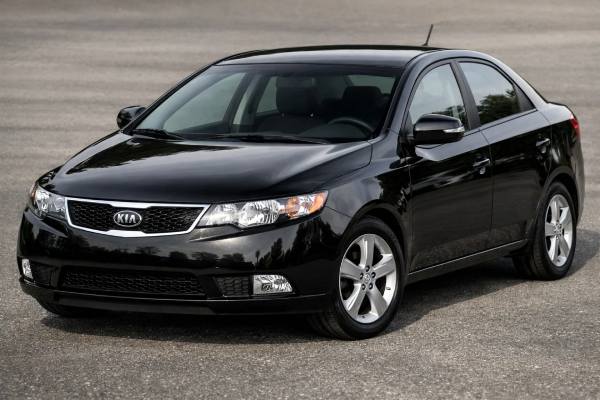
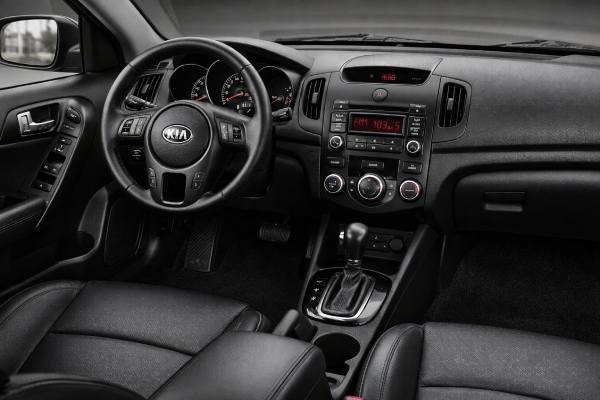
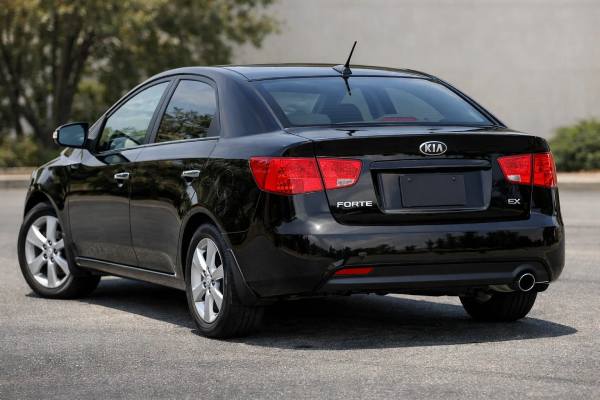
The 2010–2011 Kia Forte (TD) with the naturally aspirated Theta II 2.0 L (156 hp) is a simple, durable compact that rewards owners who keep up with fluids and small wear items. Engineering-wise, its strengths are straightforward: a conventional multi-port fuel-injected (MPI) four-cylinder, a timing chain (not a belt), and front-wheel-drive packaging that keeps service access reasonable for most jobs. Where buyers should pay attention is in the “details that change the experience”: early 2010 transmission variants versus the later 6-speed setups, and the safety and service-campaign history around airbags and ABS/ESC components. If you want an affordable daily driver with predictable running costs, this Forte can be a solid pick—provided you verify recall completion, check for oil leaks or neglected maintenance, and choose the trim and transmission that fit how you actually drive.
Quick Specs and Notes
- A conventional 2.0 L MPI four-cylinder keeps repairs simpler than direct-injected or turbo alternatives.
- 2011’s 6-speed automatic typically drops highway rpm and can improve relaxed cruising compared with early 2010 automatics.
- Verify safety campaigns (airbag logic updates on early builds) and confirm all recalls are completed before purchase.
- Pay attention to ABS/ESC hydraulic unit fire-risk recall completion; don’t ignore ABS or stability-control warning lights.
- Change engine oil every 10,000–12,000 km (6,000–7,500 mi) or 12 months; shorten to ~6,000 km (3,750 mi) for short-trip/severe use.
Navigate this guide
- Kia Forte TD 2.0 ownership focus
- Kia Forte TD key specifications
- Kia Forte TD trims and safety
- Reliability issues and service actions
- Maintenance schedule and buyer checks
- Driving feel and real economy
- Forte TD versus key rivals
Kia Forte TD 2.0 ownership focus
This specific Forte recipe—TD platform, 2.0 L Theta II, 156 hp—sits in a sweet spot for people who want a compact car that behaves like a “normal car” should. You get linear power, familiar service parts, and a chassis tuned more for everyday stability than sharp-edge sportiness. For many owners, the Forte’s biggest advantage isn’t one headline feature; it’s the absence of complications. A naturally aspirated MPI engine avoids direct-injection carbon buildup patterns and turbo heat management, and the engine bay layout is generally friendly to routine work like plugs, coils, belts, and coolant service.
The 2010–2011 range matters because this is where you’ll see meaningful running-gear differences without changing the basic car. In 2010, some variants were paired with older automatic gearboxes (and a higher-efficiency 5-speed automatic option), while 2011 leans into 6-speed transmissions that better match highway use and reduce the “busy” feeling at cruising speeds. If you drive a lot of motorway, that gearing difference can be felt every day: lower rpm, fewer downshifts on mild grades, and typically a calmer noise profile.
On safety, this generation earned strong marks from major testing bodies for the era, but you should treat “2010” as two sub-generations: early production and later production after updates. The Institute’s documentation notes changes tied to airbag deployment strategy and, separately, structure/side-impact improvements on later builds and 2011 models. In practical terms, your job as a buyer is to confirm the car you’re looking at received any applicable service campaign work and has a clean record of completed recalls. That due diligence is worth more than debating small spec-sheet differences.
Finally, the Forte’s value story is strongest when you buy based on condition, not just price. A well-kept TD with fresh fluids, quiet suspension, and verified recall completion is usually a better long-term bet than a “cheap” one with warning lights, mismatched tires, or deferred maintenance. This model rewards boring ownership: consistent oil changes, cooling system health, and timely brake and transmission fluid service.
Kia Forte TD key specifications
Below are the core specifications most owners and buyers actually use for decision-making. Values can vary by market, body style (sedan vs. Koup), and exact build; use these as a practical baseline and verify your VIN-specific details in official documentation.
Powertrain and efficiency
| Item | Specification |
|---|---|
| Code | Theta II (commonly referenced as G4KD in Kia/Hyundai applications) |
| Engine layout and cylinders | I-4, DOHC, 16-valve (4 valves/cyl) |
| Bore × stroke | 86.0 × 86.0 mm (3.39 × 3.39 in) |
| Displacement | 2.0 L (1,998 cc) |
| Induction | Naturally aspirated |
| Fuel system | MPI / MPFI (port injection) |
| Compression ratio | ~10.5:1 (market-dependent) |
| Max power | 156 hp (116 kW) @ ~6,200 rpm* |
| Max torque | ~194 Nm (143 lb-ft) @ ~4,300 rpm* |
| Timing drive | Chain |
| Rated efficiency (EPA examples) | 2010 2.0 auto (5-spd): 7.84 L/100 km (30 mpg US / 36.0 mpg UK) combined; 2011 2.0 auto (6-spd): 8.11 L/100 km (29 mpg US / 34.8 mpg UK) combined |
| Real-world highway @ 120 km/h (75 mph) | Typically ~7.2–7.8 L/100 km (30–33 mpg US), depending on tires, wind, and gearbox |
*Peak outputs vary slightly by calibration and market.
Transmission and driveline
| Item | Specification |
|---|---|
| Transmission (common North American mix) | 2010: 5-speed manual; 4-speed automatic; optional 5-speed automatic on some 2.0 variants. 2011: 6-speed manual or 6-speed automatic (most common) |
| Drive type | FWD |
| Differential | Open |
Chassis and dimensions
| Item | Specification |
|---|---|
| Suspension (front/rear) | MacPherson strut / torsion beam (typical TD layout) |
| Steering | Electric power steering (EPS) |
| Brakes | 4-wheel discs on many trims; sizes commonly ~280 mm (11.0 in) front and ~262 mm (10.3 in) rear |
| Wheels/Tyres (most common) | 205/55 R16 (varies by trim; 15–17 in wheels available) |
| Ground clearance | ~152 mm (6.0 in) |
| Length / width / height | ~4530 / 1775 / 1460 mm (178.3 / 69.9 / 57.5 in) |
| Wheelbase | ~2650 mm (104.3 in) |
| Turning circle (kerb-to-kerb) | ~10.6 m (34.8 ft) |
| Kerb (curb) weight | ~1,270–1,340 kg (2,800–2,950 lb), equipment-dependent |
| GVWR | Market-dependent; typically around the high-1,700 kg range (verify by door-jamb label) |
| Fuel tank | ~52 L (13.7 US gal / 11.4 UK gal) |
| Cargo volume | ~406 L (14.3 ft³) trunk (sedan; SAE method varies by market) |
Performance and capability
| Item | Specification |
|---|---|
| Acceleration 0–100 km/h (0–62 mph) | ~9.2–10.2 s (transmission and conditions vary) |
| Top speed | ~190–205 km/h (118–127 mph), trim and gearing dependent |
| Braking 100–0 km/h | ~39–41 m (tire-dependent; typical for class/era) |
| Towing capacity | Often not officially rated for North American sedans; treat as “not rated” unless your market documentation specifies |
| Payload | Typically ~400–500 kg (880–1,100 lb), depending on trim and GVWR |
Fluids and service capacities
| Item | Specification |
|---|---|
| Engine oil | API SM/SN class; SAE 5W-20 commonly specified (climate-dependent). Capacity ~4.3 L (4.5 US qt) with filter |
| Coolant | Ethylene glycol-based, typically 50/50 mix. Capacity ~6.0–6.5 L (6.3–6.9 US qt) |
| Transmission/ATF | 2010 automatics often use Hyundai/Kia SP-III; later 6-speed automatics commonly SP-IV (verify by VIN). Capacity varies by gearbox |
| Manual trans fluid | Typically GL-4 75W-85 class; capacity varies (~1.8–2.1 L common range) |
| A/C refrigerant | R-134a; charge amount varies by body and market (commonly around ~500 g / ~18 oz) |
| Key torque specs (critical fasteners) | Wheel lug nuts typically ~88–108 Nm (65–80 lb-ft); other values vary—confirm in service documentation |
Safety and driver assistance
| Item | Specification |
|---|---|
| Crash ratings | IIHS: generally strong “Good” results for key tests on later builds; verify model-year page details |
| Euro NCAP | Not applicable for many North American TD variants (test coverage varies by region) |
| Headlight rating (IIHS) | Often not rated for this era/trim mix |
| ADAS suite | No modern ADAS (AEB/ACC/LKA) on 2010–2011 Forte; expect ABS, ESC (where fitted), traction control, and conventional airbags |
Kia Forte TD trims and safety
For 2010–2011, the easiest way to think about Forte trims is “comfort and equipment” rather than “mechanical transformation,” especially when you’re targeting the 2.0 L, 156 hp configuration. Most of the meaningful ownership differences come from wheels/tires, interior content, and whether stability-control and side airbags were standard or packaged in your market.
Trims and options that matter in real life
Common trim naming varies by region, but many markets use an entry trim (often LX) and a better-equipped mid-trim (often EX) for the 2.0 L engine. Typical differentiators:
- Wheels and tires: Smaller wheels (15–16 in) generally ride softer and cost less for tires. Larger wheels sharpen response but can add road noise and increase rim damage risk on rough roads.
- Comfort equipment: Automatic climate control, heated seats, sunroof, upgraded audio, and steering-wheel controls are quality-of-life features that also add electrical complexity as the car ages.
- Brakes and suspension tuning: Most 2.0 trims share the same basic hardware; sportier variants in the lineup (often SX with a larger engine) may use different wheel/tire packages and sometimes different brake sizing.
If you’re shopping used, quick identifiers help: alloy wheels and fog lights usually signal a higher trim; cloth seats and steel wheels often indicate a base trim. Because parts and service history matter more than badges at this age, prioritize a car with consistent maintenance and fewer unresolved warning lights over one with every option.
Safety ratings and what changed
Independent testing shows this Forte generation performed well overall for its time, but with important nuance: early testing identified areas that led to updates. The Institute’s documentation describes changes tied to airbag deployment logic for frontal crashes and notes side-structure and side-airbag-related improvements associated with later builds and the 2011 model-year configuration. In practical buyer terms:
- A 2010 build is not “one thing.” Early production and later production can differ in calibration and structural details.
- Service campaigns matter. When a manufacturer responds to a test outcome with a reflash or campaign, you want proof it was done.
Safety systems and “ADAS” expectations
For 2010–2011, think in terms of foundational safety rather than advanced driver assistance:
- Airbags: Expect front airbags and, on many trims, side torso and side curtain airbags. Confirm presence and non-deployed status.
- ABS and stability control: ABS is common; stability control (ESC) may be standard or optional depending on market/trim. Make sure warning lights illuminate at key-on and then go out—bulb removal or taped-over lights are real risks on cheap used cars.
- Child-seat provisions: Look for LATCH/ISOFIX anchors and verify the rear seat hardware is intact and not bent from prior misuse.
After any steering/suspension work, a proper alignment matters not only for tire wear but also for predictable emergency handling. This is a car where “basic safety done right” (good tires, healthy brakes, correct alignment) can matter more than any single feature line on a brochure.
Reliability issues and service actions
The 2.0 L MPI Forte is generally a “steady” used-car proposition when maintained, but at 15+ years old you should assume rubber, fluids, and electrical connectors are living on borrowed time. The best reliability strategy is to recognize which problems are common and cheap, which are uncommon but expensive, and which are safety-related and non-negotiable.
Common, occasional, and rare issues
| System | Prevalence | Cost tier | Typical signs | What usually fixes it |
|---|---|---|---|---|
| Ignition coils and plugs | Common | Low–Medium | Misfire, rough idle, flashing MIL | Plugs at interval; replace weak coils; inspect plug wells for oil |
| Valve cover gasket seepage | Common | Low | Oil smell, seep around cover edge | Gasket replacement; clean PCV system |
| Crank/cam sensors (age-related) | Occasional | Medium | Stalling, long crank, intermittent no-start | Sensor replacement; inspect wiring and connector locks |
| Cooling system wear (thermostat, hoses, radiator cap) | Occasional | Low–Medium | Overheat in traffic, slow warm-up, coolant smell | Pressure test; replace weak components; refresh coolant |
| Suspension wear (bushings, links) | Common | Medium | Clunks over bumps, vague steering | Replace links/bushings; alignment afterward |
| Wheel bearings | Occasional | Medium | Humming that changes with speed/load | Bearing/hub replacement |
| Charging/12 V battery issues | Common | Low | Slow cranking, electrical glitches | Battery test; clean grounds; alternator check if needed |
Mileage bands are less important than usage patterns. Short trips, long idle time, and neglected fluid changes cause more problems than “high highway miles” on this powertrain.
Safety-critical recall and why it matters
One of the most important service actions to verify is the ABS/ESC hydraulic electronic control unit (HECU) recall affecting certain Forte/Forte Koup vehicles. The recall documentation describes an internal electrical short that can create an engine-compartment fire risk, including while parked. It also lists warning indicators such as ABS light, burning smell, or smoke, and outlines the remedy approach (fuse changes and owner guidance on parking precautions). Treat this as a hard stop in your buying process: you want documented completion, not a promise.
Practical buyer advice:
- If the ABS or stability-control light is on, do not treat it as a minor annoyance. Diagnose it before purchase.
- Ask for paperwork showing recall completion; if absent, run the VIN through official recall tools and confirm with a dealer.
Software and calibrations
On this era of Forte, “software updates” mainly mean ECU and airbag module campaigns rather than frequent over-the-air improvements. Still, they matter. The Institute’s notes describe a change in airbag deployment strategy for certain frontal crashes starting with later 2010 production and a related service effort for earlier vehicles. If you’re evaluating a 2010 car, it’s reasonable to ask specifically whether any airbag control module campaign work was performed, and to verify that the SRS system is free of codes.
The good news: most non-recall problems on this Forte are conventional and diagnosable. The bad news: neglect compounds. A car that has been driven for months with a misfire, a coolant leak, or warning lights can quickly turn “affordable” into “expensive.”
Maintenance schedule and buyer checks
A simple maintenance plan is where the Forte TD 2.0 pays you back. The key is consistency: fluids on time, filters before they choke airflow, and small leaks fixed before they become big ones. Below is a practical schedule that matches how these cars age in the real world.
Practical maintenance schedule
| Item | Interval (distance/time) | Notes |
|---|---|---|
| Engine oil and filter | 10,000–12,000 km (6,000–7,500 mi) or 12 months | Use the correct viscosity for your climate; shorten to ~6,000 km (3,750 mi) for short trips, heavy city use, or high heat |
| Engine air filter | 20,000–30,000 km or 12–24 months | Inspect sooner in dusty areas |
| Cabin air filter | 15,000–20,000 km or 12 months | Keeps HVAC efficient and reduces blower strain |
| Spark plugs | 50,000–100,000 km depending on plug type | Many cars benefit from earlier replacement if idle quality drops |
| Coolant | ~5 years or 100,000–160,000 km | Use correct coolant chemistry; fully bleed air after service |
| Brake fluid | Every 2 years | Moisture lowers boiling point; improves pedal consistency |
| Brake pads and rotors | Inspect every 10,000–15,000 km | Uneven wear often signals sticky calipers or slider pins |
| Transmission fluid (automatic) | 60,000–90,000 km or 4–6 years | Use the exact ATF spec for your gearbox; earlier changes help if driven in heat or traffic |
| Manual transmission fluid | 80,000–120,000 km | Helps shift quality as synchros age |
| Serpentine/aux belt and hoses | Inspect annually; replace as cracked | Cheap prevention against roadside failures |
| 12 V battery test | Annually after year 4–5 | Replace proactively if cold cranking drops or voltage sags |
Fluid specs, capacities, and torque values you should confirm
Because Kia used different transmissions across 2010–2011 and across markets, your buyer diligence should include confirming:
- Exact ATF spec (SP-III vs. SP-IV) and the correct service method (drain/fill vs. full exchange).
- Oil specification and viscosity appropriate for your climate and engine condition.
- Key torque values for safety-critical fasteners (wheel lugs, brake caliper brackets, suspension bolts) in the official service procedure.
If you do your own work, invest in a decent torque wrench and treat wheel lug torque as non-negotiable. Over-torqued lugs can warp rotors and strip studs; under-torqued lugs can be far worse.
Buyer’s inspection checklist
Use this as a fast, high-yield inspection plan:
- Cold start: Listen for extended cranking, unstable idle, ticking beyond the first minute, or visible smoke.
- Dash check: Confirm ABS, ESC, and airbag lights illuminate at key-on and turn off after start.
- Road test: Check for transmission flare or harsh shifts, steering vibration, and braking straightness.
- Under-hood: Look for oil around the valve cover, coolant residue, and brittle hoses.
- Underbody: Check for wet shocks, torn bushings, and uneven tire wear patterns.
- Paperwork: Verify recall completion, especially safety-related campaigns. Prioritize cars with documented fluid services.
Long-term durability outlook: if you buy a clean, well-maintained example and keep the maintenance routine boring, the TD 2.0 is capable of high mileage with predictable costs. If you buy a neglected one, you can easily stack multiple “medium” repairs into a bill that exceeds the car’s value.
Driving feel and real economy
This Forte’s driving personality is more “stable commuter” than “hot hatch,” and that’s largely a compliment. The chassis is confidence-inspiring at normal speeds, the steering is light enough for city use, and the car feels planted on the motorway when the suspension is healthy and the tires match as a set.
Ride, handling, and NVH
- Ride: On 15–16 inch wheels, the Forte generally rides with a firm-but-not-harsh feel. When bushings and links are worn, you’ll hear clunks over sharp bumps and the car can feel busier.
- Handling balance: Predictable understeer is the default. Good tires and correct alignment do more for real-world handling than any minor trim difference.
- Noise: Road noise is often the limiting comfort factor as these cars age, especially if fitted with cheap tires or if door seals are tired. A quieter touring tire can noticeably improve daily comfort.
Powertrain character and transmission behavior
The 2.0 L MPI engine delivers its power honestly: modest low-end torque, stronger pull in the midrange, and willingness to rev without feeling fragile. It’s not quick by modern standards, but it’s responsive enough for merging and urban gaps.
Transmission choice shapes the experience:
- Manual: Generally the most direct-feeling setup, and often the easiest to keep healthy with proper fluid and clutch habits.
- Automatic: Earlier automatics can feel more “geary” and may downshift more readily on grades. Later 6-speed automatics typically keep the engine calmer at cruise and improve relaxed drivability.
Real-world efficiency (what owners can expect)
EPA ratings show how gearbox and year change the numbers. Examples for the 2.0 L powertrain include:
- 2010 2.0 automatic (5-speed): 30 mpg US combined (7.84 L/100 km).
- 2011 2.0 manual (6-speed): 28 mpg US combined (8.40 L/100 km).
- 2011 2.0 automatic (6-speed): 29 mpg US combined (8.11 L/100 km).
In real use, motorway speeds around 120 km/h (75 mph), winter tires, short trips, and heavy HVAC use will all raise consumption. A realistic planning figure for steady 120 km/h cruising is often in the low-to-mid 7 L/100 km range when the car is in good tune, climbing toward ~8 L/100 km with wind, hills, or aggressive driving.
Key performance metrics that affect the verdict
Expect 0–100 km/h times roughly in the 9–10 second range depending on transmission and traction. Braking distances and emergency stability are heavily tire-dependent, so if you’re evaluating a used example, prioritize:
- Matching tires with good tread depth
- Fresh brake fluid and smooth braking feel
- No ABS/ESC warning lights
For a daily driver, the Forte’s real performance advantage is predictability: it behaves consistently when maintained, and it communicates enough to keep drivers out of trouble.
Forte TD versus key rivals
To compare the 2010–2011 Forte TD 2.0 fairly, compare it to the mainstream compact sedans of the same era: Toyota Corolla, Honda Civic, Mazda3, Volkswagen Jetta, and its corporate cousin, the Hyundai Elantra. The Forte’s value proposition is strong, but it wins in specific ways—not in every category.
Where the Forte tends to win
- Value per feature: On the used market, Fortes often cost less than an equivalent-condition Corolla or Civic while offering similar comfort equipment.
- Straightforward engineering: A naturally aspirated MPI engine and conventional driveline make it easier to own outside of dealer networks.
- Safety performance for the era (with nuance): Strong independent test outcomes on later builds support the Forte’s credibility as a family compact—assuming campaigns and recalls are handled.
Where rivals can be stronger
- Resale value: Corolla and Civic typically hold value better, which can offset higher purchase price if you sell sooner.
- Cabin refinement: Some rivals (and some trims) do a better job with road noise and long-distance comfort, especially as cars age.
- Aftermarket and specialist familiarity: Civics and Corollas often have a deeper bench of independent specialists and parts familiarity in many regions.
How to choose based on your priorities
Choose the Forte TD 2.0 if you want:
- A lower buy-in price with solid day-to-day practicality
- A drivetrain that responds well to routine maintenance
- A compact that feels stable and grown-up on the highway (especially with 6-speed gearing)
Consider a Corolla or Civic if you want:
- Maximum resale and an ultra-established reliability reputation
- The broadest support network for service and parts in your area
Consider a Mazda3 if you prioritize:
- Sharper steering feel and a more “driver-focused” chassis (at the possible cost of a firmer ride)
No matter what badge you choose, the deciding factor at this age is condition. A Forte with verified recalls, good tires, clean fluids, and no warning lights is a better “rival” to any competitor than a neglected example of a traditionally “better” model.
References
- Gas Mileage of 2010 Kia Forte 2010 (Fuel economy database) ([fueleconomy.gov][1])
- Gas Mileage of 2011 Kia Forte 2011 (Fuel economy database) ([fueleconomy.gov][2])
- 2010 Kia Forte 2010 (Safety Rating) ([iihs.org][3])
- 2011 Kia Forte 2011 (Safety Rating) ([iihs.org][4])
- Part 573 Safety Recall Report 23V-652 2023 (Recall Database)
Disclaimer
This article is for informational purposes only and is not a substitute for professional inspection, diagnosis, or repair. Specifications, torque values, service intervals, and procedures can vary by VIN, market, build date, and equipment. Always verify details using your official owner’s manual and service documentation, and confirm recall completion through official channels.
If this guide helped you, please consider sharing it on Facebook, X (Twitter), or your favorite forum to support our work.