
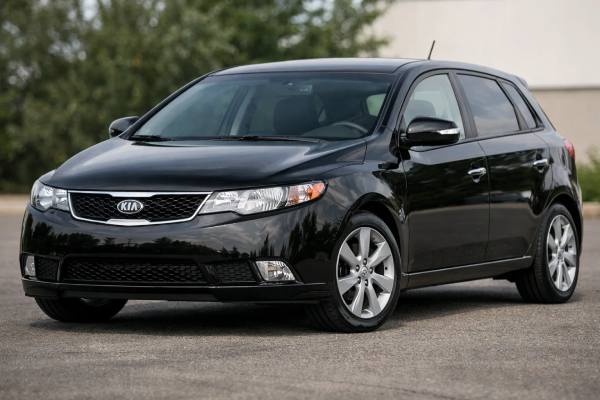
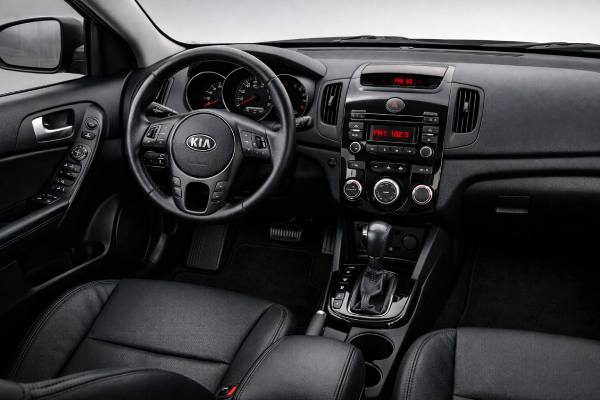
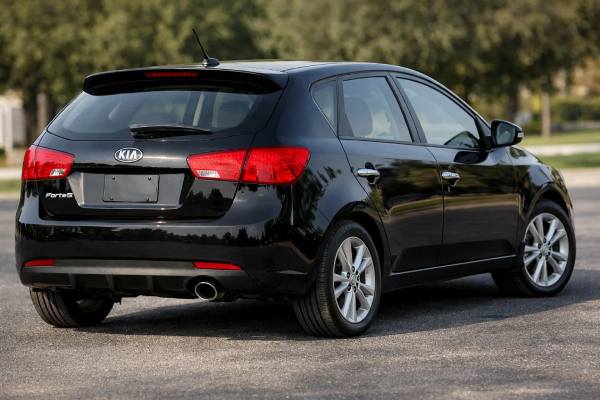
The 2011 Kia Forte5 (TD) is the hatchback spin on the Forte formula: a compact chassis with a practical tailgate, paired here with the 2.0-liter Theta II (156 hp) that favors simple, everyday torque over headline numbers. Done right, this powertrain is easy to live with—smooth at cruising speeds, responsive enough around town, and generally affordable to maintain because it relies on common service parts and straightforward packaging.
Ownership success with this model is less about chasing upgrades and more about consistency: correct oil grade, clean air filtration, and timely fluid services keep the engine and driveline happy. The Forte5’s real advantage is that it delivers “small-car” running costs while behaving like a bigger car in stability and cabin usability. The catch is age: by now, condition and service history matter more than mileage alone, so a careful pre-purchase check is worth the effort.
Key Takeaways
- Practical hatchback layout with strong cabin and cargo flexibility for a compact footprint.
- Theta II 2.0 offers predictable daily performance and typically reasonable fuel use when maintained.
- Verify recall completion and watch for brake- and ABS-related warning lights or burning smells.
- Change engine oil every 8,000–10,000 km (5,000–6,000 mi) or 6 months, whichever comes first.
- Prioritize cars with documented coolant and transmission fluid services over “low-mileage” promises.
Section overview
- Kia Forte5 TD hatchback focus
- Kia Forte5 TD technical tables
- Kia Forte5 TD trims and safety
- Reliability watchlist and campaigns
- Upkeep schedule and buyer screening
- Handling traits and daily economy
- Competitor snapshot for compact hatches
Kia Forte5 TD hatchback focus
Think of the 2011 Forte5 as a “normal car” hatchback—low step-in height, sensible controls, and a body that’s easier to load than the sedan without turning into a tall crossover. In TD form, the Forte5 shares the same basic structure and front-end layout as the Forte sedan, then adds a shorter rear overhang and a liftgate. That matters in day-to-day life: bulky groceries, a folded stroller, or a couple of weekend bags fit without playing trunk Tetris, and the rear opening is usually more forgiving than a sedan’s narrow cut-out.
The Theta II 2.0-liter in this configuration is tuned for mainstream driving. It doesn’t need to be revved constantly, and it’s generally calmer than sportier trims that trade comfort for pace. In traffic, the engine’s predictability is a bigger win than raw horsepower: smooth pull-away, consistent midrange, and less drama when you’re merging or climbing a grade with passengers onboard. On the highway, the Forte5’s compact wheelbase can make it feel “alert,” but it also tracks straight when suspension and alignment are in good shape.
Where this model shines is ownership efficiency. Parts are widely available, and most service work is routine for any shop familiar with compact Kia/Hyundai platforms. The key is avoiding the “deferred maintenance trap.” Many Forte5 examples are now old enough that rubber and fluids are the true clock: engine mounts, coolant hoses, suspension bushings, and brake hydraulics can age even when the odometer looks friendly. A clean service record is worth more than a low number on the dash.
Advantages specific to the Forte5 body are practical rather than flashy:
- Cargo flexibility: the hatch makes odd-shaped loads easier, and rear seats typically fold to expand usable space.
- Urban usability: compact footprint, good outward visibility for the class, and manageable parking.
- Cost balance: fuel, tires, and brake consumables tend to be modest versus heavier compact crossovers.
If you’re shopping today, you’ll get the best experience by choosing the cleanest, best-documented car you can find, then “resetting the baseline” with fluids and wear items early in your ownership. That approach turns the Forte5 from a cheap used car into a predictable daily tool.
Kia Forte5 TD technical tables
Below is a practical spec set for the 2011 Forte5 TD with the 2.0L Theta II (156 hp). Specs can vary by market, trim, and transmission, so treat numbers as configuration-dependent and verify against the vehicle’s VIN documentation where possible.
Powertrain and efficiency
| Item | Specification |
|---|---|
| Code | Theta II 2.0 (market naming varies) |
| Engine layout and cylinders | Inline-4, DOHC, 16 valves (4 valves/cyl) |
| Displacement | 2.0 L (≈ 1,998 cc) |
| Induction | Naturally aspirated |
| Fuel system | Multi-point fuel injection (MPI) |
| Max power | 156 hp (115 kW) @ ~6,200 rpm |
| Max torque | ~195 Nm (144 lb-ft) @ ~4,300 rpm |
| Timing drive | Chain |
| Rated efficiency (EPA, comparable 2.0L Forte listings) | 8.1 L/100 km (29 mpg US / 35 mpg UK) combined (varies by transmission) |
| Real-world highway @ 120 km/h (75 mph) | Typically ~7.0–7.8 L/100 km (30–34 mpg US), depending on wind, tires, and load |
Transmission and driveline
| Item | Specification |
|---|---|
| Transmission | Commonly 5- or 6-speed manual, or automatic (market- and trim-dependent) |
| Drive type | FWD |
| Differential | Open |
Chassis and dimensions
| Item | Specification |
|---|---|
| Suspension (front/rear) | MacPherson strut / torsion-beam rear (typical for this platform) |
| Steering | Power-assisted rack-and-pinion |
| Brakes | Front discs; rear discs or drums depending on trim/market |
| Wheels and tyres (popular sizes) | 205/55 R16 (EX) and 215/45 R17 (SX wheel package often listed for the model line) |
| Wheelbase | 2,649 mm (104.3 in) |
| Width | 1,775 mm (69.9 in) |
| Height | 1,461 mm (57.5 in) |
| Length | Market-dependent; typically around 4.3 m (≈ 169–172 in) for the Forte5 body |
| Turning circle (kerb-to-kerb) | Typically ~10.6–11.0 m (34.8–36.1 ft) |
| Curb weight | Commonly ~1,250–1,330 kg (2,755–2,932 lb), depending on equipment |
| Fuel tank | Typically ~50 L (13.2 US gal / 11.0 UK gal) |
| Cargo volume | ~549 L (19.4 ft³) seats up (method varies) |
Performance and capability
| Item | Typical figure |
|---|---|
| 0–100 km/h (0–62 mph) | ~9.5–10.8 s (transmission and tires matter) |
| Top speed | ~185–195 km/h (115–121 mph) |
| Braking distance 100–0 km/h | Often ~38–42 m (125–138 ft), tire- and brake-condition dependent |
| Payload | Varies by trim and rating label; check door-jamb placard |
Fluids and service capacities (verify by VIN)
| Item | Typical guidance |
|---|---|
| Engine oil | API SN/SP class oil; common viscosities 5W-20 or 5W-30 depending on climate |
| Oil capacity | Typically ~4.0 L (4.2 US qt) with filter |
| Coolant | Ethylene glycol-based long-life coolant; usually 50/50 mix with distilled water |
| Transmission fluid | Automatic: Kia/Hyundai-spec ATF; Manual: gear oil per label/manual |
| A/C refrigerant | R-134a (common for this era); charge varies by label |
| Key torque specs | Lug nuts commonly ~88–108 Nm (65–80 lb-ft); confirm for wheel type |
Safety and driver assistance
| Item | Notes for this generation |
|---|---|
| Crash ratings | Many published ratings are for the Forte sedan; Forte5 shares core platform but body differs |
| ADAS | Typically none of the modern suites (no AEB/ACC/LKA) in most 2011 trims |
| Stability systems | ABS, ESC, traction control commonly available depending on trim/market |
| Airbags | Usually front, side, and curtain airbags (count and coverage vary) |
Kia Forte5 TD trims and safety
For the 2011 Forte5, trims often center on comfort and appearance packages rather than major mechanical changes—except that some markets paired sportier trims with larger wheels, upgraded brakes, or even a different engine. Since this article targets the 2.0L 156 hp configuration, treat the 2.4L “sport” versions as adjacent but not identical when you compare listings.
Trims and options: what changes in real life
Common trim themes you’ll see:
- Comfort and convenience upgrades: automatic climate control (where offered), steering-wheel audio controls, Bluetooth connectivity, and upgraded audio head units.
- Wheel and tire packages: moving from 16-inch to 17-inch wheels can sharpen turn-in but also increases tire costs and can make the ride busier over sharp edges.
- Interior wear points: higher trims may add leather-touch surfaces, but aging material quality and sun exposure matter more than trim name.
Quick identifiers that help when you’re standing next to the car:
- Wheel size and brake setup: a 17-inch wheel package often signals a higher trim; confirm brake type at the rear (disc vs drum) by looking through the wheel or behind it.
- Cabin controls: steering-wheel buttons and factory Bluetooth are easy tells; so are heated-seat switches in cold-market cars.
- VIN build data: a seller’s trim description is not proof—use VIN decoding and the vehicle’s option label information when available.
Safety ratings: what’s actually published
For this generation, you’ll often find the most complete crash-test documentation for the Forte sedan, not always the hatch. That doesn’t mean the Forte5 is unsafe, but it does mean you should be careful about assuming a rating transfers perfectly. Treat published results as a platform reference, then focus on the equipment on the exact car you’re buying: airbags present, ABS and stability control functioning, and no structural crash repairs.
Safety systems and what to check
On most 2011 Forte5 examples, safety is about fundamentals:
- ABS and ESC: Confirm the ABS and stability control lights illuminate briefly at start-up and then go out. A warning light that stays on is a negotiating point and a safety concern.
- Airbag system health: The airbag warning lamp should never remain on. If it does, don’t assume it’s “just a sensor”—diagnose it properly.
- Child-seat provisions: Look for ISOFIX/LATCH points and check that rear seatbacks latch firmly after folding.
Because there is typically no modern ADAS, the driver experience depends heavily on tire quality and brake condition. A Forte5 on tired all-seasons and old brake fluid can feel far less secure than the same car on fresh tires and properly serviced brakes. If you plan highway commuting, prioritize the best tire you can justify—grip and wet braking are among the biggest safety upgrades you can buy for a non-ADAS compact.
Reliability watchlist and campaigns
At this age, reliability is a blend of design traits and how the car was treated. The Forte5’s 2.0L Theta II and FWD driveline can be durable, but certain patterns show up repeatedly. A useful way to think about it is prevalence (how often you’ll see it) and severity (how expensive or risky it is).
Common, usually low-to-medium severity
- Ignition coil or plug wear (common / low–medium):
Symptoms: misfire under load, rough idle, flashing check-engine light.
Likely cause: worn plugs, aging coils, or oil in plug wells from a valve cover gasket seep.
Remedy: replace plugs at the correct interval, replace failed coils, address oil leaks promptly. - Valve cover gasket seepage (common / low):
Symptoms: oil smell after a drive, light oil wetness near the top of the engine.
Remedy: gasket replacement; clean and recheck. - Front suspension wear (common / medium):
Symptoms: clunks over bumps, uneven tire wear, vague steering.
Likely cause: worn stabilizer links, control arm bushings, or strut mounts.
Remedy: replace worn components as a set where sensible, then align.
Occasional, can become high severity if ignored
- Cooling system aging (occasional / medium):
Symptoms: slow coolant loss, overheating in traffic, sweet smell.
Likely cause: aging hoses, radiator end-tank seepage, water pump wear.
Remedy: pressure test, replace weak parts proactively, refresh coolant on schedule. - Oil consumption or top-end noise (occasional / medium–high):
Symptoms: rising oil use between changes, ticking that changes with temperature.
Likely cause: neglected oil changes, PCV issues, or general wear.
Remedy: verify oil level discipline, confirm PCV function, and investigate noise early.
Safety campaigns and recall-style concerns (high importance)
Some Kia/Hyundai vehicles from this era have had campaigns related to:
- ABS module / hydraulic electronic control unit concerns (high): risk can include electrical short and, in worst cases, under-hood fire risk.
- Airbag control system-related campaigns (high): faults that can affect airbag and pretensioner behavior.
- Transmission fluid leak campaigns on certain configurations (medium–high): leaks that can create reliability and safety risks.
The practical owner takeaway is simple: don’t rely on “I think it was done.” Ask for documentation and verify by VIN through official channels. If a seller can’t provide proof and the car falls into an affected range, price in a dealer visit.
Pre-purchase checks worth paying for
- Cold start observation: listen for abnormal rattles, confirm stable idle within a minute.
- Brake and ABS scan: check for stored faults even if the dash is clear.
- Undercarriage inspection: look for fluid leaks, torn bushings, and uneven tire wear.
- Service history review: oil change consistency matters more than single “big services.”
A Forte5 that passes these checks and shows consistent maintenance is typically far more satisfying than a cheaper example that needs “a few small things.”
Upkeep schedule and buyer screening
If you want this Forte5 to feel tight and dependable, treat maintenance as a routine, not a reaction. The schedule below is a practical baseline for a 2011 2.0L daily driver; shorten intervals for short trips, hot climates, heavy city use, or long idling.
Practical maintenance schedule (distance/time)
- Engine oil and filter: every 8,000–10,000 km (5,000–6,000 mi) or 6 months.
If the engine sees short trips or you notice consumption, stay closer to 5,000 mi / 6 months. - Tire rotation and inspection: every 8,000–10,000 km (5,000–6,000 mi).
Include brake inspection at the same time. - Engine air filter: inspect every 15,000 km (9,000 mi); replace as needed (often 30,000 km / 18,000 mi).
- Cabin air filter: every 15,000–20,000 km (9,000–12,000 mi), especially in dusty areas.
- Brake fluid: every 2 years, regardless of mileage.
Old fluid is a hidden brake feel and ABS reliability problem. - Coolant: commonly 5 years / 100,000 km (then shorter thereafter), but verify the coolant type and prior service history.
- Spark plugs: commonly 60,000–100,000 km (40,000–60,000 mi) depending on plug type; confirm what’s fitted.
- Transmission fluid:
- Automatic: consider a drain-and-fill around 60,000–80,000 km (40,000–50,000 mi) if history is unknown, then adjust based on condition.
- Manual: refresh fluid around 80,000–120,000 km (50,000–75,000 mi) or if shifting quality declines.
- 12V battery: test annually after year 4; many last 4–6 years depending on climate.
Fluids and parts: decision-making guidance
- Use the oil viscosity appropriate for climate (commonly 5W-20 or 5W-30 for this era) and avoid extended drain intervals unless you have proof the engine is clean and healthy.
- Don’t ignore small leaks. A slow seep today can become a low-oil event later, and low oil is one of the fastest ways to shorten engine life.
Essential torque values (verify before wrenching)
- Wheel lug nuts: typically ~88–108 Nm (65–80 lb-ft)
- Spark plugs: commonly ~18–25 Nm (13–18 lb-ft) depending on plug and head design
- Engine oil drain plug: commonly ~30–40 Nm (22–30 lb-ft)
Use these as a “ballpark sanity check,” not as final authority. Over-tightening is a common DIY mistake and can turn a simple job into an expensive one.
Buyer screening checklist: what to prioritize
- Paperwork: consistent oil changes, coolant history, and any recall documentation.
- Dashboard: no ABS, ESC, or airbag lights—ever.
- Road test: straight braking with no pull, smooth shifts, and no steering shimmy at highway speed.
- Tires: uneven wear suggests alignment or suspension work is due.
- Hatch practicality: confirm the rear seats fold and latch correctly and that the hatch struts hold the door open.
A well-screened Forte5 is a better value than a “cheap” one that needs tires, brakes, suspension work, and overdue fluids all at once.
Handling traits and daily economy
The Forte5’s driving personality is defined by its compact wheelbase and hatchback packaging. In good condition, it feels light on its feet and easy to place in traffic, with steering that responds quickly to small inputs. The ride quality depends heavily on wheel and tire setup: 16-inch tires usually deliver the most forgiving ride and the least noise on rough roads, while 17-inch packages can look sharper and turn in faster but transmit more impact harshness.
Ride, handling, and NVH (noise and vibration)
- Straight-line stability: generally solid for a compact, but sensitive to alignment and tire quality. A small toe error can make the car feel “busy” on the highway.
- Cornering balance: predictable mild understeer when pushed—safe and easy to manage.
- Braking feel: can be confident when pads, rotors, and fluid are fresh; a soft pedal often improves dramatically after brake fluid service.
- Cabin noise: expect noticeable tire roar on coarse pavement, especially on wider tires or worn suspension bushings.
Powertrain character in real use
The 2.0L Theta II is well suited to commuting. Throttle response is typically clean and linear, and the engine feels most relaxed when you drive it like a daily tool rather than a hot hatch. With an automatic, kickdown is adequate but not instant; with a manual, the car feels more eager and can mask the engine’s modest peak output. Either way, the engine is happiest when it’s maintained and not forced to run low on oil.
Real-world efficiency
Official EPA-style figures for comparable 2011 2.0L Forte listings commonly sit around:
- City: ~25 mpg US (≈ 9.4 L/100 km)
- Highway: ~34–35 mpg US (≈ 6.7–6.9 L/100 km)
- Combined: ~28–29 mpg US (≈ 8.1–8.4 L/100 km)
In the real world, expect your results to swing with speed. At 120 km/h (75 mph), many owners land around 7.0–7.8 L/100 km (30–34 mpg US) when the car is in good tune and tires are properly inflated. Short trips, winter fuel blends, and heavy stop-and-go can push consumption up meaningfully.
Small changes that make a big difference
- Fresh alignment after suspension work: improves stability and saves tires.
- Quality tires: best “safety per dollar” upgrade on a non-ADAS car.
- Brake fluid service: restores pedal feel and supports ABS performance.
- Clean air filtration: protects fuel economy and throttle behavior.
Treat the Forte5 like a system—tires, alignment, and brakes matter as much as the engine when you’re judging daily satisfaction.
Competitor snapshot for compact hatches
A 2011 Forte5 buyer usually cross-shops other compact hatches from the same era. The right comparison depends on what you value most: driving feel, interior durability, fuel use, or long-term repair risk.
Where the Forte5 typically wins
- Value and equipment: You can often get features (Bluetooth, steering-wheel controls, comfort options) for less money than some rivals of the same age.
- Simple ownership logic: Straightforward layout, common parts, and a large service ecosystem can keep costs reasonable.
- Usable space: The hatch layout provides practical flexibility without the tall ride height of a crossover.
Where rivals can be stronger
- Driving refinement: A well-kept Mazda3 hatch often feels more “athletic” in steering and body control.
- Cabin materials and aging: Some competitors hold up better in seat fabric, switch feel, and long-term rattle control.
- Powertrain variety: Certain rivals offer more efficient base engines or more modern transmissions, depending on year and market.
Common rival types and how to choose between them
- Sport-leaning compact hatches (e.g., Mazda3 hatch):
Choose these if steering feel and chassis balance are top priority and you’re willing to pay a bit more for a clean example. - Durability-leaning practical hatches (e.g., Toyota Matrix-style choices):
Often a good bet for low-drama ownership, sometimes at the cost of a less engaging drive. - European-flavored compacts (e.g., Golf-type alternatives):
Can feel more solid and quiet, but parts and specialized labor may cost more depending on where you live. - Budget-friendly domestic options (e.g., Focus-era hatches):
Can be excellent values, but condition and known weak points matter a lot—don’t buy on price alone.
A simple decision rule
Pick the Forte5 if you want a compact hatch that balances cost, practicality, and straightforward daily performance—then buy the cleanest, best-maintained example you can. Choose a rival instead if your top priority is either (1) best-in-class steering feel or (2) a long track record of low-drama ownership and you’re willing to pay more upfront.
In 2026, the “best” car in this class is rarely the model name. It’s the specific vehicle with the best maintenance history, the fewest shortcuts, and the most honest seller.
References
- 2011 Kia Forte5 Overview 2010 (Press Release) ([Kia Media][1])
- Gas Mileage of 2011 Kia Forte 2011 (Fuel Economy Database) ([fueleconomy.gov][2])
- 2011 Kia Forte 2011 (Safety Rating) ([iihs.org][3])
- Recall: Millions of Kia, Hyundai Vehicles for Fire Risk | NHTSA 2023 (Recall Notice) ([NHTSA][4])
- Manuals 2026 (Owner’s Manuals) ([owners.kia.com][5])
Disclaimer
This article is for informational purposes only and is not a substitute for professional inspection, diagnosis, or repair. Specifications, torque values, service intervals, and procedures vary by VIN, market, and equipment; always verify details using official owner and service documentation for your exact vehicle.
If this guide helped, please consider sharing it on Facebook, X (Twitter), or your favorite forum to support our work.