
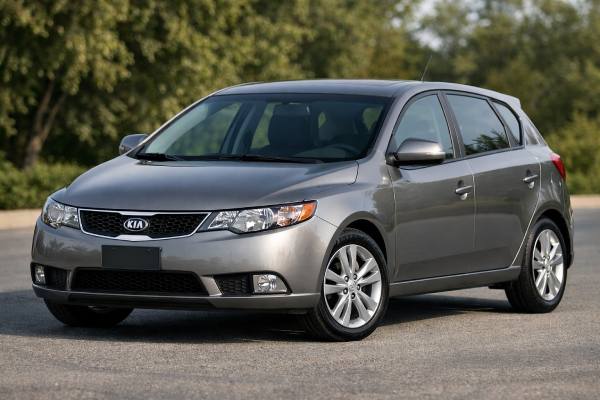
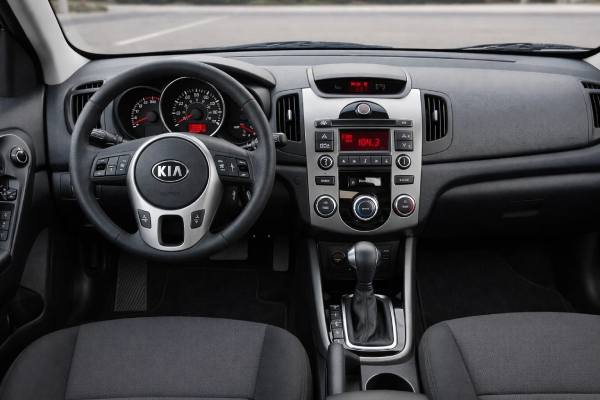
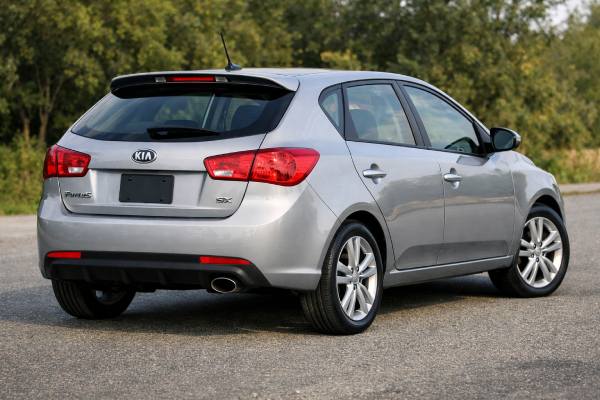
The 2011 Kia Forte5 (TD) with the 2.4-liter Theta II is a rare “hot hatchback-lite” offering from its era: simple, naturally aspirated, and genuinely useful day-to-day. In SX form, the 173 hp 2.4 brings stronger midrange pull than the base engines, while the hatchback body adds real cargo flexibility without moving into crossover territory. Underneath, you’re looking at straightforward front-wheel-drive hardware, a torsion-beam rear suspension tuned for stability, and a chassis that was designed to feel more planted than budget compacts that came before it.
Ownership is mostly about staying ahead of maintenance basics—clean oil, correct fluids, and early attention to any warning lights—because age-related wear items (rubber, sensors, and cooling components) matter as much as the engine itself. Buy a good one and it can be a practical commuter with enough power to feel effortless in modern traffic.
Owner Snapshot
- Stronger real-world passing power than most 2011 compacts, especially from 2,500–4,500 rpm.
- Hatchback utility is the “quiet advantage” for small families, city moves, and weekend gear.
- Prioritize recall completion and warning-light diagnosis before you negotiate.
- Plan for oil and filter changes every 8,000 km (5,000 mi) or 6 months for best longevity.
- Budget for suspension and brake wear refreshes as mileage climbs past ~160,000 km (100,000 mi).
Navigate this guide
- Kia Forte5 TD 2.4 ownership summary
- Kia Forte5 TD 2.4 specs and measurements
- Kia Forte5 TD trims, options, and safety tech
- Reliability issues and recalls to check
- Maintenance plan and smart buying tips
- Real-world driving and performance notes
- Rivals: how the Forte5 SX 2.4 stacks up
Kia Forte5 TD 2.4 ownership summary
If you’re shopping this one-year, 2.4-powered Forte5 configuration, the headline is balance: more power than most economy hatches of its time, paired with simple, repairable mechanicals. The 2.4 Theta II is a naturally aspirated inline-four with modern features for the era and a timing chain rather than a belt. In plain terms, it’s built to run a long time if oil quality stays high and the cooling system stays healthy.
The Forte5 body is the second half of the appeal. Compared with the sedan, the hatchback format makes the car feel “bigger than it is” when you need it—folding seats, taller cargo opening, and easier loading of bulky items. Practical cargo space behind the rear seats and a roomy cabin footprint for a compact are the ownership wins that tend to show up every week, not just on road trips.
On the road, the Forte5 with the 2.4 isn’t a track toy, but it does deliver confident everyday acceleration. The advantage shows up most in merging and two-lane passing, where the engine’s torque curve reduces the need for full-throttle drama. The trade-off is that this is still a compact with a torsion-beam rear suspension—stable and predictable, but not as fluid over broken pavement as the best multi-link competitors.
From an ownership perspective, the car’s biggest “make-or-break” factor isn’t the spec sheet—it’s condition and paperwork. At this age, you want to see consistent oil service, proof of transmission fluid care (especially if driven in heat or heavy traffic), and completed recalls. Two recall families are worth special attention: an automatic-transmission fluid cooler hose issue affecting certain 2011 Forte automatic models, and a later campaign involving the ABS/ESC hydraulic electronic control unit (HECU) fire risk on various Kia models that includes Forte/Forte Koup in the affected population.
Who is this car best for today? A driver who wants a compact hatchback with a bit of extra power, doesn’t need modern ADAS, and is comfortable staying proactive with maintenance. If you prefer “simple and solid” over “new and complicated,” the 2011 Forte5 2.4 can still make a lot of sense.
Kia Forte5 TD 2.4 specs and measurements
Below are the most relevant specs for the 2011 Forte5 (TD) with the 2.4-liter Theta II (173 hp). Some figures vary by trim, transmission, wheels, and market equipment; where that’s common, you’ll see ranges or notes.
Powertrain and efficiency
| Item | Spec |
|---|---|
| Engine code/family | Theta II 2.4 MPI (Theta II family) |
| Layout | Inline-4 (I-4), DOHC, 16 valves |
| Displacement | 2.4 L (2,359 cc) |
| Bore × stroke | 88.0 × 97.0 mm |
| Induction | Naturally aspirated |
| Fuel system | MPI (multi-point injection) |
| Compression ratio | 10.5:1 |
| Max power | 173 hp (approx. 129 kW) (SX 2.4 application) |
| Max torque | ~228 Nm (168 lb-ft) (typical 2.4 Theta II MPI output) |
| Timing drive | Chain (inspect for noise/stretch symptoms with age) |
| Rated fuel economy (EPA, 2.4) | Around 22–23 city / 31 highway / 26 combined mpg (varies by listing) |
| Real-world highway @ 120 km/h | Commonly ~7.5–8.5 L/100 km (28–31 mpg US) depending on wind, tires, and load |
Transmission and driveline
| Item | Spec |
|---|---|
| Transmission | 6-speed manual or automatic depending on build/market (verify by VIN/build sheet) |
| Drive type | FWD |
| Differential | Open |
Chassis, dimensions, and capacities
| Item | Spec |
|---|---|
| Suspension (front/rear) | MacPherson strut / torsion beam |
| Steering | Power-assisted rack-and-pinion |
| Brakes | 4-wheel discs; SX typically has larger front brakes |
| Popular tire size (SX) | 215/45 R17 (17-inch wheels) |
| Wheelbase | 2,650 mm (104.3 in) |
| Width | 1,775 mm (69.9 in) |
| Height | 1,460 mm (57.5 in) |
| Passenger volume | 97.5 ft³ (Forte5) |
| Cargo volume | 19.4 ft³ seats up (Forte5) |
| Fuel tank | ~52 L (13.7 US gal) (verify on your label/build sheet) |
Performance and capability (what to expect)
| Metric | Typical range |
|---|---|
| 0–100 km/h (0–62 mph) | ~8.0–9.0 s depending on transmission, tires, and conditions |
| Top speed | ~200 km/h (124 mph) range (gearing and conditions) |
| Braking (100–0 km/h) | Typically mid–high 30 m range with good tires and fresh pads/rotors |
| Towing | Not recommended; treat as “cargo-only” for longevity |
| Payload | Varies; check door-jamb tire/load label |
Fluids and service capacities (verify by VIN/service info)
| Item | Typical spec guidance |
|---|---|
| Engine oil | Common viscosity 5W-20 or 5W-30; capacity typically ~4.3–4.6 L with filter (confirm) |
| Coolant | Phosphate-free ethylene glycol mix; typically 50/50; capacity varies |
| ATF | Use Kia-specified ATF only; service method matters |
| A/C refrigerant | R-134a (charge amount on under-hood label) |
| Key torque specs | Lug nuts commonly ~88–108 Nm (65–80 lb-ft) range; verify for your wheel type |
Safety and driver assistance
| Item | Spec guidance |
|---|---|
| Crash ratings | Published ratings commonly focus on the Forte sedan; use as guidance and verify equipment by VIN |
| Stability control | ESC availability varies by trim/market; confirm on the car |
| ADAS | No factory AEB/ACC in this era; focus is airbags, ABS, and ESC |
A quick note on safety data: the most detailed public crash-test pages often focus on the sedan body style, but the Forte5 shares the same platform and core safety architecture. Treat published ratings as highly informative, but always verify equipment (airbags/ESC) for the exact VIN.
Kia Forte5 TD trims, options, and safety tech
For the 2011 model year, the Forte5 hatchback typically centered on EX and SX trims in many markets, with the SX being the performance-oriented choice thanks to the 2.4-liter engine. The practical takeaway: if you’re here for the 173 hp 2.4, you’re usually shopping an SX—or a car that has been badge-swapped or mis-listed. Confirm with the engine cover sticker, VIN decoder/build sheet, and the emissions label under the hood.
Trims and packages: what actually changes
On a used Forte5, trim differences matter most in these areas:
- Powertrain pairing: The 2.4 is the key differentiator; verify the transmission type (manual vs automatic) and check for smooth shifting and clean fluid history.
- Wheels and brakes: SX models commonly run 17-inch wheels and larger front brakes. Larger wheels sharpen steering response but increase tire cost and can make ride quality firmer.
- Interior and convenience: Expect differences in steering wheel adjustment, gauge cluster upgrades, and common comfort features (Bluetooth and steering wheel audio controls) depending on market package.
- Premium add-ons: Sunroof availability and audio/infotainment upgrades vary heavily; check for water leaks around drains if equipped.
Quick identifiers that help you spot an SX 2.4
Because listings can be messy, these cues help:
- 17-inch wheels and sport-themed interior accents are common tells.
- Look for 2.4L on the under-hood emissions label and confirm with the VIN/build data.
- If it has paddle shifters, confirm they’re factory and that the transmission behaves correctly under load (no flare or harsh engagement).
Safety ratings and what they mean in practice
Structured safety results for this generation often highlight improvements for 2011 production relating to side-impact protection hardware and curtain airbags. The practical meaning is simple: build year and equipment matter. A car that’s missing key safety features for its trim/market (or has warning lights) should be treated as a different vehicle from a fully functional, correctly equipped example.
Safety systems and “driver assistance” for 2011 standards
This era predates most modern ADAS. You’re mainly evaluating:
- Airbags: front airbags plus seat-mounted and curtain airbags depending on trim/market.
- ABS/EBD/ESC: These systems are the backbone of real-world crash avoidance for this generation—confirm no warning lights and verify proper operation after any brake work.
- Child-seat provisions: Check ISOFIX/LATCH anchors and make sure the rear seatbacks lock firmly after folding.
If you want modern AEB, adaptive cruise, or lane-centering, this isn’t the right vehicle generation. But if you want a straightforward safety package that can still perform well when it’s maintained properly, the Forte5 can deliver.
Reliability issues and recalls to check
At this age, reliability is less about “brand reputation” and more about two practical questions: (1) has the car been maintained consistently, and (2) has it had the required fixes and updates? For the 2011 Forte (including Forte variants), the answer often hinges on recalls and a small set of predictable wear points.
Common issues (higher frequency, usually manageable)
- Oil consumption and oil quality sensitivity (medium cost if ignored): As mileage climbs, some Theta II engines can consume more oil. The risk isn’t just topping up—it’s running low between services. Symptoms include low dipstick readings, timing-chain noise on cold start, or a harsher top end at idle. Best prevention: shorten oil intervals and use a quality filter.
- Valve cover gasket seepage (low–medium cost): Look for oil smell, light smoke near the exhaust side, or oily residue around the valve cover perimeter.
- Cooling system aging (medium cost): Radiator plastic end tanks, thermostat housings, and coolant hoses can become brittle with heat cycles. Overheating once can do long-term damage, so treat any temperature spike as urgent.
- Ignition wear (low cost): Misfires under load are often plugs/coils. If the car stumbles on acceleration, scan for codes before throwing parts.
Occasional issues (watch for symptoms)
- Transmission shift quality changes (medium–high cost): Harsh 2–3 shifts, delayed engagement, or shudder can come from fluid condition, solenoids, or mount wear. A “sealed for life” mindset is not your friend here—fluid condition matters.
- Suspension wear and tire cupping (medium cost): Torsion-beam rear setups are durable, but bushings and shocks still wear. If you hear rear knocks over sharp bumps, plan an inspection of shocks, mounts, and bushings.
- Electrical convenience items (low–medium cost): Door lock actuators, window switches, and blower resistors are common aging points across many compacts of this era.
Recalls and service actions (do not skip these)
Two recall categories deserve special attention:
- Automatic transmission fluid cooler hose campaign: Some 2011 Forte vehicles with automatic transmissions were recalled for a transmission fluid cooler hose issue that could lead to ATF leaking, warning lights, abnormal shifting, and reduced mobility. The remedy is replacement of the hose with an improved part.
- HECU/ABS module fire-risk campaign population: A later recall population includes certain Kia vehicles where the hydraulic electronic control unit (HECU) may experience an electrical short. Warning signs can include ABS/MIL lights, burning smell, and smoke. Some guidance includes parking outside until the remedy is completed.
How to verify completion
- Run the VIN through an official recall lookup and request dealer service history printouts.
- If the seller can’t prove recall completion, treat it as unfinished until a dealer confirms it in writing.
- If you see any ABS/ESC warning lights on a test drive, do not assume it’s “just a sensor.” Get a scan and a documented diagnosis.
A well-kept Forte5 can be dependable, but a neglected one can quickly turn into a “catch-up maintenance” project. Condition and documentation matter more than any single story.
Maintenance plan and smart buying tips
A good maintenance plan for the 2011 Forte5 2.4 is intentionally boring: frequent oil service, scheduled fluid replacements, and early fixes for leaks and warning lights. That’s how you protect a timing-chain engine and keep the transmission happy over the long term.
Practical maintenance schedule (distance/time)
Use this as a conservative ownership baseline:
- Engine oil and filter: every 8,000 km (5,000 mi) or 6 months, whichever comes first. If the car does short trips, consider 6,000 km (3,750 mi) intervals.
- Tire rotation and brake inspection: every 8,000–10,000 km (5,000–6,000 mi). Rotate to control cupping and keep the rear end stable in wet conditions.
- Engine air filter: inspect every 15,000 km (9,000 mi); replace around 30,000 km (18,000 mi) depending on dust.
- Cabin air filter: every 15,000–20,000 km (9,000–12,000 mi) or annually.
- Coolant: every 5 years / 100,000 km (60,000 mi) as a safe rule if history is unknown (use the correct coolant chemistry).
- Brake fluid: every 2 years, regardless of mileage. Pedal feel and ABS performance both benefit.
- Spark plugs: commonly 160,000 km (100,000 mi) interval for long-life plugs, but confirm what’s installed and service earlier if misfires appear.
- Automatic transmission fluid (if equipped): drain-and-fill every 60,000–80,000 km (40,000–50,000 mi) for longevity, sooner with heavy city use or heat.
- Manual transmission fluid (if equipped): every 80,000–120,000 km (50,000–75,000 mi) depending on shift feel and usage.
- Accessory belt and hoses: inspect annually; replace at the first signs of cracking, glazing, or squeal.
- Battery testing: yearly after the battery reaches 3–4 years old; replace proactively before winter if cranking slows.
Fluids: how to avoid expensive mistakes
- Do not “universal fluid” this car. Use Kia-specified ATF and the correct coolant type.
- If you’re unsure what’s inside, a careful drain/refill approach is safer than aggressive flushing on a high-mile car.
Buyer’s guide: what to check before purchase
Bring a flashlight and a cheap OBD-II scanner, and focus on these:
- Cold start behavior: Listen for rattles, rough idle, or exhaust smell that suggests misfires.
- Oil level and condition: Check the dipstick before the test drive and again after. If it’s low, ask why.
- Cooling system health: Look for crusted coolant residue near hose junctions and the radiator end tanks. Confirm the fans cycle normally.
- Transmission function: For automatics, confirm smooth engagement from Park to Drive, no flare on upshifts, and no harsh downshift shock.
- Brake and ABS/ESC lights: Any warning light should trigger a scan and a price adjustment—or a walk-away.
- Rear hatch seals and water ingress: Lift the cargo floor and check for dampness or musty odor.
- Recalls: Confirm completion for the automatic-transmission cooler hose campaign (if automatic) and check eligibility for the HECU-related campaign by VIN.
Long-term durability outlook
If the car has documented service history and you keep to conservative fluid intervals, the Forte5 2.4 can be a durable, cost-controlled hatchback. The biggest risk is deferred maintenance—especially low oil operation and ignored warning lights.
Real-world driving and performance notes
The Forte5 2.4’s personality is defined by usable power rather than dramatic speed. In normal traffic, it feels confident because you don’t have to plan merges as far ahead as you would in a base 2.0 compact. The engine’s torque peak is in the midrange, and that’s exactly where daily driving lives—rolling acceleration from 50–90 km/h, climbing grades without constant downshifts, and keeping pace with faster-flowing highways.
Ride, handling, and NVH (noise, vibration, harshness)
- Straight-line stability: The Forte5 tracks well on the highway for a compact of its era. The chassis feels planted, and the car doesn’t wander when aligned properly.
- Cornering balance: Expect safe understeer at the limit. The torsion-beam rear helps predictability, but you’ll feel bigger impacts over mid-corner bumps compared with multi-link rivals.
- Steering feel: Light-to-moderate weight, tuned for easy city use. Direct enough for confident lane placement, though feedback is limited compared with sportier hatches.
- Braking feel: With fresh pads and good tires, braking is consistent and easy to modulate. If the pedal feels soft, brake fluid age is a common culprit.
Powertrain character and transmission behavior
- Throttle response: Naturally aspirated response is clean and linear—no turbo lag, no sudden torque spike.
- Automatic logic: A well-maintained unit should shift smoothly and kick down predictably. Hesitation, flare, or harsh engagement is a sign to inspect fluid condition, mounts, and scan for stored codes.
- Manual driving: If you find a manual, pay attention to clutch take-up and any chatter. A smooth engagement point and clean shifts are what you want; grinding or notchiness under load can mean synchro wear or old fluid.
Real-world fuel economy
You can expect combined fuel economy in the mid-to-high 20s mpg (US) for the 2.4 with normal driving, with highway mileage improving notably when speeds and tires are reasonable:
- City-heavy driving: typically 9.0–10.5 L/100 km (22–26 mpg US), worse in winter or with short trips.
- Highway 100–120 km/h: typically 7.5–8.5 L/100 km (28–31 mpg US) if tires and alignment are in good shape.
- Mixed commuting: often lands near 8.5–9.5 L/100 km (25–28 mpg US).
What actually makes it feel faster (or slower)
- Tires: Worn or cheap tires hurt traction and braking—and make the car feel “nervous.”
- Engine mounts: Tired mounts add vibration and make shifts feel harsher than they should.
- Maintenance state: Old plugs, dirty filters, and low oil level can dull throttle response noticeably.
If you want a compact hatch that feels responsive without relying on forced induction, the Forte5 2.4 delivers a satisfying, straightforward drive—especially when it’s kept mechanically sharp.
Rivals: how the Forte5 SX 2.4 stacks up
To judge the 2011 Forte5 2.4 fairly, compare it to other early-2010s compact hatches and wagons that offered similar practicality. The Forte5’s edge is value-plus-power: you get a bigger engine than many base rivals, often for less money on the used market. The trade-offs are refinement and the lack of modern driver assistance.
Where the Forte5 2.4 wins
- Everyday passing power: Many competing compacts in 2011 leaned on smaller engines. The Forte5’s 2.4 makes the car feel less strained on hills and during merges, especially with passengers or cargo.
- Simple mechanical layout: Naturally aspirated engine, conventional transmission choices, and accessible parts make it approachable for long-term ownership.
- Hatchback usefulness without “tall car” compromises: You keep compact dimensions while gaining real cargo flexibility.
Where rivals can be better
- Ride sophistication: Multi-link rear suspensions can feel calmer over rough pavement and mid-corner bumps. The Forte5’s torsion beam is durable and stable, but it can transmit sharper impacts.
- Cabin noise and materials: Some rivals deliver better highway quiet and a more premium interior feel. If you do long motorway trips, this is worth prioritizing on your test drive.
- Safety tech and ADAS: Newer rivals can bring AEB and lane support that the 2011 Kia simply doesn’t offer.
Practical rival short list (what to cross-shop)
- Mazda3 hatch (driving feel focus): typically sharper steering and chassis tuning, often at a higher used price.
- Volkswagen Golf (refinement focus): often quieter and more “solid,” but maintenance costs can be higher depending on powertrain.
- Toyota Matrix / hatch-style alternatives (durability focus): strong reliability reputation, usually less punchy than the Forte5 2.4.
- Hyundai Elantra Touring / related-era hatches (value focus): similar parts ecosystem, but powertrain options vary.
The verdict in plain terms
Choose the Forte5 SX 2.4 if you want a compact hatch with honest power and straightforward ownership—and you’re willing to compensate for its age with proactive maintenance and careful recall verification. Choose a rival if your priorities are quieter cruising, more sophisticated ride quality, or newer safety technology.
References
- 2011 KIA FORTE AND ALL-NEW FORTE 5-DOOR 2010 (News Release)
- 2011 Kia Forte 4-door sedan 2011 (Safety Rating)
- Gas Mileage of 2011 Kia Forte 2011 (Fuel Economy Database)
- IMPORTANT SAFETY RECALL 2016 (Recall Notice)
- Part 573 Safety Recall Report 23V-652 2023 (Recall Report)
Disclaimer
This article is for informational purposes only and is not a substitute for professional diagnosis, inspection, or repair. Specifications, torque values, fluid types, capacities, service intervals, and procedures can vary by VIN, market, production date, and installed equipment. Always verify details using your vehicle’s official service information, labels, and dealer records.
If this guide helped you, please consider sharing it on Facebook or X (Twitter) to support our work.