
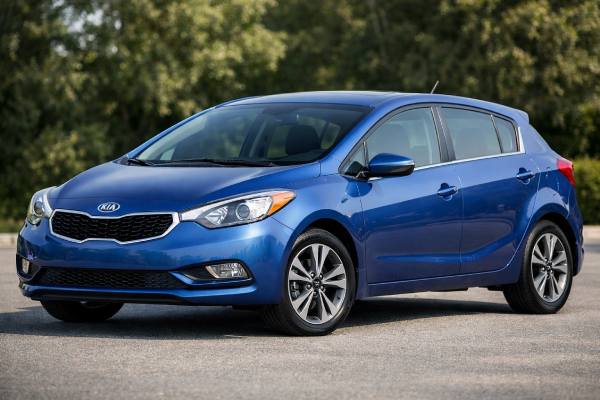
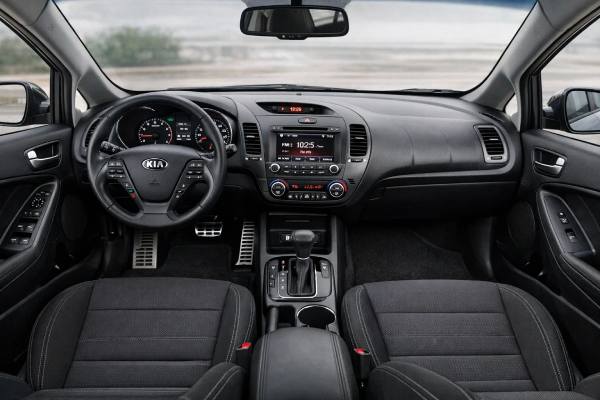
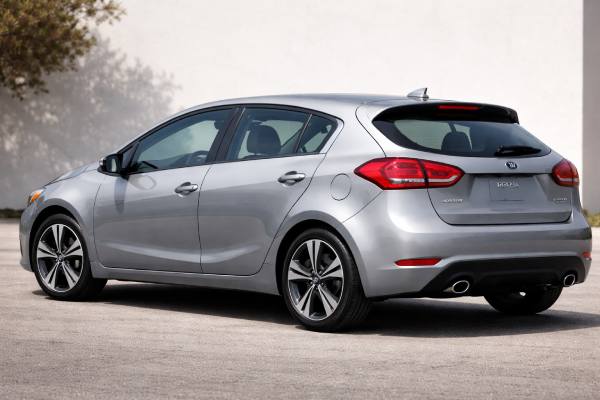
The 2014–2016 Kia Forte5 (YD) with the 2.0L Nu GDI engine is a practical hatchback that blends compact-car running costs with useful cargo flexibility. In this tune, the direct-injected 2.0 delivers a responsive midrange and steady highway pace without needing turbo complexity. The Forte5’s chassis is simple and predictable—front struts with a torsion-beam rear—which helps keep alignment, bushing, and brake service straightforward and affordable.
Ownership tends to be defined by two things: how well the engine is maintained (oil quality, warm-up habits, and intake cleanliness matter more on GDI) and how carefully you choose trim and options (wheels, tires, and infotainment packages change the driving feel). If you want a compact hatch that is easy to live with, easy to park, and easy to service, this configuration is usually the sweet spot.
What to Know
- Strong everyday power for a non-turbo compact, especially in the 40–100 km/h range.
- Hatchback cargo space is genuinely useful, with a wide opening and a low liftover height.
- Direct injection can mean intake valve deposits over time; plan occasional cleaning by mileage and symptoms.
- Rotate tires every 10,000–12,000 km (6,000–7,500 mi) to keep noise and wear under control.
- Automatics are generally easy to live with, but benefit from earlier fluid service than “lifetime” claims.
Guide contents
- Kia Forte5 YD in context
- Kia Forte5 YD 2.0 GDI data
- Kia Forte5 YD trims and safety tech
- Issues, recalls, and weak points
- Service intervals and buyer checklist
- How it drives and sips fuel
- Competitors and best-fit choices
Kia Forte5 YD in context
The Forte5 is the hatchback sibling in the YD Forte family, and it’s best understood as a “do-it-all compact” rather than a hot hatch. With the 2.0 Nu GDI (173 hp), it sits above the base naturally aspirated engines in punch and passing confidence, but it stays focused on daily usability—reasonable running costs, decent refinement for the class, and a cabin layout that’s easy to learn.
A key Forte5 advantage is packaging. The roofline and hatch opening make bulky items easier than in the sedan, and the rear seats fold to create a flat, practical load floor for weekend errands, strollers, or airport runs. This flexibility also makes the Forte5 a good fit for drivers who want one car to cover commuting, occasional road trips, and everyday hauling without moving up to a crossover.
Mechanically, the car’s straightforward suspension (strut front, torsion-beam rear) trades ultimate ride sophistication for durability and low service complexity. Bushings, links, and dampers are typically inexpensive compared with multi-link setups, and alignment is generally simple as long as the rear axle beam is healthy. Steering is electric assist—light in parking lots, calmer on the highway—so the Forte5 feels modern even when compared with newer compacts.
For the buyer, the big differentiators are trim and wheels. Smaller wheels tend to ride quieter and cost less in tires; larger wheel packages sharpen initial turn-in but can add impact harshness on broken pavement. The hatch body can also introduce its own “ownership feel” items—rear wiper hardware, liftgate struts, and occasional cargo-area squeaks—none of which are deal-breakers, but worth checking on a test drive.
If you prioritize a practical hatch with a stronger non-turbo engine and don’t mind staying on top of GDI-specific maintenance habits, this Forte5 configuration is often a smart, value-focused choice.
Kia Forte5 YD 2.0 GDI data
Below are model-relevant specifications for the Forte5 (YD) with the 2.0L Nu GDI output at 173 hp. Exact figures can vary slightly by market, emissions certification, and trim, but the fundamentals are consistent.
Powertrain and efficiency (2.0 Nu GDI)
| Item | Specification |
|---|---|
| Code | Nu 2.0 GDI (commonly listed as 2.0L GDI) |
| Engine layout and cylinders | Inline-4, DOHC, 16-valve, dual CVVT |
| Displacement | 2.0 L (1,999 cc) |
| Bore × stroke | 81.0 × 97.0 mm (3.19 × 3.82 in) |
| Induction | Naturally aspirated |
| Fuel system | GDI (gasoline direct injection) |
| Compression ratio | 11.5:1 |
| Max power | 173 hp (129 kW) @ 6,500 rpm |
| Max torque | 209 Nm (154 lb-ft) @ 4,700 rpm |
| Timing drive | Chain |
| Rated efficiency (typical, by trim) | ~7.1–9.6 L/100 km (33–24 mpg US) |
| Real-world highway @ 120 km/h | Often ~6.8–8.0 L/100 km (35–29 mpg US), wind and tires matter |
Transmission and driveline
| Item | Specification |
|---|---|
| Transmission | 6-speed automatic (common); 6-speed manual (market/trim dependent) |
| Drive type | FWD |
| Differential | Open |
Chassis and dimensions
| Item | Specification |
|---|---|
| Suspension (front/rear) | MacPherson strut / torsion beam axle |
| Steering | Electric rack and pinion; ratio about 15.7:1 (varies by trim) |
| Brakes | Vented front disc / solid rear disc |
| Brake diameters | Front 279 mm (11.0 in) or up to 300 mm (11.8 in); rear 262 mm (10.3 in) |
| Wheels and tires (common sizes) | 205/55 R16, 215/45 R17, 225/40 R18 |
| Ground clearance | 140 mm (5.5 in) |
| Length / width / height | 4,351 / 1,781 / 1,450 mm (171.3 / 70.1 / 57.1 in) |
| Wheelbase | 2,700 mm (106.3 in) |
| Turning circle (kerb-to-kerb) | 10.6 m (34.8 ft) |
| Kerb weight (automatic, typical range) | ~1,321–1,416 kg (2,912–3,122 lb) |
| GVWR (automatic) | ~1,800–1,840 kg (3,968–4,057 lb) |
| Fuel tank | 50.0 L (13.2 US gal / 11.0 UK gal) |
| Cargo volume | 657 L (23.2 ft³) seats up; 1,597 L (56.4 ft³) seats folded (SAE-style figure) |
Performance and capability (typical expectations)
| Metric | Typical range (varies by tires, transmission, and conditions) |
|---|---|
| 0–100 km/h (0–62 mph) | ~8.5–9.5 s |
| Top speed | ~190–205 km/h (118–127 mph) |
| Braking 100–0 km/h | Often ~38–41 m on good tires |
| Towing capacity | Usually not rated / not recommended in many markets |
Fluids and service capacities (verify by VIN)
Because published capacities can vary by sub-variant and market, use these as planning references and confirm in official service documentation:
| Item | Common spec and typical fill |
|---|---|
| Engine oil | API SN/SM class equivalent; often 5W-20 or 5W-30 by climate; ~4.0–4.5 L (4.2–4.8 US qt) with filter |
| Coolant | Ethylene glycol long-life coolant; 50/50 mix typical; ~6–7 L (6.3–7.4 US qt) |
| Automatic transmission fluid | Hyundai/Kia SP-IV-type ATF in many markets; service method affects quantity |
| A/C refrigerant | R-134a on these years in most regions; charge varies by label |
Safety and driver assistance (high-level)
| Item | Notes |
|---|---|
| Crash ratings | Often covered under “Forte” test programs; verify by year and market body style |
| ADAS suite | Typically stability control, ABS, traction control; forward collision mitigation and radar-based systems are generally limited or absent compared with newer compacts |
Kia Forte5 YD trims and safety tech
Trims for the Forte5 vary by region, but the common pattern is a value-oriented base model, a comfort-focused mid trim, and a sport-appearance or feature-heavy upper trim. On this generation, the 2.0 Nu GDI is often found in the mainstream trims, while some top “sport” trims may pair different engines in certain markets. When shopping, focus less on the badge and more on the equipment you can confirm in the car and via the build sheet.
Trims and options that change ownership
The features that most affect long-term satisfaction are:
- Wheel size and tire profile: 16-inch setups usually ride quieter and cost less to replace; 18-inch packages look sharp but can transmit more impact harshness and increase tire cost.
- Infotainment and camera hardware: A factory camera and upgraded head unit are convenient, but check for dead pixels, intermittent touch response, and backup camera clarity—repairs can be pricier than mechanical wear items.
- Seat materials and heaters: Heated seats and a heated wheel are high-value comfort options in colder climates; leather can wear better than cloth if cared for, but neglected leather cracks quickly.
- Hatch-specific items: A cargo cover, rear wiper, and roof rails (where fitted) add utility, but each is also something to inspect for noise, play, or water ingress.
Quick identifiers that help you confirm equipment:
- Look for paddle shifters (automatic only), dual exhaust tips on some sporty trims, projector headlamps versus reflector housings, and whether the car has a rear wiper (standard on the hatch, but check functionality).
- Inside, confirm whether the cluster has a larger driver information display and whether the head unit includes factory navigation or smartphone integration (which often arrived later in the decade).
Safety ratings and what they mean here
Safety results are often published under the broader “Forte” name and may be based on sedan testing even when the hatch is structurally similar. Treat ratings as guidance, then confirm the exact body style, model year, and airbag configuration for your market. The most useful practical approach is:
- Confirm airbags: You want front airbags, front seat-mounted side airbags, and side curtain airbags for both rows.
- Confirm stability control: Electronic stability control and traction control should be present and functioning (no warning lights).
- Inspect tires and brakes: Crash-avoidance is heavily influenced by tire condition and brake consistency.
Driver assistance and calibration realities
On 2014–2016 compacts, advanced driver assistance is usually limited. If your Forte5 has any camera- or radar-based features (market dependent), remember that windshield replacement, front bumper work, and alignment changes can require sensor aiming or calibration. Even without ADAS, the Forte5 relies on accurate wheel speed sensing for ABS and stability control, so keep tires matched and avoid large differences in tread depth side-to-side.
For family use, confirm ISOFIX/LATCH points are present and accessible, and check that rear seatbelts retract smoothly. A hatchback also makes it easier to load strollers and child gear, but ensure the rear hatch latches securely and doesn’t sag—poor closure can create exhaust odor and water leak risks.
Issues, recalls, and weak points
The 2.0 Nu GDI Forte5 is usually not “fragile,” but it does have predictable patterns. The most important theme is that direct injection rewards consistent oil service and clean air flow. Below is a practical way to think about problems by prevalence and cost.
Common (usually low-to-medium cost)
- GDI intake valve deposits (carbon build-up)
Symptoms: rough idle, mild misfires, reduced fuel economy, hesitation at low rpm.
Likely cause: fuel doesn’t wash intake valves in GDI engines; deposits accumulate faster with short trips.
Remedy: intake cleaning (chemical or walnut blasting depending on severity), then adjust driving habits—longer warm runs help. - Ignition coils and spark plugs (wear items)
Symptoms: misfire under load, flashing check-engine light, stumble on acceleration.
Root cause: normal wear, sometimes accelerated by old plugs.
Remedy: replace plugs on schedule; replace coils as needed, ideally in matched sets when mileage is high. - EVAP and small-emissions faults
Symptoms: check-engine light with fuel odor or “loose cap” style codes.
Root cause: purge valve issues, minor vacuum leaks, or cap sealing problems.
Remedy: smoke test; replace faulty valve or seals.
Occasional (medium cost)
- High-pressure fuel system sensitivity
Symptoms: hard starts, hesitation, loss of power at high load, fuel pressure codes.
Root cause: fuel quality issues, sensor faults, or high-pressure pump/injector wear (less common than on some turbo GDI setups, but possible).
Remedy: diagnostic pressure testing; replace only confirmed failed components. - Cooling system seepage and plastic fittings
Symptoms: slow coolant loss, sweet smell, dried residue near hose joints.
Root cause: aging hoses, clamps, or plastic necks.
Remedy: replace the weak part before it becomes a sudden leak; refresh coolant properly afterward.
Rare but higher cost (pay attention during inspection)
- Timing chain noise or correlation faults
Symptoms: cold-start rattle that persists, cam/crank correlation codes, poor running.
Root cause: chain stretch, tensioner wear, or guide issues (not common, but expensive if ignored).
Remedy: confirm with scan data and mechanical inspection; replace chain system when out of spec. - Hatch water leaks and wiring fatigue
Symptoms: damp spare-tire well, intermittent rear lights, rear camera glitches, hatch won’t unlock.
Root cause: hatch seal issues, clogged drains, or wiring harness strain at the hinge area.
Remedy: reseal, clear drains, repair wiring properly (avoid twist-and-tape fixes).
Recalls, TSBs, and service actions
Because campaigns differ by market and VIN range, treat recall coverage as a must-check step—not an assumption. Use an official VIN search and dealer history to confirm completion, especially for safety systems, airbags, and brake-related campaigns. When you evaluate a used Forte5, request:
- A printout showing recall completion status
- Evidence of software updates if drivability issues were addressed by reflash
- Service records for oil changes at reasonable intervals, not stretched to extremes
This model tends to reward buyers who choose a well-documented car over a cheaper unknown-history example.
Service intervals and buyer checklist
A Forte5 with the 2.0 Nu GDI stays inexpensive when you use a simple rule: service fluids a bit earlier than the maximum schedule and don’t ignore drivability changes. The outline below is a practical baseline for mixed driving.
Practical maintenance schedule (distance or time)
- Engine oil and filter: every 8,000–10,000 km (5,000–6,000 mi) or 6–12 months (short trips and cold climates push you toward the shorter end).
- Engine air filter: inspect every oil service; replace about 20,000–30,000 km (12,000–18,000 mi) depending on dust.
- Cabin air filter: every 15,000–20,000 km (9,000–12,000 mi) or annually for airflow and HVAC odor control.
- Spark plugs: commonly 60,000–100,000 km (40,000–60,000 mi) depending on plug type and market schedule; replace sooner if misfires appear.
- Coolant: typically 5 years / 100,000–160,000 km as a planning range; refresh earlier if contamination or seepage occurs.
- Brake fluid: every 2 years, regardless of mileage (moisture accumulation affects pedal feel and corrosion).
- Automatic transmission fluid: a smart interval is 60,000–90,000 km (40,000–60,000 mi), especially with city driving or heat.
- Tire rotation: 10,000–12,000 km (6,000–7,500 mi); align if you see inside-edge wear.
- 12 V battery test: annually after year 4; many batteries age out around 4–6 years depending on climate.
Fluids, specs, and torque values (decision-level)
Always verify against VIN-specific documentation, but these ranges help you plan:
- Oil viscosity: 5W-20 or 5W-30 is common depending on climate; prioritize the correct API/ILSAC category for your market.
- Wheel lug nuts: typically 90–110 Nm (66–81 lb-ft)—use a torque wrench, especially on alloy wheels.
- Spark plug torque: commonly 18–25 Nm (13–18 lb-ft) depending on plug design; avoid over-tightening.
Buyer’s guide: what to inspect on a Forte5
Bring a flashlight, a cheap OBD scan tool, and plan a cold start.
Exterior and hatch checks
- Look under the rear cargo floor for moisture, rust staining, or musty smell.
- Check the hatch struts: the hatch should rise smoothly and stay up.
- Inspect the rear hatch seal and hinge wiring boot for cracks or amateur repairs.
Engine and driveline
- Cold start should be clean: brief startup noise is normal, but persistent rattles deserve attention.
- Check for oil leaks around the valve cover area and for coolant residue at hose joints.
- On the test drive, confirm the engine pulls smoothly from 2,000 rpm without shuddering.
Transmission and brakes
- Automatic shifts should be consistent—no long flare, harsh bang into gear, or delayed engagement.
- Brakes should be stable with no steering shake; uneven rotor wear can be a sign of cheap pads or seized slide pins.
Electronics
- Confirm all windows, locks, rear camera (if equipped), and infotainment functions.
- Any warning lights—ABS, ESC, airbag—should be treated as a “fix before purchase” item.
Long-term durability is typically good when maintenance is consistent. The best cars are the ones with clean records, matching tires, and evidence that oil changes were not stretched excessively.
How it drives and sips fuel
In real-world use, the Forte5 with the 2.0 Nu GDI feels like a well-judged middle ground: stronger than basic naturally aspirated compacts, but not tuned to be edgy. The hatchback body adds utility without changing the driving character dramatically, and the car’s controls are easy to adapt to—especially if you’re coming from other front-wheel-drive compacts.
Ride, handling, and NVH
The torsion-beam rear suspension gives the Forte5 a predictable, slightly firm feel over sharp edges. On 16-inch tires, it typically rounds off rough pavement better and stays quieter at speed. With 17s or 18s, steering response tightens and the car feels more immediate, but you may hear more tire roar and feel more impact harshness on patched roads.
Straight-line stability is generally solid for the class, and the electric steering is light at parking speeds. Feedback is limited, but the system is consistent, which matters more for daily confidence than “sportiness.” Braking feel depends heavily on pad quality and tire grip; on a good set of tires, the Forte5 stops with reassuring stability and predictable pedal response.
Powertrain character
The 2.0 GDI’s best trait is its willingness to rev without feeling strained. Around town, it has enough low-end torque to keep the transmission from constantly hunting, and it responds well in the midrange for passing. Compared with turbo engines, the delivery is linear—no surge—so it’s easy to modulate in wet conditions.
If the car has a 6-speed automatic, you want clean, decisive shifts. A slight “learning” feel is normal, but harsh engagement or frequent gear searching suggests neglected fluid or an underlying control issue. Manual cars (where offered) tend to feel straightforward and are often a good fit if you prioritize simplicity.
Real-world efficiency (what owners can expect)
Fuel consumption varies more with driving style than many expect:
- City-heavy driving: often 8.5–10.5 L/100 km (22–28 mpg US) depending on traffic and warm-up time.
- Steady highway (100–120 km/h): often 6.8–8.0 L/100 km (29–35 mpg US); roof racks and wider tires can add noticeable drag.
- Mixed commuting: commonly 7.5–9.0 L/100 km (26–31 mpg US).
Cold weather matters on GDI cars because warm-up enrichment and short trips can raise consumption and speed up deposit formation. If you mostly do short drives, consider a weekly longer run once the engine is fully warm—it helps moisture boil-off in the oil and can reduce drivability complaints over time.
Overall, the Forte5’s driving experience is calm, practical, and easy to live with—especially if you choose a wheel and tire setup that fits your roads.
Competitors and best-fit choices
Shopping the Forte5 is easiest when you compare it by “ownership personality” rather than just horsepower. The 2.0 Nu GDI Forte5 is for drivers who want a compact hatch that is practical, modern enough in features, and not expensive to keep on the road. Here is how it generally stacks up against common rivals in the same era.
If you value driving feel most
- Mazda3 hatchback: Often the dynamic benchmark—more steering feel, more refined suspension tuning. The tradeoff can be slightly higher parts costs and less “appliance-simple” service in some areas. Choose it if you prioritize handling and cabin feel.
- Volkswagen Golf: Typically more solid at highway speeds with a composed ride. Ownership depends heavily on service history and local specialist availability. Choose it if you want a premium-feeling compact and you’re comfortable being strict about maintenance.
If you value low-stress ownership
- Toyota Corolla-based hatch variants (market dependent): Usually strong for long-term simplicity and resale, though power and driving engagement may be less lively than the Forte5 2.0 GDI. Choose it if you want “just works” reliability more than hatch utility or power.
- Honda Civic (era-dependent availability): Often efficient and durable with strong ergonomics. Pricing can be higher, and some trims may be harder to find in hatch form depending on your region.
If you want similar value with a close mechanical cousin
- Hyundai Elantra GT (or related Hyundai hatchbacks): Often shares similar engineering themes and can be cross-shopped for equipment and condition. Choose it if you find a better-maintained example or a more appealing feature set for the money.
Where the Forte5 2.0 GDI wins
- Balanced performance without turbo complexity: It’s quick enough for real roads and simple enough to service.
- Cargo utility: The hatch format adds daily usefulness without moving into crossover size and cost.
- Value for features: Depending on trim, you can get comfort options that feel upscale for the segment.
Where you should be cautious
- GDI maintenance habits: If the seller has stretched oil intervals or mostly drove short trips, budget for an intake cleaning and catch-up maintenance.
- Wheel and tire costs: Big wheels look great but can raise running costs and reduce ride comfort.
The best pick is usually the cleanest, best-documented example with the wheel size that suits your roads. A well-cared-for Forte5 will feel like a smart tool—useful, efficient enough, and predictable—rather than a project.
References
- 2016 Kia Forte5 Specifications 2016 (Manufacturer Specifications) ([Kia Media][1])
- 2016 Kia Forte5 Features & Options 2016 (Manufacturer Equipment Guide) ([Kia Media][2])
- Gas Mileage of 2016 Kia Forte 2016 (Official Fuel Economy Data) ([fueleconomy.gov][3])
- 2016 Kia Forte 4-door sedan 2016 (Safety Rating) ([IIHS Highway Safety][4])
- Check for Recalls: Vehicle, Car Seat, Tire, Equipment 2026 (Recall Database) ([NHTSA][5])
Disclaimer
This article is for informational purposes only and is not a substitute for professional diagnosis, inspection, or repair. Specifications, torque values, service intervals, and procedures can vary by VIN, market, model year, and installed equipment. Always verify details using official owner’s and service documentation for the specific vehicle you are working on.
If you found this guide useful, consider sharing it on Facebook, X (Twitter), or your favorite forum to support our work.