

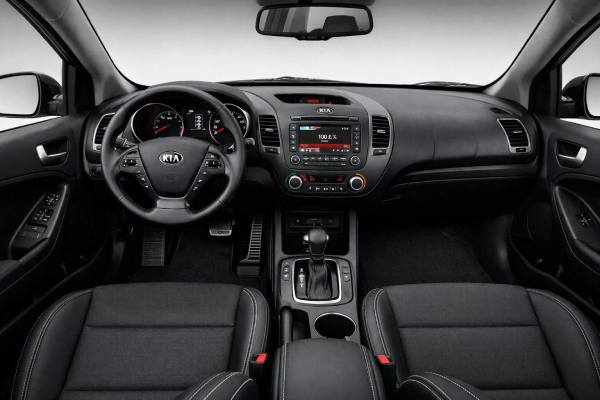
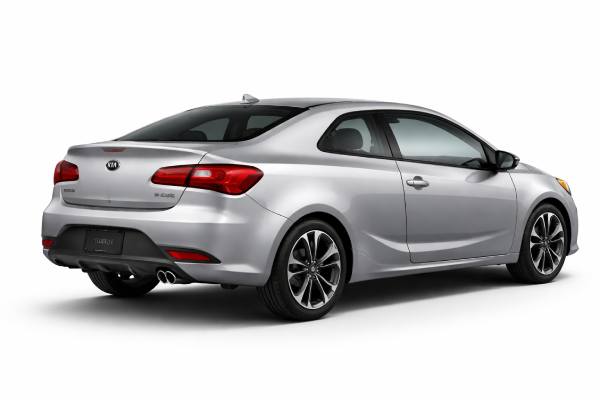
The 2014–2016 Kia Forte Koup (YD) with the 1.6-liter Gamma turbo GDI is the “sweet spot” of the range if you want real punch without stepping into a heavier, more complex performance car. The engine’s broad midrange torque makes the Koup feel quick in everyday driving, while the compact coupe body keeps it easy to place in traffic and parking. Under the skin, it’s a straightforward front-drive layout with conventional suspension and braking hardware—good news for long-term ownership and parts availability.
That said, this specific powertrain asks more from its fluids and air management than the non-turbo Forte variants. If you treat oil quality, warm-up habits, and intake cleanliness as priorities, the 1.6T can stay smooth and responsive deep into higher mileage.
Quick Specs and Notes
- Strong midrange torque makes it feel faster than the headline horsepower suggests.
- Simple FWD chassis with predictable handling and reasonable tire costs.
- Turbo GDI engines reward shorter oil intervals and careful PCV maintenance.
- Expect best results with high-quality fuel and clean intake plumbing.
- Plan engine oil changes about every 8,000–10,000 km (5,000–6,000 mi) or 6 months for mixed driving.
Explore the sections
- Kia Forte Koup YD turbo basics
- Kia Forte Koup 1.6T specs and measurements
- Kia Forte Koup trims and safety tech
- Common issues and service bulletins
- Maintenance plan and buyer checklist
- Real-world driving and efficiency
- Rivals and value comparison
Kia Forte Koup YD turbo basics
The turbo Forte Koup is best understood as a practical coupe with a “hot hatch” style powerband. The 1.6T Gamma engine is small-displacement, direct-injected, and boosted—so it behaves differently than a larger naturally aspirated motor. Instead of building power mainly with rpm, it delivers a broad torque plateau in the middle of the rev range. That is why the car feels lively at 40–90 km/h (25–55 mph), where most daily driving happens.
Chassis-wise, the Koup stays conservative: front-wheel drive, a front strut layout, and a rear torsion beam. You do not get the complexity of adaptive dampers or a tricky AWD system. This matters for owners because the wear items are familiar: tires, brakes, bushings, ball joints, and shocks. The coupe body adds long doors and a tighter rear seating area, but it also tends to feel a bit more “tied down” than the sedan because of the shorter cabin opening and slightly sportier trim tuning.
Where this model differs from a regular Forte is heat and airflow management. Turbo engines run hotter around the turbine housing, and direct injection places more importance on oil vapor control (PCV system), spark quality, and intake cleanliness. These are not reasons to avoid the car—they are simply the areas where good maintenance makes the biggest difference.
If you want the best ownership experience, prioritize:
- Clean service history with frequent oil changes
- Smooth boost delivery (no surging, no hesitations)
- Stable coolant temperature in traffic
- Crisp transmission behavior (manual clutch feel or automatic shift quality)
Done right, the Koup 1.6T offers a rare mix for its era: compact size, a genuinely quick feel, and running costs closer to an economy car than a dedicated performance model.
Kia Forte Koup 1.6T specs and measurements
Below are the key specifications that matter for ownership, maintenance planning, and comparisons. Values can vary by market, emissions calibration, and wheel/tire package, so treat them as a practical reference and verify by VIN when ordering parts or fluids.
Powertrain and efficiency (1.6T Gamma GDI)
| Item | Specification |
|---|---|
| Engine code (common) | Gamma II 1.6 T-GDi (often G4FJ family, market-dependent) |
| Layout | Transverse inline-4 (I-4) |
| Valvetrain | DOHC, 4 valves/cyl (16 valves total) |
| Displacement | 1.6 L (≈ 1,591 cc) |
| Induction | Turbocharged, intercooled |
| Fuel system | Gasoline direct injection (GDI) |
| Compression ratio | Typically around 9.5:1 (market-dependent) |
| Max power | 201 hp (≈ 150 kW) @ rpm (varies by calibration) |
| Max torque | ≈ 264 Nm (≈ 195 lb-ft) @ midrange rpm (varies by calibration) |
| Timing drive | Chain |
| Fuel | Regular unleaded in many markets; premium can improve consistency under heat/load |
| Rated efficiency (typical) | ~8.1–9.8 L/100 km (≈ 24–29 mpg US) depending on transmission and test cycle |
| Real-world highway @ 120 km/h | Often ~7.5–8.5 L/100 km (≈ 28–31 mpg US) with stock tires and good alignment |
Transmission and driveline
| Item | Specification |
|---|---|
| Drive type | FWD |
| Transmission options (common) | 6-speed manual; 6-speed automatic (market/trim dependent) |
| Differential | Open (traction control via brake-based system) |
Chassis, brakes, and dimensions
| Item | Specification (typical) |
|---|---|
| Suspension (front/rear) | MacPherson strut / torsion beam |
| Steering | Electric power steering (EPS) |
| Brakes | 4-wheel disc on most turbo trims; rotor sizes vary by trim |
| Common tire size | Often 225/40 R18 on sport trims (verify by market) |
| Length / width / height | ≈ 4,530 / 1,780 / 1,400 mm (≈ 178.3 / 70.1 / 55.1 in) |
| Wheelbase | ≈ 2,650 mm (≈ 104.3 in) |
| Turning circle | ≈ 10.6 m (≈ 34.8 ft), depending on tires |
| Curb weight | ≈ 1,370–1,450 kg (≈ 3,020–3,200 lb), depending on transmission and equipment |
| Fuel tank | ≈ 50 L (≈ 13.2 US gal / 11.0 UK gal) |
| Cargo volume | Typically ~350 L (≈ 12.4 ft³) trunk volume; varies by measurement method |
Performance and capability (realistic expectations)
| Metric | Typical outcome |
|---|---|
| 0–100 km/h (0–62 mph) | ~7.5–8.2 s (tires, traction, and transmission matter) |
| Top speed | ~210 km/h (≈ 130 mph), market-limited |
| Braking 100–0 km/h | Often ~37–41 m on good tires (test-dependent) |
| Towing | Usually not rated or not recommended for meaningful towing in many markets |
| Payload | Varies; check door jamb label for your VIN |
Fluids and service capacities (planning ranges)
| System | Spec (typical) |
|---|---|
| Engine oil | Full synthetic recommended; common grades: 5W-30 or 5W-40 (climate-dependent) |
| Engine oil capacity | ~4.0–4.5 L (≈ 4.2–4.8 US qt), depending on filter and pan design |
| Coolant | Long-life ethylene glycol mix (typically 50/50) |
| Coolant capacity | ~6–7 L (≈ 6.3–7.4 US qt), system-dependent |
| Automatic transmission fluid | Hyundai/Kia SP-IV type fluid (verify exact spec by VIN) |
| A/C refrigerant | Usually R-134a in these years; charge varies by market label |
Key torque specs (common “decision” fasteners)
| Fastener | Typical torque |
|---|---|
| Wheel lug nuts | ~88–108 Nm (≈ 65–80 lb-ft) |
| Engine oil drain plug | Commonly ~30–40 Nm (≈ 22–30 lb-ft), verify for your oil pan |
These tables cover what most owners actually use: performance expectations, consumables, and the measurements that determine fitment and service planning.
Kia Forte Koup trims and safety tech
For the 2014–2016 window, the turbo 1.6T is typically tied to the sport-oriented trim (often branded as SX or “Turbo,” depending on region). The easiest way to identify the turbo model quickly is to look for trim badging, larger wheels, dual exhaust finishers, and the presence of a turbocharged engine cover or intake plumbing in the bay. A VIN decode through official channels is still the cleanest confirmation when buying parts.
Trims and options that change ownership
The big ownership differences usually come down to:
- Transmission choice: manual vs automatic changes clutch wear (manual) versus fluid service needs and shift behavior monitoring (automatic).
- Wheel and tire package: 18-inch tires look great but cost more and transmit more sharp impacts. They also influence braking distance and torque steer feel.
- Infotainment tier: navigation units and amplified audio systems raise replacement cost if modules fail, but day-to-day reliability is usually acceptable.
- Convenience packages: push-button start, heated seats, and sunroof add comfort but also add electrical complexity (switches, regulators, drains).
Year-to-year changes are often small (feature packaging, head unit revisions, minor interior updates). What matters most is whether the specific car you are looking at has the safety and lighting configuration you prefer.
Safety ratings and what they mean here
Crash-test coverage can differ by body style. In many cases, rating bodies focus on the sedan/hatch variant of a platform, and the coupe may not always be tested separately. For the Forte platform in this era, the general story is:
- Strong performance in several structural tests,
- A known “weak spot” in certain small-overlap style evaluations of the time,
- And limited availability of modern driver assistance features.
Treat published results as a platform guide, then verify whether your exact Koup year/trim has an individual listing and what the test version was. Even when a rating is strong, remember that headlight performance and tire choice can affect real-world safety more than most people expect.
Safety systems and ADAS (driver assistance)
On most turbo Koups of this era, you can expect:
- ABS and stability control (ESC) as standard equipment in many markets
- Front, side, and curtain airbags (commonly a 6-airbag layout)
- Tire pressure monitoring (TPMS) in many regions
- Rear camera availability on many trims, often standard or bundled
What you usually do not get (compared with newer cars):
- Automatic emergency braking (AEB)
- Adaptive cruise control (ACC)
- Modern lane-centering assistance
That does not make the car unsafe—it just means the driver must cover more of the workload. If you are buying one today, prioritize: good tires, correct headlight aim, fresh brake fluid, and predictable brake response. Those items often deliver more real-world risk reduction than a long feature list on paper.
Common issues and service bulletins
Reliability for the 1.6T Forte Koup is best viewed through two lenses: the base car (simple chassis, common parts) and the turbo GDI engine (more sensitive to oil quality, heat, and intake cleanliness). Below is a practical map of what tends to show up, how serious it is, and what to do about it.
Common (worth checking on every car)
- PCV valve and oil vapor control (low to medium cost)
Symptoms: rough idle, oil smell, higher oil use, inconsistent boost response.
Likely cause: PCV valve wear or clogged hoses; excess oil vapor entering the intake.
Remedy: replace PCV valve, inspect hoses, and confirm the intake tract is dry and secure. - Ignition coils and spark plugs (low to medium cost)
Symptoms: misfire under load, flashing check-engine light, hesitation during boost.
Likely cause: coil aging, plug wear, or incorrect plug heat range/gap.
Remedy: use correct plugs for the turbo application, replace coils as needed, and avoid “universal” substitutes. - Carbon buildup tendencies in GDI engines (medium cost, gradual)
Symptoms: sluggish throttle response, reduced efficiency, uneven idle over time.
Likely cause: GDI sprays fuel directly into the cylinder, so intake valves don’t get “washed” by fuel.
Remedy: periodic intake valve cleaning methods (service-dependent), plus diligent oil and PCV upkeep.
Occasional (depends on heat, mileage, and driving style)
- Turbo wastegate rattle or boost control quirks (medium cost)
Symptoms: rattling near turbo, inconsistent boost, underboost codes.
Likely cause: wastegate actuator wear, linkage play, or boost control solenoid issues.
Remedy: proper diagnosis first—don’t replace the turbo prematurely if the control hardware is the issue. - Cooling system wear items (medium cost)
Symptoms: slow coolant loss, temperature creep in traffic, heater inconsistency.
Likely cause: hose aging, thermostat behavior, radiator cap issues.
Remedy: pressure test, replace aged hoses/clamps preventively, keep coolant fresh. - Suspension knocks and bushing wear (low to medium cost)
Symptoms: clunks over bumps, vague steering feel, uneven tire wear.
Likely cause: worn stabilizer links, control arm bushings, or strut mounts.
Remedy: replace in pairs where appropriate and align afterward.
Rare but higher consequence (do not ignore)
- Oil starvation from neglect (high cost)
Symptoms: timing chain noise, low oil pressure warnings, bearing noise.
Likely cause: extended oil intervals, wrong oil grade, or running low on oil.
Remedy: shorten intervals, verify oil level often, and investigate any consumption early.
Recalls, TSBs, and how to verify
Because recall and service action coverage depends on build date and VIN range, the best approach is simple:
- Run a VIN lookup through official recall databases.
- Ask for dealer history printouts if possible.
- Confirm the remedy was completed, not just “open” or “recommended.”
When you shop, remember that “no warning lights” is not the same as “healthy turbo system.” A clean scan for stored codes, stable coolant temperature, and smooth boost delivery under load are the real green flags.
Maintenance plan and buyer checklist
A turbo GDI Forte Koup can be an excellent used buy if you treat maintenance as an engineering routine rather than a vague guideline. The goal is to control heat, keep oil clean, and prevent air/fuel surprises that lead to misfires and drivability complaints.
Practical maintenance schedule (distance/time)
Use this as a conservative, owner-friendly baseline for mixed driving:
- Engine oil and filter: every 8,000–10,000 km (5,000–6,000 mi) or 6 months
Shorten to ~6,000–8,000 km if you do short trips, heavy city driving, or frequent boost. - Engine air filter: inspect every 15,000 km, replace every 30,000–45,000 km (dusty areas sooner)
- Cabin air filter: every 15,000–30,000 km or yearly (HVAC performance depends on it)
- Spark plugs (turbo application): commonly 90,000–100,000 km (55,000–60,000 mi)
If you modify boost, shorten the interval and use the correct heat range. - Coolant: often 160,000 km or 10 years, then every 80,000 km (verify your market spec)
- Brake fluid: every 2 years, regardless of mileage (moisture hurts pedal feel and ABS performance)
- Transmission fluid (automatic): a cautious interval is 60,000–90,000 km
Even if “lifetime” is claimed, used-car longevity improves with periodic fluid refreshes. - Manual transmission: inspect for leaks; consider fluid replacement around 80,000–120,000 km depending on use
- Serpentine belt and hoses: inspect every 30,000 km, replace by condition (age matters as much as mileage)
- Tires: rotate every 8,000–10,000 km; align yearly or whenever wear looks uneven
- 12 V battery: test yearly after year 4; many last 4–6 years depending on climate and usage
Fluids, specs, and “don’t guess” items
For this model, the highest-value choices are:
- Correct oil viscosity for your climate, with strong high-temperature stability
- Correct spark plugs for the turbo calibration
- Correct ATF specification for the automatic (mixing fluid types can create shift quality issues)
Buyer’s guide: inspection checklist
When evaluating a used 1.6T Koup, focus on the systems that reveal prior care:
- Cold start behavior: listen for timing chain rattle, unstable idle, or loud ticking that does not settle.
- Boost delivery: during a warm test drive, apply moderate throttle in a higher gear—power should build smoothly without misfires or surging.
- Cooling stability: temperature should remain steady in traffic; fans should cycle normally.
- Oil condition and level: very dark, thin, or low oil is a red flag on a turbo engine.
- Tire wear pattern: inner-edge wear hints at alignment neglect; mismatched tires can cause torque steer and traction control oddities.
- Brake feel: a soft pedal often means old fluid; vibration can mean warped rotors or cheap pads.
- Electrical checks: confirm windows, locks, and infotainment behave consistently—coupe doors stress window regulators more.
Long-term durability outlook
With consistent oil service, correct ignition parts, and attention to intake/PCV health, the 1.6T can be a durable daily driver. Most “horror stories” trace back to neglected oil intervals, persistent misfires that were ignored, or cheap parts substitutions. Buy the best-maintained example you can, even if it costs slightly more up front.
Real-world driving and efficiency
In daily driving, the turbo Forte Koup’s personality is shaped by midrange torque rather than high-rpm theatrics. Around town, that means fewer downshifts and easier merging. On the highway, it feels confident in the 80–120 km/h range because the engine does not need to scream to make usable power.
Ride, handling, and NVH (noise and refinement)
The Koup is tuned on the firm side compared with pure economy sedans, especially on larger wheels. Expect:
- Good straight-line stability at highway speed, assuming alignment is correct.
- Predictable cornering with mild understeer when pushed—common for FWD coupes.
- Steering that feels light to moderate with a clean on-center zone; feedback is limited, but accuracy is usually decent.
- Road noise that depends heavily on tires. Cheap, worn, or aggressive tread patterns can make the cabin noticeably louder.
Braking feel is typically solid if the pads are decent and the brake fluid is fresh. A “long” or inconsistent pedal often improves dramatically after a brake fluid flush, which is why it is such a smart first service on a used example.
Powertrain character and transmission behavior
The 1.6T responds best when the engine is warm and the oil is in good shape. You should feel a smooth rise in torque rather than a sudden spike. If the car hesitates, bucks, or feels inconsistent under boost, that usually points to ignition or air/fuel control issues rather than “normal turbo lag.”
- Manual: expect a straightforward clutch, but check for slip under load in higher gears.
- Automatic: expect clean, repeatable shifts; harsh shifts or flares can suggest old fluid, adaptation issues, or underlying wear.
Real-world fuel economy
Real-world results depend more on driving style than most owners admit, because boost is addictive.
Typical patterns:
- City: ~9.0–11.0 L/100 km (≈ 21–26 mpg US) if you use boost frequently
- Highway (100–120 km/h): ~7.5–8.5 L/100 km (≈ 28–31 mpg US)
- Mixed: ~8.5–10.0 L/100 km (≈ 24–28 mpg US)
Cold weather usually increases consumption because warm-up takes longer and the engine runs richer under load. Short trips are the hardest scenario: they raise moisture and fuel dilution risk in oil, another reason shorter oil intervals are a smart policy for this car.
Traction and tire effects
Because it is FWD with an open differential, tire choice matters:
- A high-grip summer tire improves launch and braking, but can increase road noise and cost.
- A quality all-season tire improves wet behavior and daily comfort.
- Uneven tire wear or mismatched tires can trigger traction control interventions and make the car feel “busy” under acceleration.
Overall, the Forte Koup 1.6T drives like a quick, compact coupe rather than a high-strung sports car. Keep it maintained, keep good tires on it, and it stays satisfying without demanding constant attention.
Rivals and value comparison
The turbo Forte Koup sits in an interesting middle ground: sportier than commuter coupes, but usually cheaper to run than more hardcore hot hatches. When you compare it to rivals, focus on what you value most—steering feel, traction, cabin space, or cost control.
Where the Forte Koup 1.6T wins
- Everyday torque and easy speed: the midrange makes it feel quick without constant shifting.
- Simple hardware: conventional suspension and braking parts keep maintenance predictable.
- Value equation: used prices often undercut better-known sport compacts while offering similar daily pace.
- Comfort-per-dollar: many examples come well equipped (camera, heated seats, infotainment upgrades).
Where rivals can be stronger
- Limited-slip traction: some competitors offer a limited-slip differential or better front-axle traction solutions, improving hard acceleration out of corners.
- More advanced safety tech: newer or more premium rivals may offer AEB/ACC and better headlights.
- Chassis sophistication: performance-focused models often have stronger damping control and sharper steering feedback.
Common rival matchups (practical take)
- Hyundai Veloster Turbo (same family theme): often feels more “playful” and hatchback-practical, but can be louder and less conventional in layout.
- Honda Civic Si Coupe (driver-first): sharper shifting and chassis balance, typically stronger enthusiast feel, but may cost more used and rides firmer.
- Volkswagen GTI (practical performance): more refined power delivery and a premium feel, but maintenance and parts costs can be higher depending on region.
- Scion tC (simple and roomy): practical hatch access and simplicity, but less torque-rich and not as quick-feeling as the turbo Koup.
- Ford Focus ST (bigger jump in performance): notably faster and more aggressive, but tires, brakes, and ownership costs rise with capability.
The honest verdict
If you want a compact coupe that is easy to live with, feels genuinely quick in daily traffic, and does not require specialized maintenance knowledge, the turbo Forte Koup is a smart used pick. It is not the sharpest tool for track days, and it does not have modern ADAS, but it rewards owners who keep oil service frequent, ignition parts correct, and tires in good condition.
For most buyers, it is best positioned as a “grown-up sporty daily”—fast enough to be fun, simple enough to be affordable, and common enough that parts and service are rarely a problem.
References
- 2016 FORTE KOUP 2016 (Manufacturer Press Release)
- Gas Mileage of 2016 Kia Forte 2016 (Official Fuel Economy Data)
- Vehicle Detail Search – 2016 KIA FORTE KOUP | NHTSA 2016 (Recall Database)
- 2016 Kia Forte 4-door sedan 2016 (Safety Rating)
Disclaimer
This article is for informational purposes only and is not a substitute for professional inspection, diagnosis, or repair. Specifications, torque values, service intervals, and procedures can vary by VIN, market, production date, and equipment. Always verify details using official manufacturer service documentation for your specific vehicle.
If you found this guide useful, please consider sharing it on Facebook, X (Twitter), or your favorite forum to help others and support our work.