
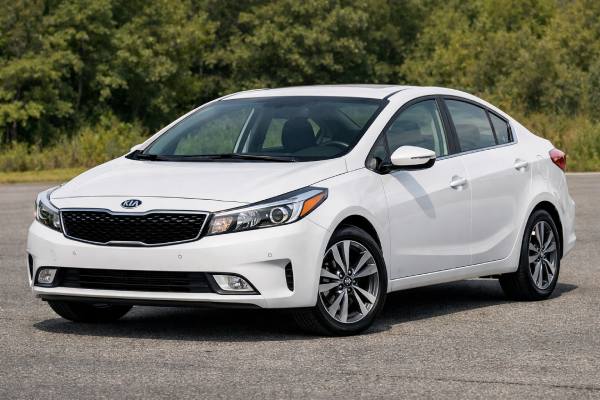
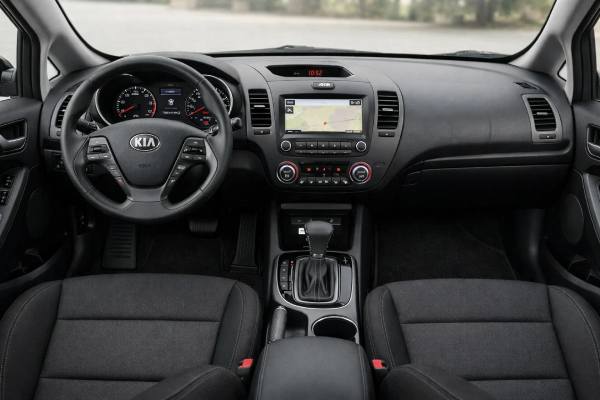
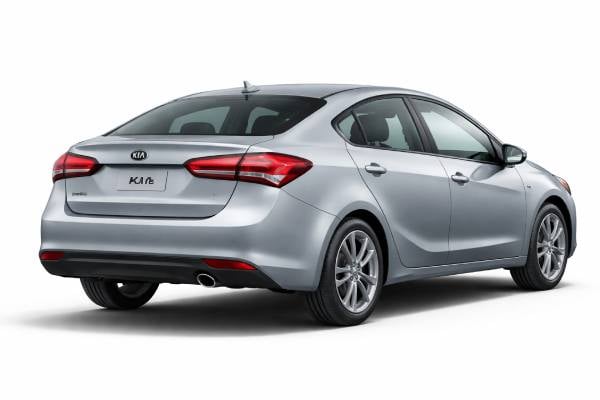
The 2017–2018 facelifted Kia Forte (YD) with the 2.0-liter Nu GDI is an interesting “sweet spot” in the compact-sedan world: simple packaging, a conventional 6-speed automatic, and a naturally aspirated engine tuned for usable midrange rather than headline speed. In everyday ownership, the appeal is straightforward—predictable controls, easy servicing, and cabin space that punches above its price point. The trade-off is that direct injection (GDI) adds complexity compared with MPI versions, mainly around intake valve deposits and fuel-system sensitivity over high mileage.
If you are shopping used, treat this Forte as a condition-led purchase. A well-maintained example can be a comfortable, low-drama commuter, but the best ones come with proof of correct oil service, completed campaigns, and a clean diagnostic scan. Get those basics right, and it is one of the more sensible ways into a modern compact sedan.
Quick Specs and Notes
- Strong everyday usability: roomy front seats, easy controls, and predictable handling for commuting
- Efficient for its size with the 6-speed automatic; highway cruising is relaxed at typical speeds
- GDI ownership requires discipline: consistent oil changes and attention to intake deposit prevention
- Check campaign completion before buying; software updates can materially change engine protection behavior
- Practical interval: change engine oil every 6 months or 7,500 mi (12,000 km) in normal use; halve that for severe driving
Jump to sections
- Kia Forte YD 2.0 GDI in context
- Kia Forte YD specification tables
- Kia Forte YD trims and safety gear
- Reliability patterns and fixes
- Maintenance plan and buying tips
- Road manners and real economy
- Rivals and value comparison
Kia Forte YD 2.0 GDI in context
The facelifted 2017–2018 Forte (YD) sits in the last chapter of a proven, conventional compact-sedan formula. You get a front-engine, front-wheel-drive layout, a torsion-beam rear suspension, and a naturally aspirated 2.0-liter Nu engine paired most commonly with a 6-speed automatic. That combination matters: it keeps costs and complexity down, and it tends to age more gracefully than early small-displacement turbos when maintenance is inconsistent.
The 2.0 Nu GDI’s “direct injection” part is the big distinction. Instead of spraying fuel into the intake ports (like MPI), GDI injects fuel straight into the combustion chamber at high pressure. The advantages are better efficiency potential and stronger response under load—especially at midrange rpm—because the engine can control mixture and timing more precisely. The ownership downside is that intake valves no longer get “washed” by fuel, which can allow carbon deposits to build up over time. Deposit rate depends heavily on driving style (short trips accelerate it), oil quality and change discipline, and the health of the PCV (positive crankcase ventilation) system.
From a buyer’s perspective, think of this Forte as a practical car with one extra layer of due diligence. You are not buying a fragile engine, but you are buying a system that rewards routine. A clean service history is more than a nice-to-have here: consistent oil changes reduce sludge risk, help keep piston rings healthier, and reduce the amount of oil vapor that can feed intake deposits.
In day-to-day use, this Forte’s strongest engineering trait is predictability. Steering is light and consistent, braking hardware is straightforward, and the chassis favors stability over sportiness. It is also a car you can inspect well: most problems show up as clear symptoms—rough idle, misfire codes, delayed starts, abnormal noises, or warning lights tied to stored diagnostic trouble codes.
If you plan to keep the car beyond 150,000 miles (240,000 km), your long-term success hinges on three habits:
- Use the correct oil specification and keep the interval conservative for your usage.
- Don’t ignore drivability changes—address small problems early.
- Verify campaigns, recalls, and software updates have been completed, because they can affect engine protection logic and warranty coverage.
Kia Forte YD specification tables
Below are practical, ownership-relevant specifications for the 2017–2018 facelift Forte (YD) equipped with the 2.0-liter Nu GDI (164 hp class) and the common 6-speed automatic. Exact figures can vary by market, emissions certification, and trim, so treat these as the baseline configuration and verify against the vehicle’s build label and VIN-specific documentation.
Powertrain and efficiency
| Item | Specification |
|---|---|
| Engine code | Nu (2.0 GDI family; market naming varies) |
| Engine layout and cylinders | Inline-4, 4 cylinders, DOHC, 4 valves/cyl |
| Displacement | 2.0 L (1,999 cc) |
| Bore × stroke | 81.0 × 97.0 mm (3.19 × 3.82 in) |
| Induction | Naturally aspirated |
| Fuel system | Gasoline direct injection (GDI) |
| Compression ratio | Typically ~11.5:1 (varies by emissions spec) |
| Max power | 164 hp (122 kW) @ 6,200 rpm (some emissions specs list ~160 hp) |
| Timing drive | Chain |
| Rated efficiency (typical automatic) | Around 7.4 L/100 km combined (about 32 mpg US combined), depending on test cycle |
Real-world highway @ 120 km/h (75 mph): Expect roughly 6.5–7.5 L/100 km (31–36 mpg US) in mild conditions with stock tires, assuming steady cruising and no roof racks. Winter fuel and short-trip operation can move this notably upward.
Transmission and driveline
| Item | Specification |
|---|---|
| Transmission | 6-speed automatic (conventional torque-converter) |
| Drive type | FWD |
| Differential | Open |
Common 6-speed automatic gear ratios (typical): 1st 4.400, 2nd 2.726, 3rd 1.834, 4th 1.392, 5th 1.000, 6th 0.774, final drive about 3.065.
Chassis and dimensions
| Item | Specification |
|---|---|
| Front suspension | MacPherson strut |
| Rear suspension | Coupled torsion beam axle |
| Steering | Electric power steering, rack and pinion |
| Turning circle (kerb-to-kerb) | About 10.6 m (34.8 ft) |
| Brakes (front/rear) | Vented disc / solid disc |
| Brake diameters | ~279 mm (11.0 in) front; ~262 mm (10.3 in) rear |
| Wheelbase | 2,700 mm (106.3 in) |
| Length / width / height | 4,559 / 1,781 / 1,430 mm (179.5 / 70.1 / 56.3 in) |
| Ground clearance | About 135 mm (5.3 in) |
| Fuel tank | ~50 L (13.2 US gal / 11.0 UK gal) |
| Cargo volume (sedan trunk) | ~422 L (14.9 ft³), method varies by standard |
Wheels and tires (common): 205/55 R16 is a frequent “most popular” fitment; some trims use 215/45 R17.
Performance and capability
| Item | Typical value (varies by trim and conditions) |
|---|---|
| 0–100 km/h (0–62 mph) | ~8.0–9.0 s |
| Top speed | ~195–205 km/h (121–127 mph) |
| Braking 100–0 km/h | ~38–42 m (typical for class on all-seasons) |
| Towing capacity | Usually not rated for towing in many markets; treat as “not recommended” unless your local documentation states otherwise |
| Payload | Varies by trim and market; commonly in the 400–500 kg range (880–1,100 lb) |
Fluids and service capacities (owner-focused)
Because capacities vary by pan design, cooler circuits, and market equipment, use these as decision-level guidance, then confirm for the exact VIN.
| Fluid | Specification guidance |
|---|---|
| Engine oil | API SN/ILSAC GF-5 or better; common viscosities 5W-20 or 5W-30 depending on climate |
| Coolant | Long-life ethylene glycol coolant; typically 50/50 premix |
| Automatic transmission fluid | Kia/Hyundai SP-IV class ATF (check label/service info) |
| A/C refrigerant | Commonly R-134a on this generation (market dependent) |
Safety and driver assistance (high-level)
| Item | Notes |
|---|---|
| Crash ratings | IIHS ratings depend heavily on headlights and the availability of front crash prevention; Euro NCAP may not apply to this model/market |
| ADAS suite | Forward collision warning/AEB and lane support may be trim- or package-dependent; verify by VIN and calibration labels after windshield/camera work |
Kia Forte YD trims and safety gear
Trim structure varies by country, but the core pattern for the 2017–2018 facelift is consistent: lower trims prioritize affordability and simple features, while mid and upper trims add the equipment most buyers actually feel every day—wheels/tires, lighting, infotainment, and driver assistance options.
Trims and options you will typically see
Entry trims (often labeled LX or similar):
These usually carry the simplest interior materials, smaller wheels (often 15-inch), and fewer convenience features. In some markets, the entry trim uses the 2.0 MPI engine rather than the 2.0 GDI. If your target is specifically the 164 hp Nu GDI, confirm the engine type on the under-hood emissions label and through the VIN build data.
Mid trims (commonly S or EX equivalents):
This is where the 2.0 GDI most often appears, along with 16-inch wheels, nicer infotainment, and upgraded cabin touches. These trims can be the best ownership balance because they avoid some high-cost features while still providing comfort and resale-friendly equipment.
Option packages (naming varies):
Typical package themes include:
- Infotainment upgrade: larger screen, premium audio, and enhanced connectivity.
- Comfort package: heated seats, upgraded upholstery, and power driver seat.
- Safety package: adds forward collision warning/AEB, lane departure warning or lane keeping, and sometimes blind-spot monitoring/rear cross-traffic alert.
Quick identifiers when shopping
- Engine confirmation: the emissions label or spec label under the hood is the most reliable quick check. It should indicate GDI for this 164 hp variant.
- Wheels and tires: 205/55 R16 is a common “GDI mid-trim” clue, while 215/45 R17 often signals sportier appearance packages.
- Headlight type: lighting performance and safety scores can depend on headlamp configuration. Always test headlights at night if possible; look for uneven cutoff, dim output, or excessive glare.
Safety ratings and what they mean in real shopping
For this generation, safety performance is not one simple number. The biggest variables are:
- Headlights: some trims have notably better beam patterns and output.
- Front crash prevention: AEB availability can change the way the vehicle is evaluated by certain rating bodies.
- Tire condition and brake maintenance: on any used compact sedan, worn tires and old brake fluid can materially change emergency behavior.
Safety systems and ADAS service implications
Common baseline safety equipment includes multiple airbags, ABS, electronic stability control, and traction control. On higher trims or packages, you may see:
- AEB (automatic emergency braking): camera or sensor-based; windshield replacement and camera alignment procedures matter here.
- Lane support: lane departure warning or lane keeping assist; calibration can be required after alignment, steering work, or camera-related service.
- Blind-spot monitoring/rear cross-traffic alert: typically radar-based; bumper repairs can affect sensor mounting and aiming.
When evaluating a used car, do not assume these features work because no warning lights show. Request a scan of stored codes (including “history” codes), confirm the forward camera area is clean and uncracked, and verify that any aftermarket windshield is the correct specification.
Reliability patterns and fixes
This Forte’s overall reliability story is usually shaped less by “hard failures” and more by maintenance quality and campaign completion. The 2.0 Nu GDI can be a durable engine, but like most GDI designs it is less tolerant of neglected oil service and repeated short-trip use.
Common issues (higher prevalence)
- Intake valve deposits (carbon buildup):
Symptoms: rough idle, hesitation at low rpm, reduced fuel economy, and sometimes misfire codes.
Likely root cause: oil vapor and blow-by residue collecting on intake valves, accelerated by short trips and long oil intervals.
Remedy: professional intake cleaning (methods vary by shop), followed by improved maintenance habits. A healthy PCV system and clean air filtration help reduce recurrence. - Ignition and misfire events (including spark plug-related actions on certain builds):
Symptoms: MIL (check-engine light), misfire codes, rough running, and occasional cold-start stumble.
Root cause: spark plugs and coils are wear items; additionally, some production batches may have plug manufacturing defects addressed by service actions.
Remedy: replace plugs with the correct heat range and torque; inspect coils and boots; ensure the engine has the latest applicable service actions completed. - Oil consumption that appears “gradually”:
Symptoms: oil level dropping between changes, blue smoke on hard acceleration (less common), and oily deposits in the intake tract.
Root cause: long intervals, ring deposits, or high blow-by on engines that lived on short trips.
Remedy: shorten oil intervals, verify correct oil grade, check PCV function, and document consumption rate. Address early; ignoring it can worsen deposits and catalyst health.
Occasional issues (medium prevalence)
- High-pressure fuel system sensitivity:
Symptoms: hard starts, hesitation, fuel trims out of range, or fuel pressure-related codes.
Root cause: GDI systems run higher pressures and are more sensitive to contamination and inconsistent fuel quality.
Remedy: avoid questionable fuel sources, replace filters where applicable (some systems are “lifetime” in-tank), and diagnose fuel pressure with proper tools rather than guessing. - Cooling system wear items:
Symptoms: slow coolant loss, sweet smell after shutdown, or overheating in heavy traffic with A/C on.
Root cause: hoses, clamps, radiators, and water pumps age like any other car; neglected coolant accelerates corrosion.
Remedy: pressure test, repair leaks, and keep coolant service on schedule.
Rare but important (high severity)
- Engine protection software campaigns (knock sensor detection logic):
Symptoms: warning lights, reduced power (limp mode), or a diagnostic path that points to engine bearing protection logic.
Root cause: campaigns may add software designed to detect early bearing wear patterns and protect the engine by limiting power.
Remedy: confirm the campaign update has been installed; if the car enters limp mode, follow the manufacturer diagnostic workflow rather than clearing codes and continuing to drive. - Safety recalls:
Certain recalls can involve airbag control modules, latches, or other safety-related components.
Best practice: check the vehicle’s VIN for open recalls and obtain proof of completion from dealer records.
Practical pre-purchase checks to request
- Full service history with oil interval proof (dates and mileage).
- Confirmation of completed recalls and campaigns by VIN.
- A scan report showing current and history codes for engine and body systems.
- A cold start test (listen for abnormal mechanical noise and confirm stable idle).
- A steady-speed highway drive (watch for hunting shifts, vibration, and abnormal fuel economy).
If a seller cannot provide campaign/recall proof, treat that as a price negotiation point and schedule a dealer VIN inquiry immediately after purchase.
Maintenance plan and buying tips
A maintenance plan for the 2.0 Nu GDI Forte should be built around one goal: keep deposits and wear under control. The car is not exotic, but GDI engines reward consistent, conservative service intervals—especially if the vehicle does mostly city driving.
Practical maintenance schedule (distance and time)
Use whichever comes first: distance or time.
- Engine oil and filter: every 7,500 mi (12,000 km) or 6 months in normal driving; every 3,750 mi (6,000 km) or 6 months for severe use (short trips, heavy traffic, extreme temperatures).
- Engine air filter: inspect every 12 months; replace every 15,000–30,000 mi (25,000–50,000 km) depending on dust.
- Cabin air filter: every 12 months or 15,000 mi (25,000 km), sooner if airflow drops.
- Spark plugs: typically 105,000 mi (170,000 km) for long-life plugs, but consider earlier inspection if you see misfires or rough starts.
- Coolant: replace around 10 years/120,000 mi (200,000 km), then every 30,000 mi (50,000 km) or 2–3 years (verify for your market coolant type).
- Automatic transmission fluid: “lifetime” claims aside, plan a drain-and-fill cycle around 60,000–80,000 mi (100,000–130,000 km) for mixed driving; earlier if the car lives in traffic or heat.
- Brake fluid: every 2 years regardless of mileage.
- Brake pads and rotors: inspect at every tire rotation; replace based on thickness and vibration, not time.
- Tire rotation and alignment: rotate every 5,000–7,500 mi (8,000–12,000 km); alignment check annually or after pothole impacts.
- 12 V battery: test annually after year 3; typical replacement window is 4–6 years.
Fluids, specs, and decision-level capacities
- Engine oil: use the viscosity recommended for your climate; 5W-20 is common in many markets, while 5W-30 may be preferred in hotter climates or sustained high-speed use (confirm in official documentation).
- ATF: use the correct OEM-spec fluid; mixing ATF types can cause shift quality issues over time.
- Coolant: stick with the specified long-life coolant and correct mix ratio; don’t “top off” with unknown universal coolant.
Essential torque values (verify for your VIN)
These are the fasteners owners and general shops most often touch:
- Wheel lug nuts: typically around 90–110 Nm (66–81 lb-ft).
- Spark plugs: use the plug manufacturer’s spec and the correct tightening method; overtightening risks thread damage.
Buyer’s guide: what to seek and what to avoid
Seek:
- Evidence of conservative oil intervals and quality filters.
- Completed recalls/campaigns (especially engine-protection and safety items).
- A smooth cold start and stable idle after warmup.
- Clean, consistent transmission behavior in gentle and moderate throttle.
Be cautious with:
- Cars that did mostly short-trip urban driving with long oil intervals.
- Any example with recurring misfire history, “cleared” warning lights, or missing service documentation.
- Aftermarket modifications that affect intake, exhaust, or tuning—these can accelerate deposits and complicate diagnostics.
Durability outlook:
With routine service and prompt attention to drivability changes, this Forte can be a long-lived commuter. The cars that disappoint owners are usually the ones that were “just driven” without disciplined oil service or that have unresolved campaign work.
Road manners and real economy
The 2017–2018 Forte (YD) is tuned for everyday comfort and stability rather than sporty edge. That is good news for most owners: it feels calm on the highway, easy to place in traffic, and forgiving on rough pavement.
Ride, handling, and NVH (noise and vibration)
Ride: The torsion-beam rear suspension is simple and space-efficient, and Kia’s tuning usually prioritizes controlled motions over sharp impact harshness. On stock wheel sizes, the Forte absorbs typical city bumps well. With larger wheels and lower-profile tires, you will hear more road texture and feel sharper edges over potholes.
Handling: Steering is light with predictable on-center behavior. You should not expect strong feedback through the wheel, but you should expect consistency—important for long commutes. In quick direction changes, the car remains stable, with mild understeer at the limit, which is normal for a front-drive compact.
NVH: At city speeds, the drivetrain is generally quiet for the class. At highway speeds, wind noise and tire roar depend heavily on tire choice and door seal condition. A used car with mismatched tires can sound dramatically louder than one with quality, matched all-seasons.
Powertrain character and transmission behavior
The 2.0 Nu GDI’s personality is about clean, linear response. It does not deliver turbo-style surge, but it does build speed confidently once rolling. In traffic, the key advantage is predictable throttle mapping—no waiting for boost, no sudden torque spike.
The 6-speed automatic typically shifts smoothly when healthy. What you want to feel on a test drive:
- Crisp but not harsh upshifts under moderate throttle
- No flare (rev rise) between gears
- No shudder on light acceleration
- Clean kickdown response when you press past mid-throttle
If you notice delayed engagement from Park to Drive, harsh 2–3 shifts, or repeated gear hunting on gentle hills, budget for diagnosis and fluid service.
Real-world efficiency
In mixed use, many owners see mileage close to official combined figures if the car does regular highway runs. The situations that most hurt efficiency are predictable:
- Short trips and cold starts: the engine runs richer until warm, and the catalyst needs temperature.
- High-speed cruising into headwinds: aerodynamic drag rises quickly above 110 km/h.
- Winter fuel and heavy HVAC use: both can add noticeable consumption.
As a practical expectation:
- City-heavy: roughly 8.0–9.5 L/100 km (25–29 mpg US) depending on traffic and warmup time
- Highway steady: roughly 6.5–7.5 L/100 km (31–36 mpg US) at typical speeds
- Mixed commuting: roughly 7.2–8.2 L/100 km (29–33 mpg US)
Performance metrics that matter most
The Forte’s real “performance” is usable passing power and stable braking rather than track numbers. If you care about highway merges and passing:
- The engine feels strongest from midrange rpm; avoid lugging it at very low rpm.
- Passing performance improves noticeably when the transmission drops one or two gears promptly.
For braking and stability, tire quality matters more than almost anything else. A fresh set of reputable tires can make the car feel like a different vehicle in wet and emergency stops.
Rivals and value comparison
To judge this Forte fairly, compare it with other mainstream compact sedans of the same era, not with newer platforms that gained major structural and ADAS improvements. In that frame, the Forte’s value comes from comfort per dollar, straightforward mechanicals, and generally reasonable operating costs—assuming the GDI-related maintenance discipline is there.
Versus Toyota Corolla (similar years)
Corolla strengths: proven long-term reputation, typically excellent parts availability, and very predictable resale.
Forte advantage: often more features for the money and a roomier feel in some seating positions.
Decision point: if you want the lowest-maintenance mindset and can accept fewer features at a given price, Corolla is hard to argue against. If you want better equipment value, the Forte often wins on purchase price.
Versus Honda Civic (similar years)
Civic strengths: sharper driving dynamics, strong efficiency, and excellent ergonomics.
Forte advantage: simpler ownership in certain configurations and often lower used pricing for similar mileage.
Decision point: choose Civic if you care about steering feel and “nice to drive” every day. Choose Forte if comfort and value matter more than sporty character.
Versus Mazda3 (similar years)
Mazda3 strengths: premium-like interior feel in higher trims, engaging handling, and strong build quality perception.
Forte advantage: usually more rear space and a more relaxed ride, depending on wheel size.
Decision point: Mazda3 is the driver’s pick; Forte is the practical pick. Your local road quality and your tolerance for a firmer ride should guide you.
Versus Hyundai Elantra (platform cousin)
Elantra strengths: similar ownership logic, broad parts ecosystem, and often similar feature sets.
Forte advantage: depending on trim, you may find a better equipment mix or more attractive pricing in the used market.
Decision point: buy the best condition example regardless of badge. Service history and campaign completion matter more than the small model differences.
Versus Chevrolet Cruze and Volkswagen Jetta (where applicable)
These can tempt buyers with driving feel or highway stability, but long-term cost and complexity vary more by engine and transmission choice. If you want the most predictable ownership, the Forte generally stays on the “safer bet” side, especially if you avoid neglected examples.
Bottom-line verdict
Choose the 2017–2018 Forte (YD) 2.0 Nu GDI if you want:
- A comfortable compact sedan with conventional mechanicals
- Solid efficiency without turbo complexity
- Good used-market value—features per dollar—when service history is strong
Skip it (or be very selective) if:
- You cannot confirm conservative oil service and completed campaigns
- You mainly do short trips and do not plan to adjust maintenance habits
- The test drive reveals idle roughness, persistent misfire history, or questionable transmission behavior
A “good” Forte in this spec is genuinely easy to live with. A neglected one can be a slow drain of time and diagnosis. Treat it like a maintenance-led purchase, and it usually rewards you.
References
- 2018 Kia Forte Specifications 2018 (Specifications)
- 2017 Kia Forte 4-door sedan 2017 (Safety Rating)
- Fuel Economy of the 2018 Kia Forte 2018 (Official Fuel Economy)
- Check for Recalls: Vehicle, Car Seat, Tire, Equipment 2026 (Recall Database)
- Kia America, Inc. 2024 (Campaign Notice)
Disclaimer
This article is for informational purposes only and is not a substitute for professional diagnosis, inspection, or repair. Specifications, torque values, service intervals, and procedures can vary by VIN, market, engine calibration, and installed equipment. Always verify details using official service information and documentation for the exact vehicle you are working on.
If this guide helped, please consider sharing it on Facebook, X, or your favorite forum to support our work.