
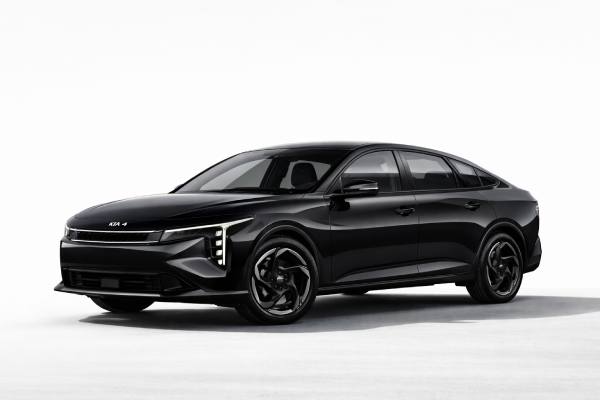
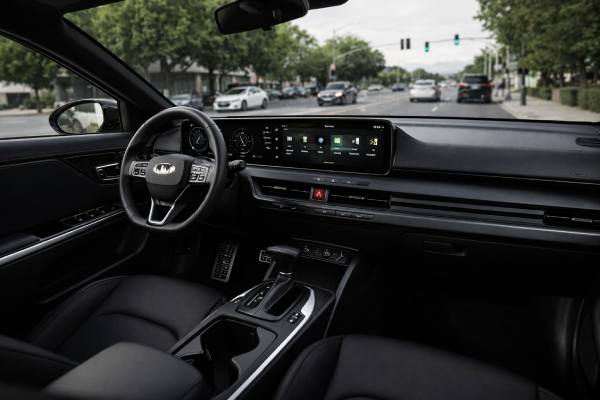
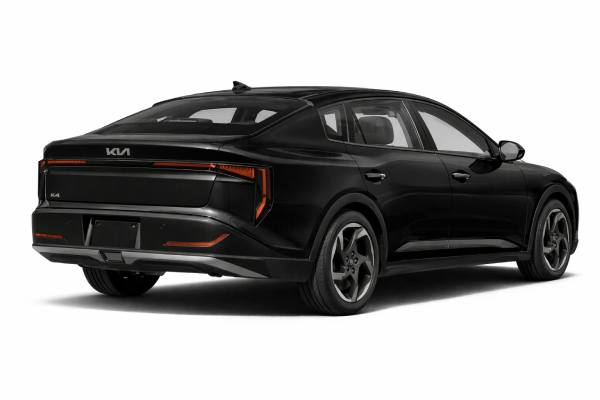
The 2025–present Kia K4 (CL4) with the 2.0-liter, 147 hp engine is the “everyday” side of the K4 lineup: simple, efficient, and tuned for commuting comfort rather than headline speed. The appeal is straightforward—an MPI (multi-port injected) engine that avoids many direct-injection quirks, a smooth IVT (Kia’s CVT-style automatic), and a cabin and tech package that aims above older compact-sedan norms. Because this is a first model year for an all-new nameplate, ownership is less about proven long-term patterns and more about smart risk control: verify updates, stay on top of fluids, and choose trims for the features you’ll actually use.
This guide focuses on the 2.0/147 hp configuration and highlights what matters most: specs and dimensions, real-world driving, likely early-life issues, and a practical maintenance plan.
Owner Snapshot
- Strong space-for-size packaging, with a stable highway feel for a compact sedan.
- MPI 2.0 favors straightforward upkeep over maximum output.
- Good everyday efficiency potential when driven gently and kept on stock tire sizes.
- First-year model realities: expect occasional software and sensor calibration updates.
- Plan engine oil service every 12,000 km (8,000 mi) or 12 months (sooner for short trips and cold climates).
Guide contents
- Kia K4 CL4 ownership overview
- Kia K4 2.0 specs and dimensions
- Kia K4 trims, options, and safety tech
- Reliability watchlist and recalls
- Maintenance plan and buying tips
- On-road performance and economy
- K4 2.0 vs key rivals
Kia K4 CL4 ownership overview
For most buyers, the 2.0-liter K4 is about low-friction daily use: predictable power delivery, relaxed cruising, and manageable running costs. The engine’s character is linear and calm—there’s enough torque for city merges and steady-state highway grades, but it won’t feel “punchy” without downshifts. That’s where the IVT matters. It’s designed to keep revs low when you’re light on the throttle, then raise engine speed quickly under heavier demand. If you’re new to CVT-type behavior, expect a slightly different rhythm than a stepped automatic: more “hold” at a chosen rpm instead of distinct shifts.
Where the K4 tends to win is the overall platform feel. Modern compact sedans are increasingly tuned for quietness and stability, and the K4 aims for a mature, mid-size-like vibe in the way it tracks at speed and filters broken pavement. The chassis is also less sensitive than older designs to minor alignment drift, although tire selection still makes a noticeable difference (especially if you move to wider, heavier wheels).
Ownership in the first few years should be approached with a “systems” mindset:
- Software matters. Infotainment stability, phone pairing, and driver-assist sensor logic can improve with updates. If you’re buying used, ask for proof of dealer-performed campaigns and check menus for current software versions.
- Fluids matter more than marketing. Long service intervals may look attractive, but short-trip driving and cold starts are hard on oil and condensation control. If your use is mostly urban, a shorter oil interval is cheap insurance.
- Tires define the verdict. Many “comfort vs handling” opinions come down to tire model, wear state, and pressure. If you test-drive one that feels noisy or nervous, look first at tires and alignment before blaming the car.
The 2.0 K4 also has a clear role inside Kia’s own range: it’s the sensible choice next to the more performance-oriented turbo trims. If your priority is smooth commuting and straightforward maintenance, the 2.0 is the version that best fits that brief.
Kia K4 2.0 specs and dimensions
Below are the key specs for the Kia K4 (CL4) with the 2.0-liter 147 hp engine. Values can vary slightly by trim, wheels, and market equipment, so treat them as configuration-level reference points—not VIN-level absolutes.
Powertrain and efficiency (2.0 MPI)
| Item | Spec |
|---|---|
| Engine code | 2.0 MPI (market labeling varies) |
| Layout | Inline-4, DOHC, 16 valves |
| Bore × stroke | 81.0 × 97.0 mm (3.19 × 3.82 in) |
| Displacement | 2.0 L (1,999 cc) |
| Induction | Naturally aspirated |
| Fuel system | MPI (multi-port injection) |
| Compression ratio | 12.5:1 |
| Max power | 147 hp (110 kW) @ 6,200 rpm |
| Max torque | 179 Nm (132 lb-ft) @ 4,500 rpm |
| Timing drive | Chain |
| Rated efficiency (typical) | 7.4–6.7 L/100 km (32–35 mpg US, 38–42 mpg UK)* |
| Real-world highway @ 120 km/h | ~6.5–7.5 L/100 km (31–36 mpg US)** |
*Efficiency varies by wheels/trim and test cycle.
**Real-world results depend heavily on temperature, tire type, and speed discipline.
Transmission and driveline
| Item | Spec |
|---|---|
| Transmission | IVT (CVT-type automatic) |
| Drive type | FWD |
| Differential | Open |
Chassis and dimensions
| Item | Spec |
|---|---|
| Front suspension | MacPherson strut |
| Rear suspension | Multi-link |
| Brakes (typical by trim) | 4-wheel disc (sizes vary) |
| Common tire sizes | 215/55 R17 or 235/40 R18 (trim-dependent) |
| Ground clearance | ~140 mm (5.5 in) |
| Length | 4,709 mm (185.4 in) |
| Width | 1,849 mm (72.8 in) |
| Height | 1,420 mm (55.9 in) |
| Wheelbase | 2,720 mm (107.1 in) |
| Turning circle (kerb-to-kerb) | ~10.7 m (35.2 ft) |
| Curb weight (range) | ~1,388–1,439 kg (3,060–3,172 lb) |
| Fuel tank | ~56.0 L (14.8 US gal / 12.3 UK gal) |
| Cargo volume (sedan) | ~413 L (14.6 ft³), seats up |
Performance (typical expectations)
| Metric | Value |
|---|---|
| 0–100 km/h (0–62 mph) | ~8.4 s (0–60 mph ~8.1 s) |
| Top speed | ~209 km/h (130 mph)* |
| Braking (dry, good tires) | ~36–38 m (118–125 ft) from 100–0 km/h |
*Top speed can be electronically limited and trim-dependent.
Safety and driver assistance (availability summary)
| Item | Notes |
|---|---|
| Crash ratings | Check current listings by build date and trim; results can change as tests update |
| ADAS (typical availability) | AEB, lane support, blind-spot features, and adaptive cruise may be standard or optional depending on trim/package |
| Headlights | Performance varies by headlamp type; verify your trim’s rating where applicable |
Kia K4 trims, options, and safety tech
The 2.0/147 hp K4 usually anchors the value-oriented trims, while higher-performance trims may switch engines. That split matters because the best “deal” depends on whether you value comfort features, safety tech, or powertrain upgrades.
Trims and options: what to look for
Common trim logic tends to follow this pattern (names can vary by market):
- Entry trim (often LX-equivalent): focuses on core safety, a basic wheel/tire package, and fewer luxury touches. This is often the lightest configuration, which helps efficiency and ride softness.
- Mid trims (often LXS/EX-equivalent): typically add convenience items that affect daily satisfaction more than you’d expect—better seat materials, more adjustment range, upgraded infotainment, and additional driver-assist options.
- Sport appearance trim (often “GT-Line” style): may keep the 2.0 engine but add larger wheels, different bumpers, and sometimes firmer tuning. This can look great, but bigger wheels can reduce ride compliance and raise tire replacement cost.
Quick identifiers when shopping used:
- Wheel size tells you a lot. 17s usually ride more comfortably and cost less to replace than 18s.
- Headlight housing and signature lighting often differentiate option packages more reliably than badges.
- ADAS button layout on the steering wheel (lane assist, cruise functions) can quickly confirm whether the car has the higher driver-assist suite.
Year-to-year changes on a new model line are often software-led at first. If you’re choosing between two otherwise similar cars, prioritize:
- documented update history,
- the driver-assist features you actually want, and
- the wheel/tire package you can live with long term.
Safety ratings: how to read them
Safety scores are not “one number forever.” Testing bodies update protocols, and results can depend on headlight performance, crash-avoidance equipment, and even build dates. For the U.S. market, Insurance Institute for Highway Safety results can differ based on specific headlights and the availability of pedestrian AEB. For government-style star ratings, National Highway Traffic Safety Administration entries can appear later than a vehicle’s on-sale date.
Practical takeaway: treat ratings as trim + equipment + build-date dependent. When you narrow to a VIN, check the exact configuration and confirm whether any required equipment (headlights, AEB calibration) matches the rating version.
Safety systems and ADAS: service implications
Modern driver-assist systems add real value, but they also add service requirements:
- Windshield replacements often require camera recalibration.
- Front bumper work can trigger radar alignment procedures.
- Wheel alignment affects lane-centering behavior more than most owners realize.
If you want the convenience of higher-level assistance features, keep a small budget buffer for calibration after glass, bumper, or suspension work. It’s normal, but it’s part of “true cost of ownership” for a modern compact sedan.
Reliability watchlist and recalls
Because the K4 is new, reliability discussion should be framed as two buckets: (1) known behaviors of the 2.0 MPI + IVT drivetrain family, and (2) early-production “new model” issues that often center on electronics, sealing, and sensor logic.
Likely issues by prevalence and cost tier
Common (low to medium cost):
- Infotainment bugs and phone pairing instability
Symptoms: random disconnects, frozen screens, slow boot.
Root cause: software and compatibility quirks across phone OS versions.
Remedy: update software, reset profiles, confirm USB cable quality, and check for dealer campaigns. - ADAS warnings that come and go
Symptoms: camera/radar unavailable messages in heavy rain, glare, or slush.
Root cause: sensor blockage, calibration sensitivity, or voltage dips.
Remedy: clean sensors, check 12 V battery health, and recalibrate after glass/bumper work.
Occasional (medium cost):
- IVT shudder or “rubber band” feel under certain throttle patterns
Symptoms: vibration during light acceleration, odd flare behavior on hills.
Root cause: fluid condition, adaptive learning, or wear patterns influenced by heat.
Remedy: verify correct fluid spec, perform relearn procedures where supported, and consider earlier fluid changes for severe use. - Wind noise or water sealing complaints
Symptoms: whistling at highway speed, wet carpet after storms.
Root cause: door glass alignment, weatherstrip seating, or drain management.
Remedy: adjust seals and verify drain paths before interior damage spreads.
Rare (higher cost):
- Sensor module failures (radar/camera) or persistent diagnostic faults
Symptoms: repeated fault codes, lane/forward assist disabled permanently.
Root cause: component failure or wiring/connector issues.
Remedy: proper diagnostic scan, connector inspection, and module replacement if confirmed.
Mileage/age bands that matter
- 0–20,000 km (0–12k mi): software updates, minor trim rattles, and fit-and-finish fixes are most common.
- 30,000–80,000 km (20k–50k mi): tire wear patterns, alignment drift, and brake maintenance become the main “feel” issues.
- 80,000 km+ (50k mi+): the IVT’s fluid condition and cooling history start to matter more, especially for hot climates and heavy commuting.
Recalls, TSBs, and how to verify
For any modern car—especially a first-year model—assume that service actions may exist even if you never experienced symptoms. The practical approach:
- Run an official VIN check for recalls and open campaigns.
- Ask a dealer for the completed service history printout.
- Confirm that software updates were applied (infotainment and any driver-assist modules).
If you’re buying used, “no warning lights today” is not the same as “fully updated.” A well-documented update history is one of the simplest ways to reduce early ownership surprises.
Maintenance plan and buying tips
A good maintenance plan for the 2.0 K4 is less about exotic procedures and more about consistency. The engine is designed for normal-use durability, but the way many people actually drive—short trips, cold starts, and stop-and-go traffic—pushes oil and moisture control harder than highway miles do.
Practical maintenance schedule (distance/time)
Use this as a sensible baseline, then tighten intervals for severe use (short trips, extreme heat/cold, dusty roads, heavy city driving).
- Engine oil and filter: every 12,000 km (8,000 mi) or 12 months; severe use 8,000 km (5,000 mi) or 6 months
- Tire rotation: every 8,000–12,000 km (5k–8k mi)
- Engine air filter: inspect every service; replace 24,000–48,000 km (15k–30k mi) depending on dust
- Cabin air filter: 15,000–20,000 km (10k–12k mi) or annually
- Brake fluid: every 2 years
- Coolant: typically long-life; plan 160,000–200,000 km (100k–120k mi) or 10 years unless your manual specifies earlier
- Spark plugs (iridium, typical): 160,000 km (100k mi) range
- IVT fluid: if your market lists it as “lifetime,” treat that as ideal conditions; for long-term ownership consider 60,000–100,000 km (40k–60k mi) depending on climate and traffic
- 12 V battery test: annually after year 3; replacement often 4–6 years depending on climate
Fluid specs and “decision-grade” notes
Exact specs vary by market, but the decision points are consistent:
- Use the exact oil viscosity and service category listed for your VIN (modern engines are sensitive to oil quality, not just weight).
- Use correct IVT/CVT fluid only—universal ATF is a false economy.
- If you live in a cold region, confirm the coolant mix ratio is correct before winter.
Essential torque values (verify by VIN)
Keep these as “order-of-magnitude” guidance, not a substitute for factory documentation:
- Wheel lug nuts: typically 90–110 Nm (66–81 lb-ft)
- Engine oil drain plug: often 30–45 Nm (22–33 lb-ft) depending on pan design
Buyer’s guide: what to inspect
Pre-purchase checklist
- Even tire wear across the axle (alignment and suspension health).
- Smooth pull-away with no IVT shudder when warm.
- No persistent ADAS faults; test lane and cruise functions on a clear road.
- No water in the trunk/spare well; check seals and rear light areas after rain.
- Confirm all keys, full service records, and campaign completion.
Best configurations for long-term satisfaction
- Favor 17-inch wheels if comfort and cost control matter most.
- Choose the ADAS suite you’ll actually use; it’s easier to buy it upfront than retrofit features later.
- If you plan to keep the car beyond warranty, prioritize documented updates and conservative maintenance over the highest trim.
On-road performance and economy
The 2.0 K4 drives like a modern commuter sedan should: calm, predictable, and biased toward comfort. The chassis tuning is aimed at stability first. On the highway it tends to track straight without constant micro-corrections, and the suspension does a good job of smoothing the fast, small bumps that make some compact sedans feel busy. In town, the ride is usually most pleasant on smaller wheel packages; larger wheels sharpen response but can add impact harshness over pothole edges.
Powertrain character
With 147 hp, acceleration is adequate rather than eager. The engine’s strongest trait is consistency: no turbo lag, no surprise torque spikes—just steady pull that builds with revs. The IVT’s behavior defines the subjective experience:
- Under light throttle, it keeps revs low for quiet cruising.
- Under heavier throttle, it raises rpm quickly and holds it, which can sound “busy” even if speed is increasing normally.
- On hills, it may hover at a higher rpm to maintain speed; that’s normal CVT logic, not necessarily a fault.
If you dislike that feel, the best mitigation is driving technique: use smoother throttle inputs and anticipate merges earlier rather than demanding a sudden burst at the last second.
Real-world efficiency
Expect strong results on steady highway cruising, with mixed driving depending on traffic density and temperature. Cold weather can raise consumption noticeably because the engine must warm up and cabin heat is “waste heat” dependent. Common real-world patterns:
- City-heavy, short trips: economy drops the most; oil interval should shorten too.
- Highway at 100–110 km/h (60–70 mph): typically the sweet spot.
- Highway at 120–130 km/h (75–80 mph): consumption rises quickly; aerodynamic drag dominates.
Tires matter here. Wider performance tires and heavier wheels often cost a few percent in economy, and underinflation can cost more than most owners realize.
Braking, steering, and NVH
Braking feel is usually progressive and easy to modulate. The biggest braking differences come from tire grip and pad compound rather than hardware alone. Steering is tuned for low effort and confidence, not heavy feedback. Cabin noise is generally well-controlled, but you’ll hear more road noise on coarse asphalt, especially with larger wheel/tire packages.
If your priority is a relaxed daily drive with reasonable passing power and good highway composure, the 2.0 K4 fits the brief. If you want stronger midrange punch for frequent overtakes or steep grades, you’ll likely prefer the turbo variants—at the cost of added complexity.
K4 2.0 vs key rivals
The compact-sedan class is crowded, so the right comparison depends on what you value: efficiency, long-term simplicity, driving feel, or the availability of advanced safety features at a given price.
Versus mainstream efficiency leaders
- Toyota Corolla: Often the benchmark for low operating drama and strong resale. The K4’s advantage is usually cabin presentation and feature value; the Corolla’s advantage is long-established ownership data and reputation.
- Honda Civic: Typically feels more athletic in steering and chassis response. The K4 tends to counter with a calmer ride and potentially stronger value per trim step, depending on pricing.
Choose the K4 2.0 if your priority is relaxed comfort and you want modern features without jumping to a higher output engine.
Versus “near-premium feel” alternatives
- Mazda3: Often wins on steering feedback, interior “premium” feel, and cohesive driving dynamics. The K4 tends to emphasize space, tech availability, and a more isolated ride.
- Hyundai Elantra: Shares a similar modern-tech approach in the segment. K4 vs Elantra often comes down to design preference, pricing, and which trim gives you the features you want without forcing bigger wheels or unwanted packages.
Versus value-focused comfort picks
- Nissan Sentra: Usually a comfort-forward option with a quiet cabin in higher trims. The K4’s edge is often newer platform packaging and feature availability; Sentra can be compelling if you find a strong deal.
The “new model” factor
One honest advantage rivals may have is time: more long-term reliability data and a clearer picture of recurring issues. The K4 counters with a fresh platform, modern cabin tech, and (in many markets) a strong feature set for the money.
If you plan to keep the car well past warranty, prioritize:
- conservative maintenance,
- documented updates and campaigns,
- and a trim that avoids cost multipliers you don’t benefit from (especially oversized wheels).
Done that way, the 2.0 K4 can be a sensible, comfortable daily sedan that’s easy to live with.
References
- Vehicle Detail Search – 2025 Kia K4 (2.0L) | NHTSA 2025 (Recall Database)
- Vehicle Detail Search – 2025 Kia K4 | NHTSA 2025 (Recall Database)
- 2025 Kia K4 Specifications 2025 (Technical Specifications)
- 2025 TOP SAFETY PICKs 2025 (Safety Rating)
Disclaimer
This article is for informational purposes only and is not a substitute for professional diagnosis, inspection, or repair. Specifications, torque values, service intervals, and procedures can vary by VIN, market, powertrain, and equipment. Always verify details using your official Kia service documentation for your exact vehicle.
If this guide helped, consider sharing it on Facebook or X to support our work.