
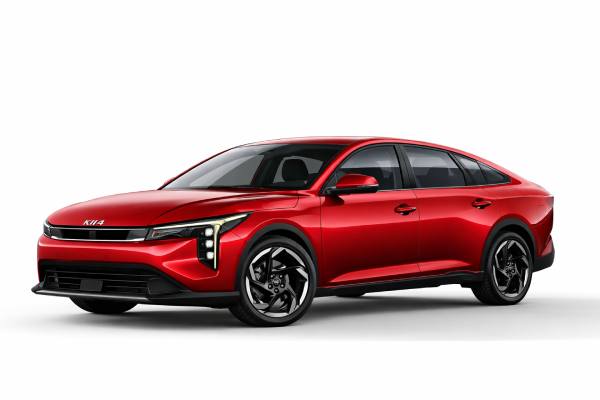
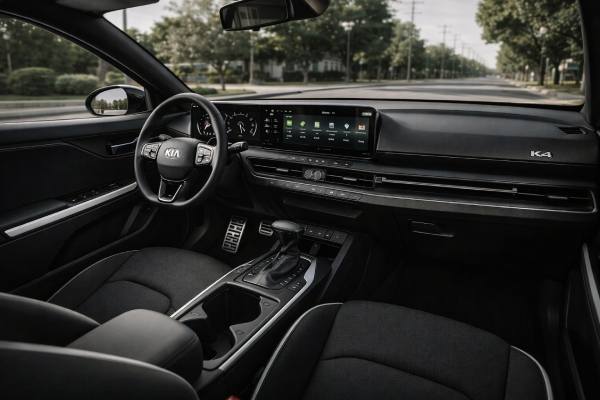
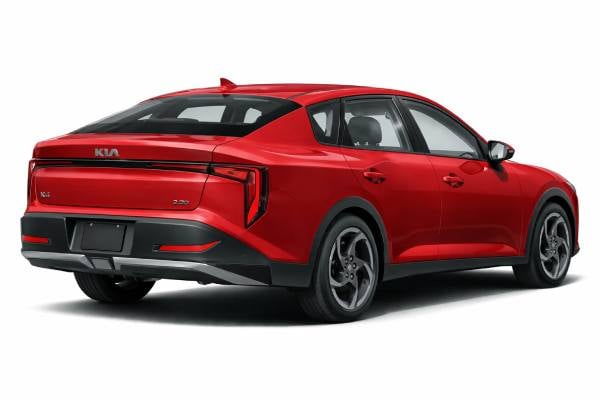
The Kia K4 (CL4) with the 1.6-liter turbo is the “grown-up quick” version of Kia’s compact sedan: strong mid-range torque, an 8-speed automatic, and a chassis tuned to feel more planted than economy-focused predecessors. In day-to-day driving it behaves like a small grand tourer—quiet enough on the highway, stable over long sweeps, and responsive when you ask for a pass—without demanding constant attention. The trade-off is that modern turbo-GDI (gasoline direct injection) engines reward consistent oil quality and warm-up habits, especially if your driving is mostly short trips. Because the K4 is new, long-term reliability data is still forming, so the smartest ownership approach is preventive: follow severe-service intervals if your usage matches them, stay current on software updates, and keep documentation for warranty and resale.
Owner Snapshot
- Strong passing power from low-to-mid rpm; the 8-speed keeps it in the torque band without feeling busy.
- Good highway comfort for a compact sedan, helped by a longer wheelbase and a more settled ride.
- Useful everyday efficiency for the performance level, especially on steady-speed commuting.
- Plan on stricter oil-change discipline if you do short trips or lots of stop-and-go driving.
- Rotate tires every 8,000–10,000 km (5,000–6,000 mi) to keep the front axle wearing evenly.
Navigate this guide
- Kia K4 CL4 turbo in context
- Kia K4 1.6T specs and measurements
- Kia K4 turbo trims and safety tech
- Reliability watchlist and service actions
- Maintenance plan and buying advice
- Real-world driving and efficiency
- How it stacks up against rivals
Kia K4 CL4 turbo in context
The 1.6 turbo K4 is the powertrain choice for drivers who want “easy speed” rather than a high-rev personality. Peak numbers matter less than the shape of the torque curve: in normal traffic, the car feels alert because you do not need to rev it hard to get moving, merge, or overtake. Kia pairs that engine with a conventional 8-speed automatic (not a CVT), and that decision shapes the ownership experience in a good way—heat management is simpler than a dual-clutch in heavy traffic, and the shift logic is easier to live with when you crawl, park, or do repeated short errands.
The platform’s headline change is packaging. A longer wheelbase typically improves straight-line stability and reduces the “busy” ride some compacts get on rough highways. In practice, it also makes the cabin feel less cramped, which matters if the K4 is doing commuter duty with adults in the back seat. Even if you never measure it, you notice it when passengers stop negotiating knee room.
From an engineering standpoint, this model sits at an interesting intersection: it is modern enough to include advanced driver assistance and over-the-air update capability on many trims, but still simple enough to be maintained like a normal gasoline sedan. That is good news for long-term costs—no high-voltage battery system to manage—while still giving you the safety tech and connectivity buyers now expect.
If you are cross-shopping, think of the K4 turbo as a compact sedan with near-midsize road manners. The best use case is mixed driving: city congestion during the week, long highway stints on weekends, and occasional brisk back-road work where torque and chassis balance matter more than outright horsepower.
Kia K4 1.6T specs and measurements
Below are the core specifications for the 1.6-liter turbo K4. Availability and exact numbers can vary by market and trim, so treat this as the typical North American configuration unless your local documentation states otherwise.
Powertrain and efficiency
| Item | Specification |
|---|---|
| Code | 1.6 Turbo GDI (engine family; market-specific code may differ) |
| Engine layout and cylinders | Inline-4, DOHC, 16-valve |
| Displacement | 1.6 L (1,598 cc) |
| Induction | Turbocharged |
| Fuel system | Gasoline direct injection (GDI) |
| Compression ratio | 10.5:1 |
| Bore × stroke | 75.6 × 89.0 mm (2.98 × 3.50 in) |
| Max power | 190 hp (142 kW) @ 6,000 rpm |
| Max torque | 264 Nm (195 lb-ft) @ 1,700–4,500 rpm |
| Timing drive | Chain |
| Rated efficiency (EPA, typical) | 9.0 / 6.5 / 8.1 L/100 km (26 / 36 / 29 mpg US) city / hwy / combined |
| Real-world highway @ 120 km/h (75 mph) | Commonly ~6.8–7.6 L/100 km (31–35 mpg US), temperature and tires matter |
Transmission and driveline
| Item | Specification |
|---|---|
| Transmission | 8-speed automatic |
| Drive type | FWD |
| Differential | Open (traction control uses brake-based torque vectoring) |
Chassis and dimensions
| Item | Specification |
|---|---|
| Suspension (front / rear) | MacPherson strut / multi-link |
| Steering | Electric power steering (EPS) |
| Wheelbase | 2,720 mm (107.1 in) |
| Length | 4,710 mm (185.4 in) |
| Width | 1,850 mm (72.8 in) |
| Height | 1,420 mm (55.9 in) |
| Turning circle (kerb-to-kerb) | 11.0 m (36.1 ft) |
| Kerb (curb) weight | 1,439–1,461 kg (3,172–3,220 lb) (trim dependent) |
| Fuel tank | 47 L (12.4 US gal / 10.3 UK gal) |
| Cargo volume (seats up) | 413 L (14.6 ft³), method varies by market |
Performance and capability
| Item | Typical value |
|---|---|
| 0–100 km/h (0–62 mph) | ~7.3–8.0 s (trim, tires, conditions) |
| Top speed | Typically ~210–225 km/h (130–140 mph), market-limited |
| Braking 100–0 km/h | Often ~36–39 m (118–128 ft), tire-dependent |
| Towing capacity | Not typically rated for towing in many markets |
| Payload | Varies by trim and market; check door-jamb label |
Fluids and service capacities (verify by VIN)
Public spec sheets often omit capacities. Use your owner’s manual or service documentation for exact values. Typical ranges for this class/powertrain are:
| Fluid | Typical spec (confirm locally) | Typical capacity |
|---|---|---|
| Engine oil | API SP / ILSAC GF-6; viscosity commonly 0W-20 or 5W-30 | ~4.5–5.0 L (4.8–5.3 US qt) |
| Coolant | Long-life ethylene glycol, 50/50 mix | ~6.0–7.0 L (6.3–7.4 US qt) |
| Automatic transmission | OEM-specified ATF for 8AT | ~7.0–8.0 L total (drain/fill less) |
| A/C refrigerant | R-1234yf (common in newer models) | label-specific |
| Key torque specs (typical ranges) | Lug nuts ~90–110 Nm (66–81 lb-ft) | verify exact spec |
Safety and driver assistance (high-level)
| Item | Notes |
|---|---|
| Crash ratings | Availability depends on test body publishing schedules |
| ADAS suite | Forward collision avoidance, lane support, and adaptive cruise typically available; standard vs optional varies by trim |
Kia K4 turbo trims and safety tech
For the 1.6 turbo K4, trims usually separate into two groups: value-focused models that concentrate on core comfort features, and sport-appearance or technology-focused trims that bundle more driver assistance and premium interior equipment. The powertrain itself may be restricted to higher trims in some markets, so start your search by confirming the turbo badge and the 8-speed automatic in the listing details (or by decoding the VIN/build sheet at a dealer).
Trims and options that matter most
When you compare listings, prioritize “functional” options over cosmetics:
- Tire and wheel package: Larger wheels can sharpen steering response but often add road noise and increase tire cost. If you drive broken pavement daily, the smaller wheel option can feel more refined and be cheaper to keep aligned.
- Headlights: Higher trims may include better projector LEDs and smarter automatic high beams. This can matter more than you think if you do rural night driving.
- Seat material and ventilation: Heated seats are a real quality-of-life improvement in winter climates. Ventilated seats are more variable—great when they are strong, forgettable when they are mild.
- Infotainment tier: Look for wireless phone integration if you hate cables, and confirm whether navigation or premium audio is bundled with a tech package.
- Chassis tuning differences: If your market offers appearance trims with the same suspension, don’t assume “sport” means firmer. Drive both if ride quality is important.
Quick identifiers you can use on the lot:
- Turbo models should list 1.6T (or similar) and the 8-speed automatic.
- A higher-trim interior often shows upgraded seat upholstery, larger infotainment screen, and additional camera views (surround/parking) where fitted.
- Window stickers usually spell out whether advanced safety functions are standard or packaged.
Safety ratings and what they mean
Two points keep buyers from misreading ratings:
- Test versions change. A “Top Safety Pick” style award can be updated year-to-year. A model can remain structurally similar while the test gets harder.
- Headlight performance matters. Some trims score better simply because the headlights and automatic high-beam system are better on that version.
In North America, the most commonly referenced body is Insurance Institute for Highway Safety. If your local market uses different tests or publishes results later, treat the first year of a new model as “ratings still settling,” then re-check once more data appears.
Driver assistance and service implications
Modern ADAS features depend on cameras and radar alignment. After a windshield replacement, front-end collision repair, or even an alignment on some vehicles, the system may require calibration. Practical advice:
- Ask for documentation showing calibrations were completed after any crash repair.
- During a test drive, verify lane support and adaptive cruise behave smoothly and do not throw warning lights.
- If you plan to run non-standard tire sizes, understand it can affect speed sensor calculations and system behavior.
Reliability watchlist and service actions
Because the K4 is new, reliability discussion should be framed as a watchlist rather than a verdict. The good news is that the turbocharged 1.6-liter GDI + conventional 8-speed automatic is a well-understood formula across the industry. The caution is that turbo heat, direct injection, and modern emissions controls can turn “normal wear” into expensive repairs if maintenance is stretched.
Common vs occasional vs rare: what to watch
Common (usually low-to-medium cost if caught early)
- Carbon buildup on intake valves (GDI trait): Symptoms can include rough idle, reduced efficiency, and hesitation. It tends to show up earlier with lots of short trips and extended oil intervals. Remedy is often intake cleaning (chemical or walnut blasting), plus improving maintenance habits.
- PCV and crankcase ventilation sensitivity: A sticky PCV system can increase oil vapor ingestion and deposits. Symptoms are oil consumption changes or intermittent idle issues. Remedy is inspection and replacement if out of spec.
- Battery and charging complaints on short-trip cars: Start-stop usage and short commutes can wear 12 V batteries quickly. Test the battery rather than guessing.
Occasional (cost varies; driving conditions matter)
- Turbo plumbing leaks or sensor faults: Small boost leaks can feel like a “lazy” engine. Watch for whistling, reduced torque, and stored fault codes. Remedy ranges from clamps/hoses to sensor replacement.
- Cooling system seepage: Modern plastic housings and quick-connect fittings can weep over time. Catching a seep early avoids overheating risk.
Rare (higher cost, but uncommon with proper care)
- Turbocharger failure: More likely if oil quality is poor, oil changes are delayed, or the engine is shut down repeatedly after hard driving without cool-down. Prevention is the real win here.
Software and calibrations
On modern cars, some “mechanical” symptoms are fixed with updated calibrations: shift logic improvements, sensor plausibility thresholds, and ADAS behavior refinements. If you feel a repeatable hesitation, odd shift hunting, or persistent warnings, ask a dealer to confirm:
- Powertrain software is current (ECU/TCU updates).
- ADAS sensors are calibrated after any windshield or front-end work.
- Infotainment updates are installed if you see frequent resets.
Recalls, TSBs, and how to verify
For any new model, make recall checks part of your routine ownership:
- Verify recall status using your VIN in official databases and keep the completion paperwork.
- If buying used, ask for dealer service history printouts showing recall completion dates and mileage.
In the U.S., recall information is typically published through National Highway Traffic Safety Administration, but Kia’s owner portal can be faster for brand-specific campaign details.
Maintenance plan and buying advice
A turbo compact can be very reliable if you treat maintenance as a system, not a checklist. The goal is heat control (oil quality), cleanliness (filters), and consistent fluid condition (transmission and brake hydraulics). Use the intervals below as a practical baseline, then tighten them if you match “severe service” conditions: frequent short trips, heavy traffic, very hot/cold climates, mountainous driving, or dusty roads.
Practical maintenance schedule (distance and time)
Engine oil and filter
- Normal use: every 12,000 km (7,500 mi) or 12 months
- Severe use: every 8,000 km (5,000 mi) or 6 months
Tip: Turbo engines are more sensitive to stretched oil intervals. If you do mostly short trips, treat yourself as severe-service.
Engine air filter
- Inspect every 12,000–15,000 km (7,500–10,000 mi)
- Replace typically 24,000–48,000 km (15,000–30,000 mi) depending on dust
Cabin air filter
- Replace every 12 months (or sooner in polluted/dusty areas)
Spark plugs
- Often 96,000–160,000 km (60,000–100,000 mi) depending on plug type and boost level; confirm the exact spec for your engine
Coolant
- Typically first change around 160,000 km (100,000 mi) or 10 years, then at shorter intervals; confirm your local long-life coolant schedule
Automatic transmission fluid (8AT)
- Normal use: inspect and consider service around 96,000–120,000 km (60,000–75,000 mi)
- Severe use: 60,000–80,000 km (37,000–50,000 mi) is a conservative approach for longevity
Brake fluid
- Every 2 years, regardless of mileage, to control moisture absorption
Tires and alignment
- Rotate every 8,000–10,000 km (5,000–6,000 mi)
- Check alignment yearly, and immediately if you see uneven wear
12 V battery
- Test annually after year 3; replacement is common in the 3–5 year window for short-trip usage
Buyer’s guide: what to inspect
- Cold start behavior: Listen for abnormal rattles, rough idle, or warning lights.
- Boost response: A healthy turbo car pulls cleanly from low rpm without surging.
- Transmission shifts: The 8AT should shift decisively without flare (engine revs rising without acceleration).
- Brake feel: Pulsation can indicate warped rotors; a soft pedal can indicate old brake fluid.
- Tire wear pattern: Feathering or inside-edge wear often means alignment issues.
- ADAS sanity check: Confirm camera/radar features engage and do not display faults.
Long-term durability outlook
If you keep oil changes conservative, avoid repeated hard driving followed by instant shutdown, and do periodic transmission and brake fluid service, the 1.6 turbo K4 should age like a well-maintained modern compact: mostly predictable wear items, with turbo/GDI-related upkeep as the main “new-school” cost category.
Real-world driving and efficiency
The turbo K4’s personality is defined by torque and gearing. Around town, it feels stronger than the horsepower figure suggests because peak torque arrives early and stays broad. That means you can drive it lazily—light throttle, low rpm—and it still keeps pace. When you demand more, the 8-speed automatic usually drops one or two gears quickly rather than hunting, and the engine responds with a smooth surge instead of a dramatic kick.
Ride, handling, and NVH
- Ride quality: The longer wheelbase helps the car feel calm over highway expansion joints. On broken city pavement, wheel size matters more than trim badges—smaller wheels generally ride better and cost less in tires.
- Steering: EPS steering is typically light at parking speeds and firms up on the move. Feedback is modest (normal for the class), but accuracy is usually good once you adapt.
- Brakes: Expect a modern “assist-heavy” pedal—easy to modulate in traffic, less talkative during enthusiastic driving. Good tires make the biggest difference in stopping distance and confidence.
- Cabin noise: At steady speed, the K4 tends to feel more composed than older compacts. Tire roar is the main variable; aggressive tread patterns can make the car feel louder than it really is.
Real-world efficiency (what owners usually see)
With the turbo engine, economy depends heavily on how often you dip into boost:
- City: commonly 8.5–10.0 L/100 km (24–28 mpg US) depending on traffic and warm-up time
- Highway (100–120 km/h): commonly 6.8–7.6 L/100 km (31–35 mpg US)
- Mixed: commonly 7.8–8.8 L/100 km (27–30 mpg US)
Cold weather typically increases consumption because the engine runs richer during warm-up and the cabin heater demand is higher. Short trips magnify this effect.
Useful performance metrics in practice
- Passing power (80–120 km/h / 50–75 mph): This is where the turbo shines. The car feels confident without needing a long run-up.
- Traction: Being FWD, wheelspin can appear if you floor it in the wet on worn tires. Quality all-season tires (or true winter tires in snow regions) change the experience more than most modifications.
Loading and towing
Many markets do not rate compact sedans like this for towing. If you regularly carry heavy loads (tools, full family gear, long mountain grades), stay on top of transmission fluid health and brake condition, and consider more frequent service intervals.
How it stacks up against rivals
The turbo K4’s competitive position is simple: it offers a strong torque-forward driving experience and modern cabin space without forcing you into a CVT. That combination narrows the real rival list to compact sedans and a few entry-level liftbacks that balance performance and day-to-day comfort.
Against mainstream compact sedans
- Versus efficiency-first trims (often CVT-equipped): The K4 turbo usually feels more responsive at highway speeds and more relaxed under load. If your priority is absolute simplicity and maximum mpg, non-turbo rivals can win—but they often feel flatter when passing.
- Versus sport-leaning compacts: Some rivals deliver sharper steering or a more playful rear axle. The K4’s advantage tends to be a smoother “grown-up” balance: stable, quiet, and quick in normal driving rather than edgy.
What to choose based on your use case
- Mostly highway, lots of miles: The turbo’s torque and the 8AT make passing effortless. Choose a wheel/tire setup that prioritizes comfort and low noise.
- Mostly short trips, city congestion: Consider whether you will truly maintain severe-service oil intervals. If not, a non-turbo engine can be lower-stress.
- Winter climates: Tire choice dominates. A great set of winter tires will matter more than small differences in traction control tuning.
- Long-term keeper: Pick the trim with the safety tech you actually want, then commit to conservative oil changes and periodic ATF service. That is usually the cheapest path over 8–10 years.
The verdict in one line
If you want a compact sedan that feels strong and composed without stepping up to a larger class, the K4 1.6 turbo is a compelling sweet spot—just treat turbo-GDI maintenance as part of the deal.
References
- 2025 Kia K4 Specifications 2025 (Technical Specifications)
- 2025 Kia K4 2025 (Safety Rating)
- Recalls 2025 (Recall Portal)
Disclaimer
This article is for informational purposes only and is not a substitute for professional diagnosis, inspection, or repair. Specifications, torque values, fluid types, capacities, and service intervals can vary by VIN, market, model year, and installed equipment; always verify details against your official owner’s manual and service documentation.
If this guide helped, please consider sharing it on Facebook, X (Twitter), or your favorite forum to support our work.