


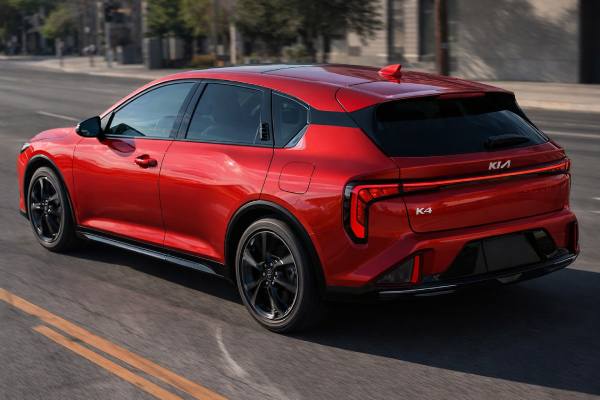
The 2026–present Kia K4 Hatchback (CL4) with the 1.6-liter turbo is aimed at buyers who want the everyday usability of a compact hatch without giving up passing power. In practice, this version is defined by three ownership traits: a torque-forward engine that feels stronger than its numbers at normal speeds, a conventional 8-speed automatic that favors smoothness over “sporty” tricks, and a body style that adds real cargo flexibility without the SUV height or weight penalty.
It is also a model you should approach with a “verify-by-VIN” mindset. Early production years can see small running changes in software, parts, and standard equipment, and turbo GDI engines are more sensitive to oil quality, short-trip use, and cooling system health than a basic naturally aspirated setup. Set it up correctly, though, and it can be a comfortable, efficient daily driver that still feels quick when you need it.
Top Highlights
- Strong midrange pull for merging and two-lane passing, especially from 50–110 km/h (30–70 mph).
- Conventional 8-speed automatic favors smooth, predictable shifts over “rubber-band” behavior.
- Hatchback body improves load flexibility without a large footprint or SUV fuel use.
- Turbo GDI ownership rewards shorter oil intervals and high-quality fuel in hot or heavy-traffic use.
- Plan on engine oil and filter service about every 12 months or 12,000–13,000 km (7,500–8,000 mi) in normal use (sooner for severe duty).
Jump to sections
- K4 Hatchback Turbo: what it is
- K4 Hatchback 1.6T specs and dimensions
- K4 Hatchback trims, options, and ADAS
- Reliability, known issues, and recalls
- Maintenance plan and buyer’s checklist
- Real-world driving and efficiency
- Rivals and which one fits you
K4 Hatchback Turbo: what it is
Think of the K4 Hatchback 1.6 Turbo as the “do-it-all” configuration in the lineup: it trades the base engine’s simplicity for a broader, more confident powerband while keeping the kind of drivability most owners want every day. The 1.6T is a turbocharged, direct-injected (GDI) four-cylinder. Turbocharging compresses incoming air so the engine can burn more fuel cleanly when needed—great for midrange torque and highway passing—but it also increases heat and stress, which is why maintenance quality matters more than on a basic non-turbo engine.
This model’s character is shaped just as much by the transmission as the engine. A traditional 8-speed automatic (with a torque converter) typically feels smoother in parking lots and stop-and-go traffic than many dual-clutch setups, and it tends to be more forgiving when creeping on hills or inching forward in congestion. The “sport” side comes from gearing and torque, not from harsh shifts.
The hatchback body is the practical ace. Even when overall exterior length stays compact, the rear opening and usable roofline make it easier to load bulky items—strollers, flat-pack furniture, sports gear—without the step-up height of a crossover. In real ownership terms, that means fewer compromises: a car that still fits tight urban parking but can handle weekend errands and road trips without feeling cramped.
Who is it best for?
- Commuters who want low stress in traffic, but enough power to merge confidently.
- Urban drivers who value a short turning circle and easy visibility, with the utility of a hatch.
- Long-distance users who want stable highway manners and reasonable fuel costs.
Who might prefer the base engine instead?
- Drivers who keep cars for a very long time with minimal servicing complexity.
- Mostly short-trip owners who rarely get the engine fully warm (turbo GDI engines dislike constant cold operation).
K4 Hatchback 1.6T specs and dimensions
Below are the key numbers owners actually use—power, gearing, footprint, and the service-related basics you plan around. Specs can vary by market, trim, wheel/tire package, and regulatory test cycle, so treat these as the baseline for the 1.6T (190 hp) configuration and confirm against your VIN label and owner documentation.
Powertrain and efficiency
| Item | Specification |
|---|---|
| Code | 1.6 Turbo GDI (market naming varies) |
| Engine layout and cylinders | Inline-4, DOHC, 4 cylinders (valvetrain detail varies by market) |
| Displacement | 1.6 L (≈1,600 cc) |
| Induction | Turbocharged |
| Fuel system | Direct injection (GDI) |
| Max power | 190 hp (142 kW) @ 6,000 rpm |
| Max torque | 265 Nm (195 lb-ft) @ ~1,700–4,500 rpm |
| Timing drive | Typically chain-driven on this engine family (verify by VIN) |
| Rated efficiency (EPA estimate, where applicable) | 9.0 / 7.1 / 8.4 L/100 km (26 / 33 / 28 mpg US) city / highway / combined |
| Real-world highway @ 120 km/h (75 mph) | Commonly ~7.0–7.8 L/100 km (30–34 mpg US), depending on wheels, wind, and load |
Transmission and driveline
| Item | Specification |
|---|---|
| Transmission | 8-speed automatic (traditional torque-converter type) |
| Drive type | FWD |
| Differential | Open (traction managed by brake-based stability/traction control) |
Chassis and dimensions
| Item | Specification |
|---|---|
| Suspension (front / rear) | Independent front; rear layout depends on configuration (confirm by trim and market) |
| Steering | Electric power steering |
| Brakes | 4-wheel disc (trim-dependent sizing) |
| Wheels and tyres (common performance package) | 235/40 R18 |
| Length | ≈4,430 mm (174.4 in) |
| Width | ≈1,850 mm (72.8 in) |
| Height | ≈1,430 mm (56.3 in) |
| Wheelbase | ≈2,720 mm (107.1 in) |
| Turning circle (kerb-to-kerb) | 5.36 m (17.6 ft) |
| Kerb (curb) weight | ≈1,505–1,514 kg (3,318–3,338 lb), trim-dependent |
Performance and capability
| Item | Specification |
|---|---|
| Acceleration | 0–100 km/h (0–62 mph): 8.1 s (approx.) |
| 0–60 mph | 7.4 s (approx.) |
| Top speed | 209 km/h (130 mph) |
| Braking distance | 60–0 mph: 39.0 m (128 ft) (test setup dependent) |
| Towing capacity | Often not rated for meaningful towing in many markets; verify local homologation |
| Payload | Trim and market dependent; check door-jamb label |
Fluids and service capacities (verify by VIN)
Manufacturers often publish exact capacities in the owner’s manual and service information rather than press specs. Use these as planning ranges and confirm for your specific vehicle.
| System | What to use | Typical planning range |
|---|---|---|
| Engine oil | API SP / ILSAC GF-6 (or equivalent); viscosity per climate | ~4.5–5.0 L (4.8–5.3 US qt) with filter (varies) |
| Coolant | Long-life ethylene glycol mix; use specified type | Capacity varies; follow service manual |
| Automatic transmission | Use only the specified ATF type for the 8-speed | Capacity varies by service method |
| A/C refrigerant | Refrigerant type and charge listed on under-hood label | Use under-hood label values |
Safety and driver assistance (what to look for)
Formal crash ratings can lag new releases, and hatchbacks can be tested separately from sedans. The most practical approach is to confirm (1) the presence of key active safety systems and (2) whether your exact trim has the higher-performing headlight package.
| Item | What matters most |
|---|---|
| Crash ratings | Check the latest results for your exact model year and body style where you register the car |
| Headlights | Look for the highest-rated headlight package available in your trim line |
| ADAS suite | AEB (vehicle/pedestrian/cyclist), lane support, blind-spot monitoring, rear cross-traffic alert, ACC availability varies by trim and option package |
K4 Hatchback trims, options, and ADAS
For most buyers, trims are less about cosmetics and more about three functional differences: wheels/tires, lighting, and driver-assistance hardware (radar/cameras and the software that uses them). The K4 Hatchback turbo typically sits high enough in the range that you may find it bundled with “sport appearance” items (larger wheels, firmer tires) and a richer infotainment setup.
Trims and quick identifiers
While naming varies by market, the pattern is usually consistent:
- Mid-trim comfort model: smaller wheels, more compliant ride, often the best for rough roads.
- Sport-styled trim: larger wheels/tires (often 18-inch), sharper steering calibration, upgraded interior cues.
- Turbo-focused trim: includes the 1.6T powertrain and tends to bundle higher-content options.
Quick ways to confirm you are looking at the 1.6T hatch:
- Badging: “Turbo” or trim badge on the hatch, depending on market.
- Wheels: many turbo packages ship with wider performance tires (e.g., 235-section on 18-inch rims).
- Driving feel: stronger low-to-mid rpm pull and more decisive passing response compared with the base engine.
Options that change daily ownership
These are the options that actually move the needle:
- Headlight upgrade (if offered)
Better headlights improve night driving and can influence safety-test equipment scoring. If you do highway night miles, prioritize this. - Adaptive cruise control (ACC)
Great for long commutes. Confirm it includes stop-and-go behavior if you drive in heavy traffic. - Parking aids (camera quality, sensors, surround view where offered)
A hatchback already helps visibility, but good camera resolution and reliable sensors reduce daily stress. - Infotainment and audio tiers
Look for the screen size and speaker upgrades you care about, but also check whether wireless phone projection is standard or tied to a package in your market.
Safety systems and ADAS explained simply
Modern ADAS is a combination of sensors (camera/radar/ultrasonics) and calibrations. The same feature name can behave differently depending on software revision and sensor hardware. In practical terms:
- Automatic emergency braking (AEB): Can reduce crash severity, but you should keep sensors clean and avoid windshield replacement shortcuts that skip calibration.
- Lane keeping and lane centering: Lane keeping nudges you back; lane centering actively holds you near lane center (usually tied to higher trims).
- Blind-spot monitoring and rear cross-traffic alert: Extremely useful in dense parking areas and when reversing out of angled spaces.
- Traffic sign recognition: Helpful, but not perfect; treat it as assistance, not authority.
After any of the following, plan for a scan and calibration check: windshield replacement, front bumper work, alignment changes after curb hits, or any accident repair involving camera/radar mounting points. ADAS that is “slightly off” may not warn you with a clear fault, but it can become less trustworthy.
Reliability, known issues, and recalls
Because the 2026–present K4 Hatchback 1.6T is still early in its lifecycle, true long-term trends (10+ years) are not fully visible. The best reliability forecast comes from understanding turbo GDI realities, heat management, and software maturity in early production. Most owners will have a trouble-free experience, but the cost profile changes when turbo and high-pressure fuel systems are involved.
Common vs occasional vs rare: what to watch
Common (seen across many turbo GDI cars, usually lower cost):
- Carbon build-up on intake valves (GDI trait):
Symptoms: rough idle, hesitation, reduced efficiency over time.
Root cause: fuel doesn’t wash intake valves in GDI; deposits accumulate faster with short trips.
Remedy: periodic cleaning if symptoms develop; reduce short-trip pattern when possible. - Spark plug and ignition coil sensitivity:
Symptoms: misfires under load, flashing check-engine light, poor fuel economy.
Root cause: higher cylinder pressures in turbo engines stress ignition components.
Remedy: use correct plug type and heat range; replace plugs on time (earlier if tuned or driven hard).
Occasional (moderate cost, more “usage-dependent”):
- PCV system and oil vapor management:
Symptoms: oil consumption changes, rough idle, increased deposits.
Root cause: high crankcase vapor load in boosted engines.
Remedy: inspect PCV function; maintain oil change discipline. - Cooling system weak spots (hoses, clamps, thermostat behavior):
Symptoms: slow coolant loss, overheating warnings, heater performance changes.
Root cause: heat cycling; early-life clamp settling.
Remedy: pressure test; fix leaks early—turbo engines dislike overheating events.
Rare but higher impact (higher cost):
- Turbocharger control issues (wastegate actuator, boost control faults):
Symptoms: reduced power, boost codes, whistle changes.
Root cause: actuator wear or sensor faults.
Remedy: correct diagnosis is key; avoid parts-swapping without data. - High-pressure fuel system faults:
Symptoms: hard starts, hesitation at high load, fuel pressure codes.
Root cause: high-pressure pump or sensor issues.
Remedy: follow factory diagnostic flow; use quality fuel.
Software and calibration updates
Early model years often receive updates for drivability and false warnings—especially related to infotainment, camera/radar logic, or transmission shift refinement. If you feel:
- irregular shifting that is not consistent,
- intermittent sensor warnings,
- or “phantom” ADAS alerts,
ask a dealer to check for ECU/TCU and ADAS software updates before you approve mechanical work. A software fix is the simplest and least invasive remedy when applicable.
Recalls and service actions: how to stay protected
Instead of relying on rumors or forum posts, verify your vehicle through the official recall lookup tools and your dealer service history. The goal is twofold:
- Confirm any recalls or service campaigns are completed.
- Confirm the car has the correct software calibration level after repairs.
For used buyers, request a printed repair history and ask specifically whether ADAS calibrations were performed after collision repair or windshield replacement.
Maintenance plan and buyer’s checklist
A turbo hatchback can be a very reliable daily driver when serviced with a “heat and fuel-system” mindset. The theme is simple: keep fluids fresh, keep the cooling system healthy, and avoid prolonged neglect of small drivability symptoms.
Practical maintenance schedule (distance/time)
Use the manufacturer schedule as the authority, but these intervals are widely practical for a 1.6T daily driver. If you drive in heavy traffic, extreme heat/cold, do many short trips, or carry frequent full loads, use the severe-duty intervals.
- Engine oil and filter:
Normal: every 12 months or ~12,000–13,000 km (7,500–8,000 mi)
Severe: every 6 months or ~8,000 km (5,000 mi) - Cabin air filter: every 15,000–20,000 km (10,000–12,000 mi) or annually (more often in dusty cities)
- Engine air filter: inspect every service; replace typically 30,000–45,000 km (20,000–30,000 mi)
- Spark plugs (turbo engines are less forgiving):
Plan 60,000–100,000 km (40,000–60,000 mi) depending on plug type and duty cycle; earlier if you see misfires or do heavy boost use. - Brake fluid: every 2–3 years (moisture absorption is time-based)
- Coolant: commonly 5–10 years depending on coolant type; verify your exact interval
- Automatic transmission fluid (8-speed):
Even if marketed as “lifetime,” many owners who keep cars long term do a drain-and-fill around 60,000–100,000 km (40,000–60,000 mi), especially in hot climates or heavy city use. - Tire rotation and alignment: rotate every 8,000–10,000 km (5,000–6,000 mi); check alignment annually or after pothole hits
- 12 V battery: test annually after year 3; many modern cars see replacement around 4–6 years depending on climate
Fluids and specs: how to avoid expensive mistakes
- Use the exact oil specification listed for your market, not “close enough.” Turbo engines are sensitive to oil shear and deposits.
- Do not mix coolants unless explicitly compatible. A coolant mix mistake can create gel-like deposits and heater-core restrictions.
- Use only the specified ATF. The wrong ATF can create shift quality problems that look like a transmission fault.
Buyer’s guide: what to inspect (new or used)
Walk-around and body:
- Check hatch alignment and weather seals; water intrusion is rare but expensive to chase.
- Look for uneven tire wear (alignment or suspension bushing issues).
Under-hood checks:
- Inspect for coolant residue around hose junctions and the coolant reservoir.
- Look for oil seepage at common gasket points; minor weeps are not unusual, but wet drips need attention.
Test drive checklist:
- Cold start: should settle quickly to a stable idle.
- Light throttle: no surging or hesitation.
- Medium throttle: boost should build smoothly with no “flat spot.”
- Transmission: shifts should feel consistent; harshness only in one gear can signal calibration or sensor issues.
- Braking: no steering wheel shake during moderate braking (could indicate rotor runout).
Paperwork to request:
- Full service history with dates and mileage.
- Proof of recall/campaign completion.
- Any collision repair invoices that show camera/radar calibration steps.
Long-term durability outlook: with disciplined oil service and attention to cooling, a 1.6T + conventional automatic pairing is a solid bet for many owners. The biggest avoidable failures tend to come from overheats, skipped oil service, or ignoring misfires.
Real-world driving and efficiency
The K4 Hatchback 1.6T is tuned to feel energetic in real traffic rather than only on a spec sheet. That means the most noticeable performance advantage shows up in midrange acceleration—merging onto fast roads, passing from 80–120 km/h (50–75 mph), and climbing grades without constant downshifts.
Ride, handling, and NVH
- Ride quality: With larger wheels and wider tires on turbo-oriented trims, the car often feels planted but can transmit sharper impacts over broken pavement. If your roads are rough, a smaller-wheel trim (if available) can be the “quietly best” choice.
- Steering and balance: Expect light-to-moderate steering weight with quick response. A hatchback’s shorter rear overhang can make it feel tidy in parking maneuvers and urban corners.
- Cabin noise: Turbo engines can be quiet at cruise, but wider tires can add more road noise on coarse asphalt. The difference between tire models can be larger than the difference between trims.
Powertrain character (what it feels like)
- Throttle response: Stronger at part throttle than many naturally aspirated 2.0L compacts because boost builds early.
- Turbo behavior: Modern small turbos are designed to minimize lag, but there is still a subtle “step” as boost comes on—most noticeable when you roll into the throttle from low rpm.
- 8-speed logic: You should feel smooth, predictable shifts. If you experience repeated gear “hunting” on gentle hills, check for software updates and consider whether you are in an aggressive drive mode.
Real-world efficiency
Official ratings are useful for comparison, but your real results depend on speed and temperature. Common patterns:
- City-heavy use: 9.0–10.5 L/100 km (22–26 mpg US) depending on traffic density and warm-up time.
- Highway at 100–120 km/h (60–75 mph): often 7.0–7.8 L/100 km (30–34 mpg US) if tires are properly inflated and you avoid repeated full-boost pulls.
- Cold weather: short trips can increase consumption materially because the engine spends more time in warm-up enrichment and the cabin heater load is higher.
Performance metrics that matter
- 0–100 km/h (0–62 mph): about 8.1 seconds is quick enough to feel “effortless” in daily driving.
- Braking: a ~39 m (128 ft) 60–0 mph result suggests competent baseline hardware, but tires heavily influence this. Performance tires can shorten stops; cheap replacements can lengthen them.
- Turning circle: 5.36 m is genuinely helpful in tight urban driving and parking ramps.
If you want the car to feel consistently strong, keep the engine in its happy zone: clean air filter, correct plugs, fresh oil, and quality fuel. Turbo cars often “tell on themselves” early—small hesitations or inconsistent boost are worth diagnosing before they become expensive.
Rivals and which one fits you
The K4 Hatchback 1.6T sits in a crowded but interesting space: compact hatchbacks that balance daily comfort with enough power to feel lively. Your best rival depends on what you value most—ride comfort, steering feel, interior tech, or long-term simplicity.
If you want maximum long-term simplicity
Look at naturally aspirated hatchbacks with fewer heat and fuel-system demands. They often feel slower during passing, but they can be more forgiving of short-trip life and delayed service.
Best fit if you:
- keep cars for 10+ years,
- do many short trips,
- prioritize low maintenance complexity over passing power.
Trade-off:
- less midrange punch and more downshifting on hills.
If you want the sportiest feel
Some rivals prioritize steering sharpness and chassis feedback over comfort. They may feel more “alive” on a back road, but can ride firmer or be noisier on rough pavement.
Best fit if you:
- value cornering feel,
- are willing to accept a firmer ride,
- plan to run higher-quality tires and brake pads.
Trade-off:
- comfort and noise can be worse on poor roads.
If you want the best highway commuter
Here, what matters is calm cruise behavior, stable lane tracking, good seats, and strong ADAS availability. The K4 Hatchback turbo’s conventional 8-speed automatic and torque-forward engine are strengths for this use case.
Best fit if you:
- do frequent highway miles,
- want predictable passing performance,
- care about ACC and lane support.
Trade-off:
- larger wheels can reduce ride comfort; choose your trim carefully.
Why the K4 Hatchback 1.6T is compelling
It’s a rare combination: usable cargo flexibility, strong everyday torque, and a traditional automatic that tends to be easy to live with in traffic. If you keep up with oil service and treat cooling system health as non-negotiable, it can be a satisfying “one car” solution—especially for drivers who want hatchback practicality without stepping up to an SUV.
References
- 2026 Kia K4 Hatchback Specifications 2026 (Specifications)
- KIA AMERICA ANNOUNCES 2026 K4 HATCHBACK PRICING 2026 (Press Release)
- 2026 Kia K4 Hatchback 2026 (Model Overview)
Disclaimer
This article is for informational purposes only and is not a substitute for professional diagnosis, repair, or safety evaluation. Specifications, torque values, fluid capacities, maintenance intervals, and procedures can vary by VIN, market, powertrain calibration, and installed equipment. Always verify details using your official owner’s manual, factory service information, and dealer records for your specific vehicle.
If you found this guide useful, please consider sharing it on Facebook, X (Twitter), or your favorite forum—it helps others find practical, trustworthy ownership information.