


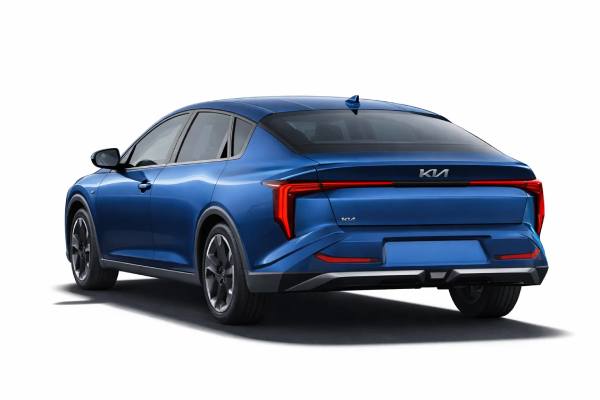
The Kia K4 (CL4) with the 1.6 T-GDi rated around 178 hp sits in the “sweet spot” of the lineup: enough torque to feel effortless in daily driving, but still tuned for sensible fuel use and low-stress ownership. This variant pairs a direct-injected turbo four-cylinder with a 7-speed dual-clutch transmission (DCT), giving it quick response when you ask for power and relaxed cruising when you do not.
For buyers, the big story is balance. The K4’s chassis is sized like a modern compact, but its wheelbase and suspension layout aim for a more grown-up ride. You get meaningful safety tech, strong crash-test results in some test programs, and a powertrain that rewards correct maintenance—especially oil quality, cooling care, and smooth DCT habits. This guide focuses on the exact 1.6 T-GDi ~178 hp configuration and what it means for real-world performance, reliability, and long-term costs.
Quick Specs and Notes
- Strong mid-range torque makes passing and hill climbs easier without high rpm.
- 7-speed DCT can feel crisp and efficient when driven smoothly, especially in stop-and-go traffic.
- Best durability comes from shorter oil-change intervals than “maximum” schedules, particularly with many short trips.
- Plan brake-fluid replacement about every 2 years, and rotate tires every 10,000–12,000 km (6,000–7,500 mi).
- If you regularly drive in hot climates or steep grades, keep the cooling system and intercooler ducts clean and unobstructed.
Navigate this guide
- Kia K4 CL4 1.6T profile
- Kia K4 CL4 1.6T specs and measurements
- Kia K4 CL4 trims, options, and ADAS
- Reliability patterns and known faults
- Maintenance plan and buying tips
- Driving feel and real-world economy
- Rivals and positioning
Kia K4 CL4 1.6T profile
Think of the 1.6 T-GDi K4 as the “daily driver plus” version of the platform. It is not a full sport model, but it brings the kind of torque curve that makes normal driving calmer. With roughly 265 Nm available from low rpm, you spend less time forcing downshifts to merge or overtake. That matters even more in a DCT car, because the gearbox can stay in a taller gear while the turbo does the work.
From an engineering perspective, this configuration is about controlled performance rather than peak output. The turbo is sized for usable low- and mid-range response, and the power peak arrives at higher rpm without demanding it all the time. In practice, you feel it most between 40–120 km/h (25–75 mph), where the engine’s boost and the DCT’s quick ratio changes work together.
Chassis-wise, this K4 setup leans into stability. A long wheelbase for the class helps highway composure, and the rear suspension design (multi-link in the European spec data) is typically chosen to separate ride comfort from cornering control. The trade-off is more components (bushings, links) than a simple torsion beam, but it usually pays back in a more settled feel over broken pavement.
Ownership traits to keep in mind:
- Turbo + direct injection rewards good oil and clean air supply. Short trips and cheap oil are the two biggest enemies.
- Dual-clutch behavior depends on driving style. Treat it like a manual that shifts for you: smooth throttle, avoid “creeping” on hills, and do not hold the car on the throttle at a standstill.
- Heat management matters. If you drive hard, give the engine a brief cool-down before shutoff and keep the cooling stack (radiator/intercooler) clean.
If you want an everyday K4 that feels confident with passengers and luggage, this is the variant that tends to satisfy without requiring a “performance car” mindset.
Kia K4 CL4 1.6T specs and measurements
Below are specs aligned to the 1.6 T-GDi ~178 hp configuration shown in European spec documentation. Markets can differ by emissions equipment, gearing, and equipment weight, so treat these as a solid baseline and verify against your VIN-specific paperwork.
Powertrain and efficiency (1.6 T-GDi ~178 hp)
| Item | Specification |
|---|---|
| Code | 1.6 T-GDi (market naming varies) |
| Engine layout and cylinders | I-4, DOHC, 4 valves/cyl |
| Bore × stroke | 75.6 × 89.0 mm (2.98 × 3.50 in) |
| Displacement | 1.6 L (1,598 cc) |
| Induction | Single-scroll turbo |
| Fuel system | Direct injection (DI) |
| Compression ratio | ~11.0:1 (market dependent) |
| Max power | ~178 hp (132 kW) @ ~6,000 rpm |
| Max torque | ~265 Nm (195 lb-ft) @ ~1,500–4,500 rpm |
| Timing drive | Typically chain-driven on this family; confirm by engine code |
| Rated efficiency (WLTP combined) | ~6.9 L/100 km (~34.1 mpg US / ~40.9 mpg UK) |
| Real-world highway @ 120 km/h (75 mph) | Often ~7.0–8.0 L/100 km (varies strongly with tires, wind, and load) |
Transmission and driveline
| Item | Specification |
|---|---|
| Transmission | 7-speed dual-clutch automatic (DCT7) |
| Drive type | FWD |
| Differential | Open (traction control manages wheel slip) |
Chassis, brakes, and tires
| Item | Specification |
|---|---|
| Suspension (front/rear) | MacPherson strut / Multi-link (spec-market dependent) |
| Steering | Electric power steering; rack-and-pinion |
| Turning circle (kerb-to-kerb) | ~10.72 m (35.17 ft) |
| Brakes (front/rear) | Ventilated discs front; discs rear |
| Brake diameters | Front up to ~325 mm (12.8 in); rear ~284 mm (11.2 in) |
| Wheels/tires (common fitments) | 205/55 R16, 225/45 R17, or 235/40 R18 (market and trim dependent) |
| Ground clearance | ~140 mm (5.5 in) |
Dimensions and weights (5-door spec data)
| Item | Specification |
|---|---|
| Length / width / height | ~4,440 / 1,850 / 1,435 mm (174.8 / 72.8 / 56.5 in) |
| Wheelbase | ~2,720 mm (107.1 in) |
| Kerb (curb) weight | ~1,500–1,591 kg (3,307–3,508 lb), equipment dependent |
| GVWR | ~1,940 kg (4,277 lb) |
| Payload | ~440 kg (970 lb) |
| Fuel tank | ~47 L (12.4 US gal / 10.3 UK gal) |
| Cargo volume | ~438–1,217 L (VDA method) depending on seat position |
Performance and capability (baseline)
| Metric | Typical figure |
|---|---|
| 0–100 km/h (0–62 mph) | ~8.4 s |
| Top speed | ~210 km/h (131 mph) |
| Towing capacity | Market dependent; verify towing certification plate and handbook |
Fluids and service capacities (verify for VIN)
Because capacities and specs vary by engine code and cooling package, use the table below as a decision guide and confirm with your official service data.
| Fluid | What to use (typical) | Typical capacity guidance |
|---|---|---|
| Engine oil | Full-synthetic meeting the required API/ACEA spec; viscosity often 0W-20/5W-30 depending on market | ~4.0–5.0 L common range on 1.6T class engines |
| Coolant | Phosphate-based ethylene glycol coolant; premix typically 50/50 | ~5–7 L typical range |
| DCT fluid | OEM-specified DCTF only | Capacity depends on service method |
| Brake fluid | DOT 4 / DOT 4 LV (as specified) | Replace by time interval |
Key torque specs (common ranges—confirm for your vehicle):
- Wheel lug nuts: ~90–110 Nm (66–81 lb-ft)
- Engine oil drain plug: ~30–40 Nm (22–30 lb-ft)
Use VIN-specific torque values whenever you can; over-tightening is a frequent cause of warped brake rotors (lugs) and stripped oil pans (drain plugs).
Kia K4 CL4 trims, options, and ADAS
Trims for the K4 vary by region, but the pattern is consistent: lower trims focus on value and standard safety basics, while mid and upper trims add comfort, larger wheels, and the most capable driver-assistance tuning. For the 1.6 T-GDi ~178 hp variant, equipment differences can affect not only comfort but also how the car feels and what it costs to maintain.
Trims and options that change the experience
Look for these “functional” differences when comparing cars on a lot:
- Wheel and tire packages: Moving from 16-inch to 18-inch wheels typically sharpens turn-in but increases road noise and replacement tire cost. It can also reduce real-world efficiency at highway speeds.
- Brake hardware: Some higher-output versions use larger front rotors. That improves fade resistance but raises pad and rotor replacement cost.
- Lighting: LED headlamps and adaptive functions (where offered) improve night visibility and are often tied to higher trims. If you drive rural roads, this is a meaningful ownership upgrade.
- Cooling and drivability options: Some markets bundle drive modes, paddle shifters, or extra cooling ducting with sport-styled trims. These do not make the car “racey,” but they can improve control on grades and during repeated passing.
Quick identifiers (typical):
- Sport-styled exterior (unique bumpers, black accents) often signals the highest trim.
- Larger wheels and wider tires usually accompany upgraded seats, bigger displays, and additional ADAS sensors.
Safety ratings and what they really mean
Safety ratings can differ by testing body and by the exact car spec tested (airbag count, ESC standardization, and ADAS availability). For the K4 line, recent results in at least one NCAP program show very strong performance. The practical takeaway is that the structure and restraint systems appear competitive, and the car’s electronic stability systems are a key part of its safety story.
When you shop, confirm:
- Airbag count and placement on the exact trim (front, side, curtain, and center airbags vary by market).
- ESC is standard (it should be in most modern markets).
- ADAS package status (standard vs optional), because crash-avoidance tech depends on sensors and software.
ADAS suite and service implications
Common ADAS functions you may see on K4 trims include:
- Autonomous emergency braking (AEB) for vehicles and vulnerable road users (pedestrians/cyclists)
- Adaptive cruise control (ACC)
- Lane keeping assist (LKA) and lane following/centering support (often called LFA or similar)
- Blind-spot monitoring and rear cross-traffic alert
- Speed assist and traffic sign recognition (market dependent)
Service note: Any front-end repair (bumper, grille, windshield, alignment work) can require camera/radar recalibration. Budget time and money for calibration after collision repairs or windshield replacement; it is not optional if you want the system to work correctly.
Reliability patterns and known faults
Because the K4 CL4 is new for 2026–present in many markets, long-term fleet data is still developing. The best way to think about reliability is by system design: turbocharged direct injection engines and DCT gearboxes are proven concepts, but they depend more on correct fluids, correct intervals, and correct driving habits than older, simpler setups.
Below is a practical “what to watch” map based on common patterns for modern 1.6T DI + DCT vehicles.
Common (higher prevalence, usually moderate cost)
- DI intake carbon buildup (long-term):
Symptoms: rough cold idle, hesitation, reduced fuel economy.
Likely cause: direct injection does not wash intake valves with fuel, so oil vapor deposits can accumulate.
Remedy: periodic intake cleaning (chemical or walnut blasting depending on severity), plus keeping the PCV system healthy and avoiding extended oil intervals. - DCT low-speed shudder or harsh creep feel:
Symptoms: judder when inching forward, grabby engagement in traffic.
Likely cause: clutch heat, adaptation drift, or driving style that forces the clutch to slip constantly.
Remedy: software adaptation reset where applicable, inspect for clutch contamination if severe, and adjust driving habits (use brakes to hold, avoid throttle-holding on hills). - Coolant system sensitivity (turbo heat):
Symptoms: coolant smell, small leaks, frequent top-ups.
Likely cause: heat cycling and plastic fittings/hoses aging faster around a turbo engine bay.
Remedy: pressure test early, replace weak hoses or caps, and keep the radiator stack clean.
Occasional (moderate prevalence, cost varies)
- Turbo wastegate or boost-control irregularities:
Symptoms: inconsistent power, underboost codes, occasional limp mode.
Likely cause: actuator calibration drift, vacuum/boost plumbing leaks, or sensor issues.
Remedy: smoke test intake plumbing, verify boost control solenoid operation, and apply ECU updates if available. - Oil seepage at seals or timing cover edges:
Symptoms: light oil film, burning smell on hot surfaces.
Likely cause: gasket shrinkage over time, pressure from extended intervals, or minor assembly variances.
Remedy: confirm it is seepage vs active leak; repair when it reaches drip level or contaminates belts/mounts.
Rare but high-impact (lower prevalence, higher cost)
- Overheat events leading to head gasket risk:
Symptoms: repeated overheating, coolant loss with no external leak, misfire after hot soak.
Likely cause: cooling failure ignored too long, or a major leak.
Remedy: do not keep driving; diagnose immediately. One severe overheat can turn a minor part into a major engine repair. - ADAS sensor faults after minor impacts:
Symptoms: warning lights, lane/ACC unavailable.
Likely cause: radar bracket misalignment, camera aim shift, or harness damage.
Remedy: proper scan-tool diagnosis plus recalibration; avoid “parts swapping.”
Recalls, TSBs, and verification steps
For a new model line, service actions can arrive quickly as real-world feedback comes in. Always verify completion using:
- Official VIN recall lookup (your market’s regulator database)
- Dealer service history printout (especially for software updates)
If you buy used, ask for proof of:
- Any ECU/TCU updates related to shift quality, cold start behavior, or warning-light fixes
- ADAS calibration records after windshield replacement or collision repair
Maintenance plan and buying tips
A turbo DI engine with a DCT can be very durable, but it is less forgiving of “minimum effort” servicing. The goal is simple: keep the oil clean, keep the cooling system healthy, keep the air path sealed, and keep the gearbox fluid correct.
Practical maintenance schedule (distance and time)
Use the factory schedule as your legal baseline, then apply this owner-focused plan if you want long-term durability:
- Engine oil and filter: every 10,000 km (6,000 mi) or 12 months, whichever comes first.
If you do many short trips, heavy city driving, hot climate driving, or frequent full-throttle runs, consider 7,500 km (4,500 mi) intervals. - Cabin air filter: every 15,000–30,000 km (9,000–18,000 mi) or yearly if you drive dusty roads.
- Engine air filter: inspect every 15,000 km (9,000 mi); replace 30,000–45,000 km (18,000–28,000 mi) depending on conditions.
- Brake fluid: every 2 years (time matters more than mileage).
- Coolant: commonly 5 years / 100,000 km (60,000 mi) for modern long-life coolant, then shorter after the first change. Verify for your market.
- Spark plugs: turbo DI engines often use iridium plugs; common intervals are 60,000–100,000 km (37,000–62,000 mi). Replace early if misfires appear.
- DCT service: follow the exact OEM interval and fluid spec. If you tow (where permitted) or drive in sustained heat, earlier fluid service can reduce wear.
- Tire rotation: every 10,000–12,000 km (6,000–7,500 mi); align if you see uneven wear.
- 12 V battery test: yearly after year 3; many batteries last 4–6 years depending on climate.
Fluids, specs, and “don’t guess” rules
- Use the exact oil and DCT fluid specification listed for your engine and gearbox. “Close enough” fluids are a common cause of DCT shift issues.
- For oil viscosity, follow the manual’s climate chart. A slightly thicker oil is not automatically better; it can worsen cold-flow and turbo lubrication on start-up.
- Replace coolant with the correct chemistry. Mixing types can reduce corrosion protection.
Buyer’s guide: what to inspect before purchase
Under the hood
- Oil level and color (sludgy oil or burnt smell suggests extended intervals).
- Coolant level and signs of dried residue around hose joints and radiator end tanks.
- Intake hoses and clamps for oil mist and loose connections (boost leaks are common “mystery” problems).
During the test drive
- Smooth DCT engagement from a stop (no repeated shudder or delay).
- Consistent boost and power delivery under moderate throttle (no surging).
- Brake feel: stable pedal, no vibration at 100–0 km/h stops.
Electronics and safety
- Confirm all ADAS features function (ACC, lane support, camera views).
- Check for warning lights and insist on a scan for stored codes, not just an instrument-cluster glance.
Long-term durability outlook
The 1.6T K4 can be a strong long-term pick if you commit to:
- Conservative oil intervals
- Correct DCT fluid practices
- Early fixes for coolant leaks and boost leaks
Most expensive outcomes come from ignoring small problems until heat or misfires compound the damage.
Driving feel and real-world economy
In real use, the 178 hp tune is less about peak acceleration and more about “effortlessness.” The engine’s torque plateau lets the car pull cleanly at low rpm, and the DCT keeps the engine in its efficient zone when you cruise.
Ride, handling, and NVH
- Ride quality: With the longer wheelbase, the K4 tends to feel composed on highways. On 16–17 inch tires, bumps are rounded off well. On 18s, you usually gain sharper response but also more impact harshness over potholes.
- Handling balance: Expect safe, predictable behavior. The front end grips well, and stability control typically intervenes smoothly. It is not a playful rear-drive car, but it should feel confident on wet roads with good tires.
- Noise (NVH): Turbo fours can be quiet at steady speed, but you may hear more induction and tire noise under load—especially with wide 18-inch tires.
Powertrain character and DCT behavior
- Throttle response: The turbo is generally responsive, but like most small turbos, there can be a brief pause if you demand sudden torque at very low rpm. Drive modes (if equipped) usually sharpen throttle mapping and hold gears longer.
- Shifts: A DCT often feels quickest when you use steady throttle. In stop-and-go traffic, it can feel “busy” if you constantly modulate the pedal. Smooth inputs reduce clutch heat and improve refinement.
- Hill starts and creeping: Use the brake to hold the car, then accelerate smoothly. Avoid holding position with throttle, which forces clutch slip.
Real-world efficiency (what drivers typically see)
If the combined rating sits around 6.9 L/100 km, real-world results often land in these ranges:
- City: ~7.5–9.0 L/100 km (31–26 mpg US / 38–31 mpg UK) depending on traffic and tire size
- Highway at 100–120 km/h (60–75 mph): ~6.5–8.0 L/100 km (36–29 mpg US / 43–35 mpg UK)
- Mixed driving: ~7.0–8.5 L/100 km (34–28 mpg US / 41–33 mpg UK)
Cold weather can add a noticeable penalty because the engine runs richer during warm-up, and winter tires increase rolling resistance.
Performance metrics that matter day to day
- 0–100 km/h in ~8.4 s feels brisk for the class, especially for highway merges.
- Top speed ~210 km/h (131 mph) is more than enough for unrestricted-road scenarios, but the more important point is stability and braking confidence at typical motorway speeds.
- Wider tire packages improve grip but can increase tramlining (following road grooves). If your roads are heavily rutted, a 17-inch setup is often the best compromise.
Rivals and positioning
The K4 1.6 T-GDi ~178 hp sits in a competitive zone where many buyers cross-shop mainstream compact sedans/hatchbacks and a few “near-premium” options. Your best rival depends on what you value: smoothness, fuel costs, cabin quiet, or long-term simplicity.
Where the K4 tends to win
- Torque-forward drivability: A strong mid-range makes the car feel relaxed with passengers or on grades.
- Equipment-to-price value (in many markets): Higher trims often bundle ADAS and comfort features that cost extra elsewhere.
- Balanced chassis sizing: With a long wheelbase and multi-link rear (in some specs), it can feel more stable than simpler torsion-beam competitors.
Where rivals can be stronger
- Transmission refinement in traffic: Some competitors with conventional automatics or well-tuned CVTs can feel smoother at very low speeds than a DCT.
- Long-term simplicity: Naturally aspirated engines paired with a traditional automatic often tolerate neglected maintenance better (though they may feel slower).
- Efficiency edge: Hybrids and some smaller turbo engines can beat the 1.6T on fuel use in dense urban driving.
Common cross-shops and how to decide
- If you prioritize smooth creep and low-speed comfort, test drive a conventional automatic rival back-to-back with the K4 DCT in stop-and-go traffic.
- If you prioritize passing power and highway calm, the K4’s torque and gearing are likely to feel more confident than a smaller engine.
- If you plan to keep the car 8–12 years, choose the trim with the safety features you truly want, then budget for proactive fluid care (oil, brake fluid, and correct DCT service). Paying a bit more for the right equipment often costs less than changing cars later.
The practical verdict
Pick the K4 1.6 T-GDi ~178 hp if you want a compact that drives like it has more displacement than it does, with strong safety tech and a modern cabin—provided you are willing to maintain it like a modern turbo+DCT car. If you want the most forgiving ownership experience with the least sensitivity to service quality, a simpler powertrain rival may fit better.
References
- Der neue Kia K4. Preise/Daten 2026 (Specifications)
- Introducing the Kia K4, where bold design meets smart innovation 2025 (Manufacturer overview)
- 2025 Kia K4 2025 (Safety Rating)
- Vehicle Detail Search – 2025 Kia K4 | NHTSA 2025 (Recall Database)
- Kia delivers top safety again, now with the K4 — Global NCAP 2025 (Safety Rating)
Disclaimer
This article is for informational purposes only and is not a substitute for professional diagnosis, inspection, or repair. Specifications, torque values, service intervals, and procedures vary by VIN, market, powertrain calibration, and installed equipment. Always verify details using your official owner’s manual and factory service documentation for your exact vehicle.
If you found this guide useful, consider sharing it on Facebook, X (Twitter), or your favorite forum to help others research their next car.