
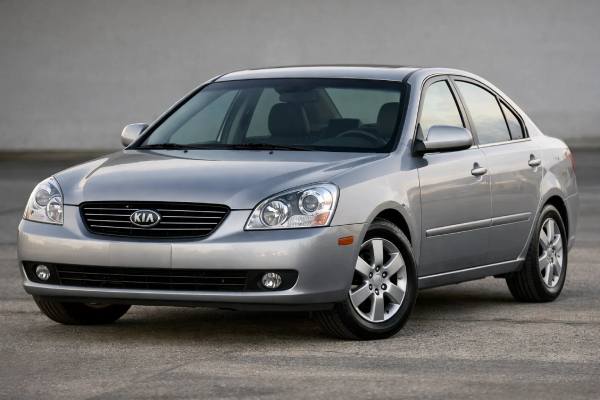
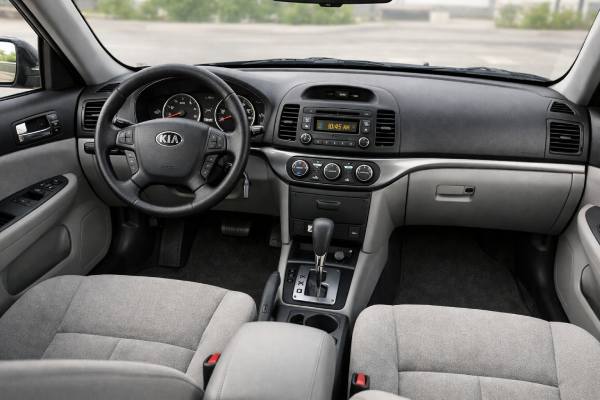
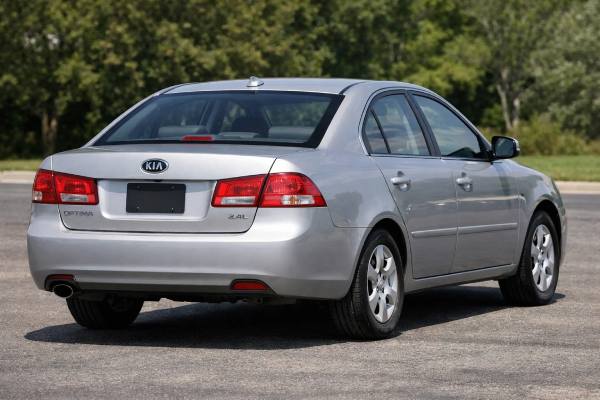
The 2006–2008 Kia Optima (MG) with the 2.4-liter G4KC is one of those “quietly good” midsize sedans: simple layout, chain-driven timing, and enough power to feel relaxed in normal traffic without demanding premium fuel or complicated maintenance. Its biggest ownership wins tend to come from predictable running costs and straightforward service access—especially compared with more complex turbo or direct-injection setups.
That said, this Optima’s long-term happiness depends on basics done well: clean oil at sensible intervals, cooling system upkeep, and attention to wear items like suspension bushings and brake hardware. If you’re shopping used, the real story is condition and history, not the badge—because a well-kept MG can feel tight and dependable, while a neglected one can become a steady drip of small fixes.
Quick Specs and Notes
- Strong value per mile when the maintenance history is clean and the drivetrain feels smooth under load.
- Simple, naturally aspirated 2.4-liter with a timing chain—no scheduled belt replacement.
- Stable, predictable road manners with a comfortable ride on the common 16-inch tire setup.
- Watch for age-related electrical and steering-column issues (especially airbag warning lights).
- Plan on engine oil and filter service about every 8,000–10,000 km (5,000–6,000 mi) or 6 months under mixed driving.
Guide contents
- Kia Optima MG in depth
- Kia Optima MG specs and measurements
- Kia Optima MG trims and safety kit
- Reliability patterns and known faults
- Maintenance plan and smart buying
- Real driving and fuel use
- Rival comparison and ownership value
Kia Optima MG in depth
The MG-generation Optima sits in the “conventional midsize sedan” sweet spot: transverse engine, front-wheel drive, and a chassis tuned more for stability and comfort than razor-edge sportiness. With the G4KC 2.4-liter, the character is smooth and linear rather than punchy. You get the kind of acceleration that feels strongest from mid-range rpm onward, which suits commuting and highway merging well.
A key engineering advantage is the timing chain. Chains aren’t “lifetime, forget it” parts, but they remove a big scheduled expense that many belt-driven competitors carried in this era. The engine is also naturally aspirated and generally uncomplicated—less heat stress than turbo setups and fewer specialized parts to age out.
Where this Optima tends to show its age is not in one catastrophic weak point, but in the accumulation of normal 15–20-year-old car realities: rubber hardens, grounds corrode, sensors drift, and previous owners may have stretched service intervals. If you’re evaluating one today, you’re really judging stewardship. A clean idle, steady coolant temperature, consistent shifting (especially warm), and a quiet front suspension over sharp bumps tell you far more than the odometer alone.
This model also makes sense because it’s easy to live with: good sightlines, straightforward controls, and parts availability that is typically better than niche imports. For owners who like to maintain their own cars, the Optima’s conventional layout means many services are approachable with basic tools—oil, filters, spark plugs, brakes, and most suspension wear items are not exotic jobs.
If your priority is “low drama transportation,” this MG can deliver—provided you buy the best condition example you can, verify recall and campaign completion, and treat maintenance like a schedule rather than a suggestion.
Kia Optima MG specs and measurements
Below are practical, commonly referenced specifications for the 2006–2008 Optima (MG) with the 2.4-liter G4KC rated around 162 hp. Markets and trims vary, so treat exact figures as “typical” unless you confirm by VIN/build label.
Powertrain and efficiency
| Item | Specification |
|---|---|
| Code | G4KC |
| Engine layout and cylinders | Inline-4 (I-4), DOHC, 16-valve (4 valves/cyl) |
| Bore × stroke | 88 × 97 mm (3.46 × 3.82 in) |
| Displacement | 2.4 L (2359 cc) |
| Induction | Naturally aspirated |
| Fuel system | Multi-point injection (typical for this engine family/era) |
| Compression ratio | ~10.5:1 (market-dependent) |
| Max power | 162 hp (121 kW) @ 5800 rpm |
| Max torque | 222 Nm (164 lb-ft) @ 4250 rpm |
| Timing drive | Chain |
| Rated efficiency (typical) | Auto: ~11.2 / 7.6 / 9.4 L/100 km (21 / 31 / 25 mpg US city/hwy/comb) |
| Real-world highway @ 120 km/h (75 mph) | ~7.5–8.5 L/100 km (31–28 mpg US), weather and tires matter |
Transmission and driveline
| Item | Specification |
|---|---|
| Transmission | 5-speed manual or 5-speed automatic (varies by market/trim) |
| Drive type | FWD |
| Differential | Open |
Chassis and dimensions
| Item | Specification |
|---|---|
| Suspension (front/rear) | MacPherson strut / multi-link (typical configuration) |
| Steering | Power rack-and-pinion |
| Brakes | 280 mm (11.0 in) front discs; 262 mm (10.3 in) rear discs (common setup) |
| Wheels/tyres (popular) | 205/60 R16 |
| Ground clearance | ~160 mm (6.3 in) |
| Length / Width / Height | 4735 / 1805 / 1480 mm (186.4 / 71.1 / 58.3 in) |
| Wheelbase | 2720 mm (107.1 in) |
| Turning circle (kerb-to-kerb) | ~10.8 m (35.5 ft) |
| Kerb (curb) weight | ~1425 kg (3142 lb) |
| Fuel tank | ~62 L (16.4 US gal / 13.7 UK gal) |
| Cargo volume | ~419 L (14.8 ft³) trunk (method varies) |
Performance and capability
| Item | Typical figure (varies by transmission/trim/conditions) |
|---|---|
| 0–100 km/h (0–62 mph) | ~9.0–10.0 s |
| Top speed | ~200–210 km/h (124–131 mph) |
| Braking distance | ~38–43 m (125–141 ft) 100–0 km/h (62–0 mph) |
| Towing capacity | Often not rated or not recommended for this class/market |
| Payload | Check door-jamb label; varies widely by trim and tyre rating |
Fluids, service capacities, and key torque specs
Because published capacities vary by market and service method (drain-and-fill vs total fill), use these as planning numbers, then confirm for your exact car.
| Item | Typical spec |
|---|---|
| Engine oil | API/ILSAC gasoline spec; common grades 5W-20 or 5W-30; ~4.5–4.8 L (4.8–5.1 US qt) with filter |
| Coolant | Ethylene glycol long-life; 50/50 mix; ~6.5–7.5 L (6.9–7.9 US qt) total system |
| Automatic transmission | ATF type per label (often SP-III era); drain-and-fill commonly ~3.5–4.5 L (3.7–4.8 US qt) |
| Manual transmission | Gear oil per service info; capacity varies |
| Brake fluid | DOT 3 or DOT 4 (as specified on cap) |
| A/C refrigerant | R-134a; charge varies by market (confirm under-hood label) |
| Wheel lug nuts | ~88–108 Nm (65–80 lb-ft) typical range for this class |
| Spark plugs | ~18–25 Nm (13–18 lb-ft) typical range (confirm plug type) |
Safety and driver assistance snapshot
- Crash ratings: Results differ by test body and year. For a closely related body shell tested in the same era, Euro NCAP awarded 4 stars overall in 2006 testing, with detailed notes about footwell deformation and airbag performance in early testing and a re-test after modifications.
- IIHS-era context: Midsize sedans from this period often show “mixed” performance across categories, especially in side and roof strength tests compared with modern standards.
- ADAS: Advanced systems like AEB and lane-keeping were generally not part of this generation; expect ABS and stability control depending on trim/market.
Kia Optima MG trims and safety kit
Trim names vary by market, but the 2006–2008 Optima MG usually follows a familiar pattern: a value-focused base, a mid-grade with comfort upgrades, and a higher trim with more convenience features and, sometimes, additional safety equipment. When shopping today, it helps to focus less on the badge and more on what’s physically on the car—wheels, steering wheel controls, seat material, and the presence of stability-control indicators on the dash.
Trims and options that matter mechanically
Most differences are comfort and convenience, but a few option areas can affect ownership costs:
- Wheels and tyres: Common 16-inch packages ride softer and protect the suspension a bit better on rough roads. Larger wheels (where offered) sharpen steering response but can increase tyre cost and impact harshness.
- Brakes: Rotor sizes are usually similar, but higher trims may bundle better pad compounds or different wheel/tyre combos that change stopping feel.
- Stability control (ESC): In some markets, ESC became standard later or was tied to higher trims. If you drive in rain, snow, or mixed traction, ESC is one of the most meaningful “options” you can have.
- Side and curtain airbags: Some cars have only front airbags; others add torso and curtain coverage. Confirm by looking for “SRS” tags on seatbacks and headliner pillars, and verify the airbag light behavior at key-on.
Quick identifiers to confirm equipment
- ESC presence: Look for an ESC button and an indicator icon on the instrument cluster.
- Airbag count: Check for SRS tags at seats and pillars; compare left vs right sides for consistency (repairs after a collision sometimes leave clues).
- Audio and climate level: Higher trims often add steering-wheel audio controls and upgraded head units; these can also indicate a better overall option package.
- Build label and VIN decoding: The door-jamb label confirms tyre size, pressures, and manufacturing details that help parts matching.
Safety ratings and what they mean in practice
If you see “five-star” marketing, it usually refers to a specific government program and test configuration, not an across-the-board guarantee. Likewise, independent tests such as IIHS and Euro NCAP are valuable, but they reflect the test methods of their era. The practical takeaway is this: the Optima MG can be a reasonably safe car for its time when equipped with side airbags and stability control, but it does not meet modern crash-avoidance expectations because it lacks newer driver-assistance systems.
Service implications for safety systems
- Airbag warning light = non-negotiable. If the airbag light is on, treat it as a “fix before regular use” item.
- Steering wheel and column work: Any work involving the steering wheel, clockspring, or column wiring should follow proper battery disconnect procedures and correct alignment to avoid SRS faults.
- Post-repair calibration: This generation has limited calibration needs compared with modern ADAS cars, but correct steering-angle sensor setup (where fitted) matters for stability control operation.
Reliability patterns and known faults
Think of Optima MG reliability as a mix of solid fundamentals and age-driven problems. The G4KC itself is usually happiest when oil changes are consistent and the engine isn’t overheated. Most “big bills” come from neglect (low oil, old coolant, ignored warning lights) or from normal wear compounding over time.
Common issues (higher prevalence)
- Airbag warning light and clockspring wear (medium to high importance):
Symptoms: Airbag light on, steering-wheel button issues, intermittent horn.
Likely cause: Worn clockspring contacts in the steering column.
Remedy: Diagnostic scan for SRS codes, inspect clockspring and related wiring, replace with correct part and follow safe SRS procedures. - Front suspension wear (low to medium cost, frequent with age):
Symptoms: Clunks over bumps, uneven tyre wear, wandering steering feel.
Likely cause: Control arm bushings, ball joints, stabilizer links, or strut mounts aging.
Remedy: Replace worn components as a set when possible; align afterward. - Valve cover gasket seepage (low cost):
Symptoms: Oil smell, light oil film around valve cover, occasional oil on exhaust heat shield.
Remedy: Replace gasket and grommets; confirm PCV system is functioning.
Occasional issues (condition-dependent)
- Ignition coils and misfires:
Symptoms: Rough idle, flashing check-engine light under load.
Remedy: Confirm plugs are correct type and gap; replace weak coils; check for oil in plug wells from gasket leaks. - Cooling system aging (medium risk if ignored):
Symptoms: Temperature creep in traffic, coolant smell, slow coolant loss.
Remedy: Pressure test, replace aged hoses/thermostat/radiator cap as needed, refresh coolant on schedule. - Automatic transmission shift quality changes (medium cost):
Symptoms: Shudder, delayed engagement, shift flare when hot.
Remedy: Confirm fluid condition and correct specification; consider multiple drain-and-fills; diagnose solenoids only after basics.
Rare but costly concerns
- Oil starvation or severe oil consumption:
Symptoms: Low oil between services, ticking/knocking, smoke on acceleration.
Remedy: Verify PCV function, check for leaks, monitor consumption. A pre-purchase compression/leak-down test can be worthwhile on high-mileage examples. - Rust in harsh climates (severity varies):
Symptoms: Flaking around subframes, brake lines, or suspension mounts.
Remedy: Avoid heavily corroded structures; surface rust is manageable, structural rust is not.
Recalls, campaigns, and how to verify
For this model range, safety campaigns have included steering-column and airbag-related items in some regions. The only reliable approach is verification: run the VIN through an official recall lookup, then ask a dealer to confirm completion status in their service system. If the seller can’t show paperwork, assume you need to verify it yourself.
Maintenance plan and smart buying
A 2006–2008 Optima MG can be inexpensive to own, but only if you treat maintenance like insurance. The goal is to prevent the expensive stuff: overheating, chronic low oil, and “cascade failures” where one neglected part takes another with it.
Practical maintenance schedule
Use this as a real-world plan for mixed driving; shorten intervals for short trips, extreme heat/cold, or heavy stop-and-go.
- Engine oil and filter: every 8,000–10,000 km (5,000–6,000 mi) or 6 months. If the engine consumes oil, check level every 1,000–1,500 km (600–900 mi).
- Engine air filter: inspect every 15,000 km (9,000 mi); replace by 30,000 km (18,000 mi) or sooner in dust.
- Cabin air filter: every 15,000–20,000 km (9,000–12,000 mi) or yearly.
- Coolant: every 5 years or 100,000 km (62,000 mi), then every 3 years or 60,000 km (37,000 mi) (confirm coolant type).
- Spark plugs: typically 100,000–160,000 km (60,000–100,000 mi) depending on plug type; replace earlier if misfires occur.
- Drive belts and hoses: inspect at every oil service; expect replacement by 10–12 years if original.
- Automatic transmission fluid: every 60,000 km (37,000 mi) for long life, especially if the car sees heat or city driving.
- Brake fluid: every 2 years, regardless of mileage.
- Brake pads/rotors: inspect every 15,000 km (9,000 mi); service slide pins yearly in salted climates.
- Tyre rotation: every 8,000–10,000 km (5,000–6,000 mi); alignment check yearly or after suspension work.
- 12 V battery test: yearly once the battery is 4+ years old; proactive replacement around 5–6 years avoids no-start surprises.
Fluid choices that reduce problems
- Use the oil viscosity that fits your climate and the manufacturer’s guidance for your market. Too thick in winter increases wear; too thin in extreme heat can raise consumption in tired engines.
- For the automatic transmission, the correct ATF spec matters more than the brand. Incorrect fluid can create shudder or harsh shifts.
Buyer’s guide: what to check before you pay
- Cold start behavior: Listen for timing rattle, heavy ticking, or unstable idle.
- Warm transmission test: After 20–30 minutes, check for smooth engagement and consistent shifts.
- Cooling system health: Confirm stable temperature, no coolant smell, and a clean expansion tank.
- Suspension and steering: Drive over sharp bumps at low speed—clunks and looseness often show up here first.
- Electrical sanity: Confirm all windows, locks, HVAC modes, and dash lights behave correctly, including the airbag light self-test.
- Rust check: Focus on brake lines, subframes, and suspension mounting points if the car lived in salted regions.
- Service history: Favor documented oil changes and coolant service over “recently tuned” claims.
If you want the simplest long-term ownership path, prioritize: clean history, no warning lights, smooth warm shifting, and a quiet front end. Those four filters usually save more money than negotiating the last few percent off the price.
Real driving and fuel use
On the road, the Optima MG feels like what it is: a comfort-first midsize sedan with a stable footprint and a drivetrain tuned for smoothness. Steering is typically light-to-moderate in effort and more about easy placement than detailed feedback. At highway speeds it tracks straight and feels settled, especially on the common 16-inch tyre package with a slightly taller sidewall.
Ride, handling, and NVH
- Ride: The chassis generally does a good job smoothing broken pavement. Sharp-edged bumps can sound harsher as bushings age, so a noisy front end often points to worn links or mounts rather than “bad design.”
- Handling: Body roll is present but controlled. The car is predictable in corners, with front-end push (understeer) if you enter too hot—normal for this layout.
- Noise: Expect moderate wind and tyre noise by modern standards. Fresh door seals and correct tyre pressures help more than people expect.
Powertrain character
The 2.4-liter is at its best when you drive it like a naturally aspirated engine: smooth throttle, let it rev a bit for passing, and avoid lugging at very low rpm. With the manual, it feels more responsive because you can keep it in the meat of the powerband. With the automatic, downshifts can be a touch conservative; a deliberate pedal input usually gets the response you want.
Real-world efficiency
You can treat the official ratings as a baseline, then adjust for your reality:
- City driving: Short trips and cold starts are the biggest penalty. Expect consumption to rise noticeably in winter.
- Highway (100–120 km/h / 60–75 mph): Many owners land around 7.5–8.5 L/100 km (31–28 mpg US) if tyres are properly inflated and the alignment is good.
- Mixed use: The gap between a healthy car and a tired one is often maintenance: dragging brakes, weak O2 sensors, tired plugs, and low tyre pressure can quietly add 10–20% fuel use.
Performance metrics that matter day-to-day
In real use, the important number is passing confidence. The Optima MG 2.4 typically feels adequate rather than fast: it merges safely, it holds speed on grades, and it doesn’t require constant planning. If you regularly carry five adults or drive steep terrain, the car’s downshift behavior (especially with the automatic) becomes the deciding factor—test that scenario before buying.
Rival comparison and ownership value
To judge the Optima MG fairly, compare it with the midsize staples of its time: Toyota Camry, Honda Accord, Hyundai Sonata, Mazda6, Ford Mondeo/Fusion, and Volkswagen Passat. The Kia’s strengths are usually value, straightforward mechanicals, and reasonable comfort. Its weaknesses are typically “age-tech” (fewer modern safety assists) and, depending on market, resale perception.
Where the Optima MG wins
- Cost-to-own potential: Purchase prices are often lower than the most in-demand rivals. If you buy carefully, that difference can pay for a full round of baseline maintenance.
- Service simplicity: Conventional layout and common parts make it a good candidate for owners who want predictable repairs rather than specialized systems.
- Comfort balance: The ride is generally forgiving, and the cabin is designed for easy daily use.
Where rivals can be stronger
- Refinement and cabin quiet: Some competitors from this era deliver less wind and tyre noise, especially at highway speeds.
- Crash-avoidance features: Many rivals in later model years (outside 2006–2008) began adding more advanced driver aids sooner. In this exact period, most are similarly limited, but the “modern gap” is still real today.
- Aftermarket and community depth: High-volume models can have broader DIY documentation and parts choice.
Best fit buyers for this Optima
- Value-first commuters who want a conventional midsize sedan and plan to keep it for years.
- Practical owners willing to do preventative maintenance and occasional suspension refresh work.
- Used-car shoppers who prioritize condition and records over brand reputation.
When to choose a different car
If you need modern crash-avoidance tech, advanced lighting performance, or you’re shopping in a harsh rust belt where subframe/brake-line corrosion is common, you may be better served by a newer generation vehicle—even if it costs more up front. The Optima MG is strongest when it’s a well-kept, sensibly priced sedan that you maintain proactively.
References
- Fuel Economy of the 2007 Kia Optima 2007 (Official Fuel Economy Data)
- 2007 Kia Optima 2007 (Safety Rating)
- KIA OPTIMA EARNS FIVE STAR SAFETY RATING FROM U.S. GOVERNMENT 2007 (Manufacturer Statement)
- 2007 Kia Optima LX 4dr Sdn I4 Manual Features and Specs 2007 (Specifications)
- Microsoft Word – SC094 573 6 NOTICE.DOC 2012 (Recall Filing)
Disclaimer
This article is for informational purposes only and is not a substitute for professional diagnosis, inspection, or repair. Specifications, torque values, service intervals, and procedures can vary by VIN, market, production date, and installed equipment. Always verify details using official service documentation for your specific vehicle and follow proper safety procedures.
If you found this guide useful, please consider sharing it on Facebook, X/Twitter, or your favorite forum—sharing helps others find reliable ownership information.