
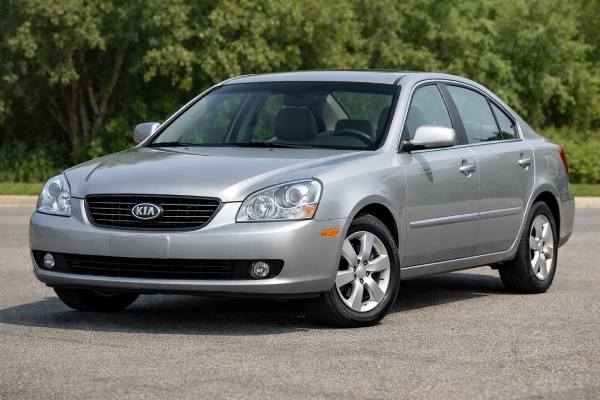
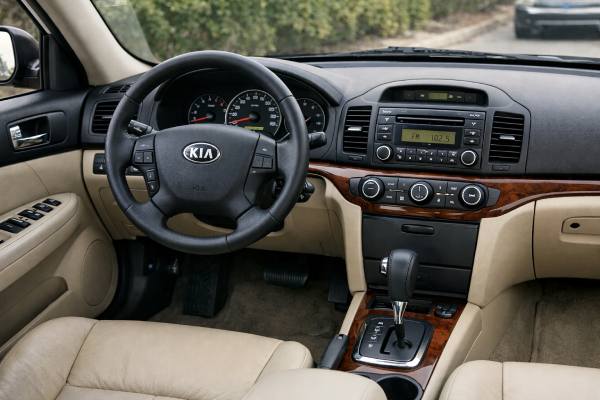
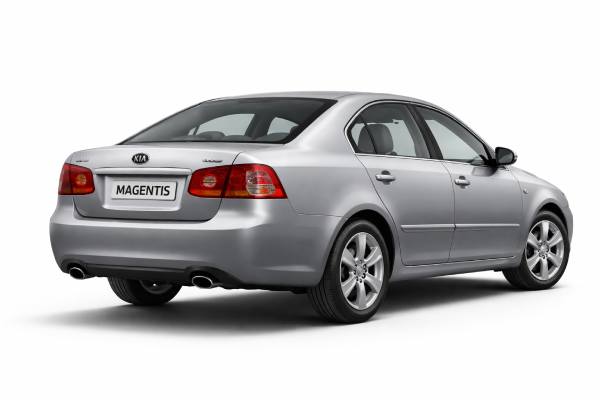
If you’re shopping the 2006–2008 Kia Magentis (MG) with the 2.0 CRDi diesel (D4EA), you’re looking at a mid-size sedan built around a simple value proposition: strong low-rpm torque, long-legged cruising, and straightforward mechanicals compared with newer, more sensor-heavy diesels. The D4EA uses common-rail injection and a turbocharger to deliver usable pull for everyday driving, especially with passengers or on motorway grades. The trade-offs are typical for Euro-4-era diesels: the car rewards regular oil changes, clean intake and EGR plumbing, and careful attention to fuel quality. Most examples now are old enough that condition matters more than mileage alone—service history, smoke behavior under load, and cooling performance tell you far more than the odometer. This guide focuses on the MG diesel’s real ownership needs: what it is, what to check, and how to keep it dependable.
What to Know
- Strong mid-range torque makes motorway merges and uphill driving easy, even with a full cabin.
- Simple, pre-ADAS safety and electronics mean fewer calibration headaches after repairs.
- Good long-distance economy when the intake and turbo controls stay clean.
- Budget for diesel-system upkeep (injectors, EGR, boost hoses) as the car ages.
- Plan oil changes every 10,000 km (6,200 mi) or 12 months, whichever comes first.
Jump to sections
- Kia Magentis MG diesel profile
- Kia Magentis MG D4EA specifications
- Kia Magentis MG trims and safety tech
- Reliability risks and service actions
- Maintenance schedule and buying guide
- Driving feel and real economy
- How it stacks up
Kia Magentis MG diesel profile
The 2006–2008 Magentis (MG) is a traditional D-segment sedan: front-wheel drive, transverse engine layout, and a comfort-biased chassis tuned for stable highway travel. In diesel form, it was aimed at drivers who wanted lower running costs and relaxed torque rather than outright speed. The D4EA 2.0 CRDi’s defining feature is how it delivers thrust: instead of needing high rpm, it builds usable pull early, so the car feels “bigger” than its power number suggests when you’re rolling.
From an engineering perspective, this generation sits in a sweet spot between old mechanical diesels and modern emissions-complex units. You get high-pressure common-rail injection and turbocharging, but most markets did not pair it with today’s dense network of driver assistance sensors. That matters for long-term ownership: fewer cameras and radar modules means fewer expensive calibrations after windscreen replacement, suspension work, or minor bumps.
Where this Magentis can surprise owners is that the diesel’s reliability is highly maintenance-sensitive. Long oil intervals, wrong oil specifications, or repeated short-trip driving often show up later as sticky EGR valves, soot-loaded intake runners, and lazy turbo control. Likewise, fuel quality and filter discipline can make the difference between a smooth, quiet CRDi and one that starts hard, smokes, or develops injector imbalance.
If you want the best experience, think of the MG diesel as a “highway sedan that dislikes neglect.” Give it clean oil, clean air, and clean fuel—and it can be a calm, economical commuter. Skip basics, and the same car can become a cycle of boost leaks, warning lights, and smoke diagnosis.
Advantages that still hold up
- Torque-first drivability: less downshifting in daily traffic and on grades.
- Straightforward layout: conventional suspension and braking parts, easy access for most routine service.
- Value-per-mile: purchase prices often leave room in the budget for catch-up maintenance.
Ownership realities
- Diesels age by condition: listen for cold-start behavior, check for boost leaks, and insist on documented fluid changes.
- Parts quality matters. A cheap fuel filter or questionable injector refurbishment can create repeat problems.
Kia Magentis MG D4EA specifications
Specs vary by market, trim, and gearbox, so treat the numbers below as the typical “2.0 CRDi 140” baseline for 2006–2008 cars. Where regional differences are common, the table uses practical ranges.
Powertrain and efficiency
| Item | Spec (typical for 2006–2008 MG 2.0 CRDi) |
|---|---|
| Code | D4EA (2.0 CRDi) |
| Engine layout and cylinders | Inline-4, turbo diesel, 4 cylinders, 4 valves/cyl (16-valve) |
| Bore × stroke | 83.0 × 92.0 mm (3.27 × 3.62 in) |
| Displacement | 2.0 L (1,991 cc) |
| Induction | Turbocharged (often VGT) with intercooler |
| Fuel system | Common-rail direct injection (CRDi) |
| Compression ratio | Market-dependent (commonly high-teens; verify by VIN) |
| Max power | 140 hp (103 kW) @ ~4,000 rpm (ratings vary by market) |
| Max torque | ~305 Nm (225 lb-ft) (market-dependent) |
| Timing drive | Belt |
| Rated efficiency | Commonly ~6.0–7.0 L/100 km (39–34 mpg US / 47–40 mpg UK) depending on gearbox |
| Real-world highway @ 120 km/h (75 mph) | Often ~6.5–7.5 L/100 km (36–31 mpg US / 43–38 mpg UK) in good tune |
Transmission and driveline
| Item | Spec (typical) |
|---|---|
| Transmission | 6-speed manual common; 4- or 5-speed automatic in some markets |
| Drive type | FWD |
| Differential | Open |
Chassis and dimensions
| Item | Spec (typical MG sedan) |
|---|---|
| Suspension (front / rear) | Strut / multi-link (market-dependent details) |
| Steering | Hydraulic or early electric assist (varies by year/market) |
| Brakes | 4-wheel discs common; ABS standard on many trims |
| Wheels/tyres (popular) | Often 205/60 R16 or 215/50 R17 (trim dependent) |
| Ground clearance | Typically ~140–160 mm (5.5–6.3 in) |
| Length / width / height | About 4,730–4,750 mm / ~1,805 mm / ~1,480 mm (186–187 / 71 / 58 in) |
| Wheelbase | About 2,720 mm (107.1 in) |
| Turning circle | Typically ~11.0 m (36 ft) |
| Kerb (curb) weight | Often ~1,430–1,600 kg (3,150–3,530 lb), depending on gearbox and equipment |
| Fuel tank | Often ~60–62 L (15.9–16.4 US gal / 13.2–13.6 UK gal) |
| Cargo volume | Typically ~480–500 L (17–18 ft³), sedan boot |
Performance and capability
| Item | Typical figure |
|---|---|
| 0–100 km/h (0–62 mph) | ~10.5–11.5 s (gearbox dependent) |
| Top speed | ~195–205 km/h (121–127 mph) |
| Braking 100–0 km/h | Commonly ~38–42 m (varies with tyres and brake condition) |
| Towing capacity | Market dependent; verify by VIN plate and registration (many sedans are 0–1,500 kg braked) |
| Payload | Typically ~400–550 kg (880–1,210 lb), trim dependent |
Fluids, service capacities, and key torques
The most ownership-relevant items are oil specification and capacity. For this model/engine family, correct oil choice matters for turbocharger health and soot management.
| Item | Spec (decision-useful) |
|---|---|
| Engine oil | ACEA C3; commonly 5W-30; capacity 5.9 L (about 6.2 US qt) |
| Oil service interval (typical) | 10,000 km or 12 months |
| Coolant | OEM long-life coolant; mix commonly 50/50 (verify by market) |
| Transmission fluid | Varies by gearbox; use OEM spec only |
| A/C refrigerant | Varies by system and year; check under-hood label |
Key torque specs (typical ranges; verify for your VIN)
- Wheel lug nuts: ~90–110 Nm (66–81 lb-ft)
- Engine oil drain plug: ~30–40 Nm (22–30 lb-ft)
- Brake caliper bracket bolts: commonly ~80–110 Nm (59–81 lb-ft)
Safety and driver assistance
This generation predates modern ADAS packages. Expect conventional safety hardware (airbags, ABS, stability control depending on market/trim) rather than AEB or lane support. Euro NCAP testing for this era used points and stars rather than today’s percentage format.
- Euro NCAP (2006 tested Magentis): Adult occupant 4 stars (28 points); Child occupant 4 stars (32 points); Pedestrian 1 star (3 points).
- IIHS: generally not applicable for this model/market positioning in the same way as US-sold equivalents.
Kia Magentis MG trims and safety tech
Trim names vary widely by country, but most Magentis MG diesels fall into a simple ladder: a base or “LX-type” car, a mid-grade, and a higher trim that adds comfort equipment and sometimes chassis upgrades (larger wheels, fog lights, upgraded audio). Because the MG is now mostly a used-market purchase, your goal is less about the badge and more about verifying what’s actually fitted—especially safety and convenience features that affect daily satisfaction.
Trims and options that matter most
Common equipment differences you’ll notice
- Climate control: manual HVAC on base cars, automatic climate on higher trims. Automatic systems are nicer but add blend-door actuators and more sensors to check.
- Seating and interior: cloth vs leather, heated front seats on many higher trims, and occasional power driver seat.
- Infotainment: basic radio/CD vs upgraded audio; factory navigation is rare and often outdated, so condition matters more than features.
- Wheels/tyres: 16-inch wheels usually ride softer and cost less to tyre; 17-inch packages can sharpen response but amplify road noise.
Mechanical or functional differences to look for
- Gearbox choice: 6-speed manuals are generally the enthusiast pick for durability and economy. Automatics are fine when serviced, but neglected fluid can lead to shudder or delayed engagement.
- Braking and stability systems: ABS is common; ESC (electronic stability control) can be standard or optional depending on market/year. If fitted, confirm the warning lights behave correctly on startup.
Quick identifiers when listings are vague
Use these practical checks rather than relying on seller descriptions:
- VIN and option list: a dealer parts desk can often decode build info from the VIN.
- Dashboard clues: an ESC button, automatic climate display, and steering-wheel audio controls often signal a higher trim.
- Wheel size and tyre sticker: the door-jamb label and tyre sidewall tell you the real wheel/tyre package.
Safety ratings and what they mean today
The MG Magentis earned a respectable result for its time in adult and child occupant categories, but expectations have moved. The structure and restraint systems were designed before widespread use of today’s small-overlap testing, advanced pedestrian protection, and multi-sensor collision avoidance.
Practical takeaway: if your priority is maximum crash avoidance, newer rivals with stability control standard and even basic AEB will have an advantage. If you’re buying the MG diesel, focus on:
- Correct tyre load rating and good tread
- Brake condition and fluid quality
- Properly functioning airbags and seatbelt pretensioner systems (warning light check)
- Child-seat anchor usability and clarity of airbag deactivation status if you use a front child seat
Driver assistance and calibration implications
Most cars in this era do not have camera-based lane support or radar cruise, which is a hidden advantage for long-term costs. After windscreen replacement or suspension work, you typically won’t face expensive ADAS calibration. However, ABS/ESC systems (where fitted) still rely on wheel speed sensors and steering angle sensors—so a sloppy alignment or damaged tone ring can create warning lights and disable stability features.
Reliability risks and service actions
A well-maintained D4EA Magentis can be a durable long-distance sedan, but age and diesel-specific wear patterns mean you should expect some corrective work. The best approach is to sort issues by how common they are and how expensive they become if ignored.
Common issues (most likely)
1) EGR and intake soot build-up (medium cost, high annoyance)
- Symptoms: hesitant acceleration, uneven idle, smoke under load, reduced fuel economy.
- Likely cause: soot and oil vapor accumulate in the EGR valve and intake runners, restricting airflow.
- Remedy: clean EGR and intake tract, confirm boost control operation, and shorten oil intervals if the car does many short trips.
2) Boost leaks and intercooler hose fatigue (low to medium cost)
- Symptoms: whistle, flat power, oily mist around hoses, overboost/underboost codes on scan tools.
- Likely cause: aging rubber hoses, loose clamps, or intercooler end-tank seepage.
- Remedy: pressure test the charge system, replace suspect hoses, and secure clamps correctly.
3) Glow plug and cold-start system aging (low to medium cost)
- Symptoms: hard starts in cold weather, rough first minute, excess white/gray smoke on startup.
- Likely cause: worn glow plugs, weak battery, or glow control module issues.
- Remedy: test glow circuit properly (not just resistance), confirm battery health, and replace as a set where appropriate.
Occasional issues (condition-dependent)
4) Injector imbalance, leak-off, or sealing problems (medium to high cost)
- Symptoms: diesel knock, rough idle, fuel smell, smoke, difficult hot starts, worsening economy.
- Likely cause: injector wear, carbon at the seat, or return flow issues.
- Remedy: professional leak-off testing and correction; avoid “cheap rebuilt” injectors without proper calibration.
5) Turbo control sticking (medium cost)
- Symptoms: intermittent limp mode, inconsistent boost, smoke spikes during hard acceleration.
- Likely cause: soot affects variable-geometry mechanisms (where fitted) or vacuum control lines.
- Remedy: inspect vacuum system, actuator movement, and boost control solenoids; clean or refurbish turbo only if diagnosis supports it.
Rare but expensive (watch for red flags)
6) Cooling system neglect leading to overheating (high cost)
- Symptoms: temperature creep on hills, coolant loss, heater performance changes.
- Likely cause: aged thermostat, radiator restriction, weak coolant maintenance, or water pump wear.
- Remedy: treat overheating as urgent—diesels can warp heads when abused.
7) Dual-mass flywheel wear (manual cars) (high cost)
- Symptoms: clutch chatter, vibration at idle, clunk when shutting off, harsh engagement.
- Likely cause: normal wear, worsened by stop-start city use and aggressive clutch slipping.
- Remedy: budget for flywheel + clutch as a unit if symptoms appear.
Recalls, TSBs, and how to verify
Rather than guessing which campaigns apply, use an official VIN-based recall lookup and request dealer history printouts. A seller who can show recall completion and recent fluid services is usually a safer bet than one who only promises “it runs fine.”
Maintenance schedule and buying guide
A Magentis MG diesel is at its best when you run it like a “fleet car”: consistent servicing, good filters, and proactive checks. The schedule below is practical for real ownership. If your official handbook differs, follow the handbook—especially for timing belt intervals and gearbox fluid specifications.
Practical maintenance schedule
| Item | Interval (distance/time) | Notes |
|---|---|---|
| Engine oil + filter | 10,000 km (6,200 mi) or 12 months | Use the correct ACEA C3 5W-30-type oil and quality filter; short trips justify shorter intervals. |
| Engine air filter | 20,000–30,000 km (12k–18k mi) | Dusty climates: inspect more often. |
| Cabin air filter | 15,000–20,000 km (9k–12k mi) | Improves HVAC performance and reduces blower strain. |
| Fuel filter | 20,000–40,000 km (12k–25k mi) | Critical for CRDi pump/injector longevity; don’t stretch it. |
| Coolant | 4–5 years | Use OEM-type long-life coolant; confirm correct mix ratio. |
| Brake fluid | Every 2 years | Prevents corrosion and maintains pedal feel. |
| Brake pads/rotors inspection | Every 10,000–15,000 km | Check slider pins and parking brake operation. |
| Manual gearbox oil (if specified) | 60,000–100,000 km | Some “filled for life” claims are optimistic for older cars. |
| Automatic ATF (if fitted) | 50,000–80,000 km | Earlier service is safer if towing or heavy city use. |
| Timing belt kit | Commonly 90,000–120,000 km or ~5 years | Replace belt, tensioners, and idlers; many owners also do the water pump if driven by the belt. |
| Serpentine/aux belt | 60,000–100,000 km | Replace sooner if cracking or squeal appears. |
| Battery test | Yearly after age 4 | Weak batteries stress glow and starter systems. |
| Tyre rotation + alignment check | 10,000–12,000 km | Helps stability, braking, and tyre life. |
Fluid and spec reminders for smarter shopping
For the 2006–2008 MG 2.0 diesel listing, the oil spec and capacity are especially useful because they show whether the previous owner followed an appropriate service standard.
- Oil: ACEA C3; commonly 5W-30; 5.9 L capacity.
- Oil interval: 10,000 km / 12 months baseline.
Pre-purchase checklist
Bring a flashlight and aim for evidence, not promises:
Engine and exhaust
- Cold-start behavior: should start promptly without extended cranking.
- Smoke: a brief puff can be normal; persistent blue/white smoke is not.
- Boost integrity: check for oily residue at intercooler hoses and listen for hissing under load.
Cooling system
- Stable temperature on a test drive, including an uphill pull.
- No coolant smell in the cabin; heater output should be consistent.
Transmission
- Manual: check for clutch slip in a high-gear pull and listen for flywheel rattle at idle.
- Automatic: feel for shudder, flare, or delayed engagement when selecting Drive/Reverse.
Chassis and brakes
- Even tyre wear (alignment health).
- Brake pedal feel and ABS function (safe, controlled stop on a quiet road).
Paperwork
- Proof of timing belt replacement if mileage/age suggests it’s due.
- Records for oil changes and fuel filter changes.
- VIN-based recall check and dealer campaign history.
Which examples age best
The best long-term buys tend to be:
- Highway-driven cars with regular oil changes and documented fuel filter service
- Stock boost plumbing (no improvised hose repairs)
- Owners who can describe recent work with receipts (not just “serviced recently”)
Avoid:
- Chronic short-trip cars with vague history
- Noticeable boost leaks, persistent smoke, or coolant loss
- Cars with warning lights that the seller claims are “just sensors”
Driving feel and real economy
The Magentis MG diesel is tuned to feel calm rather than sporty. Its strengths show up in daily usability: steady motorway tracking, a settled ride on long trips, and torque that reduces the need to chase revs. If you’re coming from a small diesel hatchback, the first impression is often how “adult” the car feels at speed—less busy, more stable, and better at covering distance.
Ride, handling, and NVH
Ride: The chassis generally favors compliance. On 16-inch wheels with taller tyres, the car absorbs broken surfaces well for its class. 17-inch wheel packages can look sharper but often add more impact harshness over potholes.
Handling: Cornering balance is safe and predictable, with a front-heavy feel typical of FWD sedans. It won’t rotate like a sport sedan, but it tracks cleanly through sweepers when the alignment and tyres are right.
NVH (noise, vibration, harshness): At idle, a healthy CRDi will sound “diesel,” but it should not shake the cabin. On the highway, wind noise is usually more noticeable than engine noise. Excess vibration often points to tired mounts, a flywheel issue (manual), or injector imbalance.
Powertrain character
The D4EA’s torque delivery is the highlight. Expect useful pull from low rpm and a stronger surge through the mid-range as boost builds. The car feels most responsive in the mid gears; it’s less about top-end power and more about effortless passing once you’re already moving.
- Manual gearboxes: typically give the best sense of control and consistent economy.
- Automatic gearboxes: can feel slower to respond; they reward smooth throttle inputs and clean fluid.
Real-world efficiency
When the intake and turbo controls are healthy, many owners see excellent long-distance results for a mid-size sedan. As a rule:
- City driving: often ~8.0–9.5 L/100 km (29–25 mpg US / 35–30 mpg UK), depending on traffic and warm-up time.
- Highway 100–120 km/h: often ~6.5–7.5 L/100 km (36–31 mpg US / 43–38 mpg UK).
- Mixed use: commonly ~7.0–8.5 L/100 km (34–28 mpg US / 40–33 mpg UK).
Cold weather and short trips can push consumption up sharply because diesels take longer to reach full operating temperature and can run richer during warm-up. If you mainly do short urban trips, plan on more frequent oil changes and keep the cooling system (thermostat) in good shape so the engine reaches temperature promptly.
Key performance metrics that change the verdict
For most buyers, the numbers only matter in context:
- If you want brisk acceleration from a stop, the MG diesel is “adequate,” not quick.
- If you want confident passing and relaxed cruising, the torque delivery is genuinely satisfying.
Your best performance upgrade is not a tune—it’s restoring factory health: fresh filters, no boost leaks, correct oil, and a clean EGR/intake.
How it stacks up
In the mid-2000s diesel-sedan world, the Magentis MG 2.0 CRDi sits in a value lane. It rarely beats the segment leaders in steering feel or cabin materials, but it can compete strongly on ownership economics—especially when purchase price leaves room for preventive maintenance.
Where the Magentis MG diesel wins
1) Value and simplicity
Compared with many newer diesels, this platform is easier to own without specialist diagnostic equipment for cameras, radar, and complex emissions subsystems. For a DIY-friendly owner or a trusted independent shop, that can be a real advantage.
2) Torque-focused drivability
The D4EA’s character suits real roads. It feels comfortable at motorway speeds and handles hills without constant downshifts—exactly what many buyers want from a diesel sedan.
3) Parts availability and conventional layout
Suspension, braking, and routine service items tend to be straightforward and widely available in most markets where the MG was sold.
Where rivals often do better
1) Chassis polish and steering feedback
Mainstream European rivals of the era often feel tighter in fast transitions and give more steering communication. If you care about “driver’s car” handling, the Magentis is usually not the top pick.
2) Cabin materials and long-term rattles
Higher-mile examples may show interior wear earlier than premium rivals. Condition varies a lot by owner care.
3) Safety technology
Even if crash structure scores were solid for the time, many rivals (especially newer generations) gained standard ESC earlier and later added basic collision avoidance features. If your priority is modern crash avoidance, newer alternatives will have an edge.
Who should choose it today
The Magentis MG 2.0 diesel makes the most sense for drivers who:
- Want a comfortable, economical used sedan for commuting or motorway travel
- Prefer simpler electronics and are comfortable maintaining an older diesel properly
- Can buy a well-documented example (or budget to “reset” maintenance immediately)
It’s a weaker fit if you:
- Drive mostly short city trips (diesel soot and warm-up penalties add up)
- Want modern infotainment and active safety features without retrofits
- Need guaranteed low maintenance without proactive upkeep
References
- Engine Oil Grades and Capacities 2024 (Service Guide)
- ED Engine 2008 (Technical Training)
- Kia Magentis 2006 (Safety Rating)
- Kia Recalls | Kia Europe 2026 (Recall Database)
- Kia_Rescue-sheets_03_2021_ENU 2021 (Rescue Sheet)
Disclaimer
This article is for informational purposes only and is not a substitute for professional inspection, diagnosis, or repair. Specifications, torque values, service intervals, and procedures can vary by VIN, market, model year, and installed equipment. Always confirm details using your vehicle’s official service documentation and identification labels before ordering parts or performing work.
If you found this guide useful, please consider sharing it on Facebook, X (Twitter), or your favorite forum—your support helps us keep producing detailed ownership resources.