


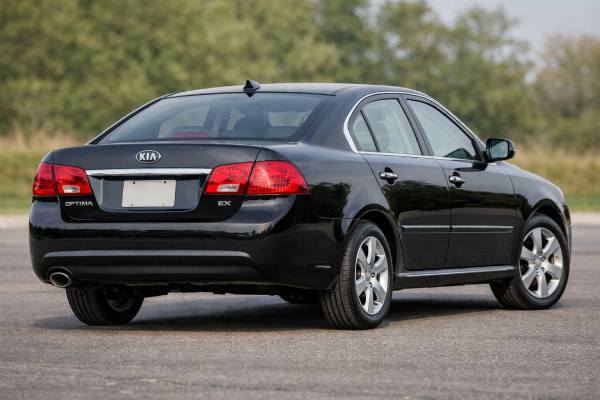
The 2009–2010 facelift Kia Optima is a practical midsize sedan that quietly improved the original MG-generation formula: a roomy cabin, a simpler mechanical layout than many European rivals, and a 2.4-liter naturally aspirated engine that favors predictable response over flashy numbers. In most markets, the G4KC “Theta” inline-four pairs with a conventional automatic transmission and front-wheel drive, keeping ownership straightforward for DIY-minded drivers and general repair shops.
What matters most for buyers today is condition and maintenance history. These cars can run well at higher mileage when oil changes are consistent, cooling-system health is protected, and suspension wear items are refreshed before they turn into tire wear or noisy rides. If you want a comfortable commuter with honest running costs, this facelift Optima can still make sense—provided you shop carefully.
Quick Specs and Notes
- Strong everyday torque and smooth part-throttle response for city driving and merges
- Spacious rear seat and a trunk that works for family errands and airport runs
- Simple FWD layout and conventional automatic make repairs more predictable than many newer sedans
- Watch for oil seepage and aging rubber parts (engine mounts, bushings, hoses) on higher-mile cars
- Change engine oil and filter about every 8,000–10,000 km (5,000–6,000 mi) or 6–12 months depending on use
Section overview
- Kia Optima MG facelift explained
- Kia Optima MG 2.4 spec sheet
- Kia Optima MG equipment and safety
- Common failures and service actions
- Maintenance plan and buyer checks
- Driving feel and real economy
- Optima 2.4 versus its rivals
Kia Optima MG facelift explained
The 2009–2010 facelift version of the Kia Optima sits in a useful sweet spot: modern enough to have standard stability control in many trims and decent crash structures for its era, but still old-school in the best ways—simple port fuel injection on many markets, a naturally aspirated four-cylinder, and a conventional automatic. Compared with the earlier MG years, the facelift typically brought updated exterior panels and lighting, small interior revisions, and (in some regions) a rebalanced trim walk that made comfort features easier to find without stepping into the top model.
Under the hood, the 2.4-liter G4KC is tuned for daily drivability. You do not buy this engine for a thrilling top-end rush; you buy it because it behaves consistently in traffic, pulls cleanly from low rpm, and works well with the gearing of the automatic. For owners, that means fewer “surprises” than turbocharged engines of the same era—no boost leaks, no high heat load on turbos, and generally simpler intake plumbing.
From a chassis perspective, this Optima targets comfort first. The suspension is designed to soak up rough pavement and expansion joints, while still keeping the car stable on the highway. That balance is also why the car is sensitive to worn bushings and tired dampers: once the rubber and shocks age, the ride can turn floaty and tire wear can accelerate. If you test-drive one today, focus less on “how fast it feels” and more on how tight and quiet it feels—especially over bumps, during braking, and in sweeping turns.
Ownership value comes down to three themes:
- Maintenance cadence (oil, coolant, ATF, brakes) is more important than “low mileage.”
- Heat management matters: a healthy cooling system and clean radiator fins protect the engine and automatic.
- Rubber aging is normal: hoses, mounts, and suspension bushings often decide whether the car feels solid or worn out.
Kia Optima MG 2.4 spec sheet
Below is a practical spec layout for the 2009–2010 facelift Kia Optima with the G4KC 2.4L and 175 hp tune. Exact values can vary by market, emissions package, and transmission code, so treat this as a “what you should expect” baseline and confirm with your VIN plate and official documentation.
Powertrain and efficiency
| Item | Specification |
|---|---|
| Code | G4KC |
| Engine layout and cylinders | Inline-4 (I-4), DOHC, 4 valves/cyl (typical) |
| Bore × stroke | ~88.0 × 97.0 mm (~3.46 × 3.82 in) |
| Displacement | 2.4 L (≈2,359 cc) |
| Induction | Naturally aspirated |
| Fuel system | Port fuel injection (PFI/MPFI, market-dependent) |
| Compression ratio | ~10.5:1 (typical) |
| Max power | 175 hp (≈130 kW) @ ~6,000 rpm (market-dependent) |
| Max torque | ~229 Nm (~169 lb-ft) @ ~4,000 rpm (typical) |
| Timing drive | Chain (typical for this family) |
| Rated efficiency | ~8.5–10.5 L/100 km (≈22–28 mpg US / 26–33 mpg UK), depending on cycle and gearbox |
| Real-world highway @ 120 km/h (75 mph) | Often ~7.5–9.0 L/100 km (≈26–31 mpg US / 31–38 mpg UK) when well maintained |
Transmission and driveline
| Item | Specification |
|---|---|
| Transmission | Conventional automatic (commonly 4- or 5-speed depending on market) |
| Drive type | FWD |
| Differential | Open |
Chassis and dimensions
| Item | Specification |
|---|---|
| Suspension (front/rear) | MacPherson strut / multi-link (common for the platform; verify by market) |
| Steering | Hydraulic or electric-assist (market/trim dependent); typical ratio ~15–17:1 |
| Brakes | 4-wheel discs on many trims; rotor sizes vary (often ~280–300 mm front) |
| Wheels/tyres (popular sizes) | 205/65 R16 or 215/55 R17 (trim dependent) |
| Ground clearance | ~150–165 mm (~5.9–6.5 in), depending on tyres and load |
| Length / width / height | ~4,780–4,820 / ~1,805 / ~1,480 mm (≈188–190 / 71.1 / 58.3 in) |
| Wheelbase | ~2,720 mm (~107.1 in) |
| Turning circle (kerb-to-kerb) | ~10.7–11.2 m (~35–37 ft) |
| Kerb weight | ~1,450–1,580 kg (~3,200–3,480 lb), trim dependent |
| Fuel tank | ~65–70 L (~17–18.5 US gal / ~14–15.4 UK gal) |
| Cargo volume | ~400–450 L (~14–16 ft³), measurement method varies |
Performance and capability
| Item | Specification |
|---|---|
| 0–100 km/h (0–62 mph) | ~9.8–11.0 s (trim, tyres, and transmission dependent) |
| Top speed | ~200–210 km/h (~124–130 mph), market dependent |
| Braking distance | Highly tyre-dependent; expect mid-40 m range for 100–0 km/h on good tyres |
| Towing capacity | Often limited or not officially rated in some markets; verify for your region |
| Payload | Typically ~400–500 kg (~880–1,100 lb) depending on GVWR |
Fluids and service capacities (typical guidance)
| Item | Specification |
|---|---|
| Engine oil | API SL/SM/SN equivalent; common viscosities: 5W-20 or 5W-30 (climate dependent) |
| Oil capacity | ~4.3–4.8 L (~4.5–5.1 US qt) with filter (varies by pan and filter) |
| Coolant | Phosphate-OAT style long-life coolant in many markets; 50/50 mix typical |
| Coolant capacity | ~6.5–7.5 L (~6.9–7.9 US qt), varies |
| ATF | Kia/Hyundai-spec ATF for the transmission family (verify exact spec by VIN) |
| A/C refrigerant | R-134a on most cars of this era; charge varies by system |
Safety and driver assistance (era-appropriate)
| Item | Specification |
|---|---|
| Crash ratings | Vary by test body and year; check IIHS and NHTSA for your exact year/trim |
| ADAS suite | Typically none beyond ABS, stability control, and traction control; parking sensors optional on some trims |
Kia Optima MG equipment and safety
Trim names differ by country, but the facelift Kia Optima generally followed a familiar ladder: a value-oriented base model, a mid-trim with comfort upgrades, and a higher trim that added convenience and appearance features (and sometimes a stronger audio system). When you shop used, the most important “trim differences” are the ones that change running costs and day-to-day satisfaction: wheel size, brake hardware, lighting, and seat material.
Trims and options that matter most
- Wheel and tire packages: Moving from 16-inch to 17-inch wheels can sharpen steering response, but it also increases tire cost and makes the ride a bit firmer. Larger wheels are also less forgiving of worn bushings—listen for knocks and check for uneven wear on inner tire shoulders.
- Comfort equipment: Heated seats, automatic climate control, and better sound insulation often appear on mid-to-upper trims. These features age well if the car has been kept dry and the cabin filter has been replaced regularly.
- Infotainment tiers: Factory head units vary. Older navigation systems can feel outdated, but a clean, working base system is sometimes better than a higher trim with intermittent screen or button issues.
- Sunroof and power accessories: A sunroof adds comfort and resale appeal, but drains and seals need attention. Check for damp headliner edges, musty smell, or water in the spare-tire well.
Quick identifiers when viewing a car
- Wheel size: A fast clue for trim level—confirm the tire size printed on the sidewall.
- Steering wheel controls: Many mid-trims added audio controls on the wheel.
- Seat material: Leather or leatherette usually signals higher trims; check stitching wear and bolster collapse.
- VIN build plate and option codes: If available in your region, a dealer can decode original equipment.
Safety ratings and what they mean here
Safety results depend on the test body and the version tested. For 2009–2010 vehicles, two realities matter:
- Test protocols changed over time. A “good” result in one year is not identical to a “good” result in another year because crash tests and scoring evolved.
- Equipment can change outcomes. Side airbags, stability control, and tire condition matter a lot in real crashes.
As a practical owner, focus on what you can verify on the car:
- Airbag presence: Confirm front, side torso, and curtain airbags if equipped.
- ABS and stability control: Many cars in this era offered ESC (electronic stability control). It is a meaningful safety feature, especially in rain and snow.
- Child-seat provisions: Look for ISOFIX/LATCH anchor labels and check that the plastic covers and brackets are intact.
- Lighting: Headlight clarity and aim matter more than people think. Cloudy lenses reduce stopping distance at night because you see hazards later.
If you buy one, make sure the SRS (airbag) light, ABS light, and stability-control light all illuminate at startup and then go out—any persistent warning deserves a scan before you commit.
Common failures and service actions
A well-kept 2009–2010 facelift Kia Optima is not an exotic car, but age introduces patterns. Below is a practical “prevalence and severity” map, followed by symptoms and remedies you can actually use when inspecting or budgeting.
Common (expect to see on higher-mile cars)
- Suspension bushings and links (low to medium cost):
Symptoms: front-end clunks over bumps, vague steering, inner-edge tire wear.
Likely causes: worn control-arm bushings, stabilizer links, and tired struts.
Remedy: replace worn links/bushings and align afterward. Refreshing dampers often restores the car’s “tight” feel. - Oil seepage (low to medium cost):
Symptoms: damp oil pan edge, oily timing cover area, smell after a drive.
Likely causes: aging gaskets (valve cover, front cover seep), crank seal seep, or loose fasteners after past work.
Remedy: confirm the leak source (clean, drive, re-check). Fix small leaks early to avoid soaked mounts and belts. - Ignition maintenance drift (low cost):
Symptoms: slight hesitation, poorer fuel economy, misfire codes under load.
Likely causes: worn spark plugs, aging coils, or vacuum leaks.
Remedy: replace plugs at the correct interval and inspect coil boots; smoke-test for air leaks if trims are off.
Occasional (depends on climate and service history)
- Cooling system aging (medium cost if neglected):
Symptoms: temp needle fluctuation, weak cabin heat, coolant smell, slow leaks.
Likely causes: radiator end-tank seep, tired hoses, sticky thermostat, or weak cap.
Remedy: pressure test the system and replace weak components proactively. Overheating events are what turn “reliable” engines into expensive ones. - Automatic transmission shift quality (medium to high if ignored):
Symptoms: delayed engagement, harsh 2–3 shift, flare under light throttle.
Likely causes: old ATF, adaptive shift behavior, worn mounts, or internal wear.
Remedy: start with mounts and fluid condition. If the fluid is burned or the pan shows heavy debris, budget carefully.
Rare but expensive (verify before buying)
- Timing-related noise or correlation faults (high if severe):
Symptoms: rattle on cold start, cam/crank correlation codes, rough running.
Likely causes: chain tensioner or guide wear (varies by engine family and maintenance).
Remedy: do not ignore correlation codes—verify oil pressure health and timing components before continued use.
Recalls, TSBs, and how to verify
For any older car, assume that at least one recall or campaign may apply depending on market. Your verification process should be:
- Run an official VIN check in your country’s recall database.
- Ask for dealer printouts showing completion dates and mileage.
- Confirm physical evidence where possible (stickers, updated parts, or campaign notes in service records).
Even if you do your own repairs, campaigns and software updates are usually best handled through official channels because documentation protects resale value and safety.
Maintenance plan and buyer checks
If you want this facelift Kia Optima to feel dependable, maintenance needs to be calendar-based as much as mileage-based. Many problems on older sedans are not “design flaws”—they are deferred basics. Use the schedule below as a practical baseline and tighten it for short trips, extreme heat, or heavy city use.
Core maintenance schedule (practical intervals)
- Engine oil and filter: every 8,000–10,000 km (5,000–6,000 mi) or 6–12 months. Use the viscosity that matches your climate and the manufacturer’s spec. Short trips and cold winters justify the shorter interval.
- Engine air filter: inspect every 15,000 km (9,000 mi); replace around 30,000 km (18,000 mi) or sooner in dusty areas.
- Cabin air filter: every 15,000–20,000 km (9,000–12,000 mi); it protects HVAC performance and reduces window fogging.
- Coolant: commonly 5 years/100,000 km (60,000 mi) for long-life coolant; confirm your exact coolant type before mixing.
- Spark plugs: often 60,000–100,000 km (40,000–60,000 mi) depending on plug type; misfires on older coils are easier to prevent than to diagnose later.
- Serpentine belt and hoses: inspect every oil change; replace cracked belts and soft hoses before they strand you.
- ATF (automatic): a conservative approach is 50,000–80,000 km (30,000–50,000 mi), especially if the car sees heat, hills, or traffic. “Lifetime” fluid claims rarely match real-world aging.
- Brake fluid: every 2 years, regardless of mileage, to protect ABS components and maintain pedal feel.
- Brake pads and rotors: inspect every 15,000 km (9,000 mi); replace based on thickness and vibration, not just noise.
- Tire rotation and alignment: rotate every 8,000–10,000 km (5,000–6,000 mi); align when you install new tires or notice steering pull.
- 12 V battery: test annually after year 3; many last 4–6 years depending on climate.
Fluid notes and torque values (decision-useful)
Rather than listing every fastener, focus on what matters for safe service decisions:
- Wheel lug nuts: typically in the 90–110 Nm (66–81 lb-ft) range for midsize sedans (confirm for your wheels).
- Oil drain plug: usually 25–40 Nm (18–30 lb-ft) depending on pan design (confirm before you strip threads).
- Spark plugs: follow plug manufacturer torque; overtightening can damage threads in aluminum heads.
Buyer’s guide: what to check before purchase
- Cold start behavior: listen for rattles, belt squeal, and unstable idle. A clean cold start is worth more than a shiny wax job.
- Transmission engagement: from Park to Drive/Reverse should be prompt and smooth. Delays or thumps can signal mount or internal issues.
- Cooling system: confirm the fan cycles, heater works, and coolant level is stable. Any history of overheating should lower the price significantly.
- Suspension and tires: check inner shoulder wear and look for mismatched tires; both hint at alignment or bushing wear.
- Water leaks: lift trunk carpeting and check the spare tire well. Sunroof drains and tail-lamp seals can cause hidden rust and electrical problems.
- Service history: prioritize documented oil changes and coolant service over “recent brake pads.” Fluids keep engines alive.
Long-term, these cars tend to reward steady maintenance. Budgeting for suspension refresh and fluid services often transforms the ownership experience more than chasing performance mods.
Driving feel and real economy
On the road, the facelift Kia Optima is best understood as a comfort-first midsize sedan with predictable manners. If you come from a sport sedan, steering feedback will feel lighter and less detailed, but straight-line stability is usually good—especially on fresh tires with correct alignment. The ride is tuned to smooth out rough pavement, which makes it a strong commuter, but it also means worn dampers can sneak up on you and gradually turn the car floaty.
Ride, handling, and NVH
- Ride quality: compliant over patchy pavement; sharp impacts increase with larger wheels and low-profile tires.
- Handling balance: generally safe understeer at the limit. A healthy rear suspension helps the car rotate calmly in highway ramps, but it is not a “pointy” chassis.
- Braking feel: typically consistent when the system is fresh. Old brake fluid and cheap pads are common reasons owners complain about a long pedal.
- Cabin noise: wind and tire noise are often more noticeable than engine noise at 110–120 km/h (68–75 mph). Quiet tires can make a bigger difference than people expect.
Powertrain character
The 2.4-liter G4KC tune (175 hp) gives a familiar naturally aspirated feel:
- Throttle response: linear and easy to modulate in traffic.
- Low-rpm pull: adequate rather than punchy; the transmission’s kickdown strategy matters more than peak power.
- Automatic behavior: expect smooth, sometimes relaxed shifts. If it hunts between gears on gentle grades, check for outdated fluid, mismatched tires, or a dirty throttle body before assuming the transmission is “bad.”
Real-world economy expectations
Fuel economy depends heavily on speed and tires. As a realistic owner expectation:
- City: often ~10–12.5 L/100 km (≈19–24 mpg US / 23–28 mpg UK) depending on traffic and warm-up time.
- Highway (100–120 km/h): often ~7.5–9.0 L/100 km (≈26–31 mpg US / 31–38 mpg UK).
- Mixed: commonly ~8.5–10.5 L/100 km (≈22–28 mpg US / 26–33 mpg UK).
Cold weather can add noticeable consumption because warm-up takes longer and winter tires increase rolling resistance. If a car’s economy is far worse than these ranges, look for dragging brakes, low tire pressure, old spark plugs, or a lazy thermostat.
Optima 2.4 versus its rivals
In the used midsize sedan market, the facelift Kia Optima typically cross-shops with the Honda Accord, Toyota Camry, Mazda6, and Ford Mondeo (depending on region). The Optima’s advantage is rarely “best in class” in one headline metric—it is value through overall balance and straightforward ownership.
Where the Optima 2.4 often wins
- Simple mechanical ownership: naturally aspirated engine and conventional automatic keep diagnosis and repair familiar.
- Cabin packaging: good rear-seat space for its size, with a trunk that works for daily life.
- Purchase price: these models often cost less than an equivalent Accord or Camry in similar condition, leaving budget for catch-up maintenance.
Where rivals may be stronger
- Efficiency leadership: Camry and some Accord configurations can return slightly better fuel economy, especially on the highway, depending on gearing and engine tech.
- Driving engagement: Mazda6 typically offers sharper steering and more eager chassis response.
- Parts availability and resale: in some markets, Camry/Accord parts supply and resale demand are simply stronger, which can matter if you plan to sell quickly.
The smart buyer’s decision rule
Pick the Optima if you find:
- complete service history,
- smooth shifting with clean fluid,
- a tight suspension with even tire wear,
- no cooling-system red flags.
Choose a rival if you need maximum resale, the broadest parts network, or a more athletic driving feel. In practice, the “best car” in this class is usually the one with the best maintenance trail and the cleanest mechanical behavior—more than the badge on the grille.
References
- 2010 Kia Optima 2010 (Safety Rating)
- Gas Mileage of 2010 Kia Optima 2010 (Fuel Economy Database)
- Vehicle Detail Search – 2010 KIA OPTIMA 4 DR FWD | NHTSA 2010 (Recall Database)
- Manuals 2025 (Owner’s Manual Portal)
Disclaimer
This article is for informational purposes only and is not a substitute for professional diagnosis, inspection, or repair. Specifications, torque values, fluid types, service intervals, and procedures can vary by VIN, market, production date, and equipment. Always verify details using official documentation for your exact vehicle and follow qualified service guidance when safety is involved.
If this guide helped you, please consider sharing it on Facebook, X (Twitter), or your favorite forum to support our work.