


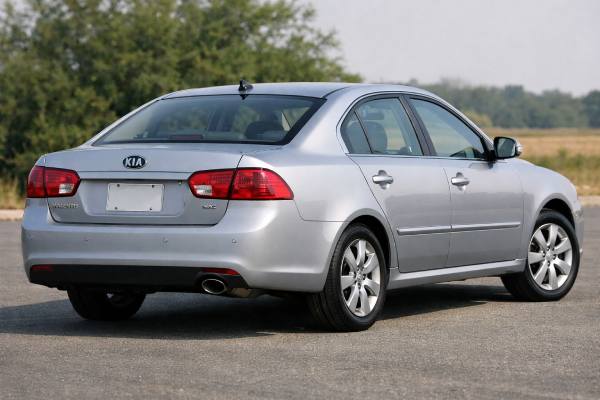
The 2009–2010 facelift Kia Magentis (MG) with the 2.0 CRDi D4EA diesel is the “torque-first” version of this midsize sedan: it trades high-rev power for strong low-rpm pull, relaxed cruising, and typically lower fuel use on long trips. Mechanically, it’s still an old-school, serviceable package—conventional front-wheel drive, simple chassis, and a diesel system that can run for years when fuel quality and maintenance are taken seriously. The ownership catch is that diesel durability depends on the small things: clean oil, timely fuel filtration, healthy glow plugs, and keeping soot-related systems (EGR and intake) under control. Buy the right example and this Magentis can feel like a calm, long-distance commuter with strong passing ability. Buy a neglected one and you can inherit expensive, diesel-specific problems that don’t show up in a short test drive.
What to Know
- Strong mid-range torque makes it easy to drive in traffic and comfortable on highways.
- Often delivers noticeably better long-trip economy than the petrol versions when in good tune.
- Diesel ownership risk: neglected fuel filtration and EGR/soot buildup can trigger costly drivability issues.
- Plan for timing-belt service and water pump replacement on schedule (verify interval by VIN).
- Typical interval: replace the fuel filter about every 15,000 km (10,000 mi) (sooner with poor fuel quality).
Quick navigation
- Kia Magentis MG diesel facelift profile
- Kia Magentis MG D4EA specifications
- Kia Magentis MG equipment and safety tech
- Known diesel weak points
- Service plan and buying advice
- Road feel and fuel use
- Choosing between key rivals
Kia Magentis MG diesel facelift profile
The facelifted 2009–2010 Magentis (MG) diesel is best understood as a comfortable, value-focused long-distance sedan that happens to have a strong engine for everyday driving. The D4EA 2.0 CRDi’s character is fundamentally different from the petrol four-cylinders: instead of building power with revs, it delivers its best work in the mid-range, where you spend most of your time. That makes the car feel confident during merges, hills, and overtakes without needing frequent downshifts.
From an engineering and ownership perspective, this is where the Magentis diesel earns its reputation: it’s a straightforward platform with a powertrain built to do heavy commuting. The body and chassis are not sporty, but they are stable and predictable. Most cars use a multi-link rear setup that helps the sedan feel planted on uneven highways. Steering is usually light-to-medium and tuned for low effort rather than sharp feedback—ideal if your priority is reducing fatigue rather than chasing corners.
Where buyers should be careful is the “diesel tax.” Diesel systems add components that can become expensive with age: turbocharger control parts, EGR (exhaust gas recirculation) valves, high-pressure fuel components, and, in some markets, emissions hardware such as a diesel particulate filter (DPF). Not every 2009–2010 D4EA Magentis has the same emissions equipment, so you can’t assume two cars are identical even if they share horsepower. A simple rule helps: the more urban, short-trip use a diesel has seen, the more you should expect soot-related maintenance.
This model is also old enough that condition matters more than badges. A well-kept Magentis diesel feels composed and “bigger” than its price suggests. A tired one can feel like a collection of small problems: worn suspension links and bushings, sticky brake calipers, tired engine mounts, and neglected fluid services. The good news is that these are solvable. The bad news is that many owners postpone them because the car feels “good enough” for daily use—until several deferred items land at once.
If you’re shopping, prioritize a car with a clear service trail, quiet cold starts, stable coolant temperature, and smooth boost delivery. Those traits usually tell you more about the car’s future than cosmetic condition alone.
Kia Magentis MG D4EA specifications
Specifications can vary by market, emissions spec, and transmission, so treat the tables below as the most common baseline for the 2009–2010 facelift D4EA 2.0 CRDi (140 hp) and verify against your VIN and under-hood labels.
Powertrain and efficiency
| Item | Spec |
|---|---|
| Code | D4EA (2.0 CRDi) |
| Engine layout & cylinders | Transverse inline-4, DOHC, 4 valves/cyl |
| Bore × stroke | ~83 × 92 mm (~3.27 × 3.62 in) |
| Displacement | 2.0 L (~1,991 cc) |
| Induction | Turbocharged (often VGT) with intercooler |
| Fuel system | Common-rail direct injection (CRDi) |
| Compression ratio | typically ~17.7:1 (varies by version) |
| Max power | 140 hp (103 kW) @ ~4,000 rpm |
| Max torque | commonly ~305 Nm (225 lb-ft) @ ~1,800–2,500 rpm |
| Timing drive | Belt-driven cams (verify by variant); replace on schedule |
| Rated efficiency | often ~6.0–6.8 L/100 km (39–33 mpg US / 47–42 mpg UK) |
| Real-world highway @ 120 km/h | commonly ~6.0–7.5 L/100 km depending on tyres, wind, and load |
Transmission and driveline
| Item | Spec |
|---|---|
| Transmission | Typically 5-speed manual or 4-speed automatic (market dependent) |
| Drive type | FWD |
| Differential | Open |
Chassis and dimensions
| Item | Spec |
|---|---|
| Suspension (front / rear) | MacPherson strut / multi-link |
| Steering | Power-assisted rack; ratio varies by market |
| Brakes | 4-wheel discs (diameters vary by trim) |
| Most popular tyre size | 205/60 R16 (common), larger wheels optional |
| Ground clearance | typically ~160 mm (~6.3 in), market dependent |
| Length / width / height | ~4,800 / 1,805 / 1,480 mm (189.0 / 71.1 / 58.3 in) |
| Wheelbase | ~2,720 mm (107.1 in) |
| Turning circle (kerb-to-kerb) | about ~11.2 m (~36.7 ft) |
| Kerb weight | commonly ~1,480–1,580 kg (3,263–3,483 lb) depending on equipment |
| GVWR | varies by market; check door-jamb plate |
| Fuel tank | ~62 L (16.4 US gal / 13.6 UK gal) |
| Cargo volume | ~425 L (~15.0 ft³) seats up (method varies) |
Performance and capability
| Item | Spec |
|---|---|
| Acceleration 0–100 km/h (0–62 mph) | typically ~10.0–11.5 s (depends on transmission) |
| Top speed | often ~200–210 km/h (124–131 mph) |
| Braking distance | depends heavily on tyres and brake condition; test drive should feel stable and straight |
| Towing / payload | varies by market approval; verify registration data |
Fluids and service capacities (ownership set)
| Fluid | Specification (typical) | Capacity |
|---|---|---|
| Engine oil | Diesel-rated oil meeting the correct ACEA/API spec for your market; common viscosities 5W-30 or 5W-40 | often ~5.3–5.7 L (5.6–6.0 US qt) with filter (verify) |
| Coolant | Long-life ethylene glycol based; correct type for your market | often ~7–8 L total system (verify) |
| Manual trans oil (if fitted) | OEM-spec MTF | commonly ~1.8–2.1 L |
| Automatic ATF (if fitted) | OEM-spec ATF only | total fill often ~6.5–8.0 L; drain/refill less (verify) |
| A/C refrigerant | R134a (most markets for this era) | often ~550–650 g depending on setup |
Key torque specs (critical fasteners only)
These ranges are for orientation—confirm exact values for your VIN:
- Wheel lug nuts: typically 90–110 Nm (66–81 lb-ft)
- Oil drain plug: often 35–45 Nm (26–33 lb-ft)
- Fuel filter housing fasteners: snug to spec—over-tightening can crack housings on some designs
Safety and driver assistance
This generation typically focuses on fundamentals (structure, belts, airbags, ABS/ESC). Modern ADAS features such as AEB, adaptive cruise, and lane centering are generally not part of the 2009–2010 equipment set.
Kia Magentis MG equipment and safety tech
For the facelift years, trim naming varies by country, so it’s more useful to think in “equipment layers” you can spot quickly: comfort layer, wheel-and-brake layer, and safety layer. With the diesel, there’s also an “ownership layer” tied to how the car was optioned for long-distance use—cruise control, better seats, and sometimes different wheel packages that change ride and tyre cost.
Trims and options that change daily life
Look for these practical differences when comparing listings:
- Wheels and tyres: 16-inch packages tend to ride more quietly and reduce pothole harshness. Larger wheels can sharpen appearance but may increase tyre roar and make worn suspension parts more noticeable.
- Cabin comfort: automatic climate control, heated seats, and better audio systems make this car feel more premium than its age suggests.
- Cruise control: a real benefit on diesel long-trip cars, where the engine’s torque and gearing make steady cruising effortless.
- Transmission pairing: some markets bundled automatics with higher trims. If you prefer the automatic, buy the best serviced example you can find rather than chasing “highest trim.”
Quick identifiers in person:
- Side airbags often show as SRS tags on seat outer bolsters; curtain airbags may be labeled on A-pillar/headliner trim.
- Diesel versions usually have clear CRDi badging and a different under-hood layout (intercooler piping, diesel fuel filter housing).
- A tidy engine bay with intact clips and hoses often signals more careful ownership.
Safety ratings and what they mean here
The Magentis MG was tested under older crash-test protocols. A period star rating is still useful, but it’s not directly comparable to modern ratings that include advanced driver assistance scoring and newer crash configurations. Treat the rating as “how it performed in its era,” and then focus on what you can control today: tyres, brakes, lighting, and whether the restraint systems are intact.
Also keep the naming issue in mind: in some regions, the same generation is indexed under different model names. When you search safety databases, always match by generation (MG), body style, and year rather than relying only on the badge.
Safety systems to verify on a used diesel
Because this car predates most automation, “working basics” matter:
- ABS and stability control: confirm warning lights illuminate at start and then go out. A persistent light can mean wheel-speed sensors, wiring, or ABS module issues.
- SRS/airbag system: ensure the airbag light behaves normally. Don’t ignore it—diagnosis is part of responsible buying.
- Seat belts: belts should retract crisply and lock under a firm tug.
- Child-seat anchors: ISOFIX/LATCH availability varies by market; inspect anchors and the surrounding trim for damage from past installs.
- Headlights: hazed lenses reduce real-world safety. Clear, well-aimed lights matter more than trim level on a 15-year-old car.
A final note specific to diesels: if the car has any emissions warning lights or limp-mode history, treat it as both a drivability and safety issue. A diesel that unexpectedly loses power while overtaking is not an annoyance—it’s a risk.
Known diesel weak points
The D4EA 2.0 CRDi can be durable, but it is less forgiving of neglect than the petrol engines. Most expensive problems start as small symptoms that get ignored. The goal is to recognize early signs and fix root causes before they damage turbo, injectors, or emissions components.
Below is a practical map by prevalence and cost tier.
Common — low to medium cost
- EGR and intake soot buildup (hesitation, smoke, uneven idle):
Symptoms: flat spot at low rpm, rough idle, higher smoke under load, sluggish response.
Root cause: EGR deposits and intake manifold contamination, especially in short-trip use.
Remedy: diagnose airflow and EGR function; clean EGR/intake where appropriate and address driving pattern (regular hot runs help). - Fuel filter restriction (surging, loss of power, hard starting):
Symptoms: stutter under load, longer cranking, power loss at high demand.
Root cause: overdue filter, water contamination, or poor fuel quality.
Remedy: replace filter and drain water separator if fitted; treat the fuel source as part of the repair. - Glow plug or relay issues (cold start roughness):
Symptoms: hard starting in cold weather, white smoke on start, uneven first minute.
Root cause: aged glow plugs, relay, or wiring.
Remedy: test properly; replace as a matched set when needed.
Occasional — medium cost
- Turbo control problems (underboost/overboost, limp mode):
Symptoms: inconsistent pull, sudden power drop, whistle changes, fault codes.
Root cause: sticky variable-geometry vanes, vacuum/boost leaks, tired actuator, or sensor issues.
Remedy: smoke test and vacuum test first; fix leaks and control faults before blaming the turbo itself. - Injector wear or leak-off imbalance (knock, smoke, hard starting):
Symptoms: diesel knock, rough idle, smoke, poor economy, difficult warm starts.
Root cause: injector internal wear or sealing issues.
Remedy: leak-off test; reseal or refurbish injectors as indicated. - Dual-mass flywheel wear on manuals (rattle, vibration):
Symptoms: rattling at idle, vibration on shutdown, clutch chatter.
Root cause: DMF springs and friction surfaces aging, often accelerated by stop-start city use.
Remedy: replace DMF and clutch as a set if confirmed.
Rare but high impact — higher cost
- Overheating-driven engine damage:
Symptoms: temperature spikes, coolant loss, pressurization, repeated top-ups.
Root cause: neglected cooling system components or leaks.
Remedy: fix early; overheating is one of the quickest paths to major diesel expense. - Emissions hardware failure (DPF-equipped variants):
Symptoms: frequent regeneration attempts, warning lights, limp mode, rising oil level (fuel dilution) in severe cases.
Root cause: short trips preventing complete regeneration, pressure sensor faults, or ash loading over time.
Remedy: confirm whether the car even has a DPF; if it does, focus on sensors, driving pattern, and correct oil spec.
Recalls, TSBs, and how to verify completion
Market coverage varies, so the correct method is universal: run an official VIN recall check and ask for proof of completion. If the seller has no documentation, price the car as though the campaigns are outstanding and plan a dealer check. For imported cars, also confirm that recalls were performed in the original market—records don’t always follow the vehicle cleanly.
Service plan and buying advice
A diesel Magentis stays inexpensive when you treat maintenance as preventive instead of reactive. The most cost-effective strategy is to keep the oil clean, keep the fuel clean, and keep the engine reaching full temperature regularly so soot doesn’t accumulate unchecked.
Practical maintenance schedule
Use this as a conservative baseline, then tighten intervals for heavy city driving:
- Engine oil and filter: every 10,000 km (6,500 mi) or 12 months. If the car does mostly short trips, reduce to 7,500 km.
- Fuel filter: replace about every 15,000 km (10,000 mi); sooner if fuel quality is questionable or water contamination is suspected.
- Air filter: inspect every 15,000 km, replace typically 30,000 km (sooner in dusty regions).
- Cabin filter: every 15,000–20,000 km or yearly for HVAC performance.
- Coolant: replace on schedule (often first at ~90,000 km or 60 months, then at shorter intervals); use the correct coolant type and proper water.
- Brake fluid: every 2 years regardless of mileage.
- Manual gearbox oil: change every 60,000–90,000 km for shift feel and bearing life.
- Automatic ATF: prefer drain-and-fill at 50,000–60,000 km using the exact spec fluid (avoid universal mixes).
- Timing belt system (where applicable): replace belt, tensioners, idlers, and commonly the water pump at the manufacturer’s interval (often around 90,000 km / 5 years, but confirm by VIN).
- Glow plugs: test before winter; replace as a set when weak rather than waiting for multiple failures.
Fluid choices that protect the diesel
- Oil specification matters more than viscosity alone. Choose the correct diesel-rated oil standard for your emissions equipment. If the car has a DPF, the wrong oil can accelerate ash loading.
- Use clean fuel sources. A diesel can tolerate a lot, but water and dirt are expensive. If you can’t trust fuel quality, shorten the filter interval and drain water separators if fitted.
- Don’t “fix” diesel issues with additives by default. Additives can help in specific cases, but diagnosis comes first—especially with CRDi systems.
Pre-purchase checklist (best done on a lift)
- Cold start behavior: it should start without extended cranking and settle quickly. Excessive smoke or heavy knocking deserves investigation.
- Boost delivery: steady pull from low rpm without sudden dropouts. Any limp-mode feeling is a red flag.
- Cooling system integrity: stable temperature, no coolant smell, no oily residue in expansion tank.
- Rust and underbody condition: inspect subframe mounts, suspension pickup points, brake/fuel lines, and rear multi-link hardware.
- Clutch and DMF (manual): listen for rattle at idle and feel for vibration on shutdown.
- Service history quality: look for evidence of fuel filter changes, correct oil, and timing belt service if applicable.
Long-term durability outlook
A well-maintained D4EA Magentis can be a dependable high-mileage commuter, especially for mixed and highway use. The cars that become money pits are typically those that lived on short trips, ran overdue filters and oil, and were driven through warning lights. If you buy one, commit to baseline services early—doing so often “resets” the ownership experience and prevents larger diesel bills later.
Road feel and fuel use
In real driving, the 2.0 CRDi version makes the Magentis feel more effortless than the petrol models at everyday speeds. The engine’s torque arrives early, so the car doesn’t need revs to feel responsive. That changes how you drive it: you can short-shift, ride the mid-range, and still make smooth progress—exactly what a comfortable midsize sedan is supposed to do.
Ride, handling, and NVH
- Ride comfort: the Magentis is tuned for compliance. It absorbs broken pavement well when the suspension is healthy. Worn dampers and bushings make it floaty or clunky, so condition matters more than design.
- Highway stability: generally strong. The long wheelbase and conservative alignment give it a calm “straight-ahead” feel.
- Steering: light and predictable. It’s good for relaxed commuting, not for precision driving.
- Noise: diesel sound varies by maintenance. A healthy CRDi has a modest idle clatter that fades at cruise. Excess injector noise, vibration, or booming often signals mounts, fueling imbalance, or exhaust issues.
One of the biggest “hidden upgrades” on older sedans is tyres. A quiet touring tyre in the correct size can transform the cabin, while mismatched budget tyres can make the car feel harsh and loud.
Powertrain character and transmission behavior
The diesel’s best trait is how little effort it takes to keep speed. Passing performance is typically strong in the 80–120 km/h range because torque is available without a dramatic downshift. Manuals feel flexible and relaxed; automatics can feel dated, but the diesel torque helps mask the limited gear count by reducing the need for constant shifting.
Watch for these telltales on a test drive:
- Hesitation below 2,000 rpm can indicate EGR/soot issues or boost control faults.
- Surging under steady throttle often points to fueling or air leaks.
- Sudden power loss suggests limp mode—treat as a diagnosis requirement, not a “quirk.”
Real-world efficiency
Fuel economy depends heavily on driving pattern and engine health:
- City: often 7.5–9.5 L/100 km in typical traffic; short trips can push higher.
- Highway (100–120 km/h): commonly 6.0–7.5 L/100 km for healthy cars on correct tyres.
- Mixed: many owners land around 6.5–8.0 L/100 km.
Cold weather can increase consumption and worsen short-trip soot buildup. If economy is poor, don’t assume it’s “just old.” Common causes include a thermostat stuck open, dragging brakes, dirty air filter, boost leaks, tired injectors, or an EGR system that’s not behaving.
Selective performance metrics that matter
The diesel Magentis isn’t about 0–100 km/h bragging rights; it’s about usable torque. Still, acceleration around the low-to-mid 10-second range is typical depending on gearbox. More important: the car should feel confident when you ask for passing power without smoke clouds or hesitation. If it doesn’t, you’re likely seeing a maintenance or control-system issue, not “normal diesel behavior.”
Choosing between key rivals
In the late-2000s diesel midsize class, the Magentis often wins on value and simplicity, while established rivals may win on refinement, brand perception, or a more modern cabin. The right choice depends on your priorities: cost-to-own, driving feel, or long-term parts and specialist support in your region.
How the Magentis diesel typically compares
- Versus Volkswagen Passat 2.0 TDI (same era): the Passat often feels more European in steering and interior design, and may have stronger resale. The Kia can be cheaper to buy and simpler to live with when you avoid neglected examples. If you want the “tightest” chassis feel, the VW often leads; if you want lower entry cost and straightforward servicing, the Kia can be compelling.
- Versus Ford Mondeo 2.0 TDCi: Mondeo rivals are known for strong chassis balance and driver confidence. The Kia usually answers with a softer ride and calmer demeanor. Choose the Ford if you care about handling; choose the Kia if you prefer comfort and a more conservative ownership experience.
- Versus Toyota Avensis D-4D: Toyota often wins the “no drama” reputation, but diesel specifics still depend on maintenance. The Magentis can undercut it on price and may offer similar everyday comfort. If you find an Avensis with a perfect history, it’s hard to argue against; if not, the Kia’s value proposition becomes stronger.
- Versus Hyundai Sonata (related philosophy): these cars can be close in mechanical concept, and choice often comes down to condition, rust history, and service evidence. Buy the best-kept example, not the best story in the ad.
Who this Magentis is best for
This 2.0 CRDi Magentis makes the most sense if you:
- Drive regular longer routes where a diesel stays clean and efficient.
- Want a comfortable sedan with strong mid-range torque for hills and overtakes.
- Prefer a conventional car that independent shops can service without specialized tooling.
Consider a different option if you:
- Mostly do short urban trips where soot systems never get a proper hot run.
- Want modern safety tech (AEB, adaptive cruise, lane support), which generally requires a much newer car.
- Need the very quietest engine and the most modern gearbox feel—this era of diesel and 4-speed automatics can’t match newer designs.
In summary, the Magentis D4EA is a value-oriented diesel sedan that shines when used as intended: consistent, warm, longer drives with disciplined maintenance. It’s less forgiving when treated like a short-trip city car.
References
- Kia Recalls | Kia Europe 2026 (Recall Database)
- Kia Service Intervals 2023 (Service Schedule)
- Scheduled maintenance service 2026 (Owner’s Manual)
- Adult occupant protection 2006 (Safety Rating)
Disclaimer
This article is for informational purposes only and is not a substitute for professional diagnosis or repair. Specifications, torque values, service intervals, and procedures can vary by VIN, market, drivetrain, emissions equipment, and trim. Always verify details using official owner’s manuals, workshop/service documentation, and your vehicle’s labels before purchasing parts or performing work.
If this guide helped you, please consider sharing it on Facebook, X (Twitter), or a community group—your support helps others find reliable ownership information.