

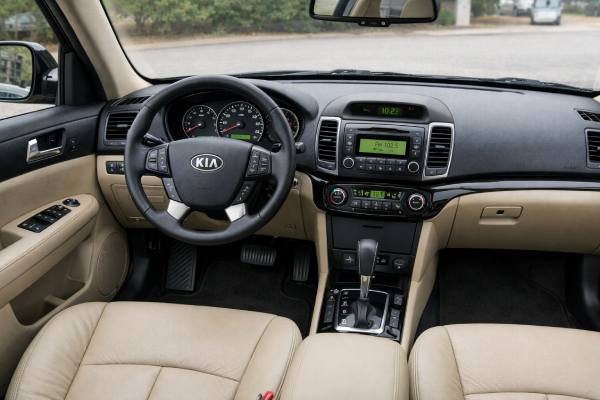
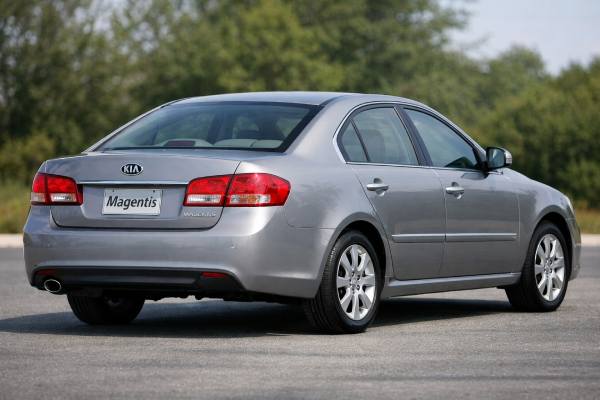
The 2009–2010 facelift Kia Magentis (MG) with the G6EA 2.7 V6 is a classic “big-sedan value” play: a smooth, naturally aspirated six-cylinder, simple front-wheel-drive layout, and comfort-focused tuning that suits long commutes more than back-road aggression. In this version, the car’s appeal is less about headline technology and more about predictable mechanical behavior—linear power delivery, reasonable parts availability in many markets, and a chassis that prioritizes stability and refinement.
For owners today, the V6 can be a strong choice if it has been maintained on time and not overheated. It is also a car where condition and service history matter more than mileage: cooling system health, ignition upkeep, and transmission fluid quality do most of the “make or break” work. When those basics are handled, the Magentis tends to feel honest—quiet, comfortable, and easy to live with.
Owner Snapshot
- Smooth V6 power delivery suits highway driving and full-load commuting.
- Spacious cabin and compliant ride make it comfortable for daily use.
- Straightforward FWD mechanical layout keeps most repairs conventional.
- Watch cooling-system condition and oil-leak seepage as the car ages.
- Plan engine-oil changes about every 10,000–12,000 km (6,000–7,500 mi) or 12 months for long-term health.
What’s inside
- Magentis MG V6 facelift explained
- Magentis MG 2.7 V6 spec tables
- Magentis MG options and crash protection
- Reliability risks and recalls
- Maintenance map for long ownership
- How it drives day to day
- V6 Magentis versus competitors
Magentis MG V6 facelift explained
Think of the 2009–2010 facelift Magentis V6 as a mid-size sedan built around low-effort, low-drama travel. The naturally aspirated 2.7-liter V6 doesn’t rely on turbo boost or high-tech trickery; instead, it delivers a steady climb in torque and a more relaxed feel at highway speeds than most four-cylinder versions. That character matters in real ownership: you spend less time chasing the “right” rpm and more time letting the drivetrain do its thing.
The facelift years are typically the sweet spot if you want the later styling and, in many markets, more mature equipment packaging. The platform itself is conventional: front-engine, front-wheel drive, a comfort-tuned suspension, and an automatic transmission that favors smoothness over snap. That combination helps explain why these cars often feel stable and predictable even when they’re older—provided the suspension bushings and dampers have not been ignored.
Where the V6 differs from the four-cylinder Magentis is not just power. It’s also thermal load and packaging density. A V6 bay runs hotter, uses more coolant capacity, and is less forgiving of small issues like a weak radiator cap or an aging thermostat. If you’re shopping, prioritize cars with evidence of cooling-system service (fresh coolant, healthy fans, no overheating history) and regular oil changes. Overheating and neglected oil are the two paths that can turn a smooth V6 into an expensive project.
The good news is that the Magentis is not a complicated concept car. Most systems are serviceable with normal tools, and the ownership experience is strongly influenced by routine maintenance. If you want a comfortable, older sedan that feels “bigger” than its price suggests, the V6 Magentis can still make sense—especially for drivers who value a calm cabin and easy cruising over sharp handling or modern driver-assist tech.
Magentis MG 2.7 V6 spec tables
Specs can vary by market, emissions calibration, and gearbox. The tables below reflect the common 2009–2010 facelift Magentis/Optima-era configuration for the G6EA 2.7 V6 with FWD and a 5-speed automatic.
Powertrain and efficiency
| Item | Specification |
|---|---|
| Code | G6EA |
| Engine layout and cylinders | V6, 6 cylinders, DOHC, 24 valves (4 valves/cyl) |
| Displacement | 2.7 L (2656 cc) |
| Induction | Naturally aspirated |
| Fuel system | Multi-point injection (MPI) |
| Max power | 185 hp (138 kW) @ ~6000 rpm (market-dependent) |
| Max torque | ~247 Nm (182 lb-ft) @ ~4000 rpm |
| Timing drive | Chain-driven (typical for this family) |
| Rated efficiency (combined) | ~9.1 L/100 km (25.8 mpg US / 31.0 mpg UK) in common auto spec ([Auto Data][1]) |
| Real-world highway @ 120 km/h (75 mph) | Often ~8.5–10.0 L/100 km depending on tires, load, and ambient temperature |
Transmission and driveline
| Item | Specification |
|---|---|
| Transmission | 5-speed automatic (common pairing) |
| Drive type | FWD |
| Differential | Open |
Chassis and dimensions
| Item | Specification |
|---|---|
| Suspension (front/rear) | MacPherson strut / multi-link (typical layout for this generation) |
| Steering | Hydraulic assist in many markets; EPS availability varies |
| Brakes | 4-wheel discs (sizes vary by trim/market) |
| Wheels/tyres (popular size) | Often 205/60 R16 or 215/55 R17 depending on trim |
| Length / width / height | ~4800 / 1805 / 1480 mm (189.0 / 71.1 / 58.3 in) ([Auto Data][2]) |
| Wheelbase | ~2720 mm (107.1 in) ([Auto Data][2]) |
| Turning circle (kerb-to-kerb) | ~11.8 m (38.7 ft) ([Auto Data][3]) |
| Kerb (curb) weight | Commonly ~1500–1530 kg (3310–3370 lb), equipment-dependent ([Auto Data][2]) |
| GVWR | Often ~2020 kg (4450 lb), market-dependent |
| Fuel tank | 62 L (16.38 US gal / 13.64 UK gal) ([Auto Data][2]) |
| Cargo volume | Often listed around 425–500 L seats up (method varies by region) |
Performance and capability
| Item | Specification |
|---|---|
| 0–100 km/h (0–62 mph) | ~9.0–9.5 s (gearbox and market tune dependent) |
| Top speed | ~220 km/h (136.7 mph) in common listings ([Auto Data][1]) |
| Braking 100–0 km/h | Typically mid-to-high 30 m range on good tires (test-dependent) |
| Towing capacity | Often 1300–1700 kg braked (market rules vary) |
| Payload | Often ~450–550 kg depending on GVWR and curb weight |
Fluids and service capacities
These values vary by VIN and market. Always confirm with the correct service documentation for your exact engine and gearbox.
| Fluid | Specification | Capacity (typical) |
|---|---|---|
| Engine oil | Quality API/ACEA equivalent; viscosity commonly 5W-30 or 5W-40 depending on climate | ~4.5–5.9 L (varies by source and whether oil cooler is included) ([TechniRevue][4]) |
| Coolant | Ethylene glycol-based coolant for aluminum components | ~8.5 L (varies by system) ([Automoli][5]) |
| Automatic transmission fluid | Commonly SP-III era fluid in many Hyundai/Kia 5AT applications | Drain/refill often ~3–4 L; total fill higher (confirm by transmission code) |
| Brake fluid | DOT 4 | Fill as needed (flush quantity varies) |
| A/C refrigerant | R134a | Charge varies by market and compressor system |
Safety and driver assistance
| Item | Specification |
|---|---|
| Crash ratings | Euro NCAP: 4 stars adult occupant; score 28. Child occupant score 32. Pedestrian score 3 (older point-based system). |
| IIHS | Not typically applicable for this Europe/Global Magentis rating set in the same way; depends on region and model naming |
| ADAS suite | Generally limited for the era (ABS and stability control common; modern AEB/ACC/LKA typically not available on this generation) |
Magentis MG options and crash protection
For the facelift Magentis V6, trims usually focus on comfort and convenience rather than performance variants. Naming differs by region (for example, “EX” or “SX” style badges in some markets), but the practical differences often come down to wheels, interior materials, audio/navigation, and a few safety-related features such as curtain airbags or stability control being standard vs optional.
Trims and equipment patterns to look for
- Wheel and tire packages: Base trims often run 16-inch wheels with taller sidewalls for a softer ride; higher trims use 17-inch wheels that sharpen steering response slightly but can increase road noise on coarse pavement.
- Seating and interior: Cloth vs leather, heated front seats, and power driver seat functions are common “step-up” items. A healthy power seat mechanism and working seat heaters are small details that hint at overall electrical care.
- Infotainment tiers: Many cars of this era were offered with a basic radio/CD unit and an optional navigation head unit. Today, the key is not features but function: dead pixels, failing buttons, or weak speakers can be a negotiation point.
- Climate control: Automatic climate control is typical on higher trims. Confirm that the A/C is cold at idle and that the blend doors move properly—repair often requires dash work.
Quick identifiers when shopping
- VIN/build plate details: Use these to confirm engine family and production date (late 2009 vs early 2010 can matter for parts supersessions).
- Brake hardware and wheels: A quick glance can reveal whether the car matches the trim claim. Mixed wheels or mismatched tires can signal accident repair or chronic alignment issues.
- Factory vs aftermarket wiring: Look under the dash and around the battery for non-factory wiring splices. Poor accessory installs often correlate with intermittent electrical problems later.
Safety ratings and occupant protection reality
The Magentis earned a 4-star adult-occupant rating in the older Euro NCAP point-based system, with a noted score of 28 points for adult occupant and 32 for child occupant, but low pedestrian protection scoring. The important ownership takeaway is that crash-test context has evolved: modern cars are judged on more demanding protocols, including active safety and vulnerable road user metrics. So while the structure and restraint systems were respectable for the mid-2000s design era, a 2009–2010 Magentis will not match the crash avoidance performance of newer sedans with automatic emergency braking and lane support.
Airbags, restraints, and child-seat practicality
Typical configurations include front airbags, side torso airbags, and side curtain airbags on many trims/markets (verify by checking the seat tags and A-pillar markings). ISOFIX/LATCH availability depends on region; physically confirm anchor points rather than relying on seller claims. For family use, check rear-seat belt retraction strength and whether the rear headrests adjust properly—small items that make a big difference with child seats and adult comfort.
Reliability risks and recalls
A V6 Magentis can be durable, but it is less tolerant of neglect than the four-cylinder versions because heat, oil volume, and packaging density all rise with cylinder count. The best way to think about reliability is to separate common annoyances from rare but expensive mistakes.
Common issues (higher prevalence, lower to medium cost)
- Oil seepage and gasket aging (low/medium): Valve cover gaskets and related seals can sweat oil over time.
Symptoms → cause → remedy: burning-oil smell near the firewall or oil film on the engine → hardened gaskets/PCV stress → replace gaskets, confirm PCV function, clean and re-check. - Ignition wear (medium): Coils and plugs work harder in a hot V6 bay.
Symptoms → cause → remedy: misfire under load, flashing MIL, fuel smell → weak coil or worn plugs → replace coils as needed, install correct plugs, check for oil in plug wells. - Cooling system wear (medium): Thermostats, radiator end tanks, hoses, and caps age.
Symptoms → cause → remedy: creeping temperature at idle, intermittent overheating, coolant smell → restricted radiator, weak fan, sticking thermostat → pressure test, verify fan operation, refresh thermostat/cap proactively.
Occasional issues (medium prevalence, medium/high cost)
- Automatic transmission shift quality (medium/high): Fluid condition strongly affects longevity.
Symptoms → cause → remedy: flare on upshift, delayed engagement, shudder → old ATF, solenoid wear, heat stress → service fluid correctly, diagnose solenoids, avoid power-flushing neglected units without assessment. - Catalyst damage after misfires (high): Prolonged misfire can overheat catalytic converters.
Symptoms → cause → remedy: loss of power, sulfur smell, rattling exhaust → misfire-induced catalyst meltdown → fix misfire immediately; inspect converters if symptoms persist.
Rare but expensive (low prevalence, high cost)
- Overheating events: A single severe overheat can warp heads or damage head gaskets.
Buying tip: walk away from cars with vague “it just needed coolant” stories unless there is proof of proper repair and stable operating temps. - Chronic oil neglect/sludge: Extended intervals with low-quality oil can cause varnish and oil-control issues.
Buying tip: remove the oil cap and inspect for heavy deposits; request evidence of consistent oil service.
Recalls, TSBs, and verification
Recall coverage depends on market and model naming. Your safest workflow is:
- Run the VIN through the official recall database for your region (and check for “customer satisfaction” campaigns).
- Ask the seller for dealer invoices or recall completion printouts.
- Confirm that airbags, seatbelt pretensioners, and any campaign-related parts show consistent labels and dates.
For U.S.-market equivalents (often branded as Optima rather than Magentis), National Highway Traffic Safety Administration provides the authoritative recall lookup and campaign summaries. ([NHTSA][6])
Maintenance map for long ownership
If you want the G6EA V6 to stay smooth, treat maintenance as a system, not a collection of isolated tasks. The priorities are oil quality, cooling stability, and transmission fluid discipline.
Practical maintenance schedule
Use this as a conservative ownership plan when service history is incomplete (adjust to the official schedule for your VIN/market).
- Engine oil and filter: every 10,000–12,000 km (6,000–7,500 mi) or 12 months. Short-trip city driving: consider 7,500–10,000 km. Use a quality filter and oil that matches climate needs.
- Engine air filter: inspect every 15,000 km; replace around 30,000 km (dusty regions sooner).
- Cabin filter: 15,000–20,000 km or yearly for HVAC performance.
- Spark plugs: commonly 90,000–120,000 km depending on plug type; do not stretch intervals if coils have started failing.
- Coolant: every 5 years or ~100,000 km (or sooner if coolant tests weak). Always bleed air properly after service.
- Automatic transmission fluid: if the car is mainly city-driven, consider every 50,000–60,000 km; highway-only may tolerate longer, but fluid condition should lead the decision.
- Brake fluid: every 2 years to protect ABS components.
- Belts and hoses: inspect each oil service; replace at the first signs of cracking, glazing, swelling, or seepage.
- Suspension and alignment: rotate tires every 10,000–12,000 km, align if there is uneven wear or steering pull.
Fluids, capacities, and what to verify
Because published capacities vary by source and configuration, confirm the correct values for your engine and transmission code before ordering fluids. Some listings show engine oil in the mid-4-liter range, while others report higher totals depending on how capacity is defined and whether additional volume is included. ([TechniRevue][4]) For owners, the practical point is simple: measure what drains, refill carefully, and confirm on the dipstick after a proper settle time.
Essential torque values (decision-making level)
Exact values depend on fastener type and service manual revision, but these are the kinds of “critical fasteners only” items you should verify before DIY work:
- Oil drain plug torque (typical): ~30–45 Nm range depending on plug design. ([TechniRevue][4])
- Wheel lug torque: follow the sticker/manual for your wheel size and stud type.
Buyer’s guide checklist
- Cold start behavior: listen for abnormal rattles, check idle stability, and confirm the engine settles quickly.
- Cooling proof: fans should cycle correctly; no bubbling in the expansion tank; heater should blow hot at idle.
- Transmission feel: smooth engagement from P to D and R; no long delay; no harsh 2–3 shifts when warm.
- Underbody and seams: check for corrosion at subframe mounts, brake line routing points, and fuel-tank strap areas (regional).
- Electronics sanity: all windows, locks, mirrors, HVAC modes, and instrument illumination should work without flicker.
Long-term outlook: a well-kept V6 Magentis can be a comfortable, dependable commuter, but a neglected one becomes costly quickly. Buy the best-maintained example you can find.
How it drives day to day
The V6 Magentis is at its best when you drive it like a grown-up sedan—steady throttle, long distances, and minimal drama. The 2.7 V6’s biggest daily advantage is effortless passing compared with smaller engines. You rarely need to push the engine hard; it builds speed with a smooth, predictable surge rather than a sudden hit. That’s especially noticeable with a full cabin or luggage, where the V6 feels less strained.
Ride, handling, and NVH
Ride quality tends to be the highlight. The suspension is tuned for compliance, so it absorbs broken pavement well and keeps highway motion calm. The trade-off is that the car is not eager to rotate in corners; it prefers neutral, safe behavior and will remind you it’s front-wheel drive if you enter a tight bend too quickly. Steering feel is usually light-to-moderate, prioritizing ease of parking and relaxed cruising over sharp feedback.
Noise control is generally good for the era. Expect some wind noise around mirrors at highway speed and more tire roar if the car is on low-quality or mismatched tires. A fresh set of well-rated touring tires often makes the car feel one “class” newer.
Powertrain character and transmission logic
The automatic transmission’s personality is smoother than sporty. In normal driving it upshifts early and keeps revs modest. Kickdown is usually quick enough for passing, but it is not as instant as modern multi-speed automatics. If you feel hunting between gears on gentle grades, it often improves after correct fluid service and ensuring the engine is running cleanly (no weak coils or vacuum leaks).
Real-world efficiency
A realistic combined figure for the V6 automatic sits around the high-8s to low-10s L/100 km depending on driving style, with published combined numbers around 9.1 L/100 km (25.8 mpg US / 31.0 mpg UK) in common specs. ([Auto Data][1]) City-only use, short trips, and cold weather can push it higher. If fuel cost is your main concern, the V6 is not the “smart” choice; if relaxed cruising is the priority, it makes sense.
Braking feel and stability
With healthy pads, rotors, and fresh brake fluid, pedal feel is typically predictable and easy to modulate. If braking feels inconsistent, check for uneven rotor wear, sticky calipers, and old fluid—issues that become more common as these cars age. Stability control (where fitted) tends to be tuned conservatively, stepping in early to keep the car calm.
V6 Magentis versus competitors
In the 2009–2010 timeframe, the Magentis V6 competed in the heartland of mid-size sedans—cars that win buyers with comfort, value, and low running stress. Today, the buying decision usually comes down to condition, running costs, and how much “modern safety” you require.
Against mainstream comfort sedans
- Toyota Camry: Often the benchmark for low-fuss ownership and resale. A good Camry can cost more upfront, but it may return that in easier long-term parts logistics and buyer demand. The Magentis fights back with value and a “more car for the money” feel.
- Honda Accord: Typically sharper to drive and strong on efficiency in four-cylinder trims. If you enjoy steering feel and chassis balance, the Accord often wins. If you want softer ride comfort at lower purchase price, the Magentis can be attractive.
- Hyundai Sonata: Often close mechanically depending on region and year, with similar maintenance logic. Shopping between them is frequently about finding the best-maintained example and the features you prefer.
Against European-style alternatives
- Volkswagen Passat and Ford Mondeo: These can offer a more “planted” feel and sometimes better high-speed chassis confidence, but ownership costs vary widely depending on engine and transmission choice. The Magentis typically stays simpler and more predictable when it comes to routine service.
- Mazda Mazda6: Usually more engaging to drive, often at the expense of a slightly firmer ride. If you value handling, Mazda is compelling; if you want relaxed comfort, the Magentis aligns better.
Who the V6 Magentis suits best
Choose the V6 Magentis if you want:
- A comfortable daily sedan for longer trips.
- Naturally aspirated power without turbo complexity.
- Strong value, provided you can verify maintenance.
Consider rivals (or a newer car) if you need:
- Modern crash avoidance tech (AEB, ACC, lane centering).
- Best-in-class fuel economy.
- Top resale value and easiest future selling experience.
Ultimately, the V6 Magentis wins when you buy a clean, well-documented car and keep it on a disciplined maintenance plan. That’s the formula that lets its strengths—comfort and smoothness—show through.
References
- euroncap_kia_magentis_2006_4stars.pdf 2006 (Safety Rating)
- Check for Recalls: Vehicle, Car Seat, Tire, Equipment | NHTSA 2026 (Recall Database)
- Kia Owner’s Manual 2026 (Owner’s Manual)
- Owner’s Manuals and Documents 2026 (Owner’s Manual)
Disclaimer
This article is for informational purposes only and is not a substitute for professional inspection, diagnosis, or repair. Specifications, torque values, service intervals, and procedures vary by VIN, market, and equipment; always verify details using the official documentation for your specific vehicle and powertrain.
If this guide helped, please consider sharing it on Facebook, X (Twitter), or your favorite forum to support our work.