
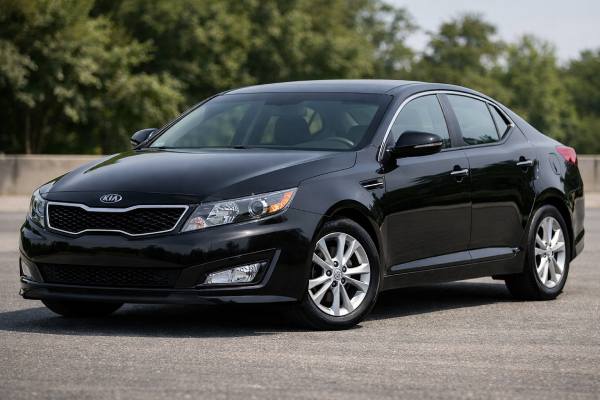
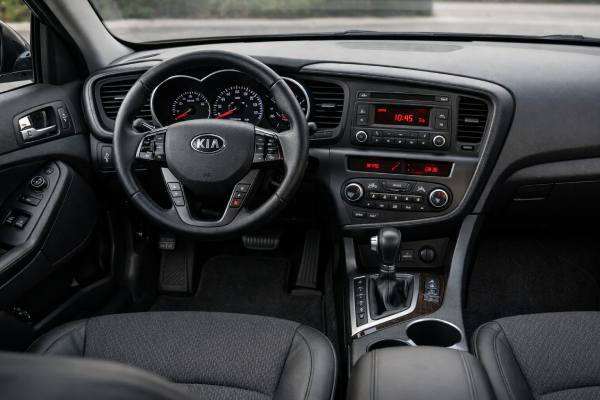
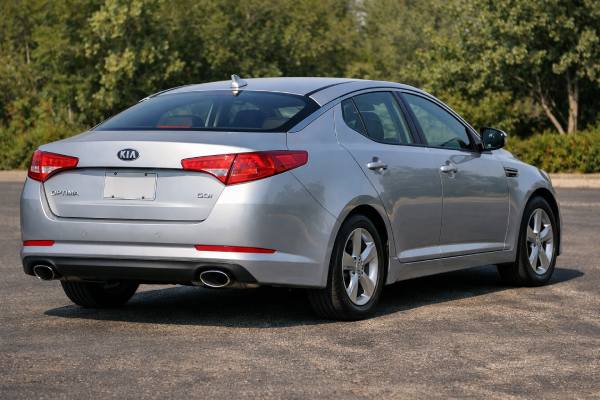
The 2011–2013 Kia Optima (TF) with the G4KH 2.0-liter turbo is the “quick” version of Kia’s midsize sedan from this era—strong mid-range torque, a modern feel for its age, and enough passing power to make highway driving effortless. It is also a car where ownership quality depends heavily on history: correct oil service, clean cooling, and proof that factory service actions were completed matter more than the odometer alone. When sorted, the Optima 2.0T can be a comfortable, long-distance commuter with a genuinely useful blend of speed and refinement. When neglected, it can turn into a “chase the symptoms” project, especially around engine health, heat management, and boost-related wear items. This guide focuses on the facelift-era TF turbo setup most buyers seek: what it is, how it drives, where it tends to age, and how to maintain it for predictable reliability.
Owner Snapshot
- Strong turbo torque makes passing easy and reduces the need for frequent downshifts.
- Stable highway ride with good cabin comfort for long commutes.
- Well-equipped trims offer modern basics (Bluetooth, stability control, multiple airbags) for the money.
- Ownership hinges on service history—skipped oil changes and overheating events are major red flags.
- Plan oil and filter changes every 8,000 km (5,000 mi) or 6 months for conservative turbo care.
Navigate this guide
- Kia Optima TF 2.0T snapshot
- Kia Optima TF 2.0T specs tables
- Kia Optima TF trims and safety
- Reliability and known weak points
- Maintenance plan and buying tips
- On-road feel and economy
- Rivals and best alternatives
Kia Optima TF 2.0T snapshot
In 2011 Kia redesigned the Optima into the TF generation—lower, wider-looking, and tuned to feel more European than older Kia sedans. The G4KH 2.0T variant is the enthusiast-friendly pick, pairing a turbocharged four-cylinder with a conventional automatic and front-wheel drive. In daily use, the “personality” comes from torque: you do not need to rev it hard to move quickly, and the car feels relaxed at highway speeds.
For buyers, the key is understanding what this engine asks for. Turbo engines run hotter, shear oil faster, and depend on clean oil flow to the turbocharger bearings. If the previous owner stretched oil intervals, used the wrong grade, or drove low on oil, you should assume accelerated wear. The Optima can also be sensitive to cooling system health; a single overheating event can shorten the life of hoses, plastic fittings, and gaskets.
The good news: the chassis is straightforward, parts availability is generally decent in many markets, and the cabin holds up well if cared for. You also get practical advantages that matter day-to-day:
- Comfort and usability: supportive seats, stable ride, and an easy-to-live-with sedan layout.
- Performance without drama: quick passing power on two-lane roads, especially from 60–120 km/h (40–75 mph).
- Value: many trims deliver features that were “premium” in 2011–2013.
The ownership strategy is simple: buy the cleanest service history you can find, verify service actions and recalls, then keep the car on a conservative maintenance rhythm. Do that, and the Optima 2.0T can feel like a lot of car for the money—still modern enough to be pleasant, still simple enough to be maintainable.
Kia Optima TF 2.0T specs tables
Below are practical specifications for the 2011–2013 Optima (TF) with the 2.0-liter turbo. Exact numbers can vary by market, emissions certification, wheel/tire package, and trim, so treat these as the “typical” configuration most owners encounter.
Powertrain and efficiency
| Item | Spec |
|---|---|
| Code | G4KH |
| Engine layout and cylinders | Inline-4 (I-4), DOHC, 4 valves/cyl |
| Displacement | 2.0 L (1,998 cc) |
| Induction | Turbocharged |
| Fuel system | Direct injection (GDI) |
| Max power | 274 hp (204 kW) @ rpm (varies by market tune) |
| Max torque | Typically ~365 Nm (~269 lb-ft) @ low–mid rpm (market-dependent) |
| Timing drive | Chain |
| Rated efficiency (typical) | ~10.7 L/100 km city / ~6.9 L/100 km highway (approx. 22/34 mpg US) |
| Real-world highway @ 120 km/h | Often ~7.5–8.5 L/100 km (31–27 mpg US), depending on tires, wind, and load |
Transmission and driveline
| Item | Spec |
|---|---|
| Transmission | 6-speed automatic (typical for 2.0T in this era) |
| Drive type | FWD |
| Differential | Open |
Chassis and dimensions (typical TF sedan)
| Item | Spec |
|---|---|
| Suspension (front/rear) | MacPherson strut / multi-link |
| Steering | Electric power steering (EPS) |
| Brakes | 4-wheel disc (trim-dependent sizing) |
| Wheels/tyres (common) | 225/45 R18 (common performance package size) |
| Length / Width / Height | ~4,845 mm / ~1,830 mm / ~1,455 mm (approx. 190.7 in / 72.0 in / 57.3 in) |
| Wheelbase | ~2,795 mm (110.0 in) |
| Turning circle (kerb-to-kerb) | ~11.0–11.3 m (36–37 ft), varies |
| Kerb (curb) weight | Often ~1,550–1,620 kg (3,417–3,571 lb), by trim |
| Fuel tank | ~70 L (18.5 US gal / 15.4 UK gal), market-dependent |
Performance and capability (typical real-world ranges)
| Metric | Typical result |
|---|---|
| 0–100 km/h (0–62 mph) | ~6.8–7.5 s (conditions and tires matter) |
| Top speed | Often ~220–230 km/h (137–143 mph), market-limited |
| Towing capacity | Often not rated / minimal in many markets for this sedan |
| Payload | Varies by trim and market; check door jamb label |
Fluids and service capacities (common owner-facing values)
| Item | Typical spec |
|---|---|
| Engine oil | Full synthetic; commonly 5W-30 or 5W-40 (climate dependent); capacity ~4.7–5.2 L (5.0–5.5 US qt) with filter |
| Coolant | Long-life ethylene glycol mix; typically 50/50; capacity varies by radiator/market |
| Transmission/ATF | Manufacturer-spec ATF (do not “universal fluid” this); drain/fill volume varies |
| A/C refrigerant | R-134a (most markets in this era); charge varies by system label |
Safety and driver assistance (typical TF equipment)
| Item | Notes |
|---|---|
| Crash ratings | Strong results reported for this generation by major rating bodies (see References) |
| Airbags | Typically 6 (front, front side, full-length curtains), by market/trim |
| Stability and braking | ABS + ESC + traction control commonly standard |
| ADAS | This era is mostly pre-AEB; features are more “passive safety + stability” than modern driver assistance |
If you want one quick takeaway from the data: the Optima 2.0T is “fast enough” to feel modern even today, but it’s still a 2011–2013 platform—expect strong fundamentals, not today’s advanced driver assistance suite.
Kia Optima TF trims and safety
Trim naming varies by country, but most markets offered a clear ladder: a comfort-oriented base/mid trim and a sportier top trim where the 2.0T usually lived. In North America, the turbo often appeared as SX (and later SX Limited), while other markets used different grade names but similar packaging: larger wheels, firmer suspension tuning, upgraded brakes, and more interior equipment.
Trims and options that change ownership
Look for these differences because they affect running costs and how the car feels:
- Wheel and tire packages: 18-inch wheels look great and sharpen response, but tires cost more and ride can be firmer. Check for uneven wear—misalignment, worn bushings, or bent wheels are common on older performance trims.
- Braking hardware: higher trims may use larger discs and sometimes different pad shapes. Good for repeated stops, but not all aftermarket pads feel the same; cheap pads can ruin pedal feel and create vibration.
- Lighting: projector or HID-style setups (trim dependent) can be excellent when healthy, but headlamp housings can haze with age. That affects visibility more than people expect.
- Infotainment: navigation and premium audio systems are nice when functional, but aging touchscreens, Bluetooth modules, and backup cameras can become “small but annoying” repairs.
Quick identifiers when shopping
When listing photos are limited, these clues help confirm you are looking at the turbo car:
- Badging and wheels: many markets used sportier wheels and trim accents on turbo models.
- Interior cues: more bolstering, upgraded steering wheel controls, and often a higher-spec instrument cluster.
- Under the hood: the turbo plumbing and intercooler routing are obvious—do not rely on badges alone.
Safety ratings and safety systems
This TF generation built a strong safety reputation for its time, combining a modern structure with standard stability control and multiple airbags in many markets. The important owner point is that “safety equipment” is not only what the car has, but whether it still works correctly:
- Confirm the airbag warning light proves out properly at start-up and goes out.
- Test ABS and stability control function with a safe low-speed brake check (a scan tool check is even better).
- Inspect for signs of prior collision repair: uneven panel gaps, paint mismatch, or non-OEM headlamps can indicate structural work.
Driver assistance in 2011–2013 is limited compared with modern cars. Think “good passive safety and stability,” not “automatic emergency braking and lane centering.” That is not a flaw—just a reality of the era. If you are buying the Optima for family duty, prioritize tire condition, brake health, and correct suspension geometry. Those factors often matter more in real stopping distance than the brochure’s feature list.
Reliability and known weak points
A well-maintained Optima 2.0T can be dependable, but the reliability story is not “set and forget.” The engine is powerful for its size, which means stresses are higher, and neglect shows up sooner than on a naturally aspirated 2.4.
Below is a practical issue map—prevalence and cost vary, but this helps you triage.
Common (watch closely)
- Oil consumption or low oil level
- Symptoms: frequent top-offs, oil smell, low oil warning, noisy cold start.
- Likely causes: extended oil intervals, stuck PCV system, wear from past overheating, turbo seal wear.
- Remedy: verify PCV operation, check for leaks, perform compression/leak-down if consumption is significant, and keep oil changes conservative.
- Engine knock events / bearing wear concerns
- Symptoms: metallic knock under load, worsening noise, misfire codes, limp mode, or persistent vibration.
- Likely causes: lubrication stress, debris, past low-oil driving, or known failure modes addressed through manufacturer actions.
- Remedy: confirm service actions were completed, scan for knock-related history, and avoid cars with “it just needs a sensor” explanations.
- Turbo-related heat aging
- Symptoms: boost leaks (hissing), sluggish acceleration, overboost/underboost codes, oil seep at hoses.
- Likely causes: hardened charge pipes, cracked vacuum lines, tired diverter/boost control components.
- Remedy: smoke test the intake tract; replace aged rubber and clamps with quality parts.
Occasional (budget for it)
- High-pressure fuel system sensitivity (GDI)
- Symptoms: hard starts, hesitation, lean codes, poor high-load response.
- Likely causes: fuel quality issues, carbon accumulation patterns, fuel pump wear.
- Remedy: use quality fuel, keep filters and maintenance current, and diagnose properly before replacing expensive components.
- Cooling system weak points
- Symptoms: coolant smell, slow leaks, temperature creep in traffic.
- Likely causes: aging hoses, plastic fittings, radiator end tanks, thermostat sticking.
- Remedy: pressure test the system; treat any overheating history as a serious risk.
Rare, but high-cost if ignored
- Transmission distress from neglected fluid
- Symptoms: flare on upshift, harsh engagement, delayed drive/reverse.
- Likely causes: old ATF, heat, aggressive driving with poor service history.
- Remedy: verify fluid condition and service records; avoid “flush fixes everything” shortcuts.
Service actions, software, and verification
For this generation and engine family, the smart move is to treat recall/service action proof as part of the purchase price. Ask for dealer documentation and run an official VIN check. If the seller cannot provide it, assume you will need to verify and potentially complete outstanding actions immediately after purchase. This single step can be the difference between a confident daily driver and a high-stress ownership experience.
Maintenance plan and buying tips
A conservative maintenance approach is the best “mod” you can do to a turbo Optima. The goal is stable oil quality, controlled temperatures, and early detection of small leaks before they become expensive.
Practical maintenance schedule (owner-focused)
| Item | Interval (distance/time) | Notes |
|---|---|---|
| Engine oil + filter | 8,000 km (5,000 mi) or 6 months | Full synthetic; shorten for short trips, hot climates, or hard driving |
| Engine air filter | 24,000–32,000 km (15–20k mi) | Replace sooner in dusty areas |
| Cabin air filter | 12,000–20,000 km (7–12k mi) | Cheap comfort win; helps HVAC performance |
| Spark plugs | 80,000–100,000 km (50–60k mi) | Use the correct heat range; turbo engines are sensitive |
| Coolant | 5 years/100,000 km (60k mi) typical | Follow your market’s official spec; do not mix incompatible coolants |
| Brake fluid | Every 2 years | Moisture lowers boiling point—important for safety |
| ATF (6-speed auto) | 60,000–100,000 km (40–60k mi) in severe use | “Severe” includes city traffic, heat, hills, or spirited driving |
| Serpentine belt and hoses | Inspect every service; replace at first cracking | Preventive replacement avoids overheating events |
| PCV system | Inspect every 40,000–60,000 km | Helps control oil vapor and consumption patterns |
| 12 V battery | Test yearly after year 4; replace 5–7 years | Weak voltage causes random electronic faults |
Fluids and decision-making guidance
- Oil viscosity: choose based on climate and the manufacturer’s spec for your market. If you live in very hot conditions or drive hard, a slightly heavier grade approved for the engine can help maintain film strength, but only if it matches the official specification.
- Fuel: many turbo calibrations deliver best power on higher-octane fuel. If your market allows regular fuel, the car may pull timing under load; that is normal, but it reduces peak performance.
Buyer’s guide: what to check before you pay
Use this checklist to avoid the common expensive surprises:
- Cold start behavior: listen for timing chain rattle, ticking that does not fade, or smoke.
- Oil level and condition: pull the dipstick before the test drive. Low oil is a major red flag.
- Cooling system pressure test: any coolant smell, crusty residue, or damp hoses should reduce your offer.
- Boost and intake leaks: during a test drive, watch for surging, hiss, or inconsistent acceleration.
- Transmission feel: it should shift cleanly, without flare or harsh bangs when warm.
- Scan for codes: even “no check engine light” cars can store pending faults.
- Tires and alignment: uneven wear can mean suspension bushing fatigue or past impact damage.
Long-term durability outlook
If you buy a documented, well-serviced example and you keep oil and cooling conservative, the Optima 2.0T can be a satisfying long-term car. If you buy a “cheap turbo sedan” with missing history, you should budget like a project: fluids, cooling refresh, intake leak checks, and a deeper engine health verification early in ownership.
On-road feel and economy
The Optima TF 2.0T is defined by how effortlessly it moves in real traffic. Turbo torque arrives early, which means merging and passing feel immediate. Around town you can drive it lazily—light throttle, short bursts of boost, and relaxed cruising. On the highway, it has enough reserve that you rarely need a big kickdown to overtake.
Ride, handling, and NVH
For a midsize sedan from this era, the Optima’s body control is a strong point. It feels planted at speed, and the suspension generally balances comfort with control better than many bargain sedans of the early 2010s. What changes the experience most is the wheel/tire package:
- 18-inch performance tires sharpen turn-in and reduce sidewall squirm, but they can add impact harshness over broken pavement.
- Worn dampers or bushings show up as float on highway dips, clunks over potholes, and vague on-center steering. If the car feels “loose,” assume it needs suspension reconditioning.
Cabin noise is typically reasonable, though older examples can develop wind noise from door seals and tire roar from aggressive tread patterns. If you want the quietest Optima, prioritize good tires and a clean alignment over chasing sound-deadening hacks.
Powertrain character
The engine’s best trait is mid-range response. You get a strong surge from low to mid rpm, and the car feels quick even without full throttle. The downside is traction: in wet conditions or on poor tires, front-wheel drive plus turbo torque can produce wheelspin and some torque steer. That is not dangerous when the chassis is healthy, but it is a reminder that tires and suspension condition matter.
The 6-speed automatic is generally smooth when maintained. Hesitation, hunting, or harshness often points to old fluid, software adaptation issues, or engine misbehavior (a weak ignition coil or boost leak can feel like a “transmission problem”).
Real-world efficiency
Turbo sedans reward steady driving. In mixed use, many owners land in a realistic band rather than the best-case numbers:
- City-heavy driving: commonly ~10.0–12.0 L/100 km (23–20 mpg US), depending on traffic and warm-up time.
- Highway at 100–120 km/h (60–75 mph): often ~7.5–8.5 L/100 km (31–27 mpg US).
- Cold weather penalty: short trips in winter can add a noticeable bump in consumption because the engine spends more time warming up and the cabin heater load is higher.
If you want both performance and reasonable economy, drive it like a torque engine: use the mid-range, avoid constant full-boost bursts, and keep tire pressures correct.
Rivals and best alternatives
The 2011–2013 Optima 2.0T sits in a competitive segment, and its best “value argument” is simple: you often get near-V6 pace with four-cylinder running costs—if it has been maintained properly. Here’s how it stacks up against common rivals.
Compared with Hyundai Sonata 2.0T (same era)
This is the closest sibling in feel and engineering philosophy. Both deliver turbo torque and similar packaging.
- Choose the Optima if you prefer the styling, interior layout, and available equipment mix.
- Choose the Sonata if you find a cleaner history or better local parts support.
In practice, condition beats badge here—buy the best-maintained example.
Compared with Honda Accord (2.4 or V6)
- Accord 2.4: usually less complicated and often more tolerant of neglected maintenance, but slower than the Optima 2.0T.
- Accord V6: smooth, strong, and typically fast, but higher fuel use and more expensive wear items in some markets.
If you want a “set it and forget it” ownership style, the Accord often wins. If you want torque-heavy punch and strong value, the Optima can make more sense.
Compared with Toyota Camry (I4 or V6)
Camry ownership is often about low drama: predictable maintenance and generally strong resale.
- Camry I4: dependable and easy, but less engaging.
- Camry V6: quick and refined, but fuel use rises.
If your priority is maximum long-term simplicity, Camry is a top benchmark. If you want a more athletic feel and strong mid-range power, the Optima 2.0T is more fun—assuming history checks out.
Compared with Ford Fusion (EcoBoost) and VW Passat
These can be rewarding to drive, but they can also be more sensitive to local specialist support and parts cost.
- Fusion EcoBoost: can feel great, but buy based on maintenance proof and diagnostic cleanliness.
- Passat: roomy and comfortable, but ownership can become costlier if you are far from good European-car service support.
The practical verdict
Choose the Optima TF 2.0T if you want:
- Strong passing performance without stepping into a V6,
- A comfortable, stable commuter,
- And you can verify service actions and maintain it conservatively.
Choose a simpler rival (often a naturally aspirated four-cylinder) if you want:
- The lowest complexity per kilometer,
- Maximum tolerance for imperfect maintenance history,
- Or you do not have access to confident turbo/GDI diagnostics.
References
- 2013 Kia Optima Specifications 2013 (Specifications)
- 2012 Kia Optima 4-door sedan 2012 (Safety Rating)
- 2011 KIA OPTIMA EARNS FIVE-STAR CRASH SAFETY RATING FROM U.S. GOVERNMENT 2011 (Press Release)
- Section One: Introduction and Overview 2017 (Warranty Bulletin)
- Vehicle Detail Search – 2011 KIA OPTIMA 4DSDN742761111111 | NHTSA 2011 (Recall and VIN Check)
Disclaimer
This article is for informational purposes only and is not a substitute for professional inspection, diagnosis, or repair. Specifications, torque values, service intervals, and procedures vary by VIN, market, and equipment. Always confirm details using the official service documentation and labels for your specific vehicle, and consult a qualified technician when needed.
If you found this guide useful, please consider sharing it on Facebook, X (Twitter), or your favorite forum to support our work.