
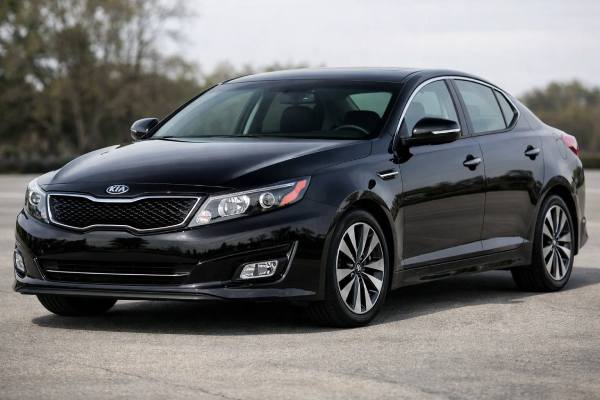


The 2014–2015 facelift of the Kia Optima TF with the 1.7 CRDi (D4FD) is a practical “long-distance” midsize sedan: quiet at speed, stable on the motorway, and capable of genuinely low fuel use when driven with a light foot. The D4FD diesel is tuned for torque rather than drama, so it suits commuters and high-mileage owners more than stoplight sprinting. Where these cars shine is the total package—comfortable seating, generous cabin space, and a chassis that feels composed even on rougher European roads.
Age and service history matter more than mileage alone. A well-maintained 1.7 CRDi can be a dependable workhorse, but neglected oil changes, repeated short trips, and skipped diesel emissions care can turn “efficient” into “expensive.” This guide focuses on the facelift years and the 134 hp diesel specifically.
Fast Facts
- Strong mid-range pull for everyday driving, especially 60–120 km/h passing.
- Low highway fuel consumption is realistic with steady speed and warm engine.
- Budget for diesel emissions upkeep (EGR, DPF, sensors), especially with short-trip use.
- Plan oil and filter service every 12 months (or sooner for heavy city driving).
- A pre-purchase scan for fault codes plus a clean service record beats “low km” every time.
Guide contents
- Kia Optima TF diesel in context
- Kia Optima TF 1.7 CRDi specs and measurements
- Kia Optima TF facelift trims, safety, and driver aids
- Common diesel issues and service actions
- Maintenance plan and smart buying checklist
- Driving feel and real-world economy
- How it stacks up against diesel rivals
Kia Optima TF diesel in context
The facelifted Optima TF sits in the “midsize family sedan” sweet spot: big enough for adults in the back, long-wheelbase stable at speed, and generally easier to live with than many premium-branded alternatives of the same era. With the 1.7 CRDi D4FD, the car’s identity is efficiency-first. The engine is happiest between roughly 1,600–3,000 rpm, where it delivers the kind of relaxed, elastic pull that makes motorway merges and two-lane overtakes feel calm rather than urgent.
For owners, there are three pillars to understand:
- The car is a highway specialist. Consistent speeds, fully warmed-up oil, and fewer cold starts are where the D4FD rewards you. If your use is mostly 2–5 km trips, you’re signing up for more soot loading and more frequent interruptions from emissions systems (especially the DPF).
- The Optima’s comfort is “grown-up.” The suspension is tuned for stability and compliance, not razor-sharp turn-in. That’s a good match for long drives, but it also means worn dampers, tired bushings, or mismatched tires are immediately noticeable as float, tramlining, or dull steering.
- Maintenance is more about consistency than heroics. This engine family doesn’t like long oil intervals when used hard in city driving. The best-running examples tend to have shorter-than-minimum oil changes, clean intake paths, and owners who treat the fuel system (and filters) as critical rather than optional.
The facelift years also matter for ownership because equipment and interior details often improved, while basic mechanical layout stayed familiar. If you’re shopping, your goal is not “the newest plate,” but the car with the clearest proof of correct servicing—especially oil specification, filter quality, and a history that matches the car’s usage pattern.
Kia Optima TF 1.7 CRDi specs and measurements
Below are practical specs for the 2014–2015 facelift Optima TF with the 134 hp 1.7 CRDi (D4FD). Exact figures can vary by market, gearbox, wheel size, and emissions certification, so treat the numbers as typical ranges unless your VIN data confirms one value.
Powertrain and efficiency
| Item | Spec |
|---|---|
| Code | D4FD (1.7 CRDi) |
| Engine layout and cylinders | I-4, DOHC, 16-valve |
| Bore × stroke | ~77.2 × 90.0 mm (3.04 × 3.54 in) |
| Displacement | 1.7 L (1,685 cc) |
| Induction | Turbocharged (VGT) |
| Fuel system | Common-rail direct injection (CRDi) |
| Compression ratio | Market dependent (typ. mid-to-high teens:1) |
| Max power | 134 hp (100 kW) @ ~4,000 rpm |
| Max torque | ~320–330 Nm (236–243 lb-ft) @ ~2,000 rpm |
| Timing drive | Chain (typical for this engine family) |
| Rated efficiency | ~4.7–5.5 L/100 km (50–60 mpg UK / 43–50 mpg US), market and test-cycle dependent |
| Real-world highway @ 120 km/h (75 mph) | ~5.5–6.5 L/100 km (43–51 mpg UK / 36–43 mpg US), weather and tires matter |
Transmission and driveline
| Item | Spec |
|---|---|
| Transmission | 6-speed manual or 6-speed automatic (market dependent) |
| Drive type | FWD |
| Differential | Open |
Chassis and dimensions
| Item | Spec |
|---|---|
| Suspension (front/rear) | MacPherson strut / multi-link |
| Steering | Electric power steering (EPS) |
| Brakes | 4-wheel discs (diameters vary by trim) |
| Wheels and tires (common) | 215/55 R17 or 225/45 R18 (market dependent) |
| Ground clearance | ~145 mm (5.7 in), typical |
| Length / width / height | ~4,845 / 1,830 / 1,455 mm (190.7 / 72.0 / 57.3 in) |
| Wheelbase | ~2,795 mm (110.0 in) |
| Turning circle (kerb-to-kerb) | ~11.0 m (36.1 ft), typical |
| Kerb weight | ~1,450–1,560 kg (3,197–3,439 lb), trim dependent |
| Fuel tank | ~70 L (18.5 US gal / 15.4 UK gal), typical |
Performance and capability
| Item | Typical value |
|---|---|
| 0–100 km/h (0–62 mph) | ~10.6–11.6 s (gearbox dependent) |
| Top speed | ~200–205 km/h (124–127 mph) |
| Braking 100–0 km/h | ~36–41 m (118–135 ft), tires and test conditions dominate |
| Towing capacity | Market dependent; many EU specs list braked towing around ~1,500 kg (3,307 lb) typical |
| Payload | Typically ~450–550 kg (992–1,213 lb), trim dependent |
Fluids and service capacities
| Item | Typical specification |
|---|---|
| Engine oil | Low-SAPS diesel spec (commonly ACEA C3) |
| Viscosity grade | Often 5W-30 (climate dependent) |
| Oil capacity | ~5.3 L (~5.6 US qt), filter included (verify for your VIN) |
| Coolant | Long-life OAT-type coolant (mix per label; commonly 50/50) |
| A/C refrigerant | Market dependent (R134a in many 2014–2015 cars) |
Safety and driver assistance (high-level)
| Item | Notes |
|---|---|
| Crash ratings | See next section for rating-body details and “applies to” notes |
| ADAS suite | Facelift-era availability varies: some markets had lane warning, AEB/ACC mostly later or higher trims |
Kia Optima TF facelift trims, safety, and driver aids
Trims and options that change ownership
Naming varies widely by country (for example: LX/EX/SX in some regions; 1/2/3 or “Plus” lines elsewhere). Instead of chasing trim names, focus on option content that affects comfort, repair cost, and daily usability:
- Wheels and suspension feel: 18-inch packages sharpen response but increase tire cost and make worn dampers or bushings more obvious. If you want maximum comfort and lowest running costs, a 17-inch setup is often the “sweet spot.”
- Seats and cabin: Heated seats are common; ventilated seats and memory functions appear on higher trims. Leather can wear well, but check for cracked bolsters and failed seat heaters (often a broken element, not a whole-seat problem).
- Infotainment: Earlier systems can feel dated, but they’re usually stable. Verify Bluetooth pairing, navigation boot time, and whether the reverse camera is clean and functioning.
- Lighting: Projector headlamps and DRL styling differ by market. Adaptive lighting systems can be expensive if the leveling sensors or modules fail, so confirm auto-leveling works and the beam pattern is even.
Quick identifiers when inspecting:
- Look at the cluster and steering-wheel buttons: adaptive cruise and lane-related buttons typically show up clearly if equipped.
- Check the windshield area for camera housings (lane support) and the front grille for radar modules (ACC/AEB on later systems).
- Use the VIN build sheet or dealer equipment list where possible; trim badges are not always reliable.
Safety ratings and what they mean for this model
This generation (2011–2015 body family) has well-known results in North American testing. IIHS ratings for 2011–2015 models commonly show:
- Strong performance in moderate overlap frontal, side, roof strength, and head restraints.
- Driver-side small overlap results are often the “make-or-break” category on older midsize sedans; check your specific year’s rating page.
For European-style percentage scoring, published figures you’ll see online often relate to later Optima testing protocols. Some safety reports for a 1.7 diesel Optima tested under Euro NCAP-aligned procedures list results around:
- Adult occupant: 88%
- Child occupant: 86%
- Vulnerable road user (pedestrian): 67%
- Safety assist: 74%
Important nuance: these percentage-style results are tied to the exact tested configuration and year’s protocol. Treat them as a benchmark rather than a guarantee for every market’s 2014–2015 facelift TF.
Airbags and driver assistance
Most Optima TF cars include multi-airbag protection (front, side, and curtain). Electronic stability control (ESC), ABS, and brakeforce distribution are standard in most markets. Advanced driver assistance (AEB, ACC, lane keeping) is highly market- and trim-dependent in 2014–2015—so verify by equipment, not assumptions.
After windshield replacement or front-end repairs, any camera- or radar-based systems (if fitted) may require calibration. Even if your car only has basic lane warning, a misaligned camera can create nuisance alerts or disable the system.
Common diesel issues and service actions
The D4FD 1.7 CRDi is generally durable when serviced correctly, but most “diesel problems” are really usage-pattern problems. Here’s a practical map by prevalence and cost tier, with what owners typically notice first.
Common: emissions and airflow problems (medium cost if caught early)
- DPF loading and forced regenerations (common in city use)
Symptoms: frequent cooling fan operation after shutdown, rising fuel consumption, sluggish response, warning lights.
Likely cause: repeated short trips, interrupted regenerations, low-quality oil or wrong spec.
Remedy: confirm DPF soot load with a scan tool; complete a proper regen; address root cause (thermostat stuck open, failed sensors, intake leaks). Severe cases require DPF removal/cleaning or replacement. - EGR valve and cooler fouling
Symptoms: hesitation, rough idle, “reduced power,” soot around EGR connections.
Likely cause: soot buildup, especially with low-load driving.
Remedy: cleaning may help temporarily; replacement is more reliable if the valve position feedback is erratic. - Boost leaks and sticky turbo control
Symptoms: weak low-end torque, limp mode under load, whistle/hiss.
Likely cause: split intercooler hoses, loose clamps, sticky VGT actuator/control.
Remedy: pressure test intake tract; replace hoses/clamps; verify actuator movement and control solenoid operation.
Occasional: fuel system sensitivity (medium to high cost)
- Injector imbalance or return flow issues
Symptoms: hard starts, diesel knock, smoke, uneven idle.
Likely cause: injector wear, contamination, high return flow.
Remedy: proper return test and correction coding; replace or refurbish injectors as needed. - High-pressure pump wear (rare, high cost)
Symptoms: metal contamination, repeated fuel pressure faults.
Remedy: treat as a system repair (pump, injectors, rail cleaning) if contamination is confirmed.
Occasional: cooling and thermostat behavior (low to medium cost)
- Thermostat stuck open
Symptoms: slow warm-up, weak cabin heat, increased DPF problems.
Remedy: replace thermostat and verify coolant temperature behavior on live data.
Chassis and electrical age issues (common, low to medium cost)
- Front suspension bushings, drop links, and strut mounts
Symptoms: clunks over bumps, vague steering, uneven tire wear.
Remedy: inspect rubber and ball joints; align after any suspension work. - Parking sensors, camera, and infotainment glitches
Symptoms: intermittent warnings, no camera image, slow head unit.
Remedy: start with battery health and ground checks; many “electronics issues” are low-voltage issues.
Recalls, TSBs, and how to verify
Recalls and service campaigns vary by market. The correct workflow is:
- Run an official VIN recall check in your country (dealer or regulator site).
- Confirm completion with dealer history, not just “no warning lights.”
- Scan for stored codes—some campaigns update software without obvious symptoms.
Maintenance plan and smart buying checklist
A diesel Optima TF rewards owners who run a simple, consistent maintenance routine—and punishes those who treat it like a gasoline commuter car. Use the schedule below as a real-world baseline; adapt it to your climate, driving pattern, and official service book.
Practical maintenance schedule (distance and time)
- Engine oil and filter: every 10,000–15,000 km or 12 months (use the lower end for city driving). Always use the correct low-ash diesel specification; this is critical for DPF life.
- Air filter: inspect every 15,000 km; replace typically every 30,000 km (more often in dusty areas).
- Cabin filter: every 15,000–20,000 km or once per year.
- Fuel filter: commonly every 30,000–60,000 km depending on market recommendation and fuel quality.
- Coolant: typically every 5 years/100,000 km (verify the coolant type and official interval).
- Brake fluid: every 2 years regardless of mileage.
- Brake pads and rotors: inspect at every service; replace based on thickness and corrosion, not just noise.
- Transmission fluid:
- Manual: inspect for leaks; change interval varies by market (often 60,000–100,000 km for long-life oils).
- Automatic: a drain-and-fill around 60,000–80,000 km is a sensible longevity move, especially if driven in heat or city traffic.
- Timing components (chain): no routine replacement interval, but inspect by symptoms—rattle on cold start, correlation codes, or metal debris trends in oil.
- Aux belt and pulleys: inspect annually; replace at the first sign of cracking, noise, or pulley wobble.
- Battery (12 V): test yearly after year 4; many last 4–6 years in real use.
Fluid specs, capacities, and “decision” torque values
- Engine oil: choose the exact spec first, viscosity second. A low-SAPS ACEA C-class oil is typical for DPF-equipped diesels.
- Oil capacity: around 5.3 L with filter is common—measure what comes out and confirm on refill rather than guessing.
- Critical torque values: use the factory service manual for drain plug, wheel nuts, and brake carrier bolts. In practice, “correct torque + clean threads + correct washer” prevents many repeat leaks.
Buyer’s guide: what to check before you commit
Bring a scan tool and take a 20–30 minute test drive that includes steady-speed cruising.
Must-check items
- Cold start behavior: smooth idle, no excessive smoke, no hunting.
- Live data: coolant warms normally; no weirdly low temperatures (thermostat).
- Turbo response: strong mid-range, no limp mode, no boost leaks hiss.
- DPF status (if supported): soot load and regen history; repeated failed regens are a red flag.
- Service history: proof of correct oil spec and consistent intervals.
Common reconditioning costs to expect
- Tires (mismatched brands are common and hurt the way the car drives).
- Front suspension links/bushings.
- Brake refresh (especially rear corrosion on lightly used cars).
- EGR/DPF cleaning on city-driven examples.
Best matches
- High-mileage commuter or mixed driving with regular warm runs.
- Owners who value comfort, stability, and low fuel costs over sporty feel.
Who should avoid it
- Mostly short-trip urban drivers who won’t adjust habits (or service frequency) to suit a modern diesel.
Driving feel and real-world economy
The Optima TF diesel is at its best when you drive it like a torque car: short-shift, ride the mid-range, and let the turbo do the work. It’s not a hot sedan, but it’s a very competent daily driver with a relaxed, “bigger than it is” feel on the open road.
Ride, handling, and NVH
- Ride quality: Generally composed, with good control over long undulations. On larger wheels, sharp edges and potholes come through more strongly—so the same car can feel either plush or busy depending on tire profile and damper condition.
- Steering and stability: The EPS setup prioritizes stability and ease. Straight-line tracking is usually good; if it wanders, suspect alignment, tire mismatch, or worn front suspension joints.
- Cabin noise: At 100–120 km/h, wind and tire noise dominate more than engine noise in a healthy car. A droning note often comes from uneven tire wear or a tired wheel bearing rather than the engine itself.
Powertrain character
- Throttle response: There’s a brief “gathering itself” moment below peak boost, then the engine pulls cleanly. If the car feels flat above 2,500 rpm, that can indicate boost control or intake restriction rather than “normal diesel behavior.”
- Manual vs automatic:
- Manual: best for extracting economy; clutch condition matters on high-km cars.
- Automatic: smoother in traffic, but more sensitive to neglected fluid. A hesitant kickdown can be normal programming, but shudder or flare is not.
Real-world economy (what owners actually see)
Real consumption is shaped by speed and temperature more than many people expect.
- City: ~6.5–8.0 L/100 km (36–43 mpg UK / 29–36 mpg US) depending on traffic and warm-up time.
- Highway 100–120 km/h: ~5.5–6.5 L/100 km (43–51 mpg UK / 36–43 mpg US) in mild weather.
- Mixed: ~5.8–7.0 L/100 km (40–49 mpg UK / 34–41 mpg US).
Cold weather can add 0.5–1.5 L/100 km, especially with short trips and heavy cabin heating.
Performance metrics that matter day to day
The numbers that change the ownership verdict aren’t 0–100 alone, but passing response:
- 80–120 km/h in-gear is where the diesel feels most confident, especially when boost is healthy and the engine is fully warmed.
If you test drive one, do at least one steady uphill pull at motorway speed. A healthy D4FD should feel steady and consistent—no sudden power drops, no warning lights, and no “surge then fade” behavior.
How it stacks up against diesel rivals
In the 2014–2015 European diesel landscape, the Optima TF 1.7 CRDi competes less on “headline tech” and more on comfort-per-euro. Here’s how it typically compares to common midsize alternatives of the era.
Versus Volkswagen Passat 2.0 TDI
- Optima advantages: often better standard equipment for the money, a calmer ride, and a simpler ownership story if you’re not chasing the newest infotainment features.
- Passat advantages: broader parts ecosystem, more body styles (wagon), and usually stronger resale in many markets.
- Decision tip: choose Passat if you need wagon practicality; choose Optima if you want “quiet comfort” and good value in a sedan.
Versus Ford Mondeo 2.0 TDCi
- Optima advantages: interior comfort and long-drive calm, often strong warranty history where applicable.
- Mondeo advantages: sharper steering feel and, in many trims, more dynamic handling.
- Decision tip: Mondeo for driving feel; Optima for relaxed commuting and cabin comfort.
Versus Opel Insignia 2.0 CDTI
- Optima advantages: generally straightforward cabin ergonomics and a stable highway demeanor.
- Insignia advantages: wide model spread and, depending on year, strong highway gearing and refinement.
- Decision tip: buy on condition—both can be great, both can be money pits if neglected.
Versus Toyota Avensis 2.0 D-4D
- Optima advantages: often more modern-feeling cabin and stronger equipment levels.
- Avensis advantages: reputation for longevity, though diesel variants still need emissions care.
- Decision tip: if you’re allergic to risk, a well-kept Avensis can feel “safer,” but a properly serviced Optima can deliver more comfort and value.
The Optima diesel “best use case”
Pick the Optima TF 1.7 CRDi if you:
- Drive enough distance to keep a diesel healthy (regular warm runs).
- Want a stable, comfortable sedan with good real-world fuel economy.
- Prefer value and equipment over badge and razor-sharp handling.
Avoid it if you:
- Do mostly short trips and won’t adjust maintenance habits.
- Want the newest active safety tech as standard (that’s more a later-generation play).
References
- Oil-Grades-and-Capacities.pdf 2023 (Service Maintenance)
- 2015 Kia Optima 4-door sedan 2015 (Safety Rating)
- ANCAP Safety Rating – KIA OPTIMA (November 2015 – September 2020) 2016 (Safety Rating)
- Check for Recalls: Vehicle, Car Seat, Tire, Equipment 2026 (Recall Database)
Disclaimer
This article is for informational purposes only and is not a substitute for professional diagnosis, inspection, or repair. Specifications, torque values, fluid types, capacities, service intervals, and procedures can vary by VIN, market, and equipment. Always verify details using your vehicle’s official owner’s manual and factory service information, and consult a qualified technician when needed.
If you found this guide useful, please consider sharing it on Facebook, X (Twitter), or your favorite forum to help others find reliable ownership information.