
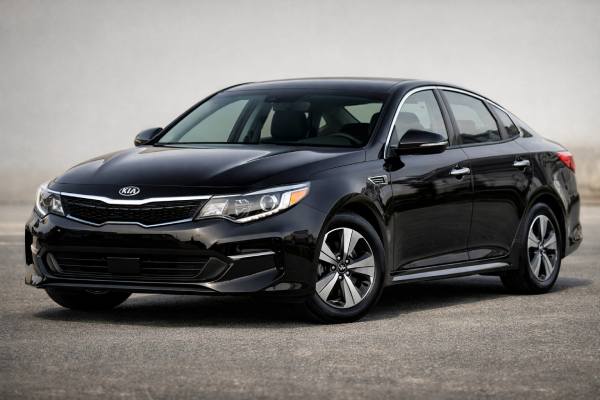
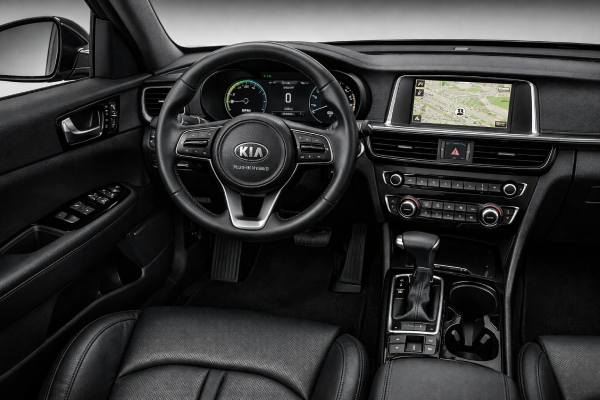
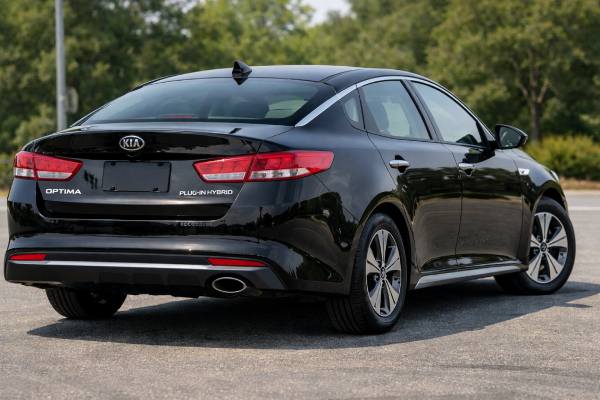
The 2017–2018 Kia Optima Plug-in Hybrid (JF) is a midsize sedan built for drivers who want real electric commuting without giving up long-trip flexibility. Its engineering is a layered system: a 2.0-liter GDI gasoline engine works with a 50 kW electric motor and a high-voltage battery to deliver a combined 205 hp. When you plug in regularly, the Optima PHEV can handle many daily trips on electricity alone, yet it still behaves like a familiar automatic sedan when the battery is low.
Ownership success depends less on “hybrid complexity” and more on routine fundamentals: keeping cooling circuits healthy, using the correct fluids, and preserving battery life with smart charging habits. Compared with many PHEVs, the Optima’s strengths are comfort, predictable highway manners, and a drivetrain that feels conventional—especially for drivers moving from a standard gasoline car.
Quick Specs and Notes
- Genuine plug-in capability: short trips can be mostly electric if you charge consistently.
- Smooth transition between EV and hybrid modes; feels like a normal sedan at speed.
- Strong long-distance comfort and stability for a midsize family car.
- Watch the “hidden” items: battery cooling, 12 V battery condition, and sensor calibration after repairs.
- Typical home charging: about 2.5–3.5 hours on 240 V (Level 2) with a 3.3 kW onboard charger.
What’s inside
- Kia Optima PHEV JF real-world overview
- Kia Optima PHEV specs and capacities
- Kia Optima PHEV trims and safety tech
- Common PHEV faults and recalls
- Service schedule and buyer advice
- EV driving, hybrids, and economy
- PHEV Optima vs key rivals
Kia Optima PHEV JF real-world overview
The Optima Plug-in Hybrid (JF) sits in a sweet spot for drivers who want electric miles but do not want an EV-only lifestyle. It behaves like a normal midsize sedan most of the time: comfortable seating for five, a stable long-wheelbase ride, and a familiar automatic transmission feel. The difference is how it uses energy. For short trips, it can prioritize the electric motor and battery, reducing fuel use dramatically—especially in stop-and-go traffic where gasoline engines are least efficient. For long trips, it simply becomes a strong hybrid that can run all day without charging stops.
A useful way to think about the Optima PHEV is as two cars sharing one chassis:
- EV commuter: best for daily routes where you can charge at home or work. Smooth takeoff, quiet low-speed driving, and low running cost per kilometer when electricity rates are reasonable.
- Hybrid tourer: best for weekends and highway travel. When the battery is depleted, the system blends engine and motor as needed, keeping the car easy to drive and stable at speed.
The Optima’s combined output (205 hp) is not “sports sedan” fast, but it is more than adequate in real-world driving. The electric motor fills in low-speed response, so the car can feel quicker off the line than the horsepower number suggests. At higher speeds, the gasoline engine carries more of the load, and the character becomes more conventional: steady, predictable passing power rather than sudden surges.
There are two trade-offs every buyer should understand early. First, the plug-in battery and related hardware add weight, which can soften ultimate cornering sharpness compared with a lighter gasoline Optima. Second, the trunk is usually smaller than non-hybrid versions because packaging priorities shift toward the battery and electronics. For families, that is not a deal-breaker, but it is worth checking with your real luggage and stroller needs.
Finally, the Optima PHEV is a “systems car.” It has more cooling loops, more sensors, and more modules than a standard sedan. That does not automatically mean poor reliability—but it does mean that neglected coolant services, weak 12 V batteries, and sloppy crash repairs can cause frustrating electrical or warning-light issues later. A well-cared-for example is typically obvious, and it tends to stay pleasant to own.
Kia Optima PHEV specs and capacities
This section focuses on the PHEV-specific hardware plus the core chassis dimensions that affect parking, comfort, and running costs. Exact values can vary by market and VIN, so use this as a detailed baseline and verify for your specific car when ordering parts or fluids.
Powertrain and efficiency
| Item | Specification (typical for 2017–2018 Optima PHEV) |
|---|---|
| System type | Plug-in hybrid (parallel hybrid with multi-gear automatic) |
| Gas engine | 2.0 L GDI inline-4, DOHC, naturally aspirated |
| Displacement | 2.0 L (about 1,999 cc) |
| Electric motor | 50 kW traction motor (single, front axle) |
| System output | 205 hp (153 kW) combined |
| System torque | Market dependent; motor torque fills low-speed response |
| Battery chemistry | Lithium-ion polymer (typical for Kia/Hyundai PHEVs of this era) |
| Battery capacity | About 9–10 kWh usable class (market dependent) |
| Onboard charger | 3.3 kW AC (Level 1 and Level 2) |
| Drive type | FWD |
| Transmission | 6-speed automatic (hybrid-optimized) |
| Real-world highway @ 120 km/h (75 mph) | Usually runs mostly as a hybrid; economy depends on speed, wind, and temperature |
Charging performance (home AC)
| Charging setup | Typical time |
|---|---|
| 120 V (Level 1) | About 8–10 hours to full (from low) |
| 240 V (Level 2, 3.3 kW) | About 2.5–3.5 hours to full (from low) |
| Public DC fast charging | Not supported on most Optima PHEV configurations |
Practical note: your real “time-to-full” depends on battery temperature, the charger’s actual delivered current, and whether the car is preconditioning or running cabin climate while plugged in.
Chassis and dimensions
| Item | Specification (typical JF body) |
|---|---|
| Suspension (front/rear) | MacPherson strut / multi-link or double-wishbone style independent rear (market dependent labeling) |
| Steering | Electric rack-and-pinion |
| Brakes | Four-wheel discs (diameter varies with wheel package) |
| Wheels/tyres (common) | Often 215/55 R17 or 215/60 R16 depending on trim |
| Ground clearance | About 135 mm (varies with load and market) |
| Length / width / height | About 4,855 / 1,860 / 1,465 mm |
| Wheelbase | About 2,805 mm |
| Turning circle | Around 10.9 m kerb-to-kerb (varies by wheel/tyre) |
Weights and practical capacities
| Item | Typical range |
|---|---|
| Curb weight | Roughly 1,650–1,750 kg (trim dependent) |
| Fuel tank | Smaller than some non-hybrids in certain markets; verify by VIN |
| Cargo volume | Commonly reduced vs non-hybrid (often around 280–320 L seats up, market dependent) |
Fluids, cooling loops, and service capacities (what to know)
Plug-in hybrids often have multiple cooling needs. Even when exact liters vary by VIN, understanding the systems helps you maintain them correctly:
- Engine oil: use the specified oil grade and quality standard for the 2.0 GDI engine in your market. PHEVs can see more short “engine on” events, so oil condition matters even if fuel use is low.
- Engine coolant: standard engine cooling loop; keep it clean and properly mixed to protect the water pump and heater core.
- Hybrid/inverter coolant (if separate): some PHEVs use dedicated cooling for power electronics. Mixing coolant types or ignoring air bleeding can lead to warning lights and reduced performance.
- A/C system: many electrified cars use an electric compressor. Correct refrigerant charge and oil type are important after repairs.
Safety and driver assistance (spec-level summary)
| Item | What to expect |
|---|---|
| Crash structure | Same basic safety cell as Optima JF range |
| Airbags | Typically front, side, curtain; count varies by market |
| ADAS | AEB, lane support, blind spot monitoring often trim- or package-dependent |
| Headlight performance | Can vary greatly by trim; check real night visibility, not just the lens type |
Kia Optima PHEV trims and safety tech
The Optima PHEV is usually sold in fewer trims than the gasoline Optima, but equipment can vary widely by region. For used buyers, the best approach is to identify the car by its functional systems rather than the badge name. Two cars that look identical can differ in driver assistance hardware, headlight performance, and even charging equipment depending on market.
Trims and options that change daily experience
- Driver assistance package presence:
Look for forward camera modules near the rear-view mirror area and radar hardware in the grille region (design varies). If the car has AEB and adaptive cruise control, it becomes a noticeably easier long-distance commuter. If it lacks those systems, the car is still safe and stable, but it will not offer the same fatigue reduction on highways. - Wheel and tyre package:
Larger wheels can sharpen steering response but often reduce ride comfort and increase tyre cost. For plug-in hybrids, tyre choice also affects efficiency. A more comfort-oriented wheel size with properly inflated tyres often yields better electric range and smoother ride. - Heating and climate equipment:
PHEVs can run cabin heat in different ways. Some configurations rely more heavily on engine heat when it is cold; others use electric heating elements more aggressively. This matters because cold-weather heating can reduce electric range significantly. A good test drive includes checking warm-up behavior on a cold start and confirming the cabin can heat effectively without constant engine cycling. - Infotainment and energy screens:
Beyond convenience, the energy and charging menus are practical tools. They help you monitor battery state-of-charge, charging schedules, and consumption. A slow or glitchy screen is not just annoying—it can make charging management harder.
Passive safety and child-seat practicality
The Optima JF platform is designed with modern crash structure priorities: controlled crumple zones, a reinforced passenger cell, and common mid-2010s restraint technology. For families, look for easy ISOFIX/LATCH access, intact rear-seat cushions, and properly working seatbelt retractors. If rear seat fabric is torn or the anchors are damaged, it can complicate child-seat installation and indicate heavier use.
Crash ratings: how to interpret them for a PHEV
Most crash ratings apply to the body and restraint system, so the PHEV typically aligns with the Optima’s overall rating performance for the generation. Still, two nuances matter:
- Test year and protocol: rating agencies update methods over time, so always compare within the same era.
- Trim equipment: headlight performance and AEB availability can change scoring or real-world safety outcomes.
ADAS and calibration reality
If your PHEV has radar and camera systems, treat windshield and front-bumper repairs as “calibration events.” After collision work, a car can drive normally while the ADAS quietly disables itself or performs poorly. When inspecting a used Optima PHEV, check for warning messages, confirm the lane camera initializes, and ensure adaptive cruise (if fitted) tracks smoothly without abrupt braking. These checks are as important as engine noise checks in an electrified car.
Common PHEV faults and recalls
Most Optima PHEV issues fall into two categories: ordinary midsize sedan wear items (suspension links, brakes, 12 V batteries) and electrified-system specifics (charging hardware, cooling loops, sensors). The good news is that many problems are detectable early with the right inspection. The risk is that a poorly diagnosed “hybrid warning” can lead to unnecessary parts replacement.
Common issues (more likely) and typical cost tier
- 12 V battery weakness (low to medium cost)
Symptoms: intermittent no-start, infotainment resets, warning messages, slow boot of hybrid system.
Root cause: PHEVs still rely on a conventional 12 V battery for modules and contactor control; age and short trips accelerate failure.
Remedy: test battery under load, verify charging behavior, replace proactively around 4–6 years if weak. - Charge door, inlet, or latch faults (low to medium cost)
Symptoms: charging won’t start, charge port won’t lock/unlock, inconsistent connector detection.
Root cause: worn latch actuator, dirty pins, or damaged charge inlet door mechanisms.
Remedy: clean and inspect contacts, confirm correct EVSE operation, replace damaged hardware. - Cooling system air pockets or leaks (medium cost if ignored)
Symptoms: intermittent warnings, reduced power, heater inconsistency, coolant level changes.
Root cause: small leaks, improper bleeding after service, aging hoses or clamps.
Remedy: pressure test, correct bleed procedure, and use the correct coolant type.
Occasional issues (less frequent) but higher consequence
- Onboard charger or DC–DC converter faults (medium to high cost)
Symptoms: charging stops unexpectedly, “check hybrid system” messages, 12 V battery not maintained.
Root cause: internal electronics fault, thermal stress, or wiring/connectors issues.
Remedy: confirm power supply, check fuses and connectors, then proceed to module diagnostics. - Battery capacity loss and imbalance (high cost, usually slow-moving)
Symptoms: noticeable EV range reduction, frequent engine starts, stronger “taper” under acceleration.
Root cause: normal aging accelerated by heat, frequent full charges held at 100%, or repeated deep discharge cycles.
Remedy: assess with diagnostic tools and real-world range testing; improve charging habits; repair is usually module-level and expensive. - Brake feel changes due to blended braking (low to medium cost)
Symptoms: inconsistent pedal feel, more rust on rotors, squeal after rain.
Root cause: regenerative braking reduces friction brake use, allowing rotor corrosion.
Remedy: periodic firm braking to clean rotors, quality pads, and regular inspections.
Software updates and calibrations
Many “hybrid” complaints are software-related: charging behavior, warning logic, or drivability transitions. A vehicle with dealer-serviced updates can feel more polished than an identical car without them. When buying used, ask for documented software campaigns and confirm there are no recurring warning codes.
Recalls and how to confirm safely
Recall and service-campaign scope varies by VIN and country. The practical method is consistent:
- Run an official VIN recall check for your market.
- Verify completion status in dealer records (not just “a recall exists”).
- If the car has ADAS, confirm calibration after windshield or bumper replacement.
For a PHEV, treat undocumented electrical work with caution. Added accessories, aftermarket alarm systems, and poor-quality audio wiring can create hard-to-trace parasitic drain or communication faults.
Service schedule and buyer advice
Plug-in hybrids reward structured maintenance because they mix two worlds: normal engine service plus electrified-system health. The aim is to prevent small issues—weak 12 V power, contaminated coolant, neglected brake fluid—from becoming “hybrid system” headaches.
Practical maintenance schedule (distance or time)
Every 12 months or 10,000–15,000 km
- Engine oil and filter (use the correct specification for the 2.0 GDI in your market).
- Inspect engine air filter and cabin filter; replace if dirty.
- Check coolant levels (engine and any hybrid/electronics loops if applicable).
- Inspect tyres, rotate if wear pattern suggests it, and verify pressures for efficiency.
Every 2 years
- Brake fluid flush (blended braking does not reduce brake fluid aging).
- A/C performance check, especially if the system uses an electric compressor.
Every 30,000–60,000 km
- Engine air filter replacement (sooner in dusty areas).
- Cabin filter replacement (often annually is realistic).
- Full brake inspection: pads, sliders, rotor condition, and corrosion.
Every 60,000–100,000 km (or per official schedule)
- Spark plugs (GDI engines are sensitive to plug condition).
- Cooling system service if the history is unknown or the coolant shows contamination.
Charging habits that improve longevity
These habits are simple and usually effective:
- If your charger or schedule allows it, avoid leaving the car at 100% for long periods in hot weather.
- Use Level 2 charging for convenience, but do not stress about it; the onboard charger is designed for regular home charging.
- Keep the charge inlet clean and protected; moisture and grit increase connection issues.
Buyer’s checklist (what actually predicts a good PHEV)
History and documentation
- Confirm routine services (oil, filters, brake fluid) were done on time even if fuel use was low.
- Look for evidence of recall completion and software updates.
- Ask whether the car was stored for long periods; long storage can harm 12 V batteries and create brake corrosion.
Inspection and test drive
- Start cold: confirm the car initializes without warnings.
- Drive in EV mode if possible: listen for unusual drivetrain noises and verify smooth acceleration.
- After warm-up: confirm the engine starts smoothly when needed and does not surge or shudder.
- Check charging: even a short plug-in session should show stable charging behavior.
Common reconditioning items to budget
- 12 V battery replacement if age is unknown.
- Tyres (efficiency and braking performance depend heavily on correct tyres).
- Brake cleanup if rotors are heavily corroded from low friction use.
Long-term durability outlook
A well-maintained Optima PHEV is often a “low stress” long-term car: quiet, comfortable, and efficient. The expensive risks usually come from neglected cooling systems, repeated warning lights that were ignored, or poorly repaired accident damage affecting sensors and wiring. Buy condition and history first, and the powertrain tends to behave predictably.
EV driving, hybrids, and economy
The Optima PHEV’s driving character changes with battery state-of-charge, but the transition is usually smooth enough that passengers barely notice. In EV mode at city speeds, it feels calm and refined: quiet launch, minimal vibration, and simple one-pedal-like modulation when regenerative braking is active. On the highway, it feels like a stable midsize sedan, with the hybrid system adding torque as needed rather than changing the personality.
Ride, handling, and NVH
- Ride quality: the Optima’s long wheelbase helps it glide over motorway imperfections. The extra PHEV weight can actually improve the “settled” feel on some roads, though it may also make the car feel less eager in quick direction changes.
- Handling balance: predictable and safe. It is tuned for confidence, not sharpness. Good tyres make a bigger difference than most owners expect, especially in wet braking.
- Cabin noise: EV mode is quiet at low speeds, but tyre noise becomes the main sound on coarse asphalt. Wheel size and tyre model matter.
Powertrain feel: EV mode vs hybrid mode
- EV mode: best below moderate speeds and gentle acceleration. The car feels responsive because electric torque is immediate.
- Hybrid mode: the engine joins in under stronger acceleration, higher speed, or low battery. The 6-speed automatic keeps it feeling like a conventional car rather than an eCVT “rubber band” sensation.
Real-world efficiency and range (what owners actually see)
Real results depend on climate, speed, and whether you can charge reliably:
- EV range: typically best in mild temperatures and city driving. Cold weather can reduce range noticeably because cabin heat and battery conditioning consume energy.
- Hybrid fuel economy on long trips: once the battery is depleted, expect solid midsize hybrid-like results, but high speeds will increase consumption. At around 120 km/h, aerodynamic drag dominates and economy will be lower than official mixed figures.
- Best-case pattern: frequent charging + moderate speeds + gentle acceleration yields the biggest cost advantage.
A practical ownership tip: treat EV range as a tool, not a promise. If your daily route is close to the car’s real EV capability, you will feel the benefit strongly. If your commute is much longer, you still benefit from hybrid efficiency, but the plug-in value depends on how often you can charge.
Braking feel and regen behavior
Regenerative braking reduces wear on pads, but it can increase rotor rust if the friction brakes are rarely used. Periodically using firm, safe stops helps keep rotors clean and maintains consistent pedal feel. This is particularly important in wet climates or where roads are salted.
PHEV Optima vs key rivals
The Optima PHEV competes less on raw specs and more on how it fits real life: comfort, simplicity, and the ability to do most local driving on electricity without turning long trips into a charging strategy session.
Where the Optima PHEV stands out
- Conventional driving feel: the multi-gear automatic makes it feel familiar, especially at higher speeds, which many drivers prefer to eCVT-style hybrids.
- Comfort-first tuning: it is a relaxed midsize sedan with stable highway manners, well-suited to commuters and families.
- Practical plug-in benefit: for drivers with home charging, it can meaningfully cut fuel use on short trips without forcing lifestyle changes.
Where rivals can beat it
- Some rivals offer more EV range: depending on model year and battery size, certain competitors may deliver longer electric-only commuting.
- Some rivals package cargo better: PHEV packaging often hurts trunk space, and competitors differ widely in how well they hide the battery.
- Charging speed and features vary: some plug-in rivals have faster onboard chargers or more sophisticated energy management in later model years.
How to choose based on your driving pattern
- If you drive short daily trips and can charge, prioritize EV usability: range consistency in cold weather, cabin heating behavior, and charging convenience.
- If you drive long highway routes, prioritize comfort, stability, headlight performance, and driver assistance features.
- If your driving is mostly urban with heavy traffic, also consider how smooth the car feels at low speed and how easily it blends regen and friction braking.
The practical verdict
The Optima PHEV is at its best as a “quiet efficiency upgrade” from a regular gasoline sedan. It is not the flashiest plug-in, but it can be a very satisfying ownership experience when the car is charged regularly and maintained with attention to cooling systems, 12 V health, and brake condition. If you want a plug-in that still feels like a normal midsize sedan on a long trip—and you value comfort over sporty response—it remains a strong and sensible choice in the used market.
References
- 2017 Kia Optima Plug-in Hybrid 2017 (Fuel Economy Data)
- 2017 Kia Optima 2017 (Safety Rating)
- Kia Optima | Safety Rating & Report | ANCAP 2015 (Safety Rating)
- Check for Recalls: Vehicle, Car Seat, Tire, Equipment | NHTSA 2026 (Recall Database)
Disclaimer
This article is for informational purposes only and is not a substitute for professional inspection, diagnosis, or repair. Specifications, torque values, service intervals, fluids, and procedures can vary by VIN, market, model year, and installed equipment, so always verify details using official manufacturer documentation for your exact vehicle.
If this guide helped you, please consider sharing it on Facebook, X (Twitter), or another platform so more owners can benefit.