
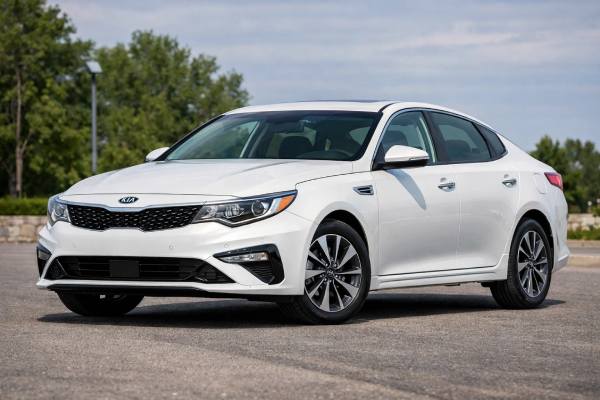
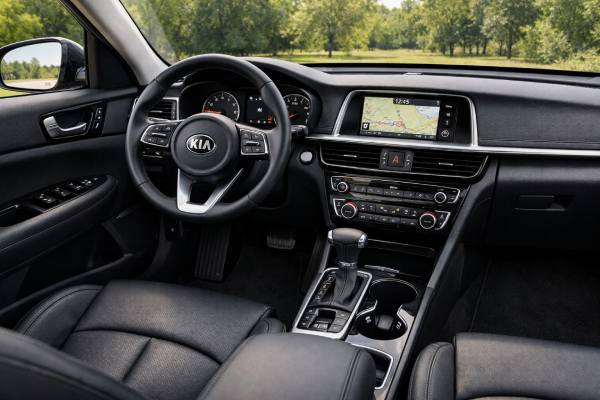
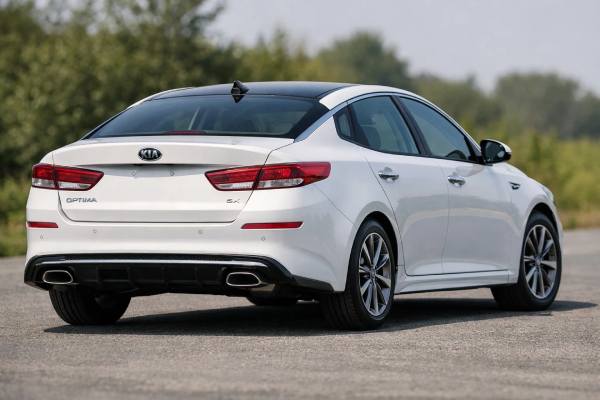
The 2019–2020 facelift Kia Optima Plug-in Hybrid (JF) is aimed at drivers who want a mid-size sedan (or Sportswagon in some markets) that can do short commutes on electricity without giving up long-distance comfort. Its engineering is unusual in a good way: instead of an e-CVT, it uses a conventional 6-speed automatic with an electric motor integrated into the transmission. That makes highway behavior familiar and predictable, while the plug-in system adds quiet EV driving and lower running costs when you charge regularly.
Ownership is mostly about understanding the “two-car” nature of a PHEV. Battery health, charging habits, and software updates matter, but so do normal petrol-car items like oil quality and cooling-system condition. Treat it as a premium commuter that can run electric part-time, and it tends to be rewarding: smooth, stable at speed, and often better equipped than rivals at similar prices.
Quick Specs and Notes
- Smooth PHEV system with a familiar 6-speed automatic feel at motorway speeds.
- Useful EV driving for daily errands when you can charge at home or work.
- Comfort-first ride and long wheelbase make it an easy long-distance car.
- Don’t ignore time-based servicing—oil and brake fluid still age even with lots of EV miles.
- Plan to change engine oil and filter every 12 months / 10,000 km (6,000 miles) for mixed use.
Navigate this guide
- Kia Optima PHEV JF ownership view
- Kia Optima PHEV JF technical specs
- Kia Optima PHEV JF trims and safety
- Hybrid reliability and known issues
- Service plan and used-buyer tips
- Driving feel and real efficiency
- How Optima PHEV stacks up
Kia Optima PHEV JF ownership view
The facelift Optima Plug-in Hybrid sits in the “quiet competence” corner of the segment. It isn’t trying to be the lightest or the sportiest PHEV; it’s trying to be a comfortable mid-size Kia that can cover a meaningful chunk of day-to-day miles on electricity, then behave like a normal petrol car for longer trips. If your routine includes a predictable commute, school run, or errands that fit inside the EV range—and you can charge consistently—the Optima PHEV makes financial and practical sense. If you can’t charge, it behaves like a heavier petrol Optima with little upside, so charging access is the first ownership filter.
A key trait is the drivetrain layout. Many plug-in hybrids use an e-CVT or a dedicated hybrid transmission that feels different from a standard automatic. The Optima’s approach is more familiar: the electric motor is integrated with a 6-speed automatic, and a clutch-based arrangement allows EV driving and blended hybrid operation. In practice, that means smoother highway cruising than some e-CVT setups (less “rubber band” feel), and a natural rhythm in gentle acceleration.
The facelift years also matter for everyday usability. Depending on market and trim, you may see updated infotainment, improved driver assistance packaging, and small refinements that make the car feel more modern than earlier JF examples. PHEV ownership also tends to improve late in a model cycle because software calibrations and parts availability become more mature.
Think of the Optima PHEV as two systems sharing one shell:
- EV system strengths: quiet starts, reduced local emissions, low-cost miles when electricity is cheaper than petrol, and reduced brake wear thanks to regenerative braking.
- Petrol system strengths: no range anxiety, fast refuelling, and stable cold-weather usability compared with a pure EV of the same era.
The trade-offs are predictable: reduced boot/cargo volume due to the battery pack, a higher curb weight than the non-hybrid Optima, and more complexity to diagnose if previous owners neglected service intervals or ignored warning lights. The best used examples usually come from owners who charged often, serviced on time, and kept the car updated—because modern PHEVs are as much software-managed as they are mechanical.
Kia Optima PHEV JF technical specs
The Optima Plug-in Hybrid is sold across multiple markets, so some figures vary (especially battery size, test-cycle economy, and EV range). The tables below focus on the core facelift-era configuration: 2.0 GDI petrol + 50 kW motor, system output around 202–205 hp, front-wheel drive, and a 6-speed automatic.
Powertrain and efficiency
| Item | Specification (typical) |
|---|---|
| Hybrid type | Parallel PHEV (engine + motor can drive wheels) |
| Petrol engine | 2.0 L inline-4 GDI, DOHC, 16-valve |
| Bore × stroke | 81.0 × 97.0 mm (3.19 × 3.82 in) |
| Displacement | 2.0 L (1,999 cc) |
| Induction | Naturally aspirated (no turbo) |
| Fuel system | GDI (Gasoline Direct Injection) |
| Compression ratio | 13.5:1 |
| Engine power (petrol-only) | 154 hp (115 kW) @ 6,000 rpm |
| Engine torque | 190 Nm (140 lb-ft) @ 5,000 rpm |
| Electric motor | 50 kW (≈66 hp) |
| Motor torque | 205 Nm (151 lb-ft) @ 0–2,330 rpm |
| System output | 202–205 hp (151 kW) @ 6,000 rpm |
| System torque | 375 Nm (276 lb-ft) @ 2,330 rpm |
| Battery chemistry | Lithium-ion polymer (market dependent naming) |
| Battery voltage | 360 V |
| Battery energy | 9.8 kWh (some markets list a larger gross value) |
| Rated efficiency | Highly market/test dependent (WLTP/NEDC/EPA) |
| Real-world highway @ 120 km/h | Typically 6.8–8.2 L/100 km once the battery buffer is depleted, depending on tyres, temperature, and load |
Transmission and driveline
| Item | Specification |
|---|---|
| Transmission | 6-speed electronic automatic |
| Drive type | FWD |
| Differential | Open |
| Hybrid coupling note | Motor integrated into transmission; clutch-based operation enables EV-only and blended modes |
Chassis and dimensions
| Item | Specification (typical) |
|---|---|
| Suspension (front/rear) | MacPherson strut / multi-link |
| Steering | Electric rack-and-pinion |
| Turns lock-to-lock | 2.78 |
| Brakes (front/rear) | Ventilated disc / solid disc |
| Brake diameter (front/rear) | 305 mm (12.0 in) / 284 mm (11.2 in) |
| Wheels/Tyres (common) | P215/55 R17 (other sizes exist by trim) |
| Ground clearance | 130 mm (5.1 in) |
| Length / Width / Height | 4,854 / 1,860 / 1,461 mm (191.1 / 73.2 / 57.5 in) |
| Wheelbase | 2,805 mm (110.4 in) |
| Turning circle (kerb-to-kerb) | 10.9 m (35.8 ft) |
| Kerb (curb) weight | 1,718 kg (3,788 lb) (varies by market/body style) |
| Fuel tank | 55.0 L (14.53 US gal) |
| Cargo volume | Market dependent; typically reduced vs non-hybrid Optima |
Performance and capability
| Item | Specification (typical) |
|---|---|
| 0–100 km/h (0–62 mph) | Around 9.2–9.7 s |
| Top speed | Around 192 km/h (119 mph) |
| Towing | Often limited or market-restricted for PHEVs; verify by VIN and local homologation |
| Payload | Depends on GVWR and trim; confirm door-jamb label |
Fluids and service capacities (planning guidance)
PHEV service-fill volumes and fluid specs can vary by VIN, so use these as decision support and confirm in official documentation:
- Engine oil: manufacturer-approved spec for GDI engines; choose viscosity for climate; plan on a fill near ~4–5 L with filter (verify).
- Coolant: long-life coolant; some PHEVs have separate loops (engine vs power electronics) depending on market.
- Transmission fluid: OEM-only spec; many services are drain-and-fill, not full exchange.
- A/C refrigerant: label under bonnet; some systems use electrically driven compressors requiring specific compressor oil.
Key torque specs worth verifying for routine work:
- Wheel nuts (common range for this class): 90–110 Nm (66–81 lb-ft) depending on wheel/fastener type.
Kia Optima PHEV JF trims and safety
Optima PHEV trims vary by region, but most markets keep the lineup simple: one or two well-equipped grades, often built around comfort and safety features rather than performance add-ons. The most important shopping point is not badge wording; it’s whether the car has the driver-assistance hardware and charging features you actually want. PHEVs can look identical in listings, yet differ meaningfully in daily convenience.
Trims and options that make a real difference
Look for these practical items when comparing used examples:
- Charging cable kit and onboard charging equipment: confirm the car includes the correct charge cable(s) for your country and that the charge port door and latch operate smoothly.
- Heat and comfort features: heated seats and steering wheel are great, but they can reduce EV miles in winter. If you’re buying mainly for electric commuting, efficient cabin heating matters more than luxury trim.
- Wheel and tyre package: 17-inch tyres usually ride better and cost less. Larger wheels can reduce EV efficiency and raise tyre replacement cost.
- Infotainment and connectivity: later facelift cars often have more polished smartphone integration; check screen response and that the USB ports charge reliably.
Quick identifiers when inspecting
- A genuine PHEV will have a charge port and EV-related menu screens (energy flow, charging timer, and EV driving data).
- Higher ADAS trims typically have a windscreen camera module and radar sensor area up front. If the bumper looks mismatched or aftermarket, check that radar-related warning lights are not present.
Safety ratings in plain language
The Optima platform has a strong reputation in formal crash testing for its era. The key nuance is that safety “ratings” can represent two different things:
- Structure and restraint performance (airbags, crash structure, belt systems), which tends to be consistent across trims, and
- Avoidance technology (AEB, lane support, adaptive cruise), which can be standard on one trim and optional on another.
When shopping, confirm what’s actually installed rather than assuming that a five-star result automatically means full ADAS coverage on every car.
Safety systems and ADAS coverage
Commonly available features on facelift-era cars include:
- Multiple airbags: front, side, and curtain protection; some markets add a driver knee airbag.
- ESC and traction systems: stability control and related braking logic are typically standard.
- Forward Collision-Avoidance Assist (AEB/FCA): often standard or widely fitted; verify no warning lights and that the forward sensor area is intact.
- Lane Keep Assist (LKAS) and lane support: depends on trim; sensitive to windscreen replacement and camera alignment.
- Blind-spot monitoring and rear cross-traffic alert: very useful in daily driving; check operation in a controlled test drive.
- Smart cruise control (ACC/ASCC): a major comfort feature for motorway use; verify smooth deceleration and that the radar sensor area isn’t blocked.
After repairs, calibration matters. If the car has had a windscreen replacement, front-end accident repair, or suspension alignment work, confirm ADAS calibration completion via invoices or a scan report. A PHEV is already complex—don’t add “uncertain sensor alignment” to the ownership mix.
Hybrid reliability and known issues
Reliability on the Optima PHEV tends to be good when the car is used as intended (charged regularly, serviced on time, and kept on current software). Most problems fall into three buckets: charge-system quirks, 12-volt electrical weaknesses, and the normal aging patterns of a modern GDI petrol engine. Think in terms of prevalence and cost tier, because not every warning light is a crisis—but ignoring the wrong one can be expensive.
Common (most likely to show up)
- 12 V battery weakness (low to medium cost):
Symptoms: random warning lights, failure to “Ready” up, intermittent infotainment resets, slow unlocking or no-start behavior.
Likely causes: age, frequent short trips in accessory mode, or a car that sits unplugged for long periods.
Remedy: test battery state-of-health, check charging system behavior, replace proactively if marginal. - Charge-port and charging handshake issues (low):
Symptoms: charger connects but won’t start, intermittent charge interruptions, charge-port door or latch problems.
Likely causes: dirty pins, latch misalignment, worn port hardware, or a compatibility issue with a particular EVSE.
Remedy: clean/inspect port, test on a second charger, update software if applicable. - Regenerative braking feel changes (low to medium):
Symptoms: inconsistent brake pedal feel after sitting, light surface rust on discs due to reduced friction-brake use.
Likely causes: regen does most braking, friction brakes see less heat and cleaning action.
Remedy: periodic firm stops (safely), brake inspection and lubrication at service intervals.
Occasional (depends on age, climate, and use)
- Onboard charger (OBC) or DC–DC converter faults (medium to high):
Symptoms: car won’t charge, charge speed reduced, 12 V system warnings, charge-related fault codes.
Remedy: proper diagnosis is key; avoid repeated parts guessing. - Cooling system components (medium):
Symptoms: coolant loss, temperature warnings, reduced EV capability in hot weather.
Likely causes: electric water pump wear, hose seepage, or coolant that wasn’t maintained correctly.
Remedy: address leaks early and keep coolant to spec; PHEVs are sensitive to heat management. - GDI intake deposit buildup over time (medium):
Symptoms: rough cold idle, reduced efficiency, occasional misfire at higher mileage.
Remedy: intake cleaning when symptomatic; keep oil service consistent and PCV system healthy.
Rare but costly (treat as urgent)
- High-voltage battery isolation or contactor issues (high):
Symptoms: “Check hybrid system,” inability to enter EV mode, limited power, persistent fault codes.
Remedy: dealer-level diagnosis is often required; do not ignore HV warnings.
Service actions and software updates
PHEVs rely heavily on software for energy management, charging logic, and fault detection. Updates can improve:
- EV-to-hybrid transitions and drivability
- Charging compatibility and error handling
- Battery temperature management strategies
- ADAS sensor behavior and diagnostics
When buying used, ask for evidence of updates, recall completion, and a clean scan report. A well-documented PHEV is usually a better bet than a cheaper example with gaps—because “unknown history” on a hybrid often means “unknown electrical troubleshooting” later.
Service plan and used-buyer tips
A good Optima PHEV maintenance plan is about disciplined basics plus a few hybrid-specific checks. The trap some owners fall into is treating EV miles as “free miles” for the engine. In reality, time-based degradation still happens: oil absorbs moisture and fuel dilution, brake fluid absorbs water, and coolant additives age. If you follow a pragmatic schedule, you usually avoid the expensive surprises.
Practical maintenance schedule (distance/time)
Use whichever comes first:
- Engine oil and filter: 12 months / 10,000 km (6,000 miles) is a sensible real-world interval for mixed PHEV use; shorten if the engine runs frequently on short trips or in very cold climates.
- Engine air filter: inspect annually; replace around 30,000 km (18,000 miles) or sooner in dusty regions.
- Cabin air filter: 12–24 months depending on air quality and HVAC use.
- Spark plugs: follow the official interval; for many modern GDI engines, 60,000–100,000 km is common depending on plug type and market. Replace earlier if you see misfires or rough running.
- Coolant: confirm whether your car has one loop or multiple loops (engine vs power electronics). Replace per official time/mileage guidance and never mix incompatible coolants.
- Transmission fluid: follow OEM interval; consider a preventative drain-and-fill if the car sees lots of stop-start driving or towing (where permitted).
- Brake fluid: every 2 years.
- Brake service: inspect pads/rotors yearly; lubricate slide pins and check parking brake operation.
- Tyre rotation and alignment: rotate every 10,000–12,000 km; align if you see uneven wear or steering pull.
- 12 V battery testing: test yearly after year 3; replace proactively around 4–6 years in cold climates.
Charging and battery-care habits that help longevity
- Avoid leaving the battery at 100% for long periods in high heat; if your charger supports timers, finish charging near departure time.
- If you store the car, aim for a mid-state of charge (roughly “half to three-quarters”) and check the 12 V system health.
- Use reliable home charging equipment; intermittent public chargers can create confusing “false faults.”
Used-buyer inspection checklist
- Charging test: plug in and confirm charging starts and completes; check for repeated interruptions.
- EV mode check: on a warm car with charge, verify EV-only operation is available and smooth.
- Hybrid transition: accelerate gently from EV into hybrid operation; it should feel calm, not jerky.
- Cooling system: inspect for coolant smell, damp hoses, and stable temperature behavior.
- Brake condition: check for heavy disc corrosion and confirm smooth braking (regen + friction blending).
- Suspension and tyres: heavy PHEVs can reveal alignment issues through inner-shoulder tyre wear.
- Scan report and history: request proof of recall completion, software updates, and a diagnostic scan showing no stored hybrid/charging faults.
Long-term durability outlook
A well-maintained Optima PHEV can be a dependable “charge-at-home” commuter for years. The biggest predictor of happiness is not mileage; it’s service discipline and charging consistency, plus a clean electrical history with no recurring warning lights.
Driving feel and real efficiency
On the road, the Optima PHEV feels like a mature mid-size car first and a hybrid second—which many owners appreciate. The long wheelbase helps it track straight and settle over rough surfaces, and the suspension tuning prioritizes comfort. The extra weight from the battery pack is noticeable if you push hard into corners, but in normal driving it mostly shows up as a planted, stable feel.
Ride, handling, and NVH
- Ride: generally composed and absorbent, especially on 17-inch tyres. Sharp potholes still make themselves known, but the car avoids the constant “fidget” some lighter sedans have.
- Handling: predictable front-drive balance with safe understeer when pushed; best enjoyed as a smooth, momentum-friendly car rather than a sharp sports sedan.
- Braking: blended regen and friction braking can feel slightly different from a pure petrol car—especially at very low speed where regen tapers off. Good examples feel natural after a short adaptation period.
- Noise: EV mode is quiet; in hybrid mode the petrol engine is typically subdued unless you demand full power.
Powertrain character
The petrol engine is naturally aspirated, so you don’t get turbo punch, but the electric motor fills in the low-speed gap. That creates a “torque-on-demand” sensation in city driving. Under steady acceleration, the powertrain blends smoothly, and the 6-speed automatic keeps the experience familiar:
- In town: EV mode works best for gentle starts and moderate speeds.
- On the motorway: once the battery buffer is low, the car behaves like a refined petrol sedan with sensible gearing.
Real-world efficiency and EV range expectations
PHEV efficiency depends more on your routine than the car’s brochure. Two drivers can see dramatically different results.
- If you charge daily and your trips fit inside EV range: many owners can do most weekday miles on electricity and use petrol mainly for weekends.
- If you rarely charge: the car’s extra weight means petrol consumption can be worse than a comparable non-hybrid Optima.
Typical real-world patterns:
- EV range: often around 45–60 km (28–37 miles) in mild temperatures, with winter heating reducing that noticeably.
- Depleted-battery petrol use at 120 km/h: commonly 6.8–8.2 L/100 km, depending on tyres and weather.
- Mixed use without regular charging: expect figures closer to a normal petrol mid-size car, not a miracle number.
Charging performance (typical)
Most Optima PHEVs of this era support AC charging rather than fast DC charging:
- Home charging: roughly 2.5–4 hours depending on supply and onboard charger rating.
- Best practice: use charge scheduling so the car finishes close to departure in hot weather.
Key performance metrics (selective)
This Optima PHEV isn’t slow, but it’s tuned for smoothness:
- 0–100 km/h: around 9.2–9.7 seconds feels brisk enough for family use.
- Top speed: around 192 km/h offers comfortable motorway headroom where legal.
If you want a PHEV that feels sporty at the limit, there are sharper rivals. If you want a calm, confidence-inspiring car that makes charging feel worthwhile, the Optima fits its brief.
How Optima PHEV stacks up
The Optima PHEV’s closest rivals depend on your market, but the comparison usually comes down to five questions: EV range, cabin comfort, boot space, charging convenience, and long-term complexity. The Optima tends to score well on comfort and value, while some rivals beat it on newer tech or packaging efficiency.
Versus Volkswagen Passat GTE and Skoda Superb iV
These are common cross-shops where available. They often feel modern inside and can offer strong infotainment ecosystems. Where the Optima often competes well is on:
- Ride comfort and motorway calm: the Kia’s long wheelbase and suspension tuning suit long trips.
- Value in the used market: equipment levels can be generous for the price.
Potential downside: depending on region, the VW-group cars may have a broader specialist network and more abundant trim variety.
Versus Ford Mondeo Energi and similar-era PHEVs
Some older PHEV rivals have very smooth hybrid behavior, but may feel dated in infotainment and driver assistance compared with facelift Optimas. With the Kia, the late-model-cycle refinements can be a real quality-of-life advantage.
Versus Toyota Camry Hybrid (non plug-in)
A conventional hybrid can be the smarter buy if you cannot charge. The Camry-style approach avoids plug-in complexity and often delivers predictable fuel economy without charging habits. The Optima’s advantage appears when you can charge daily, because electricity can replace a large share of petrol miles.
Versus premium PHEVs (e.g., 330e-class cars)
Premium badges may offer stronger performance and more advanced driver assistance, but they can be significantly more expensive to buy and maintain. The Optima’s niche is “mainstream comfort with plug-in savings,” not luxury-brand dynamics.
Who should choose the Optima PHEV
Pick it if:
- You can charge at home or work and your routine includes short-to-medium daily trips.
- You value ride comfort, stable highway behavior, and a familiar automatic transmission feel.
- You want a well-equipped mid-size car without a premium price tag.
Consider an alternative if:
- You can’t charge reliably (a conventional hybrid is usually better).
- You need maximum cargo volume (battery packaging can reduce usable boot space).
- You prioritize the newest infotainment/ADAS technology above comfort and value.
The best way to decide is to run a simple reality check: estimate how many days per week you can plug in, and how often your daily miles fit within EV range. If the answer is “most days,” the Optima PHEV can be a very rational and pleasant ownership choice.
References
- 2019 Kia Optima PHEV Specifications 2019 (Specification Sheet)
- 2019 Kia Optima Plug-In Hybrid 2019 (Safety Rating)
- Check for Recalls: Vehicle, Car Seat, Tire, Equipment 2026 (Recall Database)
- Kia Car Owners Manual | Kia UK 2026 (Owner’s Manual)
- Five-star safety ratings for all-new Kia Optima and Sportage 2015 (Safety Rating)
Disclaimer
This article is for informational purposes only and is not a substitute for professional diagnosis, inspection, or repair. Specifications, torque values, fluid types and capacities, service intervals, and procedures can vary by VIN, market, model year, and installed equipment. Always verify details using official service documentation for your specific vehicle and follow manufacturer procedures.
If this guide was useful, please consider sharing it on Facebook, X (Twitter), or your preferred community to support our work.