
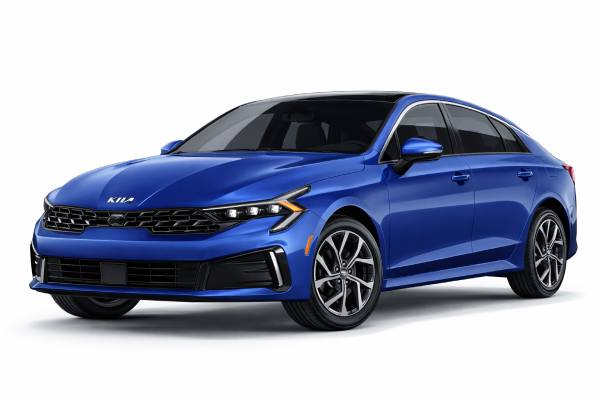
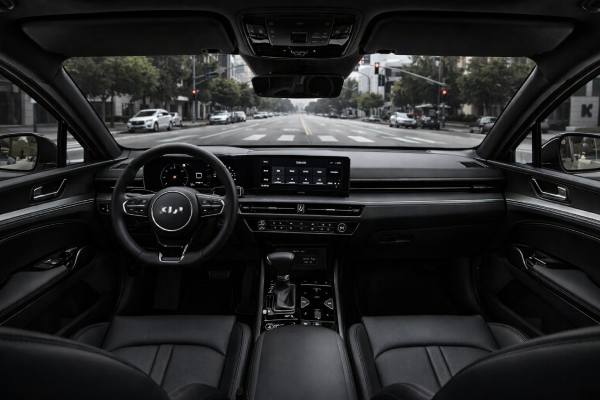
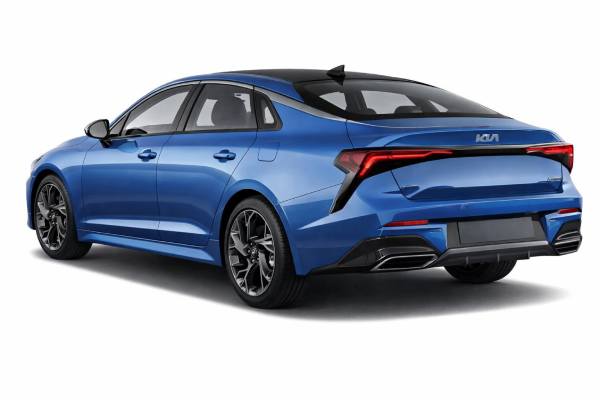
The facelifted Kia K5 AWD (DL3) with the Smartstream 2.5-liter engine is aimed at buyers who want a midsize sedan that feels modern, runs efficiently, and still makes sense as a long-term ownership play. The core of the package is straightforward: a naturally aspirated 2.5 paired with an 8-speed automatic, with AWD offered on select trims to add all-weather traction without turning the car into a heavy, thirsty outlier. The facelift years also bring meaningful technology updates—especially driver-assistance—and a cabin layout that’s easy to live with daily.
Where owners benefit most is in low-stress drivability: predictable power delivery, calm highway manners, and a suspension tune that prioritizes stability over sharp-edged sportiness. The best outcomes come from treating it like a modern GDI-era car: correct oil, good fuel, and consistent service intervals.
Quick Specs and Notes
- AWD availability improves wet and winter traction, but it adds weight and slightly reduces fuel economy versus FWD.
- The 2.5-liter non-turbo powertrain is generally simpler to maintain than turbo alternatives with similar size.
- Trim selection matters for safety tech: some driver aids and lighting performance can vary by package.
- Plan on engine oil and filter every 8,000–10,000 km (5,000–6,000 miles) or 6 months for typical mixed use (short trips = sooner).
- Keep tires closely matched in tread depth on AWD to reduce coupling stress over time.
Navigate this guide
- Kia K5 AWD facelift at a glance
- Kia K5 AWD 2.5 specs and dimensions
- Kia K5 AWD trims packages and ADAS
- Reliability patterns and known fixes
- Maintenance roadmap and buyer tips
- Driving character and real-world economy
- How the K5 AWD stacks up
Kia K5 AWD facelift at a glance
The 2025–present facelift version of the K5 keeps the DL3 platform fundamentals—wide stance, long wheelbase feel, and a low cowl—but sharpens the “daily usability” side of the equation. The Smartstream 2.5 naturally aspirated engine is the calm, consistent choice in the range: it avoids turbo heat load and high boost stress, and it delivers linear response that’s easy to modulate in traffic. Paired with an 8-speed automatic, it’s tuned for smoothness first, not lightning shifts.
AWD is the headline differentiator. In this configuration, it’s best understood as an all-weather confidence feature rather than a performance system. It helps the car pull away cleanly on slick surfaces and reduces front-wheel spin on cold, wet pavement. You still feel the K5’s front-drive roots in steering and cornering balance, but the system can make winter commuting less dramatic—especially on all-season tires that don’t love packed snow.
From an engineering perspective, the facelift years also tend to concentrate value into option structure. Many owners will recognize that the “right” K5 is usually a mid-trim with a strong package rather than a base model loaded with aftermarket add-ons. Factory-equipped LED lighting, radar and camera-based driver assist, and larger infotainment screens (where equipped) usually integrate better and age more gracefully than retrofits.
Ownership outcomes are typically defined by three habits:
- Consistent oil service with the correct viscosity and specification for your market.
- Good fuel quality (especially important for direct-injection operation and injector health).
- Preventive attention to tires, brakes, and software updates—because a modern sedan’s comfort and safety systems depend on sensors staying aligned and calibrated.
If you want a sedan that feels contemporary and doesn’t punish you with complicated upkeep, the K5 AWD 2.5 sits in a sweet spot—provided you buy the trim that matches your priorities and keep up with basic service.
Kia K5 AWD 2.5 specs and dimensions
This section focuses on the K5 facelift-era AWD paired with the Smartstream 2.5 (191 hp class) and 8-speed automatic. Some numbers vary slightly by market, wheels, and equipment, but the structure below reflects the typical North American configuration and the common trim where AWD is offered. ([kianewscenter.com][1])
Powertrain and efficiency
| Item | Specification |
|---|---|
| Engine family | Smartstream G2.5 (2.5 L) |
| Displacement | 2.5 L (2,497 cc) |
| Layout | Inline-4, DOHC |
| Induction | Naturally aspirated |
| Fuel system | Direct injection (often paired with port injection by market/variant) |
| Max power | 191 hp (142 kW) (rating varies slightly by market standard) |
| Max torque | Typically ~181 lb-ft (≈245 Nm) class (verify by VIN/market) |
| Timing drive | Chain |
| Transmission | 8-speed automatic |
| Drive type | AWD (trim-dependent; often limited to one core trim) |
Rated fuel economy (typical)
From Kia media specs for AWD automatic in the facelift-era range, the AWD estimate is commonly listed as: ([Kia Media][2])
| Drivetrain | City | Highway | Combined |
|---|---|---|---|
| AWD automatic | 24 mpg | 33 mpg | 27 mpg |
FuelEconomy.gov listings for the 2025 K5 AWD align with the same general rating profile for the AWD variant. ([Fuel Economy][3])
Chassis, brakes, steering, and wheels
The AWD version uses the same core suspension layout as other DL3 K5 models, with tuning and wheel/tire sizes varying by trim.
| Item | Specification (typical) |
|---|---|
| Front suspension | MacPherson strut |
| Rear suspension | Multi-link |
| Steering type | Electric power steering |
| Turning circle (curb-to-curb) | 36.0 ft (≈11.0 m) ([Kia Media][2]) |
| Front brakes / rear brakes | Ventilated disc / solid disc ([Kia Media][2]) |
| Brake rotor diameters | 305 mm / 284 mm (typical non-GT trims) ([Kia Media][2]) |
| Common tire size (AWD trim class) | 235/45 R18 ([Kia Media][2]) |
Dimensions and capacities (typical DL3 K5)
K5 DL3 exterior dimensions tend to remain stable through the facelift, but confirm exact numbers for your region and wheels.
| Item | Typical value (approx.) |
|---|---|
| Length | ~4,905 mm (~193.1 in) |
| Width | ~1,860 mm (~73.2 in) |
| Height | ~1,470 mm (~57.9 in) |
| Wheelbase | ~2,850 mm (~112.2 in) |
| Cargo volume | 15.6 ft³ (≈442 L) ([Kia Media][2]) |
Weights (AWD-specific)
The AWD configuration adds meaningful curb weight versus FWD. For the AWD trim where it is offered, Kia media specifications list: ([Kia Media][2])
| Item | Value |
|---|---|
| Curb weight (AWD) | 3,463 lb (≈1,571 kg) |
| GVWR (AWD) | 4,519 lb (≈2,050 kg) |
Performance expectations (realistic ranges)
Because performance depends on tires, temperature, and traction strategy, it’s best expressed as a band:
- 0–100 km/h (0–62 mph): typically ~7.5–8.5 s for the AWD 2.5 in everyday testing conditions.
- Passing response (80–120 km/h): strongest when you let the transmission downshift decisively; it’s tuned for smoothness, not snap.
- Braking feel: stable and repeatable for daily use; longer downhill braking benefits from timely fluid changes.
If your priority is maximum straight-line punch, the turbo models do that job. The 2.5 AWD’s strength is that it stays composed, predictable, and easy to manage.
Kia K5 AWD trims packages and ADAS
On the facelift-era K5, trims and packages determine far more than cosmetics. They can change wheel/tire sizing, seating comfort, lighting performance, parking assistance, and the completeness of the driver-assistance stack. For the K5 AWD 2.5, AWD availability is typically constrained to a specific trim tier (commonly the “sport appearance” middle trim), so shoppers should treat trim selection as a drivetrain decision, not an afterthought. Kia media specification structure for the model year range shows AWD weight and economy listed for only one trim column, which is a strong clue that AWD is not broadly available across the whole lineup. ([Kia Media][2])
Common trims and how to identify them quickly
While names vary by market, the facelift-era pattern often looks like:
- Value/base trim (FWD only): smaller wheels, fewer comfort extras, simpler lighting.
- Mid trim (often AWD-capable): 18-inch wheels, sportier exterior details, and the broadest package menu.
- Luxury-oriented trim (usually FWD): comfort and convenience focus, sometimes no AWD depending on region.
- Performance trim (turbo): different engine/transmission; not the 191 hp 2.5 you’re targeting.
Quick identifiers you can use on a walkaround:
- AWD badge on the trunk (where fitted) and AWD listed on the window sticker/build sheet.
- Wheel design and size: 18-inch wheels are common on the AWD-capable trim class. ([Kia Media][2])
- Driver-assist buttons on steering wheel: more complete ADAS suites add dedicated cruise/lane controls.
- Parking camera layout: surround view and blind-view cameras require specific packages and mirror/camera hardware.
Options and packages that change daily ownership
Kia’s package strategy often bundles the “quality of life” upgrades together. From the feature/package listings, higher packages can add items such as: panoramic roof, premium audio, ventilated seats, heated steering wheel, power-fold mirrors, and advanced parking/collision-avoidance features. ([NHTSA][4])
If you keep cars a long time, prioritize packages that improve:
- Lighting (visibility is safety and fatigue reduction).
- Seat comfort (ventilation, lumbar, memory if multiple drivers).
- Parking assistance (tight city ownership is easier when sensors are factory-integrated).
Safety ratings and driver assistance
For crash-test and headlight evaluations, rely on a recognized test body rather than trim marketing language. The Insurance Institute for Highway Safety provides model-year pages that break down crashworthiness, crash avoidance, and headlight performance by configuration. On many modern sedans, headlight rating can vary sharply by trim and option set, so it’s normal for two K5s from the same year to perform differently in IIHS lighting evaluations.
ADAS features to confirm (standard vs optional):
- Automatic Emergency Braking (AEB): vehicle and pedestrian detection (and cyclist detection where equipped).
- Adaptive Cruise Control (ACC) and stop-and-go behavior (traffic use matters).
- Lane keeping vs lane centering: these feel different on the highway.
- Blind-spot monitoring and rear cross-traffic alert: especially useful in busy parking lots.
- Parking collision-avoidance and surround-view: package-dependent, but high-value in tight spaces. ([Kia Media][2])
Calibration note: After windshield replacement, front bumper impact, wheel alignment changes, or suspension work, ADAS sensors may require calibration. Budget for that possibility—especially if you buy used and the car has a repair history.
Reliability patterns and known fixes
The Smartstream 2.5 non-turbo K5 is generally a “low drama” drivetrain when maintained properly, but modern reliability is less about catastrophic engine failures and more about smaller systems: sensors, cooling management, electronics, and software. The best way to think about this car is as a strong base powertrain wrapped in a high-feature shell—meaning a lot of ownership satisfaction depends on preventive checks and early responses to symptoms.
Below is a practical issue map by prevalence and cost tier, with typical symptoms and the most sensible first response.
Common (low to medium cost)
- Battery/charging system nuisance faults (12 V side)
- Symptoms: slow crank, intermittent warning lights, infotainment reboots.
- Likely cause: aging 12 V battery, loose terminals, or parasitic draw patterns from accessory use.
- Remedy: test battery under load, clean and torque terminals, confirm charging voltage; replace 12 V battery proactively around the typical 4–6 year window.
- Brake feel changes from low-use corrosion (especially rear brakes)
- Symptoms: light vibration, noisy scraping after rain, uneven pad wear.
- Likely cause: surface corrosion on rotors, sticky caliper slide pins.
- Remedy: clean/lube slide pins, confirm pad movement, consider rotor resurfacing/replacement if thickness and runout are out of spec.
- Direct-injection cleanliness behavior (fuel quality dependent)
- Symptoms: slight rough idle, cold-start stumble, mileage drop.
- Likely cause: injector deposits, intake valve deposits (varies by engine configuration and usage).
- Remedy: use high-quality fuel, keep oil changes consistent, and consider an intake service if symptoms persist and diagnostics support it.
Occasional (medium cost)
- Cooling system seepage or thermostat behavior
- Symptoms: coolant smell, slow loss, temperature swings.
- Likely cause: hose clamp relaxation, thermostat housing seepage, or cap issues.
- Remedy: pressure test, inspect for crusting at joints, replace weak components before overheating becomes a risk.
- Infotainment and camera glitches
- Symptoms: camera latency, screen freezes, phone pairing instability.
- Likely cause: software bugs, camera module sensitivity, low 12 V voltage events.
- Remedy: update system software where applicable, confirm battery health, and document the symptom for dealer diagnosis if under warranty.
AWD-specific (medium to high cost if ignored)
- Tire mismatch stress on the AWD system
- Symptoms: shudder on tight turns, driveline binding sensation, coupling overheating warnings (rare).
- Likely cause: significant tread depth difference between tires.
- Remedy: keep tires matched; rotate regularly; replace tires as a set when wear spreads beyond a small tolerance.
- Rear differential/transfer case fluid neglect
- Symptoms: faint whine, vibration, or harsh engagement in cold conditions.
- Likely cause: fluid aging and contamination, especially with heavy city use.
- Remedy: follow the severe-service interval earlier than the “normal” schedule if you do lots of short trips.
Recalls, TSBs, and how to verify work
Modern cars can have service actions that don’t “feel” like failures but still matter. Kia press and regulatory documentation can also highlight specific recall campaigns; for example, NHTSA recall reports may cover model-year bands that include the K5. Always verify completion via dealer records and official recall documentation. ([Kia Media][5])
Pre-purchase checks to request (AWD 2.5):
- Full service history with oil interval consistency.
- Proof of any recall/service campaign completion.
- Tire brand and tread depth measurement at all four corners.
- Scan for stored codes (even if the dash is clean).
- Test drive includes tight low-speed turns and steady highway cruising to confirm no driveline oddities.
Maintenance roadmap and buyer tips
A facelift-era K5 AWD can be a very stable long-term car if you maintain it like a modern GDI-era vehicle and treat AWD as a system that needs periodic fluid attention. The schedule below is intentionally practical: it aims to prevent the issues that turn “reliable” cars into expensive annoyances.
Practical maintenance schedule (distance/time)
Use the earlier interval if you do short trips, frequent idling, very hot/cold climates, or heavy city traffic.
- Engine oil and filter: every 8,000–10,000 km (5,000–6,000 miles) or 6 months
- Tire rotation and pressure check: every 8,000–10,000 km (5,000–6,000 miles)
- Cabin air filter: every 15,000–20,000 km (10,000–12,000 miles) (more often in dusty cities)
- Engine air filter: inspect every 15,000–20,000 km, replace as needed
- Brake fluid: every 2 years, regardless of mileage
- Coolant: commonly 10 years / 160,000 km (100,000 miles) first interval, then shorter thereafter (verify by market)
- Spark plugs: typically 60,000–160,000 km range depending on plug type and market (confirm the exact spec for your VIN)
- AWD rear differential and transfer case fluid: inspect and service by severe-use guidance; many owners choose 50,000–80,000 km (30,000–50,000 miles) as a conservative window if the manual allows flexibility
- Wheel alignment: annually or whenever tire wear looks uneven
Fluids and service capacities (decision-level detail)
Exact specifications and capacities vary by market and VIN, so treat these as “what to confirm,” not as a substitute for official service data.
| System | What to use (typical) | Notes |
|---|---|---|
| Engine oil | Often 0W-20 (or market-specified equivalent) | Use the correct API/ILSAC grade listed for your VIN |
| Coolant | OEM long-life coolant | Confirm mix ratio and compatibility; don’t mix types casually |
| Automatic transmission | OEM-specified ATF | Avoid universal fluids unless explicitly approved |
| AWD rear differential | GL-5 gear oil (often 75W-90 class) | Confirm exact viscosity by service manual |
| Brake fluid | DOT 3 or DOT 4 | Fresh fluid helps pedal consistency and ABS performance |
Essential torque values (common decision points)
These are typical industry ranges; always verify exact values for your platform and fastener type.
- Wheel lug nuts: commonly ~110 Nm (≈81 lb-ft) class
- Brake caliper bracket bolts: often medium-high torque; verify by service data
- Oil drain plug: do not overtighten; replace crush washer where used
Buyer’s guide: what to inspect before purchase
Exterior and chassis
- Check tire wear pattern: inside-edge wear can indicate alignment issues or bent components.
- Look under the car for scrapes near subframes and the AWD rear components.
- Confirm brake rotor condition; lots of city parking and short trips can cause corrosion.
Engine bay
- Inspect coolant level and any crusting near hose junctions.
- Look for oil seepage around the valve cover and front timing cover areas (minor seepage can be normal, but active leaks deserve attention).
- Ask about oil interval history; inconsistent service is a bigger long-term risk than high mileage.
Interior and electronics
- Test every camera and parking sensor function.
- Confirm all driver-assist features work without persistent warnings.
- Check HVAC performance, including defrost speed and temperature stability.
Best “ownership value” configuration
For many drivers, the best K5 AWD is the trim that combines AWD with the package that upgrades lights, seats, and parking tech—because those features reduce fatigue and make daily use easier for years. If you’re choosing between “more features” and “newer year,” prioritize the one that gives you the safety and comfort items you’ll use every day.
Driving character and real-world economy
The K5 AWD 2.5 is a sedan built for composure. In normal driving it feels stable, quiet enough for long commutes, and predictable in transitions—exactly what most owners want when the novelty wears off and the car becomes daily infrastructure.
Ride, handling, and NVH
- Ride quality: tuned toward comfort and control rather than sharp sport response. Impacts are generally rounded off, especially on 18-inch wheels with sensible tire sidewall.
- Straight-line stability: a strong trait at highway speeds; the car tracks cleanly and doesn’t feel nervous in crosswinds.
- Steering: light-to-moderate effort with a modern, insulated feel. It’s accurate, but not “chatty.”
- Braking: consistent for daily driving; the biggest improvement over time comes from maintaining brake fluid and keeping slide pins moving freely.
Cabin noise at 100–120 km/h typically comes more from tires than from the engine. If you want the car to stay quiet, prioritize touring-style tires over aggressive all-seasons.
Powertrain character (what it feels like)
The non-turbo 2.5 delivers smooth power without a sudden torque hit. That means:
- City response: easy to meter, good for creeping traffic and parking maneuvers.
- Highway passing: strongest when you commit to a downshift—don’t expect instant turbo-style shove.
- Transmission behavior: generally calm; it prefers efficiency and smoothness. Sport modes (where equipped) can hold gears longer but won’t turn it into a different engine.
AWD engagement is usually subtle. You don’t “feel” it most of the time, but you notice it when pulling away on slick pavement or when accelerating through wet intersections.
Real-world efficiency and range
Using the rated numbers as a reference point (about 27 mpg combined for AWD), real-world outcomes often look like:
- City-heavy use: high 20s mpg can drop into the low-to-mid 20s if trips are short and cold.
- Highway cruising: low-to-mid 30s mpg is realistic when speeds are steady and tires are properly inflated.
- Winter impact: expect a meaningful hit in short-trip winter use due to longer warm-up time and thicker fluids.
If you drive at 120 km/h regularly, pay attention to tire pressure and alignment—small deviations show up as fuel consumption and road noise.
AWD traction and tire strategy
For most owners, the best AWD “upgrade” is not a mode button—it’s tires.
- In mild climates, a high-quality all-season is fine.
- In true winter regions, dedicated winter tires transform braking and steering far more than AWD alone.
- Keep tread depth close across all four tires to protect the AWD coupling and keep the car smooth on tight turns.
How the K5 AWD stacks up
The midsize sedan segment has shifted: fewer choices than a decade ago, but stronger technology and safety content per car. The K5 AWD 2.5 stands out mainly because it combines modern cabin tech with optional AWD—something not every midsize sedan offers.
Versus AWD-focused sedans
Nissan Altima AWD
- Often lighter on its feet than expected, but the driving feel depends heavily on CVT tuning and preferences.
- If you dislike CVT behavior under load, the K5’s 8-speed automatic can feel more natural.
Subaru Legacy
- Standard AWD is a big selling point.
- Legacy often wins on “default winter readiness,” while the K5 wins on styling, interior tech presentation, and package-driven features—depending on trim.
What the K5 AWD does better: it can deliver AWD traction without forcing you into a niche brand identity or a very specific driving experience.
Versus mainstream FWD leaders
Toyota Camry 2.5
- Strong reputation and excellent hybrid options.
- Camry tends to win on long-term proven track record and hybrid efficiency; K5 can win on tech packaging and design value.
Honda Accord (current generation)
- Efficient powertrains and strong cabin space feel.
- Accord is typically FWD-focused; if AWD is non-negotiable, K5 becomes more relevant quickly.
Where the K5 AWD 2.5 fits best
Choose the K5 AWD 2.5 if you want:
- A modern midsize sedan with a conventional automatic transmission feel.
- AWD for real weather use, not for performance branding.
- Strong value when you pick the trim/package that includes the comfort and parking tech you’ll use daily.
Skip it (or cross-shop hard) if you want:
- Maximum efficiency (hybrids often win).
- The quickest acceleration (turbo trims or other models do that better).
- Standard AWD across all trims (some competitors make that simpler).
The best advice is simple: buy the K5 AWD for calm, capable daily driving, then protect that experience with tire discipline and consistent service. That’s what keeps it feeling “new” long after the first year.
References
- 2026 Kia K5 Specifications 2026
- 2026 Kia K5 Documents 2026
- 2025 Kia K5 4-door sedan 2025 (Safety Rating)
- 2025 Kia K5 2025 (Fuel Economy)
- RCLRPT-25V493-8503.PDF 2025 (Recall Database)
Disclaimer
This article is for informational purposes only and is not a substitute for professional diagnosis, inspection, or repair. Specifications, torque values, fluid types, service intervals, and procedures can vary by VIN, market, and equipment, so always verify details using official owner and service documentation for your exact vehicle.
If this guide helped, consider sharing it on Facebook, X (Twitter), or your favorite forum to support our work.