

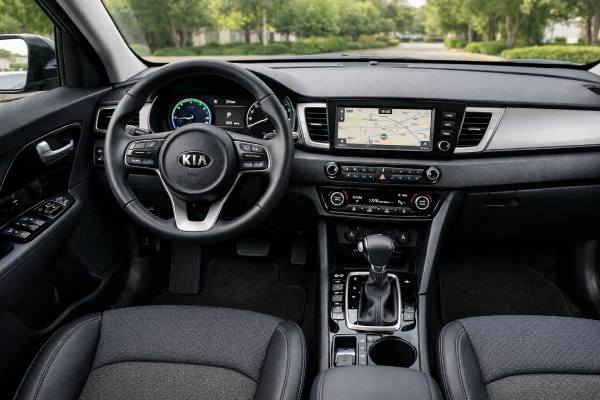

The 2016–2019 Kia Niro Hybrid (DE) is one of the earlier “hybrid-first” crossovers: it was engineered around a compact hybrid system rather than adapted from an existing gasoline model. In practice, that shows up in two places owners notice quickly—efficiency in real traffic, and the way the drivetrain behaves. Instead of an eCVT, the Niro uses a 6-speed dual-clutch transmission (DCT) paired with a 1.6-liter direct-injection engine and an electric motor. The result is a familiar, “geared” driving feel, with strong low-speed response when the hybrid system is healthy and the software is up to date. For German-market buyers looking at used examples today, the sweet spot is understanding what equipment you’re getting (especially safety tech), what the hybrid system likes in terms of servicing and usage, and which known service actions or recalls apply. This guide focuses on the 139 hp (141 PS) HEV from 2016–2019, with practical ownership advice rather than brochure fluff.
Owner Snapshot
- Smooth and efficient in stop-and-go driving once warm; low fuel use is realistic with gentle throttle.
- DCT-based hybrid feels more “normal” than many eCVT hybrids, but it’s more sensitive to software updates and correct fluid service.
- Check for completed recall and service actions (especially steering- and clutch-actuator related) before purchase.
- Plan engine oil and filter every 15,000 km or 12 months (whichever comes first) for typical European use.
- If you do lots of short trips, shorten intervals and keep an eye on brakes for corrosion from heavy regen use.
Navigate this guide
- Kia Niro Hybrid DE deep dive
- Kia Niro Hybrid DE specs and dimensions
- Kia Niro Hybrid DE trims and safety tech
- Reliability patterns and known fixes
- Maintenance plan and buyer checks
- Driving feel and real economy
- Rivals and smart alternatives
Kia Niro Hybrid DE deep dive
At a hardware level, the 2016–2019 Niro HEV is a parallel hybrid: the gasoline engine and electric motor can both drive the front wheels, and the system blends them depending on load, speed, and battery state. The core pieces are the 1.6-liter Kappa GDI (direct injection) engine and a transmission-mounted electric motor, fed by a compact lithium-ion polymer battery.
What makes this Niro different from many hybrids is the gearbox. The 6-speed DCT gives you defined gear steps under acceleration and a more conventional highway feel. For many drivers, that’s a plus: engine revs don’t “hang” the way they can in eCVT hybrids. The tradeoff is that a DCT hybrid can be more sensitive to calibration, clutch learn procedures, and fluid condition. When it’s right, takeoffs are clean and transitions between EV assist and engine power are subtle. When it’s not, you can feel hesitation, a lurch at low speed, or an odd “searching” sensation.
Efficiency is a system behavior, not just a number. In urban traffic, the Niro can lean on electric drive and regenerative braking, and it rewards smooth inputs: gentle acceleration, anticipating stops, and avoiding high-speed bursts when the battery is low. Shorter trips and cold starts will always raise consumption, because the engine may run for cabin heat and emissions control even when you’d prefer EV running.
The platform packaging is practical. You get a higher seating point and useful cargo space without a huge footprint. It’s not an off-roader, but it handles rough city surfaces well enough, and the hybrid system doesn’t require plug-in charging—useful for apartment living.
Who it suits best (and least):
- Best for: commuters, mixed city/highway drivers, ride comfort seekers, and buyers who want hybrid efficiency without an eCVT driving feel.
- Less ideal for: drivers who tow frequently, do lots of sustained high-speed Autobahn runs, or expect a sporty response from a small hybrid battery.
Bottom line: the Niro HEV is a sensible, engineering-led crossover—as long as you treat it like a modern hybrid drivetrain that depends on correct maintenance and updates, not like an old-school naturally aspirated hatchback.
Kia Niro Hybrid DE specs and dimensions
Below are the core specifications for the 2016–2019 HEV with the Kappa 1.6 GDI-based hybrid system (141 PS / 139 hp class). Figures vary slightly by wheel size, trim, and homologation cycle, so treat these as the “center of the target,” then verify by VIN and the vehicle’s data sticker.
Powertrain and efficiency
| Item | Specification |
|---|---|
| Code | Kappa II 1.6 GDI HEV (Euro 6 era) |
| Engine layout and cylinders | Inline-4, DOHC, 4 valves/cyl |
| Bore × stroke | 72.0 × 97.0 mm (2.83 × 3.82 in) |
| Displacement | 1.6 L (1,580 cc) |
| Induction | Naturally aspirated |
| Fuel system | Gasoline direct injection (GDI) |
| Compression ratio (ICE) | 13.0:1 (typical) |
| Max power (system) | 141 PS (≈139 hp) combined |
| Timing drive | Chain (typical for this family) |
| Real-world highway @ 120 km/h | Often mid-5s to low-6s L/100 km in mild weather at steady speed (conditions vary) |
Transmission and driveline
| Item | Specification |
|---|---|
| Transmission | 6-speed dual-clutch (6DCT) |
| Drive type | FWD |
| Differential | Open |
Chassis and dimensions
| Item | Specification |
|---|---|
| Suspension (front/rear) | MacPherson strut / multi-link |
| Brakes | Disc front/rear (sizes vary by trim) |
| Wheels/tyres (common) | 205/60 R16 or 225/45 R18 (trim dependent) |
| Length / width / height | ~4,355 / 1,805 / 1,535 mm |
| Wheelbase | ~2,700 mm |
| Turning circle | ~10.6 m class (spec dependent) |
| Kerb (curb) weight | Typically ~1,4xx kg (varies by trim/wheels) |
| GVWR | Market dependent (verify by VIN plate) |
| Fuel tank | ~45 L |
Performance and capability
| Metric | Typical figure (HEV) |
|---|---|
| Acceleration 0–100 km/h (0–62 mph) | ~11 s class (test-method dependent) |
| Top speed | ~162 km/h (100 mph) |
| Towing capacity | Market/trim dependent; confirm by paperwork and VIN |
Fluids and service capacities (decision-useful)
Exact capacities and specs vary by market and service bulletin revisions, but these are the typical service-relevant items:
| Fluid | What to use (typical) | Notes |
|---|---|---|
| Engine oil | Correct OEM spec per manual; common viscosities include 0W-20 or 5W-30 (market dependent) | Use the correct specification; hybrids are sensitive to cold-start protection |
| Coolant | OEM long-life coolant (do not mix chemistries) | Many markets use a long first interval; confirm by VIN and coolant label |
| DCT fluid | OEM DCT fluid per service documentation | Correct fluid matters for clutch control and longevity |
| Brake fluid | DOT 3/4 per cap/manual | Replace on time; moisture causes internal corrosion |
Key torque specs (critical fasteners only, verify before tightening):
- Wheel lug nuts: typically ~90–110 Nm (verify by wheel/trim label)
- Engine oil drain plug: commonly ~25–35 Nm range (verify by service manual)
Kia Niro Hybrid DE trims and safety tech
Trims and option structure vary across Europe, but most 2016–2019 Niro HEVs follow a simple ladder: a comfort-focused base trim, one or two mid grades with tech packages, and a top trim with larger wheels, upgraded lighting, and more driver assistance. When buying used, the most important differences are wheel/tyre size, headlight type, and ADAS (driver-assistance) equipment, because those affect ride comfort, tire costs, and safety performance.
Trims and options that materially change ownership
Wheels and tyres
- 16-inch setups (often 205/60 R16) usually ride better and return slightly better fuel economy.
- 18-inch packages (often 225/45 R18) sharpen steering response but can increase road noise and tire cost.
Lighting
- LED headlamps (where fitted) typically improve visibility and can be a strong value marker. Also check for adaptive features and auto high-beam behavior if equipped.
Infotainment
- Verify navigation (if desired), Bluetooth stability, camera operation, and whether smartphone integration works correctly. A weak 12 V battery can make infotainment behavior look worse than it is.
Comfort packs
- Heated seats and steering wheel are not just “nice to have” in hybrids: they can reduce the temptation to run high HVAC heat on cold days, which often improves real-world winter economy.
Safety ratings: what matters to a used buyer
In European testing, the Niro achieved a top-tier overall rating for its era, with strong adult occupant protection and a solid safety-assist score. What matters most when buying used is not the headline rating, but whether the car you’re viewing matches the tested equipment level.
Two practical takeaways:
- Safety Assist depends on fitted tech. AEB, lane support, and radar/camera options may be trim- or package-dependent.
- Headlights and AEB are real-world multipliers. Better lighting reduces risk at night, and AEB can prevent the most common urban crashes.
Safety systems and ADAS to verify on a used car
- Airbag system health: no warning lights; scan for stored codes, not just current lights.
- ISOFIX/child-seat hardware: confirm anchor condition and access.
- AEB and lane camera: check for windshield damage in the camera area and evidence of poor repair.
- Adaptive cruise (if equipped): confirm smooth speed control and distance-keeping without abrupt braking.
- Parking sensors and camera: these are often the first things to show wiring or moisture issues after minor bumps.
If the car has ADAS, budget for calibration after windshield replacement or front-end repairs. A “cheap” Niro can become expensive if you inherit misaligned sensors.
Reliability patterns and known fixes
The Niro HEV is generally durable when serviced correctly, but it has the typical modern-hybrid profile: most expensive problems are not basic engine wear—they’re electronics, actuators, sensors, or software. Think in systems, not parts.
Common issues (higher prevalence, usually low to medium cost)
- 12 V system weakness or odd electrical behavior
Symptoms: intermittent no-start, random warnings, infotainment resets, start-stop oddities.
Likely causes: aging 12 V battery, poor charging after long parking, loose grounds, marginal battery health.
Remedy: proper load test, check charging voltage, clean grounds, replace the 12 V battery before it strands you. - Brake feel changes and rotor corrosion (regen-heavy hybrids)
Symptoms: grabby brakes after rain, vibration after long light-braking periods, squeaks at low speed.
Cause: friction brakes used less; surface rust can build and pads can glaze.
Remedy: periodic firm stops (when safe), service slider pins, replace rotors/pads with quality parts if vibration persists. - GDI intake valve deposits (time and short-trip dependent)
Symptoms: rough idle, reduced efficiency, occasional misfire codes at higher mileage.
Cause: direct injection doesn’t wash intake valves with fuel mist like port injection does.
Remedy: regular long drives to fully warm the engine, correct oil spec, and professional intake cleaning if symptoms appear.
Occasional issues (medium cost tier)
- Low-speed hesitation or shudder
Symptoms: lurching in parking maneuvers, inconsistent creep, odd engagement feel.
Cause: DCT clutch control calibration, learned values out of range, fluid condition, or mounts.
Remedy: check for software updates; perform proper clutch relearn; inspect mounts and driveline slack. - Hybrid cooling airflow concerns
Symptoms: battery cooling fan noise, warnings after heat soak, reduced EV assist.
Cause: blocked vents, lint/dust buildup, fan wear, or temperature sensor faults.
Remedy: clean vents and ducts, keep interior clean, scan for stored codes before replacing parts.
Rare but higher-severity items (treat seriously)
- Steering-related service campaigns/recalls (MDPS motor/connector)
Risk: steering assist loss warnings or degraded steering feel.
Action: verify completion via VIN check and dealer record. - Hydraulic clutch actuator concerns (where applicable by market/production range)
Risk: warning lights, drivability issues, and in some recall scopes, elevated fire risk.
Action: confirm eligibility and completion status; inspect for leaks and signs of prior repair.
Pre-purchase checks to request (high value)
- Complete service history with dates and mileage (not just stamps).
- Proof that open campaigns were performed (dealer invoice or printout).
- Hybrid and powertrain scan for stored fault codes (history matters).
- Test drive from cold: listen for unusual noises, confirm smooth engagement, and check low-speed behavior in a parking lot.
A well-kept Niro can be a low-stress car. A neglected one can become a diagnosis project—especially if warning lights were cleared to sell it.
Maintenance plan and buyer checks
A clean maintenance routine is the difference between “hybrid ownership is boring” and “hybrid ownership is confusing.” Use the schedule below as a practical baseline for the 2016–2019 Niro HEV, then tighten it if you drive short trips, do heavy city use, or live where roads are heavily salted.
Practical maintenance schedule (distance/time)
- Engine oil and filter: every 15,000 km or 12 months (whichever comes first). If most trips are short or the engine rarely warms fully, consider 7,500–10,000 km intervals.
- Cabin air filter: every 15,000–30,000 km (often yearly in dusty/urban environments).
- Engine air filter: inspect at least every 30,000 km; replace as needed (sooner in dust).
- Brake fluid: every 2 years is a sensible rule unless the official schedule differs.
- Coolant: many markets use long-life coolant with a long first interval; confirm by VIN and coolant label, then follow the correct change schedule afterward.
- Spark plugs: commonly around the 100,000 km class depending on plug type and market schedule; confirm what’s installed and what the manual specifies.
- DCT fluid: some schedules treat it as “no service required” unless submerged, but many owners prefer a preventive change around 60,000–100,000 km for long-term shift quality—especially in hot climates or heavy traffic.
- Tyres: rotate every 10,000–15,000 km; align if you see uneven wear. Hybrids can wear front tires faster with aggressive launches.
- 12 V battery: test annually after year 4–5; replace proactively if the car shows intermittent electronic glitches.
Hybrid-specific upkeep that pays off
- Keep battery cooling airflow unobstructed. Don’t block vents with luggage, and keep interior dust down.
- Use the friction brakes on purpose sometimes. A few firm stops (when safe) help keep rotors clean.
- Software matters. If low-speed drivability feels odd, check for dealer updates and relearn procedures before replacing hardware.
Buyer’s guide: what to inspect (in order)
- VIN checks: confirm open recalls and completed remedies (dealer printout is ideal).
- Cold start + first 10 minutes: listen for abnormal rattles, check for roughness, confirm smooth engagement from Park to Drive.
- Hybrid behavior: verify smooth transitions and consistent response during repeated low-speed starts.
- Brakes and suspension: look for rusty rotors, sticky calipers, and rear multi-link bush wear.
- Corrosion hotspots (Europe): rear subframe areas, brake lines, and lower door seams—especially if the car lived in heavy road-salt regions.
- Interior electronics: test camera, parking sensors, climate control, and steering-wheel controls; weak 12 V power can mimic module failures.
Recommended used configurations
- Most owners: mid-trim with 16-inch wheels plus a safety package (AEB and lane support). This is usually the best balance of comfort, tyre cost, and day-to-day safety.
- Avoid if possible: poorly documented cars, cars with persistent warnings, or cars with harsh low-speed behavior that a seller dismisses as “normal.”
If you can only do one thing before buying: pay for a proper scan and a test drive from cold. It’s cheaper than guessing.
Driving feel and real economy
The Niro HEV’s driving personality is defined by three things: its DCT, its modest battery, and how the car blends regenerative braking with friction braking. If you’ve driven eCVT hybrids, the Niro feels more like a conventional car—sometimes in a good way, occasionally in a way that reminds you it has clutches.
Ride, handling, and NVH (noise, vibration, harshness)
- Ride: On 16s, the Niro is generally calm over broken pavement, with controlled damping and good everyday comfort. On larger wheels, you’ll notice sharper impacts and more tyre noise on coarse asphalt.
- Handling: Predictable rather than sporty. The rear multi-link helps stability in quick lane changes, and the car tracks straight at highway speeds.
- Cabin noise: At city speeds, EV assist keeps it quiet. At 120–130 km/h, wind and tyre noise dominate more than engine noise—unless you’re climbing a grade where the engine holds higher rpm.
Powertrain character and drive modes
- Step-off response: The electric motor provides the initial push, so launches feel confident if the battery has charge.
- ICE ↔ EV transitions: A healthy system transitions smoothly. You may notice the engine starting under heavier load, low battery state, or strong cabin heat demand.
- DCT behavior: In stop-and-go traffic, the DCT can feel like a carefully managed manual gearbox—because it is. Expect gentle clutch modulation, not torque-converter “creep.”
- Drive modes: Eco generally softens throttle and prioritizes efficiency; Sport holds gears longer and uses more engine.
Real-world efficiency: what owners typically see
Numbers swing with temperature, speed, and trip length, but these patterns are common:
- City (warm weather): low-4s to mid-5s L/100 km is realistic with smooth driving.
- Mixed use: mid-4s to low-6s L/100 km depending on traffic and terrain.
- Highway 100–120 km/h: often mid-5s to low-6s L/100 km if steady; sustained faster cruising can push higher.
Cold-weather penalty: short trips in winter can add a full liter (or more) per 100 km because the engine runs for heat and emissions control. Seat heaters help because warming occupants can reduce total HVAC load.
Braking feel and consistency
Hybrids blend regen (motor generating electricity) with friction brakes. The Niro’s pedal can feel slightly different than a non-hybrid:
- Light braking tends to be regen-heavy and smooth.
- Sudden or hard braking blends in friction braking quickly; you may feel a subtle change in pedal response.
- If you feel pulsing at low speed in dry conditions, inspect rotors and caliper sliders—regen can let hardware sit too long.
What “adequate performance” means in practice
- The Niro isn’t quick, but it’s competent in normal traffic because the motor fills in low-speed torque.
- Passing power is best when the battery isn’t depleted; if the battery is low and you’re already at highway speed, it will feel more like a 1.6-liter gasoline car carrying extra weight.
For most owners, the Niro’s win is that it makes efficient driving easy without demanding lifestyle changes.
Rivals and smart alternatives
A smart comparison isn’t “which car is best,” but “which car is best for your driving pattern and your tolerance for complexity.” Here’s how the 2016–2019 Niro HEV generally stacks up against common alternatives in the same used-price ecosystem.
Versus Toyota Prius
- Niro advantage: crossover seating position and practicality with a more conventional driving feel (geared DCT).
- Prius advantage: hybrid system simplicity and long-term track record; eCVT behavior is predictable and often very durable.
- Decision tip: choose Prius if you prioritize lowest running drama; choose Niro if you want the crossover form and prefer “gears.”
Versus Hyundai Ioniq Hybrid
- Niro advantage: roomier, more versatile cabin and cargo; better fit for family duty.
- Ioniq advantage: often slightly better aero-driven highway efficiency; can feel lighter.
- Decision tip: if your commute is mostly highway at steady speed, Ioniq can shine; if you want a do-it-all shape, Niro is easier to live with.
Versus Toyota C-HR (hybrid where applicable)
- Niro advantage: typically better packaging for cargo and rear-seat usability, and a drivetrain tuned for efficiency.
- C-HR advantage: distinctive styling and, in some markets, strong resale.
- Decision tip: prioritize function and fuel economy first; choose styling second.
Versus Honda HR-V (non-hybrid era examples)
- Niro advantage: fuel economy and low-speed torque assist; better in heavy traffic.
- HR-V advantage: mechanical simplicity in some trims and potentially lower repair complexity (depending on drivetrain).
- Decision tip: if you drive mostly urban miles, the Niro’s hybrid system is a real advantage; if you do low annual mileage and want maximum simplicity, a non-hybrid can still make sense.
The “which used Niro should I buy?” shortcut
- If your driving is mostly city + mixed: the Niro HEV is a strong pick, especially with safety tech and 16-inch wheels.
- If your driving is mostly high-speed: focus on tyre condition, noise expectations, and realistic consumption at your cruising speed.
- If you want the least drivetrain complexity: an eCVT hybrid rival may appeal, though every modern car still has complex electronics.
The best used-car purchase is the one with the cleanest history, correct maintenance, and no open campaigns—regardless of badge.
References
- Official Kia Niro 2016 safety rating 2016 (Safety Rating)
- New Kia Niro 2016 (Technical Specifications)
- Vehicle Detail Search – 2017 KIA NIRO HYBRID SUV FWD | NHTSA 2017 (Recall Database)
- sc145– 2017 my kia niro mdps motor connector 2017 (Recall Document)
- Kia Niro HEV 2023 (Recall Document)
Disclaimer
This article is for informational purposes only and is not a substitute for professional inspection, diagnosis, or repair. Specifications, torque values, service intervals, and procedures can vary by VIN, market, model year, and installed equipment. Always verify details using official manufacturer service documentation and your vehicle’s labels, and consult a qualified technician for safety-critical work.
If you found this guide useful, please consider sharing it on Facebook, X (Twitter), or your favorite forum—it helps others find reliable ownership information.