
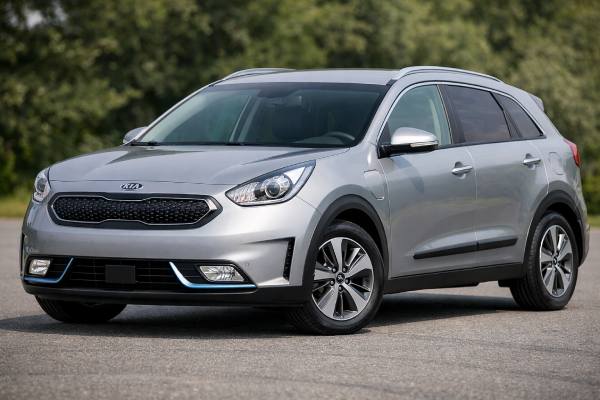
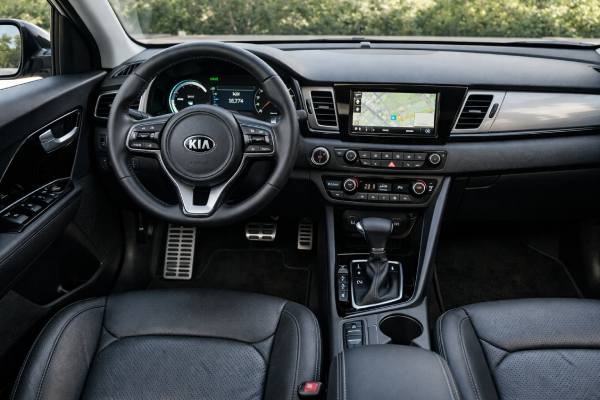
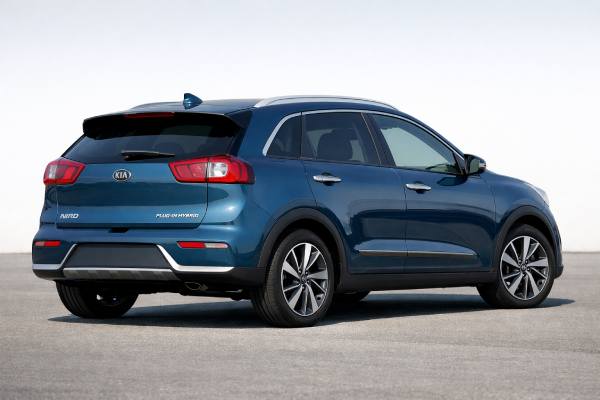
The 2017–2019 Kia Niro Plug-in Hybrid (DE) takes the regular Niro Hybrid formula and adds what many commuters actually want: meaningful electric-only driving without giving up long-trip flexibility. It still uses the 1.6-liter Kappa GDI engine and a 6-speed dual-clutch transmission (DCT), but the plug-in model carries a much larger high-voltage battery and a charging port, so your daily kilometers can be mostly electric when you plug in consistently. The engineering story is about tradeoffs: you gain EV range and lower fuel use on short runs, but you add charging hardware, more cooling loops, and extra weight. For used buyers, that shifts the priority list toward battery health, charge-port function, software updates, and recall completion—alongside the usual checks for DCT behavior and service history. This guide focuses on German-market realities: how the PHEV system works, what commonly wears, and how to choose a well-sorted 2017–2019 example.
Quick Specs and Notes
- EV-first commuting is the main win: consistent charging can turn most weekday driving into low-cost electric kilometers.
- DCT-based hybrid feels more “geared” and familiar than eCVT rivals, especially on the Autobahn.
- Higher complexity than the self-charging hybrid—verify charging equipment, software status, and recall completion before buying.
- Plan engine oil and filter every 15,000 km or 12 months (whichever comes first), even if you drive mostly electric.
- If you rarely use the friction brakes, schedule periodic brake inspections to prevent rotor corrosion from heavy regen use.
**Contents and shortcuts**
- Kia Niro PHEV DE how it works
- Kia Niro PHEV DE specs tables
- Kia Niro PHEV DE trims and ADAS
- Known issues, recalls, and software
- Maintenance schedule and used buying
- Driving impressions, EV range, and charging
- PHEV rivals and which to pick
Kia Niro PHEV DE how it works
The Niro Plug-in Hybrid is best understood as a “hybrid that can start the day as an EV.” It’s still a parallel hybrid with a gasoline engine and electric motor driving the front wheels, but the battery is large enough to support real EV-only trips—especially at urban speeds—when it’s charged. That changes ownership behavior: your efficiency depends less on driving technique alone and more on how often you plug in and how you manage cabin heat in winter.
Powertrain layout in plain terms
- The 1.6-liter direct-injection engine handles sustained load and high-speed cruising efficiently for its size.
- A transmission-mounted electric motor provides low-speed torque, smoother launches, and EV propulsion when conditions allow.
- The 6-speed DCT gives fixed gear ratios and a conventional feel at speed. You don’t get the “rubber band” rev behavior some drivers dislike in eCVT hybrids.
What’s different versus the self-charging Niro Hybrid
- Battery and charging hardware: You add a charge port, onboard AC charger, extra high-voltage contactors, and more thermal management. These parts are usually reliable, but they introduce additional failure modes.
- Weight and packaging: The plug-in hardware adds mass, and cargo volume can be slightly reduced compared with the standard hybrid, depending on market specification and measurement standard.
- Driving strategy matters: If you never charge, a PHEV becomes a heavier hybrid. If you charge daily, it can behave like a small EV during the work week and a hybrid on weekends.
How the car decides EV vs hybrid
Most PHEVs juggle three priorities: protect the battery, meet emissions rules, and deliver the power you request. Expect the engine to start even with a charged battery when:
- you demand strong acceleration,
- you reach higher sustained speeds,
- the system needs engine heat (especially in cold weather),
- the battery temperature is outside its preferred band.
The practical takeaway for used buyers
A good Niro PHEV feels seamless: quiet EV pull-away, gentle engine starts, and predictable regen braking. A neglected one often reveals itself at low speed—hesitation, lurching, or warning messages—because the DCT and hybrid controls depend on correct software, healthy 12 V power, and clean sensor signals.
Kia Niro PHEV DE specs tables
This section focuses on the 2017–2019 Niro Plug-in Hybrid (DE) in the 139 hp (141 PS) class. Exact figures vary by market paperwork, wheel and tyre size, and test cycle, so use these as a structured reference and confirm specifics by VIN and the vehicle data plate.
Powertrain and efficiency
| Item | Specification (typical for 2017–2019 PHEV) |
|---|---|
| Code | Kappa II 1.6 GDI-based PHEV system |
| Engine layout and cylinders | Inline-4, DOHC, 4 valves/cyl |
| Bore × stroke | 72.0 × 97.0 mm (2.83 × 3.82 in) |
| Displacement | 1.6 L (1,580 cc) |
| Induction | Naturally aspirated |
| Fuel system | Gasoline direct injection (GDI) |
| Compression ratio (ICE) | 13.0:1 class |
| Timing drive | Chain |
| Electric motor type | Permanent magnet synchronous motor (PMSM), single motor, front (transmission-mounted) |
| System voltage | ~360 V class |
| Battery chemistry | Lithium-ion polymer |
| Battery energy | 8.9 kWh (gross, class value) |
| Max power (system) | 139 hp (≈104 kW) @ ~5,700 rpm class |
| Max torque (system) | ~265 Nm (195 lb-ft class) @ ~4,000 rpm class |
Transmission and driveline
| Item | Specification |
|---|---|
| Transmission | 6-speed dual-clutch automatic (DCT) |
| Drive type | FWD |
| Differential | Open |
Chassis and dimensions
| Item | Specification (typical) |
|---|---|
| Suspension (front/rear) | MacPherson strut / multi-link |
| Steering | Electric power steering (MDPS), ratio varies by model year |
| Brakes | Disc front/rear (diameters vary by wheel package) |
| Wheels/tyres (common EU sizes) | 205/60 R16 or 225/45 R18 (trim dependent) |
| Length / width / height | ~4,355 / 1,805 / 1,535–1,560 mm (roof rails can change height) |
| Wheelbase | ~2,700 mm |
| Turning circle | ~10.6 m class (spec dependent) |
| Kerb weight | ~1,5xx kg class (equipment dependent) |
| Fuel tank | ~43–45 L class (market dependent) |
| Cargo volume | Around the low-300 L class in some European VDA figures (verify by market) |
Performance and capability
| Metric | Typical figure |
|---|---|
| 0–100 km/h (0–62 mph) | ~10–11 s class (test-method dependent) |
| Top speed | ~170 km/h class |
| Towing capacity | Often available with an optional towing pack; verify braked/unbraked limits on registration documents |
| Payload | Varies significantly by trim and tyre rating; check door-jamb sticker |
Fluids and service capacities (decision-useful)
| Fluid | What matters most |
|---|---|
| Engine oil | Use the correct OEM specification (not just viscosity). Many markets use 0W-20 class oils for efficiency and cold-start protection. |
| Engine coolant | Use the specified long-life coolant and avoid mixing chemistries. Follow the correct interval for your VIN. |
| DCT fluid | Correct DCT fluid is critical for clutch control and longevity; verify service history and fluid type used. |
| Brake fluid | Replace on time; moisture increases internal corrosion and can degrade pedal feel. |
| A/C refrigerant | Use the exact refrigerant type and charge amount; incorrect fills can cause poor cooling and faults. |
Key torque values (verify before tightening):
- Wheel lug nuts: commonly ~90–110 Nm (trim/wheel dependent)
- Oil drain plug: commonly ~25–35 Nm (engine/version dependent)
Kia Niro PHEV DE trims and ADAS
German-market trim naming varies by year and importer strategy, but the equipment pattern is consistent: the biggest differences are wheel size, lighting, driver assistance, and comfort features that influence efficiency (like seat heating). When shopping used, you want to identify what’s fitted without guessing—because a “good deal” can be a low-spec car missing the safety tech you assumed was standard.
Practical trim and option identifiers
Charging-related cues
- A plug-in model will have a charge door and charge indicator behavior that the regular hybrid doesn’t. Confirm the charge port opens smoothly and the locking pin works properly.
Wheels and tyres
- 16-inch wheels often pair best with the PHEV mission: quieter ride, lower tyre cost, and typically a slight efficiency advantage.
- Larger wheels can look better but may reduce EV efficiency and increase road noise.
Cabin comfort that affects real consumption
- Heated seats and steering wheel matter more than people expect. In winter, heating occupants directly can reduce the need for high cabin heat, which is one of the biggest EV-range killers.
- Heat-pump HVAC (where available) can materially help winter efficiency; confirm by equipment list rather than assuming.
Infotainment and navigation
- PHEVs often display energy flow, charge scheduling, and EV-mode screens. Test these menus and confirm the car remembers settings after shutdown—odd resets can point to a weak 12 V battery.
Safety ratings and what they mean for your car
The Niro line achieved a strong Euro NCAP result for its era, but the key nuance is equipment: Euro NCAP ratings often reference a specific safety pack or assistance package. For used buyers, the important step is to match the car’s actual ADAS hardware to the level you want.
ADAS and safety systems to verify (hands-on checklist)
- Forward collision warning and AEB: confirm it’s present in menus and no camera/radar faults exist.
- Lane support: check for lane-keep warnings and steering assist function on a clear road.
- Adaptive cruise (if equipped): verify smooth stop-and-go behavior and stable following distance.
- Blind-spot monitoring and rear cross-traffic alert (if equipped): test with a controlled pass-by scenario.
- Airbags and restraints: ensure no warning lights and verify ISOFIX anchor integrity.
Calibration implications
Any windshield replacement (camera-equipped) or front bumper repair (radar-equipped) can require calibration. If the seller can’t document proper repair procedures, budget for a professional ADAS check—especially if you see unexplained warnings or inconsistent lane assist behavior.
Known issues, recalls, and software
A 2017–2019 Niro PHEV can be very dependable, but it’s not the type of vehicle you buy “blind.” The most expensive surprises usually come from actuators, wiring, or software interactions, not from the basic engine block. Think in terms of prevalence and cost tier.
Common (often low to medium cost)
- 12 V battery weakness and electronic oddities
Symptoms: intermittent no-start, warning messages that disappear, infotainment reboots, charging sessions that fail to initiate reliably.
Root cause: aging 12 V battery, poor ground connections, or low standby voltage after long parking.
Remedy: proper battery test (not just voltage), check charging system, clean grounds, replace proactively if marginal. - Brake corrosion from regen-heavy driving
Symptoms: vibration after rain, squeaks, rough first stop of the day.
Root cause: friction brakes used less; rotors develop surface rust and pads glaze.
Remedy: periodic firm stops (when safe), service caliper slider pins, replace pads/rotors if vibration persists. - Charge-port door, latch, or lock-pin behavior
Symptoms: door won’t open smoothly, charging connector doesn’t lock, charge session stops unexpectedly.
Root cause: mechanical wear, moisture ingress, or a misbehaving lock actuator.
Remedy: inspection and lubrication where appropriate, check for fault codes, repair/replace actuator if needed.
Occasional (medium cost tier)
- Low-speed hesitation or shudder (DCT + hybrid blending)
Symptoms: lurching in parking maneuvers, inconsistent creep, jerky stop-start transitions.
Root cause: clutch adaptation out of range, software calibration needing update, contaminated/aged DCT fluid, or worn mounts.
Remedy: check for software updates and perform correct clutch relearn; inspect mounts; verify DCT fluid condition and service history. - Onboard charger (OBC) or charging control faults
Symptoms: repeated charge interruptions, inability to charge on certain EVSEs, warning indicators related to charging.
Root cause: OBC internal fault, wiring/connector issues, or software compatibility edge cases.
Remedy: scan for charging-related codes, verify with multiple chargers, and follow diagnostic flow before replacing hardware.
Rare but high-severity (treat seriously)
- Hydraulic clutch actuator-related recall scope (certain build ranges, certain markets)
Risk: localized overheating/melting at a connector and, in worst cases, fire risk.
Action: verify recall completion by VIN and insist on documentation. - Steering assist service actions (MDPS-related in some campaigns)
Risk: warning lights, degraded assist, or inconsistent steering feel.
Action: check campaign status and confirm the remedy was performed.
Software and calibrations: why they matter more on the PHEV
Modern PHEVs coordinate engine ECU, transmission control, battery management, and charging control. Small software improvements can meaningfully change:
- low-speed smoothness,
- charging session stability,
- warning logic (preventing nuisance faults),
- battery temperature management and winter behavior.
When evaluating a used Niro PHEV, treat “software up to date” as part of maintenance—like fresh brake fluid. A seller who can show dealer service records for updates and service actions is often offering a better car, even at a slightly higher price.
Maintenance schedule and used buying
PHEVs tempt owners into skipping maintenance because the engine runs less on short trips. That’s a mistake. The engine still experiences cold starts, moisture contamination, and time-based oil aging—and the chassis still needs the same brake, tyre, and suspension care as any crossover. Use the schedule below as a practical baseline for Germany and similar European conditions.
Core maintenance schedule (distance or time)
- Engine oil and filter: every 15,000 km or 12 months. If you do frequent short trips (engine rarely hot), consider 7,500–10,000 km intervals.
- Cabin air filter: every 15,000–30,000 km (often annually in urban areas).
- Engine air filter: inspect at 30,000 km; replace as needed (sooner in dust).
- Brake fluid: every 2 years is a strong default unless your official schedule differs.
- Coolant: follow the correct long-life interval for your VIN; don’t mix coolant types.
- Spark plugs: commonly around the 100,000 km class (confirm plug type and official interval).
- DCT fluid: follow official guidance; many long-term owners choose a preventive change around 60,000–100,000 km depending on usage (heavy city and heat justify earlier service).
- Tyres: rotate every 10,000–15,000 km; align if you see uneven wear.
- 12 V battery: test annually after year 4–5; replace proactively if marginal.
PHEV-specific checks that prevent headaches
- Charging system health: occasionally charge on a different AC station to confirm compatibility and stable charging.
- Keep cooling paths clean: battery and power electronics rely on proper airflow and coolant performance—avoid blocking vents and address coolant leaks immediately.
- Use the friction brakes deliberately: once in a while, perform a few firm stops (when safe) to keep rotors clean and pads deglazed.
Used buyer’s inspection list (high yield)
- VIN campaign check: confirm all recalls and service actions are closed.
- Charge test: plug in, confirm the car begins charging promptly, and verify it locks/unlocks the connector correctly.
- Hybrid scan: read stored fault history, not only active faults.
- Cold start drive: note engine start quality, listen for abnormal noises, and check for low-speed drivability issues.
- DCT behavior: slow parking maneuvers reveal a lot—smooth engagement is the goal.
- Corrosion inspection: brake lines, subframe areas, and lower seams (especially if the car lived in heavy road-salt regions).
- Brakes and tyres: hybrids can hide brake wear; tyres can show alignment or suspension issues.
Which versions are easiest to live with?
- Best all-rounder: 16-inch wheels + strong safety equipment (AEB and lane support) + comfort features you’ll actually use in winter.
- Approach with caution: cars with unclear charging history, repeated warning lights, or “it’s normal” explanations for rough low-speed behavior.
A well-kept PHEV is a commuter cheat code. A poorly maintained one becomes an electrical-and-software mystery—so buy the history as much as the car.
Driving impressions, EV range, and charging
The Niro PHEV’s real personality shows up in three scenarios: silent EV commuting, stop-and-go traffic with DCT blending, and steady Autobahn cruising after the battery is depleted. If you understand those three, you’ll know whether it fits your life.
Ride, handling, and cabin noise
- Ride comfort: On 16-inch tyres, it’s generally composed and comfortable over broken city pavement. Bigger wheels can add sharpness and tyre roar.
- Handling balance: predictable and stable rather than sporty. The rear multi-link suspension helps the car feel planted in quick lane changes.
- Highway NVH: wind and tyre noise usually dominate at 120–130 km/h; engine noise rises mainly on grades or strong acceleration.
Powertrain behavior: what “good” feels like
- EV pull-away: smooth and quiet with strong initial torque for city speeds.
- Engine start events: should feel like a soft overlay rather than a jolt. If the engine start is harsh or inconsistent, suspect 12 V health, software status, or adaptation issues.
- DCT low-speed feel: unlike a torque-converter automatic, a DCT “manages clutches.” In slow traffic, it should be controlled and predictable, but not always as buttery as a traditional automatic.
EV range and real-world efficiency
Official EV-only range figures vary by test cycle and model year paperwork. In everyday use:
- Urban EV range is best in mild temperatures with gentle acceleration and moderate speeds.
- Winter range drops noticeably when cabin heat is needed and battery temperature is low.
- After EV range is used, the car behaves like an efficient hybrid. Fuel consumption becomes most sensitive to speed, temperature, and elevation.
A practical way to think about it:
- If your daily driving is within the car’s usable EV range and you can charge at home, you may do most weekdays with minimal fuel use.
- If you can’t charge regularly, you’ll still get hybrid efficiency, but you won’t earn back the added PHEV complexity.
Charging performance (AC only)
This generation PHEV is designed for AC charging, not DC fast charging.
- Typical onboard AC rate: around 3.3 kW class (single-phase AC).
- Typical full charge time: roughly 2.5–3.5 hours depending on supply voltage, temperature, and charging losses.
- Daily habit: topping up from partial is often more convenient than waiting for near-empty.
Best practice for longevity and convenience:
- Plug in when you park at home.
- Don’t obsess over “perfect” charging percentages—consistent, moderate charging is usually kinder than deep cycling.
- If you see repeated interrupted sessions, test with another EVSE and scan for stored charging faults.
Braking feel and regen
Like most electrified cars, the Niro PHEV blends regenerative and friction braking:
- Light braking is often regen-heavy and smooth.
- Hard braking blends friction brakes quickly; you may feel a subtle pedal transition.
- If you rarely use friction braking, rotors can corrode—inspect and address early to avoid vibration.
For most owners, the win is simple: the car can be an EV when you want it, then quietly becomes a hybrid when the trip gets longer.
PHEV rivals and which to pick
Comparing PHEVs is less about badge preference and more about charging access, daily distance, and how you tolerate drivetrain “personality.” The Niro PHEV’s distinctive traits are its DCT driving feel and its practical crossover packaging.
Versus Mitsubishi Outlander PHEV (similar-era examples)
- Outlander advantage: larger cabin and, in many versions, AWD capability.
- Niro advantage: usually lower mass, better efficiency potential, and a smaller footprint for city use.
- Decision tip: if you need space and traction, Outlander fits; if you want efficient commuting and compact practicality, Niro is easier to live with.
Versus Volkswagen Golf GTE (similar timeframe)
- Golf GTE advantage: more performance-oriented tuning and a hatchback driving feel.
- Niro advantage: higher seating position, easier access, and often better cargo usability for a small family.
- Decision tip: choose Golf GTE for driving engagement; choose Niro for everyday comfort and crossover practicality.
Versus Toyota Prius Plug-in (Prius Prime)
- Prius Plug-in advantage: a hybrid system with a long reputation for smoothness and efficiency, often with very predictable behavior.
- Niro advantage: crossover form factor and a more conventional “geared” feel at speed.
- Decision tip: prioritize Prius Plug-in if you want the calmest powertrain logic; choose Niro if you prefer the seating position and DCT feel.
Versus Hyundai Ioniq Plug-in Hybrid
- Ioniq PHEV advantage: often slightly better aero efficiency on steady highway runs.
- Niro advantage: more versatile cabin and a generally more crossover-friendly driving position.
- Decision tip: if your driving is mostly highway, Ioniq can be compelling; if your life is mixed and you value packaging, Niro often wins.
The smart-buy rule for used PHEVs
Regardless of rival, the best used PHEV is the one that checks these boxes:
- Documented recall/service-action completion.
- Verified charging function (no intermittent faults).
- Smooth low-speed drivability (DCT behavior is the tell).
- Clean service history with time-based maintenance honored.
- No warning lights and no “recently cleared” fault history.
If your commute is charge-friendly, the Niro PHEV can deliver the best of both worlds. If you can’t charge, consider the standard Niro Hybrid or a conventional hybrid rival—you’ll likely get similar day-to-day costs with less complexity.
References
- Official Kia Niro 2016 safety rating 2016 (Safety Rating)
- Kia Motors reveals all-new Stinger, Picanto and two plug-in hybrids in Geneva 2017 (Press Kit)
- 2019 Kia Niro PHEV Specifications 2019 (Technical Specifications)
- Vehicle Detail Search – 2019 KIA NIRO PLUG-IN HYBRID SUV spa | NHTSA 2019 (Recall Database)
- 2017-2022MY Niro & 2018-2022 Niro Plug-in Hybrid 2023 (Recall Document)
Disclaimer
This article is for informational purposes only and is not a substitute for professional inspection, diagnosis, or repair. Specifications, torque values, service intervals, and procedures can vary by VIN, market, model year, and installed equipment. Always verify details using official manufacturer service documentation and your vehicle’s labels, and consult a qualified technician for safety-critical work.
If this guide helped, please consider sharing it on Facebook, X (Twitter), or your preferred community—your support helps others find reliable ownership information.