
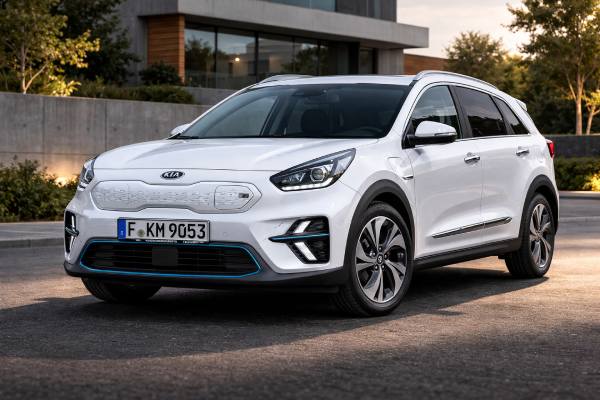
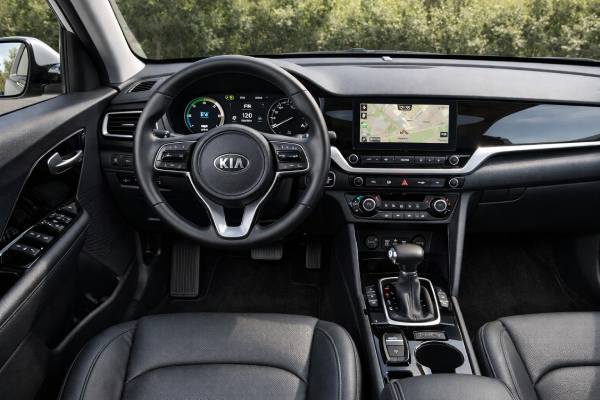
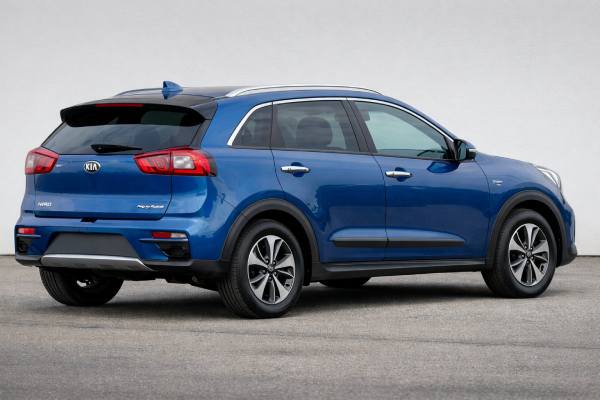
The facelifted 2019–2022 Kia Niro Plug-in Hybrid for Germany (DE) is one of the most “normal-feeling” PHEVs of its era: you get true EV commuting capability without giving up a conventional gearbox, familiar controls, or long-distance flexibility. Under the hood is Kia’s 1.6-liter direct-injection four-cylinder paired with an electric drive motor and a modest traction battery—enough to cover many daily trips on electricity, but still light and simple compared with larger PHEV SUVs.
In ownership terms, this model rewards drivers who can charge regularly and keep the petrol engine exercised. The drivetrain is generally robust, but the plug-in Niro adds more cooling loops, high-voltage electronics, and charge hardware than the standard hybrid—so condition, software updates, and correct servicing matter. If you want an efficient family crossover with predictable running costs and no range anxiety, the facelift Niro PHEV is a strong, practical choice.
What to Know
- Best results come from frequent charging; short EV commutes can cut fuel use dramatically.
- Smooth, predictable power delivery with a familiar 6-speed dual-clutch feel rather than an eCVT.
- Good packaging and visibility, but the PHEV gives up some cargo space versus the regular hybrid.
- Watch for charge-port wear, 12 V battery weakness, and any “hybrid/EV system” warning history.
- Plan brake-fluid service about every 2 years, even if regen braking reduces pad wear.
Navigate this guide
- Kia Niro PHEV facelift explained
- Kia Niro PHEV specs and capacities
- Kia Niro PHEV trims and ADAS
- Reliability and known trouble spots
- Maintenance plan and buying tips
- Real-world drive and economy
- PHEV rivals and value check
Kia Niro PHEV facelift explained
Think of the 2019–2022 facelift Niro Plug-in Hybrid as the “two-mode commuter”: it’s an EV for the first part of the day (when you start with a charged battery), and a highly efficient hybrid once the battery is depleted. The engineering goal is not maximum EV range—it’s to deliver consistent, low-stress efficiency in mixed real life: city traffic, suburban speeds, and autobahn stretches.
How the drivetrain works in practice
The Niro PHEV combines a 1.6-liter gasoline engine with an electric traction motor integrated into the transmission. When you pull away gently, the motor can move the car on its own, especially at lower speeds. As demand rises—hard acceleration, higher speed, or a depleted battery—the petrol engine starts and contributes torque. A key point: unlike many hybrids that use an eCVT, this Niro uses a 6-speed dual-clutch transmission (DCT). That means you’ll feel upshifts and downshifts under load, which some drivers prefer because it feels conventional.
What changed with the facelift (ownership-relevant)
The facelift mainly brought styling and interior updates, plus infotainment and driver-assistance improvements. From an owner perspective, the important implications are:
- More electronics (bigger screens, connectivity) that depend on up-to-date software and healthy 12 V power.
- ADAS content that may vary by trim/package; sensor calibration can matter after windshield replacement or bumper repairs.
- Charging habits becoming more important: because the battery is relatively small, consistent plugging-in is what makes the PHEV “pay back” in fuel savings.
Where this PHEV fits best
If you can charge at home or at work, the Niro PHEV can cover many daily trips mostly on electricity, while still behaving like a normal car on long routes. If you cannot charge regularly, you’ll be carrying the extra weight and complexity of the plug-in system without getting the main benefit. In that case, the standard hybrid can be a better match.
What to expect from day-to-day behavior
Expect quiet electric roll-off at low speeds, then a smooth engine start once power demand or speed rises. You’ll notice the DCT more in stop-and-go traffic than an eCVT—still refined, but it can feel more “mechanical” at very low speeds. The overall character is calm, efficient, and practical rather than sporty.
Kia Niro PHEV specs and capacities
Below are commonly published specifications for the Kia Niro Plug-in Hybrid (DE), facelift 2019–2022, 139 hp system output. Equipment and approvals can differ by market and VIN, so treat these as representative for this variant.
Powertrain and efficiency
| Spec | Value |
|---|---|
| Powertrain code (common) | Kappa II 1.6 GDI + electric motor (PHEV) |
| Engine layout | I-4, DOHC, 16-valve |
| Displacement | 1.6 L (1,580 cc) |
| Induction | Naturally aspirated |
| Fuel system | Direct injection (GDI) |
| System max power | 139 hp (104 kW) |
| Engine max power | 104 hp (77 kW) |
| Motor type | PMSM traction motor, single, front axle |
| Motor max power | 44.5 kW (approx.) |
| Motor max torque | 170 Nm (125 lb-ft) |
| Battery chemistry | Lithium-ion polymer |
| Battery gross capacity | 8.9 kWh |
| Battery usable capacity | 8.3 kWh (approx.) |
| Rated efficiency (WLTP, weighted) | 1.3–1.6 L/100 km and 13–15 kWh/100 km |
| Rated EV range (WLTP) | ~49 km (varies by wheel/trim) |
| Real-world highway @ 120 km/h (battery depleted) | ~6.2–7.0 L/100 km |
Transmission and driveline
| Spec | Value |
|---|---|
| Transmission | 6-speed DCT (dual-clutch) |
| Drive type | FWD |
| Differential | Open (front) |
Chassis and dimensions
| Spec | Value |
|---|---|
| Suspension (front) | MacPherson strut |
| Suspension (rear) | Multi-link |
| Steering | Electric power steering |
| Brakes (front/rear) | Ventilated disc / disc |
| Most common tyre size | 225/45 R18 (popular) |
| Ground clearance | ~160 mm |
| Length / Width / Height | ~4,355 mm / 1,805 mm / 1,535 mm |
| Wheelbase | ~2,700 mm |
| Turning circle (kerb-to-kerb) | ~10.6 m |
| Kerb weight | ~1,590–1,650 kg |
| GVWR | ~2,000 kg |
| Fuel tank | ~45 L |
| Cargo volume | ~324 L seats up / ~1,322 L seats down (VDA-style reporting commonly used in EU brochures) |
Performance and capability
| Spec | Value |
|---|---|
| 0–100 km/h (0–62 mph) | ~10.4–10.8 s |
| Top speed | ~160 km/h |
| Towing capacity (braked/unbraked) | 1,300 kg / 600 kg (where approved) |
| Payload | ~350–450 kg (typical range by trim) |
Fluids and service capacities
| Spec | Value |
|---|---|
| Engine oil viscosity (common) | 0W-20 or 5W-30 (market dependent) |
| Engine oil capacity | ~3.8–4.0 L |
| Coolant | Ethylene glycol-based long-life coolant (OEM spec) |
| Brake fluid | DOT 4 (common) |
| A/C refrigerant | R-1234yf (common on later-model EU cars) |
| Wheel nuts torque | ~88–108 Nm |
Safety ratings and driver assistance
| Spec | Value |
|---|---|
| Euro NCAP overall rating | 5 stars (rating carried through reviews/updates) |
| Euro NCAP Adult / Child / VRU / Safety Assist | 91% / 80% / 70% / 81% (for the published rating set) |
| Typical core ADAS availability | AEB, lane assist, driver attention alerts, optional ACC and blind-spot features (trim dependent) |
Kia Niro PHEV trims and ADAS
For the facelift Niro PHEV in Germany, trims and option structure can vary by model year and sales program, but the pattern is consistent: a well-equipped base, then one or two upper trims adding comfort tech and driver assistance. The most important thing as a buyer is to identify what’s actually on the car—because ADAS and lighting packages influence both daily satisfaction and repair costs.
Typical trims and what changes mechanically
Mechanically, most trims share the same core hardware: the 1.6 GDI hybrid system, battery, and 6DCT. Differences are usually wheels/tyres (which affect ride and efficiency) and occasionally brake/tyre package. So when comparing trims, focus less on drivetrain “performance” and more on:
- Wheel size: 18-inch packages often look better but can add road noise and reduce EV efficiency slightly versus smaller wheels.
- Tyre choice: some trims ship with more efficiency-focused tyres; replacements matter for range and noise.
- Heat pump / winter package (if offered): very relevant for EV-mode comfort and winter consumption.
How to identify options quickly (used-car checks)
If you’re inspecting a used Niro PHEV, you can often spot key packages without tools:
- ACC (adaptive cruise): look for steering-wheel buttons dedicated to distance control and a radar unit behind the lower grille area.
- Blind-spot monitoring: mirror icons plus related buttons/settings in the cluster/menu.
- Lane-keeping / lane-follow assist: lane markers icon in the cluster and a dedicated steering-assist setting.
- LED headlamps: distinctive lamp signatures and lens design; also check for auto-leveling behavior.
If you have access to the infotainment menu, look for ADAS configuration pages. A car with more settings typically has more hardware fitted.
Safety systems: what’s generally standard
Even lower trims commonly include the basics expected in the EU market:
- Multiple airbags (front, side, curtain; some variants add a driver knee airbag)
- ESC stability control and traction control
- ISOFIX/LATCH points for child seats
- Tire pressure monitoring
- Emergency braking assistance and hill-start assist
ADAS calibration implications (important after repairs)
Modern Niro PHEVs can require calibration when certain work is done:
- Windshield replacement can affect camera-based lane systems.
- Front bumper repairs can affect radar alignment for AEB/ACC.
- Wheel alignment changes can influence steering-angle and lane centering behavior.
If the seller can provide proof of proper calibration after bodywork, it’s a real plus.
Year-to-year changes that matter
Across 2019–2022, the biggest functional changes tend to be infotainment generations (screen size, connectivity) and how much ADAS becomes standard rather than optional. When choosing between years, prioritize condition and equipment over a small model-year difference—especially if you want ACC, blind-spot monitoring, or advanced headlights.
Reliability and known trouble spots
Overall, the facelift Niro PHEV has a good durability reputation when serviced correctly. The key is that a PHEV combines two worlds: ICE wear items (oil, plugs, cooling) plus EV hardware (battery management, charge control, high-voltage safety). Most problems are not catastrophic—but they can become expensive if ignored.
Common issues (higher likelihood)
- 12 V battery weakness (low–medium cost)
Symptoms: random warning lights, infotainment rebooting, “ready” issues, intermittent keyless entry problems.
Likely cause: frequent short trips, long parking with accessories on, or an aging 12 V battery stressed by electronics.
Remedy: load-test the 12 V battery; replace proactively if borderline; confirm DC–DC charging behavior. - Charge port wear or latch/door problems (low–medium cost)
Symptoms: difficulty inserting the plug, inconsistent charging start, charge door not opening/closing cleanly.
Likely cause: mechanical wear, contamination, or minor impact damage.
Remedy: inspect port pins and latch alignment; clean carefully; replace damaged port components. - Brake noise or corrosion from heavy regen use (low cost)
Symptoms: grinding/squeal after rain or long periods without firm braking.
Likely cause: friction brakes used less; surface corrosion builds.
Remedy: periodic controlled “brake cleaning” stops; service if pads/discs are uneven or heavily pitted.
Occasional issues (situational)
- DCT low-speed behavior (medium cost if repair needed)
Symptoms: shudder, hesitation, or jerky creep in stop-start traffic.
Likely cause: clutch wear, adaptation/calibration drift, or software strategy interacting with hybrid torque.
Remedy: check for software updates and perform clutch/shift adaptations; ensure correct fluid if serviceable; investigate if persistent. - Cooling-system leaks or weak electric coolant pumps (medium cost)
Symptoms: coolant smell, warning messages, reduced heater performance, or engine running more than expected.
Likely cause: age-related hose/clamp seepage or auxiliary pump wear.
Remedy: pressure test; replace leaking components early to protect hybrid electronics and engine. - “Hybrid system” warnings that clear (medium cost, diagnosis-heavy)
Symptoms: intermittent warning, limp mode, or reduced EV operation.
Likely cause: sensor glitches, low 12 V voltage events, or software faults.
Remedy: read stored codes, check freeze-frame data, and confirm software versioning; don’t accept “no codes found” without a proper scan.
Rare but important (higher impact)
- Onboard charger (OBC) or DC–DC converter faults (high cost)
Symptoms: no AC charging, repeated charging interruptions, or 12 V not maintained.
Likely cause: component failure or heat stress over time.
Remedy: confirm with measured charge power and diagnostic checks; replacement is often the fix. - Traction battery degradation beyond expectations (high cost, uncommon)
Symptoms: noticeable EV range drop, frequent engine starts, reduced power in EV mode.
Likely cause: sustained high heat, repeated full-charge/high-discharge cycles, or long storage at high state of charge.
Remedy: request a battery health report; ensure cooling systems are functioning; follow best charging practices.
Service actions, recalls, and software
Your best protection is documentation. Ask for proof of:
- Completed recall work (dealer printout or official completion record)
- Software updates addressing charging behavior, drivability, or warning messages
- Proper repair methods after bodywork that could affect ADAS sensors
For a used PHEV, “no warning lights today” is not the same as “no history.” A scan for stored codes is worth doing before purchase.
Maintenance plan and buying tips
A plug-in hybrid benefits from a time-and-distance maintenance approach. Some items age with kilometers (oil, tyres), while others age with time (brake fluid, coolant) even if you drive mostly electric. The goal is to protect the petrol engine when it runs, and keep the hybrid cooling/charging hardware healthy.
Practical maintenance schedule (typical planning guide)
Use this as a planning baseline, then match it to the service book for your VIN:
- Engine oil and filter: every 15,000 km or 12 months
Even if the engine runs less, oil ages from moisture and short heat cycles when it does run. - Cabin air filter: every 15,000–30,000 km or 12–24 months
More often in dusty urban use or high pollen regions. - Engine air filter: every 30,000–45,000 km
Short-trip city cars can load filters faster than expected. - Brake fluid: every 2 years
Non-negotiable for safety; regen braking does not prevent fluid moisture absorption. - Coolant: often long-life, but plan inspection annually and replacement by the manufacturer interval
PHEVs can have multiple cooling loops—use only the correct coolant spec. - Spark plugs (iridium): around 100,000–110,000 km (common planning interval)
Important for smooth engine starts and efficiency. - Tyre rotation and alignment check: every 10,000–15,000 km
PHEVs are heavier; uneven tyre wear hurts efficiency and stability. - 12 V battery testing: annually after year 3; replacement often 4–6 years depending on use
A weak 12 V can mimic “big hybrid problems.” - DCT and driveline fluids: follow official guidance; if the car is used hard in city traffic, consider earlier inspection/service
Smooth DCT behavior depends on proper adaptation and correct fluid condition (where serviceable).
Ownership habits that improve reliability
- Charge smart: if you park for long periods, avoid leaving the traction battery at 100% for weeks.
- Exercise the engine: run it to full operating temperature periodically, especially in winter.
- Use the brakes on purpose: once a week, do a few firm stops in a safe place to keep discs clean.
- Keep cooling paths clear: leaves and debris in the radiator area can raise temps and stress electronics.
Buyer’s guide: what to check on a used facelift Niro PHEV
Bring a checklist and treat it like two cars in one:
- Charging behavior (must-pass test)
Plug in and confirm it starts charging consistently, holds the session, and reports normal power. Inspect the port for bent pins or moisture damage. - Battery health (practical test)
Start with a known state of charge, drive a familiar route in EV mode, and watch the stability of range prediction. A small battery will vary, but it should not collapse abruptly. - DCT smoothness
Test creeping in traffic, hill starts, and low-speed parking maneuvers. Excess shudder or repeated hesitation deserves deeper diagnosis. - Cooling and heat
Confirm cabin heat works well in EV and hybrid operation. Poor heat can point to coolant or heat-management issues. - ADAS and sensors
Test lane support, AEB warnings, parking sensors, and camera clarity. Ask about past bumper/windshield repairs.
Best trims/options to seek
If you drive in mixed traffic, prioritize:
- ACC and stronger lane support (fatigue reduction)
- LED lighting for night visibility
- Winter-focused equipment (heated seats, steering wheel, heat pump if equipped)
Condition and service history remain the biggest predictors of a good experience.
Real-world drive and economy
The facelift Niro PHEV’s driving personality is shaped by two things: a small, usable battery and a dual-clutch gearbox. If you come from an eCVT hybrid, the Niro feels more like a conventional car—yet it still does the efficient “hybrid tricks” behind the scenes.
Ride, handling, and NVH
For a compact crossover, the Niro is tidy and confidence-inspiring. The low-mounted battery helps body control, and the suspension tuning is oriented toward comfort rather than sharp sportiness.
- Ride: generally supple at city speeds; larger wheels can add impact harshness on broken pavement.
- Handling: neutral and predictable; traction is rarely an issue in normal driving, but the front tyres work hard under brisk acceleration.
- Noise: EV mode is quiet at low speeds; at autobahn speeds, tyre noise becomes the dominant sound, especially on 18-inch tyres.
Powertrain feel and transitions
In gentle driving, the EV-to-engine transition is usually smooth. You’ll still notice the engine start under heavier acceleration or when the system decides it needs heat or additional power. The DCT contributes a familiar sensation:
- Low-speed creep: can feel slightly “stepped” compared with an eCVT, especially when the engine joins in.
- Kickdown: the system may choose a downshift and engine start together; it’s not harsh, but you feel the decision happen.
- Regeneration: you’ll typically have selectable regen levels or drive-mode influence; it’s easy to adapt, but the brake pedal may feel different near the transition from regen to friction braking.
Real-world EV range and fuel use
With a battery of this size, your real-world EV results depend heavily on speed and temperature.
- City and suburban (mild weather): often 35–45 km of EV driving is realistic for careful use.
- Winter commuting: expect 20–30 km when it’s cold and the cabin heater works harder.
- Highway EV use: EV-only at sustained high speed is less efficient; many drivers save EV for urban sections.
Once the battery is depleted, the Niro behaves like an efficient hybrid:
- Mixed driving (depleted): commonly around 5.0–6.0 L/100 km depending on speed and terrain.
- Autobahn at 120 km/h (depleted): often 6.2–7.0 L/100 km, higher with winter tyres or strong headwinds.
Charging in everyday life
This generation is primarily about AC charging rather than fast DC refueling.
- Home charging: easiest ownership pattern—plug in overnight and start each day with EV range.
- Public AC: works well for topping up during shopping or work.
- Fast charging: typically not part of the feature set; plan around AC.
If you can’t charge most days, the PHEV’s advantages shrink quickly. The Niro still drives well, but you’ll be carrying battery weight without harvesting the benefit.
PHEV rivals and value check
The facelift Niro PHEV sits in a sweet spot between small hatchback PHEVs and larger SUV PHEVs. Its main competitors vary by what you value: EV range, interior space, performance, or long-distance comfort.
If you want maximum EV range (for the time)
Some rivals in later years offered larger batteries and longer EV range, which can reduce fuel use further—especially for drivers who rarely take long trips. The trade-offs are usually higher purchase price, more weight, and sometimes more complex thermal management. If your daily use is nearly all EV, you may prefer a longer-range PHEV—provided it still charges reliably and fits your budget.
If you want the simplest long-term ownership
A conventional hybrid (non-plug-in) from the same era—often including Toyota-based alternatives—can be simpler for owners who cannot charge consistently. You lose true EV commuting, but you also reduce charging hardware complexity. In this comparison, the Niro PHEV only “wins” if you will plug it in.
If you need more power or AWD
Some PHEV SUVs offer much stronger acceleration and AWD, which helps in snow regions and towing scenarios. The trade-off is higher running costs, higher tyre/brake costs, and often a less efficient depleted-battery mode at motorway speeds. The Niro PHEV remains a value pick if you want balanced efficiency rather than performance.
If you care about cabin usability and comfort tech
The Niro’s strengths are everyday practicality: visibility, sensible control layout, and a comfortable driving position. Many rivals feel either more “car-like” (lower seating and less cargo flexibility) or more “SUV-like” (bigger, heavier, more costly). For families, the Niro often lands in the middle: big enough, but not excessive.
Value checklist: when the facelift Niro PHEV is the right buy
Choose this model if:
- You can charge at home or work at least several times per week.
- You want predictable behavior and a conventional gearbox feel.
- You prefer a compact crossover footprint with sensible running costs.
- You can find a car with strong service history and clean charging behavior.
Consider a different approach if:
- You cannot charge regularly (choose a standard hybrid instead).
- You need AWD or higher towing ability (look at larger PHEVs).
- Your driving is mostly autobahn at high speed (a modern efficient diesel or strong hybrid may suit better, depending on local rules and usage).
In the best case—frequent charging and mixed driving—the facelift Niro PHEV can deliver a very low-cost daily routine without sacrificing long-distance flexibility.
References
- Official Kia Niro 2016 safety rating 2016 (Safety Rating)
- Kia Owner’s Manual 2026 (Owner’s Manual)
- Vehicle Detail Search – 2020 KIA NIRO PLUG-IN HYBRID | NHTSA 2020 (Recall Database)
- niro-phev-specification.pdf 2019 (Specification)
Disclaimer
This article is for informational purposes only and is not a substitute for professional diagnosis, inspection, or repair. Specifications, torque values, service intervals, and procedures can vary by VIN, market, model year, and equipment. Always verify details using the official owner’s manual and service documentation for your specific vehicle, and consult a qualified technician for faults or safety-critical work.
If you found this guide useful, please consider sharing it on Facebook, X (Twitter), or your favorite forum to help others find reliable ownership information.