
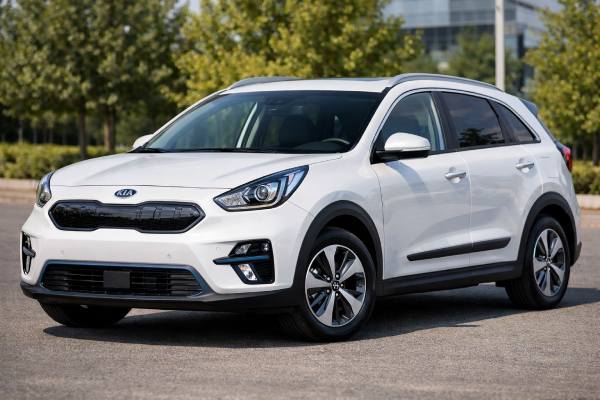
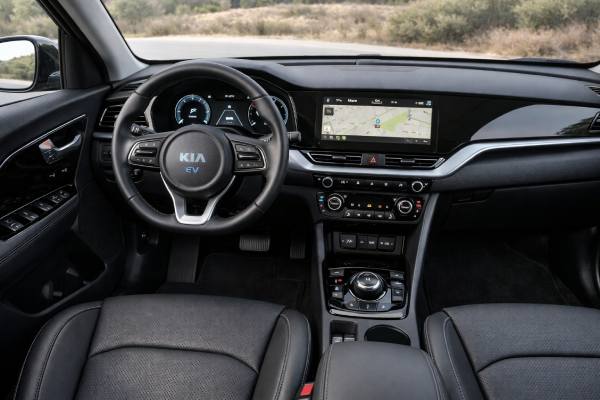
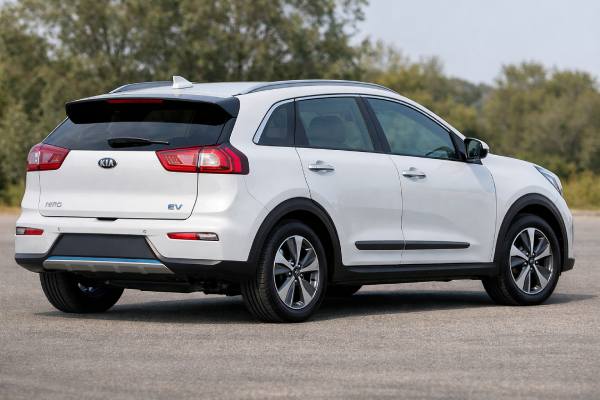
The facelifted Kia Niro EV (DE) with the 100 kW permanent-magnet motor is the “right-size” electric crossover for owners who want predictable daily range, straightforward charging, and familiar compact-SUV practicality. In this version, the focus is balance: smooth torque delivery up to motorway speeds, a usable real-world envelope for commuting and regional travel, and a drivetrain that is mechanically simple compared with hybrids. Where owners win is in low routine servicing, strong regenerative braking that reduces pad wear, and a comfortable, upright driving position that makes the car easy to live with. Where owners need to be more deliberate is battery temperature and charging habits: repeated high-power sessions and deep discharges are less forgiving on a smaller pack, especially in winter. Treated well, the Niro EV can be a durable long-term tool with fewer “surprise” mechanical jobs than an ICE equivalent.
What to Know
- Smooth, strong low-speed pull makes city driving easy and reduces fatigue in stop-start traffic.
- Practical cabin and cargo layout suits daily family use better than many “style-first” EVs.
- Predictable DC fast charging is fine for trips, but this 100 kW version is not built for repeated rapid charging every day.
- Watch 12 V battery health and charging-port hardware condition on used examples.
- Plan a baseline service check every 15,000 km or 12 months to keep inspections and software current.
Navigate this guide
- Kia Niro EV DE facelift in context
- Kia Niro EV DE specs that matter
- Kia Niro EV DE trims and safety tech
- Reliability patterns and known fixes
- Maintenance routine and used buying
- Driving feel, range, and charging reality
- Rivals and real-world positioning
Kia Niro EV DE facelift in context
Think of the facelifted Niro EV (DE) 100 kW as an EV that prioritizes “usable” over “flashy.” It sits in a sweet spot between smaller hatchbacks (which can feel cramped on longer drives) and larger, heavier electric SUVs (which can cost more to buy and to run on tyres and brakes). The upright seating and generous glass make it a calm everyday companion, and the drivetrain’s single-speed simplicity means there is no shift logic to mask or manage—just consistent torque.
From an engineering standpoint, the core story is the integration of three systems: the traction motor, the battery pack, and the thermal management that keeps them in their preferred temperature window. A permanent-magnet synchronous motor (PMSM) delivers immediate response and strong mid-range pull. That makes the car feel “lighter than it is” around town and reduces the need to plan overtakes as far ahead as you might in a small petrol crossover. The battery pack in this 100 kW variant is aimed at commuters and mixed regional use rather than high-speed, long-distance touring on back-to-back fast-charge stops.
The facelift period also matters for ownership details. Late-production updates tend to bring better infotainment stability, more refined driver-assistance tuning, and incremental changes in charging hardware and cabin equipment. That is good news for a used buyer—provided you verify that the car’s software is up to date and that any service campaigns were completed. On EVs, “software current” is not just a convenience feature; it can directly affect charging behavior, thermal control, warning thresholds, and how smoothly the car blends regeneration with friction brakes.
If your driving is mostly urban and suburban with occasional motorway travel, the 100 kW Niro EV is usually the more rational choice than chasing maximum output. If your routine includes frequent high-speed autobahn runs and repeated DC fast charging, you will want to pay extra attention to battery temperature, charging curves, and how much range you keep in reserve.
Kia Niro EV DE specs that matter
Powertrain, battery, and efficiency
| Spec | Value |
|---|---|
| Motor type | PMSM (permanent-magnet synchronous motor) |
| Motor count and axle | Single motor, front axle |
| Max power | 134 hp (100 kW) |
| Max torque | 395 Nm (291 lb-ft) |
| Traction battery nominal voltage | 327 V |
| Traction battery capacity | 39.2 kWh |
| Battery amp-hours | 120 Ah |
| Drive type | FWD |
Driveline and charging
| Spec | Value |
|---|---|
| Transmission / drive unit | Single-speed reduction gear |
| Final drive ratio | 7.981:1 |
| AC charging connector | Type 2 |
| DC charging connector | CCS |
| DC charge time (0–80%) | 54 min |
| AC charge time (0–100%) | 6 h 10 min |
| DC max charging power | 50 kW |
Performance and capability
| Spec | Value |
|---|---|
| 0–100 km/h (0–62 mph) | 9.8 s |
| Top speed | 155 km/h (96 mph) |
Chassis and dimensions
| Spec | Value |
|---|---|
| Body type | 5-door compact crossover |
| Suspension (front / rear) | MacPherson strut / multi-link |
| Brakes | Disc (front / rear) |
| Most common tyre size | 205/60 R16 or 215/55 R17 (market-dependent) |
| Wheelbase | 2700 mm (106.3 in) |
| Length | 4375 mm (172.2 in) |
| Width | 1805 mm (71.1 in) |
| Height | 1560 mm (61.4 in) |
| Cargo volume (seats up) | 451 L (15.9 ft³) |
Fluids and key service capacities
| Spec | Value |
|---|---|
| Brake fluid specification | DOT 4 |
| A/C refrigerant type | R-1234yf (most EU builds) |
| Washer fluid reservoir | Typically ~4–5 L (region equipment dependent) |
Safety and driver assistance
| Spec | Value |
|---|---|
| Crash ratings (Euro NCAP) | 4 stars (Niro family test): Adult 91%, Child 80%, Pedestrian 70%, Safety Assist 81% |
| Core stability systems | ABS, ESC, traction control, hill-start assist |
| Typical ADAS availability | AEB, lane keeping support, blind-spot monitoring, rear cross-traffic alert (by trim/pack) |
Kia Niro EV DE trims and safety tech
On the used market, Niro EV trim structure often varies by country, but the equipment logic is consistent: lower trims deliver the same drivetrain and day-to-day usability, while higher trims bundle comfort, tech, and driver assistance. For shoppers, the key is to identify what changes your ownership experience rather than chasing “top spec” on paper.
Trims and options that change daily life
Most versions share the same essential EV hardware: front-mounted motor, reduction gear, onboard charging, and the same fundamental battery system for this 100 kW configuration. The big differences tend to be:
- Cabin comfort and winter usability: heated seats and steering wheel, upgraded HVAC logic, and (where equipped) a heat pump can reduce winter range loss by making cabin heating more efficient. If you live in a cold region or do many short trips, this is one of the most meaningful options.
- Infotainment and connectivity: larger screens, navigation with better route planning, and higher-end audio are convenience upgrades—but also check responsiveness and firmware stability during a test drive.
- Wheel and tyre packages: larger wheels can sharpen turn-in but often increase road noise and energy consumption at motorway speeds. For this smaller-battery version, efficiency matters more.
- Parking and visibility aids: front sensors, reversing cameras, and automated parking support reduce low-speed stress and can be expensive to retrofit properly.
Quick identifiers help when listings are vague. Look for steering-wheel buttons for adaptive cruise and lane support, camera housings near the rear-view mirror for forward sensing, radar modules behind the front bumper, and the presence of heat-pump-related menus in the climate screens (where applicable).
Safety ratings and what they mean for an EV buyer
The Niro’s crash structure was evaluated under Euro NCAP protocols for the Niro family, and the key takeaway is that the platform is fundamentally competent in occupant protection when equipped appropriately. For an EV buyer, remember that crash performance is not just about airbags and crumple zones; it is also about high-voltage isolation and how safely the battery system disconnects in a severe impact.
ADAS and calibration implications
Driver assistance can be a genuine fatigue reducer on long trips, but it adds two ownership realities:
- Sensor condition matters. Bumper scuffs, windscreen replacements, or poor-quality body repairs can throw off radar and camera alignment.
- Calibration after repairs is not optional. If the windscreen is replaced or the front bumper is removed, the car may require camera/radar calibration to restore correct AEB and lane-support performance.
During a test drive, confirm that lane markings are detected cleanly on a normal road, that adaptive cruise maintains distance smoothly, and that warning messages are not “sticky” or intermittent. Intermittent alerts can point to low 12 V voltage, moisture intrusion at connectors, or a sensor that has been knocked out of alignment.
Reliability patterns and known fixes
The best way to think about Niro EV reliability is to separate high-voltage (HV) systems from 12 V and body electronics, because the most common ownership annoyances tend to come from the latter. The core drivetrain—motor plus reduction gear—is usually durable when fluid condition, mounts, and software are kept in good shape. The battery system is typically robust for normal commuting use, but EV ownership is less forgiving of repeated extremes (frequent deep discharges, constant high-speed running, or heavy reliance on DC fast charging).
Common (low to medium cost)
- 12 V battery weakness or drain
Symptoms: random warnings, infotainment resets, “ready” issues, or repeated low-voltage alerts after sitting.
Likely cause: aging 12 V battery, parasitic load patterns, or heavy accessory use without sufficient DC–DC charging time.
Remedy: load-test the 12 V battery, replace if marginal, and confirm charging voltage during “ready” mode. If issues persist, request a dealer scan for software updates and fault history. - Charge-port door and latch wear
Symptoms: port won’t open reliably, connector won’t latch, or charging stops unexpectedly.
Likely cause: mechanical wear, contamination, or a weak actuator.
Remedy: clean and inspect the port area, check sealing surfaces, and replace latch/actuator parts if the mechanism is inconsistent. - Brake noise and corrosion from heavy regeneration
Symptoms: scraping, groaning, or uneven brake feel after wet weather.
Likely cause: friction brakes used less frequently; surface rust builds up.
Remedy: perform periodic firm friction-brake stops (when safe), service slide pins, and ensure pads move freely. This is especially important in winter climates.
Occasional (medium to high cost)
- Onboard charger (OBC) or DC–DC converter faults
Symptoms: AC charging errors, slow charging, or repeated electrical warnings.
Likely cause: internal power electronics degradation, connector heat damage, or software control issues.
Remedy: diagnostic scan to pinpoint the affected module; repair often means module replacement plus software programming. - Reduction gear noise or seepage
Symptoms: whine that changes with speed, or oil traces around drive unit.
Likely cause: fluid condition, seal seepage, or bearing wear over time.
Remedy: inspect for leaks, confirm correct fluid type, and address early—ignoring a leak can turn a minor service into a major repair.
Software and campaigns
EVs live and die by correct calibration. Updates may improve charging stability, thermal management logic, warning thresholds, and drivability smoothness. When shopping used, ask for proof of dealer service history and confirm the car has no unresolved warnings. Also verify any recalls or field actions via an official VIN check and dealer records before purchase.
For pre-purchase diligence, prioritize:
- a printed service history showing regular inspections,
- evidence of stable charging behavior (AC and DC),
- and a battery health readout or capacity estimate from a proper diagnostic scan.
Maintenance routine and used buying
Maintenance on a Niro EV is less about frequent fluid changes and more about inspection discipline. You are protecting expensive systems (battery, power electronics, sensors) by catching small issues—seals, coolant condition, 12 V weakness—before they cascade into faults.
Practical maintenance schedule (typical)
Use this as a real-world baseline for planning; always align final intervals to the car’s official documentation and your operating conditions.
- Every 15,000 km or 12 months: general inspection, brakes and suspension check, tyre condition, software scan, and HVAC performance check. This cadence keeps small problems from lingering and ensures updates are applied regularly.
- Tyre rotation: every 10,000–15,000 km, especially if you do lots of city driving. EV torque can wear the front tyres quickly on FWD layouts.
- Cabin air filter: every 15,000–30,000 km (or annually in dusty/urban environments). A clogged filter makes the HVAC louder and less efficient.
- Brake fluid: typically every 24 months (DOT 4 is common). Moisture in brake fluid reduces boiling margin and can affect pedal feel.
- Coolant loops (battery and power electronics): inspect condition at services; replace at the official interval for your market. Correct coolant type matters because it ties directly into thermal control and corrosion protection.
- A/C service: ensure refrigerant charge is correct; in EVs the A/C system is part of comfort and, in some designs, thermal management strategy.
Key “EV ownership” checks
- 12 V battery test: do not accept “it starts fine” as proof. Load-test it. Many EV glitches trace back to weak 12 V voltage under load.
- Charge behavior: test AC charging and confirm it reaches expected power. If possible, observe a DC session to ensure it starts normally and doesn’t error out.
- Underbody and battery housing inspection: look for impact damage, missing covers, and corrosion on fasteners. A car with damaged undertrays may have been driven hard over kerbs or debris.
- Brake hardware condition: check for seized slide pins or uneven pad wear. Heavy regeneration can hide brake neglect until the first emergency stop.
Used-buyer strategy
The best-value trims are usually mid or upper-mid spec cars with the winter comfort pack (heated seats/steering wheel, and ideally a heat pump if offered), plus core ADAS. Avoid examples with vague charging complaints, unresolved warning lights, or “recently replaced” electrical modules without documentation—those can indicate repeated underlying faults.
Long-term durability outlook is generally positive if the car has been charged sensibly (regular AC charging, moderate state-of-charge habits) and serviced consistently. The biggest budget risks are power electronics modules, ADAS sensor repairs after minor bumps, and neglected brake or suspension wear that owners assume “EVs don’t need.”
Driving feel, range, and charging reality
In daily driving, the 100 kW Niro EV feels calm and mature. Steering is typically light at parking speeds and stable on the motorway, and the chassis tuning aims for comfort over sharp sportiness—appropriate for the car’s mission. The battery mounted low in the floor helps body control compared with similarly sized petrol crossovers, but you still feel the mass under heavy braking or quick direction changes. It is not a hot hatch; it is an easy-to-place family EV.
Powertrain character and one-pedal learning curve
The motor’s immediate response is the standout feature. Around town, you can “flow” with traffic using small throttle adjustments rather than waiting for revs or downshifts. Regenerative braking strength varies by mode and setting; many drivers end up using a semi-one-pedal style in urban traffic, then dial back regen on the motorway for smoother coasting. The transition between regeneration and friction braking should feel consistent—if it feels grabby or inconsistent, it can point to brake maintenance issues, tyre mismatch, or calibration needs after brake work.
Real range: how to set expectations
For this smaller-battery version, range is highly speed- and temperature-sensitive:
- City and suburban: typically the most favorable scenario, because regen recovers energy and speeds are lower.
- Motorway at 120–130 km/h: consumption rises quickly; range drops more than many first-time EV owners expect.
- Winter: cabin heating and cold battery chemistry reduce usable energy; short trips amplify losses because the car spends more time warming up than cruising.
A practical way to plan is to treat your displayed range as a planning tool, not a promise. If you routinely need most of the pack for daily driving, you will feel more stress and will likely DC fast-charge more often—both of which are harder on convenience and, over time, on the battery.
Charging performance in the real world
This version’s charging is best described as “competent, not fast.” AC charging is your friend: home or workplace charging reduces stress, keeps the battery in a moderate temperature window, and is usually cheaper. DC fast charging is perfectly usable for trips, but the peak power is modest, and charging slows as state of charge rises. For travel efficiency, the common EV rule applies: arrive low (but not empty), charge mainly in the faster lower-to-mid SOC band, then continue.
Also remember that charging is an ecosystem: cable condition, connector temperature, station quality, and battery temperature all influence results. If you see frequent session failures, do not assume “chargers are bad”—check the car’s charge port, connector latch behavior, and fault history.
Rivals and real-world positioning
The Niro EV’s closest real-world competitors are other compact, mainstream EVs that prioritize practicality over luxury. Your best choice depends less on headline horsepower and more on battery size options, charging speed, cabin efficiency, and how easy the car is to service locally.
Against Hyundai Kona Electric
The Kona Electric often feels more “compact and nimble,” while the Niro EV leans more spacious and family-friendly. If you value a roomier rear seat, a more open cabin feel, and a calmer ride, the Niro often wins. If you want a smaller footprint and a slightly more eager cornering attitude, Kona may suit better. Check wheel and tyre packages carefully on both; efficiency can swing noticeably based on rolling resistance and wheel size.
Against Nissan Leaf
The Leaf can be a strong value used, but charging standards and long-trip flexibility can differ by market and model year. The Niro EV’s crossover body style and cargo layout generally make it easier to live with for families, and its thermal management approach can be more confidence-inspiring for varied conditions. If your driving is mostly local and you charge at home, a Leaf can be a bargain; if you road-trip more often, the Niro’s charging ecosystem compatibility is often an advantage.
Against Volkswagen ID.3
An ID.3 (where available) brings a newer-platform feel: often more interior space relative to footprint and, in some versions, faster charging. The Niro EV counters with a crossover seating position, practical cargo access, and a reputation for straightforward day-to-day usability. If you want a hatchback that feels purpose-built as an EV, the ID.3 is appealing; if you want a familiar compact SUV posture with proven simplicity, the Niro remains compelling.
Ownership value summary
The facelifted Niro EV 100 kW is for drivers who want predictable, low-drama EV ownership: steady performance, practical packaging, and manageable servicing. It is less ideal for drivers who want repeated high-speed runs with minimal charging time, or who rely on public fast chargers as their primary fueling method. Buy the cleanest service history you can find, prioritize winter comfort equipment if your climate demands it, and treat charging hardware condition as seriously as you would a gearbox on a petrol car.
References
- 450235_Pricelist_e-Niro_M_DE.indd 2020 (Technical Data)
- 2020-05-Broschuere-Kia-Niro.pdf 2020 (Brochure)
- Official Kia Niro 2016 safety rating 2016 (Safety Rating)
- Kia Owner’s Manual 2022 (Owner’s Manual Portal)
Disclaimer
This article is for informational purposes only and is not a substitute for professional diagnosis, inspection, or repair. Specifications, torque values, service intervals, and procedures can vary by VIN, market, model year, and equipment; always verify details using official Kia service documentation for your exact vehicle.
If this guide helped, please consider sharing it on Facebook, X/Twitter, or your favorite forum to support our work.