
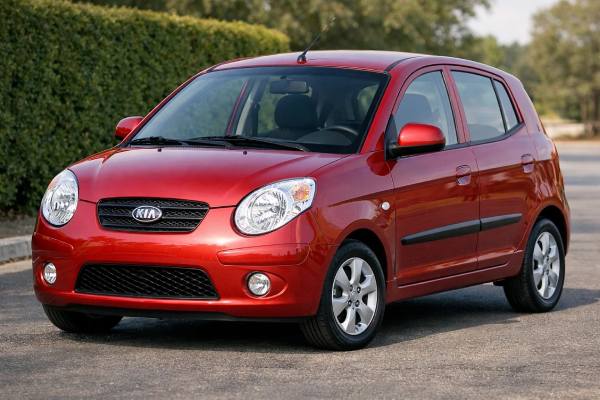
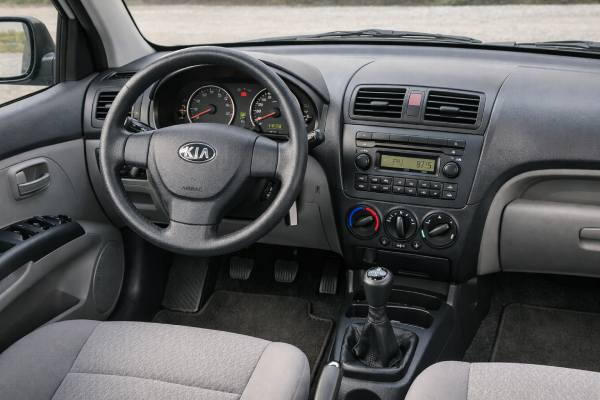
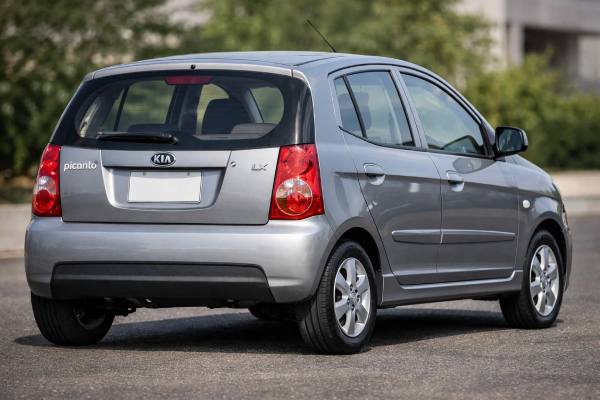
The 2006–2007 Kia Picanto (SA) 1.1 CRDi is the rare “grown-up” version of the first-generation Picanto: same compact footprint and simple hardware, but with a small turbo-diesel that changes how the car feels day to day. The D3FA 1.1-liter common-rail engine brings a strong low-rpm torque band, so it copes with hills and full loads better than the petrol models, especially in stop-start traffic. In return, ownership becomes more maintenance-sensitive: clean oil, good fuel filtration, and healthy glow plugs matter more, and short trips can be harder on the intake and turbo system. If you want a city hatch that sips fuel yet still feels willing at 50–90 km/h, this CRDi version can be a smart used buy—provided you inspect it like a diesel, not like a basic runabout.
What to Know
- Noticeably stronger pull from low rpm than the petrol Picanto, which makes city driving and hills easier.
- Excellent official economy for a 5-door hatch, with realistic highway use still often under 6.0 L/100 km.
- Simple chassis and light weight keep running costs reasonable if suspension and brakes are maintained.
- Ownership caveat: neglected oil changes and poor fuel quality can shorten turbo and injector life.
- Typical interval: engine oil and filter every 15,000 km or 12 months (whichever comes first), sooner in heavy city use.
Explore the sections
- Kia Picanto SA 1.1 CRDi in context
- Kia Picanto SA D3FA specs sheet
- Kia Picanto SA trims and safety kit
- Reliability risks and fixes
- Maintenance roadmap for owners
- Diesel driving feel and economy
- Rivals worth cross-shopping
Kia Picanto SA 1.1 CRDi in context
The diesel Picanto (SA) sits in a very specific niche: it’s a mini hatch engineered like an inexpensive city car, but powered like a small-distance commuter. In most markets, the 1.1 CRDi was sold in low volumes compared with the 1.0 and 1.1 petrol versions, which is why it can feel “unfamiliar” to second-hand buyers. That scarcity cuts both ways: you may find a well-kept example owned by someone who valued fuel economy, or you may find one that suffered years of short trips and delayed services.
Mechanically, the biggest difference is how the D3FA diesel delivers its performance. Instead of revving for speed, it leans on turbocharged torque. That makes it calmer in normal traffic: you shift earlier (or request less throttle), and the car still moves smartly. For a light hatchback, that low-end pull can also reduce clutch slip and downshifts on inclines—an advantage if you drive in hilly cities or carry passengers often.
Where the diesel asks more of you is routine discipline. Modern common-rail diesels depend on clean fuel and stable injection pressure. A tired battery, weak glow plugs, or air leaks in the fuel supply can turn “starts every time” into “starts when it feels like it.” Likewise, engines that rarely reach full operating temperature are more likely to build soot in the intake tract and EGR pathways, which can show up as hesitation, smoke, or uneven idle.
As a used purchase, the best diesel Picanto is one with boring paperwork: consistent oil changes, fuel-filter replacements, and evidence that the cooling system has been cared for. If you find that, the reward is a compact car that is easy to park, cheap to fuel, and surprisingly capable in the mid-range—without the higher complexity (and parts cost) you’d expect in larger diesel vehicles.
Kia Picanto SA D3FA specs sheet
Below is a focused technical snapshot for the 2006–2007 Kia Picanto (SA) 1.1 CRDi (D3FA). Figures can vary slightly by market, gearbox, and trim, so treat them as best-practice reference numbers and verify against VIN-specific documentation.
Powertrain and efficiency
| Item | Specification |
|---|---|
| Code | D3FA |
| Engine layout and cylinders | Front, transverse; I-3 (3 cylinders); DOHC; 4 valves/cyl |
| Bore × stroke | 75.0 × 84.5 mm (2.95 × 3.33 in) |
| Displacement | 1.1 L (1120 cc) |
| Induction | Turbocharger with intercooler |
| Fuel system | Common-rail diesel injection |
| Compression ratio | 17.8:1 |
| Max power | 75 hp (55 kW) @ 4000 rpm |
| Max torque | 153 Nm (113 lb-ft) @ 1900 rpm |
| Timing drive | Commonly chain-driven on this engine family; verify by engine build and service documentation |
| Rated efficiency (combined) | ~4.2 L/100 km (56 mpg US / 67.3 mpg UK) |
| Real-world highway @ 120 km/h (75 mph) | typically ~4.8–6.0 L/100 km depending on wind, tyres, and load |
Transmission and driveline
| Item | Specification |
|---|---|
| Transmission | Typically 5-speed manual (market dependent) |
| Drive type | FWD |
| Differential | Open |
Chassis and dimensions
| Item | Specification |
|---|---|
| Suspension (front/rear) | MacPherson strut / torsion beam |
| Steering | Electric or hydraulic assist by market; quick urban-friendly rack (ratio varies) |
| Brakes | Front disc / rear drum on many trims (sizes vary by market) |
| Wheels and tyres (common) | 155/70 R13 or 165/60 R14 (trim dependent) |
| Length / width | 3495 / 1595 mm (137.6 / 62.8 in) |
| Wheelbase | 2370 mm (93.3 in) |
| Turning circle | typically ~9.6–10.0 m (31.5–32.8 ft) |
| Kerb weight | often ~900–980 kg (1980–2160 lb), equipment dependent |
| Fuel tank | ~35 L (9.25 US gal / 7.7 UK gal) |
Performance and capability
| Item | Typical figure |
|---|---|
| 0–100 km/h (0–62 mph) | ~13.5–15.5 s (gearbox, tyres, and condition matter) |
| Top speed | ~162 km/h (101 mph) |
| Braking 100–0 km/h | commonly ~42–46 m with good tyres and brakes |
| Towing capacity | light-duty only where rated; often not emphasized for this class |
| Payload | varies widely; check door-jamb plate for GVWR |
Fluids and service capacities (high-level)
Because this model spans markets and service standards, use these as decision-making anchors and confirm the exact fluid and torque requirements by VIN.
| Item | Typical guidance |
|---|---|
| Engine oil | Quality diesel-rated oil meeting the specified ACEA/API level for the market; common viscosities include 5W-30 or 5W-40 (climate dependent) |
| Engine oil capacity | ~5.3 L (5.6 US qt) |
| Coolant | Ethylene glycol-based long-life coolant; typical 50/50 mix unless climate requires adjustment |
| Brake fluid | DOT 3/4 as specified |
| Key torque specs | Wheel nuts often ~90–110 Nm (66–81 lb-ft); confirm by wheel type and manual |
Kia Picanto SA trims and safety kit
Because the 1.1 CRDi Picanto was sold across multiple regions, trim names can differ even when the mechanical package is nearly identical. The practical approach is to identify equipment by what you can see and verify, not by the badge on the tailgate.
Trims and options: what usually changes
Most diesel Picantos share the same core drivetrain, but trims often change comfort and safety equipment:
- Air conditioning: manual A/C is common on mid trims; base cars may have heater-only ventilation.
- Power features: front electric windows and central locking were often trim-linked; rear electric windows are less common.
- Seats and interior: higher trims may add height-adjustable driver seat, better cloth, and split-fold rear bench.
- Wheels and tyres: steel 13-inch wheels are common; 14-inch packages can improve steering precision but may ride a bit firmer.
- Audio: basic radio/CD vs upgraded speakers; some markets offered steering-wheel audio controls.
Quick identifiers that help in the used market:
- Look for A/C button layout, window switch count, and whether the car has factory ISOFIX points visible at the rear seat bight.
- Check the instrument cluster: diesel variants often have glow-plug and diesel-specific warning lights, and some trims add a trip computer.
Safety ratings: what they mean for this generation
The first-generation Picanto earned a modest safety reputation by modern standards. Euro NCAP testing in the mid-2000s era reflects the technology of the time: limited structural optimization compared with later cars, fewer airbags as standard, and less sophisticated restraint tuning. Importantly, ratings may be tied to specific equipment (like side airbags) that were optional in some markets, so two cars that look identical can differ meaningfully in side-impact protection.
Safety systems and driver assistance (ADAS)
Don’t expect modern ADAS here. Instead, focus on fundamentals and whether the car has been maintained:
- Airbags: typically dual front airbags; side airbags may be optional or trim-limited.
- Child-seat provisions: ISOFIX is often present, but confirm it’s intact and not damaged by seat work.
- ABS and stability control: ABS is more common than stability control on early trims; some markets offered stability control later, but it’s not universal.
- Braking hardware: front discs/rear drums are normal for this class; what matters is condition—straight rotors, even pad wear, and no stuck calipers.
A practical safety tip for buyers: treat tyres and brakes as “active safety equipment.” A diesel Picanto with quality tyres and fresh brake fluid will often feel more secure in emergency stops than a higher-trim car running old, hardened tyres.
Reliability risks and fixes
The D3FA diesel Picanto can be durable, but it is less forgiving of neglect than the petrol models. Below are common patterns grouped by prevalence and cost tier, with symptoms and the most typical remedies.
Common and usually low-to-medium cost
- Battery and glow plug sensitivity (common, low/medium)
- Symptoms: slow crank, rough start, white smoke briefly, repeated start attempts in cold weather.
- Likely causes: weak battery, worn glow plugs, corroded grounds, or tired starter.
- Remedy: load-test the battery, clean grounds, verify glow plug circuit and replace plugs as a set if needed.
- Intake soot and EGR deposits (common on short-trip cars, medium)
- Symptoms: hesitation at low rpm, uneven idle, smoke under load, occasional limp mode.
- Likely causes: EGR valve sticking, intake tract buildup from soot and oil vapour.
- Remedy: diagnose with scan data (airflow and EGR command vs response), clean or replace EGR components as required, and fix boost leaks that worsen soot.
- Vacuum and boost leaks (common, low/medium)
- Symptoms: weak acceleration, whistle, overboost/underboost codes, oily residue on hoses.
- Likely causes: split boost hose, loose clamps, tired intercooler connections.
- Remedy: pressure-test intake system, replace hoses, check intercooler for damage.
Occasional, medium-to-high cost
- Injector and fuel-system wear (occasional, high)
- Symptoms: hard start when hot, misfire-like shake at idle, diesel knock, rising fuel consumption.
- Likely causes: injector leakage/imbalance, contaminated fuel, overdue fuel-filter service.
- Remedy: professional injector testing, replace sealing washers where applicable, strict filter intervals, and only quality fuel.
- Turbo wear or sticking vanes (occasional, high)
- Symptoms: smoke under load, oil use, inconsistent boost, loss of power.
- Likely causes: poor oil change history, heat soak shutdown habits, intake restriction.
- Remedy: verify oil supply/return health, check shaft play and boost control, rebuild/replace turbo as needed.
Rare but important
- Cooling system neglect (rare, high if ignored)
- Symptoms: overheating in traffic, coolant loss, heater performance changes.
- Likely causes: old coolant, radiator blockage, leaking hoses, failing thermostat.
- Remedy: pressure test, replace weak components, refresh coolant with correct spec.
Recalls, TSBs, and service actions
Rather than guessing which campaigns apply, the best practice is to run a VIN-based check and confirm completion in dealer history. For this generation, also request evidence of diesel-specific maintenance (fuel filter, correct oil, and cooling system service). If the seller cannot show it, budget to do it immediately after purchase—because catching up on diesel maintenance is almost always cheaper than repairing a neglected fuel or turbo system.
Maintenance roadmap for owners
A diesel Picanto rewards preventative care. Use the schedule below as a practical baseline for normal use, then shorten intervals for heavy city driving, frequent short trips, or very hot/cold climates.
Core schedule (distance or time, whichever comes first)
- Engine oil and filter: every 15,000 km or 12 months; consider 10,000 km if most trips are under 10 minutes.
- Air filter (engine): inspect every 15,000 km; replace every 30,000 km (sooner in dusty areas).
- Cabin filter: every 15,000–30,000 km, depending on air quality and A/C use.
- Fuel filter: replace every 30,000–45,000 km (or sooner if fuel quality is questionable). If equipped with a water drain, check/drain at service intervals.
- Coolant: typically every 4–5 years; confirm the coolant type and interval for your market.
- Brake fluid: every 2 years (moisture control matters more than mileage).
- Brake pads and drums/rotors: inspect every 15,000 km; rear drums can last a long time but seize if ignored.
- Gearbox oil (manual): inspect for leaks; replace around 90,000–120,000 km if shifting becomes notchy or history is unknown.
- Aux belt and hoses: inspect yearly; replace at signs of cracking, glazing, or coolant seepage.
- 12 V battery: test yearly after year 4; replacement window often 4–6 years depending on climate.
Diesel-specific habits that extend life
- Warm-up gently, then drive it: avoid full throttle until coolant is warm; once warm, occasional higher-load driving can reduce soot buildup.
- Avoid repeated short trips: if the car mostly does 2–3 km journeys, plan periodic longer drives to stabilize temperatures.
- Turbo cool-down: after sustained highway driving, let the engine idle briefly before shutting off (especially in hot weather).
- Use correct oil: diesels need the right detergent and soot-handling properties; don’t treat oil as a generic consumable.
Buyer’s guide checklist (fast but effective)
- Cold start test: should fire quickly without extended cranking or heavy smoke.
- Idle quality: steady, no rhythmic shake or hunting.
- Boost check: smooth pull from ~1800–2500 rpm; no sudden drop into limp mode.
- Cooling: stable temperature in traffic; no oily coolant or unexplained loss.
- Undercarriage: look for corrosion at suspension mounts and brake line routing points.
- Paperwork: oil change history matters more than “it runs fine.”
Long-term outlook: with regular oil and fuel filtration, the diesel Picanto can stay economical and dependable. Most expensive failures trace back to skipped services, poor fuel, or chronic short-trip use.
Diesel driving feel and economy
The 1.1 CRDi changes the Picanto’s personality. It’s still a small hatch with a short wheelbase, but the way it accelerates and cruises feels more relaxed than you might expect from a city car.
Ride, handling, and NVH
- Ride: the suspension is tuned for urban imperfections—firm enough to control body motion, but the short wheelbase means sharp bumps can still feel abrupt. Tyre sidewall height matters a lot; 13-inch tyres can ride more gently than lower-profile 14-inch packages.
- Handling: light on its feet, easy to place, and predictable. The rear torsion beam keeps things simple; lift-off oversteer is uncommon in normal driving, but abrupt inputs on poor tyres can make it feel nervous.
- NVH (noise, vibration, harshness): expect a more noticeable idle clatter than petrol models, plus a distinct “diesel thrum” under load. At steady cruise, road noise often dominates more than engine noise, especially on worn tyres.
Powertrain character
The key advantage is torque delivery. Peak torque arrives around the low-2000 rpm range, so you can short-shift and still keep pace. In city traffic, it’s easier to flow without revving. On the highway, the car is happiest at moderate speeds; at 120 km/h, it can maintain speed, but crosswinds and gradients will still demand downshifts because the car is light and geared for efficiency.
Real-world efficiency
Official combined figures around the low-4 L/100 km range are achievable in mixed driving if the car is healthy and tyres are properly inflated. In real ownership:
- City: often ~5.0–6.5 L/100 km depending on traffic density and warm-up time.
- Highway (100–120 km/h): often ~4.8–6.0 L/100 km, with wind and roof loads having a noticeable effect.
- Mixed commuting: many owners will see mid-4s to mid-5s if trips are long enough for full warm-up.
Cold weather has a bigger penalty than in petrol cars because warm-up takes longer and glow plugs add electrical load. If you mostly drive short distances in winter, don’t judge the engine solely by those numbers—look at longer-trip averages too.
Bottom line: the diesel Picanto is not a hot hatch, but it’s an efficient, torque-rich commuter that feels “bigger” than its size in everyday driving.
Rivals worth cross-shopping
If you’re shopping a 2006–2007 Picanto 1.1 CRDi, you’re usually deciding between three priorities: fuel cost, simplicity, and how “modern” the car feels for safety and refinement. Here’s how it tends to compare with typical alternatives from the same era.
If you want similar economy with a more polished feel
- Small diesel superminis from Europe (varies by market): often offer better high-speed stability and stronger cabin insulation, but parts costs and labour time can be higher. Many also carry more complex emissions hardware as the years progress, which can increase risk if maintenance was inconsistent.
If you want maximum simplicity and cheap repairs
- Petrol city cars (including petrol Picanto variants): usually cheaper to keep running if you do short trips and don’t drive long distances. They warm up faster, are less sensitive to fuel quality, and often cost less to diagnose. The trade-off is higher fuel use and weaker mid-range pull.
If you care most about safety and daily comfort
- Newer-generation small hatches (a few years newer): even a modest step up in model year can bring meaningful improvements in structure, airbags, and stability systems, plus quieter cabins. They may cost more upfront, but they can feel less “thin” on the highway.
Where the diesel Picanto wins
- Best use case: longer commutes, frequent hills, and drivers who value mid-range torque and fuel economy.
- Biggest advantage: low fuel consumption without needing a larger or heavier car.
- Key caution: don’t buy on price alone. A cheap diesel with unknown oil history can quickly erase any fuel savings.
A practical strategy is to compare total condition, not model names: if the Picanto diesel you’re looking at has excellent service history and starts cleanly from cold, it can be a better buy than a “nicer” rival with vague maintenance records. In this class, history and inspection results usually beat badge reputation.
References
- Kia Picanto instruktionsböcker | Kia Sweden 2026 (Owner’s Manual Portal)
- SA swd-0.qxd 2008 (Owner’s Manual)
- Kia Service Intervals 2023 (Service Schedule)
- Kia Recalls | Kia Europe 2026 (Recall Database)
- Adult occupant protection Child restraints Pedestrian … 2004 (Safety Rating)
Disclaimer
This article is for informational purposes only and is not a substitute for professional inspection, diagnosis, or repair. Specifications, torque values, fluid types, and service intervals can vary by VIN, market, model year, and fitted equipment, so always verify details using official owner’s literature and service documentation for your exact vehicle.
If this guide helped you, please consider sharing it on Facebook, X (Twitter), or your favourite forum to support our work.