
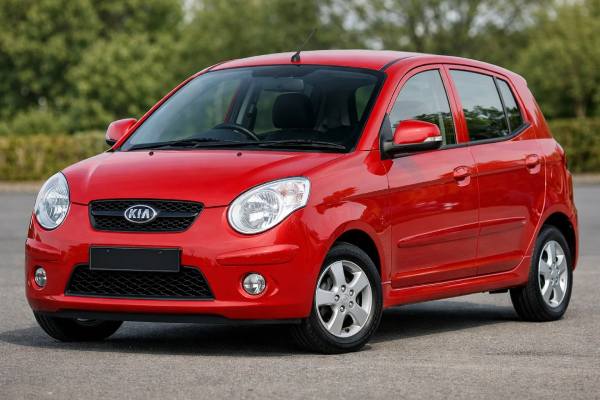
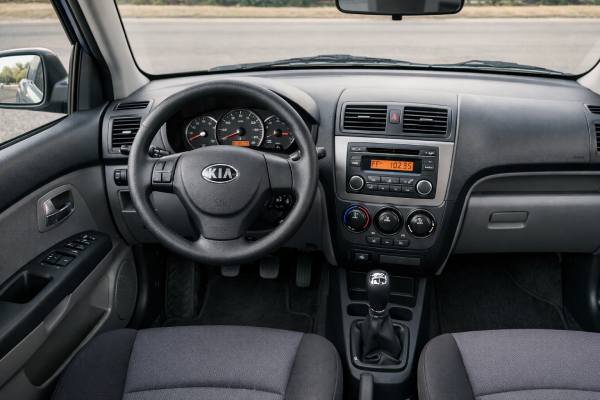
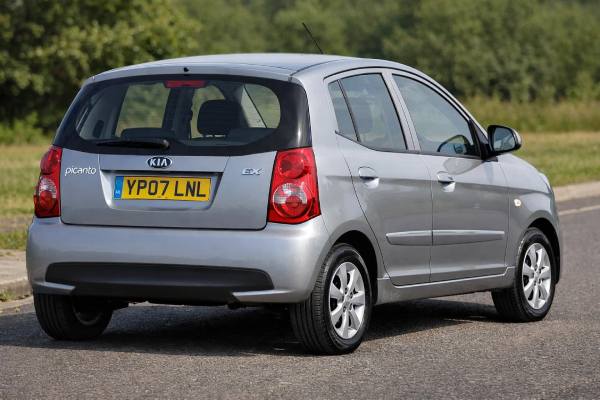
The facelift 2007–2011 Kia Picanto (SA) with the G4HG 1.1 petrol engine is the “sweet-spot” of the first-generation Picanto range for many owners. It keeps the car’s core strengths—compact size, simple mechanicals, and low day-to-day costs—while adding a little extra usable torque over the 1.0 without changing the maintenance mindset. In practical terms, the 1.1 feels less strained with passengers, on hills, and with air conditioning running, which matters more than the modest power bump suggests.
At this age, reliability depends less on the engine design and more on whether the car has been kept ahead of time-based wear: timing belt service, cooling system integrity, and rubber components (mounts, hoses, suspension bushes). Buy a well-maintained example, baseline its fluids and belt status, and the Picanto 1.1 can still be an honest, economical daily car—especially for city and suburban use.
At a Glance
- More flexible around town than the 1.0, with less frequent downshifting on hills and when loaded.
- Simple naturally aspirated petrol setup keeps diagnostics and repairs straightforward.
- Compact dimensions and common tyre sizes help keep routine costs low.
- Ownership caveat: unknown timing-belt history is a deal-breaker unless you budget to do it immediately.
- Typical interval: replace brake fluid every 2 years to protect ABS components and braking consistency.
Jump to sections
- Picanto SA facelift 1.1: what it’s like to own
- Picanto SA G4HG key specs and dimensions
- Picanto SA facelift trims, options, and safety
- Reliability patterns, common issues, and actions
- Maintenance plan and smart buyer’s guide
- Driving impressions and real fuel economy
- How the Picanto 1.1 stacks up to rivals
Picanto SA facelift 1.1: what it’s like to own
The facelift Picanto (SA) 1.1 is a small car that succeeds by being uncomplicated. The G4HG engine is naturally aspirated, uses mainstream service parts, and doesn’t depend on modern driver-assistance sensors or complex emissions hardware. That simplicity is the main advantage in 2026 ownership: fewer systems can fail, and most fixes are familiar to independent workshops.
What sets the 1.1 apart from the 1.0 is how it carries speed. The extra displacement doesn’t turn the Picanto into a fast car, but it does make it easier to keep pace in normal traffic without constant revving. With two adults and groceries (or a full back seat), the 1.1 feels calmer on inclines and merges. If you live in a hilly area or run the A/C often, that slightly stronger mid-range becomes a daily-quality upgrade.
The trade-off is not complexity—it’s expectations. The Picanto is light, narrow, and tuned for urban maneuverability. It will always feel busier at motorway speeds than a larger supermini. Wind sensitivity, road noise, and short-wheelbase ride are part of the package. If your week includes long high-speed commutes, you’ll value tyre quality, wheel alignment, and fresh suspension dampers more than any minor engine difference.
For used buyers, the most important reality is time. Rubber and cooling components age regardless of mileage. A 90,000 km car that sat and did short trips can be in worse shape than a 170,000 km car that lived on steady commutes and received consistent servicing. When owners say an old Picanto is “unreliable,” it’s often because several small age-related jobs arrived at once: battery, alternator belt, thermostat, and a tired suspension link. None are exotic, but they add up if you buy a car that hasn’t been maintained.
The ideal ownership approach is to baseline the car after purchase—fluids, filters, belt status, brakes, and tyres—then keep it on a simple schedule. When you do that, the facelift Picanto 1.1 tends to be predictable: it starts, it runs, it stops, and it costs little to keep moving.
Picanto SA G4HG key specs and dimensions
The tables below focus on the facelift 2007–2011 Picanto (SA) with the G4HG 1.1 petrol engine rated around 64 hp. Specs can vary by market, gearbox, and trim, so use them as a planning baseline and verify details by VIN and local documentation.
Powertrain and efficiency
| Item | Specification |
|---|---|
| Code | G4HG |
| Engine layout and cylinders | Inline-4, front-transverse; 4 cylinders |
| Valvetrain | SOHC; 4 valves total per cylinder group varies by version (commonly 12-valve overall) |
| Bore × stroke | ~67.0 × 77.0 mm (2.64 × 3.03 in) |
| Displacement | 1.1 L (≈1086 cc) |
| Induction | Naturally aspirated |
| Fuel system | MPI (multi-point injection) |
| Compression ratio (ICE) | ~9.5–10.1:1 (market dependent) |
| Max power | 64 hp (47 kW) @ ~5500 rpm |
| Max torque | ~97 Nm (72 lb-ft) @ ~2800 rpm |
| Timing drive | Belt |
| Rated efficiency (combined, typical) | ~5.0–5.5 L/100 km (43–47 mpg US / 51–56 mpg UK) |
| Real-world highway @ 120 km/h (75 mph) | ~6.0–6.8 L/100 km (35–39 mpg US / 41–47 mpg UK) |
Transmission and driveline
| Item | Specification |
|---|---|
| Transmission | 5-speed manual (common); 4-speed automatic (market dependent) |
| Drive type | FWD |
| Differential | Open |
Chassis and dimensions
| Item | Specification |
|---|---|
| Suspension (front/rear) | MacPherson strut / torsion beam |
| Steering | Electric or hydraulic assist (market dependent) |
| Brakes | Front discs / rear drums (typical); some trim differences possible |
| Wheels and tyres (popular) | 155/70 R13 (common); 165/60 R14 on some trims (rim in 13–14 in) |
| Ground clearance | ~150 mm (5.9 in), varies with tyre size |
| Length / width / height | ~3535 / 1595 / 1480 mm (139.2 / 62.8 / 58.3 in) |
| Wheelbase | ~2370 mm (93.3 in) |
| Turning circle (kerb-to-kerb) | ~9.4–9.8 m (30.8–32.2 ft) |
| Kerb (curb) weight | ~850–1000 kg (1874–2205 lb), equipment dependent |
| GVWR | market dependent; check door-jamb plate |
| Fuel tank | ~35 L (9.2 US gal / 7.7 UK gal) |
| Cargo volume | ~155–160 L (5.5–5.7 ft³) seats up; seats down varies by measurement method |
Performance and capability (typical, condition dependent)
| Item | Typical figure |
|---|---|
| Acceleration 0–100 km/h (0–62 mph) | ~15.0–16.0 s (manual often quicker than auto) |
| Top speed | ~153–158 km/h (95–98 mph) |
| Braking distance 100–0 km/h | ~41–45 m (tyres and brake condition dominate) |
| Towing capacity | often not emphasized; verify if rated in your market |
| Payload | typically ~350–450 kg (772–992 lb), equipment dependent |
Fluids and service capacities (verify by VIN and manual)
| Item | Typical guidance |
|---|---|
| Engine oil | Oil meeting the specified API/ACEA standard for your market; common viscosity 5W-30 (climate dependent) |
| Engine oil capacity | ~3.0–3.3 L (3.2–3.5 US qt) with filter |
| Coolant | Long-life ethylene glycol coolant; common 50/50 mix unless climate requires different |
| Transmission fluid (auto) | ATF to the specified standard; service practices vary by market |
| A/C refrigerant | Commonly R134a on this era; charge amount varies |
Picanto SA facelift trims, options, and safety
On the facelift Picanto, trim names can be misleading because different regions packaged equipment differently. For buyers, the useful approach is to identify what the car actually has—air conditioning type, braking system, airbags, and transmission—then confirm with the VIN plate and option codes where possible.
Trims and options: what changes the experience
Comfort and daily usability
- Air conditioning: Many cars have manual A/C; base trims may be heater-only. In hot climates, A/C condition matters because a weak system can make the car feel slow and uncomfortable at the same time.
- Electric windows and locks: Front electric windows are common on mid trims. Slow operation usually points to dry guides or weakening motors rather than a “major electrical problem.”
- Seating and practicality: Split-fold rear seats and a height-adjustable driver seat appear on better-equipped cars and improve usability more than cosmetic upgrades.
Mechanical or functional differences
- Manual vs automatic: The 4-speed automatic (where fitted) is simple but can feel sluggish with a small engine. A manual car often feels more responsive and may return better real-world economy if driven smoothly.
- Wheel and tyre packages: 13-inch wheels are usually the comfort and cost winner. 14-inch packages can sharpen steering but may transmit more impact harshness on rough roads.
- ABS availability: Some markets made ABS common; others didn’t. ABS is one of the most meaningful safety upgrades on this generation, so treat its presence and proper function as a buying priority.
Quick identifiers you can use during inspection:
- Look at the instrument cluster at key-on: ABS and airbag lamps should illuminate, then go out after start.
- Check the brake hardware visually: front discs are standard; rear drums are common. Confirm handbrake travel and balance.
Safety ratings: context matters
The Picanto’s crash reputation is tied to early-2000s design and test protocols. Even with the facelift, this is not a modern small car in structure or restraint tuning. That doesn’t mean it’s unsafe for everyday use, but it does mean you should avoid comparing its star ratings directly to later-generation superminis. Focus on what you can control today: tyres, brakes, seatbelts, and correct child-seat installation points.
Safety systems and driver assistance
Modern ADAS features—automatic emergency braking, lane keep assist, adaptive cruise—are not part of this era. Safety is mainly conventional:
- Airbags: Most cars have front airbags; side airbags may be optional or trim-dependent.
- Seatbelts: Ensure smooth retraction and no fraying; old belts can degrade and reduce real crash performance.
- ABS/EBD: If fitted, it should self-test properly and remain free of warning lights.
- Child-seat provisions: ISOFIX/LATCH may be present depending on market and year. Physically check the rear seat bight and tether points if required in your country.
One practical note: on older city cars, “safety feel” often comes from maintenance. Fresh tyres, good dampers, and clean brake fluid can make emergency maneuvers and stops far more controlled than any trim badge implies.
Reliability patterns, common issues, and actions
The facelift Picanto 1.1 is usually reliable in the sense that its major components are simple and well understood. Most “reliability problems” are age-and-use patterns rather than design flaws. Below are typical issues mapped by prevalence and severity, along with symptoms and sensible remedies.
Common issues (high prevalence, low-to-medium cost)
- Cooling system wear (common, medium if ignored)
Symptoms: Temperature creeping up in traffic, weak heater output, coolant smell, fan running excessively.
Likely causes: Aging thermostat, radiator cap weakness, tired fan motor/relay, brittle hoses, small leaks at clamps.
Remedy: Pressure test, replace thermostat/cap as needed, confirm fan operation, refresh coolant with the correct type. - Ignition wear and misfires (common, low/medium)
Symptoms: Rough idle, hesitation under load, higher fuel use, occasional check-engine lamp.
Likely causes: Old spark plugs, tired leads or coil pack (depending on version), intake air leaks.
Remedy: Replace plugs to spec, inspect coils/leads, smoke-test for intake leaks, clean throttle body if idle control is sticky. - Accessory belt noise and charging complaints (common, low/medium)
Symptoms: Squeal on start, dim lights, battery warning flickers, repeated dead battery with short trips.
Likely causes: Worn belt, weak tensioner, corroded grounds, old battery.
Remedy: Load-test battery, clean terminals and grounds, replace belt and inspect pulleys. - Front suspension knocks (common, low/medium)
Symptoms: Clunks over potholes, vague steering, uneven tyre wear.
Likely causes: Worn drop links, strut mounts, control arm bushes.
Remedy: Replace worn parts in pairs where appropriate, then align.
Occasional issues (moderate prevalence, medium-to-high cost)
- Automatic transmission neglect (occasional, medium/high)
Symptoms: Harsh shifts, delayed engagement, shudder when hot, fluid dark or burnt.
Likely causes: Old ATF, heat stress, worn solenoids.
Remedy: Verify fluid type and level, consider a careful drain-and-fill service (not a harsh flush on unknown history), diagnose shift quality with road testing. - Oil seepage (occasional, low unless ignored)
Symptoms: Oil film around valve cover, oil smell near exhaust side, small drips after parking.
Likely causes: Valve cover gasket aging, crank seal seepage.
Remedy: Replace gasket, keep oil level correct, clean and re-check to confirm source.
Rare but high consequence
- Timing belt overdue (rare as a “failure,” common as a “risk”)
Symptoms: Often none until it snaps; sometimes visible cracking or glazing if inspected.
Risk: Potential engine damage and roadside breakdown.
Remedy: If history is unclear, treat the belt as due and replace the belt kit (belt, tensioner, idlers). Many owners also replace the water pump during the same service for risk control.
Recalls, TSBs, and service actions
Recall applicability depends on country, import status, and VIN. The best practice is consistent:
- Run an official VIN recall check for your region.
- Ask for proof of completion (dealer invoice or printout).
- Cross-check the service book for key age-based jobs (timing belt, coolant, brake fluid).
For this platform, service discipline is the real “reliability feature.” A Picanto with documented belt service and a healthy cooling system is usually a safe bet. A cheap one with missing history often costs more over the first year than the purchase price suggests.
Maintenance plan and smart buyer’s guide
A strong maintenance plan for the Picanto 1.1 focuses on prevention. The car is mechanically forgiving, but small engines and small cooling systems have less margin for neglect. Use the schedule below as a practical baseline, then shorten intervals for harsh conditions (heavy city traffic, extreme heat/cold, or frequent short trips).
Practical service schedule (distance or time)
Every 10,000 miles (16,000 km) or 12 months
- Engine oil and filter
- Inspect coolant level and condition
- Inspect accessory/serpentine belt condition and tension
- Inspect brakes (front pads, rear drums, lines, leaks)
- Tyre pressure check and rotation if wear patterns allow
Every 20,000 miles (32,000 km) or 24 months
- Engine air filter replacement (sooner in dusty areas)
- Cabin filter replacement (if fitted)
- Brake fluid replacement (important for pedal feel and ABS component longevity)
- Inspect battery condition and charging output (especially after year 4)
Every 40,000–60,000 miles (64,000–96,000 km) or 4–6 years
- Spark plugs (interval depends on plug type; replace sooner if misfire or poor economy appears)
- Coolant replacement (and inspect thermostat, cap, hoses, radiator condition)
- Manual gearbox oil service if shifting feels notchy or history is unknown
Timing belt
- Replace at the manufacturer interval for your market. As a safe buyer’s rule on an older car: if you cannot prove the belt was done on time, plan to replace it immediately after purchase.
Fluids and decision-making notes
- Engine oil: Use the correct standard and viscosity for your climate. Short trips justify shorter intervals because moisture and fuel dilution build up faster.
- Coolant: Old coolant loses corrosion protection. A fresh coolant service often prevents heater-core and radiator issues that can turn into repeated small leaks.
- Automatic transmission fluid (if equipped): Gentle, correct-spec service can improve shift quality. Avoid aggressive “miracle fixes” when the history is unknown—diagnose first.
Essential torque values (planning only)
Exact torque values vary with hardware and market documentation, so treat these as categories you must verify in official service literature:
- Wheel nuts/bolts torque (prevents warped brake discs and loose wheels)
- Spark plug torque (prevents stripped threads and misfires)
- Oil drain plug torque (prevents leaks and sump damage)
Buyer’s guide: inspection checklist
Before starting the engine
- Look under the car for wet oil or coolant.
- Check radiator support and front panel alignment for crash repair signs.
- Inspect tyres for uneven wear (alignment and suspension hints).
Cold start
- Engine should start quickly and idle steadily.
- Listen for belt squeal and watch for warning lights that stay on.
Test drive
- Brakes should stop straight without pulsing or pulling.
- Over bumps, listen for clunks (drop links, mounts).
- Steering should return to center smoothly; wandering suggests alignment, tyre issues, or worn bushes.
- Temperature gauge should rise to normal and stay stable in traffic.
Paperwork
- Timing belt proof is worth money.
- Consistent oil changes matter more than a single “recent service.”
- If the car has A/C, check for evidence of proper servicing rather than repeated gas top-ups.
If you want the simplest ownership path, prioritize a manual gearbox, ABS-equipped car, and a body free from serious corrosion. Then baseline it: belt status, fluids, tyres, brakes. That approach keeps the Picanto’s strengths—low costs and simple upkeep—fully intact.
Driving impressions and real fuel economy
The Picanto 1.1 is not about speed; it’s about ease. The extra displacement over the 1.0 is most noticeable in everyday driving where you don’t want to rev hard to keep up with traffic.
Ride, handling, and NVH
Ride:
The suspension is tuned for urban use, with a firm-enough base to keep body movement controlled and a short wheelbase that can still “hop” over sharp potholes. Fresh dampers matter a lot on older examples. When dampers are tired, the car feels floaty at speed and harsh on impacts—two problems that disappear once the suspension is brought back to spec.
Handling:
Light weight and a predictable chassis make the Picanto easy to place. The rear torsion beam is simple and stable; grip levels depend heavily on tyre quality. Cheap tyres can make wet braking and cornering feel nervous, while good tyres make the car feel far more confident than its size suggests.
NVH:
Expect noticeable road noise and some engine sound under load. The facelift can feel slightly more refined than earlier years, but this remains an economy city car. If the cabin feels unusually loud, look for exhaust leaks, worn engine mounts, or cupped tyres.
Powertrain character
The G4HG 1.1 delivers usable torque earlier than the 1.0, so you shift less and carry speed more easily. With a manual, the car feels willing up to urban speeds, then gradually runs out of urgency above that. With an automatic (where fitted), it’s comfortable in traffic but slower to respond on hills and merges; clean throttle body behavior and correct ATF make a noticeable difference in smoothness.
Real-world efficiency
Official numbers look excellent because the car is light, but real-world economy depends strongly on trip length and speed:
- City (short trips): higher consumption because warm-up time is a big share of the journey. Battery and oil condition matter more here.
- Mixed commuting: often lands in a sensible middle range when trips allow full warm-up.
- Highway at 120 km/h: consumption rises notably because the engine must work harder and the car’s aerodynamics are basic.
A practical takeaway: if your driving is mostly short urban hops, you’ll spend more on time-based maintenance than fuel. If you do longer commutes, the 1.1 becomes a strong “value engine” because it stays economical while feeling less strained than the 1.0.
Metrics that change your verdict
- Passing performance: the 1.1 is still slow by modern standards, but it needs fewer downshifts than the 1.0 to maintain speed on grades.
- Braking feel: fresh brake fluid and good tyres matter more than brake size for emergency confidence.
- Turning circle and visibility: these are daily advantages that reduce stress in tight streets and parking—often more important than a 0–100 time.
In short, the Picanto 1.1 feels like the “complete” version of the early Picanto idea: still simple and cheap to run, but a bit more relaxed and usable when life adds hills, passengers, or summer A/C.
How the Picanto 1.1 stacks up to rivals
Shopping the facelift Picanto 1.1 usually means comparing older city cars where maintenance history decides value more than brand reputation. The best comparison is not “which badge is best,” but “which example has the healthiest fundamentals.”
Against the Picanto 1.0 facelift
- Picanto 1.1 advantage: feels less strained with load, hills, and A/C; easier to keep in a comfortable gear.
- Picanto 1.0 advantage: slightly cheaper running costs in some markets and can be marginally simpler for ultra-short-trip users.
- Best rule: choose the better-maintained car; the engine difference is smaller than the difference between a serviced and neglected example.
Against other small petrol city cars of the era
Common patterns you’ll see when cross-shopping:
- Some rivals feel more refined at speed: slightly longer wheelbases or better sound insulation can make motorway driving calmer.
- Parts pricing varies: “cheap to buy” doesn’t always mean “cheap to fix.” The Picanto often scores well here because service items are common and access is straightforward.
- Safety and stability tech can be a divider: some competitors introduced stability control earlier or made ABS more common, depending on market.
Where the Picanto 1.1 wins
- Simplicity: minimal complex systems means fewer expensive surprises.
- Urban usability: easy parking, light controls, and compact packaging.
- Cost predictability: tyres, brakes, and basic service tend to remain affordable.
Where it may lose
- High-speed comfort: it can do highway travel, but it won’t feel effortless or quiet.
- Modern safety expectations: even well-equipped examples won’t match newer generations in structure or driver assistance.
- Automatic performance: if you choose an automatic, accept slower responses and prioritize fluid condition and smooth shifts.
A buyer’s decision framework
If you want the most satisfaction per dollar, use this order of priorities:
- Rust and structural condition (walk away from serious corrosion).
- Timing belt history and cooling system health.
- Brakes, tyres, and suspension condition (the “safety feel” items).
- Electrical basics (charging output, clean grounds, no warning-light tricks).
- Comfort features (A/C performance, window regulators, interior condition).
The Picanto 1.1 doesn’t need to be perfect to be good. It needs to be honest, maintained, and free from hidden neglect. Find that, and it’s one of the more sensible ways to get reliable city transport without stepping into higher complexity.
References
- Kia Recalls | Kia Europe 2026 (Recall Database)
- Kia Car Owners Manual | Kia UK 2026 (Owner’s Manual Portal)
- Engine Oil Grades and Capacities 2023 (Service Maintenance)
- Adult occupant protection Child restraints Pedestrian … 2004 (Safety Rating)
Disclaimer
This article is for informational purposes only and is not a substitute for professional inspection, diagnosis, or repair. Specifications, torque values, service intervals, and procedures can vary by VIN, market, production date, and installed equipment, so always verify details using official owner and service documentation for your exact vehicle.
If you found this guide useful, please consider sharing it on Facebook, X (Twitter), or your preferred community to help others maintain their cars well.