
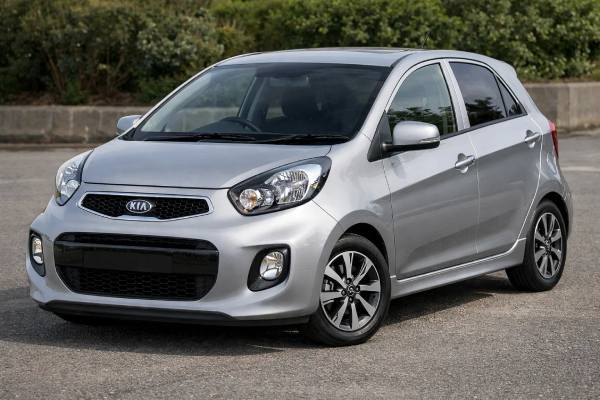
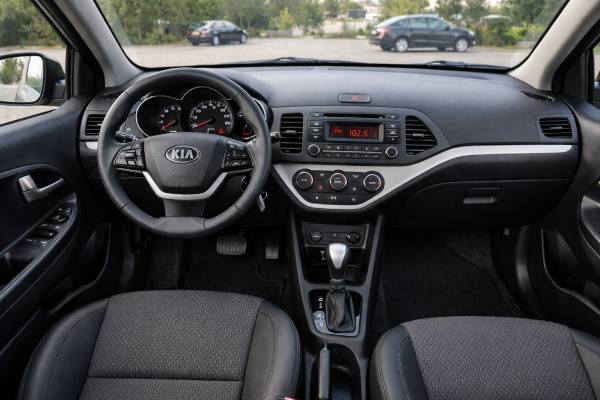
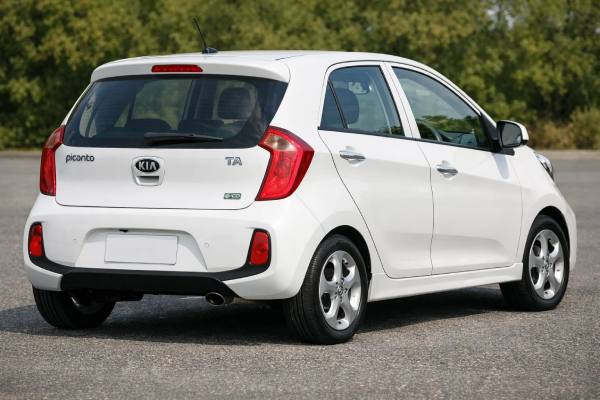
The facelifted 2015–2017 Kia Picanto (TA) with the 1.2-liter G4LA is a city car that leans on simple engineering: a naturally aspirated four-cylinder, a compact front-drive platform, and a parts ecosystem shared with other Hyundai–Kia small cars. In daily use, it feels more “grown up” than many A-segment rivals because the 1.2 has enough torque to keep up with traffic without being worked as hard as the smaller engines. That pays off in smoother highway manners, fewer downshifts, and often better real-world drivability with passengers.
For ownership, this version rewards consistent basics—oil quality, cooling health, and careful attention to small chassis wear items. Treated well, it can be a dependable, low-cost runabout that still feels modern enough for commuting and short trips.
Quick Specs and Notes
- The 1.2 G4LA is the sweet spot for mixed city and highway use, with less strain than the 1.0.
- Facelift cars usually feel tighter inside and can have improved infotainment and convenience options.
- Most issues are “small-car wear” (bushings, links, brakes), not catastrophic engine failures.
- Budget for suspension consumables and occasional sensor/coil replacement as the car ages.
- Plan engine oil and filter changes every 10,000–15,000 km or 12 months (whichever comes first), depending on driving conditions.
Contents and shortcuts
- Kia Picanto TA 1.2 facelift guide
- Kia Picanto TA 1.2 spec tables
- Kia Picanto TA equipment and driver aids
- Reliability trends and common fixes
- Maintenance schedule and buying checks
- Real driving and efficiency
- Rivals and value verdict
Kia Picanto TA 1.2 facelift guide
The 2015–2017 facelift of the second-generation Picanto (internal “TA” generation) is easy to understand: it’s still a light, front-wheel-drive A-segment hatch, but with tidier styling and, in many markets, a gradual move toward better infotainment and safety equipment. The 1.2-liter G4LA is the key piece for buyers who want the most relaxed version of this car without stepping up into a larger class.
What the 1.2 changes in real life
Compared with the smaller engines, the 1.2 typically brings:
- Less throttle needed for the same pace, especially with two adults and luggage.
- Better “merge and overtake” confidence at 80–120 km/h because you’re not living at the top of the rev range.
- Fewer situations where the gearbox hunts (automatic) or you constantly downshift (manual).
Where the facelift matters
On used cars, facelift details show up in day-to-day satisfaction:
- Cabin usability: small improvements in switchgear, trim quality, and (often) multimedia responsiveness.
- Noise and harshness: still an A-segment car, but facelift cars can feel slightly better damped, especially with good tyres.
- Equipment spread: this era often has wider trim variation, so the “same car” can feel very different depending on options.
Who it fits best
This Picanto works best for:
- Urban commuting with occasional highway runs at 110–130 km/h.
- Drivers who want low running costs, easy parking, and simple mechanicals.
- Owners comfortable with routine maintenance and occasional minor repairs rather than “set and forget” expectations.
Where it’s not the perfect answer
Be honest about its limits:
- High-speed touring is possible, but crosswinds, road noise, and short wheelbase stability are not “compact-car” level.
- Rear passenger and cargo space are modest. It’s fine for shopping and weekend bags, but not a family hauler.
- Safety equipment varies widely by trim and market—never assume two facelift Picantos are equally equipped.
If you buy the right example—clean history, no overheating past, no neglected fluids—the 1.2 G4LA facelift is one of the more balanced “small but capable” city cars of its period.
Kia Picanto TA 1.2 spec tables
Below are typical specifications for the 2015–2017 facelift Picanto (TA) with the 1.2 G4LA. Exact figures vary by market, trim, wheel/tyre package, and transmission. Use these numbers as a practical reference, then confirm against your VIN and local documentation.
Powertrain and efficiency (1.2 G4LA, typical EU-spec)
| Item | Specification |
|---|---|
| Code | G4LA |
| Engine layout and cylinders | Inline-4, DOHC, 4 cylinders, 4 valves/cyl |
| Displacement | 1.2 L (1248 cc) |
| Induction | Naturally aspirated |
| Fuel system | MPI (multi-point injection) |
| Compression ratio | ~10.5:1 (market dependent) |
| Bore × stroke | ~71.0 × 78.8 mm (2.80 × 3.10 in) |
| Max power | 85 hp (63 kW) @ ~6,000 rpm |
| Max torque | ~121 Nm (89 lb-ft) @ ~4,000 rpm |
| Timing drive | Chain |
| Rated efficiency (mixed) | ~4.9–5.6 L/100 km (48–42 mpg US / 58–50 mpg UK) |
| Real-world highway @ 120 km/h (75 mph) | ~6.0–6.7 L/100 km (39–35 mpg US / 47–42 mpg UK) |
Transmission and driveline
| Item | Specification |
|---|---|
| Transmission | 5-speed manual (common) or 4-speed automatic (market dependent) |
| Drive type | FWD |
| Differential | Open |
Chassis, brakes, and tyres (common setups)
| Item | Specification |
|---|---|
| Suspension (front/rear) | MacPherson strut / torsion beam |
| Steering | Electric power steering (EPS) |
| Brakes (front/rear) | Ventilated disc / drum (disc rear on some markets/trims) |
| Typical brake diameters | Front ~256 mm (10.1 in) / Rear drum ~203 mm (8.0 in) |
| Wheels and tyres (common) | 175/65 R14 or 185/55 R15 (most popular sizes) |
Dimensions and capacities (typical hatchback)
| Item | Specification |
|---|---|
| Ground clearance | ~140–150 mm (~5.5–5.9 in) |
| Length / width / height | ~3595 / 1595 / 1480 mm (141.5 / 62.8 / 58.3 in) |
| Wheelbase | ~2385 mm (93.9 in) |
| Turning circle (kerb-to-kerb) | ~9.6 m (~31.5 ft) |
| Kerb (curb) weight | ~980–1010 kg (~2161–2227 lb) |
| Fuel tank | ~35 L (9.25 US gal / 7.70 UK gal) |
| Cargo volume | ~200 L (7.1 ft³) seats up / ~870 L (30.7 ft³) seats down (method varies) |
Performance (typical; depends on gearbox and wheels)
| Item | Typical value |
|---|---|
| 0–100 km/h (0–62 mph) | ~11.5–13.5 s |
| Top speed | ~165–175 km/h (103–109 mph) |
| Braking 100–0 km/h | ~38–42 m (varies strongly by tyres) |
| Towing capacity | Often not rated or very limited in many markets; check local approval |
| Payload | ~350–450 kg (trim dependent) |
Fluids and service capacities (verify by VIN)
| Item | Typical guidance |
|---|---|
| Engine oil | API/ACEA spec per market; commonly 5W-30 or 5W-40; capacity ~3.5–3.6 L (3.70–3.80 US qt) with filter |
| Coolant | Long-life ethylene glycol; mix per spec; capacity ~4–5 L (market dependent) |
| Manual transmission oil | GL-4 type; capacity varies by gearbox |
| Automatic ATF | Model-specific ATF; capacity varies (service fill is less than total) |
| A/C refrigerant | R-134a (typical for this era); charge varies by system label |
| Key torque specs (typical) | Wheel nuts often ~88–108 Nm (65–80 lb-ft); oil drain plug commonly ~30–40 Nm (22–30 lb-ft) — confirm for your car |
Safety and driver assistance (market and trim dependent)
| Item | Notes |
|---|---|
| Crash ratings | Ratings depend on test year/protocol and equipment; check the exact tested variant |
| Stability and braking systems | ABS and ESC common; hill-start assist and tyre-pressure monitoring vary |
| ADAS | Generally limited in this era; some markets offered AEB as part of a safety pack near the end of the model run |
These figures are enough to compare cars and plan maintenance, but always confirm the exact service fluids and capacities from your official documentation or under-hood labels.
Kia Picanto TA equipment and driver aids
The facelift Picanto TA can look “simple,” but trim and option differences are real—especially for safety equipment. When shopping, it helps to separate cosmetic trims from functional trims (wheels, brakes, stability systems, and safety packs).
Trims and options that matter most
Wheels and tyres
Base cars often run 14-inch tyres (comfort and cost friendly). Higher trims commonly move to 15-inch packages that can sharpen steering response but also increase tyre replacement cost. If you do mostly city driving on rough roads, smaller wheels can actually be the better ownership choice.
Infotainment and convenience
Depending on market, the facelift years may offer:
- Bluetooth and USB as standard on many trims
- Touchscreen head unit on higher grades
- Steering-wheel controls and better audio trims
These features don’t change reliability much, but they change daily satisfaction. Check for screen delamination, button wear, and intermittent USB connections.
Climate equipment
Manual A/C is common; automatic climate control is less so. On older small cars, A/C performance is a practical test: weak cooling can indicate a slow leak (condenser or O-rings) rather than a “needs gas” situation.
Safety ratings and what they really mean
Safety ratings are only comparable when the test protocol and equipment are comparable. A small car tested in one year may score differently in a newer protocol, even if the structure is similar. For the Picanto TA, this matters because:
- “Standard equipment” vs “optional safety pack” can change scores significantly.
- Some late-run cars gained AEB in certain regions; many did not.
When you see a star rating mentioned, verify:
- The test year and protocol.
- Whether the tested model had a safety pack (AEB, lane support, speed assist).
- Whether your used car has the same equipment.
Safety systems and ADAS reality check
Typical safety hardware on many facelift Picanto TA models includes:
- Front airbags and side airbags (count and placement vary)
- ISOFIX/LATCH child seat anchors (usually present)
- ABS and ESC (very common in many markets by this period)
- Tyre pressure monitoring (often indirect; market dependent)
ADAS (advanced driver assistance systems) is limited compared with newer cars. If your car has AEB, treat it like a system that needs correct sensors and correct calibration:
- Windscreen replacement may require correct brackets and sensor alignment.
- A damaged front bumper or grille area can affect radar/camera mounts (depending on system type).
Quick identifiers when viewing a used car
- Look for AEB/driver-assist buttons near the steering wheel or in menus.
- Check for ESC button presence and function.
- Verify airbag labels on seats and pillars.
- Decode the VIN/build plate and compare to trim lists in your market.
This model rewards careful shopping: the “right” Picanto TA can feel surprisingly complete, while a base car can be noticeably more basic.
Reliability trends and common fixes
The facelift Picanto TA with the 1.2 G4LA is generally reliable, but it’s old enough now that age-related issues matter as much as mileage. The key is to separate common, low-cost wear from the fewer items that can become expensive if ignored.
Common issues (high prevalence, low to medium cost)
- Front suspension noises (clunks over bumps) → worn drop links or bushings → replace links/bushings; alignment afterward is smart.
- Brake vibration or uneven braking → corroded discs, seized sliders, cheap pads → service calipers, replace discs/pads with quality parts, flush fluid if neglected.
- Battery and charging complaints (slow crank, random warning lights) → weak 12 V battery or poor grounds → load test battery, clean grounds, check alternator output.
- Misfire under load → coil pack aging or spark plugs overdue → replace plugs on schedule and swap coils if the fault follows a coil.
- Rattles and trim buzz → clips and fasteners loosening → simple fixes, but worth addressing to prevent “death by a thousand noises.”
Occasional issues (medium prevalence, medium cost)
- Oil seepage at valve cover or small seals → gasket hardening with age → reseal before it contaminates coils or causes smells.
- Cooling system weakness (slow coolant loss) → radiator end tanks, hose joints, or thermostat housing seep → pressure test; fix early to avoid overheating.
- A/C underperformance → condenser damage (stone hits) or slow leaks → leak test and correct repair instead of repeated top-ups.
- Engine mounts (vibration at idle, thump on take-up) → mount wear → replace the worst mount first; retest.
Rare but important (lower prevalence, higher risk)
- Overheating history → warped head gasket risk, long-term reliability decline → avoid cars with repeated coolant loss, mixed coolant, or signs of stop-leak.
- Timing chain noise (cold rattle that persists) → tensioner wear or neglected oil quality → diagnose carefully; chain jobs aren’t common, but they’re not “cheap small-car work” either.
- Automatic transmission shift quality (harsh shifts, flare, delayed engagement) → fluid degradation, solenoid wear, adaptation issues → service fluid correctly and evaluate; avoid cars with consistent slip.
Software and calibrations
Most Picanto TA cars don’t live or die by software updates, but updates can still help with:
- Idle stability or throttle response (ECU updates)
- Infotainment bugs or Bluetooth issues
- Fault-code logic that triggers unnecessary warnings
If a seller claims “it just needs an update,” treat it as a red flag unless a dealer printout confirms the remedy.
Recalls and service actions
Recalls vary by country. Your practical approach:
- Run a VIN recall check on an official portal.
- Ask the seller for dealer history showing recall completion.
- Inspect for evidence of work (labels, invoices, or dealer stamps).
Overall, this model’s reliability story is favorable: most fixes are straightforward, and the 1.2 engine is typically long-lived when oil and cooling care are consistent.
Maintenance schedule and buying checks
A good maintenance plan for the 1.2 G4LA Picanto TA is simple: keep fluids fresh, prevent overheating, and treat braking and suspension as consumables. Below is a practical schedule that suits most owners, with “short-trip city use” noted where it changes priorities.
Practical maintenance schedule (distance/time)
- Engine oil and filter: every 10,000–15,000 km or 12 months.
- Use the viscosity and specification recommended for your climate; short trips benefit from the shorter interval.
- Air filter (engine): inspect every 15,000 km, replace by 30,000 km (sooner in dusty areas).
- Cabin filter: every 15,000–20,000 km or yearly if you use A/C often.
- Spark plugs: typically 60,000–90,000 km depending on plug type; replace sooner if misfires appear.
- Coolant: typically 5 years / 100,000–120,000 km (check your manual); pressure test if you see any loss.
- Brake fluid: every 2 years regardless of mileage.
- Brake pads/rotors: inspect every 15,000 km; clean and lubricate slider pins at least yearly in wet/salty climates.
- Manual gearbox oil: often “long life,” but changing around 100,000–120,000 km can improve shift feel and longevity.
- Automatic ATF (if fitted): consider service around 60,000–90,000 km depending on usage; use the correct fluid spec.
- Tyre rotation and alignment: rotate every 8,000–10,000 km; align after suspension work or uneven wear.
- 12 V battery: test yearly after year 4; many last 4–6 years depending on climate and trip length.
Fluids and decision-making essentials
For most owners, the most important “don’t guess” items are:
- Oil specification and viscosity for your market
- Correct coolant type (mixing coolants can cause sludge)
- Correct ATF for the 4-speed automatic (generic ATF is a common mistake)
Buyer’s guide: inspection checklist
Engine and cooling
- Cold start: listen for persistent chain rattle, rough idle, or tapping.
- Check coolant level, coolant color, and any crusty residue around hoses and radiator.
- Look for oil leaks around the valve cover and timing cover area.
Transmission
- Manual: clutch bite point, slip test in higher gear, smooth engagement.
- Automatic: check for harsh engagement, delayed drive/reverse, flare on upshifts, and burnt smell (where dipstick access exists).
Chassis and brakes
- Drive over small bumps: listen for clunks (links/bushings).
- Brake test: straight stop, no vibration, firm pedal.
- Tyre wear: inner shoulder wear suggests alignment or worn components.
Electrical and cabin
- Test every window, lock, and mirror; small motors can fail with age.
- Verify A/C performance and listen for blower noise.
Best picks and what to avoid
Seek: well-documented service history, recent brake service, fresh tyres, and proof of recall checks.
Be cautious: cars with repeated coolant top-ups, overheating stories, or “intermittent” warning lights the seller can’t explain.
Long term, this Picanto is durable when maintained, but it punishes neglect: small issues (coolant seep, old brake fluid, worn links) can stack up into a car that feels tired.
Real driving and efficiency
The 1.2-liter G4LA is not a performance engine, but in a lightweight city car it feels appropriately lively. The key advantage is elasticity—it delivers usable response without constant high-rpm operation, which makes the car calmer in daily traffic.
Ride, handling, and NVH
Ride quality:
With 14-inch tyres and decent sidewall, the Picanto can ride surprisingly well for its size. On 15-inch wheels with lower-profile tyres, impacts are sharper and road noise rises. If your roads are rough, smaller wheels often make the car feel more expensive than it is.
Handling balance:
The chassis is predictable: mild understeer at the limit, quick steering response in town, and a stable feel on dry roads. The short wheelbase means it reacts quickly to mid-corner bumps and crosswinds, so it rewards smooth inputs more than aggressive driving.
Noise and refinement:
At city speeds it’s quiet enough, but at 110–130 km/h you will hear tyre roar and some wind noise. Good tyres and correct tyre pressures make a bigger difference than many owners expect.
Powertrain character
Throttle response:
The 1.2 responds cleanly at low to mid rpm, especially once warmed up. It’s happiest when you keep it in the midrange rather than lugging it in too high a gear.
Manual gearbox:
The 5-speed manual typically feels light and easy. If it feels notchy or reluctant when cold, fresh gear oil and good clutch hydraulics (where applicable) can help.
4-speed automatic (if equipped):
It’s a traditional torque-converter unit. It prioritizes smoothness over speed and can feel busy on hills because it has fewer ratios. In return, it’s usually easy to live with if serviced correctly and not overheated.
Real-world economy
Official numbers can look excellent, but your results depend on speed and trip length:
- City (mixed traffic): ~5.8–7.0 L/100 km (41–34 mpg US / 49–40 mpg UK), heavier use in short trips and winter.
- Highway 100–110 km/h: ~5.2–6.0 L/100 km (45–39 mpg US / 54–47 mpg UK).
- Highway 120–130 km/h: ~6.0–6.7 L/100 km (39–35 mpg US / 47–42 mpg UK).
Cold weather usually adds a noticeable penalty because the engine runs richer while warming up and you use more electrical load and HVAC.
Performance metrics that matter
What you feel on the road aligns with typical testing:
- 0–100 km/h: roughly 11.5–13.5 seconds depending on gearbox and conditions
- Passing 80–120 km/h: adequate, especially with a downshift; the 1.2 is meaningfully easier than smaller engines here
- Braking consistency: more tyre-dependent than power-dependent—good tyres and healthy calipers matter most
In short: the 1.2 facelift Picanto is a “small car that doesn’t feel constantly stressed,” and that’s the trait that tends to keep owners happy.
Rivals and value verdict
In the A-segment, value is rarely about a single spec. It’s about how the car holds up in daily use, what breaks, and how annoying it feels at highway speed. The 2015–2017 facelift Picanto TA 1.2 sits in a strong position because it’s simple, common enough for parts support, and generally well-sorted.
How it compares to typical A-segment rivals
Against “ultra-basic” city cars
Some rivals win on purchase price but feel noisier, less stable at speed, or more fragile in trim and suspension. The Picanto’s advantage is maturity: it usually feels tighter and more predictable, which matters when you drive it every day.
Against efficiency-first small engines
A 1.0-liter rival can look better on paper in tax bands or official economy. In practice, the 1.2 Picanto often matches or beats them for driver stress because it needs less throttle and fewer wide-open moments. If you carry passengers or drive faster roads, that matters more than a small official consumption gap.
Against newer platforms with more ADAS
Newer city cars can offer better driver assistance and sometimes better crash performance under newer protocols. If modern ADAS is a must-have, the Picanto TA may not satisfy you unless you find a rare safety-pack example in your market.
Ownership cost reality
This Picanto tends to be economical when:
- You keep service intervals consistent (especially oil and brake fluid).
- You address small issues early (coolant seep, worn links, sticking calipers).
- You buy a car with decent tyres and brakes already fitted.
It becomes expensive for its class when:
- A neglected car needs brakes, tyres, suspension, battery, and A/C work all at once.
- The automatic transmission shows poor shift quality and you don’t know its service history.
The verdict
Choose the facelift Picanto TA 1.2 if you want:
- A city car that can also handle regular highway use without feeling overwhelmed
- Straightforward maintenance and generally durable mechanicals
- Low running costs with predictable repairs
Skip it if you need:
- The latest driver assistance technology as standard
- Larger rear space and long-distance refinement
If you shop carefully, the 1.2 G4LA facelift is one of the more balanced “small car, big usability” options from its era.
References
- New Hyundai Elantra awarded 5 stars for safety along with Kia Picanto 2016 (Safety Rating)
- Recalls 2026 (Recall Information)
- Check if a vehicle, part or accessory has been recalled 2026 (Recall Database)
- Kia Picanto awarded 4-star Euro NCAP safety rating 2011 (Safety Rating)
Disclaimer
This article is for informational purposes only and is not a substitute for professional inspection, diagnosis, or repair. Specifications, torque values, service intervals, and procedures can vary by VIN, market, model year, and equipment level, so always verify details using your official Kia service information and your vehicle’s labels.
If this guide helped you, please consider sharing it on Facebook, X (Twitter), or your favorite forum to support our work.