
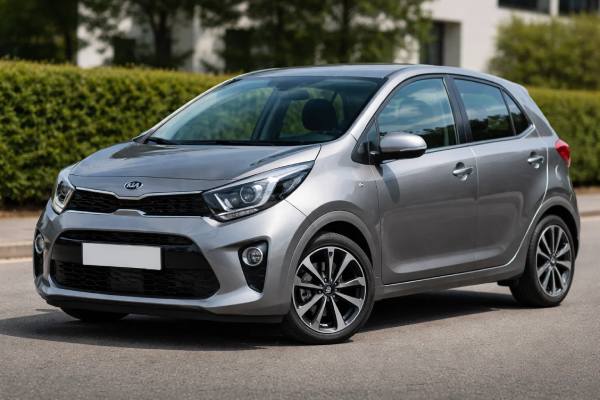
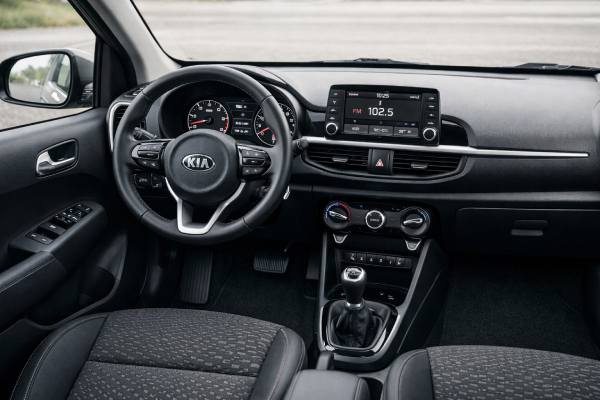
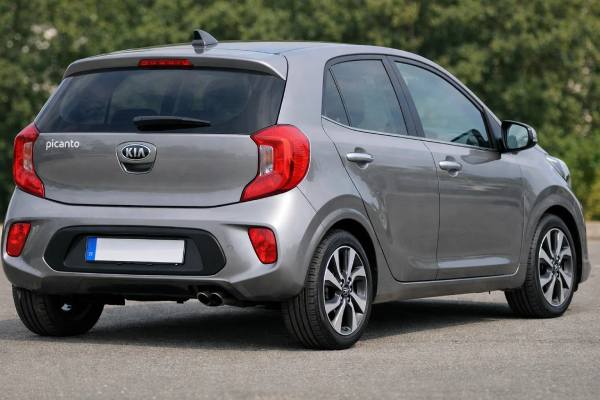
The Kia Picanto (JA) with the G3LC 1.0 T-GDi is the “hotter” take on a sensible city car: same compact footprint, but with a turbocharged torque curve that makes everyday driving feel less strained. In 2017–2020 form, it targets buyers who want easy parking and low running costs without the flat mid-range typical of small non-turbo engines. The key engineering story is how the drivetrain’s low-rpm pull changes the way you use the gearbox, while the chassis stays tuned for urban comfort rather than hard-edged sport. Ownership-wise, the difference is maintenance discipline: turbo engines reward clean oil, correct spark plugs, and proper warm-up and cool-down habits. Get those basics right and the Picanto turbo can be a durable, practical daily driver with genuinely quick in-gear response for its class.
Owner Snapshot
- Strong low-rpm torque for city gaps and short highway merges, even with passengers
- Compact body and tight turning circle make parking and narrow streets easy
- GT-Line trims often add useful comfort and tech without adding much weight
- Turbo and direct injection mean you should be strict about oil quality and change intervals
- Plan engine oil and filter service every 12 months or 10,000 miles (16,000 km), sooner for short-trip use
Quick navigation
- Picanto JA turbo overview
- Picanto JA G3LC specs and dimensions
- Picanto JA GT-Line trims and safety
- Reliability issues and service actions
- Maintenance plan and buying advice
- Real-world driving and efficiency
- How it stacks up to rivals
Picanto JA turbo overview
This 2017–2020 Picanto (JA) variant pairs a light A-segment hatchback body with the G3LC 1.0 T-GDi turbo petrol engine, typically marketed around 100 hp (often shown as 99 bhp or 100 PS depending on market). The important part is not peak power; it is the torque plateau. With roughly 170 Nm available from low rpm, the car needs fewer downshifts in normal traffic than the 1.0 and 1.2 non-turbo versions, and it feels more relaxed on short motorway stints.
On the road, the turbo Picanto is best understood as a “bigger engine feeling” rather than a true warm hatch. The suspension and wheelbase are still optimized for potholes, speed humps, and poor city surfaces. You can enjoy brisk acceleration, but grip and brake hardware remain sized for everyday use. That balance is a feature: it keeps tyres, brakes, and fuel costs reasonable, and it helps the car stay compliant over rough urban pavement.
Engineering highlights that matter to owners:
- Turbo and intercooling add heat and plumbing. Hoses, clamps, and boost control components become part of routine inspection.
- Direct injection (common on T-GDi setups) improves response and efficiency but can be less forgiving of poor fuel quality and skipped oil services.
- Small-displacement turbo load means the engine can work hard at low revs. It is smart to avoid wide-open throttle below about 1,500 rpm in a high gear, especially when climbing.
Practical usability stays very “Picanto”: easy visibility, short overhangs, and a cabin that is simple to live with. GT-Line oriented trims usually bring sportier bumpers and interior accents, but the real value is often in convenience equipment (camera, sensors, better infotainment) rather than performance parts.
Who is this version for? Drivers who spend most time in town, but want extra confidence for ring roads, hills, and occasional motorway use. If you want maximum simplicity and minimum under-bonnet complexity, the non-turbo engines still win. If you want the same small footprint with noticeably stronger mid-range, the 1.0 T-GDi is the pick—provided you maintain it like a turbo car, not like an appliance.
Picanto JA G3LC specs and dimensions
Specs vary slightly by market and test cycle. The tables below focus on the common 2017–2020 1.0 T-GDi (G3LC) layout used in GT-Line style trims.
Powertrain and efficiency
| Item | Typical spec (2017–2020) |
|---|---|
| Engine code | G3LC |
| Layout | Inline-3, transverse, turbocharged |
| Valvetrain | DOHC, 4 valves/cyl (12 total) |
| Bore × stroke | 71.0 × 84.0 mm (2.80 × 3.31 in) |
| Displacement | 1.0 L (998 cc) |
| Fuel system | Direct injection (T-GDi) |
| Compression ratio | ~10.0:1 (market dependent) |
| Max power | ~100 hp (≈74 kW) @ ~4,500 rpm |
| Max torque | ~171–172 Nm (126–127 lb-ft) @ ~1,500–4,000 rpm |
| Induction | Single turbocharger with intercooler |
| Timing drive | Chain (typical for this family; verify by VIN) |
| Rated economy | Varies by cycle; expect low-to-mid 5 L/100 km combined in many markets |
| Real-world highway @ 120 km/h | Often ~6.0–6.8 L/100 km (39–32 mpg US) depending on tyres and wind |
Transmission and driveline
| Item | Typical spec |
|---|---|
| Drive type | FWD |
| Gearboxes | 5-speed manual common; some markets offer an automatic (verify) |
| Differential | Open |
Chassis, dimensions, and capacities
| Item | Typical spec |
|---|---|
| Front suspension | MacPherson strut |
| Rear suspension | Torsion beam / trailing arm style layout |
| Steering | Electric power steering |
| Brakes | Front discs, rear drums (diameters vary by market/trim) |
| Popular tyre sizes | 175/65 R14 or 195/45 R16 (GT-Line style wheels often 16 in) |
| Length | ~3,595 mm (141.5 in) |
| Width | ~1,595 mm (62.8 in) |
| Height | ~1,485 mm (58.5 in) |
| Wheelbase | ~2,400 mm (94.5 in) |
| Turning circle | ~9.4 m (30.8 ft) |
| Kerb weight | ~980–1,070 kg (2,160–2,360 lb) |
| Fuel tank | ~35 L (9.2 US gal / 7.7 UK gal) |
| Cargo volume | Market dependent; typically ~250 L seats up (VDA), expanding with rear seats folded |
Performance (typical)
| Metric | Typical value |
|---|---|
| 0–100 km/h (0–62 mph) | ~9.5–10.5 s (gearbox and market dependent) |
| Top speed | ~175–180 km/h (109–112 mph) |
Safety and driver assistance (headline)
| Item | Typical note |
|---|---|
| Euro NCAP | 2017-era testing: 3 stars standard equipment; up to 4 stars with “Safety Pack” / ADAS pack |
| ADAS availability | AEB and related features often optional or trim-dependent in this period |
If you want “one number” to sanity-check a listing: torque in the ~170 Nm range and peak power around 4,500 rpm are strong indicators you are looking at the 1.0 T-GDi, not the non-turbo engines.
Picanto JA GT-Line trims and safety
Trim naming varies by country, but in many regions the 1.0 T-GDi is tied to sport-appearance grades such as GT-Line (and sometimes GT-Line S). The easiest way to think about it is this: the turbo engine is usually packaged with the “nicer stuff” buyers actually feel every day—bigger wheels, more infotainment, and convenience features—while entry trims prioritize price.
Trims and options that matter
Common equipment differences you will see across 2017–2020 listings:
- Wheels and tyres: GT-Line style trims often move from 14–15 inch setups to 16 inch wheels. That can sharpen steering response, but it also increases tyre cost and can make sharp-edged bumps more noticeable.
- Infotainment tier: Base cars may have a simpler audio unit, while higher trims add a larger touchscreen with smartphone integration. This is an ownership feature: modern phone mirroring can keep an older car feeling current.
- Parking aids: Rear camera and sensors are disproportionately valuable on a small hatchback that spends its life in tight spaces.
- Climate and comfort: Heated seats and a heated steering wheel appear in some markets and are worth seeking if you live in a cold climate.
Quick identifiers in used listings:
- Badging and bumpers: GT-Line styling typically includes sportier front and rear bumpers and a different grille treatment.
- Wheel design: Factory 16 inch wheels with lower-profile tyres often point to higher trims.
- Interior clues: Contrast stitching, a flatter-bottom style wheel, or sport seats can be trim tells (market dependent).
Safety ratings: what the stars really mean
The Picanto’s Euro NCAP story in this era is not “unsafe,” but “equipment-sensitive.” In the 2017 test framework, the car scores differently depending on whether it is assessed with standard safety equipment or with an optional “Safety Pack” that adds active safety tech. In practice:
- A basic trim may meet legal requirements but lack advanced driver assistance.
- A better-equipped trim (or one with the safety pack) can add autonomous emergency braking (AEB) and lane-related aids that reduce real-world crash risk, especially in city traffic.
Safety systems and ADAS to look for
Even without ADAS, most cars include the fundamentals: multiple airbags, stability control, ABS, and ISOFIX/LATCH style child-seat anchor points on the outer rear seats (confirm exact configuration by market). For ADAS, verify the specific features, not just “safety pack” wording:
- AEB (car-to-car, and sometimes pedestrian)
- Lane keeping assist or lane departure warning (not universal in early years)
- Driver attention alerts (varies)
- Tyre pressure monitoring (common, but system type differs)
Buying tip: if you want the best safety-per-dollar, prioritize a car that clearly lists AEB and related sensors, even if that means choosing a slightly higher-mileage example. If you prefer maximum simplicity, accept that a base 2017–2020 car may be lighter on ADAS and plan to drive accordingly.
Reliability issues and service actions
The G3LC 1.0 T-GDi Picanto is not inherently fragile, but it is less tolerant of neglect than the non-turbo engines. Most “bad experiences” trace back to skipped oil changes, the wrong oil grade, or repeated short trips that never fully warm the engine. Use the map below to prioritize what to check.
Common (higher prevalence)
- Ignition coils and spark plugs (medium cost):
Symptoms: misfire under boost, flashing engine light, rough idle.
Likely cause: coil degradation, worn plugs, or plug gap issues.
Remedy: replace plugs at the correct interval with the specified heat range; replace coils if misfires follow a cylinder. - PCV and intake deposits (low-to-medium cost):
Symptoms: unstable idle, oil consumption changes, occasional boost hesitation.
Likely cause: crankcase ventilation (PCV) aging, oil vapor contamination, and (on direct injection engines) intake valve deposits over time.
Remedy: inspect PCV function; use quality fuel; consider intake valve cleaning if drivability degrades at higher mileage. - Turbo plumbing leaks (low-to-medium cost):
Symptoms: soft acceleration, whooshing noise, inconsistent boost, underboost codes.
Likely cause: loose clamps, split charge hose, intercooler joint seepage.
Remedy: smoke test intake tract, replace weakened hoses, and re-clamp correctly.
Occasional (seen but not universal)
- Wastegate rattle or boost control quirks (medium cost):
Symptoms: metallic rattle at certain rpm, inconsistent torque delivery.
Likely cause: actuator wear, linkage play, or control solenoid issues.
Remedy: diagnose boost control system properly before replacing the turbo. - Cooling system seepage (medium cost):
Symptoms: slow coolant loss, sweet smell, damp hose joints.
Likely cause: hose clamp relaxation or aging plastic fittings.
Remedy: pressure test, replace suspect clamps and hoses early. - 12 V battery sensitivity (low cost):
Symptoms: slow start, stop-start malfunctions, random warning lights.
Likely cause: small battery capacity plus frequent short trips.
Remedy: battery test, clean terminals, replace preventatively if weak.
Rare (low prevalence, higher impact)
- Oil starvation or turbo damage (high cost):
Symptoms: blue smoke, whistle changes, sudden power loss.
Likely cause: extended oil intervals, incorrect oil, or severe heat cycling.
Remedy: strict oil maintenance; let the engine idle briefly after hard driving so oil can stabilize turbo temperatures.
Recalls, TSBs, and software updates
Recall and service actions are market-specific. The safest approach is to verify by VIN using the official recall portal and dealer records, then confirm that any required ECU updates were applied. In this era, software updates often target drivability quirks, sensor fault logic, or stop-start behavior rather than “hard parts,” but they still matter because they can prevent nuisance faults and improve consistency.
Pre-purchase request list:
- Full service history with dates and mileage (especially oil services)
- Proof of recall completion by VIN
- Evidence of correct plug servicing (turbo engines are less forgiving here)
- A test drive that includes low-rpm pull in higher gears and a steady-speed cruise to check for hesitation
Maintenance plan and buying advice
A turbo Picanto rewards a simple rule: treat oil and ignition as the primary reliability systems. The schedule below is practical for mixed use; shorten intervals if the car does frequent cold starts, short trips, or stop-start urban driving.
Maintenance schedule (practical baseline)
- Engine oil and filter: every 10,000 miles (16,000 km) or 12 months. For severe use, consider 6,000–7,500 miles (10,000–12,000 km). Use the correct spec oil for the engine and climate.
- Engine air filter: inspect every 12 months; replace every 2 years or sooner in dusty areas.
- Cabin air filter: replace every 12 months (it affects HVAC performance and windshield fogging).
- Spark plugs: typically 30,000–40,000 miles (50,000–65,000 km) on small turbo engines (verify exact plug type and interval for your VIN).
- Coolant: often 5 years / 100,000 miles (160,000 km) initial, then shorter thereafter (market dependent).
- Brake fluid: every 2 years, regardless of mileage.
- Transmission fluid:
- Manual: inspect for leaks; consider a change around 60,000–80,000 miles (100,000–130,000 km) for long-term shift quality.
- Automatic (if equipped): follow the exact fluid spec; consider earlier service if used in heavy traffic.
- Tyre rotation and alignment: rotate every 6,000–8,000 miles (10,000–13,000 km); align if tyres show edge wear (common with larger wheels).
- 12 V battery test: annually after year 4; replace proactively when testing shows weakness.
Fluids, capacities, and decision torque values (verify by VIN)
These are typical decision-grade figures used for planning, not a substitute for the workshop manual:
| Item | Typical spec |
|---|---|
| Engine oil | Full synthetic meeting the required manufacturer standard; ~3.6 L (3.8 US qt) with filter |
| Coolant | Long-life ethylene glycol premix (often 50:50); capacity varies |
| Brake fluid | DOT 4 |
| Lug nuts | ~90–110 Nm (66–81 lb-ft) typical |
| Spark plugs | ~20–25 Nm (15–18 lb-ft) typical |
| Oil drain plug | ~25–35 Nm (18–26 lb-ft) typical |
Buyer’s guide: what to check on a used one
Under the hood
- Any oil smell or visible seepage around turbo oil feed and return areas
- Boost hoses: look for oil mist and loose clamps (a hint of seepage is normal; wet drips are not)
- Coolant level stability and clean expansion tank
Test drive checklist
- Pull from 1,500–2,500 rpm in 3rd or 4th gear: it should feel smooth, not jerky
- Steady cruise at 60–70 mph (100–115 km/h): no surging, no warning lights
- After a brisk run, idle should settle quickly without hunting
Best years and trims to seek
- Choose based on equipment evidence, not marketing names. A later-year car with verified AEB and a complete service record can be a better buy than a “higher trim” car with gaps in maintenance.
- If you dislike harsh ride, be cautious with large wheels and low-profile tyres; you can gain comfort and cut tyre costs with smaller OEM sizes.
Long-term outlook: if maintained on time with correct oil and plugs, the Picanto 1.0 T-GDi can age well. If it was run on extended intervals and cheap oil, budget for catch-up maintenance and be more conservative about purchase price.
Real-world driving and efficiency
The turbo Picanto’s “secret advantage” is how often you can stay in one gear. In city driving, that ~170 Nm torque band means fewer downshifts when filtering through traffic or climbing short hills. It feels more confident than the non-turbo engines when the car is loaded with passengers, and it reduces the sense that you have to plan every merge.
Ride, handling, and NVH
- Ride: tuned for urban compliance first. It deals well with patched tarmac and speed humps, though GT-Line wheel packages can sharpen impacts over sharp edges.
- Handling: predictable front-end grip with safe understeer at the limit. The short wheelbase makes quick direction changes easy, but it also means the car can feel busy on broken surfaces.
- Steering: light at low speed for parking, with decent on-center stability for the class. Feedback is limited, but accuracy is usually good.
- Braking feel: generally consistent for everyday use. Because rear brakes are commonly drums, initial bite can feel a little different from all-disc rivals, but maintenance is straightforward.
Powertrain character
Turbo response is calibrated for usable mid-range rather than a dramatic top-end surge. Below ~1,500 rpm it can feel ordinary; once boost builds, it pulls strongly for its size. The best driving habit is to roll into throttle progressively rather than stabbing it at very low rpm in a high gear. That reduces knock control intervention and keeps the turbo operating smoothly.
Efficiency: what owners actually see
Real-world consumption depends heavily on speed and tyre choice:
- City: often mid-6s to low-7s L/100 km (34–29 mpg US) if traffic is heavy and trips are short.
- Highway (100–120 km/h): commonly around 6.0–6.8 L/100 km (39–35 mpg US) in normal conditions.
- Mixed use: many owners land in the high-5s to mid-6s L/100 km (40–36 mpg US) if they are gentle with boost.
Cold weather changes the story more than many expect: short trips in winter can spike consumption, and repeated cold starts accelerate oil contamination. That is one reason severe-service oil intervals make sense for a city car, even if the mileage is low.
Useful performance numbers
If you are comparing listings, focus on passing response rather than just 0–100 km/h. The turbo engine’s in-gear pull is what makes it feel “bigger.” For most drivers, that matters more than shaving half a second off a sprint number. Also remember: 16 inch tyres can improve steering response but may cost you a small amount of efficiency and comfort.
How it stacks up to rivals
This Picanto sits in a crowded space where buyers choose between simplicity, cabin feel, and real-world drivability. Here is how it generally compares to key alternatives.
Hyundai i10 (similar platform cousin)
- Where the Picanto wins: the 1.0 T-GDi torque delivery (where offered) can feel punchy, and GT-Line trims often bundle appealing comfort and tech.
- Where the i10 wins: interior packaging and refinement can be stronger in some trims, and pricing can be sharper depending on market.
- Decision tip: buy on equipment and condition. These cars can be closer than badges suggest.
Volkswagen up! (including sporty variants in some markets)
- Picanto advantage: more modern infotainment in many trims and often better feature value for the money.
- up! advantage: solid highway composure for its size, and certain versions have a distinctive character.
- Decision tip: if you drive more motorway miles, test both at 70 mph (113 km/h). Cabin noise and stability matter.
Toyota Aygo (simplicity-first approach)
- Picanto advantage: the turbo engine offers noticeably stronger mid-range than most 1.0 non-turbo rivals.
- Aygo advantage: straightforward ownership and a strong reputation for low-stress running in basic form.
- Decision tip: if you value “least complicated,” a non-turbo rival can make sense. If you value flexible power, the Picanto turbo stands out.
Suzuki Ignis (a different flavor of small car)
- Picanto advantage: more conventional hatchback dynamics and often better high-speed polish.
- Ignis advantage: taller seating and a mini-crossover vibe that some owners love.
- Decision tip: seating position and visibility can decide this one more than numbers.
Overall verdict: the Picanto JA 1.0 T-GDi is a smart pick if you want a city car that does not feel breathless outside the city. It is not a track toy, but it is one of the more satisfying “normal fast” options in the A-segment—so long as you are prepared to maintain it like a turbocharged, direct-injection engine rather than a bare-bones commuter.
References
- picanto-specification.pdf 2017 (Specification Sheet)
- Official Kia Picanto safety rating 2017 (Safety Rating)
- Official Kia Picanto (full safety package) safety rating 2017 (Safety Rating)
- Kia Recalls | Kia Europe 2026 (Recall Database)
- Oil-Grades-and-Capacities.pdf 2023 (Service Maintenance)
Disclaimer
This article is for informational purposes only and is not a substitute for professional diagnosis, inspection, or repair. Specifications, torque values, fluid capacities, service intervals, and procedures can vary by VIN, market, model year, and installed equipment. Always verify details using your official owner’s literature and workshop/service documentation for your specific vehicle.
If you found this guide useful, please consider sharing it on Facebook, X (Twitter), or your favorite forum to support our work.